Trump Wants to Make Mortgages More Expensive to Make His Friends Richer
May 30, 2025
Donald Trump makes little effort to hide his plans to give ever more money to rich friends. He has made it clear that giving contracts to Elon Musk is a great way for countries to avoid tariffs. He has shut down regulatory agencies that investigate wrongdoing by Elon Musk and other rich people.
He has made it clear that the National Labor Relations Board will be used as a weapon against workers trying to organize. And of course, he has his big tax cuts for the richest people in the country, which he is partially offsetting by raising taxes (tariffs) for working people.
There has never been a president in the history of the country who has been so blatant in his efforts to redistribute income upward. In that context it should hardly be surprising that Trump is now proposing to reprivatize Fannie Mae and Freddie Mac, the mortgage giants that went under when the housing bubble collapsed in 2008.
Trump said that he wants to make Fannie and Freddie private but keep the “implicit” government guarantee for the companies. Not to be overly picky, but if the president announces a guarantee, it is “explicit,” not implicit. But the more important point is that making Fannie and Freddie private will raise mortgage interest rates.
Private investors will want profits, and those profits will mean higher mortgage rates. A few years back, the Congressional Budget Office estimated that privatizing Fannie and Freddie would raise average mortgage rates between 10-20 basis points, or one-tenth to two-tenths of a percentage point. Given current market rates, this would push the rate on new mortgages to over 7.0 percent.
This would be the investors’ take. It’s also important to note that a private company pursuing profits has a strong incentive to make irresponsible loans, especially if it can count on Donald Trump’s government guarantee if those loans go bad. (Have we seen this movie before?) Strong regulatory oversight could limit this risk, but we know what Donald Trump and his sidekick Elon Musk think of regulatory oversight. That’s chainsaw stuff.
So, who benefits from privatizing Fannie and Freddie? Possibly the people who own lots of stock in the companies, like big Trump backer Bill Ackman. Would Donald Trump screw millions of homebuyers to make his billionaire friend even richer? Does anyone have to ask?
This first appeared on Dean Baker’s Beat the Press blog.
Donald Trump’s Fool’s Gold
Photo by Glen Carrie
Alright, as it turns out, the golden toilet was just a myth. Donald Trump doesn’t have one. But not to fret. President Trump’s private Boeing 757 jet (not the even more lavish one he may shortly be gifted by Qatar) reportedly has gold-plated seat belts. His Trump Tower apartment features a 24-carat gold front door. Inside, there are gold ceilings, golden plant pots and even a gold elevator!
Fancy a visit to Mar-a-Lago? Its imitation Versailles aesthetic has been described as that of an upscale bordello.
Trump’s favorite restaurant is, of course, the Golden Arches, (also known as McDonald’s). And then there’s his lustrous golden tan with the reverse raccoon eyes. We could suggest that Trump’s three trophy wives were all gold diggers, but that wouldn’t be very golden hearted. Remember the golden showers kompromat rumor? Ick, let’s not go there, either.
The wannabe king boasted during his January 20 inaugural address that “The Golden Age of America begins right now.” Six weeks later, during his March 4 Joint Address to Congress, Trump reassured the audience that his Golden Age truly was coming. “Get ready for an incredible future,” he said. “The Golden Age of America has only just begun. It will be like nothing that has ever been seen before.”
That last part was certainly true.Next came Trump’s embarrassingly titled One Big Beautiful Bill Act that would cause almost 14 million Americans to lose health care, 11 million to be deprived of food stamps, and slashes $700 billion from Medicaid and $500 billion from Medicare. This was necessary, insists the Trump junta, because there’s just so much wasteful spending in Washington — except of course the $45 million US taxpayers will spend on Trump’s June 14 he-man vanity project, that will parade tanks on the streets of the capital and fighter jets overhead.
The Big Beautiful Bill was followed a day later with much fanfare — but surprisingly without any actual golden trumpeters — by the signing of Trump’s five executive orders on nuclear power. “President Trump Signs Executive Orders to Usher in a Nuclear Renaissance, Restore Gold Standard Science,” announced the press release that presaged these disastrous directives.
The orders dramatically weaken nuclear regulatory and safety oversight, put new reactor development on an entirely unrealistic timetable, knit the civil and military nuclear sectors firmly back together again and make a major nuclear accident more likely.
They also endeavor to drastically weaken existing and inadequate radiation protection standards that already don’t account for the heightened vulnerability to harm of pregnant women, infants and children.
However, since we are now entering the age of enlightenment, the press release went on to explain: “Gold Standard Science is just that—science that meets the Gold Standard.” Thank you for clearing that up.
All of these dangerous developments have arrived wrapped — or should I say gilded — in a nausea-inducing level of overblown rhetoric that showcases Trump’s obsession with all things gold, both literal and metaphorical.

And now, as if all this golden fleecing of American taxpayers wasn’t enough, we have the Golden Dome for America!
“Golden Dome for America is a revolutionary concept to further the goals of peace through strength,” asserts its manufacturer, Lockheed Martin, our first clue that the Golden Dome has nothing whatever to do with peace. Lockheed Martin is integrally involved in the US nuclear weapons complex, and is a key partner in the development and production of US submarine-launched nuclear ballistic missiles, specifically the Trident II D5, the most lethal destructive force on earth.
The idea of having an invincible missile defense system that could intercept and destroy all missiles targeting the United States, has been around since the 1950s and was developed in various iterations, garnering headlines under the Ronald Reagan administration with the announcement of his Strategic Defense Initiative (SDI), quickly nicknamed “Star Wars” by its detractors.
SDI was highly ambitious, complex, expensive and controversial, and arguably led to the failure of what promised to be a bilateral elimination of nuclear weapons agreed by Reagan and then Russian premier, Mikhail Gorbachev in 1986 when Reagan refused to place limitations on SDI.
“Unexpectedly, the two leaders agreed that they could eliminate ‘all [U.S. and Soviet] nuclear weapons,’ but Gorbachev added the contingency that SDI be confined to the laboratory,” wrote Aaron Bateman for the Arms Control Association in a 2023 article on SDI. “After Reagan refused to accept any limits on SDI, the two leaders departed Reykjavik without a deal in hand.”
By the end of the 20th century, the SDI program had been renamed National Missile Defense (NMD), eventually shifting to a focus on a Ground-Based Midcourse Defense (GMD) system, whose primary task is to defend against incoming long-range ballistic missiles aimed at the US.
As the Union of Concerned Scientists states in the headline to its history of US missile defense, “Since the system’s deployment in 2002, six out of ten test intercepts have failed.”
The Golden Dome is fundamentally another ambitious reboot of SDI. Trump claims he has already settled on what he calls the “architecture”, which makes you wonder if he sees this as some sort of floating palace, a Mar-a-Lago in the sky? When the plan was unveiled in the White House, Defense Secretary, Pete Hegseth, stood by the glittery poster looking for all the world like some sort of game show host.
The Golden Dome price tag is a whopping $175 billion (there’s austerity for you!) and apparently it will all be up and running before Trump’s term is out in January 2029, (assuming Trump willingly leaves office and we still have a democratic election process by then.)
It’s a goal longtime national security and nuclear policy expert, Joe Cirincione, called “insane” in an interview with The Bulletin of the Atomic Scientists, “You probably won’t even get the architecture of the system settled by the end of his administration,” Cirincione said.
Even more insane is that, far from enhancing the safety of the US, the Golden Dome is entirely provocative and, as a nervous China has already warned, will only increase the risks of militarizing space and could even relaunch a global arms race (arguably something that is already underway).
In any case, there’s not much use in a Golden Dome unless it’s one hundred percent effective, which it has a one hundred percent probability of not being. Its predecessor certainly didn’t achieve that and was what Cirincione described as “the longest-running scam in the history of the Department of Defense.”
If just one missile gets through, the level of destruction would be devastating, and the US would then likely retaliate after which all bets are off.
Our current missile defense system, whose earliest iteration was deployed in 1962, has cost at least $531 billion so far according to Stephen Schwartz, a longtime analyst on nuclear weapons costs.
On BlueSky, Schwartz called the Golden Dome project “delusional and reckless. There’s no way to design, test, construct, and deploy a comprehensive system to reliably stop any missiles launched from land, sea, or space, and do it in ‘two-and-a-half to three years’ for $175 billion.”
So far, US missile defense interception attempts (fortunately all tests), have had a success rate that spans a range of 41% to 88% depending on whether you accept an independent analysis, which generates the lower number, or “official” tallies, which produce the higher one. Either way, it’s not 100%.
The Golden Dome, it turns out, is no golden ticket to survival.
But no matter, since, its proponents argue, the Golden Dome is merely a deterrent meant to frighten off aggressors. That means we are about to spend $175 billion on something the US would never actually use.
Trump would do well to take a lesson from Shakespeare’s Prince of Morocco who, in The Merchant of Venice, discovers that “All that glisters is not gold.” Indeed, when he chooses the golden box (of course) over the other less sparkly ones, he learns that what tends to lurk inside such “gilded tombs” are merely “worms.”
Or maybe Trump should just stop talking and heed the most important lesson of all? Silence is golden.
Trumpus Maximus
Aureus (Coin) Portraying Emperor Nero, 66-67 CE. Art Institute of Chicago. Public domain.
The view from 4,000 miles
When I first visited Europe in 1974 and for years after, news reports from the U.S. were typically slow to arrive. There were no smart phones or internet, no 24-hour news channels, and local papers were a day or so behind in their coverage of U.S. events. The same time lag existed for the English language International Herald Tribune, published in Paris and filled with stories from U.S. wire services.
Phone calls were still expensive and cumbersome in the 1970s and ‘80s. In France and Italy, they generally required a trip to the post office, the help of an operator, and a vacant phone booth or cubicle. For news and entertainment, I mostly read local newspapers, though with difficulty, given my poor foreign language skills. In those days, when you were away from the U.S., you were really away.
Not anymore. Having this week passed my one-year anniversary as an American expat in Norwich, UK., I can definitively say that living abroad ain’t what it used to be. Not only am I a captive of the U.S. news cycle, so is much of the British media, from the gutter press (Daily Mail, The Sun, etc) to the sober BBC. In addition, the venerated organs of the British left – London Review of Books and New Left Review (NLR) allot copious column inches to American politics and the fundamental question in the age of Trump, “What is to be done?” Given the surfeit of available news, my political outlook here in Norfolk is probably not much different than it would be 4,000 miles away in Florida, from whence I came in late May, 2024.
“Minimalism vs Maximalism”
Last week, the American historian Mathew Karp published a short column in Sidecar, a blog run by NLR, that offers a broad perspective on the Trumpian present. It succinctly laid out the terms of the ongoing debate in the U.S. and U.K. between what may be called “minimalists” and “maximalists.” What follows is an extrapolation of his argument, followed by my disagreement.
Minimalists argue that if you set aside his bombast, corruption, and criminality (the president is a convicted felon), Trump is little different from other presidents. Granted, that’s a lot to put aside, but the 47 American presidents have, with only a few exceptions, been an undistinguished lot to say the least. For every Lincoln or FDR, there have been ten James Buchanans or Calvin Coolidges. The former, by supporting “state’s rights” assured the coming of the civil war; the latter by turning a blind eye to rampant speculation and corruption on Wall Street, made inevitable the stock market crash a year after he left office.
So, while Trump may be high on most historians’ list of worst presidents, he has plenty of company. His bonehead economics – tariffs one week, no tariffs the next, rinse and repeat – are no stupider than Herbert Hoover’s. After the 1929 stock market crash and quick onset of economic Depression, he refused to offer relief to laid-off workers; unemployment soared to 23% by 1932, further depressing demand and hobbling industry, leading to even higher unemployment. Hoover’s support of the Smoot-Hawley Tariff Act of 1930 also deepened the recession; tariffed nations reciprocated and even encouraged boycotts of American goods. Sound familiar?
Trump’s restrictions on immigration and his cruel deportation policy are also nothing new. Starting with the Chinese Exclusion Act of 1882, a succession of U.S. presidents have sought to limit immigration and speed deportation of people considered undesirable aliens. The deportees were generally either non-white, non-Protestant, or politically radical, and sometimes all three. President Roosevelt in 1942 issued an executive order mandating the internment of some 120,000 people of Japanese descent, two-thirds of whom were U.S. citizens. The rationale was military security in wartime, but the real purpose was gratification of racial hatred. In 1954, President Eisenhower approved Operation Wetback, which combined with pre-existing measures, resulted in the forced removal of at least a million people – mostly Mexican farm laborers living in the U.S. southwest. Finally, under Joe Biden, Immigration and Customs Enforcement (ICE) deportations were higher on a monthly basis than they have been under Trump, though not as high as Obama at his peak. Lots of presidents, Democrats as well as Republican, have enacted anti-immigrant initiatives. Trump is just louder and prouder.
Then there’s the tax cuts. New York Times columnist, Jamelle Bouie, began a recent column with a list of years: 1981, 2001, 2003 and 2017. Those are when a Republican president and Republican congress passed massive tax cuts that enriched the already affluent, impoverished the already poor and increased the already sizeable federal deficit. Trump’s “Big, Beautiful Bill” will do the same. It’s not yet law but will be soon. (The only real drama is how Sen. Josh Hawley will weasel out of his pledge to protect Medicaid.) Bouie’s point about the tax bill presents the minimalist case in a nutshell. It’s not just Trump; this is what Republicans (and sometimes Democrats) do.
But what about DOGE? Isn’t that maximally obnoxious? In fact, as Karp reminds us, the federal workforce is just 7% smaller because of Elon Musk’s chain saw, the same size it was prior to the Covid build-up between 2019-23. Some presidents, mostly Democratic, hire federal workers, and some presidents, mostly Republican, fire them. The same pattern can be observed in protection of federal land, regulation of industry, protection of worker safety and union rights, and so on. The National Mall should have a see-saw in the middle of it, not an obelisk.
In summary, say the minimalists, Trump is destructive and awful, but apart from the theatrics, there is little new there, and nothing dramatic is needed in response. In fact, the best opposition strategy, as James Carville argued in a post-inauguration New York Times op-ed, is to “roll over and play dead,” allowing Trump and the Republicans to self-destruct. Chuck Schumer and most of the rest of the Democratic leadership welcomed the advice and have followed it assiduously, convinced that if they do nothing at all, they’ll be victorious in the 2026 midterms, and the presidential contest two years later.
Karp, who endorses what he calls “left minimalism,” is similarly confident. “The laws of political gravity appear to remain the same [for 2026]” he writes, “as they were in 2022 and 2018.” The Democrats will take the House, at least. Moreover, he argues, the political sturm und drang of the maximalists – the claim that Trump is authoritarian or fascist, and a unique threat to capitalist democracy — serves only to occlude the actuality of the current crisis: that the Democratic Party and the left more broadly, have failed to address the needs of the American working class. Before it can truly succeed in the struggle against Trump and the Republicans, therefore – not just in the 2025 midterms — the left must look facts in the face and develop a program that will attract disaffected or angry American workers. Memo to Democrats: “Physician, heal thyself!”
Trump, the hedgehog
I don’t buy it. While I agree that President Trump has many wicked, obnoxious or incompetent predecessors, and that the Democrats need to develop a concrete program for the American working class, I nevertheless uphold the maximalist position: Trump represents a unique threat to capitalist democracy. He and his movement are so antithetical to personal, political and expressive freedoms, that a broad popular front must be organized to stop him. And because of his antipathy to environmental protection – indeed his glee at the prospect of ginning up fossil capital — Trump is a threat to the very survival of human and other animal species.
How can if be that Trump, a deeply ignorant man who wouldn’t understand a political theory if it leaped up from a sand trap and bit him on the nine iron, should become the major contemporary avatar of fascism? The answer is that like the hedgehog, Trump knows one big thing: Neutralize or eliminate your enemies. The political science name for that is Gleichschaltung, “coordination” or Nazification – a term with which the U.S. president is surely unfamiliar, but whose game plan he follows.
Gleichschaltung
In the weeks following his appointment as Reich Chancellor in March 1933, Adolf Hitler began a campaign to destroy representative government. He quickly appointed his henchmen, including Hermann Göring and Joseph Goebbels, to important cabinet posts, while at the same time diminishing the role of the cabinet, thus arrogating more power to himself. Germany’s civil service, education system and mass media were all brought to heel on April 7 by decree of the chancellor. The same political cancellation or worse was meted out to law chambers, charitable organizations, trade unions, and the professions. Arts organization were put under the control of the Reich Culture Chamber, headed by Propaganda Minister Goebbels. The goal was the quick establishment of a dictatorial, one-party state, rearmament, and an end to the civil rights of minorities, especially Jews. Hitler was victorious in the short term; in the longer term he was successful only in destroying his own country, himself, and nearly 20 million people.
In pursuit of a “unitary executive,” the U.S. president and his ideologues have embraced a similar policy of Gleichshaltung. They have destroyed or seized control of federal agencies established by Congress which restrained previous presidents. Acting through Elon Musk, Trump has illegally dismissed thousands of civil servants, and transferred, demoted or forced the retirement of thousands of others. His assault on national law firms – by withdrawal of government contracts and denial of security clearances – has brought some of the biggest to their knees. Large media and technology companies, including ABC, CBS, Meta, Amazon, Facebook and X, have made concessions to Trump.
Threats to de-fund research and bar enrollment of foreign students have prompted the roll-back of free speech and civil rights protections at hundreds if not thousands of colleges and universities. Though I have long been a harsh critic of DEI programs and trainings, the current onslaught is aimed not at the programs themselves, but their goal: the creation of campuses and workplaces where everyone, regardless of ethnicity, class, gender status, or disability, has an equal opportunity to succeed. Trump’s executive order of Jan. 21, 2025, rolling back President Lyndon Johnson’s 1965 equal employment directive, is a veritable license to discriminate. The consequence of all this, if allowed to run its course, will be the creation of a sovereign – Trump and his designated successor — empowered by what the German (later Nazi) legal theorist Carl Schmitt called “decisionism” — the capacity to act unconstrained by congress, constitution, common law, or custom. In that “state of exception,” democracy is nullified.
Why Trump is not yet sovereign
Hitler didn’t create his “state of exception” by force of will alone. From March to June 1933, a mass of storm troopers – their total number may have been as high as 2 million – rampaged across Germany, attacking the offices of opposition parties and politicians, intimidating uncompliant elected officials, and destroying or looting independent newspaper offices, union headquarters and university buildings. Hundreds of people were killed; their murderers were applauded. The Nazi state quickly authorized the creation of concentration camps and torture centers, and filled them with up to 200,000 Communists, Social Democrats and others deemed dissident or even just independent. These camps evolved into a vast archipelago that provided the militarized state with slave laborers. World war and death camps – Auschwitz, Treblinka and the rest — were the logical but grotesque conclusion of all this.
Trump has not organized militias or storm-troopers to intimidate, disappear or destroy opponents, and it’s not clear if the Secret Service or ICE could be repurposed as a praetorian guard. (Trump foolishly antagonized both the leadership and rank and file of the FBI and CIA.) But as with everything else concerning the Trump administration, past performance is not indicative of future results. The first Trump administration largely failed at its efforts to intimidate the media (“enemy of the people”), disable Medicaid, and deport millions of immigrants, but it’s well on its way to making good on those pledges. What anti-democratic initiatives will follow?
Team maximalist
I grew up in a political home in a politicized age. If not a “red diaper”, I was at least a pink diaper baby. My mother, Grace, was in her youth a member of the Young Communist League. My dad was a fellow traveler, he told me, until he attended a political demonstration and everybody around him got clubbed on the head by mounted police. As a young child I experienced the fear of the Cuban Missile Crisis, and the shock and horror of the Kennedy assassination. We all watched the Democratic National Convention in Chicago, hated the war, loathed Nixon and rejoiced at his resignation. I spent my life as a professor of art history but have followed every twist and turn in American politics. In my lifetime, no president has been so determined to undermine the structures of democracy. Have there been any like Trump, discounting Confederate President Jefferson Davis? Count me a member of team maximalist.
Path ahead
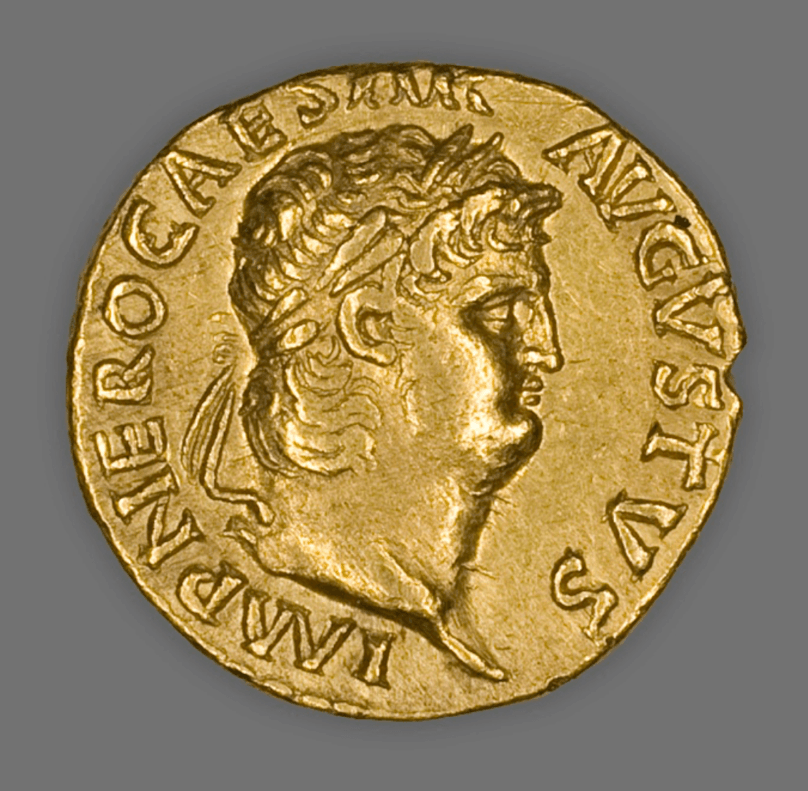
Trump is not yet sovereign — not yet Trumpus Maximus, a Nero who golfs while the world burns from the consumption of fossil fuels. While the U.S. legislative branches, dominated by Republicans, have accepted Gleichshaltung without a whimper, the judicial system has not. State and federal courts have issued orders and injunctions rolling back many of Trump’s decrees concerning deportations, civil service dismissals, agency closures, and blackmail of law firms and universities. The Supreme Court, though dominated by Schmittians, has ruled against Trump in some cases, while the most important decisions are yet to come. Right now, the high court is the thin reed upon which the future of capitalist democracy leans. We need a back-up plan.
A few universities, law firms and entertainers have publicly resisted Trump. Some Democratic politicians, chiefly Bernie and AOC, have organized large opposition rallies and promise more. While democratic institutions and protections still exist – the right to protest, petition, and publish, and the right to vote — it’s essential they are used. Lacking stormtroopers, Trump and the Republicans rely upon complaisance and fear to enact their will. If political leaders – Democrats, independents, union official and others – offer leadership and an inspiring message, masses of people will join in peaceful but determined opposition to tariffs, immigration policy, tax breaks for billionaires, environmental abuses, racism, attacks on students, and cuts in Medicaid and food stamps. When that happens, the Trump administration will collapse or be dismantled like the Golden House of Nero.

No comments:
Post a Comment