Poll finds global public support for nuclear remains high
Twice as many people support the use of nuclear energy than oppose it, according to the latest multinational public opinion poll conducted by market research firm Savanta on behalf of energy consultancy Radiant Energy Group.
_44004.jpg)
The Public Attitudes toward Clean Energy (PACE) index is described as "the world's largest publicly-released international study on what people think about nuclear energy", with data collected from almost 32,000 respondents in 31 countries.
"Across the countries surveyed, which represent almost two-thirds of the world's population, 46% support nuclear energy compared to 23% who oppose it," Radiant Energy said. That compares with the previous year when 46% of respondents supported nuclear energy with 28% opposing it. The newly published report shows that "22 of the 31 countries surveyed have net support (support exceeding opposition) for nuclear energy's use. Support is over three times higher than opposition in China, Poland, and Russia".
The survey shows that more than three times as many respondents want to keep using nuclear as want to phase it out. In most countries surveyed, over 40% support building new nuclear plants. In Russia, Poland, Norway, Finland, the Netherlands, Sweden, and France, public support for subsidising new nuclear construction is comparable to support for subsidising large-scale solar and onshore wind.
While support for nuclear was found to be high, 86% of respondents said they are concerned about the health and safety implications of nuclear's use. In addition, while 42% of respondents see nuclear energy as creating no or low levels of carbon emissions, 48% see nuclear energy as creating moderate or high levels of carbon emissions.
The survey found that the cost of nuclear is seen as low by more people than the cost of wind or solar in countries that have previously phased out nuclear's use. In Germany, Taiwan, Japan, South Korea and Sweden - countries that have had the largest politically-mandated nuclear phase-outs or closures - nuclear energy is the most positively viewed technology for reducing energy bills.
All countries show strong concern about nuclear waste. Countries pursuing one of several different waste solutions show less negative attitudes towards nuclear waste.
Public concern about nuclear waste is relatively low in Finland, home to the Onkalo repository. Similarly low levels of concern are seen in the Netherlands, which stores its waste at its above-ground COVRA facility, as well as in Egypt and Turkey, which plan to send their used fuel back to Russia.
"Given that the majority of respondents say they know little about nuclear energy, geopolitical and other non-technical factors may have a larger bearing on nuclear trust of certain countries than nuclear expertise," Radiant Energy said.
Savanta questioned 31,831 adults from 31 countries between November last year and May this year. The survey was conducted online. The countries selected include all G7 and BRICS countries, the world's top 15 countries by 2023 nuclear electricity generation, and several other countries considering their future use of nuclear energy. Eighty five percent of the global population powered by nuclear were represented in the survey.
Oklo named to supply microreactor for Alaska airbase
The US Defense Logistics Agency Energy Office has issued Oklo Inc a new Notice of Intent to Award for the development and operation of a licensed microreactor facility at Eielson Air Force Base in Alaska, clearing the way for contract negotiations to begin.
_91852.jpg)
"We are excited to partner with Oklo to take a significant step toward enhancing energy security at our installations," Acting Assistant Secretary of the Air Force for Energy, Installations, and Environment Michael Saunders said. "Following an extensive evaluation, Oklo was selected for their innovation, commitment to safety, and ability to support the mission-critical needs of this installation."
The US Air Force confirmed in 2021 that Eielson - which currently relies on coal to power its operations - would be the preferred site for its first microreactor, and in September 2022 issued a request for proposals for a "nuclear microreactor energy production facility" able to produce electricity and steam and to meet a baseload electricity demand of 5 MWe. The US Defense Logistics Agency (DLA) issued a similar notice to Oklo in August 2023, but rescinded it less than a month later to allow for "further consideration". This new Notice of Intent to Award again designates Oklo as the apparent successful offeror following a comprehensive evaluation process, the company said.
Oklo would design, construct, own, and operate the power plant, delivering both electricity to the Eielson base under a long-term power purchase agreement. The notice issued by the DLA on behalf of the Department of the Air Force and the US Department of Defense, initiates the negotiation process to potentially award a 30-year, firm-fixed-price contract to Oklo after obtaining a licence from the US Nuclear Regulatory Commission.
"This microreactor pilot could position Alaska and the nation at the forefront of energy innovation - leading us to a new era of safe, secure, and reliable energy," said Secretary of the Air Force Troy Meink. "It has the potential to shape future approaches to powering national security infrastructure, especially in the Arctic - where energy reliability is vital in the face of evolving threats."
Oklo is developing fast fission power plants capable of recycling used nuclear material, and has been given access to high-assay low-enriched uranium recovered from used fuel from the Department of Energy Experimental Breeder Reactor-II, which operated at Idaho National Laboratory from 1964 to 1994, to fuel its first core. The company's Aurora "powerhouse" can provide continuous, resilient energy that can operate independently from the grid, which the company said are key attributes for energy security at remote installations like Eielson.
As well as being rooted in legislative and executive initiatives including the 2019 National Defense Authorization Act and a 2021 Executive Order promoting small modular reactors for national defence and space exploration, the announcement also supports the aims set out in the raft of Executive Orders signed by President Donald Trump in late May.
Oklo CEO Jacob DeWitte - who was part of the White House ceremony marking the signature - said the notice "reflects continued confidence in Oklo's ability to deliver clean and secure energy solutions for mission-critical infrastructure," adding: "We are honoured to support national defense resilience objectives while demonstrating the value of US-pioneered fast reactor technology."
TVONS expands consultancy services to include SMRs
Finnish consulting company TVO Nuclear Services says it has expanded its service portfolio to include the advisory and expert services required for the preparatory and planning stages of small modular reactor projects.
_47392.jpg)
TVO Nuclear Services (TVONS) is a consulting company wholly owned by Finnish utility Teollisuuden Voima Oyj (TVO), owner of the Olkiluoto nuclear power plant. It was founded in 1998 to share TVO's expertise in the operation of Olkiluoto's two boiling water reactors (units 1 and 2), the construction of the first-of-a-kind EPR reactor (unit 3), as well as radioactive waste management.
TVONS says it is now offering consultancy services related to the construction of small modular reactors (SMRs).
"The potential of SMR plants can only be realised provided project planning and implementation, as well as the operation and maintenance of the plants represent the very highest standards," it said. "In other words, the SMR plants must hold the same trump cards as plants of the conventional size class."
"In both cases, it is our task to ensure that the plants operate reliably and efficiently through their whole life cycle," said TVONS Managing Director Ari Leppänen. "The scale of the plants may be smaller, but the responsibility is at least as great as with the larger plants. This is even more so as many of the future SMR plants are planned to be located much closer to built-up areas than the existing conventional plants."
Leppänen said services to support the commissioning and operational reliability of SMR plants will be available in Olkiluoto.
TVONS said it will offer SMR project developers services based on its extensive experience with safety standards and regulatory requirements; practice-oriented expertise in overall project management; supporting services from design through the commissioning and operational stages; knowledge required to build up the future operating organisation during the project stage; a client-driven approach, working as part of the client's core team throughout the project; and operating models refined over the decades to support risk management and successful implementation of projects.
TVONS has already provided consultancy services related to SMRs. In June 2023, it signed a letter of intent with Norsk Kjernekraft to jointly investigate the deployment of small modular reactors in Norway. In April 2024, TVONS signed a collaboration agreement with Steady Energy - Finnish developer of the LDR-50 small modular reactor - related to the development of a nuclear heating plant, initially focusing on the planning of the nuclear facility's operation and safety.
Fortum, EDF deepen cooperation on new-build projects
French energy company EDF has signed an Early Work Agreement with Finnish utility Fortum as the partners continue their collaboration toward the potential development of new nuclear projects in Finland and Sweden.
_42978.jpg)
"This agreement builds on two years of close collaboration - including joint technical workshops and site visits - under the Framework Contract signed in December 2023," Vakis Ramany, EDF's Senior Vice President International Nuclear Development, said in a LinkedIn post. "It paves the way for more in-depth cooperation and preparatory work, and for both parties to explore key technical and commercial aspects of deploying EPR technology in Finland and Sweden."
Fortum launched the feasibility study in October 2022 to explore the commercial, technological, and societal prerequisites for new nuclear in the two Nordic countries. The study involved in-depth discussions with several technology vendors, potential partners and customers as well as societal stakeholders.
In December 2022, EDF and Fortum announced the signature of a Framework Cooperation Agreement through which they would study opportunities for cooperation for the development of nuclear reactor projects in Finland and Sweden, both with conventional large reactors and small modular reactors (SMRs).
Fortum announced in March this year that it had selected two large reactor vendors plus one SMR vendor to continue discussions with after concluding its feasibility study. The company said it will continue to deepen the collaboration with two conventional reactor technology providers - EDF (EPR) and Westinghouse-Hyundai (AP1000) - and one SMR developer - GE-Hitachi (BWRX-300).
"At EDF, we are committed to supporting Fortum's nuclear development strategy in Sweden and in Finland, contributing to a secure, sustainable, and low-carbon energy future," Ramany said. "EDF teams are fully mobilised to bring their expertise to the table and move together with Fortum with confidence into the next phase."
Utah to host NuCube test reactor
US innovative microreactor developer NuCube Energy has signed a memorandum of understanding with the Utah San Rafael Energy Lab to collaborate on the siting of a test reactor at the laboratory.
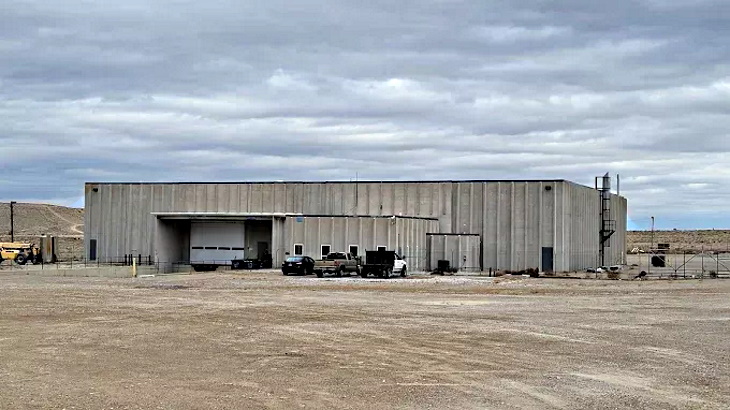
Idaho Falls-based NuCube and Utah San Rafael Energy Lab (USREL) said they have already begun discussions about community outreach and engagement regarding siting the test reactor in Orangeville, Utah.
NuCube said its technology is capable of producing the highest-temperature heat from a fission reactor that can be easily integrated with chemical processes and energy conversion technologies. The reactor design utilises tri-structural isotropic - or TRISO - fuel and heat pipe technology, among other innovations, that are designed to minimise the use of moving parts within the reactor, thereby enhancing safety and reliability. The microreactors are housed in a stainless-steel compartment that increases safety and streamlines permitting.
Testing of NuCube's microreactors at USREL will be the next step in the technology's development, it said.
NuCube's reactor can produce electricity via high temperature heat greater than 1000 degrees Celsius. "It is the only reactor that can compete with natural gas for high temperature industrial customers," the company said. "The technology can deliver cost competitive electricity and can also be operated independently from existing power grids, which could be transformative for rural areas in states such as Utah."
"Utah has an enormous amount of momentum as it explores how best to leverage nuclear energy to meet the needs of its residents and businesses," said NuCube Energy cofounder and CEO Cristian Rabiti. "NuCube's innovative reactor is ideal for Utah and we're looking forward to bringing the highest temperature application for nuclear energy to the state for the first time. We are especially excited to be working with USREL given its proven track record of demonstrating advanced power generation technologies including a supercritical carbon dioxide power cycle."
In 2023, management of USREL was transferred to the Utah Office of Energy Development (OED). The lab says it is working with partners to develop promising advanced nuclear energy technology concepts. It says it has world-class capabilities to manufacture and characterise molten salts as a nuclear fuel carrier.
OED is Utah's primary office for energy and mineral development. The office is charged with developing and implementing energy policy and resources, creating energy-related educational and workforce development programs and promoting energy efficiency and infrastructure.
"The USREL has the space and equipment necessary to host projects like NuCube Energy's test reactor," said OED Director Emy Lesofski. "The lab will be a site for a variety of research projects that focus on keeping our energy clean, affordable, reliable and sustainable. The research at USREL will play a critical role in bringing promising technologies to market safely and quickly so the state can continue to increase its reliable and clean energy supply, while also working with local community members. We're particularly excited about NuCube's technology because of the opportunities around research it will afford."
Last month, Utah Governor Spencer Cox announced that it has agreed with California-based Valar Atomics to site a test SMR at USREL. He said the test reactor is anticipated being operational within one year.

No comments:
Post a Comment