Kremlin media falsely claim the West has “accepted” Russia’s apparent victory in Ukraine and is preparing for “surrender”
Iva Tsoy
11 July 2025
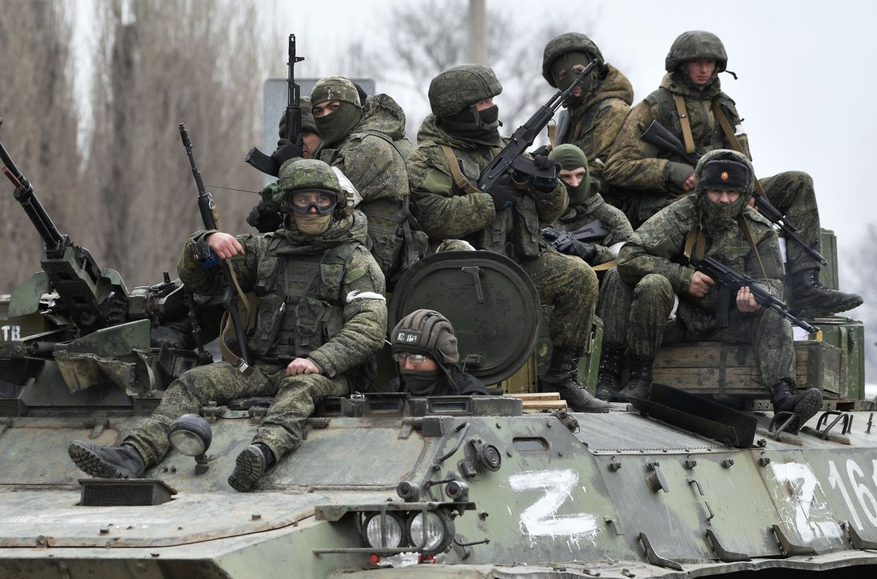
Kremlin-controlled media outlets including RIA Novosti, RT, and Lenta.ru are circulating false claims that Western countries have secretly recognized Russia's victory in the war against Ukraine and are secretly preparing to capitulate. These assertions stem from an op-ed written by American columnist Patrick Lawrence and published by the pro-Russian online outlet Consortium News (CN). Lawrence wrote:
“The fundamental problem here is that Kiev [sic] and its sponsors are unable to accept defeat. I concluded more than a year ago that Ukraine and its Western powers had lost the war — ‘effectively lost,’ I thought for a time, but then I dropped ‘effectively.’ For a good long time now what we’ve watched is nothing more than postwar gore. If you have lost a war but cannot admit you have lost because the West must never lose anything, you are down to the old game of pretend.”
Lawrence compared the current moment to the final days of World War II — putting Putin’s Russia in the role of the Allied forces and Ukraine and its present-day Western partners in the position of Nazi Germany.
“It is as if the Germans, if you do not mind the comparison, insisted they set the terms of surrender in May 1945… When a settlement is finally reached it will not be termed a surrender — you can count on this — but this is what it will come to… I am confident Moscow will hold to its currently expressed demands, which I consider eminently just and not at all excessive.”
However, on the Russia social media platform Yandex.Zen, RIA Novosti repackaged the same column under a headline reading, “Victory Near: The West Reluctantly Prepares for Capitulation.” The contradiction leaves readers unclear: does the West believe it cannot lose, or is it actually preparing to surrender?
In his piece, Lawrence asserts — without offering any evidence — that Ukraine lost the war more than a year ago. He also peddles Kremlin narratives, claiming that neo‑Nazis “control [Ukraine’s] civilian and military administration” and that “Washington and its clients in Kiev needed the neo–Nazis, especially but not only the armed militias, because they could be relied upon to fight the Russians with the sort of visceral animus the occasion required.”

Both Lawrence and CN have a history of propagating pro‑Kremlin disinformation. In 2017, Lawrence authored a controversial article in The Nation, arguing that the hacking of Democratic National Committee emails was an “inside job,” not a Russian operation. He cited the blog “The Forensicator,” later revealed to be run by British activist Tim Leonard, who spread altered documents from Russian military hackers. After scrutiny, initial cybersecurity sources withdrew their support from the piece, and The Nation eventually removed the article. Its editor, Katrina vanden Heuvel, publicly distanced the magazine from Lawrence’s claims.
Lawrence also promoted conspiracy theories surrounding the death of former DNC staffer Seth Rich, speculating — without evidence — that he was killed for leaking emails.
After Russia’s full-scale invasion of Ukraine in 2022, Lawrence continued publishing disinformation. Notably, he described the discovery of mass graves in Izium — discovered after occupying Russian forces were driven out in the fall of 2022 — as “atrocity porn,” questioning the involvement of Russian troops.
CN was founded in 2011 by the award-winning investigative journalist Robert Parry, who is best known for his reporting on the Iran-Contra arms deals and the CIA’s role in cocaine trafficking during Nicaragua’s civil war in the 1980s. However, even before Parry’s death in 2018, the outlet had taken on an overtly pro‑Kremlin editorial line.
In 2018, the Canadian publication The Walrus analyzed the way CN spreads falsehoods with the help of sites linked to Russia. Parry’s site claimed that the White Helmets — a humanitarian group that provides emergency medical aid in conflict zones — had taken part in chemical attacks on civilians in Syria alongside rebel groups. In reality, those attacks were carried out by the government of then-President Bashar al-Assad, as was confirmed by the Organisation for the Prohibition of Chemical Weapons (OPCW).
To support its claims, CN cited the website of Canadian conspiracy theorist and antisemite Michel Chossudovsky. The Insider has previously reported that Chossudovsky is among the first to amplify fake stories from questionable pro-Kremlin sources, and in return, his articles are frequently cited by RT and Sputnik. Among Chossudovsky’s most extreme claims are that the United States funds al-Qaeda and the Islamic State, and that Osama bin Laden was a CIA agent.
Chossudovsky’s site engages in cross-posting with both CN and Russia’s Strategic Culture Foundation.The Insider has also reported on the Strategic Culture Foundation: it is registered in Moscow at the headquarters of Novikombank, a subsidiary of the state defense corporation Rostec. The foundation has been sanctioned by the UK, Canada, and Ukraine for spreading Russian disinformation.
And last but not least, another one of CN’s cited experts has also drawn scrutiny from The Insider. Daniel Patrick Welch, described by Russian media as a “political analyst,” is in fact a singer and soap salesman.
by Stefano Caprio
7/12/2025
RUSSIAN WORLD
Looking back at Russia's past and present history and reality, Patriarch Kirill condemns those who ‘call for the purity of Islam or Orthodoxy,’ because ‘we may have different cultures and traditions, but we are one people.’ Meanwhile, in the Moscow neighbourhood of Kommunalka, a multi-religious centre is being presented where an Orthodox church, a synagogue, a mosque and a Buddhist temple are to be built in a shared space.
In recent months, there have been several ethnic and religious tensions in Russia, with the growing activism of nationalists from the ‘Russian Community’ organising actions against internal migrants from the Caucasus and Central Asia, with extremist tones at the ideological level, pro-Nazi, and at the religious level with expressions of ‘radical Orthodoxy’, supported by the police and blessed by the most zealous Orthodox monastic communities.
Another source of great concern is the intra-Orthodox religious controversy between the different jurisdictions of the Churches in Ukraine, where the civil authorities are putting increasing pressure on the pro-Moscow Upz: in recent days, the Ukrainian citizenship of the Metropolitan of Kiev, Onufryj (Berezovskij), has been revoked, considering it incompatible with his original Russian citizenship.
Other bishops and priests of the UOC now face the same restrictive measure, which could lead to the expulsion of Russian clergy from Ukraine.
The Patriarch of Moscow, Kirill (Gundjaev), sought to respond to these and other challenges at a reception at the Cathedral of Christ the Saviour next to the Kremlin, in front of members of the Commission for Interreligious Dialogue, a structure created directly by the Russian presidency, emphasising the importance of multi-ethnic and multi-religious dialogue as a key feature of Russian society.
He reiterated that “we are fortunate to belong to different ethnic and religious communities, we may have different cultures and traditions, but we are one people”, which is summed up in the typical sobornost, the “universal communion” of the Russian world.
Kirill assures that this type of union ‘is a very rare phenomenon in the history of human civilisation,’ an eminently Russian prerogative. Recalling the ancient empires, ‘from the Roman to the Soviet,’ the patriarch observes that in these systems, peoples lived together effectively, ‘but most of the time this unity, especially in the stages of aggregation, was based solely on force.’
The strength of the main ethnic group, of the political centre of the capital, Rome, Constantinople and those that followed, were ‘state factors that imposed unification’, as was also the case in Soviet times, where the ideological factor prevailed, even if, in the opinion of the head of the Orthodox Church, ‘the ideology was fairly balanced, offering a perspective of national politics without discrimination on ethnic grounds’.
This allowed relations between people to be consolidated, but ‘now the Soviet Union is no longer there, whatever our reaction to this may be, yet our union has been preserved’.
With these words, the patriarch effectively sums up the passage of Russian history in recent decades, finding continuity between the “atheist” Soviet empire and the “Orthodox” Russian empire of Kirill and Putin. Like President Vladimir Putin, Patriarch Kirill (also born Vladimir) grew up during the Stalinist restoration under Leonid Brezhnev, who “repaired the damage” of the Khrushchev thaw, which had condemned the “cult of personality” of the supreme leader and opened a window to “Western disorder”.
It is no coincidence that at the recent congress of the Russian communists of the KPRF, Nikita Khrushchev's denunciation of Stalin at the 20th Congress of the CPSU in 1956 was declared “a mistake of judgement”, thus closing the circle also at the historical-ideological level.
Yet the patriarch insists on the more “profound and spiritual” dimension of this continuity between communism and communion, stating that “the political, geopolitical and ideological factors that brought about the absolutely exceptional union of our multi-ethnic people have now disappeared, but we are still together”.
It is therefore the superiority of religious inspiration that makes the Russian people unique, not socio-political or ideological dimensions, but “the popular wisdom forged in historical experience, which allows us to preserve a unity that is not only in words or declarations, but in lived reality”.
According to the patriarchal narrative, ‘faith in one God has always been the spiritual foundation of our multi-ethnic country,’ so that all the truths professed by Russians, ‘brotherhood, cooperation, mutual assistance, respect for all,’ are not just formal declarations or empty words in everyday rhetoric, but are ‘expressions of a mindset rooted in people, coming from the depths of their hearts.’
Kirill proclaims himself deeply convinced that ‘not only dialogue, but simple daily coexistence and cooperation between Orthodox Christians and Muslims’ in Russia, which ‘by God's grace is not overshadowed by any kind of conflict,’ is one of the unifying forces of ‘believers’ and of the solidarity of the entire multi-ethnic people.
Russian Islam is a legacy of the Tatar-Mongol yoke, with the conversion of the khanates of the Golden Horde to the Muslim faith at the end of the 14th century, shortly before the “rebirth of Holy Russia” in the battles against the invaders who had dominated the country for a couple of centuries and who were then integrated by the victorious tsars.
With these reinterpretations of Russian history and reality, past and present, the patriarch claims the decisive role of the Church in the foundation of the Russian state and warns religious leaders not to “place obstacles in the way of the consolidation process”, recalling that “there are forces on all sides that oppose the development of these relations”.
He condemns those who ‘make appeals in defence of what they consider to be the purity of Islam or Orthodoxy’, forgetting that good relations between Russia's traditional confessions are "achievements of our theologians and ministers of worship, based on the real progress of the history of our multi-ethnic homeland, on the communion that has been formed in the experience of the people, not in university lecture halls or theological academies, or in some intellectual circle," nodding to objections from various parts of the Russian academic world.
In this interpretation, "Orthodox Christians and Muslims are fighting side by side for our homeland, and we can list many examples of those who, despite their different faiths, are united in their goal of developing our great country, and this cooperation must continue first and foremost between Orthodox Christians and Muslims, the main monotheistic religions," effectively blessing the comparison of militant Orthodoxy to Islam defending sacred laws.
The other traditional religions according to Russian law are Buddhism, widespread mainly among the descendants of the Tatar-Mongol ethnic groups, and Judaism, present in the Caucasus since the ancient Rus' of Kiev, and then spread throughout 19th-century Russia following the wanderings of various European countries.
The patriarchal thesis was supported by the Chief Rabbi of Russia, Berl Lazar (born in Milan, raised in America and a Russian “by adoption” for over thirty years), who confirmed that “we Russians have one Father who unites us”, speaking at the presentation of a multi-religious centre in the Moscow district of Kommunalka, where an Orthodox church, a synagogue, a mosque and a Buddhist temple are to be built in a shared space.
He congratulated the leaders of traditional Russian religions at all federal and regional levels for their cooperation, recalling his recent visit to the city of Derbent, the southernmost point of the Russian Federation on the shores of the Caspian Sea, where a complex representing Orthodoxy, Islam and Judaism with places of worship, museum rooms and a library, all financed by the entrepreneur and oligarch Sulejman Kerimov, an ultra-Putinist senator for the Republic of Dagestan, who is subject to all kinds of international sanctions.
The rabbi praised him for his understanding of “how important it is that traditional Russian religions do not just live side by side, but show the ability to cooperate and find common languages, to demonstrate that what unites us is much more than what divides us”, a circumstance that is particularly necessary in the North Caucasus, where the “Abrahamic religions” have been at war with each other for over a millennium.
Lazar acknowledges that ‘not everything is smooth between us’, as many ‘middle and lower-level’ ministers of religion are often infected by extremist movements that rekindle inter-ethnic and inter-religious conflicts, but according to the chief rabbi, ‘these are marginal expressions within their own communities’. without dwelling on the anti-Semitic pogroms of recent years in the Caucasus, but emphasising the need to ‘fight together against these provocations’.
When asked how friendly relations between the various faiths can be maintained in times of ongoing interreligious conflict at the international level, Lazar's response is typically rabbinical: ‘It is a test of our relationship with the eternal, and we must maintain a balanced approach, remembering that the commandment to love one's neighbour applies to all religions... It would be too easy to love only those with whom we get along.’
Russia is made up of those who also love those who would never want to submit to its suffocating ‘universal communion’.

Volodymyr B.
July 8, 2025
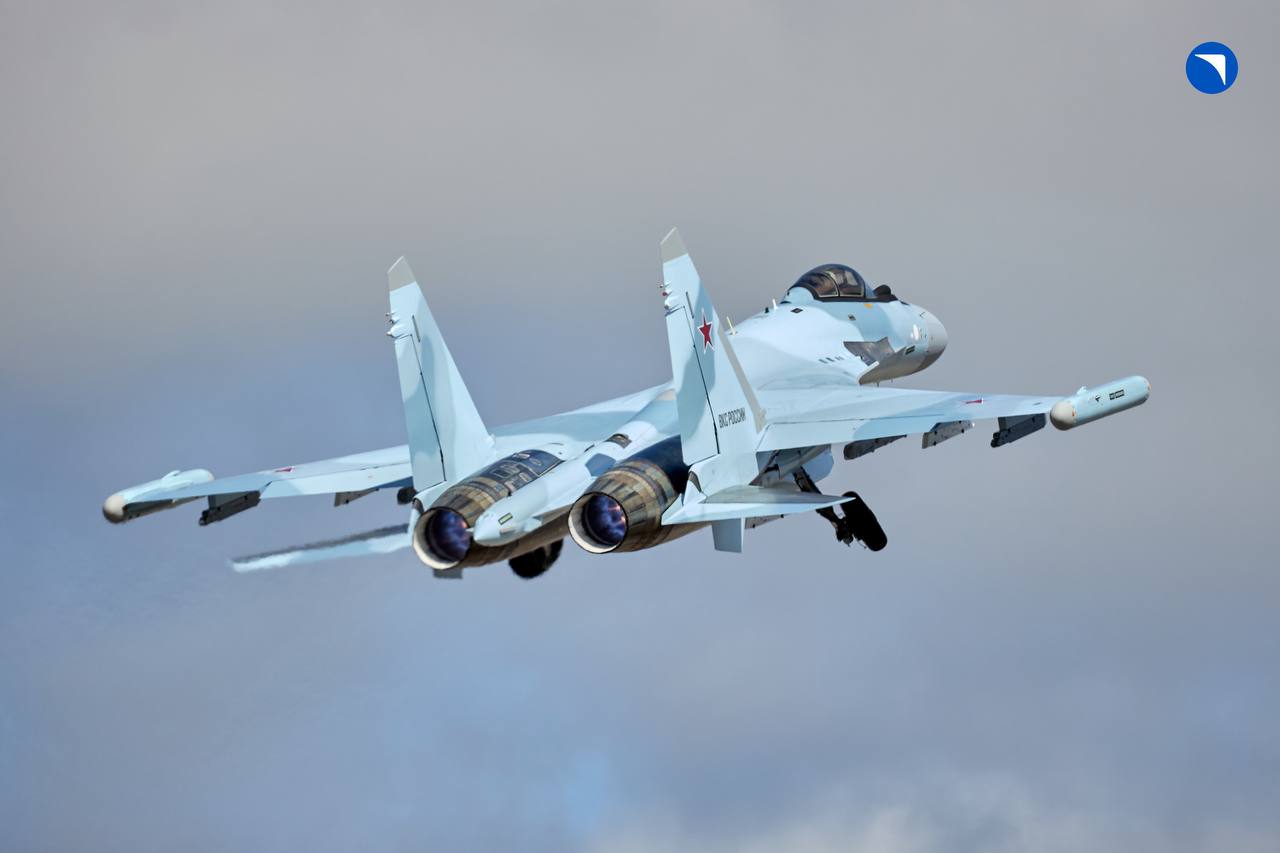
Takeoff of a new Su-35S fighter jet to the Russian Air and Space Forces.
Russian Sukhoi-built Su-34 and Su-35S fighter jets are almost entirely composed of Western-made electronics.
This is stated in the report PARTS OF THE PROBLEM: Tracing Western Tech in Russia’s Deadliest Jets, prepared by the International Partnership for Human Rights (IPHR) in cooperation with the Independent Anti-Corruption Commission (NAKO) and Hunterbrook Media.
NAKO identified and traced the origin of 1,115 of the 1,119 electronic components used in these aircraft.
Manufacturers include Texas Instruments, Analog Devices, Intel, Murata, Maxim, OnSemi, Vicor, and other leading companies.
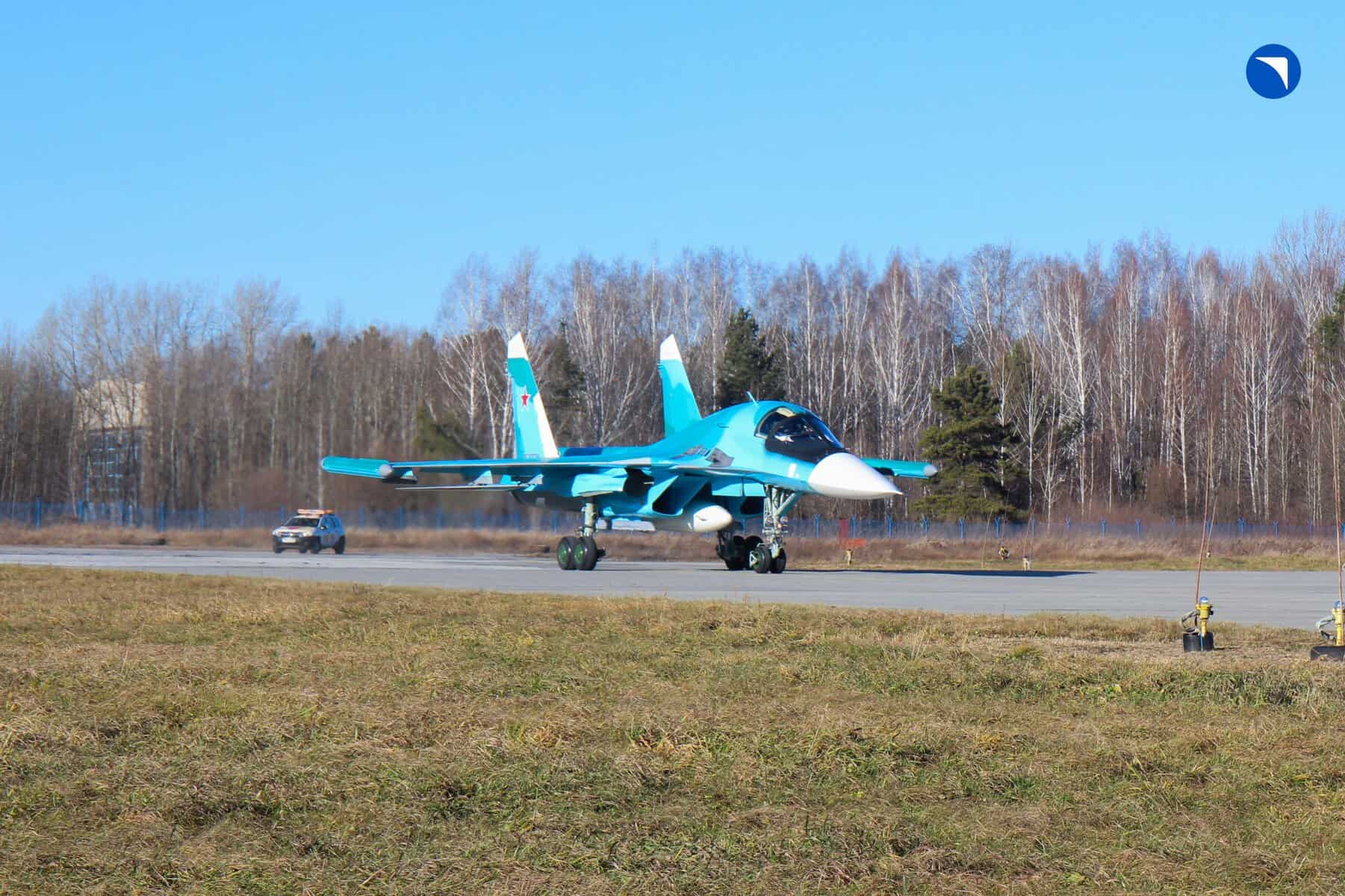 Transfer of Su-34s as part of the fourth batch from the UAC. Photo credits: United Aircraft Corporation
The main countries of origin are the US, Germany, Japan, Taiwan, and South Korea.
In total, 68 percent of the electronics in the Russian Su-34 fighter jet come from the US, with another 16.2 percent coming from Japan.
This is followed by 7 percent from European Union countries, 4.4 percent from Switzerland, 3.1% from Taiwan, 0.9% from South Korea, and the same amount from other countries.

The ratio of components in the Su-35S fighter jet is almost identical.
All these components enter Russia through an extensive network of importers and suppliers, including intermediaries and front companies in China, Hong Kong, Turkey, the UAE, and some EU countries

Western defense industry involvement in servicing Sukhoi aircraft
Earlier, on October 10, 2024, it was reported that the international intelligence community InformNapalm had contacted French companies Thales and Safran regarding the use of their equipment on Russian fighter jets serviced in Kazakhstan.
In particular, it was found that ARC Group provides maintenance services for Russian Su-30SMs in circumvention of international sanctions, using avionics manufactured by Thales and Safran.
As of 2024, Russia has up to 130 modernized Su-30SM fighters equipped with French equipment.
Domestic Policy Failures Not Just Foreign Influence Behind Many of Russia’s Nationality Problems, Duma Deputy Says
Paul Goble
Saturday, July 12, 2025
The new draft Russian government nationality policy document specifies that the main threats to ethnic peace in the Russian Federation are the result of attempts by hostile foreign powers to influence the situation there (windowoneurasia2.blogspot.com/2025/06/new-draft-nationality-strategy-focuses.html).
But Duma deputy Nikolay Doluda says “in fact, there are also internation shortcomings such as social-economic problems, insufficient amounts of information, and the lack of leaders of public opinon which are having no less a negative impact on the situation” (business-gazeta.ru/article/677077).
The ethnic Ukrainian who earlier served as a Cossack ataman but has been a member of the Russian Duma since 2021 made that remark in the course of a session of the Russian parliament’s nationalities committee devoted to a discussion of the new nationality policy document.
While most of the participants in this discussion lined up behind the government draft, others dissented in ways like Doluda and argued that Moscow needs to take positive steps to attract non-Russians to its side, including the construction of new mosques for Muslims in major cities.
These divisions in fact represent a step forward in that they highlight the fundamental differences within the Russian political class about what to do with the “nationality question.” And they may be a harbinger of real debates in the future about domestic policy as a whole and not just discussions on the margins.
Moscow Now Feels It can Again Make Changes in Russian Regions without Risk to Itself, Kynyev Says
During covid pandemic and in the run-up to the presidential elections, the Kremlin slowed making changes in the leadership of Russian regions fearing that any such moves during a period of potential turbulence was dangerous. But now, Aleksandr Kynyev says, it believes such limiting factors are behind it and that it is free to make more changes.
As a result, the HSE political scientist says the Kremlin is likely to increase still further the percentage of outsiders in charge of regions – that figure now stands at 60 percent – and will further destroy anything worthy of the name of a regional elite (semnasem.org/articles/2024/08/07/kto-upravlyaet-regionami-kynev).
Last year, Kynyev published a study of how the leadership of political and business institutions in predominantly ethnic Russian regions has changed over the last 30 years (windowoneurasia2.blogspot.com/2024/08/no-ethnic-russian-region-has-elite.html and windowoneurasia2.blogspot.com/2024/12/putin-has-gelded-regional-elites-but.html).
He repeats the arguments he made then that there are no elites in the regions of the kind that existed in the 1990s and that no predominantly ethnically Russian oblast or kray is currently capable of pursuing independence. Those who think otherwise are basing their arguments on a situation that existed in the 1990s but no longer does.
There are no real regional political elites because those the Kremlin has installed no longer identify with or care about the future of their areas of responsibility because they won’t be living there in the future, Kynyev continues; and something similar has happened to leaders of businesses in the regions: they increasingly head branches of federal companies.
“If there is turbulence in Moscow, then the rules of the game could change … and its control over the regions would weaken,” he says. If that happens, then regional challenges could emerge. But “until that control weakens, there won’t be any such ‘fermentation.’ This system is stable … and it can exist for a very long time.”

No comments:
Post a Comment