Alberta to hold nuclear power consultations as reactor companies weigh opportunities

By The Canadian Press
Published: July 07, 2025
Alberta Premier Danielle Smith says the province will hold consultations on nuclear power and whether it should be added to Alberta's energy sector.
Alberta plans to hold public consultations this fall on adding nuclear power to the province’s energy mix, Premier Danielle Smith said Monday.Sign up for breaking news emails from CTV News Edmonton, right at your fingertips
There have long been discussions about building reactors in Alberta — including ones that could power oilsands operations — but the province is currently reliant on greenhouse-gas emitting natural gas for electricity.
Those conversations are to begin anew around September or October, when Chantelle de Jonge, parliamentary secretary for affordability and utilities, plans to hold nuclear consultation sessions.
“We want to talk to Albertans, because it’s new for us,” Smith told reporters alongside Ontario Premier Doug Ford after the two flipped pancakes at the Alberta premier’s annual Stampede breakfast.
“It’s not new for Ontario. Ontario gets 60 per cent of their power, I understand, on their grid from nuclear energy.”
Small modular reactors probably make the most sense at remote rural sites that are heavy energy users, the premier added.
“Our oilsands projects are perfect for it, if you can get both the power and steam, power and heat.”
Small modular reactors, or SMRs, generate about one-third of the power of traditional nuclear plants and can be prefabricated elsewhere before being shipped to site.
Ontario Power Generation is building an SMR at its Darlington site east of Toronto, which would make it the first power company in North America to connect such a plant to the grid. There are plans to build three more SMR units there.
Ford said SMRs don’t themselves employ a lot of people when they’re up and running, but they could enable tech giants like Amazon or Google to set up shop with electricity-hungry artificial intelligence data centres.
“And that’s where the jobs are created because they just suck an endless amount of energy, these data centres,” Ford told reporters.
“So that’s the way of the future. We’re leading the world and we’re gonna make sure we share that technology right across the country.”
At least one U.S. developer of SMRs has a keen eye on Alberta as a growth market.
“We have designed a small modular reactor that is perfectly suited for Alberta,” Clay Sell, CEO of X-Energy Reactor Co., said in an interview last month.
The problem with conventional reactors has been their complexity, he said on the sidelines of the Global Energy Show in Calgary.
“If you ever get one built, you’ll run it for the next 80 years, but they’re hard to build and they’re capital intensive to build,” Sell said.
“So our whole approach has been from the beginning: ‘How do we make it simpler? How do we make it smaller? How do we have fewer components?’”
X-Energy is pursuing opportunities to add power to Alberta’s grid in general, as well as to link to steam-assisted gravity drainage oilsands projects that pull bitumen from deep underground through wells rather than mine it.
“Our plant is perfectly suited to perform that same mission on a small footprint,” Sell said.
OPG is looking at using X-Energy plants at industrial sites in Ontario.
A much larger conventional plant is also in the works in northwestern Alberta.
Energy Alberta is working on a power station in the Peace River area that would have two to four Candu reactors and a capacity of up to 4,800 megawatts. That would represent up to a quarter of the province’s existing electricity generation.
“We initially thought, ‘Wow, that would swamp our power grid,’” Smith said.
“And now with all the demands for AI data centres, we’re thinking, ‘Hmm, that’s maybe exactly what we need.’”
An initial project description was filed in April for the Peace River Nuclear Power Project, kicking off the federal review process.
In a speech to the Global Energy Show in June, Candu Energy senior vice-president Carl Marcotte said Alberta would benefit from adding nuclear to the mix.
“Whatever Albertans decide to build, you will. But you need a lot more power to do it — reliable power that runs 24/7, power that works in great weather and when it’s -45 C ... and it must be affordable — it really must,” he said.
“So yes, of course Alberta’s abundant natural gas resources can and should do all that ... But wouldn’t it benefit from having a powerful, cleaner, reliable ally in that growth, providing important baseload electricity with low emissions?”
Scott MacDougall, program director of electricity for the green think-tank Pembina Institute, said nuclear could have a role to play as a clean power source, both to feed the grid and to reduce the carbon footprint of the oilsands.
But there is lower hanging fruit.
“If the problem that they’re trying to solve is delivering that reliable, affordable, non-emitting power right away, there should be a much more all-of-the-above approach taken in Alberta, where we think renewable energy ought to be a more central pillar in that system,” said MacDougall.
“That’s partly because renewables are much quicker to deploy and lower cost as well, and their costs are coming down every year as are the costs of battery and energy storage.”
This report by The Canadian Press was first published July 7, 2025.
Lauren Krugel, The Canadian Press
Gentilly 1 declared free from nuclear fuel
_62690.jpg)
Gentilly 1 - a 250 MWe steam-generating heavy water reactor with vertical pressure tubes, light water coolant and heavy water moderation - operated intermittently from 1972 to 1978. A decommissioning programme was initiated in 1984 to bring the facility to a safe shutdown state. Since then, the facility has been in a state of safe, long-term storage with ongoing monitoring. Operations at the site are conducted under a licence issued to Canadian Nuclear Laboratories (CNL) by the Canadian Nuclear Safety Commission (CNSC). The Gentilly 1 site is now partially decommissioned and is licensed as a waste facility, the Gentilly-1 Waste Management Facility (G1WF).
The facility is owned by Atomic Energy of Canada Limited (AECL), which has contracted CNL to manage and operate its sites. The facility is adjacent to the Gentilly 2 plant, which was shutdown in 2012.
CNL has now completed the transfer of used fuel from G1WF to Chalk River Laboratories, "safely removing a major nuclear liability and clearing the way for the next steps in the decommissioning and environmental remediation of the facility".
"The efficient and safe completion of this important project reflects the deep expertise CNL has developed through years of complex, technical work in nuclear material management," said Mark Chapman, CNL's senior director of the fuel programme. "The project required detailed planning and coordination, including the development of specialised fuel-handling systems, and enhancements to storage infrastructure at CRL."
As outlined in CNL's comprehensive Integrated Waste Strategy, the fuel is now securely stored in modern purpose-built canisters at the Chalk River Laboratories – where it will remain until the Nuclear Waste Management Organization's planned long-term disposal facility for used nuclear fuel becomes available. CNL said its strategy is "aligned with Canada's national policy to reduce the number of waste sites by centralising the safe and secure storage of fuel waste".
"The successful delivery of this project is a reflection of the expertise, dedication, and collaboration across our entire organisation,” said CNL President and CEO Jack Craig. "It demonstrates CNL's commitment to safety, environmental stewardship, and the responsible management of Canada's nuclear legacy."
CNL submitted an application in July 2024, to the CNSC to amend the current licence for the facility to permit decommissioning. The CNSC has announced a public hearing in writing, scheduled for July 2026, to consider the proposed amendment for the Gentilly-1 Decommissioning Project. The amendment would authorise CNL to proceed with decommissioning all remaining buildings and structures at the site to achieve a brownfield end state.
Viewpoint: Strategic coalitions in nuclear business
As energy security and carbon neutrality have become important challenges globally, the demand for nuclear new-builds and life extensions for operating units is rising. However, writes Guen Park, Director of KHNP's Overseas NPP Power Office, the challenge is to deliver nuclear power projects on time and within budget despite global uncertainties, post-pandemic supply chain disruptions and a stricter regulatory environment. The uncertainty from these external factors means that concerns over contracts where one supplier is responsible for engineering, procurement and construction are also increasing.
..._58412.jpg)
Conflicts of interest between owners and suppliers?
To minimise the risks caused by project uncertainties, owners and suppliers often establish their plans independently of each other, but their plans inevitably conflict, because they are positioned at the opposite ends of their interest.
Most owners prefer to share risks with suppliers as part of their risk management scheme. The risk allocation strategies that owners often adopt include: sharing risks associated with construction licensing delays with suppliers, requesting equity investment to enhance the supplier’s accountability for the project, and pursuing fixed price contracts to minimise the increase of project costs.
On the other hand, nuclear suppliers do not want to assume any of the licensing risks and prefer turn-key contracts without equity investment while preparing for unexpected cost overruns through variable price contracts. In fact, there are cases where unresolved conflict of interests between owners and suppliers at the negotiation table led to a failure in signing contracts and project cancellation or suspension.
So how to solve these tensions? Well one example that Korea Hydro & Nuclear Power (KHNP) has been involved in was the refurbishment project of Romania’s Cernavoda unit 1, where the owner, Societatea Nationala Nuclearelectrica SA (SNN), and suppliers addressed potentially conflicting interests by taking a new approach between fixed and variable prices and successfully signed a contract, exploring meaningful implications from the project.
The Cernavoda unit 1 example
As stated above, suppliers tend to prefer variable-price contracts to conventional fixed-price contracts. However, the positions of owners differ from those of the suppliers. So what could be the solution?
The refurbishment project of Cernavoda unit 1 pursued by Romania’s SNN has aimed to solve this problem, based on a cooperative model which encompasses conflicting interests. The project valued at EUR1.9 billion (USD2.13 billion) is a large-scale refurbishment project which includes engineering, procurement and construction (EPC) as well as the construction of infrastructure such as a radioactive waste storage facility to extend the unit’s operational life by 30 years.
The owner, SNN, negotiated with Candu Energy and Ansaldo Nucleare, the original suppliers of Cernavoda unit 1, based on a fixed-price contract. Yet, the negotiation reached a deadlock due to the differences with Candu Energy and Ansaldo Nucleare who preferred a variable price contract just like the other suppliers.
Under these circumstances KHNP joined, proposing to execute the construction on a fixed-price basis. The participation of KHNP made it possible to balance the proportions of fixed and variable prices, leading to mutual concessions of SNN and suppliers and providing momentum for contract negotiations. As a fixed-price contract was made possible for the construction, which accounts for one-third of the entire EPC, thanks to KHNP, both Candu Energy and Ansaldo Nucleare were able to reduce the risk of fixed prices in the total project cost. As a result, the two companies could secure SNN’s concession of adopting a variable price contract for procurement (including project management) that includes high risks caused by external factors while accepting the fixed-price contract in design/engineering where they have advantages, thus making risk management relatively easier. It was also a favourable outcome for SNN that engineering and construction would be based on fixed-price contracts, considering the additional goal of signing the contract in a timely manner.
Consequently, KHNP’s involvement enabled the balance of variable prices (for procurement and project management) and fixed prices (for engineering and construction) in the contract, providing both the owner and suppliers with justification and practical benefits.
But how could KHNP participate in the project on a fixed-price basis, something which other suppliers tend to avoid,
KHNP is not just the supplier of nuclear power plants but also an operator of 26 units. It has the capabilities to estimate costs and the optimal period of construction based on experience gained from numerous nuclear power plant construction and refurbishment projects, as well as the accumulated data from more than 40 years of operation and maintenance from the same position as a utility like SNN.
KHNP was also confident of responding to unexpected events during construction based on its certified supply chains and has the experience of successfully completing the refurbishment project of Wolsong unit 1, the same model as at Cernavoda. With KHNP’s participation, it formed a tripartite consortium which combined individual expertise with Candu Energy, the IP (intellectual property) holder of Cernavoda nuclear power plant, and Ansaldo Nucleare, which supplied the Balance of Plant at the time of Cernavoda’s construction.
The key takeaway from the Cernavoda unit 1 project is that suppliers established a consortium to effectively share project risks and reach a contract with the balance between fixed and variable prices, creating a solution which satisfied both the owners and suppliers.
A model for the future?
As can be seen in the refurbishment project of Cernavoda unit 1, when a nuclear project becomes large-scale and complex, a single company cannot bear all the risks. Thus, a consortium or a joint venture model where each party takes responsibility for its own specialised area and works together can be an effective solution.
The participation of a company that can gather the capabilities of each supplier and fill the gaps in the project is essential in such a project model. In the example given, KHNP's capability in project management and project delivery skill has helped to provide a good solution.
As stated at the start of this article, the global nuclear industry operates among geopolitical risks, pressures of carbon neutrality and technological innovation. And in this complicated environment, multiple parties can reduce uncertainties and expand opportunities by leveraging their own strengths and working hand-in-hand. Furthermore, once this cooperative model takes hold, we will be able to turn challenges into new opportunities in the nuclear industry through mutual growth, going beyond mere competition among suppliers.
EDF says it will take 12.5% stake in Sizewell C project
_94956.jpg)
"This investment would be made at the time of the final investment decision by the project once the negotiation of agreements with the UK Government and investors is finalised, EDF said.
The EDF-led plan is for Sizewell C to feature two EPRs producing 3.2 GW of electricity, enough to power the equivalent of around six million homes for at least 60 years. It would be a similar design to the two-unit plant being built at Hinkley Point C in Somerset, with the aim of building it more quickly and at lower cost as a result of the experience gained from what is the first new nuclear construction project in the UK for about three decades.
In October 2016, EDF agreed with China General Nuclear (CGN) to develop the Sizewell C project to the point where a final investment decision could be made. EDF had an 80% stake and CGN a 20% stake. However, the then so-called "golden era" of UK-China relations ended with the UK government citing security concerns as it reviewed and blocked Chinese investments in UK infrastructure.
In November 2022, the UK said it would invest GBP679 million and become a 50% partner with EDF in the Sizewell C project. Further UK government funding has since been announced, with EDF's stake falling to about 16%.
EDF, which is French state-owned, has made clear that it does not want to have a large ownership stake in the project, unlike with Hinkley Point C.
Private investors sought
The UK government has been seeking private sector investment in the Sizewell C project, launching a pre-qualification for potential investors as the first stage of an equity raise process in September 2023. It has also taken legislation through Parliament allowing a new way of funding new large infrastructure projects - a Regulated Asset Base (RAB) funding model, which can see consumers contributing towards the cost of new nuclear power plants during the construction phase. Under the previous Contracts for Difference system developers finance the construction of a nuclear project and only begin receiving revenue when the station starts generating electricity.
Last month, the UK government announced it was committing GBP14.2 billion towards the building of the Sizewell C plant. The announcement of the funding was seen as a prelude to a Final Investment Decision later this year.
"EDF is the first shareholder to announce its backing for the nuclear plant alongside the UK government," the UK government said. "Today's announcement takes Sizewell C one step closer to being given the green light, when it will help to deliver the UK's 'golden age' of nuclear and see clean power supplied to millions of homes."
It added that further investors and details on the project's financing will be confirmed at the point of the Final Investment Decision, targeted for this summer.
The UK government said it will remain "a significant shareholder in the project - ensuring we have oversight of the progress and limiting delays."
According to the Financial Times, Canada's Brookfield Corporation - which owns 51% of Westinghouse - is set to take a more than 20% stake in Sizewell C, which would make it the largest shareholder after the UK government. Centrica, the owner of British Gas, is set to take a stake of about 15%, the Financial Times previously reported.
It has also been announced that Bpifrance, France's export credit agency, is set to provide a GBP5 billion debt guarantee to Sizewell C. "This supports lending to the project from a number of leading commercial banks and is enabled by Sizewell C's innovative funding model that spreads costs between consumers, taxpayers and private investors."
Tom Greatrex, Chief Executive of the Nuclear Industry Association, welcomed EDF's announcement, saying: "This is a historic investment that will help deliver the first true replica power station in British nuclear history. That replication is the best way proven to cut cost, speed up construction and deliver the jobs and energy security the country needs. Sizewell C will be a huge engine of economic growth in our industrial heartlands and form the bedrock of a more competitive energy system for the rest of this century."
Newcleo offered site for MOX fuel plant
_93827.jpg)
Newcleo plans to directly invest in a mixed uranium/plutonium oxide (MOX) plant to fuel its small modular lead-cooled fast reactors. The MOX fuel would be produced from nuclear materials recovered through the reprocessing of used fuel. In June 2022 the company announced it had contracted France's Orano for feasibility studies on the establishment of a MOX production plant.
The Aube Department council has now agreed to sell land it owns - located in the municipalities of Pont-sur-Seine and Marnay-sur-Seine - to Newcleo on which to construct the plant.
Designed as a modular facility, the MOX plant is expected to scale its production capacity as needed. The project would represent an initial investment of EUR1.8 billion (USD2.1 billion). It could ultimately include three production lines. The first line, scheduled for 2030, would involve up to 2,000 people during construction and generate 850 direct jobs. By 2040, an additional investment of EUR3.2 billion could enable the creation of two more lines, bringing the total number of direct jobs at the site to 1,700.
In March, Newcleo announced it had acquired a site in Chusclan in the Gard department in southern France on which it will build an R&D innovation and training centre supporting the development of its future fuel assembly manufacturing facility in France.
In parallel, Newcleo is progressing with another strategic project in France: the construction of its demonstration LFR-AS-30 reactor, with a power output of 30 MWe, which it plans to locate in Indre-et-Loire in the Chinon Vienne et Loire community of municipalities in western France. This first reactor would offer, in addition to electricity generation, advanced research services and the production of medical isotopes. The company continues administrative procedures in close cooperation with local elected officials, aiming for commissioning by 2031.
Newcleo said it plans to submit construction authorisation applications for both the MOX fuel facility and the demonstration reactor - which it describes as "interdependent projects" - by the end of 2026.
"France has all the assets to develop a true circular economy in nuclear energy, serving national and European energy sovereignty and industrial competitiveness," said Newcleo founder and CEO Stefano Buono. "By setting up our future fuel manufacturing facility in the Aube, we would demonstrate that fourth-generation nuclear can transform what is today considered waste - spent fuel from other reactors - into a strategic resource for Europe. Our project illustrates our deep belief: through innovation and close collaboration between public and private stakeholders, France can become the leader of an innovative and export-oriented European nuclear sector."
Framatome takes full control of Reaktortest joint venture
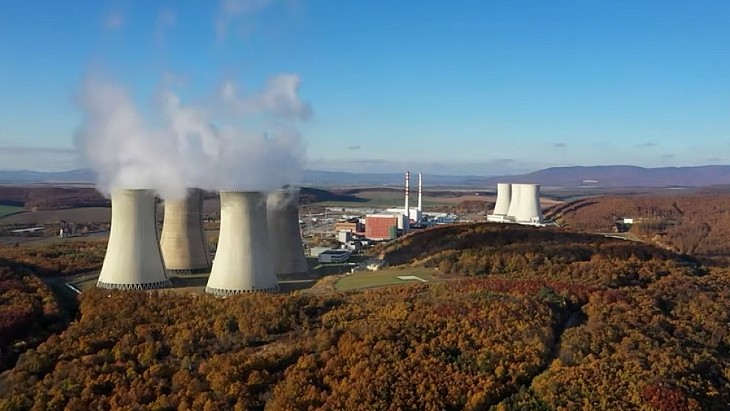
Framatome said that the full acquisition of the Slovakian company will help "strengthen its long-term presence in the inspection and non-destructive examination market for VVER reactor operators" in the region.
The company supports Slovenské Elektrárne with its in-service vessel inspections as well as quality monitoring during the construction of Mochovce units 3 and 4. It also provides technical inspection services for international projects elsewhere in the European Union and the UK.
Guirec Maugat, Senior Executive Vice President of Framatome’s Installed Base Business Unit, said: "Acquiring full ownership of Reaktortest enhances our global footprint in inspection and non-destructive examinations. It also preserves our close relationship with Slovenské Elektrárne for the long term and enables us to extend our non-destructive examination expertise to other VVER operators across Central and Eastern Europe."
Framatome said that in the next few months Reaktortest would continue to focus on inspection services for the completion of Mochovce unit 4 as well non-destructive examination of operating units in Slovakia and "developing similar services for new customers, as well as developing new offerings to meet the growing needs of the VVER market".
Restart and extended operation of Belgian reactor approved
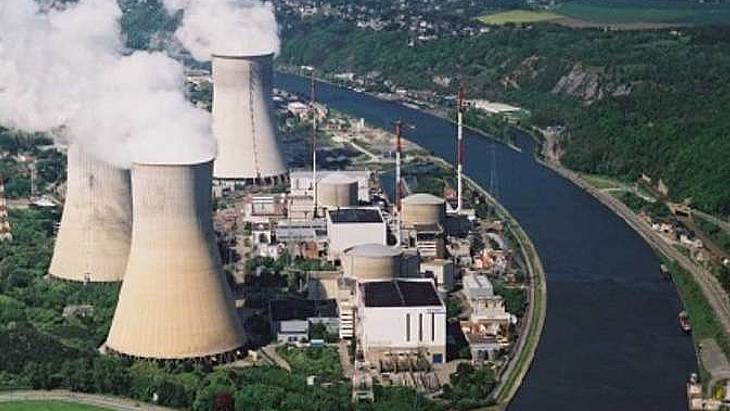
Belgium's federal law of 31 January 2003 required the phase-out of all nuclear electricity generation in the country. Under that policy, Doel 1 was originally set to be taken out of service on its 40th anniversary – 15 February 2015. However, the law was amended in 2013 and 2015 to provide for Doel 1 to remain operational for an additional ten years. Duel 3 was closed in September 2022 and Tihange 2 at the end of January 2023. Unit 1 of the Tihange plant is set to shut in October this year, with Doel 2 following in December.
The country's last two reactors - Doel 4 and Tihange 3 - were scheduled to close in November 2025. However, following the start of the Russia-Ukraine conflict in February 2022 the government and Electrabel - the Belgian subsidiary of Engie - began negotiating the feasibility and terms for the operation of the reactors for a further ten years, to 2035, with a final agreement reached in December, with a balanced risk allocation.
For the continued operation of Doel 4 and Tihange 3, Electrabel had to submit an extensive LTO (Long Term Operation) file with safety studies and an action plan to further increase the safety of the youngest reactors. This file was submitted in December 2024 for both units.
Tihange 3 was taken offline on 5 April for a so-called 'LTO overhaul' - an extensive inspection and maintenance period with a view to safe long-term operation of the reactor.
After a thorough analysis, the Federal Agency for Nuclear Control (FANC) and its technical subsidiary Bel V have determined that the reactor meets the conditions for a safe restart. Tihange 3 will be restarted in the coming days.
"In recent years, intensive consultations have already taken place between FANC and Electrabel, which means that the proposed action plan has already largely met the expectations of FANC," the regulator said.
In the first half of 2025, FANC conducted a thorough analysis of the LTO files for Tihange 3 and Doel 4 and provided the results to Electrabel in June. In doing so, FANC requested a number of additional adjustments to the action plan, including additional studies, clarification of certain action points and accelerated implementation of a number of planned actions. The action plan for Tihange 3 has now been completed and approved in this way.
FANC noted that during the LTO overhaul, part of the action plan was already implemented (for example, testing, inspections and preventive replacement of obsolete components). The remaining measures in the action plan will be completed within a period of three years, by September 2028 at the latest. FANC and Bel V will continue to closely monitor implementation.
Doel 4 was taken offline on 30 June for its LTO overhaul. As with Tihange 3, its restart requires approval of the action plan and a positive assessment of the actions carried out. The restart of Doel 4 is scheduled for 1 November at the latest.
In May, Belgium's federal parliament voted to repeal the 2003 law for the phase-out of nuclear power and banning the construction of new nuclear generating capacity.
FANC has called for "clarity to be provided in the course of this legislative term on a possible extension of the operation of Doel 4 and Tihange 3 after 2035. This will allow the necessary safety analyses and preparatory steps to be started in good time."
Pallas reactor ready to enter construction phase, minister says
_76173.jpg)
In a letter to the House of Representatives, Jansen gave her approval for the project to proceed to the construction phase following the conclusion of the Gate Review - an assessment by independent external advisers - that the programme organisations (NRG-Pallas and the Ministry of Health, Welfare and Sport) were ready and they had the ability to successfully manage and control the implementation phase of the Pallas reactor project.
NRG-Pallas applied in June 2022 to the Dutch regulator, the Authority for Nuclear Safety and Radiation Protection, for a permit to construct and operate the Pallas reactor. ANVS granted a construction licence in mid-February 2023. Preparatory work on the foundation began in May 2023. This work was carried out by Belgian construction firm Besix, which was awarded a contract in November 2022.
In May, NRG-Pallas announced that the building of the construction pit - a hole of about 50 metres by 50 metres and 17.5 metres deep - and the foundation for the Pallas reactor had been completed.
"NRG-Pallas and its partners are ready to start the next phase; the start of the construction of the reactor building and the associated systems," NRG-Pallas said. "In her letter, the minister states that the Gate review report shows that the project organisation and the ministry are ready to actually start the implementation phase."
The Ministry of Health, Welfare and Sport is closely involved in the Pallas project as a shareholder of NRG-Pallas, as a financier of the project and as a policy maker.
"We are pleased that the decision to proceed with the implementation phase of construction was taken by the Minister of Health, Welfare and Sport before the summer recess," said NRG-Pallas CEO Maurits Wolleswinkel. "Every day, many thousands of patients inside and outside the Netherlands depend on medical isotopes produced in Petten for their diagnosis or treatment.
"With the construction of the Pallas reactor as a replacement for the current High Flux Reactor, we can ensure security of supply in the future. The Netherlands and Europe do not want to become dependent on other countries for this. NRG-Pallas can start construction expeditiously and further expand its leading position in the market for medical isotopes."
Although funding had been allocated in the coming years for the construction of the Pallas reactor, the Dutch government has yet to make a final decision on its construction. The European Commission has already approved, under EU state aid rules, the Dutch government's plan to invest EUR2 billion (USD2.2 billion) in the construction of Pallas.
Former Minister of Health, Welfare and Sport Ernst Kuipers instructed NRG-Pallas not to take any irreversible steps, but to continue with the preparations for the project in the meantime to avoid unnecessary delays.
The Pallas research reactor is to be built at Petten to replace the existing High Flux Reactor (HFR). The 45 MW HFR started operating in September 1960, since when its use has largely been shifted from nuclear materials testing to fundamental research and the production of medical radioisotopes. The reactor - operated by NRG on behalf of the European Union's Joint Research Centre - has for a long time supplied about 60% of Europe's and 30% of the world's medical radioactive sources.
Pallas will be of the "tank-in-pool" type, with a thermal power of around 55 MW, and able to deploy its neutron flux more efficiently and effectively than the HFR.

No comments:
Post a Comment