Preventing recidivism after imprisonment
Recidivism does not occur in a vacuum. It happens in the encounter between people and a fragmented system
Norwegian University of Science and Technology
image:
Today, previous convictions, substance abuse and behaviour in prison are the main factors that are considered when predicting the risk of recidivism. A study from the Norwegian University of Science and Technology has revealed a number of other factors that are often ignored: mental health, relationships, motivation, support in the transition phase, system failure and resource flow.
view moreCredit: Illustrative photo: Christian Wangberg / Norwegian Prison and Probation Service
Why do so many people return to crime after serving their sentence – even in Norway, with one of the world’s most humane prison systems?
That is the question Olea Linnea Andersson recently explored in her master’s thesis in cybernetics at the Norwegian University of Science and Technology (NTNU). Not only has she looked at prison sentences, but at the entire journey: from before birth, through schooling, substance abuse, conviction, incarceration and life after prison.
Through a combination of interviews, surveys and data analysis from the Norwegian Correctional Service, she has identified a pattern: Recidivism does not occur in a vacuum. It happens in the encounter between people and a fragmented system.
Wrong focus and lack of data
Currently, the factors assessed when predicting the risk of reoffending are primarily previous convictions, substance abuse and behaviour in prison.
However, Andersson has uncovered a number of other factors that are often overlooked: mental health, relationships, motivation, support during the transition phase, system failures and resource flow.
These ‘soft’ factors – such as inner drive, life skills and social support – prove to be at least as important as the ‘hard’ variables. At the same time, there is a lack of effective data collection across services. As a result, we are flying blind, unaware of what works – or why things fail.
The missing key
An important finding in the thesis is the concept of augmented grit – an expanded understanding of the ability to succeed after serving a prison sentence.
It is about more than just willpower. It is about self-regulation, social support, hope, and systems that provide genuine opportunities to start afresh.
The research shows that if prison inmates have a high level of augmented grit, they are less likely to reoffend, but only if the surrounding system provides support.
Without support after release, structure in daily life, and trust when dealing with the Norwegian Labour and Welfare Administration, the healthcare system and housing services, motivation alone makes little difference.
Lack of coordination
One of the clearest patterns in the analysis is that the various measures all work, but that the systems rarely communicate with each other. The Norwegian Labour and Welfare Administration does one job, the healthcare system another, and the Norwegian Correctional Service a third. The result is missed opportunities, a lack of continuity, and ‘arbitrary’ reintegration.
A better model requires coordinated efforts, common source data, coherent planning, and individual risk assessments that include both soft and hard factors.
A holistic model
Andersson has developed a model that predicts the risk of recidivism using artificial intelligence. The model also shows how the entire support system is connected – and where it is disconnected.
The model highlights where the system is currently failing and where efforts will be most effective. This is the first time such a holistic method has been used to study recidivism in Norway, and as far as we know, internationally. The method combines technology, system analysis and practical insights from prisoners and prison staff.
From cycles to spirals
We often talk about the cycle of recidivism, but with better data, clearer understanding and coordinated efforts, we can create spirals: processes where former prison inmates are given the prerequisites to succeed, and where support systems work together rather than separately.
What if we used artificial intelligence and systems thinking – not for control, but to give people a new chance?
Reference: Olea Linnea Andersson. A societal cybernetic analysis of recidivism and systemic barriers in the Norwegian correctional system.
Overcrowding and violence in Belgium's prisons: 'I was the victim of four assassination attempts'
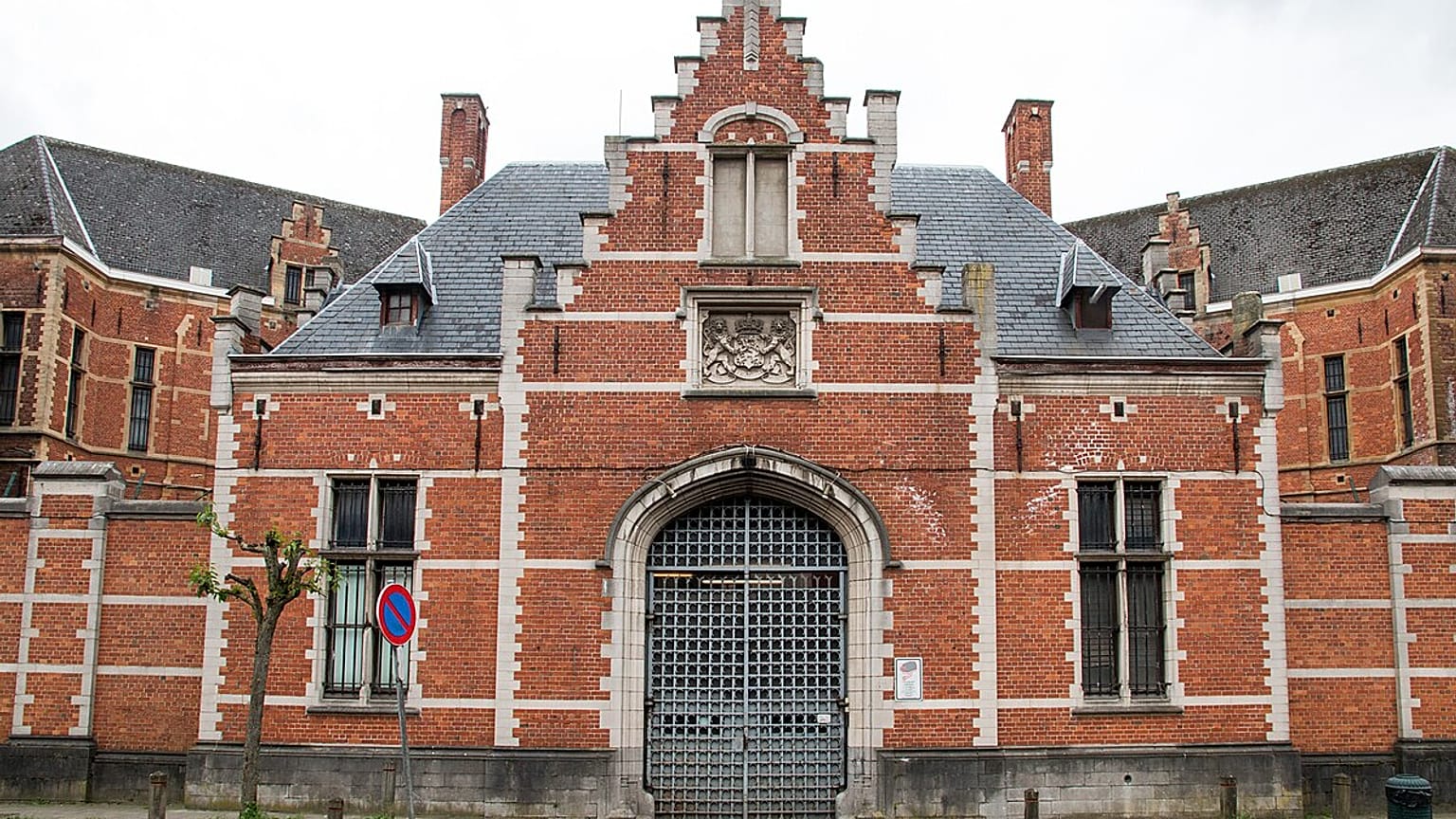
The repurposed Forest prison in Brussels has opened its doors to the public to highlight the difficulties facing the prison system in Belgium, as overcrowding threatens inmates’ safety and hinders their reintegration.
A cell of just nine square metres with no toilet can hold up to three prisoners. Sometimes, one of them has to sleep on the floor due to a lack of space. This is common in Belgium, a country that has been struggling with serious prison overcrowding for years, as reported by the non-profit association 9m².
The Forest prison in Brussels, which closed theee years ago, is an example of these conditions. The voices of those who had to survive here can still be heard. One of them is Jean-Luc Mahy, a former prisoner who earned a degree during more than 18 years behind bars and who also thought about taking his own life several times because of the harsh conditions.
"Of course there are tensions in prison. I was the victim of four murder attempts, one of them at the age of 18, when a guy came into my cell, thinking I had killed his girlfriend, and beat me up. I remember the warders saved my life," he explained to Euronews.
"They took me to the shower. I was there completely naked and the water was running and I was defecating between my buttocks and bleeding a lot. You don't forget moments like that."
A prison museum
The 9m² association was created to show society the problems prisoners face and make people think about them.
Its members have turned the empty Forest prison into a "multiperspective meeting space" where researchers, students, civil servants and former prisoners can share experiences to help find solutions to a problem that is getting worse, according to the association’s director, Manuel Lambert.
"We see that overcrowding in prisons continues to increase. There is no improvement. That's what worries us. Government after government, we seem to be stuck in the same pattern of imprisonment," Lambert says.
He also explains that "overcrowding means that inmates with very different needs are forced to share small spaces, which increases tensions."
There is also a "lack of resources" when social areas are used for accommodation, leaving no space for learning or activities. In the words of the 9m² director, "prison will not solve anything in these conditions because those who enter illiterate will leave illiterate and the stay in prison will have been a waste of time."
Staff shortages make it harder to supervise prisoners and give them personal support. "All this creates a climate more favourable to violence inside the walls, so that the integrity of both inmates and staff is at risk," Lambert explains.
Without enough psychological support, prisoners have fewer chances to reintegrate, 9m² says.
"There are not enough social workers, doctors and psychiatrists looking after prisoners to allow these people to leave in better conditions than they entered," stresses Lambert, who also underlines that "the recidivism rate of people who start again is very high in Belgium, so we see that prison is a failure to protect society."
A widespread problem in Europe
Belgium is one of the countries at the forefront when it comes to prison overcrowding in Europe with over 13,000 people in a prison system designed to hold 11,000. Overcrowding is also common in France, Italy and Cyprus.
The European Committee for the Prevention of Torture (CPT) regularly visits European prisons to check that they are functioning properly and that human rights are not being violated. According to its latest survey, carried out in 2024, the European countries which experience the most severe overcrowding in prisons, determined by more than 105 prisoners per 100 places, are Slovenia (134), Cyprus (132), France (124), Italy (118), Romania (116) and Belgium (113).
Countries with moderate overcrowding, 105 or less but still above capacity, include Croatia (110), Ireland (105) and Sweden (105). Situations close to saturation were also observed in Scotland (100), England and Wales (98) and Serbia (98).
The situation is worsening as, according to Eurostat data, the number of prisoners could increase by up to 200% between 2023 and 2027 in European prisons.
Political context
Prison overcrowding is often linked to a country's socio-political situation and the belief that long sentences are the most effective form of justice.
Hugh Chetwynd, Executive Secretary of the European Committee for the Prevention of Torture, gives the example of Italy, France or the United Kingdom as countries with "overcrowding problems" and which have "chosen to tighten criminal legislation," including for drug offences.
"The issue is that there is a lack of confidence in alternatives to imprisonment for drug offences, for example, where people could be prevented from going to prison by the imposition of electronic bracelets and community service," Hugh Chetwynd told Euronews.
At the same time, he says there is an increase in organised crime in Europe and these groups "can continue with their work and their business while they are in prison because the staff can't control them properly, because there is so much overcrowding."
Added to this is the fact that "in most countries, if a court sends a person to a prison with a valid warrant to detain them, the prison cannot expel them and will accept them even if it means that they have to go and sleep on a mattress on the floor of a cell," Chetwynd said.
Chetwynd believes there is still a long way to go before European societies widely recognise that prisons should reflect and contribute to the betterment of society.

No comments:
Post a Comment