Pollution
A Roadmap For Combating Marine Litter Across The Globe
 Agreeing on a common methodology for obtaining and comparing data, including marine litter in all environmental protection agreements and guidelines, and securing greater involvement from politicians are key points in preventing marine waste from continuing to accumulate in the oceans and, especially, on the seafloor, parts of which are already veritable rubbish dumps. Image: JAMSTEC
December 1, 2025
By Eurasia Review
Marine litter is a serious environmental problem worldwide. Reducing it would require implementing a global monitoring system, agreeing on the use of common methods and protocols for data collection, and categorizing all components of marine debris. This involves a tremendous scientific, political, and social effort at the international level — one that cannot be carried out with the same intensity by all countries — given the magnitude of what is still unknown about the pollution of seas and oceans, particularly the deep ocean, where the vast majority of marine litter accumulates.
This is one of the main conclusions of the article published in Marine Pollution Bulletin. The principal authors include Professor Miquel Canals, from the Faculty of Earth Sciences of the University of Barcelona; Georg Hanke, from the European Commission’s Joint Research Centre (JRC); Ryota Nakajima, from the Japan Agency for Marine-Earth Science and Technology (JAMSTEC); Melanie Bergmann, from the Alfred Wegener Institute (AWI) in Germany; François Galgani, from the French Research Institute for Exploitation of the Sea (IFREMER); and Daoji Li, from East China Normal University (ECNU), among other experts.
The study aims to raise awareness and emphasize the need to include marine litter — and particularly that on the seafloors — in any directive, convention, treaty, or agreement established at the national, regional, or global level to minimize marine pollution. Experts warn that the seafloor serves as the ultimate dumping ground where the vast majority of marine litter ends up.
The focus of the study is on macrolitter — items larger than 2.5 cm — that accumulate on the seafloor, the ultimate sink for marine litter. Despite its significant environmental relevance, this fraction has often been overlooked in the flood of studies on smaller-size debris, such as microplastics.
An environmental problem that begins on land
Nearly all seas and oceans are affected by marine litter, much of which reaches them via rivers. The rivers contributing the most waste are located in southern Asia (the Amur, Hai, Yellow, Yangtze, Pearl, Mekong, and the Ganges and Indus systems) and in Africa (the Niger and the Nile).
In addition to riverine inputs, certain extraordinary and catastrophic events — such as the April 2011 tsunami in eastern Japan — carry enormous amounts of debris into the ocean. Fishing and other marine activities are also continuous sources of specific types of litter, such as discarded nets, longlines, buoys, and tires used as boat fenders.“In developing countries, which lack robust waste management systems, the dumping of waste into the natural environment — and consequently along the coast and into the sea — is common, as shown by some recent studies we have carried out in mangrove ecosystems in Colombia,” explains Professor Miquel Canals, director of the UB Chair on Sustainable Blue Economy.
In more economically developed countries, waste management is far more effective than in developing nations with more limited economic capacity. Although all countries aspire to a healthier environment, the actual ability to achieve this varies greatly, and economic priorities differ in each case.
“For example — the expert notes — in countries with low or very low per capita income, often with large populations, the priority of providing daily food for the population takes precedence over protecting the environment. In more influential countries, although the fight against marine pollution is on the list of priorities, the situation is also diverse, as many variables influence the discharge of waste into the environment — for instance, population density, climatic conditions, social awareness, and cultural factors.”
“In the Mediterranean, a sea surrounded by humanity, large amounts of litter are found at the surface, throughout the water column, and especially on the seafloor. Some areas, such as the Strait of Messina between Sicily and southern Italy, are real underwater dumping grounds. During episodes of heavy rainfall, water carries huge amounts of waste previously dumped into coastal ravines by residents down to the depths of the sea, including the most unlikely objects, from refrigerators to automobiles, and from toys to garbage bags,” says Canals.
A common methodology for comparing data
Having comparable and standardized data across all research is also an essential requirement for making progress in the fight against marine litter pollution. However, the lack of a global monitoring system makes this goal difficult to achieve. To obtain an overall picture of the situation, some models use indicators such as the amount of mismanaged plastic waste by river basin or country, population density, or gross domestic product.
“However, these models often produce figures that differ greatly from one another,” notes Canals. “It is necessary to use homogeneous and harmonized observation and measurement methods, and to prioritize the use of advanced technologies both for observation and for data analysis and management. We also consider local training at different levels and capacity building to be essential elements. In this context, the temporal perspective is fundamental for determining reference or baseline states.”
From changes in consumption to environmental management
Technological progress is an ally in the fight against marine litter. The integration of modern technologies — such as airborne sensors and cameras, autonomous and crewed underwater vehicles, side-scan sonar, very high–resolution multibeam bathymetry, image analysis, among others — has improved the processes used to identify, quantify, and categorize marine litter. It is essential for the data to be accurately georeferenced and for technologies to be non-destructive, that is, they must not cause any impact on the habitats under study.
At the same time, greater synergies should be established between the academic sector and private companies, which possess vast amounts of observations, data, and images of marine litter acquired over recent decades. Data from the private sector could contribute very effectively to the definition of historical baselines, to scientific monitoring programs, and therefore also to the identification of long-term trends.
Eliminating or reducing plastic pollution — the main component of marine litter — requires identifying source emissions, transfer pathways to the sea, and accumulation areas within the marine environment. It is necessary to prevent waste from reaching the ocean in massive and insufficiently controlled — or entirely uncontrolled — ways, as occurs in many regions of the world. For this reason, it is essential to implement upstream measures targeting production, consumption habits, and on-land waste management, both at the individual and collective levels. The application of direct measures in the marine environment — for example, the large-scale removal of litter from the seafloor — should only be carried out under strict technical and environmental criteria, to avoid causing even greater harm to the environment.
A greater political commitment to protect the marine environment
Informing and raising awareness among policymakers about the scale and consequences of marine pollution caused by macro-litter is a critical step in designing and implementing meaningful and effective environmental policies. It is essential to convey the most relevant information to the political sphere in order to generate effective actions throughout the value and use chain (producers and consumers), as well as measures focused on the marine and coastal environment. In this context, macro-litter on the seafloor represents a key element of the evidence base justifying the implementation of mitigation measures at the global level.
In Europe, there are regulations such as the EU Marine Strategy Framework Directive — aimed at achieving good environmental status (GES) of Europe’s marine habitats — which includes a descriptor focused on marine litter; the Directive on port reception facilities for the delivery of ship-generated waste; and the Directive on reducing the impact of certain plastic products on the environment.
It is also important to mention the resolutions and decisions of the United Nations Environment Assembly (UNEA) and the Global Partnership on Plastic and Marine Litter (GPML) under the UN Environment Programme (UNEP), as well as Regional Seas Conventions and Action Plans (RSC), including the Mediterranean Action Plan (MAP) and the Barcelona Convention and Protocols (UNEMAP). “Unfortunately, the negotiations promoted by the UNEP to conclude an international treaty to stop plastic pollution, including in the marine environment, ended without agreement last August in Geneva,” emphasizes Canals.
“Today, almost 70 years after the first deep-ocean dive in 1958, we have images of only 0.001% of the seafloor at depths greater than 200 meters, which accounts for 66% of the total ocean surface. This figure clearly illustrates the magnitude of what we still do not know about marine litter pollution, and the enormous effort that remains necessary to gain an accurate understanding of the presence and impacts of debris in the world’s seas and oceans,” concludes Miquel Canals.

December 1, 2025
By Eurasia Review
Marine litter is a serious environmental problem worldwide. Reducing it would require implementing a global monitoring system, agreeing on the use of common methods and protocols for data collection, and categorizing all components of marine debris. This involves a tremendous scientific, political, and social effort at the international level — one that cannot be carried out with the same intensity by all countries — given the magnitude of what is still unknown about the pollution of seas and oceans, particularly the deep ocean, where the vast majority of marine litter accumulates.
This is one of the main conclusions of the article published in Marine Pollution Bulletin. The principal authors include Professor Miquel Canals, from the Faculty of Earth Sciences of the University of Barcelona; Georg Hanke, from the European Commission’s Joint Research Centre (JRC); Ryota Nakajima, from the Japan Agency for Marine-Earth Science and Technology (JAMSTEC); Melanie Bergmann, from the Alfred Wegener Institute (AWI) in Germany; François Galgani, from the French Research Institute for Exploitation of the Sea (IFREMER); and Daoji Li, from East China Normal University (ECNU), among other experts.
The study aims to raise awareness and emphasize the need to include marine litter — and particularly that on the seafloors — in any directive, convention, treaty, or agreement established at the national, regional, or global level to minimize marine pollution. Experts warn that the seafloor serves as the ultimate dumping ground where the vast majority of marine litter ends up.
The focus of the study is on macrolitter — items larger than 2.5 cm — that accumulate on the seafloor, the ultimate sink for marine litter. Despite its significant environmental relevance, this fraction has often been overlooked in the flood of studies on smaller-size debris, such as microplastics.
An environmental problem that begins on land
Nearly all seas and oceans are affected by marine litter, much of which reaches them via rivers. The rivers contributing the most waste are located in southern Asia (the Amur, Hai, Yellow, Yangtze, Pearl, Mekong, and the Ganges and Indus systems) and in Africa (the Niger and the Nile).
In addition to riverine inputs, certain extraordinary and catastrophic events — such as the April 2011 tsunami in eastern Japan — carry enormous amounts of debris into the ocean. Fishing and other marine activities are also continuous sources of specific types of litter, such as discarded nets, longlines, buoys, and tires used as boat fenders.“In developing countries, which lack robust waste management systems, the dumping of waste into the natural environment — and consequently along the coast and into the sea — is common, as shown by some recent studies we have carried out in mangrove ecosystems in Colombia,” explains Professor Miquel Canals, director of the UB Chair on Sustainable Blue Economy.
In more economically developed countries, waste management is far more effective than in developing nations with more limited economic capacity. Although all countries aspire to a healthier environment, the actual ability to achieve this varies greatly, and economic priorities differ in each case.
“For example — the expert notes — in countries with low or very low per capita income, often with large populations, the priority of providing daily food for the population takes precedence over protecting the environment. In more influential countries, although the fight against marine pollution is on the list of priorities, the situation is also diverse, as many variables influence the discharge of waste into the environment — for instance, population density, climatic conditions, social awareness, and cultural factors.”
“In the Mediterranean, a sea surrounded by humanity, large amounts of litter are found at the surface, throughout the water column, and especially on the seafloor. Some areas, such as the Strait of Messina between Sicily and southern Italy, are real underwater dumping grounds. During episodes of heavy rainfall, water carries huge amounts of waste previously dumped into coastal ravines by residents down to the depths of the sea, including the most unlikely objects, from refrigerators to automobiles, and from toys to garbage bags,” says Canals.
A common methodology for comparing data
Having comparable and standardized data across all research is also an essential requirement for making progress in the fight against marine litter pollution. However, the lack of a global monitoring system makes this goal difficult to achieve. To obtain an overall picture of the situation, some models use indicators such as the amount of mismanaged plastic waste by river basin or country, population density, or gross domestic product.
“However, these models often produce figures that differ greatly from one another,” notes Canals. “It is necessary to use homogeneous and harmonized observation and measurement methods, and to prioritize the use of advanced technologies both for observation and for data analysis and management. We also consider local training at different levels and capacity building to be essential elements. In this context, the temporal perspective is fundamental for determining reference or baseline states.”
From changes in consumption to environmental management
Technological progress is an ally in the fight against marine litter. The integration of modern technologies — such as airborne sensors and cameras, autonomous and crewed underwater vehicles, side-scan sonar, very high–resolution multibeam bathymetry, image analysis, among others — has improved the processes used to identify, quantify, and categorize marine litter. It is essential for the data to be accurately georeferenced and for technologies to be non-destructive, that is, they must not cause any impact on the habitats under study.
At the same time, greater synergies should be established between the academic sector and private companies, which possess vast amounts of observations, data, and images of marine litter acquired over recent decades. Data from the private sector could contribute very effectively to the definition of historical baselines, to scientific monitoring programs, and therefore also to the identification of long-term trends.
Eliminating or reducing plastic pollution — the main component of marine litter — requires identifying source emissions, transfer pathways to the sea, and accumulation areas within the marine environment. It is necessary to prevent waste from reaching the ocean in massive and insufficiently controlled — or entirely uncontrolled — ways, as occurs in many regions of the world. For this reason, it is essential to implement upstream measures targeting production, consumption habits, and on-land waste management, both at the individual and collective levels. The application of direct measures in the marine environment — for example, the large-scale removal of litter from the seafloor — should only be carried out under strict technical and environmental criteria, to avoid causing even greater harm to the environment.
A greater political commitment to protect the marine environment
Informing and raising awareness among policymakers about the scale and consequences of marine pollution caused by macro-litter is a critical step in designing and implementing meaningful and effective environmental policies. It is essential to convey the most relevant information to the political sphere in order to generate effective actions throughout the value and use chain (producers and consumers), as well as measures focused on the marine and coastal environment. In this context, macro-litter on the seafloor represents a key element of the evidence base justifying the implementation of mitigation measures at the global level.
In Europe, there are regulations such as the EU Marine Strategy Framework Directive — aimed at achieving good environmental status (GES) of Europe’s marine habitats — which includes a descriptor focused on marine litter; the Directive on port reception facilities for the delivery of ship-generated waste; and the Directive on reducing the impact of certain plastic products on the environment.
It is also important to mention the resolutions and decisions of the United Nations Environment Assembly (UNEA) and the Global Partnership on Plastic and Marine Litter (GPML) under the UN Environment Programme (UNEP), as well as Regional Seas Conventions and Action Plans (RSC), including the Mediterranean Action Plan (MAP) and the Barcelona Convention and Protocols (UNEMAP). “Unfortunately, the negotiations promoted by the UNEP to conclude an international treaty to stop plastic pollution, including in the marine environment, ended without agreement last August in Geneva,” emphasizes Canals.
“Today, almost 70 years after the first deep-ocean dive in 1958, we have images of only 0.001% of the seafloor at depths greater than 200 meters, which accounts for 66% of the total ocean surface. This figure clearly illustrates the magnitude of what we still do not know about marine litter pollution, and the enormous effort that remains necessary to gain an accurate understanding of the presence and impacts of debris in the world’s seas and oceans,” concludes Miquel Canals.
The mammoth task of mapping and removing plastic waste from Aldabra atoll
A team from Plastic Odyssey and Unesco have carried out a mission to map plastic waste, test removal methods and establish monitoring protocols on the Aldabra Atoll in the Seychelles. It is one of 51 marine areas listed as a World Heritage Site, increasingly under threat from plastic pollution.
Issued on: 30/11/2025 - RFI
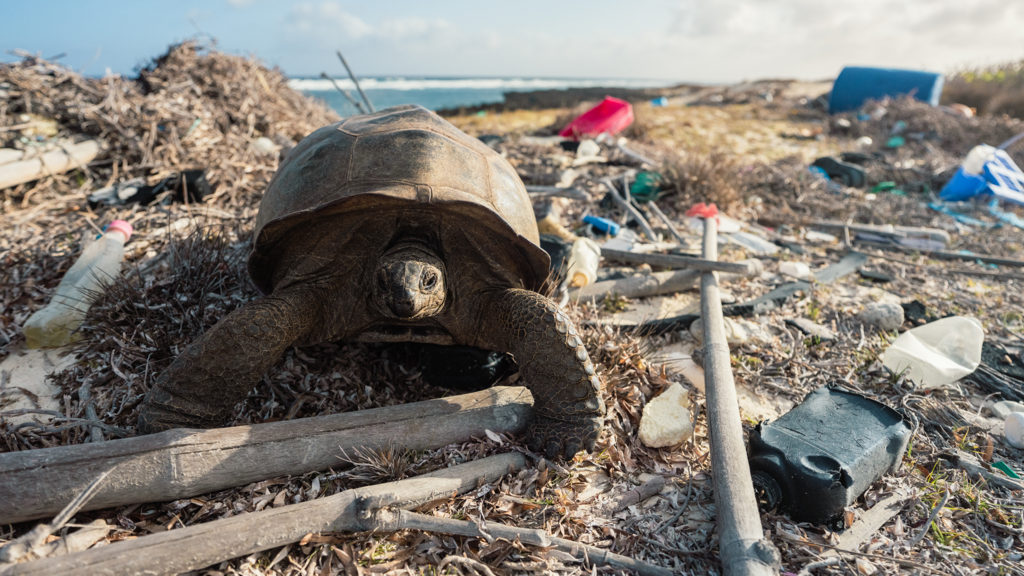
Giant tortoise surrounded by plastic waste on the Aldabra atoll in the Seychelles, October 2025. © Marine Reveilhac, Plastic Odyssey
02:40
By: Isabelle Martinetti
At the United Nations Ocean Conference (UNOC) in Nice in June, Unesco and the Plastic Odyssey expedition signed a partnership aimed at restoring the world’s most endangered marine World Heritage sites.
Drawing inspiration from a successful 2024 clean-up on Henderson Island in the South Pacific – during which 9.3 tonnes of plastic waste were removed – the organisations plan to replicate the operation in other areas across the globe.
Plastic Odyssey and Unesco sign deal to restore marine World Heritage sites
Among them is the Aldabra atoll in the Indian Ocean which is one of the largest raised coral reefs in the world.
It is known for the hundreds of endemic species – including the Aldabra giant tortoise.
"Aldabra is one of 51 marine sites listed as Unesco World Heritage Sites. These sites represent less than 1 percent of the Earth's surface, but 15 percent of marine biodiversity," Simon Bernard, CEO of Plastic Odyssey, told RFI.
"They are true biodiversity hotspots, but they are also areas that accumulate enormous amounts of plastic waste."
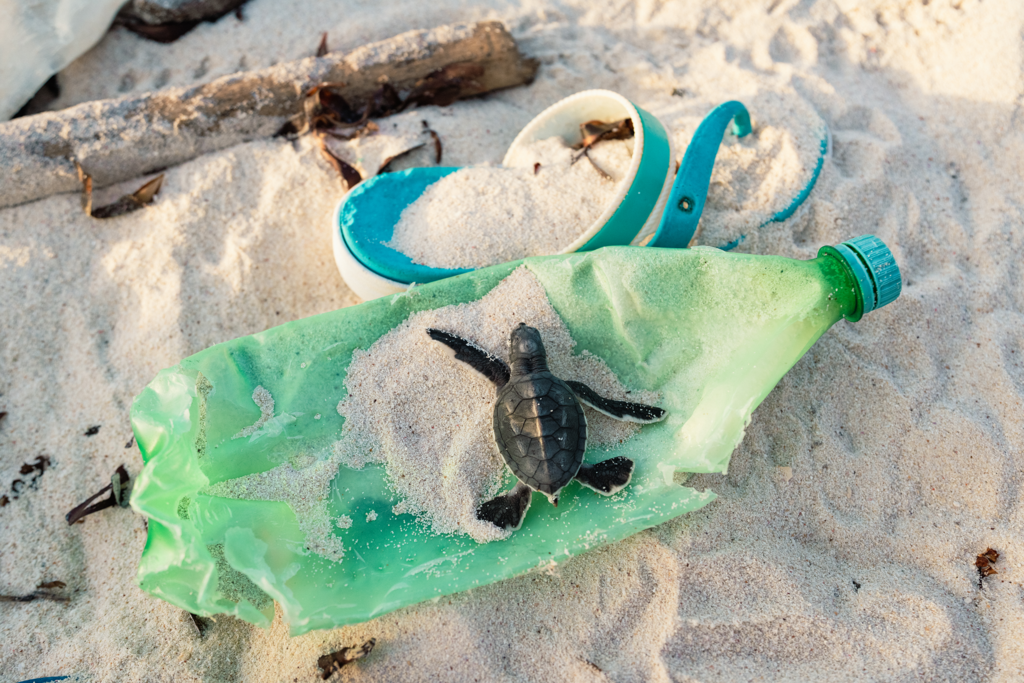
A baby turtle struggles to find its way to the sea among all this waste on the Aldabra atoll. © Marine Reveilhac, Plastic Odyssey
'Impossible clean up'
The field mission occurred from 8 to 20 October with the Plastic Odyssey team, who surveyed the island to better estimate the amount of waste.
According to scientific studies 500 tonnes of plastic waste has washed up on this tiny, remote island.
"Where is the waste, how much is there and, above all, how are we going to remove it? We will need to plan a mission lasting several months – four to six months – to collect and remove everything," said Bernard.
'Impossible clean up'
The field mission occurred from 8 to 20 October with the Plastic Odyssey team, who surveyed the island to better estimate the amount of waste.
According to scientific studies 500 tonnes of plastic waste has washed up on this tiny, remote island.
"Where is the waste, how much is there and, above all, how are we going to remove it? We will need to plan a mission lasting several months – four to six months – to collect and remove everything," said Bernard.
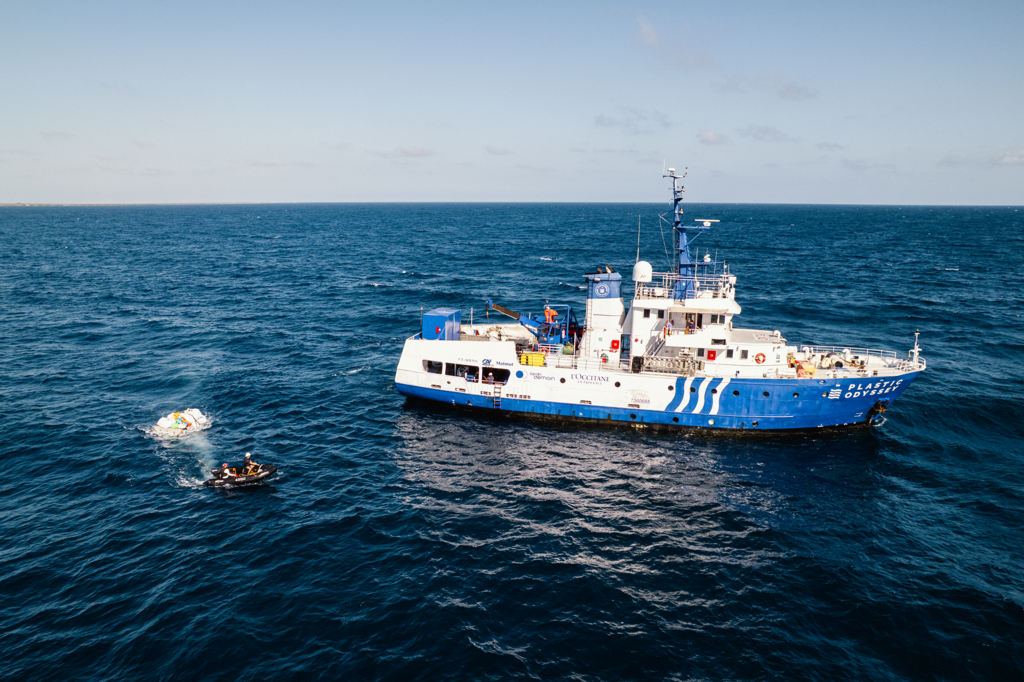
The Plastic Odyssey off the Aldabra atoll. © Marine Reveilhac, Plastic Odyssey
This mission was called "The impossible clean up" – because Aldabra is very difficult to access.
"Very often on these islands, waste accumulates on the exposed coasts, which are virtually inaccessible. There is almost no access to the sea. The island is surrounded by a belt of very sharp rocks, known as karst," Bernard explained.
"There is no water, no food and obviously no doctor. So you really have to plan all the logistics to keep the teams alive and able to survive on site for several months."
Recycling partners
The plan is to collect various waste items – like fishing buoys, flip-flops, and cans – using a slide-like system on the rocks that directs the debris into the sea for extraction.
After collection, each type of waste must be sent to an appropriate recycling partner.
Plastic Odyssey on sea-faring mission to target plastic waste in Madagascar
Flip-flops are difficult to repurpose, Bernard says, but they are "working with a company in Kenya that makes works of art out of flip-flops. They recycle several dozen tonnes a year.
"For all the hard plastic, we will be working with entrepreneurs in the Seychelles, on Mahé island, who transform this".
This mission was called "The impossible clean up" – because Aldabra is very difficult to access.
"Very often on these islands, waste accumulates on the exposed coasts, which are virtually inaccessible. There is almost no access to the sea. The island is surrounded by a belt of very sharp rocks, known as karst," Bernard explained.
"There is no water, no food and obviously no doctor. So you really have to plan all the logistics to keep the teams alive and able to survive on site for several months."
Recycling partners
The plan is to collect various waste items – like fishing buoys, flip-flops, and cans – using a slide-like system on the rocks that directs the debris into the sea for extraction.
After collection, each type of waste must be sent to an appropriate recycling partner.
Plastic Odyssey on sea-faring mission to target plastic waste in Madagascar
Flip-flops are difficult to repurpose, Bernard says, but they are "working with a company in Kenya that makes works of art out of flip-flops. They recycle several dozen tonnes a year.
"For all the hard plastic, we will be working with entrepreneurs in the Seychelles, on Mahé island, who transform this".
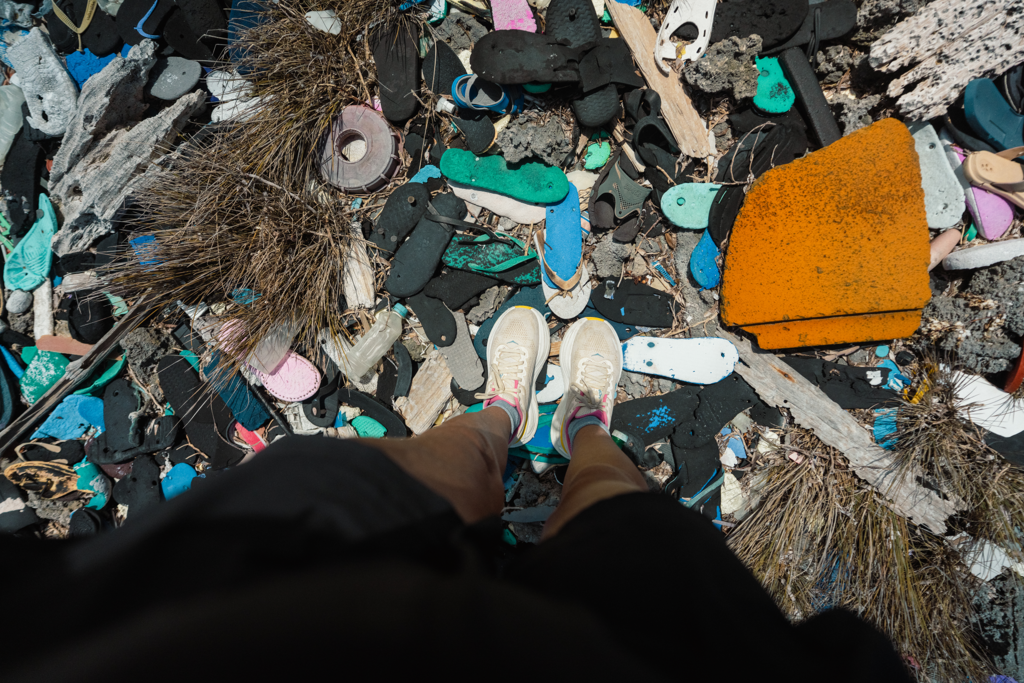
A lot of flip-flops were found among the plastic waste on the Aldabra atoll. © Marine Reveilhac, Plastic Odyssey
Plastic Odyssey has also just completed a mission to Saint-Brandon, a Mauritian archipelago which is not yet on Unesco’s official list. It is rich in exceptional endemic bird species but heavily polluted with plastic.
They collected over five tonnes and reached the ship’s maximum capacity without being able to gather everything.
The unexpected volume of plastic means they will need to return, and Saint-Brandon will be included in future Plastic Odyssey expeditions.
Plastic Odyssey has also just completed a mission to Saint-Brandon, a Mauritian archipelago which is not yet on Unesco’s official list. It is rich in exceptional endemic bird species but heavily polluted with plastic.
They collected over five tonnes and reached the ship’s maximum capacity without being able to gather everything.
The unexpected volume of plastic means they will need to return, and Saint-Brandon will be included in future Plastic Odyssey expeditions.

No comments:
Post a Comment