Can ancient viruses hidden inside bacteria defeat modern infections?
By Dr. Tim Sandle
SCIENCE EDITOR
DIGITAL JOURNAL
Antimicrobials
The problem of antimicrobial resistance, a continuing phenomena with pathogenic bacteria, is well documented. Wood is of the view that viruses could offer a safer alternative because they target specific bacterial strains without harming others and evolve alongside their hosts.
Understanding this natural bacterial defence could help researchers harness it to develop more precise treatments and reduce antibiotic dependence.
Ancient defence mechanism
Although recombinase enzymes were previously detected near bacterial defence regions, this is the first study to show that they directly participate in virus defence.
To explore how this mechanism works, the scientists increased the production of Stf proteins in Escherichia coli bacteria and then introduced viruses to the sample. After leaving the mixture overnight, they measured its turbidity, or cloudiness, to see whether the viruses had successfully infected the bacteria. The cloudier the solution, the fewer active viruses remained.
The researchers also used computer models to simulate how viruses attach to bacterial surfaces, a process known as adsorption, confirming the accuracy of their simulations by comparing them to lab results.
“When we overproduce the protein, we initially stop the virus from landing on the cell surface,” Wood details. “After eight experimental iterations, however, the virus changes its landing proteins — how it identifies and attaches to the bacteria — and can get by this defence.”
Significance of the study
This research has improved scientific understanding of how antivirus systems operate. In turn, this can aid researchers to more effectively cultivate the bacteria used to ferment foods like cheese and yogurt, as well as improve how bacterial infections are managed in health care settings.
The study appears in the journal Nucleic Acid Research, titled “Adsorption of phage T2 is inhibited due to inversion of cryptic prophage DNA by the serine recombinase PinQ.”
January 3, 2026
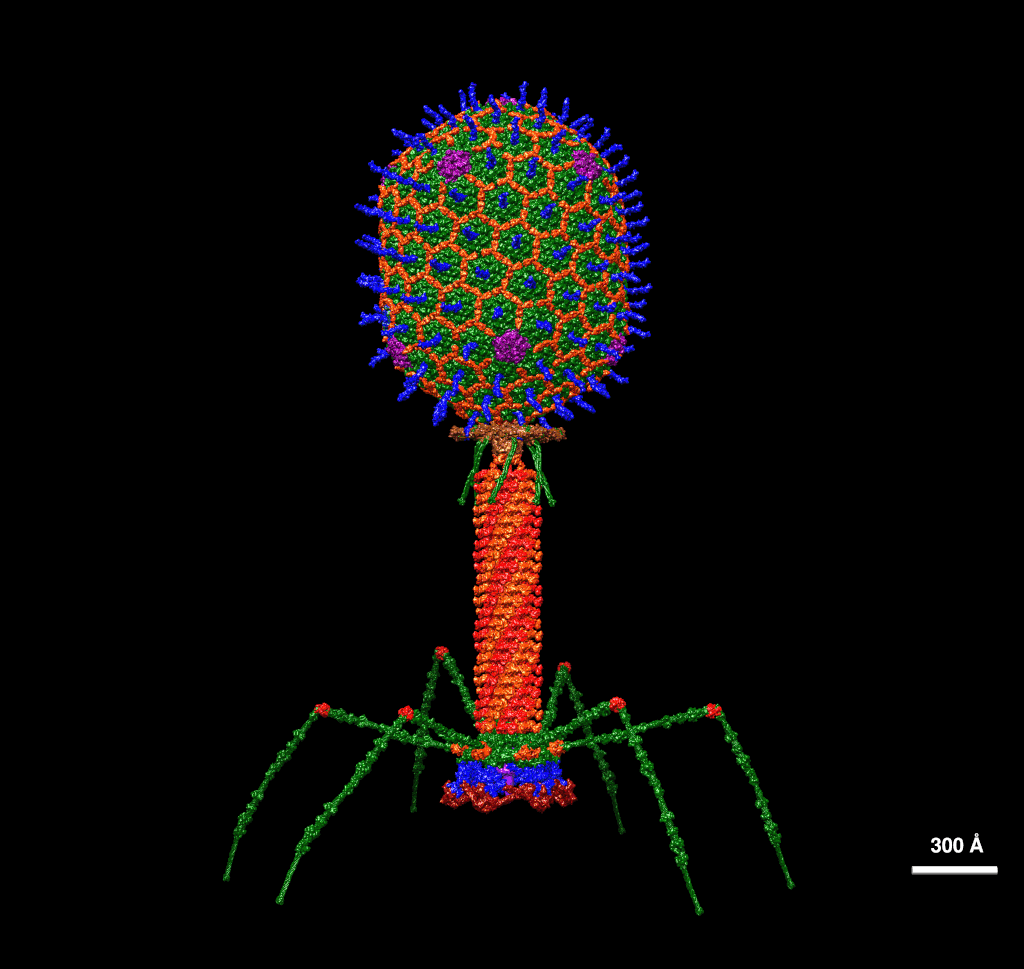
A bacteriophage is a virus that infects and replicates within bacteria.
A bacteriophage is a virus that infects and replicates within bacteria.
Image by Dr. Victor Padilla-Sanchez, PhD - Own work (CC BY-SA 4.0)
Scientists from Penn State have discovered an ancient defence where dormant viral DNA can help a bacterium to fight new viral threats. The enzyme PinQ flips bacterial genes to create protective proteins that block infection.
Understanding this mechanism could lead to breakthroughs in antivirals, antibiotic alternatives, and industrial microbiology.
Bacteria have been battling viruses for billions of years, evolving ingenious defence systems that may now hold the key to human antiviral strategies.
According to lead researcher, Thomas Wood, a professor of chemical engineering at Penn State: “There’s been a flurry of discoveries in the past few years related to antivirus systems in bacteria…Antibiotics are failing, and the most likely substitute is viruses themselves. Before using viruses as antibiotic replacements to treat human infections, however, we must understand how the bacterium defends itself from viral attack.”
Phages
Microbiologists have long known that ancient, inactive viruses known as cryptic prophages can insert their genetic material into bacterial DNA. These genetic fragments allow bacteria to use specialized enzymes and proteins to prevent new viruses – bacteriophages – from infecting the cell.
In this new study, researchers found that a protein called recombinase (an enzyme that cuts and reconnects DNA strands) can modify bacterial DNA in response to viral threats, but only if a prophage is already embedded in the genome. This recombinase acts as a rapid-response defender when the cell detects danger.
The specific recombinase identified in this system is known as PinQ. When a virus approaches the bacterial cell, PinQ triggers a DNA inversion, flipping a section of genetic code inside the chromosome. This change creates two “chimeric proteins” composed of DNA from the prophage itself. Together, these proteins — collectively called Stf — block the virus from attaching to the bacterial surface and injecting its genetic material.
As Wood explains: “It’s remarkable that this process actually produces new chimeric proteins, specifically from the inverted DNA — most of the time when you change DNA, you just get genetic mutations leading to inactive proteins. These inversions and adaptations are clear evidence that this is a fine-tuned antivirus system that has evolved over millions of years.”
Scientists from Penn State have discovered an ancient defence where dormant viral DNA can help a bacterium to fight new viral threats. The enzyme PinQ flips bacterial genes to create protective proteins that block infection.
Understanding this mechanism could lead to breakthroughs in antivirals, antibiotic alternatives, and industrial microbiology.
Bacteria have been battling viruses for billions of years, evolving ingenious defence systems that may now hold the key to human antiviral strategies.
According to lead researcher, Thomas Wood, a professor of chemical engineering at Penn State: “There’s been a flurry of discoveries in the past few years related to antivirus systems in bacteria…Antibiotics are failing, and the most likely substitute is viruses themselves. Before using viruses as antibiotic replacements to treat human infections, however, we must understand how the bacterium defends itself from viral attack.”
Phages
Microbiologists have long known that ancient, inactive viruses known as cryptic prophages can insert their genetic material into bacterial DNA. These genetic fragments allow bacteria to use specialized enzymes and proteins to prevent new viruses – bacteriophages – from infecting the cell.
In this new study, researchers found that a protein called recombinase (an enzyme that cuts and reconnects DNA strands) can modify bacterial DNA in response to viral threats, but only if a prophage is already embedded in the genome. This recombinase acts as a rapid-response defender when the cell detects danger.
The specific recombinase identified in this system is known as PinQ. When a virus approaches the bacterial cell, PinQ triggers a DNA inversion, flipping a section of genetic code inside the chromosome. This change creates two “chimeric proteins” composed of DNA from the prophage itself. Together, these proteins — collectively called Stf — block the virus from attaching to the bacterial surface and injecting its genetic material.
As Wood explains: “It’s remarkable that this process actually produces new chimeric proteins, specifically from the inverted DNA — most of the time when you change DNA, you just get genetic mutations leading to inactive proteins. These inversions and adaptations are clear evidence that this is a fine-tuned antivirus system that has evolved over millions of years.”
Antimicrobials
The problem of antimicrobial resistance, a continuing phenomena with pathogenic bacteria, is well documented. Wood is of the view that viruses could offer a safer alternative because they target specific bacterial strains without harming others and evolve alongside their hosts.
Understanding this natural bacterial defence could help researchers harness it to develop more precise treatments and reduce antibiotic dependence.
Ancient defence mechanism
Although recombinase enzymes were previously detected near bacterial defence regions, this is the first study to show that they directly participate in virus defence.
To explore how this mechanism works, the scientists increased the production of Stf proteins in Escherichia coli bacteria and then introduced viruses to the sample. After leaving the mixture overnight, they measured its turbidity, or cloudiness, to see whether the viruses had successfully infected the bacteria. The cloudier the solution, the fewer active viruses remained.
The researchers also used computer models to simulate how viruses attach to bacterial surfaces, a process known as adsorption, confirming the accuracy of their simulations by comparing them to lab results.
“When we overproduce the protein, we initially stop the virus from landing on the cell surface,” Wood details. “After eight experimental iterations, however, the virus changes its landing proteins — how it identifies and attaches to the bacteria — and can get by this defence.”
Significance of the study
This research has improved scientific understanding of how antivirus systems operate. In turn, this can aid researchers to more effectively cultivate the bacteria used to ferment foods like cheese and yogurt, as well as improve how bacterial infections are managed in health care settings.
The study appears in the journal Nucleic Acid Research, titled “Adsorption of phage T2 is inhibited due to inversion of cryptic prophage DNA by the serine recombinase PinQ.”

No comments:
Post a Comment