The challenges of protecting wildlife from war in eastern DRC
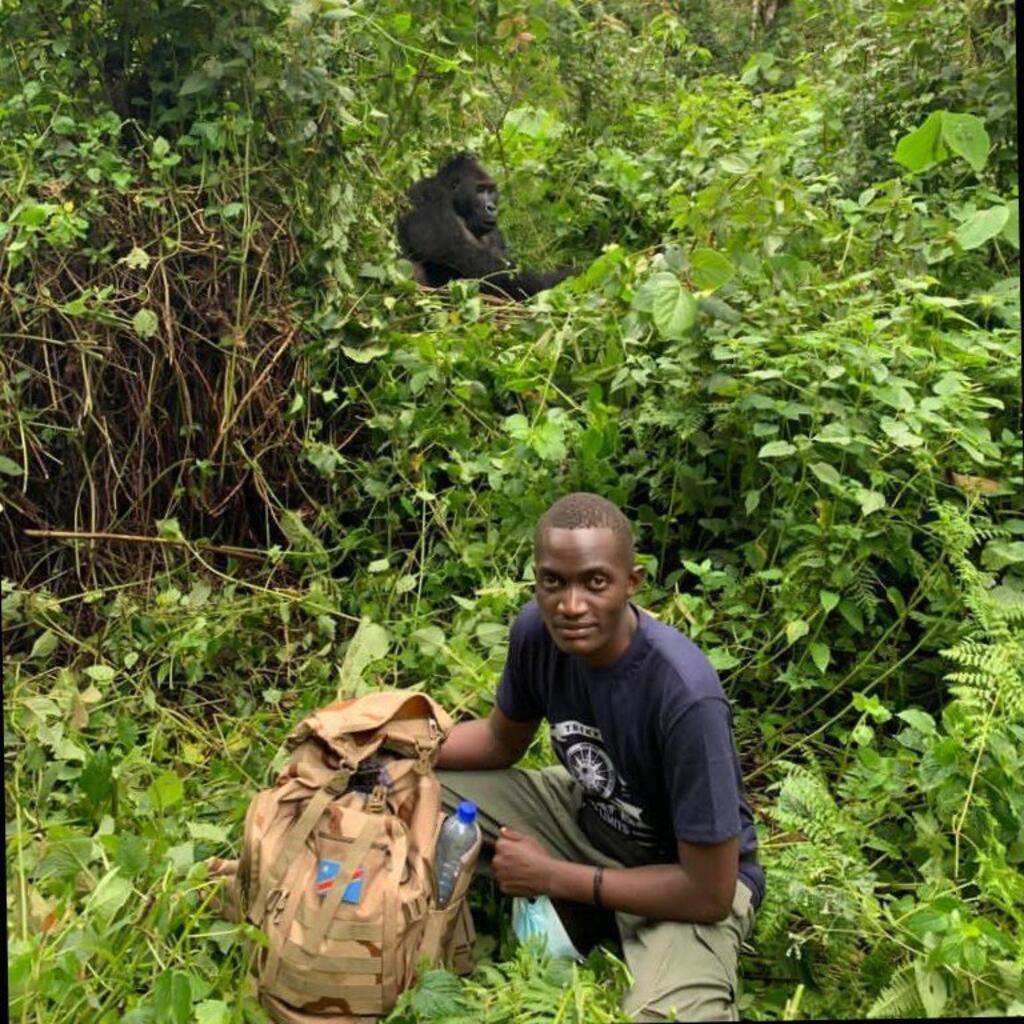
In eastern Democratic Republic of Congo's Maiko National Park, a few committed rangers have succeeded in protecting gorillas, elephants and other animals from the surrounding fighting. RFI spoke to the park's assistant director, Alain Mukiranya, about guarding wildlife in the middle of a war zone.
Issued on: 05/01/2026 - RFI

An endangered gorilla in the forest of Kahuzi-Biega National Park in north-eastern Democratic Republic of Congo, on 30 September 2019. © AFP - ALEXIS HUGUET
The Democratic Republic of Congo's mineral-rich east has been ravaged by three decades of conflict.
Since taking up arms again in 2021, the M23 rebel group, backed by Rwanda, has seized swathes of territory, leading to a spiralling humanitarian crisis.
Although Congolese and Rwandan leaders signed a peace deal in Washington on 4 December, fighting has continued. DRC authorities have accused Rwanda of killing more than 1,500 civilians in the Congolese east since early December in their latest offensive.
According to the United Nations, more than 80,000 people have fled across the border to Burundi, while at least half a million have been internally displaced within South Kivu province alone.
But there are those who refuse to leave their posts. They include some of the rangers in national parks like Maiko, on the border of North Kivu and Maniema provinces.
This vast natural haven, stuck in the middle of the conflict, is home to an extraordinary range of animals that park rangers are keen to save at any cost.
The Democratic Republic of Congo's mineral-rich east has been ravaged by three decades of conflict.
Since taking up arms again in 2021, the M23 rebel group, backed by Rwanda, has seized swathes of territory, leading to a spiralling humanitarian crisis.
Although Congolese and Rwandan leaders signed a peace deal in Washington on 4 December, fighting has continued. DRC authorities have accused Rwanda of killing more than 1,500 civilians in the Congolese east since early December in their latest offensive.
According to the United Nations, more than 80,000 people have fled across the border to Burundi, while at least half a million have been internally displaced within South Kivu province alone.
But there are those who refuse to leave their posts. They include some of the rangers in national parks like Maiko, on the border of North Kivu and Maniema provinces.
This vast natural haven, stuck in the middle of the conflict, is home to an extraordinary range of animals that park rangers are keen to save at any cost.
Alain Mukiranya, assistant director of Maiko National Park in the eastern Democratic Republic of Congo. © Alain Mukiranya
RFI: Alain Mukiranya, you are a forest ranger in Maiko National Park, in eastern DRC. How do you protect the park's animals in the middle of a war?
Alain Mukiranya: It's a huge challenge... The population, the authorities and even my fellow park rangers were on the verge of fleeing. In fact, people were already fleeing towards Kisangani [capital of Tshopo province, in north-eastern DRC], further west.
And what I did was go back to join our teams in the field. We joined forces to protect the park. We did this against the flow of the population, at our own risk.
RFI: Instead of leaving, you stayed with a team and managed to persuade some colleagues to stay with you?
AM: That was the mission I received from the Congolese Institute for the Conservation of Nature (ICCN): to return, revitalise the teams in the field, boost their morale, encourage them, and continue to monitor and protect the park. I convinced them. Together, we patrolled, and none of us left.
RFI: Did your presence in the park deter people from poaching?
AM: Yes, when people see us there, they can no longer risk prohibited acts like poaching or looting the equipment and other conservation assets we have in the park.
Our presence has also reassured some of the local communities. Some even sought refuge with us because that's where they felt safe. When the chaos erupted, the army was heading west. We stayed, and our presence reassured them. So not everyone in the local community fled. Some took refuge with us, at the park headquarters, and at another station in the area.
RFI: Did you clash with any fighters who tried to enter the park?
AM: The threat was significant, with militias needing to get their hands on weapons and ammunition. We have some here because we use them to protect the park. They wanted to come and seize our equipment to use in their war effort. But we are non-belligerent, apolitical. In times of peace or conflict, we stay and continue our work.
RFI: Did you give them your weapons in the end or not?
AM: We categorically refused. The equipment we have is for protecting wildlife and plants, and nothing else. We categorically refused, despite threats, despite pressure, and we tried to raise their awareness, to make them understand that we are here to do our job and not to interfere in politics or other situations prevailing in the area.
Zimbabwe’s elephant boom fuels conflict alongside conservation wins
RFI: In peacetime, what is the main threat to the animals in your park like gorillas and elephants? Is it professional poachers or is it the local population?
AM: In peacetime, it is poaching carried out by local communities and others who come from elsewhere, who come looking for ways to capture animals for trafficking. It all goes hand in hand.
RFI: As we begin a new year, what do you hope for in 2026?
AM: My wish for this year is the return of peace and good living and working conditions for the people living around Maiko National Park, and for all the Congolese people. For peace to return and the authority of the state to be restored.
My wish is to see the populations of gorillas, okapis, chimpanzees and elephants thrive and continue to multiply so that life can return. Tourism will also help to develop the surrounding communities, because many things will come with it, and even the local economy will benefit.
This article is based on an original interview in French and has been lightly edited for clarity.
RFI: Alain Mukiranya, you are a forest ranger in Maiko National Park, in eastern DRC. How do you protect the park's animals in the middle of a war?
Alain Mukiranya: It's a huge challenge... The population, the authorities and even my fellow park rangers were on the verge of fleeing. In fact, people were already fleeing towards Kisangani [capital of Tshopo province, in north-eastern DRC], further west.
And what I did was go back to join our teams in the field. We joined forces to protect the park. We did this against the flow of the population, at our own risk.
RFI: Instead of leaving, you stayed with a team and managed to persuade some colleagues to stay with you?
AM: That was the mission I received from the Congolese Institute for the Conservation of Nature (ICCN): to return, revitalise the teams in the field, boost their morale, encourage them, and continue to monitor and protect the park. I convinced them. Together, we patrolled, and none of us left.
RFI: Did your presence in the park deter people from poaching?
AM: Yes, when people see us there, they can no longer risk prohibited acts like poaching or looting the equipment and other conservation assets we have in the park.
Our presence has also reassured some of the local communities. Some even sought refuge with us because that's where they felt safe. When the chaos erupted, the army was heading west. We stayed, and our presence reassured them. So not everyone in the local community fled. Some took refuge with us, at the park headquarters, and at another station in the area.
RFI: Did you clash with any fighters who tried to enter the park?
AM: The threat was significant, with militias needing to get their hands on weapons and ammunition. We have some here because we use them to protect the park. They wanted to come and seize our equipment to use in their war effort. But we are non-belligerent, apolitical. In times of peace or conflict, we stay and continue our work.
RFI: Did you give them your weapons in the end or not?
AM: We categorically refused. The equipment we have is for protecting wildlife and plants, and nothing else. We categorically refused, despite threats, despite pressure, and we tried to raise their awareness, to make them understand that we are here to do our job and not to interfere in politics or other situations prevailing in the area.
Zimbabwe’s elephant boom fuels conflict alongside conservation wins
RFI: In peacetime, what is the main threat to the animals in your park like gorillas and elephants? Is it professional poachers or is it the local population?
AM: In peacetime, it is poaching carried out by local communities and others who come from elsewhere, who come looking for ways to capture animals for trafficking. It all goes hand in hand.
RFI: As we begin a new year, what do you hope for in 2026?
AM: My wish for this year is the return of peace and good living and working conditions for the people living around Maiko National Park, and for all the Congolese people. For peace to return and the authority of the state to be restored.
My wish is to see the populations of gorillas, okapis, chimpanzees and elephants thrive and continue to multiply so that life can return. Tourism will also help to develop the surrounding communities, because many things will come with it, and even the local economy will benefit.
This article is based on an original interview in French and has been lightly edited for clarity.

No comments:
Post a Comment