Madagascar's youth revive ancestral rites in search of identity
Facing unemployment and social tensions, young people in Madagascar are returning to ancestral possession rituals and traditions tied to identity and belonging.
Issued on: 04/01/2026 - RFI
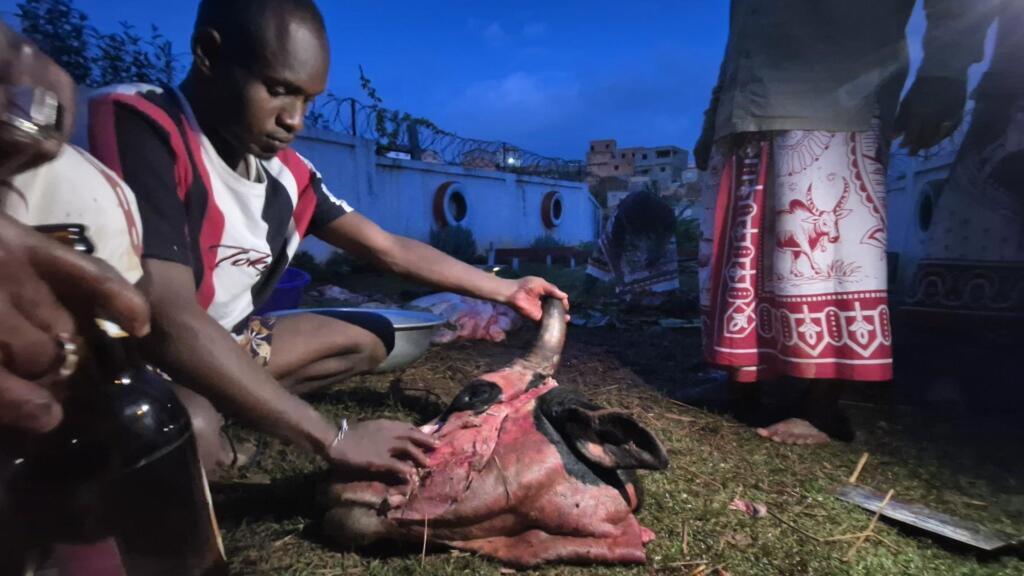
The skull of the zebu, sacrificed to the ancestors during the Alakoasibe ceremony, is later placed at the entrance of the house in honour of ancestral spirits. Its cutting follows specific techniques passed down by elders to younger people. © RFI/Sarah Tetaud
In a small town near Mahajanga, chants of the Sakalava, one of Madagascar’s ethnic groups, drift through the open windows of a house where around 60 guests, mostly young people, are gathered in a living room filled with incense and music.
During the ceremony, some participants fall into a trance, their bodies believed to be temporarily inhabited by ancestral spirits.
At one point, five people are possessed at the same time. Some bodies tremble beneath cloths, while others suddenly grow still. A woman inhabited by a male spirit removes her clothing before slowly returning to her normal state.
Watching closely is Josiane Lazare, 30, seated on a mat in the room.
She continues to welcome guests and serve drinks until well into the early hours. Lazare heads La Fac Madagascar, a platform dedicated to preserving Malagasy traditions, and plays a central role in the ceremony.
“We are searching for identity; especially young people,” she tells RFI. “This ritual allows us to interact with our ancestors, to find ourselves and understand where we come from and where we are going.”
In a small town near Mahajanga, chants of the Sakalava, one of Madagascar’s ethnic groups, drift through the open windows of a house where around 60 guests, mostly young people, are gathered in a living room filled with incense and music.
During the ceremony, some participants fall into a trance, their bodies believed to be temporarily inhabited by ancestral spirits.
At one point, five people are possessed at the same time. Some bodies tremble beneath cloths, while others suddenly grow still. A woman inhabited by a male spirit removes her clothing before slowly returning to her normal state.
Watching closely is Josiane Lazare, 30, seated on a mat in the room.
She continues to welcome guests and serve drinks until well into the early hours. Lazare heads La Fac Madagascar, a platform dedicated to preserving Malagasy traditions, and plays a central role in the ceremony.
“We are searching for identity; especially young people,” she tells RFI. “This ritual allows us to interact with our ancestors, to find ourselves and understand where we come from and where we are going.”
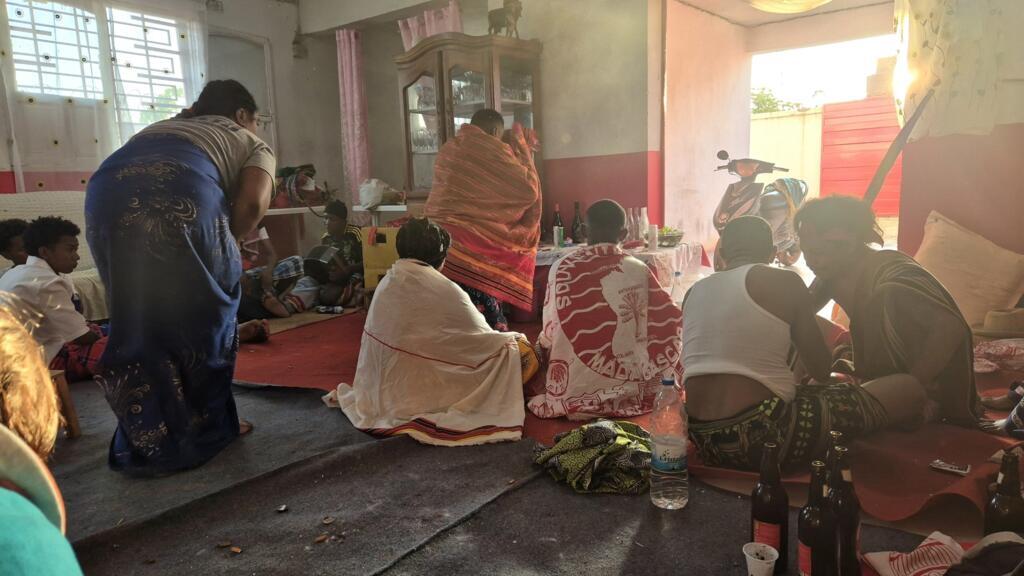
Incantations mark the moment when the Saha, people who allow their bodies to be inhabited by ancestral spirits, enter a state of possession. Those watching wait until the spirit has calmed before approaching to speak with it. © RFI/Sarah Tétaud
Lazare says her generation is determined to keep traditions alive.
“We see ourselves as the 'Gen Z of tradition', fighting to preserve the values of our ancestors,” she explains.
Many young people feel excluded from decisions about the country’s future, she says, adding that communities where elders pass on ritual knowledge offer a different model.
“Among those who keep these traditions, there is mutual respect. Adults pass things on to us and encourage us to take our place.”
Madagascar's Gen Z uprising, as told by three young protesters
Learning the rites
That transmission continues into the early hours of the morning.
After the sacrifice of a zebu, a type of cattle common in Madagascar, elders teach younger participants gathered around them how to cut the animal correctly. At around 3am, an elder gives instructions by the light of a headlamp.
“If you look at these horns, if we cut them properly, we’ll be able to hang the skull outside the house to honour the ancestors. Look, big brother, you need to cut a bit lower here,” he says.
A younger man struggles to follow the guidance. “There’s something I don’t understand. I followed your advice, but look, it’s not coming off, it’s too hard,” he replies.
The elder tells him to "cut even lower".
Lazare says her generation is determined to keep traditions alive.
“We see ourselves as the 'Gen Z of tradition', fighting to preserve the values of our ancestors,” she explains.
Many young people feel excluded from decisions about the country’s future, she says, adding that communities where elders pass on ritual knowledge offer a different model.
“Among those who keep these traditions, there is mutual respect. Adults pass things on to us and encourage us to take our place.”
Madagascar's Gen Z uprising, as told by three young protesters
Learning the rites
That transmission continues into the early hours of the morning.
After the sacrifice of a zebu, a type of cattle common in Madagascar, elders teach younger participants gathered around them how to cut the animal correctly. At around 3am, an elder gives instructions by the light of a headlamp.
“If you look at these horns, if we cut them properly, we’ll be able to hang the skull outside the house to honour the ancestors. Look, big brother, you need to cut a bit lower here,” he says.
A younger man struggles to follow the guidance. “There’s something I don’t understand. I followed your advice, but look, it’s not coming off, it’s too hard,” he replies.
The elder tells him to "cut even lower".
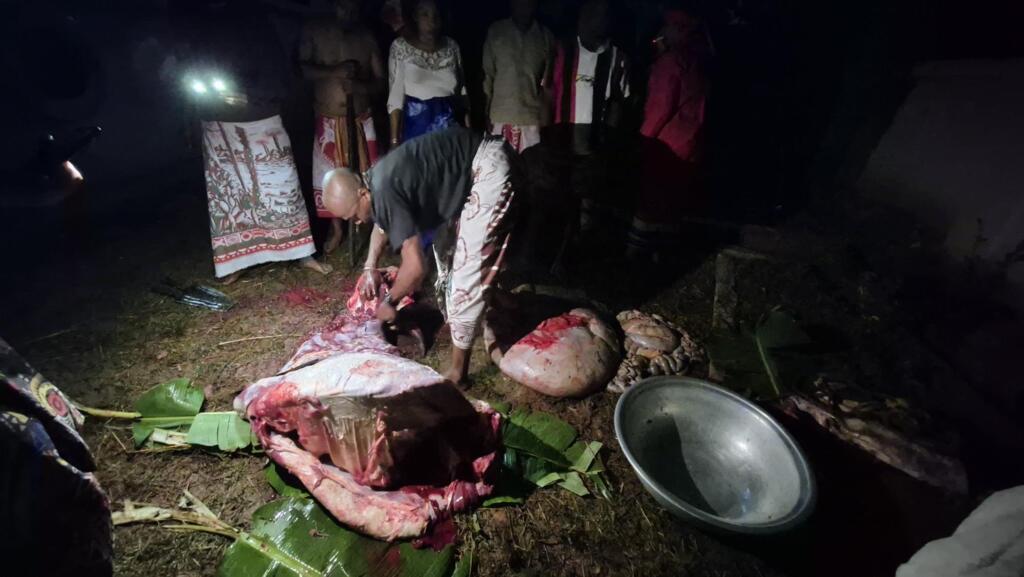
The zebu sacrificed to the ancestors during the Alakoasibe ceremony is carefully cut. Part of the animal is later shared among those attending the ceremony, with the cutting carried out using techniques taught by elders to younger people. © RFI/Sarah Tétaud
As the sun rises, the ceremony moves into its final stages, with purification rites followed by a shared meal. Johnson Fierens, prince of Belmamoun, a local royal lineage, and host of the ceremony, gathers people in his living room to reflect on what they have witnessed.
“When you take part in something, you have to understand what it means,” he tells them. “This rite educates us, corrects us and shapes us. Respect for tradition is the key to developing our country.”
Fierens urges the younger generation to focus their energy carefully. “You are not going to learn the traditions of other countries. Use your strength for good,” he says.
A photographer’s journey into Malagasy ancestral rituals
As the sun rises, the ceremony moves into its final stages, with purification rites followed by a shared meal. Johnson Fierens, prince of Belmamoun, a local royal lineage, and host of the ceremony, gathers people in his living room to reflect on what they have witnessed.
“When you take part in something, you have to understand what it means,” he tells them. “This rite educates us, corrects us and shapes us. Respect for tradition is the key to developing our country.”
Fierens urges the younger generation to focus their energy carefully. “You are not going to learn the traditions of other countries. Use your strength for good,” he says.
A photographer’s journey into Malagasy ancestral rituals
A society under strain
The turn towards ancestral practices comes against a backdrop of deep social pressure. Malagasy society is under strain, with many young people facing poverty and lack of jobs. More than 40 percent of 18 to 35-year-olds are unemployed.
Those tensions were laid bare during a recent wave of anger among Generation Z, which led to a sudden change of government in October. Youth-led protests over electricity and water shortages spread nationwide, forcing the president to flee the country.
It is against this backdrop that some young people are turning back to their cultural roots.
Zeena Ranieri, an anthropologist and lecturer at the University of Antananarivo, says the movement reflects a society in transition.
“Every political, economic and cultural context has shaken Malagasy society,” she tells RFI. “It has become a society searching for identity and for ways forward.”
Young people, she says, feel disconnected from the paths laid out for them, education that does not lead to employment and social models that no longer offer stability or fulfilment.
“We cannot find work with what we learned. We cannot find happiness with the reference points we were given,” Ranieri says. “That's why there is a break. We know we need a new identity and new reference points.”
For some young Malagasy, that search does not mean rejecting modern life but living alongside it. Ancestral rites offer defined roles, shared rules and a recognised place within the community.
This story is based on a radio report in French by RFI correspondent Sarah Tétaud


No comments:
Post a Comment