LI
Lithium Has Become a National Security Priority for the United States
- The Trump administration is using government stakes, tariffs, and industrial policy to rapidly expand U.S. lithium production and reduce foreign dependence.
- Advanced lithium extraction technologies could unlock vast domestic brine resources while lowering environmental and energy costs.
- Rising demand from EVs and energy storage is expected to push lithium demand beyond supply later this decade, reinforcing the strategic importance of U.S. production.
As the world races to mine and refine more lithium, the United States has big production plans to boost self-sufficiency and reduce its reliance on China. President Trump aims to rapidly expand the United States’ mining sector during his second term in office, to begin developing a wide array of new metals and minerals projects, aimed at enhancing both energy and national security over the coming decades.
Since President Trump came into office in January 2025, he has raced ahead with plans to expand the United States minerals and metals industry through a greater openness to mining and a push to develop the country’s manufacturing capacity. In addition, the introduction of U.S. tariffs on a wide number of countries and products is encouraging companies to invest in U.S.-based projects and resources. Several advances have been made in the U.S. lithium industry over the last year, with several more expected to come in 2026.
The global demand for lithium is rapidly increasing, driven primarily by electric vehicles (EVs) and large-scale energy storage systems (BESS). According to a Mordor Intelligence forecast, the lithium market size was estimated at 0.85 million lithium carbonate equivalent (LCE) tons in 2025, and is expected to reach 2.08 million LCE tons by 2030, expanding at a CAGR of 19.57 percent between 2025 and 2030.
Since 2022, there has been an excess of lithium supply, as producers invested heavily in the sector in anticipation of the growing demand. Meanwhile, the uptake of EVs has increased at a slower pace than originally expected in several regions of the world. However, an increase in the rollout of renewable energy, greater investment in BESS, and the continued growth of the EV market are expected to contribute to significant growth in the lithium market over the coming decades, with demand expected to gradually outpace supply.
In October, the U.S. Department of Energy took a 5 percent stake in Lithium Americas Corp. (LAC) and a separate 5% stake in the company’s Thacker Pass joint venture with General Motors, which is expected to be the largest lithium source in the Western Hemisphere. This was aimed at solidifying the launch of the only domestic source of lithium carbonate in the U.S.
At the time, U.S. Energy Secretary Chris Wright stated, “Despite having some of the largest deposits, the United States produces less than 1% percent of the global supply of lithium. Thanks to President Trump’s bold leadership, American lithium production is going to skyrocket.” Wright added, “Today’s announcement helps reduce our dependence on foreign adversaries for critical minerals by strengthening domestic supply chains and ensuring better stewardship of American taxpayer dollars. President Trump promised to do both, and he is delivering."
The U.S. has significant lithium reserves, mainly in the form of massive underground brines in south Arkansas and east Texas. However, recovering the lithium in these reserves using conventional techniques would be an energy-intensive and environmentally damaging undertaking. This has deterred several companies from investing in domestic lithium mining activities. Meanwhile, researchers have been exploring ways to access U.S. lithium more efficiently.
The MIT-based startup, Lithios, is exploring the potential use of a recovery method known as Advanced Lithium Extraction, which uses electricity to drive a reaction with electrode materials that capture lithium from salty brine water, leaving behind other impurities. Lithios believes its method is more selective and efficient than conventional extraction techniques, as well as less energy-intensive.
The startup has been conducting a pilot project since June, with a system that extracts lithium from brine waters. The system is also expected to be trialled by a commercial partner in Arkansas. In 2026, Lithois plans to commence the operation of a larger system, capable of producing 10 to 100 tons of lithium carbonate a year, for an annual production of 25,000 tons of lithium carbonate. At present, domestic lithium production stands at around 5,000 tons a year.
In December, the Trump administration announced plans to establish more “historic deals” with the domestic mining sector to increase critical mineral production for the national defence and high-tech sectors. In addition to Lithium Americas, the government also took stakes in MP Materials and Trilogy Metals last year, and more partnerships are still expected to come.
Jarrod Agen, the executive director of the White House’s National Energy Dominance Council, stated, “What we want to see is the ability for the U.S. to not be reliant on any adversary out there or any other foreign entity, that we control our own destiny when it comes to our supply chain and our critical minerals.” Agen added, “We’ve set a good pace so far, but this is just the first year.”
Lithium mining in the United States is expected to grow rapidly over the coming decades, owing to greater support from the government to expand domestic metal and mineral production and refining. This is expected to be supported by advancements in lithium extraction technology, which could significantly enhance lithium mining operations.
By Felicity Bradstock for Oilprice.com
Intrepid Potash weighs potential to develop battery-grade lithium processing plant in Utah
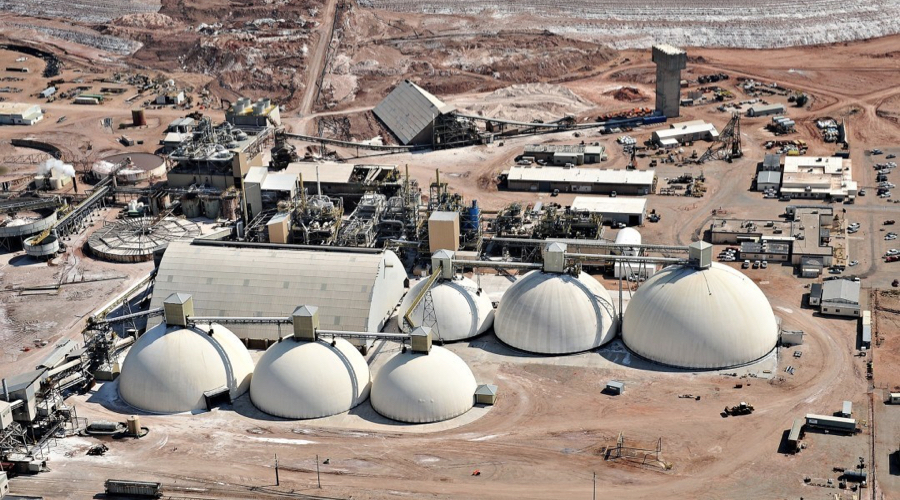
Intrepid Potash (NYSE: IPI), Aquatech International and Adionics SAS reported Tuesday the successful completion of test work to produce battery-grade lithium carbonate from byproduct brine at Intrepid’s potash facility in Wendover, Utah.

Intrepid is a supplier of high-quality potassium, magnesium, sulfur, salt and water products used in agriculture, animal feed, and the oil and gas industry. The Denver, Colorado-based company is the only US producer of muriate of potash, which is used in several industrial applications and as an ingredient in animal feed. It has two production facilities in Utah (Wendover and Moab) and one in Carlsbad, New Mexico.
Intrepid said the potential to develop a lithium processing facility in Wendover has continued to progress as Adionics and Aquatech successfully produced battery-grade lithium carbonate in a demonstration test of Intrepid’s Wendover brine.
The testing results achieved a lithium extraction rate of 92.9%, producing an overall lithium chloride purity above 99.5%, the company said. The lithium that was produced from Adionics’ facility was further processed by Aquatech to validate the conversion and refining to battery-grade lithium carbonate.
In additional testing, Aquatech said it successfully converted the lithium-rich brine to a more than 99.5%-pure lithium carbonate product, meeting key specifications for battery manufacturing. With the successful testing results, the parties will continue to move forward under the current joint development agreement with their evaluation of a lithium facility in Wendover, it added.
“We are very excited to partner with Aquatech and Adionics to continue the development of our lithium resource at Wendover,” Intrepid CEO Kevin Crutchfield said in a news release. “Advancements in direct lithium extraction (DLE) technologies have come at the perfect time, as the United States has reprioritized increasing its production of critical minerals.”
Crutchfield added that the company believes the existing infrastructure at its Wendover potash operation and the presence of lithium in its post-process brine differentiates this opportunity from other lithium development projects.
“We’re hopeful our Wendover lithium project will be among the first domestic projects to enter the market,” Crutchfield said.
“For this project, we still plan to limit our capital exposure and risk, and will continue to maintain our focus on our core fertilizer operations, but successfully monetizing lithium from our byproduct magnesium chloride brine will constitute an important step forward in driving margin improvement at Wendover.”
By market close, Intrepid Potash’s stock was up 2.85% in New York. The company has a $382 million market capitalization.

No comments:
Post a Comment