The Ice Memory Foundation on Wednesday opened the world’s first sanctuary for mountain ice cores in Antarctica, aiming to preserve crucial records of Earth’s climate for centuries to come.
]
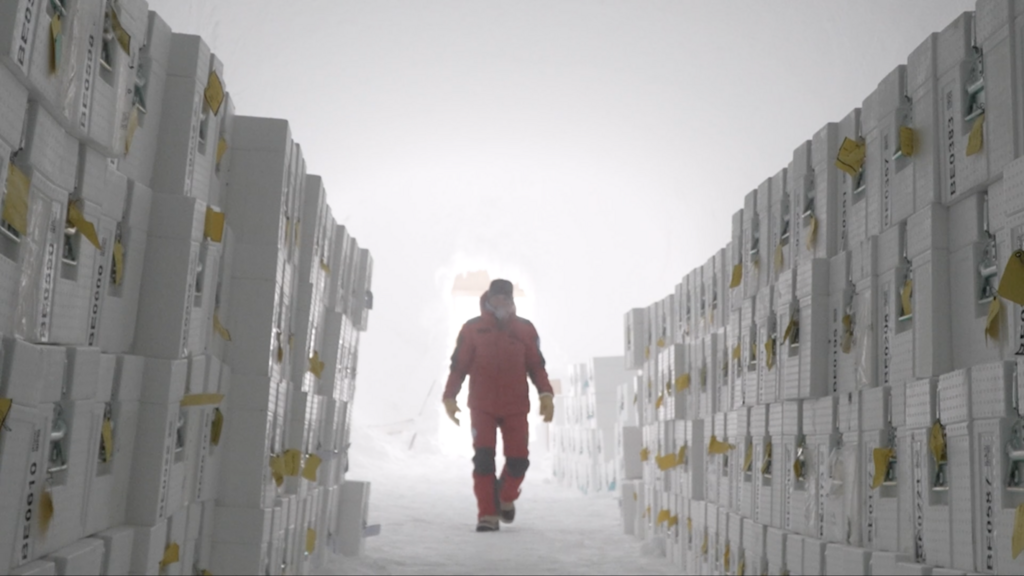
Ice cave and cores storage at the Concordia Station in Antarctica. © Gaetano MaccrÌ-PNRA-IPEV
01:32
01:32
16/01/2026 - RFI
By: Isabelle Martinetti
Designed to protect ice cores from glaciers that are rapidly disappearing due to global warming, the sanctuary is housed in Concordia Station, a French-Italian research base located 3,200 metres above sea level.
The first samples, taken from two glaciers in the Alps, are stored in a purpose-built snow cave.
Buried about 5 metres beneath the surface, the cave maintains a constant temperature of -52C, allowing the ice to be preserved naturally without artificial refrigeration. It also minimises the risks from human or technical failures.
Designed to protect ice cores from glaciers that are rapidly disappearing due to global warming, the sanctuary is housed in Concordia Station, a French-Italian research base located 3,200 metres above sea level.
The first samples, taken from two glaciers in the Alps, are stored in a purpose-built snow cave.
Buried about 5 metres beneath the surface, the cave maintains a constant temperature of -52C, allowing the ice to be preserved naturally without artificial refrigeration. It also minimises the risks from human or technical failures.
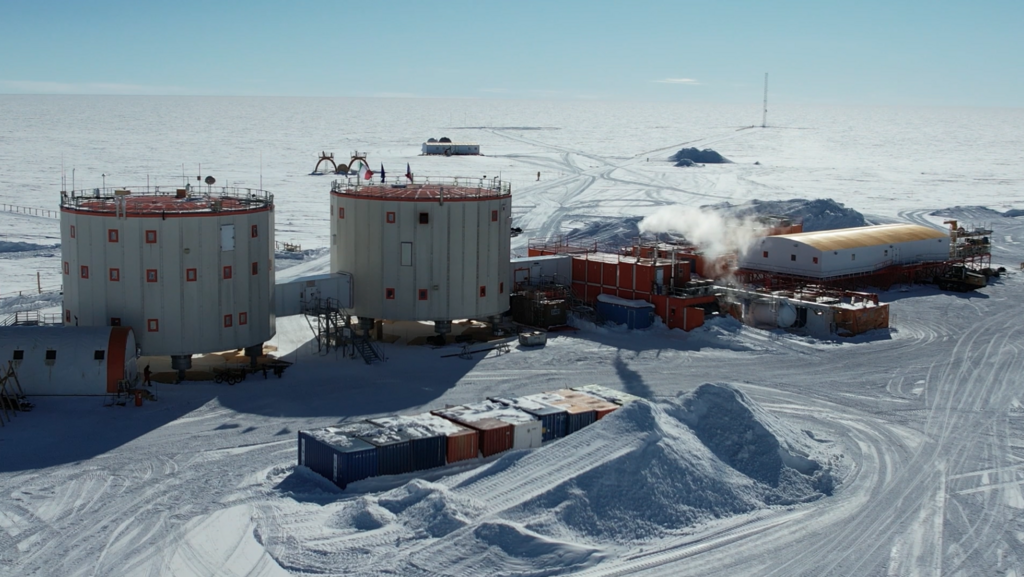
The Concordia Station in Antarctica where the ice cores are stored. © Gaetano Massimo Macri _ PNRA-IPEV
Scientists officially inaugurated the Ice Memory Sanctuary on Wednesday, amid outside temperatures of -33C.
"We are the last generation who can act," said Anne-Catherine Ohlmann, director of the Ice Memory Foundation.
"It’s a responsibility we all share. Saving these ice archives is not only a scientific responsibility – it is a legacy for humanity."
Scientists officially inaugurated the Ice Memory Sanctuary on Wednesday, amid outside temperatures of -33C.
"We are the last generation who can act," said Anne-Catherine Ohlmann, director of the Ice Memory Foundation.
"It’s a responsibility we all share. Saving these ice archives is not only a scientific responsibility – it is a legacy for humanity."
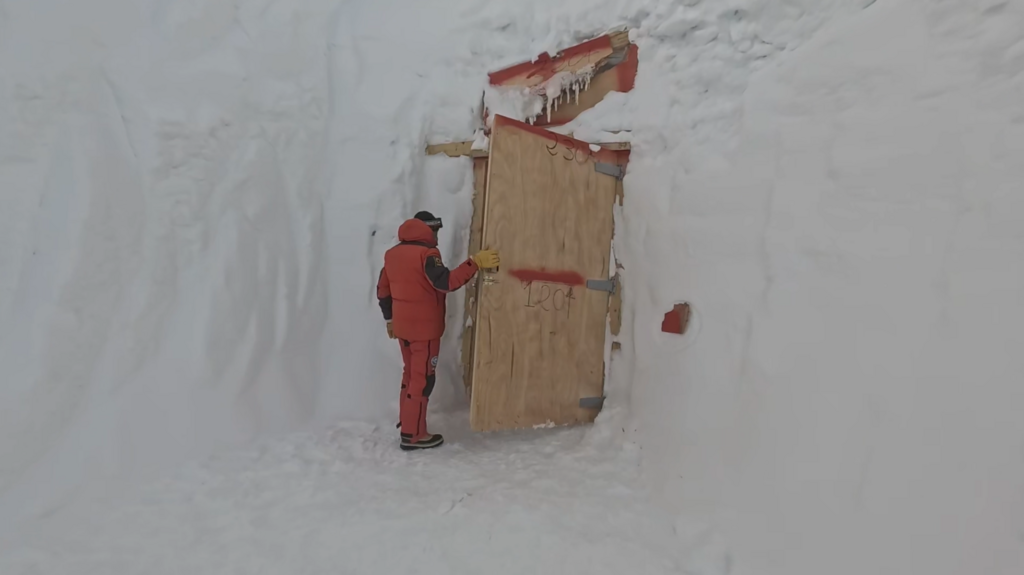
Entrance to the Ice Memory Sanctuary at the Concordia Station in Antarctica. © Gaetano Massimo Macri / PNRA-IPEV
Preserving climate records
Launched in 2015 by research institutes and universities in France, Italy and Switzerland, the Ice Memory project was conceived after scientists noticed a sharp rise in temperature on several glaciers.
Since 2000, glaciers have lost between 2 percent and 39 percent of their ice regionally and about 5 percent globally, according to a study published in Nature in 2025.
As they melt, invaluable scientific records are lost.
Preserving ice cores will allow future scientists to study Earth's climate history, explained Carlo Barbante, vice-chair of the Ice Memory Foundation and professor at Ca’ Foscari University of Venice.
"By safeguarding physical samples of atmospheric gases, aerosols, pollutants and dust trapped in ice layers, the Ice Memory Foundation ensures that future generations of researchers will be able to study past climate conditions using technologies that may not yet exist," he said.
Launched in 2015 by research institutes and universities in France, Italy and Switzerland, the Ice Memory project was conceived after scientists noticed a sharp rise in temperature on several glaciers.
Since 2000, glaciers have lost between 2 percent and 39 percent of their ice regionally and about 5 percent globally, according to a study published in Nature in 2025.
As they melt, invaluable scientific records are lost.
Preserving ice cores will allow future scientists to study Earth's climate history, explained Carlo Barbante, vice-chair of the Ice Memory Foundation and professor at Ca’ Foscari University of Venice.
"By safeguarding physical samples of atmospheric gases, aerosols, pollutants and dust trapped in ice layers, the Ice Memory Foundation ensures that future generations of researchers will be able to study past climate conditions using technologies that may not yet exist," he said.
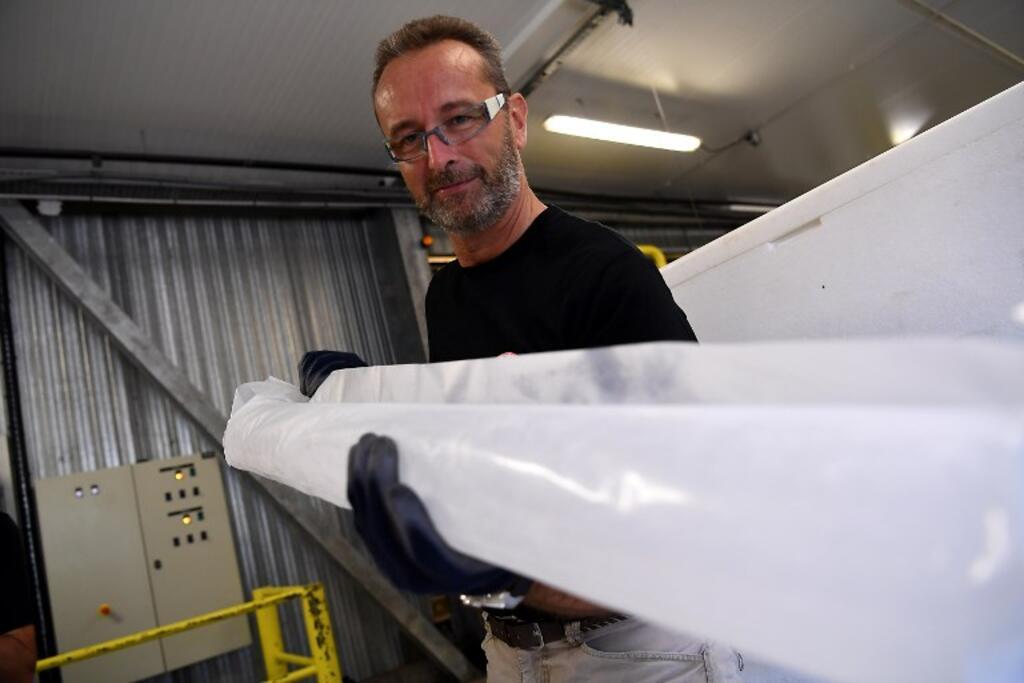
In this 2017 photo, Jérôme Chappellaz, scientific coordinator of the Ice Memory project, shows an ice core from Mount Illimani, Bolivia. @ AFP / Jean-Pierre Clatot
Natural vault
The Ice Memory Sanctuary measures 35 metres long and 5 metres high and wide.
Natural vault
The Ice Memory Sanctuary measures 35 metres long and 5 metres high and wide.
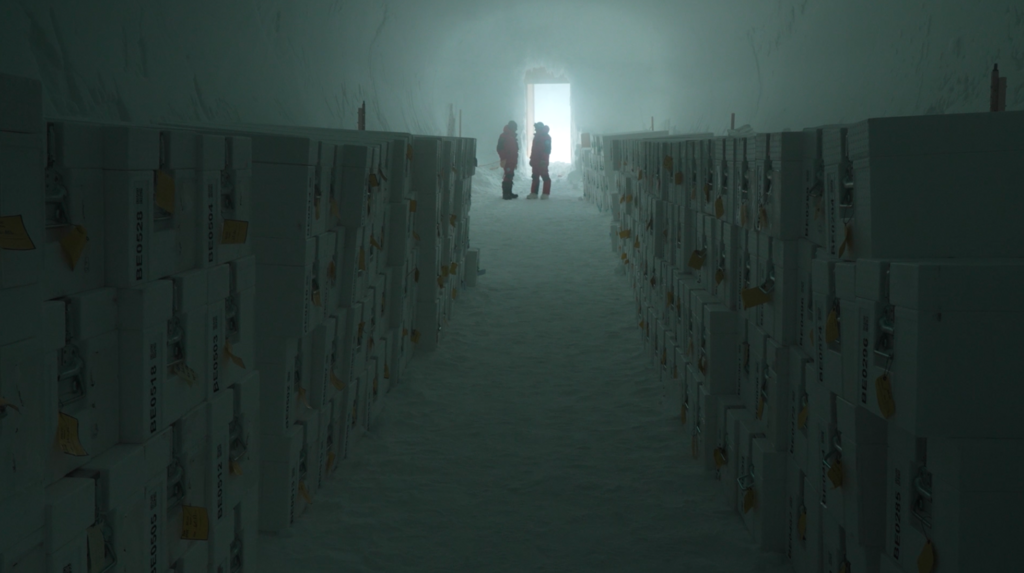
Inside the Ice Memory Sanctuary at the Concordia Station in Antarctica. © Gaetano Massimo Macri _ PNRA-IPEV
Its stability is ensured by the extreme and naturally constant Antarctic temperatures.
The natural and low-impact snow cave was approved in 2024 under the Antarctic Treaty, which regulates the use of Antartica for scientific research, and was funded by the Prince Albert II Foundation.
Where will we store the ice cores?
It currently houses ice cores extracted from the Mont Blanc and Grand Combin glaciers in 2016 and 2025 respectively.
Its stability is ensured by the extreme and naturally constant Antarctic temperatures.
The natural and low-impact snow cave was approved in 2024 under the Antarctic Treaty, which regulates the use of Antartica for scientific research, and was funded by the Prince Albert II Foundation.
Where will we store the ice cores?
It currently houses ice cores extracted from the Mont Blanc and Grand Combin glaciers in 2016 and 2025 respectively.
'Race against time'
Dozens of additional ice cores from glaciers worldwide – such as in the Andes, Pamir, Caucasus and Svalbard mountain ranges – are expected to join the Ice Memory archive in the coming years.
An international governance framework will be established over the next decade to ensure fair and transparent scientific access for future generations.
On Wednesday, European climate monitors and US confirmed that 2025 was the third hottest year on record, pushing the planet closer to a key warming limit.
"We are in a race against time to rescue this heritage before it will vanish forever," said Barbante.

No comments:
Post a Comment