Freezing EU–US trade deal 'inevitable', Italian MEP Brando Benifei says
In an interview on Euronews' morning show, Europe Today, MEP Brando Benifei said diplomatic solutions to avoid a trade war "need to be used to the end".
MEP and Head of the European Parliament's delegation for relations with the United States, told Euronews' morning show Europe Today that he does not expect an upcoming vote on the EU-US trade deal scheduled for next week to proceed.
"Inevitably, the vote that was foreseen next week in the trade committee of the European Parliament to actually advance the deal will be frozen," Benifei told Euronews. "I'm sure this will be the result."
US President Donald Trump threatened on Saturday to impose new tariffs on eight European countries that don't support his plans to annex Greenland. He then left the NATO alliance reeling with a letter to Norwegian prime minister Jonas Gahr Støre in which he said that he "no longer (felt) an obligation to think purely of Peace” when it comes to seizing the Danish territory.
After an emergency ambassadors meeting in Brussels on Sunday, several sources told Euronews that member states are prioritising diplomacy and dialogue with the US, but Benifei insisted there should be "a clear deadline" for establishing where Brussels and Washington's relationship stands.
"If in a few weeks we do not have clarity and an agreement on the future of Greenland, I think we need to be clear that the measures will be activated", he told Euronews.
One of those measures could be the anti-coercion instrument (ACI), a tool adopted in 2023 that has so far never been used. This would allow the bloc to punish unfriendly countries for "economic blackmail".
Benifei said diplomacy "must be used until the very end", but that "there must be an end".
"The problem of Europe is that the attempt to find a diplomatic solution, sometimes seems to never end. And this benefits, in this case, the US, who think we are not credible."
Benfei said he expects US counterparts to intervene and hopes "many more voices in the US Congress will raise to say that madness has to end, and that we need to sit down and work together as allies".
France and Germany push to use EU anti-coercion tools if Trump's new tariffs become reality
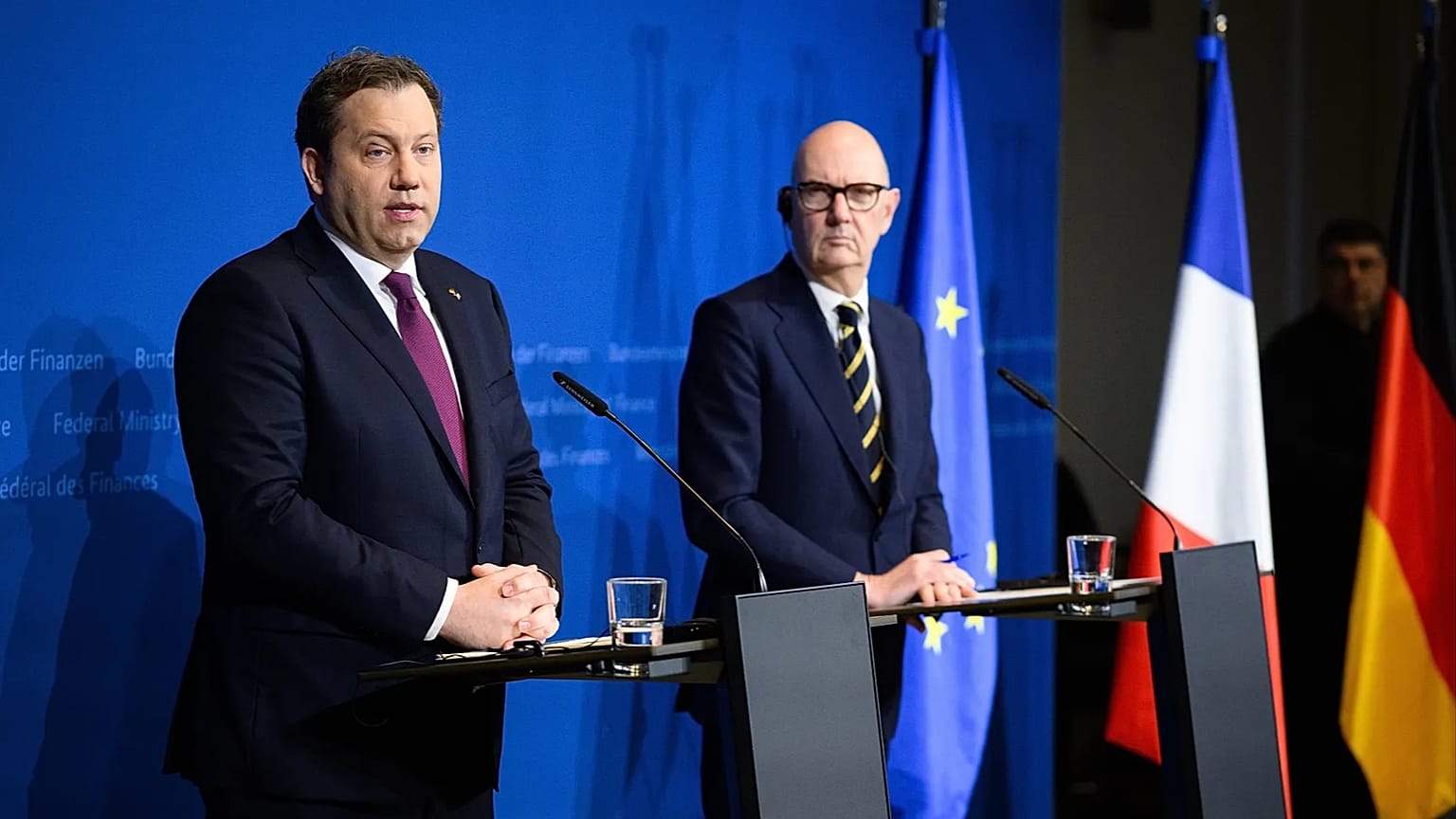
The German and French finance ministers said that the EU should be able to use all tools at its disposal if US president Donald Trump raises tariffs on European goods by 10% on 1 February.
German and French Finance Ministers Lars Klingbeil and Roland Lescure say they will push European partners to use all tools at their disposal, such as anti-coercion measures, if United States President Donald Trump makes good on his threat to increase tariffs on European goods by 10%.
The two ministers told journalists on Monday that they will make everything in their power to prevent these tariffs from being applied, but that if the US proceeds with its threat, the European Union must act accordingly.
Lescure called Trump's pressure "unacceptable" and said that tariffs should not be used as a weapon.
"Europe has to make sure that the threats that have been imposed don’t become reality," he said in Brussels. "We need to show that we’re willing to use all the instruments at our disposal, whether they are tariffs, trade agreements, or anti-coercion measures.”
Klingbel said that the severity of the situation must not be underestimated.
"Now it is time for our American friends to say 'we do not want escalation'. We also want many companies to avoid an escalation. But if President Trump does what he announced on February 1, then we have to react consciously."
Over the weekend, Trump said the US will increase tariffs on European goods by 10% if the bloc continues to oppose his efforts to take control of Greenland.
Among the tools the EU can use there is the Anti-Coercion Instrument, which enables the bloc to punish unfriendly states for economic coercion by restricting them from participating in public procurement tenders, limiting trade licenses, and even shutting off access to the single market.
Adopted in 2023, the instrument has never been used, but the US president's escalating threats over the weekend prompted calls for the instrument to be deployed, including from French President Emmanuel Macron.
Former senior EU officials, including former Commissioners Paolo Gentiloni and Cecilia Malmström, have also backed deploying the instrument.
European leaders have warned transatlantic ties are at risk after President Donald Trump's announcement that eight countries, including France, will face tariffs of up to 25 percent if they continue to oppose the United States' bid to acquire Greenland. French President Emmanuel Macron called the threats "unacceptable".
Issued on: 18/01/2026 - RFI
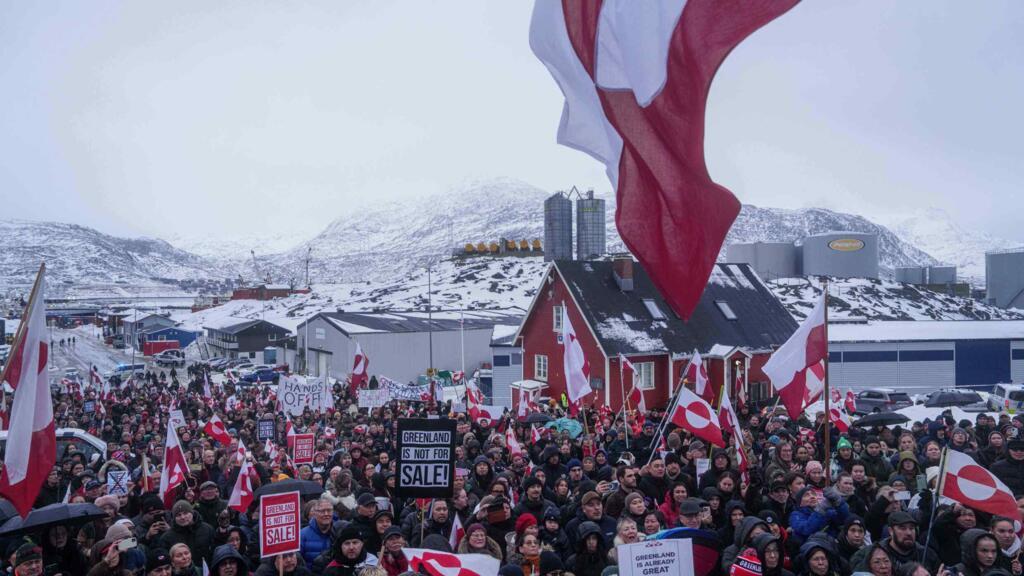
EU countries held crisis talks on Sunday after Trump said that he would charge a 10 percent import tax from February on goods from eight European countries that are resisting American control of Greenland – France, Denmark, Norway, Sweden, Germany, the United Kingdom, the Netherlands and Finland.
The rate would climb to 25 percent on 1 June if no deal was in place for "the Complete and Total purchase of Greenland" by the US, he wrote on his Truth Social platform on Saturday.
An emergency meeting of EU ambassadors took place in Brussels on Sunday.
Macron will ask the European Union to activate its powerful "Anti-Coercion Instrument" if the US imposes tariffs, his team said before the talks.
The bloc's weapon – dubbed its trade "bazooka" – allows the EU to impose tariffs and investment limits on countries exerting economic pressure on member states to force them to change policy. It has never been used before.
France to open Greenland consulate amid Trump takeover threats
'Dangerous downward spiral'
France is one of several countries that has deployed troops to the autonomous Danish territory in response to Washington's ambitions. Paris says the European military exercise is designed to show the world that it will defend Greenland.
"Tariff threats are unacceptable and have no place in this context," President Macron wrote in a post on X, saying that France and its European allies would present a united response.
"No intimidation or threat can influence us, neither in Ukraine, nor in Greenland, nor anywhere else in the world... We will ensure that European sovereignty is respected," Macron said.
All eight countries named by Trump issued a joint statement saying they backed Denmark and Greenland, and that their military exercise posed no danger to others.
"Tariff threats undermine transatlantic relations and risk a dangerous downward spiral," it said. "We will continue to stand united and coordinated in our response. We are committed to upholding our sovereignty."
In a similarly worded statement, EU leaders said the bloc "stands in full solidarity with Denmark and the people of Greenland".
Day of protests
Trump's threats came as thousands of people protested in the capital of Greenland against his drive to acquire the island, rich in rare minerals and a gateway to the Arctic.
Thousands more demonstrated in Copenhagen and other Danish cities.
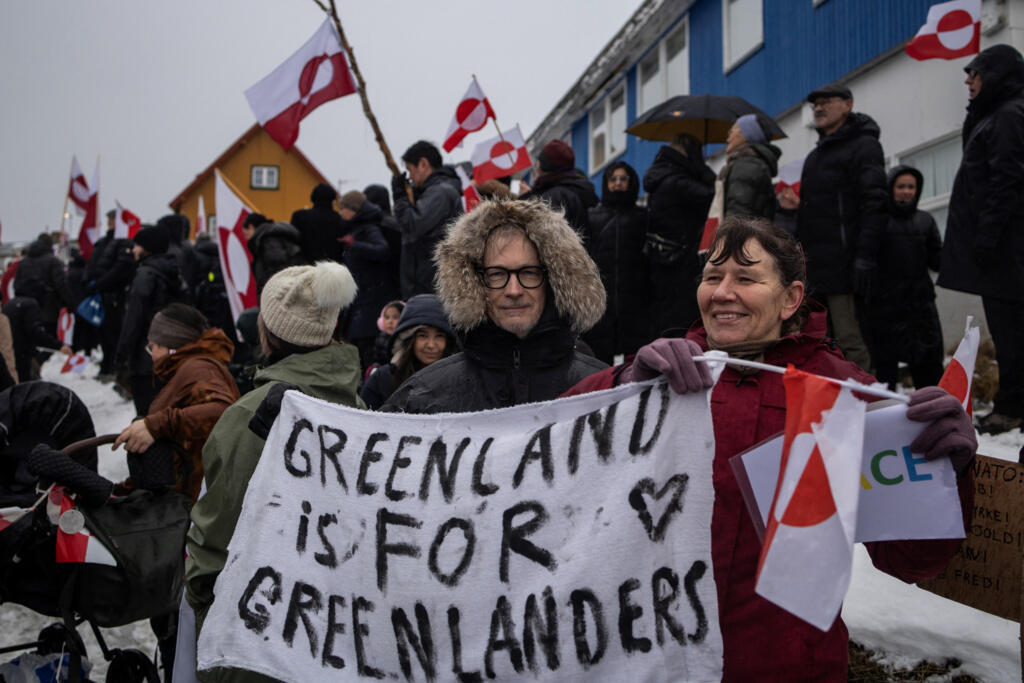
Trump has repeatedly claimed that the United States needs Greenland for US "national security", while alleging without evidence that China and Russia are trying to control it.
It was not immediately clear what authority the US president would invoke to impose the threatened tariffs, nor how he would target individual EU countries when the 27 members trade as a bloc.
If carried out, Trump's threats against NATO partners would create unprecedented tension within the military alliance, already under strain.
"In this escalation of tariffs, he has a lot to lose as well, as do his own farmers and industrialists," French Agriculture Minister Annie Genevard told broadcasters Europe 1 and CNews on Sunday.
The tariff announcement even drew criticism from Trump's populist allies in France.
Jordan Bardella, president of the far-right National Rally party, posted that the EU should suspend last year's deal to avert stiffer US tariffs on European goods, describing Trump’s threats as "commercial blackmail".
That deal, which the European Parliament had been set to ratify by next month, now faces rejection by lawmakers.
(with newswires)
The EU's anti-coercion instrument, which French President Emmanuel Macron on Sunday mentioned activating after US President Donald Trump's tariffs threats regarding Greenland, is a trade tool that the bloc adopted in 2023 but has never used. Compared by some to a “bazooka”, it aims to respond to any country using trade weapons to pressure an EU member state.
Issued on: 19/01/2026
By: FRANCE 24
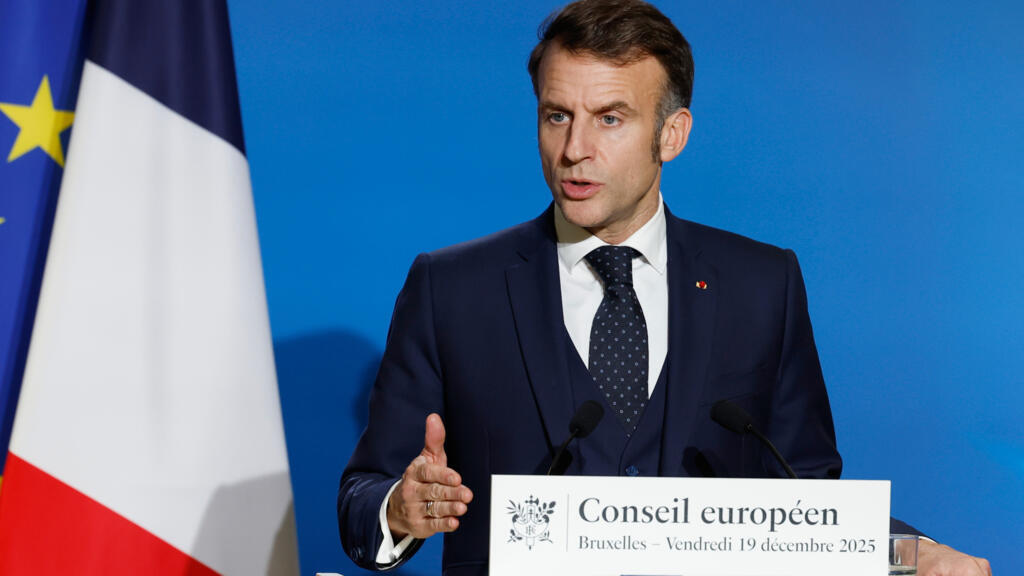
Calls are growing louder for the EU to deploy its powerful "anti-coercion instrument" in response to US President Donald Trump's threats to impose tariffs in the standoff over Greenland.
Trump stunned Europe on Saturday when he vowed to slap EU members Denmark, Finland, France, Germany, the Netherlands, and Sweden – and non-members Britain and Norway – with levies of up to 25 percent unless the Danish territory is ceded to the US.
French President Emmanuel Macron has raised the prospect of hitting back with the EU's trade weapon that was established in 2023 but has never been activated.
READ MORETrump tariff threats over Greenland prompt calls for unprecedented EU counter-measures
The leader of the liberal Renew group in the European Parliament, Valerie Hayer, also called for the weapon to be used.
Referred to as a "bazooka" or "nuclear" option, the instrument is intended to deter economic coercion against any of the EU's 27 member states.
The EU defines coercion as a third country "applying – or threatening to apply – measures affecting trade or investment", thereby interfering "with the legitimate sovereign choices" of the EU and member states.
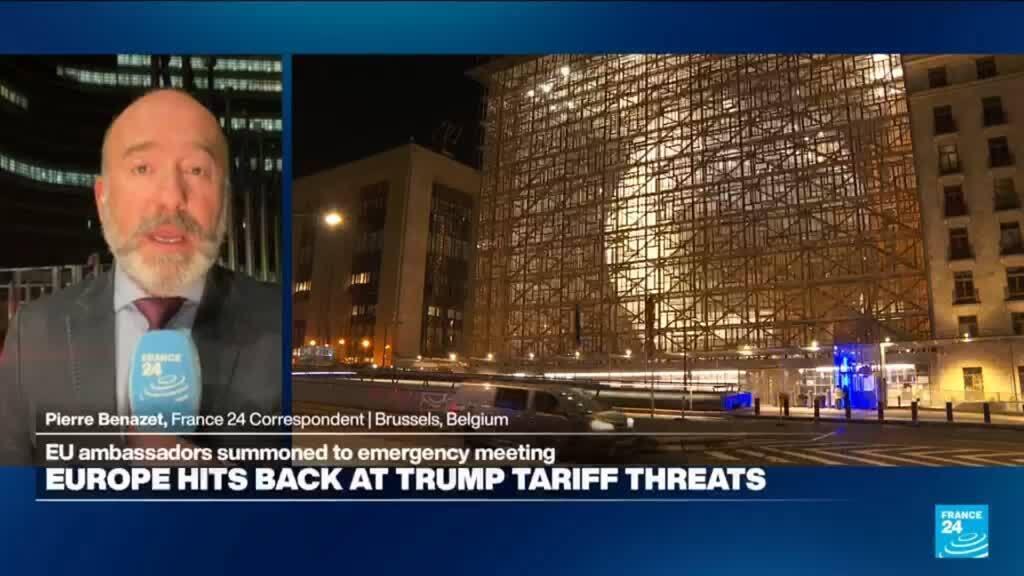
How can Europe respond to Trump's tariff threats over Greenland?
06:23
What does the instrument do?
The armoury allows the EU to take measures such as import and export restrictions on goods and services in its single market of 450 million people.
It also gives Brussels the power to limit American companies' access to public procurement contracts in Europe.
The EU last year threatened to use the weapon during difficult trade negotiations with Trump to avoid steep levies but the two sides struck a deal.
A major target could be American tech giants since the US has a services surplus with the EU.
Brussels previously drew up a list of US services to potentially target.
The instrument's creation came after Lithuania accused China of banning its exports because Vilnius allowed a Taiwanese diplomatic representation to be opened on its soil in 2021.
How does it work?
Both the commission and member states have the right to seek its activation, but it would then need the green light of at least 55 percent of the member countries voting in favour, representing 65 percent of the bloc's population.
Even if Brussels were to activate the weapon, it could take months before any measures were taken, according to the rules.
First, the European Commission has four months to investigate the third country accused of detrimental trade policies – then member states would have eight to 10 weeks to back any proposal for action.
Only then would the commission have a green light to prepare measures, to take effect within six months. The EU says the timeframe is indicative.
But even just triggering an investigation under the instrument would send a powerful message that Brussels is willing to fight back against its important ally.
"The United States is making a miscalculation that is not only dangerous but could be painful," Renew group's Hayer said in a statement.
"The anti-coercion instrument is our economic nuclear weapon," she said.
(FRANCE 24 with AFP)
French Agriculture Minister Annie Genevard warned Sunday that US President Trump's proposed tariffs on European countries opposing his plans to purchase Greenland would be "deadly for the United States". Trump on Saturday threatened a 10-percent tariff from February 1 on all goods sent to the US from eight European countries, including France.
Issued on: 18/01/2026
By: FRANCE 24
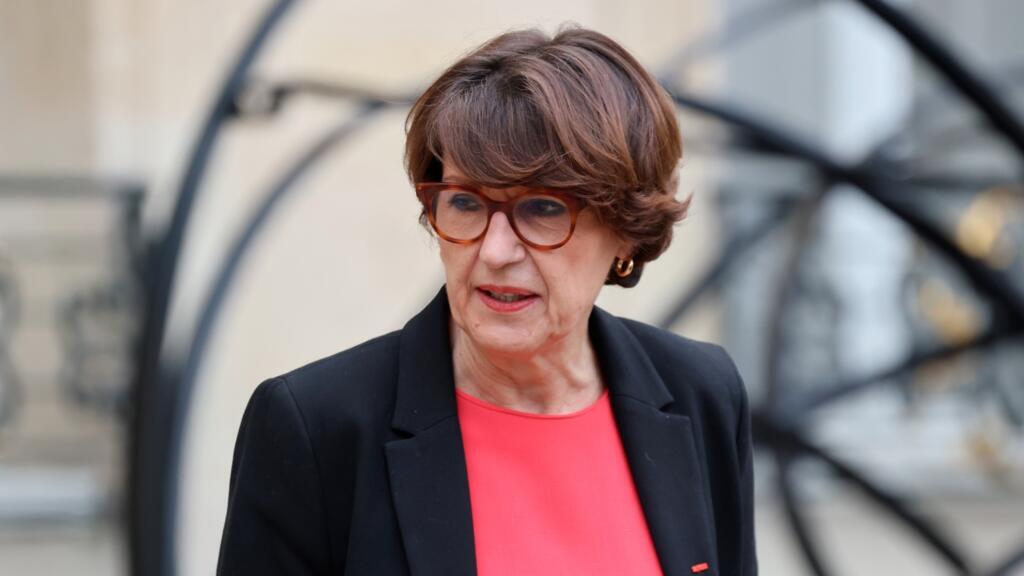
The United States will also suffer if President Donald Trump implements threats to impose tariffs on European countries opposing his plans to acquire Greenland, a French minister said on Sunday.
"In this escalation of tariffs, he has a lot to lose as well, as do his own farmers and industrialists," French Agriculture Minister Annie Genevard told broadcasters Europe 1 and CNews.
Trump has threatened to impose a 10-percent tariff from February 1 on all goods sent to the United States from Denmark, Norway, Sweden, France, Germany, the UK, the Netherlands and Finland.
EU looks to present united front in response to US 'blackmail'
04:05
All are part of the European Union, except for the United Kingdom and Norway.
That levy would then be increased to 25 percent on June 1 "until such time as a deal is reached for the complete and total purchase of Greenland", said Trump, who claims the United States needs the Arctic island, an autonomous Danish territory, for its national security.
'It could also be deadly for the United States'
An extraordinary meeting of EU ambassadors has been called in Brussels for Sunday afternoon.
"The European Union has a potential strike force" from a commercial standpoint, Genevard said.
"This is a response that must be handled with caution, because this escalation could be deadly – but it could also be deadly for the United States."
Any US takeover of Greenland would be "unacceptable," the minister added.
"It is clear that the Europeans will not let the United States do as it pleases."
(FRANCE 24 with AFP)
Europe's pro-Trump leaders tread carefully as Greenland crisis grows
Hungary's Viktor Orbán, Slovakia's Robert Fico, and Andrej Babiš from the Czech Republic will play a crucial role in any joint EU response to the Trump administration's threats.
As pressure mounts to calibrate a joint European Union response to the United States's threats over Greenland, EU leaders with ties to US President Donald Trump have yet to push back hard against his latest statements.
Trump threatened on Saturday to impose a 10% extra tariff on goods from European countries that oppose the sale of the Arctic island to the US, and warned that if the US has not been allowed to purchase Greenland by June 1, the rate will be hiked to 25%.
As the EU scrambles for ways to deal with the situation, the process of reaching a joint EU position could depend on three countries in particular: Slovakia, Hungary and the Czech Republic..
Slovakian Prime Minister Robert Fico met Trump in Mar-a-Lago on Saturday, the same day that Trump issued his latest tariff threats on social media. Speaking on a flight back to Slovakia, Fico hailed the two countries' bilateral ties, adding that both Trump and he were critical of the EU.
"We did not avoid the assessment of the EU, its competitiveness, energy and migration policy, while there was a complete agreement in viewing the EU as an institution in deep crisis,” Fico said in a video released on Sunday – not mentioning Greenland or expressing solidarity with the countries Trump directly threatened.
On Sunday, meanwhile, Hungary’s Viktor Orbán announced he had received a letter from Trump inviting him to join the Board of Peace, a body aimed at helping establish post-war administration and reconstruction in Gaza.
“With President Donald Trump comes peace. Another letter has arrived. Hungary’s efforts for peace are being recognised. President Trump has invited Hungary to join the work of The Board of Peace as a founding member,” Orbán tweeted.
But the Hungarian government has kept silent over Trump's latest threats. Orbán has previously said that the issue of Greenland can be discussed inside NATO and need not prompt an international crisis.
Czech Prime Minister Andrej Babiš posted on X on Monday afternoon to say there is no question that Greenland is an autonomous Danish territory, but he stopped short of calling for pushback against Trump's threats.
"There is no doubt about that. But we will support dialogue, not declarations," Babiš wrote. "Foreign policy is about diplomacy, not about who posts the stronger statement on social media."
Earlier, Babiš gave an interview to a conservative Hungarian website, Mandiner, where he said Trump is not helping Europe, but helping the US with his program to "make America great again".
Babiš also described himself as one of the biggest European supporters of Trump, also naming Orbán and Polish President, Karol Nawrocki.
One outlier in Europe's pro-Trump right is Italian Prime Minister Giorgia Meloni, who on Sunday criticised Trump’s stance as a “mistake” that could be the result of a misunderstanding.
"The prediction of a tariff increase against nations that have chosen to contribute to Greenland's security is a mistake, and I don't agree with it," Meloni said during a visit to South Korea.
The President of the European Council, António Costa, is convening a special EU summit on Thursday evening to discuss the Greenland issue and agree a collective response.
The agreement of Hungary, Slovakia and the Czech Republic will be needed, and their positions are as yet unknown.
But according to Fabian Zuleg, Chief Executive at the European Policy Centre, unity cannot become an excuse for paralysis when it comes to Greenland.
"If unity cannot be achieved, those governments that are unwilling to act – such as Hungary, but also others on a case-by-case basis – must be excluded, and exclusion must have consequences", he said, arguing that states blocking collective action at the European level should no longer be able to benefit fully from shared defence, security cooperation or industrial investment.
"Solidarity is a two-way street and not unconditional."

No comments:
Post a Comment