Charlevoix (Canada) (AFP) – Host Canada called Thursday on the Group of Seven powers to back Ukraine against Russia's "aggression" as a more conciliatory approach toward Moscow by Donald Trump's United States split the club of wealthy democracies.
Issued on: 13/03/2025

Diplomats at the G7 meeting in Charlevoix, Canada on March 13, 2024. From L to R, EU foreign policy chief Kaja Kallas, Japanese Foreign Minister Takeshi Iwaya, British Foreign Minister David Lammy, French Foreign Minister Jean-Noel Barrot, Canadian Foreign Minister Melanie Joly, US Secretary of State Marco Rubio, German Foreign Minister Annalena Baerbock and Italian Foreign Minister Antonio Tajani © SAUL LOEB / POOL/AFP
Canada, the current G7 president, is gathering its foreign ministers for three days of talks inside a rustic hotel in snow-dusted Charlevoix, on the banks of the St. Lawrence River in Quebec.
Once broadly unified, the G7 -- Britain, Canada, France, Germany, Italy, Japan and the United States -- has been rattled since the return of Trump, who has reached out to Russia and slapped punishing trade tariffs on close allies and competitors alike.
Before the full talks, Canadian Foreign Minister Melanie Joly met separately with Secretary of State Marco Rubio, the highest-level US official to visit since the return of Trump, who has taunted the United States' northern neighbor as the "51st state."
Rubio and Joly exchanged pecks on the cheek and shook hands before sitting next to US and Canadian flags. They did not respond to questions.
Joly, opening the formal session of the G7, said that she hoped to find ways in which the powers "continue to support Ukraine in the face of Russia's illegal aggression."
"We all want to see just and lasting peace in Ukraine," she said.
Rubio has said that he wants the G7 to avoid "antagonistic" language toward Russia, saying it would hinder diplomacy that could end a war that has killed tens of thousands of people.
Since Trump took over from Joe Biden, US statements often speak of the "Russia-Ukraine conflict" rather than Russia's "invasion" of its neighbor in 2022, which was the previous nomenclature.
Rubio took a circuitous route to Canada from Jeddah in Saudi Arabia, where he met Ukrainian officials, who agreed to a US proposal for a 30-day ceasefire with Russia.
Diplomats said that no other G7 country was aligned with the United States but that the group was looking at a formulation that could please all sides, such as endorsing the ceasefire proposal.
The United States last month voted with Russia and against its G7 allies at the United Nations for a resolution that made no explicit call on Russia to withdraw from territory it has seized since it invaded Ukraine in 2022.
Trump further stunned allies, and led Europeans to ramp up discussion on a defense future without the United States, by berating Ukrainian President Volodymyr Zelensky as insufficiently grateful and cutting off aid vital to Kyiv.
The United States restored assistance after the Jeddah agreement on Tuesday, with Rubio saying the ball was now in Moscow's court.
Russia appeared to throw cold water on the proposal on Thursday, with top Kremlin aide Yuri Ushakov saying it would only offer a "temporary breather" to Ukraine.
Canada, the current G7 president, is gathering its foreign ministers for three days of talks inside a rustic hotel in snow-dusted Charlevoix, on the banks of the St. Lawrence River in Quebec.
Once broadly unified, the G7 -- Britain, Canada, France, Germany, Italy, Japan and the United States -- has been rattled since the return of Trump, who has reached out to Russia and slapped punishing trade tariffs on close allies and competitors alike.
Before the full talks, Canadian Foreign Minister Melanie Joly met separately with Secretary of State Marco Rubio, the highest-level US official to visit since the return of Trump, who has taunted the United States' northern neighbor as the "51st state."
Rubio and Joly exchanged pecks on the cheek and shook hands before sitting next to US and Canadian flags. They did not respond to questions.
Joly, opening the formal session of the G7, said that she hoped to find ways in which the powers "continue to support Ukraine in the face of Russia's illegal aggression."
"We all want to see just and lasting peace in Ukraine," she said.
Rubio has said that he wants the G7 to avoid "antagonistic" language toward Russia, saying it would hinder diplomacy that could end a war that has killed tens of thousands of people.
Since Trump took over from Joe Biden, US statements often speak of the "Russia-Ukraine conflict" rather than Russia's "invasion" of its neighbor in 2022, which was the previous nomenclature.
Rubio took a circuitous route to Canada from Jeddah in Saudi Arabia, where he met Ukrainian officials, who agreed to a US proposal for a 30-day ceasefire with Russia.
Diplomats said that no other G7 country was aligned with the United States but that the group was looking at a formulation that could please all sides, such as endorsing the ceasefire proposal.
The United States last month voted with Russia and against its G7 allies at the United Nations for a resolution that made no explicit call on Russia to withdraw from territory it has seized since it invaded Ukraine in 2022.
Trump further stunned allies, and led Europeans to ramp up discussion on a defense future without the United States, by berating Ukrainian President Volodymyr Zelensky as insufficiently grateful and cutting off aid vital to Kyiv.
The United States restored assistance after the Jeddah agreement on Tuesday, with Rubio saying the ball was now in Moscow's court.
Russia appeared to throw cold water on the proposal on Thursday, with top Kremlin aide Yuri Ushakov saying it would only offer a "temporary breather" to Ukraine.
Trade war divides G7
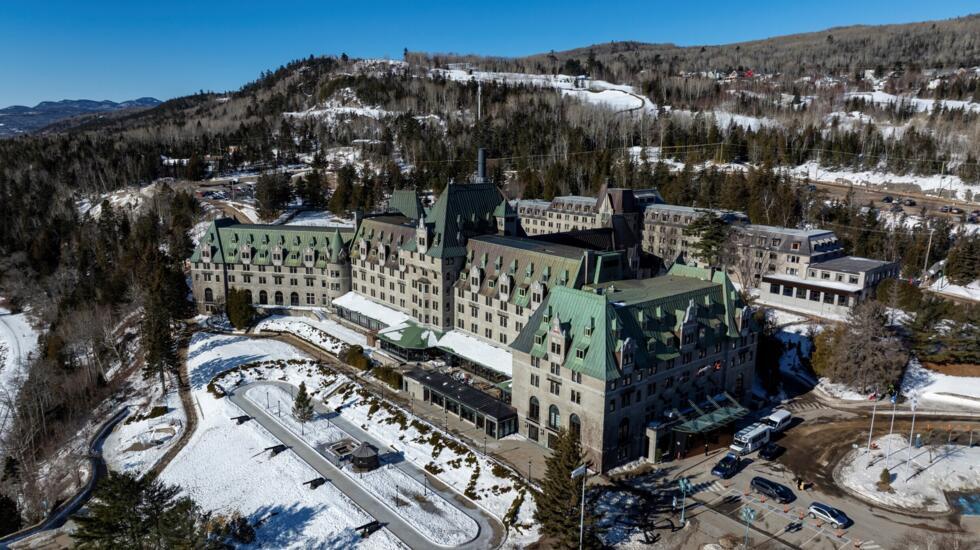
Aerial view of the Fairmont Le Manoir Richelieu, in Charlevoix, Canada, the venue for the G7 foreign ministers meeting in March 2025 © Sebastien ST-JEAN / AFP
Ahead of her meeting with Rubio, Joly made clear that she would reject Trump's threats, saying: "Canadian sovereignty is not negotiable."
Rubio on Wednesday defended Trump's tone but said he was not planning to discuss "how we're going to take over Canada" at the G7 talks.
The G7 meeting came just as Trump's sweeping 25 percent tariffs on all steel and aluminum imports came into effect Wednesday, prompting immediate retaliation from major US trading partners.
The European Union and Canada swiftly unveiled billions of dollars in counter-tariffs and France on Thursday warned of measures after Trump's latest threat of a 200 percent tariff on wine, champagne and other alcoholic drinks.
Joly said she intends to raise the issue of tariffs in "every single meeting" at the G7.
Ahead of her meeting with Rubio, Joly made clear that she would reject Trump's threats, saying: "Canadian sovereignty is not negotiable."
Rubio on Wednesday defended Trump's tone but said he was not planning to discuss "how we're going to take over Canada" at the G7 talks.
The G7 meeting came just as Trump's sweeping 25 percent tariffs on all steel and aluminum imports came into effect Wednesday, prompting immediate retaliation from major US trading partners.
The European Union and Canada swiftly unveiled billions of dollars in counter-tariffs and France on Thursday warned of measures after Trump's latest threat of a 200 percent tariff on wine, champagne and other alcoholic drinks.
Joly said she intends to raise the issue of tariffs in "every single meeting" at the G7.
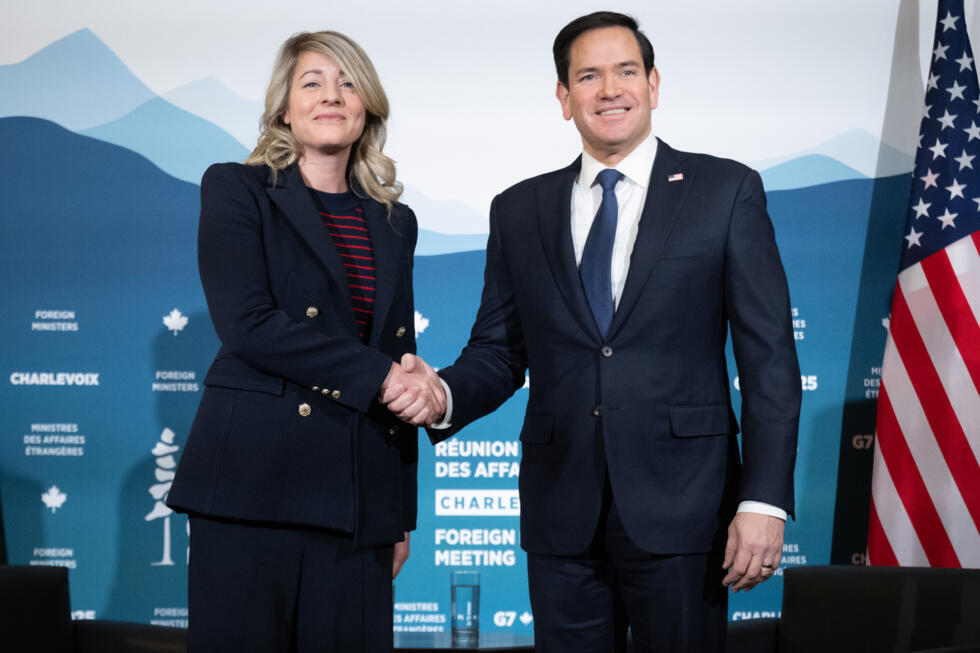
Canadian Foreign Minister Melanie Joly and US Secretary of State Marco Rubio shake hands ahead of a G7 meeting of foreign ministers in Quebec © SAUL LOEB / POOL/AFP
Rubio said he expected his counterparts to set aside any frustration over Trump's trade policies to work on shared goals.
"Every country in the world we expect will act in their national interest," he added.
"I think it is quite possible that we could do these things and at the same time deal in a constructive way with our allies and friends," Rubio said.
The meeting in Charlevoix will also touch on China and the Middle East, among other subjects.
It comes ahead of a G7 leaders' summit in the Canadian province of Alberta in June.
© 2025 AFP
Rubio said he expected his counterparts to set aside any frustration over Trump's trade policies to work on shared goals.
"Every country in the world we expect will act in their national interest," he added.
"I think it is quite possible that we could do these things and at the same time deal in a constructive way with our allies and friends," Rubio said.
The meeting in Charlevoix will also touch on China and the Middle East, among other subjects.
It comes ahead of a G7 leaders' summit in the Canadian province of Alberta in June.
© 2025 AFP

No comments:
Post a Comment