Uprated NuScale SMR design gets US approval
The US Nuclear Regulatory Commission has approved the 77 MWe version of NuScale Power's NuScale Power Module small modular reactor design. The regulator had previously approved a 50 MWe version of the design.
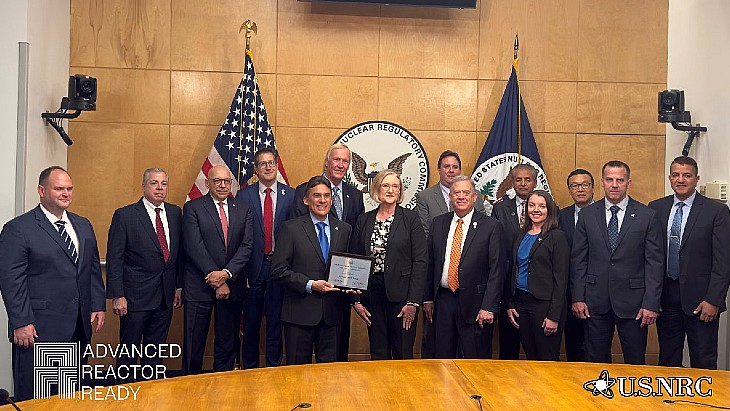
The Nuclear Regulatory Commission (NRC) accepted NuScale's design certification application for a plant comprising up to twelve 50 MWe power modules in March 2017. The regulator certified the design in January 2023, making it the first SMR design to be cleared by the regulator for use in the USA.
NuScale subsequently uprated the capacity of the power unit to 77 MWe and in January 2023 submitted an application for NRC approval of a six-unit configuration based on the uprated design. The application was accepted for NRC review in July 2023.
The NRC has now announced that it has approved the uprated SMR design. "The standard design approval is based upon the staff's final safety evaluation report, issued 28 May," it said. "This completes the NRC's technical review ahead of schedule and under budget, demonstrating the agency's commitment to safely and efficiently enable new, advanced reactor technology."
A standard design approval indicates that a proposed reactor design meets applicable NRC safety requirements. Companies that seek to use the design would have to file applications seeking permission to construct and operate a nuclear reactor using the approved design.
NuScale said its uprated design features the same fundamental safety case and passive safety features previously approved by the NRC with "a power uprate and select design changes to support growing capacity needs".
"The US NRC's uprate approval of the NuScale SMR technology now strengthens ENTRA1 Energy to produce and deliver energy as the most near-term American SMR power solution via ENTRA1 Energy Plants with NuScale SMR technology inside," NuScale said. "ENTRA1 Energy is NuScale's partner and independent power plant development platform, which holds the global exclusive rights to the commercialisation, distribution, and deployment of NuScale's SMRs."
It added that NRC approval of the uprated design enables ENTRA1 Energy to "provide a wider range of off-takers and consumers with reliable, carbon-free energy".
"We are thrilled that the NRC has approved our second SDA application, this time for our 77 MWe design," said NuScale President and CEO John Hopkins. "This marks a historic moment not only for NuScale, but the entire industry, as NuScale and ENTRA1 move closer to meeting the demands of clean energy users.
"For more than a decade, our team has proudly worked alongside the NRC to achieve the successful approval of our designs. The NRC is domestically and internationally recognised and respected for its rigorous safety standards, and this approval is a crucial step toward meeting our goal of providing clean, reliable, and, most importantly, safe energy to off-takers and consumers."
New Era of Nuclear Power Hinges on Seawater Uranium Extraction
- Global nuclear energy generation is expected to reach record levels in 2025, leading to an increased demand for uranium and a need for innovative extraction methods.
- Chinese scientists have developed a new electrochemical method to extract uranium from seawater that is significantly cheaper and more efficient than previous methods, potentially transforming the uranium market.
- The ability to extract uranium from seawater could provide energy security for countries lacking land-based uranium reserves and support the transition to a post-fossil-fuel future.
This year, the world will generate more nuclear energy than ever before. “The market, technology and policy foundations are in place for a new era of growth in nuclear energy over the coming decades,” the International Energy Agency (IEA) wrote in a report published last month.
“It’s clear today that the strong comeback for nuclear energy that the IEA predicted several years ago is well underway, with nuclear set to generate a record level of electricity in 2025,” stated IEA Executive Director Fatih Birol. “In addition to this, more than 70 gigawatts of new nuclear capacity is under construction globally, one of the highest levels in the last 30 years, and more than 40 countries around the world have plans to expand nuclear’s role in their energy systems.”
All that extra nuclear power generation is going to require a huge expansion of nuclear fuel production. So much, in fact, that the expansion of nuclear energy production capacity is expected to outpace the expansion of uranium production capacity on a global scale, and by a wide margin. This is expected to create a tight market and heightened competition to establish new uranium supplies.
As a response, scientists are trying to get creative about new ways to create or circumvent the need for uranium. And so far, China is winning the race. Chinese scientists are making great progress of developing nuclear energy reactors that are powered by thorium instead of uranium, and another team of researchers also just made a major breakthrough in a new way to source uranium from seawater.
This last development may mark a major breakthrough, as the world’s oceans are home to vast untapped reserves of the 92nd element. According to reporting from Semafor, “oceans are estimated to hold 5 billion tons of uranium, 1,000 times more than can be mined.” However, “the dissolved minerals are dilute and difficult to gather.” But a team of researchers from across China, in addition to a colleague from Taiwan, may have just cracked the code.
The scientists “developed an upgraded electrochemical method that requires less money and energy than any other seawater-extraction technique,” according to MSN News. The exact figures are nothing short of staggering. The method was able to extract 100 percent of the uranium present in waters from the East China Sea and 85 percent from the South China Sea. However, when using larger electrodes, the scientists were reportedly able to achieve 100 percent extraction from the South China Sea waters as well.
“The experiments also showed the energy required was more than 1000-fold less than other electrochemical methods,” writes New Scientist. “The whole process cost about $83 per kilogram of extracted uranium. That is twice as cheap as physical adsorption methods, which cost about $205 per kilogram, and four times as cheap as previous electrochemical methods, which cost $360 per kilogram.”
This breakthrough stands to solidify China’s place at the helm of the global nuclear energy industry. Currently, Canada, Kazakhstan and Australia are the largest global producers of uranium, accounting for nearly 70 percent of global production thanks to their naturally rich reserves. These new findings could allow China to join those ranks.
But the ability to extract uranium from sweater could also provide a critical point of entry for other countries that are not naturally rich in mineable uranium. “We need nuclear power as a bridge toward a post-fossil-fuel future,” Professor Steven Chu, a Nobel Prize-winning physicist, told the Stanford Report way back in 2017, when this technology was a distant theoretical possibility. “Seawater extraction gives countries that don’t have land-based uranium the security that comes from knowing they’ll have the raw material to meet their energy needs.”
By Haley Zaremba for Oilprice.com
Nordic nuclear regulators seek to enhance cooperation
A working group formed of representatives from the radiation and nuclear safety authorities of Denmark, Finland, Iceland, Norway and Sweden has released a strategy, which provides recommendations for strengthening cooperation between them.
_39739.jpg)
At their annual meeting in Reykjavik, Iceland, in August 2023, the directors of the Nordic radiation and nuclear safety authorities decided to explore possible common strategic priorities for Nordic authorities in the current context to determine if and how such priorities may be reflected in existing cooperation forums and ways of working. This task was assigned to an ad hoc working group - the Nordic Strategy Group - representing all Nordic nuclear and radiation safety authorities. The authorities are: the Danish Emergency Management Agency (DEMA), the Norwegian Radiation and Nuclear Safety Authority (DSA), the Icelandic Radiation Protection Institute (GR), Denmark's National Institute of Radiation Protection (SIS), the Swedish Radiation Safety Authority (SSM) and Finland's Radiation and Nuclear Safety Authority (STUK).
The working group focused on aspects of cooperation that are likely to be particularly affected by the change in the authorities' operating environment resulting from the current geopolitical situation and the increased interest in nuclear power. It has now published its cooperation strategy - titled The Nordic Strategy Group Report: Enhancing Nordic Cooperation in Nuclear and Radiation Safety.
"There is a long tradition of successful cooperation among Nordic countries sustained by the historical, cultural and geographical proximity of the countries," the report says. "This tradition also carries through to the Nordic radiation and nuclear safety authorities, which have well established cooperation on multilateral and bilateral bases."
However, it notes that "the current operational environment of the Nordic radiation and nuclear safety authorities is very dynamic and changing rapidly. These changes are driven by the growing energy needs, connected to the green transition and a potential revival of nuclear energy, as well by the changes in the global and regional security environment leading to the emergence of new threats and a need for deeper regional cooperation."
The report contains 13 recommendations for further developing cooperation. The strategy divides these further goals into five main areas: knowledge sharing and joint training on permits and supervision of nuclear installations and materials; increased information exchange within radiation protection; expanded cooperation on preparedness for radiological and nuclear incidents; strengthened Nordic cooperation on international support for, among other things, Ukraine; and increased Nordic cooperation on visibility and joint Nordic influence in international cooperation forums.
"Implementation of the recommendations is suggested to be executed through the authorities' regular work and in different Nordic cooperation forums and working groups," the report says.
In the coming months, the Nordic authorities will prepare an action plan that will propose concrete implementation of the report's recommendations.
"Energy policy in Finland and Sweden encourages the construction of new nuclear power plants," STUK said. "In Norway, a government-appointed nuclear power working group is currently preparing a report on nuclear power. The topics are also part of the public debate in Denmark, where both the political climate and public attitudes towards nuclear power have changed due to the war in Ukraine. All Nordic authorities are challenged to prepare for future developments, including the development of regulation, supervisory practices and expertise."
"The Nordic countries need to have the capacity to deal with serious radiological accidents," GR said. "They need to have the capacity to measure the effects, to be able to quickly take appropriate safety measures and to communicate information to the public. They also need to have the knowledge and ability to accept foreign assistance, as each country has limited human resources and equipment to deal with major radiological accidents."
Article researched and written by WNN's Warwick Pipe
IAEA assesses safety at Dutch and Slovenian plants
The operator of the Borssele nuclear power plant in the Netherlands has demonstrated a commitment to its operational safety, an International Atomic Energy Agency mission has concluded. Meanwhile, another IAEA mission has completed a review of long-term operational safety of the Krško plant in Slovenia.
_83768.jpg)
The 485 MWe (net) pressurised water reactor at Borssele - operated by EPZ - has been in operation since 1973 and accounts for about 3% of the country's total electricity generation. It is scheduled to close in 2033, but the government has requested it remain in operation until 2054, if this can be done safely.
An Operational Safety Review Team (OSART) mission, conducted at the request of the Netherlands, took place 19-23 May. The aim of OSART missions is to assess safety performance against IAEA safety standards, highlight areas of good practice and propose improvements. This was a follow-up mission to a 2023 OSART peer review mission to Borssele, which also found the plant to be committed to ensuring operational safety and reliability.
The majority of the recommendations and suggestions from the 2023 mission for improvement were found to be fully completed. It was concluded that a few points were satisfactorily addressed and still require some time to be fully completed.
"The plant has already implemented many actions to enhance worker engagement in safety-related initiatives to achieve excellence in operational performance," said team leader Yury Martynenko, Senior Nuclear Safety Officer at the IAEA. "We recognise the plant's defined new actions to continue the way towards a culture of continuous improvement."
"I am very pleased with the result and especially the way in which this has been achieved with a lot of engagement of our employees across the whole organisation," said EPZ CEO Carlo Wolters. "EPZ is very committed to continue the improvement journey to achieve the highest level of excellence in safe and reliable operations of the power plant."
The OSART team provided a draft report of the mission to the plant management. They will have the opportunity to make factual comments on the draft. These comments will be reviewed by the IAEA, and the final report will be submitted to the Netherlands within three months.
Slovenian mission
A ten-day Safety Aspects of Long Term Operation (SALTO) review mission to Slovenia's Krško plant - requested by the plant's operator, Nuklearna Elektrarna Krško (NEK) - ended on 22 May. An initial pre-SALTO mission was held at the plant in 2021.
Krško is a Westinghouse pressurised water reactor located on the Sava River. It is unusual in being jointly owned by two countries: Slovenia, where it is located, and Croatia, both of which were parts of the former Yugoslavia when Krško came online in 1981. It supplies as much as 40% of Slovenia's electricity. In 2023, the plant's operating licence was extended from initially 40 years to 60 years until 2043.
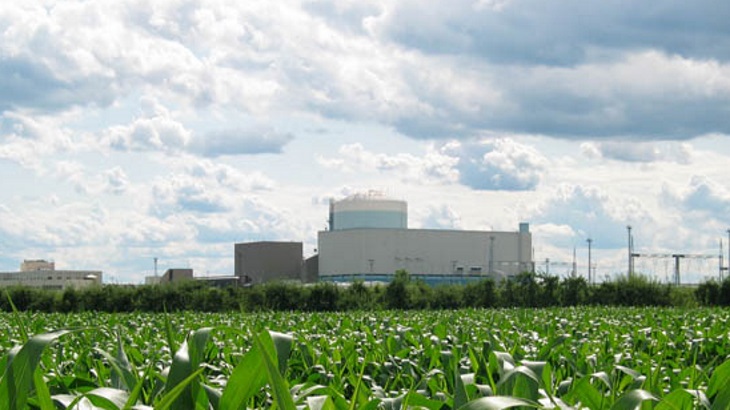
The Krško plant (Image: NEK)
A SALTO peer review is a comprehensive safety review addressing strategy and key elements for the safe long-term operation (LTO) of nuclear power plants. SALTO missions complement OSART missions which are designed as a review of programmes and activities essential to operational safety.
The IAEA team noted the progress in measures taken by the operator to ensure safe LTO. "The professionalism, openness and receptiveness for improvements of plant staff to meet and move beyond the IAEA safety standards is commendable," said team leader and IAEA Nuclear Safety Officer Martin Marchena, who noted that most ageing management and LTO activities were already in alignment with IAEA safety standards. "We encourage the plant to address the review findings and proceed with the implementation of all remaining activities for safe LTO."
"We appreciate the IAEA's support to our plant in ageing management and preparation for safe LTO," said Gorazd Pfeifer, President of the Krško board of management. "It is very important for us to get an external view on our business. The competencies and experience of the IAEA team enable us to effectively identify areas for improvement. The results of this mission will help us to improve our activities for safe LTO and to further align them with IAEA safety standards."
The team provided a draft report to the plant management and to the Slovenian Nuclear Safety Administration (SNSA) at the end of the mission. The plant management and SNSA will have an opportunity to make factual comments on the draft. A final report will be submitted to the plant management, SNSA and the Slovenian government within three months.
EDF 'just seeking to ensure Czech project meets EU rules'
French company EDF says the goal of its legal challenge to the decision to award the contract for new nuclear capacity in the Czech Republic to Korea Hydro & Nuclear Power is to ensure it is "in accordance with European regulatory rules".
The background
The Czech Republic is planning new nuclear capacity and in July last year announced KHNP was the preferred bidder, ahead of EDF. The KHNP bid was said to be for around CZK200 billion (USD8.6 billion) per unit, if two were contracted. EDF brought a case to the Czech competition authority challenging the tender process, which was dismissed last month. That cleared the way for the planned signing of the official contracts with KHNP on 7 May. However EDF succeeded in securing a last-minute court injunction in a Czech regional court on 6 May to stop the contract being signed until its case relating to the tender process has been heard in court. Last week the project development company Elektrárna Dukovany II appealed to the Czech Supreme Administrative Court to get the injunction lifted, with KHNP also filing an appeal.
In addition to the court cases, it also emerged that Stéphane Séjourné, European Commissioner for Industrial Strategy, had written on 2 May to ask for the contract signature to be postponed because the European Commission had started a preliminary review "to assess whether potential foreign financial contributions received by the Party (KHNP) constitute foreign subsidies and, if so, whether those foreign subsidies distort the internal market with respect to the project". The Czech Ministry of Industry and Trade dismissed the request, calling it a "courtesy letter" that was not legally binding.
Following Czech-EU talks there was an agreement last week to act quickly to start consultation to "clarify all legal and technical issues related to the EPC contract". According to a Reuters report this week the signing of the final contract might now be delayed until after the Czech general election in October.
What is EDF's case?
Throughout the legal challenge the French company has largely avoided public statements about the case, but Vakis Ramany, EDF's Senior Vice President International Nuclear Development, has now given his first interview since last September, to Czech media outlets including Info.cz. In it he said that the KHNP offer price and the inclusion of a guarantee that the construction would not be delayed or become more expensive, would be "unfeasible without illegal state aid given the prices in the nuclear industry". He said EDF's case was of their rival bidder having state support which would breach European Union rules. The EDF allegation was based on "information that is publicly available, including in the Korean press, and on the basis of statements by the Czech government, in particular on 17 July last year". (which was when the result of the tender was announced).
Asked about the anger and concern in the Czech Republic caused by the legal challenge, he said: "I understand that. That is why we are trying to explain our actions. But I want to make it clear to everyone that at this moment, it is absolutely not in France's interest to prevent the construction of new nuclear reactors in the Czech Republic ... our goal is clear. To ensure that the project to be built in the Czech Republic is implemented in accordance with European regulatory rules. And that it will be beneficial for Europe, but first and foremost for the Czech Republic and its industry ... If it is proven that there is no state subsidy from South Korea, then we understand that it is in your interest to build a new Korean nuclear power plant in the Czech Republic."
On the price offered, Ramany said that the KHNP reactor has a capacity of 1000 MW and EDF's one is 1200 MW and "when we convert that to the same capacity, our offer comes out almost the same ... the difference was really minimal. I am bound by a confidentiality agreement, but the price difference was a few percent".
Asked about the lack of a guarantee against price increases and delays, he said that EDF had learned from its Olkiluoto 3, Flamanville and Hinkley Point C projects, saying it had "become clear how enormous the risks are in today's highly complex European regulation and law, and that companies cannot directly influence them. That is why I argue that no-one without state subsidies is able to fully assume these risks. Economically, it simply cannot work. I know what I'm talking about. We've been through it. And we are the only Western company currently building in Europe".
He said EDF can guarantee the technology it supplies, the EPR reactor, and full support for the licensing process and it 100% guarantees the time and price of that work. It also guarantees the procurement. Together these account for more than 50% of the total price, he says. But he adds that they cannot have full control of construction as "this is where Czech and European laws and regulations come into play, which open up enormous possibilities for various obstructions and delays". "How can we guarantee how quickly the Czech authorities will decide on all the necessary construction permits? How can we influence who appeals against it and how? How quickly will the courts decide? Bear in mind that this will be the first nuclear reactor to be built here in 25 years. None of those who will be making the decisions have any recent experience with licensing nuclear reactors," he says.
On the issue of localisation of work, he says that EDF's bid guaranteed 40% of the total contract for Czech companies which could increase to 60% and "if four units were to be built, Czech companies would receive contracts worth CZK350 billion". He said their bid also "includes a share for Czech suppliers in other contracts in Europe" and "with 16 European projects under consideration in France and other countries, that would be CZK750 billion".
What have the Czech side, and KHNP said?
When the contract was announced in July last year KHNP's CEO Jooho Whang said: "I believe the primary reason the Czech government selected KHNP as the preferred bidder is because they recognised KHNP’s excellence in project management and construction capabilities, demonstrated by construction of 36 Korean nuclear reactors at home and abroad.
"Following KHNP’s successful project in the UAE, I expect that KHNP will play a pivotal role not only for Korea but globally in achieving energy security and carbon neutrality by constructing Korean nuclear reactors in the Czech Republic. A nuclear project involves long-term cooperation spanning approximately 100 years, covering construction through to operation. KHNP aims to solidify a 100-year friendship between the Czech Republic and Korea by constructing an APR1000 nuclear power plant. We will remain dedicated and exert our utmost efforts until the closing moments as we approach the upcoming negotiations with the project owner to ensure that the APR1000 reactor is built in the country."
Also on that day, Czech Minister of Industry and Trade Jozef Síkela said "it is clear that the preferred bidder offered a better price and more reliable guarantees of cost control, as well as the schedule of the entire project".
After the court injunction was granted earlier this month, KHNP issued a statement saying that it would "respect the Czech legal procedures and faithfully comply with all related laws and regulations" but believes the bidding process "was conducted fairly, transparently, and legally" and it was "very sorry about the competitor’s continued attempts to undermine the bidding results".
The Dukovany II Power Plant (EDU II) project company is seeking to lift the court injunction and it said earlier this month that the tender for the supplier of the new nuclear units "was carried out in all phases in a fully transparent manner and under fair conditions". In a 12 May statement it added: "EDF is at the same time challenging the Foreign Subsidies Regulation. EDF is concerned that the Korean side has given such favorable terms that they cannot be true. We consider this to be speculation by the unsuccessful bidder - the tender participants do not and must not have any information about the content of other bids except their own."
A statement published by the Czech Ministry of Industry and Trade on 14 May said Vlček had promised "all necessary cooperation" with the European Commission and also said that, "according to the expert opinion of the Ministry of Industry and Trade, the EPC contract with the company KHNP was not subject to the Regulation on Foreign Subsidies. This was due to both the nature of the contract itself and the fact that the tender procedure had been initiated before the effective date of this Regulation".
Nuclear power in the Czech Republic
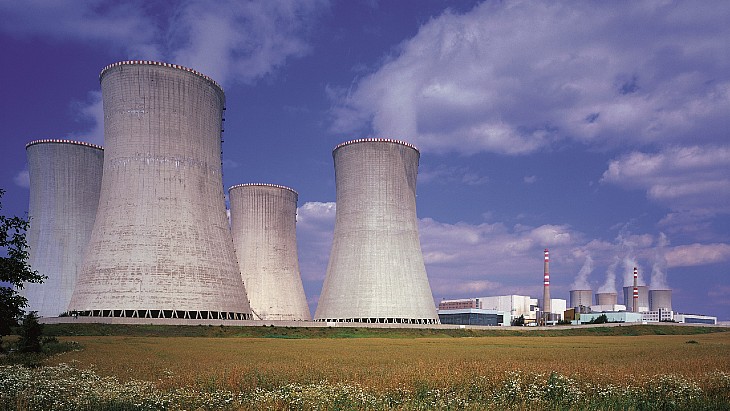
The Czech Republic currently gets about one-third of its electricity from the four VVER-440 units at Dukovany, which began operating between 1985 and 1987, and the two VVER-1000 units in operation at Temelín, which came into operation in 2000 and 2002.

No comments:
Post a Comment