G-7 works to secure critical minerals in face of China curbs

The Group of Seven leading economies are working to shore up supplies of critical minerals as they seek to move away from reliance on China for materials used in everything from mobile phones to wind turbines.

G-7 leaders aim to agree to a statement at their meeting in Kananaskis, Canada, to establish an “action plan” to diversify supplies of the vital metals and encourage “immediate and scaled investment” in projects, according to a draft document obtained by Bloomberg. Without mentioning China — which accounts for almost 70% of the world’s production of rare earths — they mentioned the “threat to our economies” of current practices in the sector.
“We have shared national and economic security interests, which depend on access to resilient critical minerals supply chains governed by market principles,” according to the draft, according to the draft, which is still subject to changes before its adoption by leaders. “Non-market policies and practices in the critical minerals sector threaten our ability to acquire many critical minerals, including the rare earth elements needed for magnets, that are vital for industrial production.”
The risks to western economies posed by the reliance on China for key resources used in a wide range of manufacturing industries has been laid bare since April when in retaliation to US President Donald Trump’s tariffs, the Asian nation tightened export controls on seven types of rare earths, having already rolled out similar curbs on other critical materials such as gallium, germanium, graphite and antimony, over the previous two years.
“We recognize the need to work together to increase investment in responsible critical minerals projects within the G-7 and around the world,” the draft document said. “Immediate and scaled investment is required to secure future supply chains and ensure promising mining and processing projects overcome barriers such as delays in permitting and approvals processes, market manipulation, and price volatility.”
The statement also encouraged multilateral development banks and private sector lenders “to make further capital available for investment in standards-based critical minerals projects, including through innovative financing.”
The G-7 is composed of the US, Canada, Japan, Germany, the UK, France, and Italy, as well as the European Union.
(By Jorge Valero)
Rare earth boss sees ‘long, hard process’ to loosen China’s grip
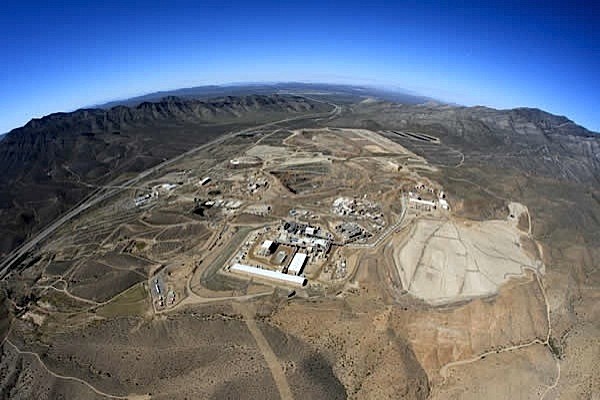
Western nations will take years to develop enough rare earth processing capacity to limit China’s dominance over the critical ingredients, according to industry veteran and former Molycorp Inc. boss Mark Smith.
Beijing, which has been curbing some critical mineral exports since 2023, tightened sales of seven rare earths in April, in response to aggressive tariffs from Washington. The squeeze caught key buyers unprepared. The Trump administration is now using Cold War-era powers to prioritize and fund rare earth mining projects it deems strategic.
“It’s clearly a wake up call, and unfortunately we waited until now to really listen to that call,” Smith said in an interview last week. “We need to have capabilities so that we have something more than zero.”
When China last used its grip on rare earth metals in a diplomatic dispute — temporarily cutting off exports to Japan 15 years ago — Smith was running the only rare earth mine in the US, as chief executive officer of Molycorp. As prices zoomed higher, he attempted to build out a mines-to-magnets supply chain.
The plan faltered, not least in the wake of falling prices as Chinese exports resumed, and Smith left in 2012. Burdened with debt and tough Chinese competition, the company eventually filed for bankruptcy in 2015.
Molycorp “needed more support, and they could not get it from the government at that time,” Smith said.
Smith is now CEO of NioCorp Developments Ltd. and along with a number of former colleagues from Molycorp, is developing a new mine in Nebraska which could produce rare earth elements as byproducts, including terbium and dysprosium, which Beijing started controlling earlier this year. It will also extract scandium, a relatively abundant rare earth, along with minor metals niobium and titanium.
Permitting pains
The Nasdaq-listed company has all the environmental permits it needs and is applying for a grant from the US Department of Defense, as well as loans from the Export-Import Bank of the United States and its UK and German equivalents, Smith said. It will then begin the three-year process of building the mine as soon as later this year, he added.
“We have all of our permits in hand to start construction today,” Smith said. “Almost every other mining project that I can think of in the United States is into the permitting nightmare of litigation and appeals.”
Even with “zero permitting risk,” production would start in 2029 at the earliest — a reminder of just how long even approved mines can take to get to production, even when companies and governments around the world are frantically trying to find sources of supply.
Smith argues the last crisis was a cautionary tale. Tokyo set about reducing reliance on China, using government money to create a stockpile and invest in a mine in Australia run by Lynas Rare Earths Ltd.
In 2010, Japan “saw the issue and did something to deal directly with it — they supported Lynas,” Smith said over video chat. The company is now one of the largest miners and refiners outside of China, and supplies about 30% of Japan’s rare earth needs. It was not an overwhelming win — not least given the time required and cost — but a crucial one.
The reaction in the US was different. While firms and the government initially looked to build up domestic suppliers, a subsequent crash in prices meant Chinese companies were the cheapest suppliers. That mistake is now being rectified.
Seeking alternatives
“Every time we go to Washington, DC, all that we hear about is critical strategic minerals, particularly the heavy rare earths,” he said. “They are the number-one priority in the country right now.”
Past efforts to push back have made a difference, though.
The successor to Molycorp, now called MP Materials Corp., produces neodymium and praseodymium elements used in magnets. Smith argues it’s because of the existence of Lynas and MP Materials that China didn’t impose export controls on those two elements — a supply chain Beijing doesn’t completely control.
However, no firm outside of China can yet produce significant quantities of the terbium, dysprosium or samarium limited by Beijing and necessary for magnets to endure high operating temperatures. By far the biggest sources of those elements have been in China and Myanmar, with almost all the refining and processing done at Chinese plants.
“We have resources in the United States. We have resources in Australia. We have resources in Canada. Those are the ones that we need to go after,” said Smith.
“We need to start building the facilities that we need, onshore, to address this problem,” but it’s going to be a “long, hard process” until these metals can be produced at volume and do away with China’s negotiating card, he said.
(By James Mayger and Martin Ritchie)
Rainbow Rare Earth, Mosaic begin economic assessment on REE extraction in Brazil
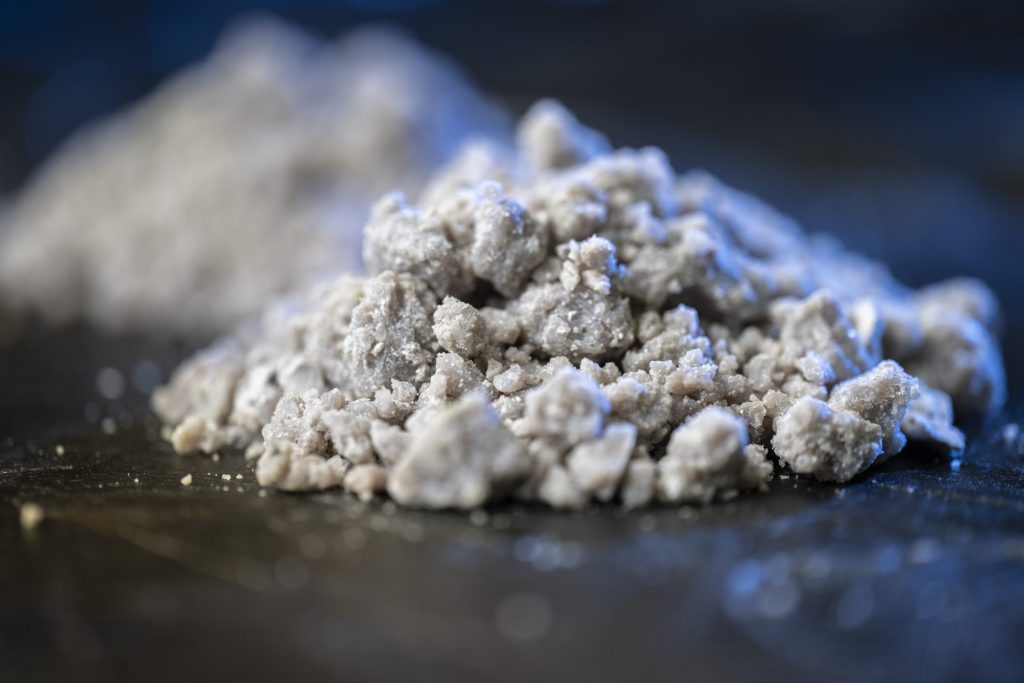
Rainbow Rare Earths (LON: RBW), in collaboration with Mosaic, has kicked off work on an economic assessment (EA) for the recovery of rare earth elements (REEs) from the Uberaba phosphogypsum project in Brazil.
The EA, says Rainbow, is intended to allow for both parties to understand the project’s economics ahead of considering a partnership to potentially replace the current non-binding memorandum of understanding.
Mosaic, the world’s leading producer of concentrated phosphates and potash crop nutrients, is the project’s owner.
According to Rainbow, the Uberaba phosphogypsum contains valuable REEs that occur as byproducts of the phosphoric acid (phosacid) production operations on site, and its pioneering IP can be applied to recover these minerals.
The material is similar in nature to its Phalaborwa project in South Africa, as it’s based on a hard rock carbonatite phosphate deposit, which is mined to initially produce a phosphate slurry feed that is then processed into phosacid using sulphuric acid, the company said.
This process, it added, delivers phosphogypsum material that contains most of the REE present in the phosphate slurry feed.
While public data is not available on the size of the Uberaba resource, initial indications are that it could be significantly larger than Phalaborwa, Rainbow has said. In addition, Mosaic’s phosacid operations are ongoing and are based on long-life phosphate mines, meaning that new phosphogypsum is deposited on the stacks annually.
“Uberaba is an exciting project for Rainbow, given the technical similarities with Phalaborwa; however, it represents a significantly larger economic opportunity over the long-term due to the sheer scale of the planned annual feed rate and the long-term nature of the underlying phosphate deposit,” Rainbow CEO George Bennett said in a news release Tuesday.
As at Phalaborwa, the Uberaba phosphogypsum is amenable to direct acid leaching, with test work to date demonstrating that between 31% and 65% of the REEs can be readily extracted, Rainbow said on its website.
Assay work has returned grades of between 0.45% and 0.79% total rare earth oxides, with Nd/Pr being 24.5% of the rare earths basket, plus economic quantities of Dy and Tb. The average grade, which will be used in the EA, is 0.58% TREO.
EA details
Under the existing MOU, Rainbow and Mosaic have developed a process flowsheet for extracting REEs from the Uberaba stack for the EA work.
The flowsheet would receive phosphogypsum from the Uberaba phosacid process facility and treat the material for REE extraction. The chemically processed and cleaned phosphogypsum stream is then returned to Mosaic’s facility.
The EA envisages an operation processing capacity totalling 4.3 million tonnes of phosphogypsum per annum, which is around twice the annual size of Phalaborwa.
As at Phalaborwa, the EA is based on the establishment of a single hydrometallurgical plant on site, which will refine the material into separated rare earth oxides of +99% purity, Rainbow said.
The EA will be based on an initial project life of 15 years. Due to the life of mine of the underlying phosphate resource feeding the phosacid plant at Uberaba, recovery of rare earths can be expected to extend for a far longer period.
The third-party costs of $230,000 to develop the EA will be shared equally between Rainbow and Mosaic, as the companies had agreed in the MOU.

No comments:
Post a Comment