Around 30 graves from the Viking Age were found by accident when pearls, coins, ceramics and a box containing gold thread were unearthed in a construction site near Lisbjerg near the city of Aarhus in Denmark. Archaeologists believe that the burial site most likely belonged to a noble family that lived during the reign of King Harald Bluetooth in the 10th century AD.
Issued on: 17/06/2025 -
By: FRANCE 24
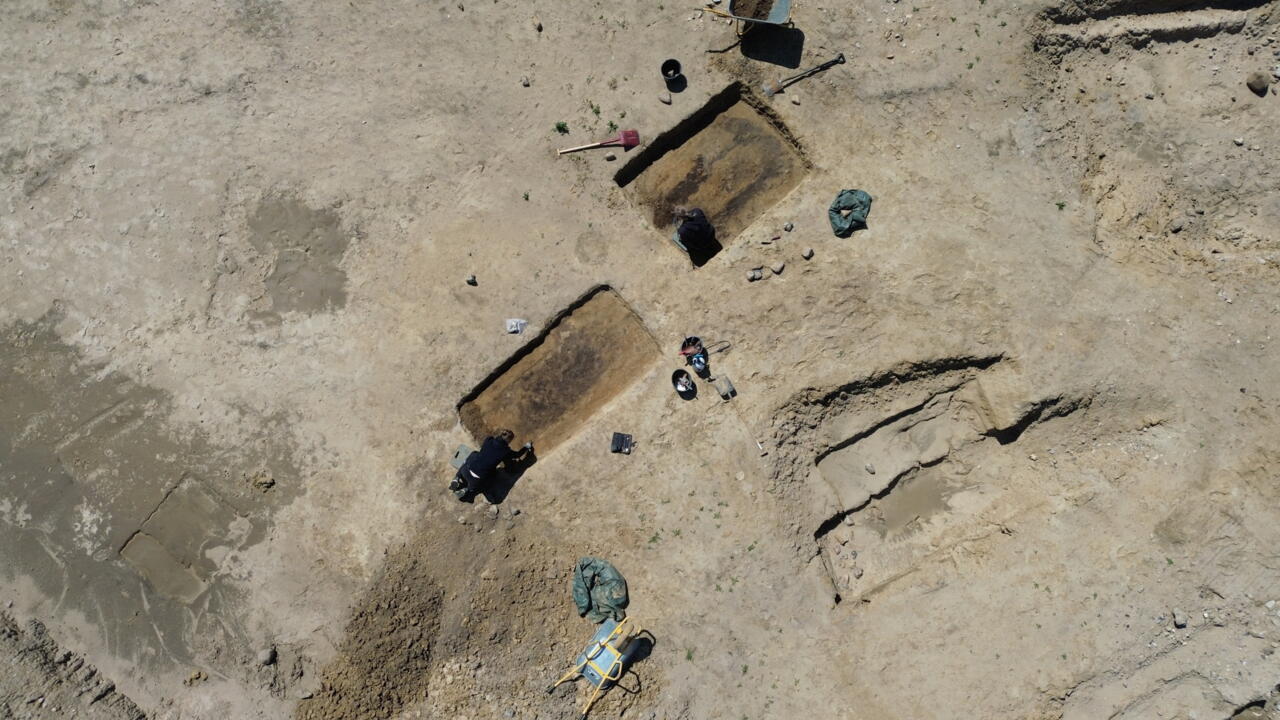
An aerial photo shows archaeologists working at a Viking Age burial site in Lisbjerg, a village seven kilometres north of Aarhus, Denmark's second-largest city, on June 13, 2025. © James Brooks, AFP
A 10th-century burial site believed to have belonged to a Viking noble family has been discovered by accident in northern Denmark, packed with a "spectacular" trove of ancient objects, a museum announced Tuesday.
The discovery came when pearls, coins, ceramics and a box containing a gold thread were unearthed during construction work near Lisbjerg, a village located seven kilometres north of Aarhus, Denmark's second-largest city.
Archaeologists found the site contained around 30 graves dating from the second half of the 10th century, when the famous King Harald Bluetooth reigned, said the Moesgaard Museum in Aarhus.
A 10th-century burial site believed to have belonged to a Viking noble family has been discovered by accident in northern Denmark, packed with a "spectacular" trove of ancient objects, a museum announced Tuesday.
The discovery came when pearls, coins, ceramics and a box containing a gold thread were unearthed during construction work near Lisbjerg, a village located seven kilometres north of Aarhus, Denmark's second-largest city.
Archaeologists found the site contained around 30 graves dating from the second half of the 10th century, when the famous King Harald Bluetooth reigned, said the Moesgaard Museum in Aarhus.
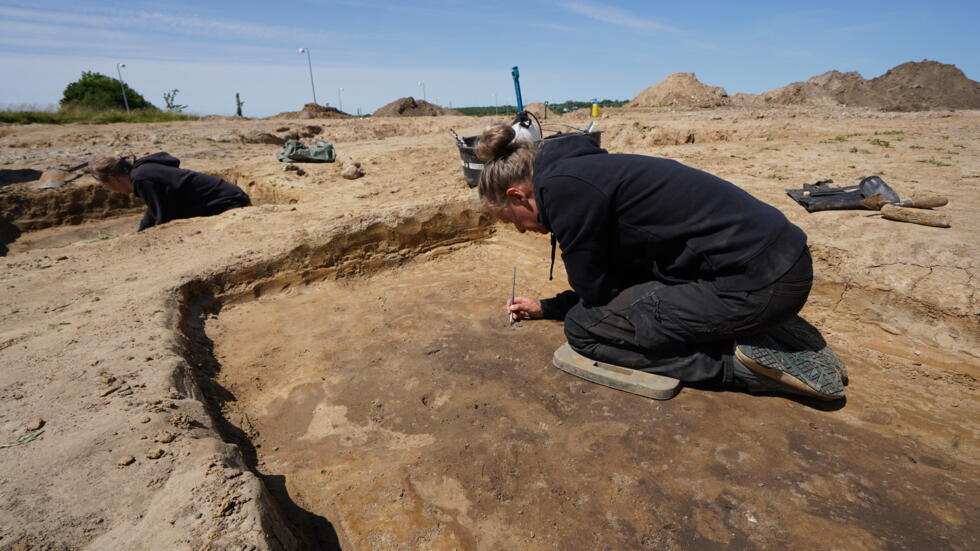
An archaeologist works at a Viking Age burial site in Lisbjerg, a village seven kilometres north of Aarhus, Denmark’s second largest city, on June 13. © James Brooks, AFP
According to the museum's archaeologist Mads Ravn, the graves are most likely linked to a noble family from the Viking Age – which lasted between the eighth and 11th centuries – whose farm was discovered less than a kilometre from the burial site in the late 1980s.
"This could have been one of Harald Bluetooth's earls or stewards," Ravn told AFP.
Ravn noted that the king, who introduced Christianity to what is today Denmark, tasked nobles with managing certain regions.
Researchers also discovered some human remains, such as teeth and bones, at the site.
"People basically took what was important to them into the grave because they wanted to transfer it to the other world," the archaeologist said.
According to the museum's archaeologist Mads Ravn, the graves are most likely linked to a noble family from the Viking Age – which lasted between the eighth and 11th centuries – whose farm was discovered less than a kilometre from the burial site in the late 1980s.
"This could have been one of Harald Bluetooth's earls or stewards," Ravn told AFP.
Ravn noted that the king, who introduced Christianity to what is today Denmark, tasked nobles with managing certain regions.
Researchers also discovered some human remains, such as teeth and bones, at the site.
"People basically took what was important to them into the grave because they wanted to transfer it to the other world," the archaeologist said.
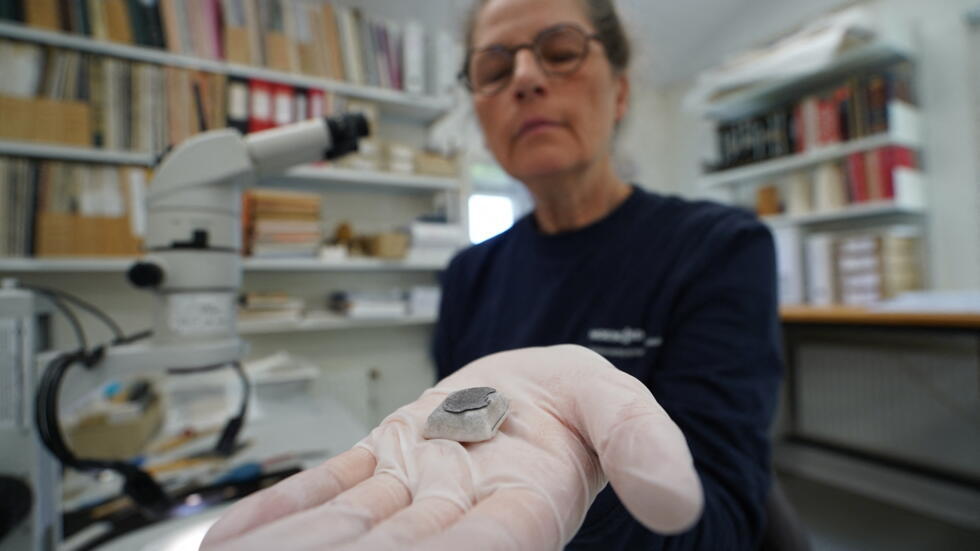
Conservator Helle Strehle holds a Viking Age silver coin discovered at a Viking Age burial site in Lisbjerg, a village seven kilometres north of Aarhus, Denmark's second largest city, on June 13. © James Brooks, AFP
One of the graves, which scientists believe belonged to an important woman, contained a box filled with decorative objects and a pair of scissors.
The "magnificent" box is a remarkable find, according to Ravn, with only a few having been discovered before, including one in southeastern Germany.
"It's very rare, there's only three of them we know of," he said.
One of the graves, which scientists believe belonged to an important woman, contained a box filled with decorative objects and a pair of scissors.
The "magnificent" box is a remarkable find, according to Ravn, with only a few having been discovered before, including one in southeastern Germany.
"It's very rare, there's only three of them we know of," he said.
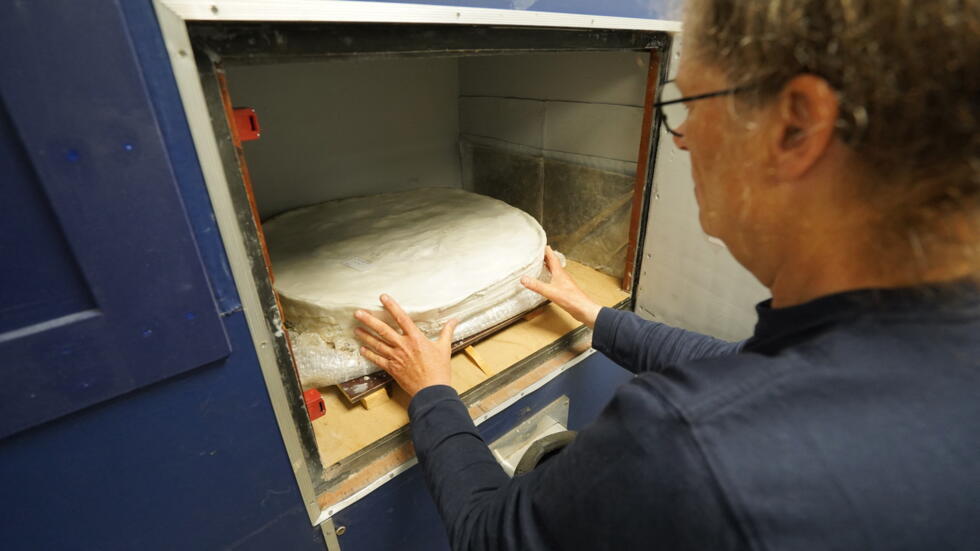
Conservator Helle Strehle places a preserved Viking Age casket discovered at Lisbjerg into an x-ray machine at Moesgaard Museum's labs in Aarhus, Denmark, on June 13. © James Brooks, AFP
The excavations at Lisbjerg are due to be completed this week, after which experts will begin a thorough analysis of the objects recovered.
Wooden objects in particular should help them accurately date the burial site.
As a royal and commercial centre, Aarhus was one of Denmark's most important cities during the Viking Age.
(FRANCE 24 with AFP)
The excavations at Lisbjerg are due to be completed this week, after which experts will begin a thorough analysis of the objects recovered.
Wooden objects in particular should help them accurately date the burial site.
As a royal and commercial centre, Aarhus was one of Denmark's most important cities during the Viking Age.
(FRANCE 24 with AFP)

No comments:
Post a Comment