.jpg)
World Bank: Economy set for worst run since 2008 outside of recessions
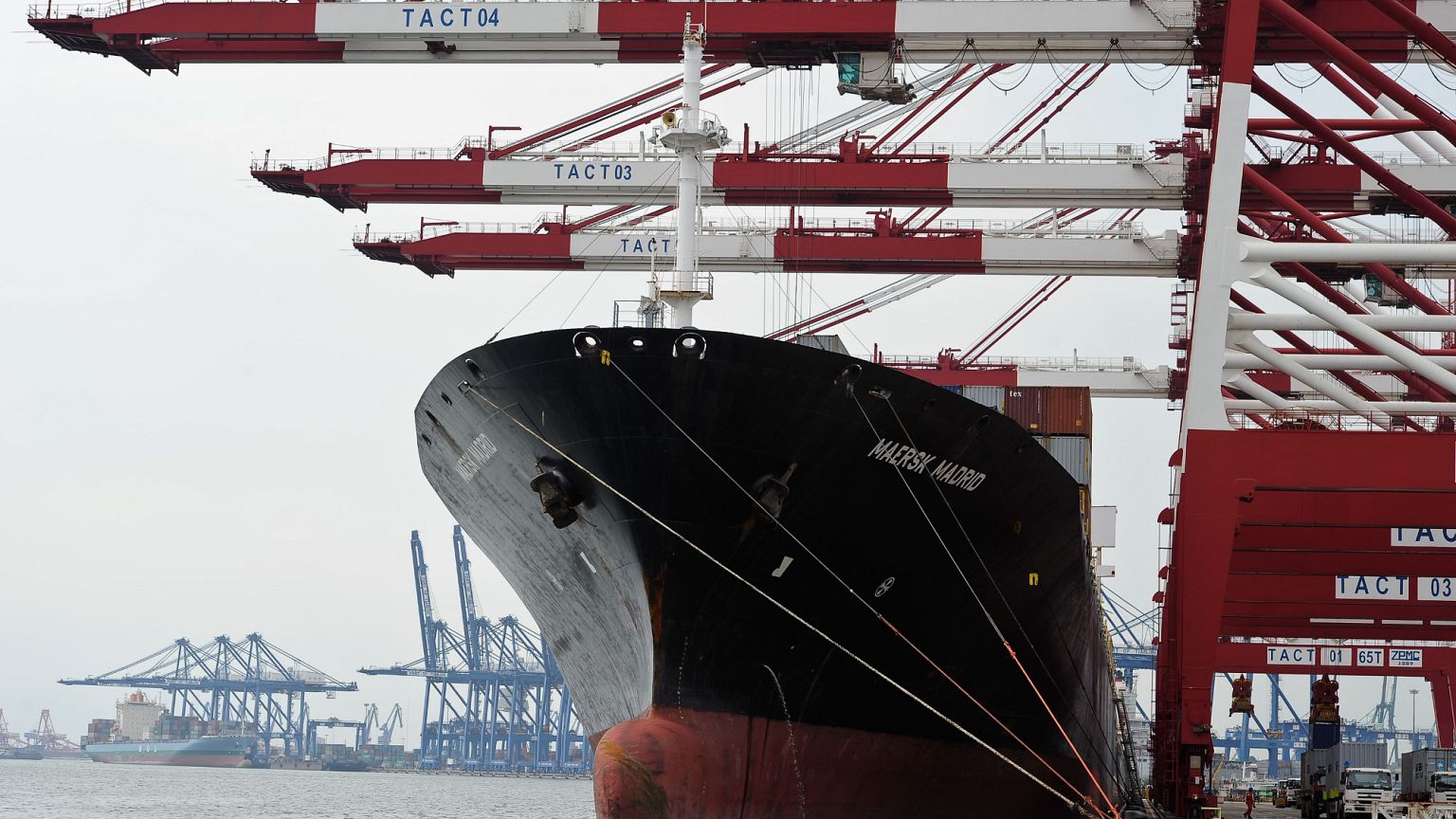
The group has cut its growth forecasts in nearly 70% of all economies — across all regions and income groups.
Trade frictions and policy uncertainty, notably linked to US tariffs, are expected to drive global growth down this year to its slowest pace since 2008 outside of outright global recessions.
That’s according to the World Bank’s latest Global Economic Prospects report, released on Tuesday.
Although the world was nearing a post-pandemic “soft landing” just six months ago, the bank noted that “the world economy today is once more running into turbulence”.
The group cut growth forecasts in nearly 70% of all economies. When it comes to global expansion, this total is projected to slow to 2.3% in 2025, nearly half a percentage point lower than the rate expected at the start of the year.
A global recession is not on the cards, but if forecasts for the next two years materialise, average global growth in the first seven years of the 2020s will be the slowest of any decade since the 1960s — according to the World Bank.
Aside from trade and policy uncertainty, barriers to global growth include rising geopolitical tensions, increasingly common extreme climate events, and slower-than-expected growth in major economies, which risks global spillovers.
“Outside of Asia, the developing world is becoming a development-free zone,” said Indermit Gill, the World Bank Group’s Chief Economist and Senior Vice President for Development Economics.
“It has been advertising itself for more than a decade. Growth in developing economies has ratcheted down for three decades—from 6% annually in the 2000s to 5% in the 2010s — to less than 4% in the 2020s. That tracks the trajectory of growth in global trade, which has fallen from an average of 5% in the 2000s to about 4.5% in the 2010s—to less than 3% in the 2020s. Investment growth has also slowed, but debt has climbed to record levels.”
Progress by emerging market and developing economies (EMDEs) in closing per capita income gaps with advanced economies and reducing extreme poverty is also anticipated to weaken, said the World Bank. The group called for more support to address long-standing challenges, including the effects of climate change.
Across EMDEs, governments should focus on containing inflation risks and strengthening fiscal resilience by reprioritising spending, said Tuesday’s report.
Global growth could rebound faster than expected if major economies are able to mitigate trade tensions, added the World Bank.
The analysis finds that if today’s trade disputes were resolved with agreements that halve tariffs relative to their levels in late May, global growth would be 0.2 of a percentage point stronger on average over the course of 2025 and 2026.
By AFP
June 10, 2025

Germany's economy has struggled in recent years in the face of high production costs at home, increasingly fierce Chinese competition and growing global trade tensions fired by US President Donald Trump - Copyright AFP JULIEN DE ROSA
Beiyi SEOW
The World Bank slashed its 2025 global growth forecast Tuesday, citing trade tensions and resulting policy uncertainty, as US President Donald Trump’s wide-ranging tariffs strained ties and weighed on economic outlooks.
The bank lowered its projection for global GDP growth to 2.3 percent in its latest economic prospects report, down from 2.7 percent expected in January, the latest in a series of downgrades by international organizations.
“That’s the weakest performance in 17 years, outside of outright global recessions,” said World Bank Group chief economist Indermit Gill.
Global growth and inflation prospects for this year and next have worsened because of “high levels of policy uncertainty and this growing fragmentation of trade relations,” he added.
“Without a swift course correction, the harm to living standards could be deep,” Gill warned.
By 2027, the World Bank expects global GDP growth to average 2.5 percent in the 2020s, which would be the slowest rate in any decade since the 1960s.
The gloomier projections come after Trump imposed a 10 percent tariff on imports from almost all US trading partners in April — and higher rates on dozens of these economies, which he has since suspended until early July.
He also engaged in tit-for-tat escalation with China, although both countries have hit pause on their trade war and temporarily lowered these staggering duties. But a lasting truce remains uncertain.
– US slowdown –
The US economy is expected to grow by 1.4 percent this year, a sharp slowdown for the world’s biggest economy from a 2.8 percent expansion in 2024.
If US tariffs on imports rose another 10 percentage points, triggering proportional retaliation, the shock to international trade and financial markets could cut world growth by 0.5 percentage points this year, the report added.
While the World Bank’s overall growth downgrade was proportionately larger for advanced economies, the bank cautioned that less wealthy countries have tricky conditions to contend with.
Commodity prices are expected to remain suppressed in 2025 and 2026, Gill said.
This means that some 60 percent of emerging markets and developing economies — which are commodity exporters — have to deal with a “very nasty combination of lower commodity prices and more volatile commodity markets.”
By 2027, while the per capita GDP of high-income economies will be approximately where it was in pre-pandemic forecasts, corresponding levels for developing economies would be six percent lower.
“Except for China, it could take these economies about two decades to recoup the economic losses of the 2020s,” Gill cautioned.
Overall, although GDP growth expectations have been revised downwards, inflation rates have been revised up, he said. The bank also urged policymakers to contain inflation risks.
Despite trade policy challenges, however, Gill argued that “if the right policy actions are taken, this problem can be made to go away with limited long-term damage.”
He urged for the “differential in tariff and non-tariff measures with respect to the US” to be quickly reduced by other countries, starting with the Group of 20 which brings together the world’s biggest economies.
“Every country should extend the same treatment to other countries,” he added.
This month, the Paris-based Organisation for Economic Co-operation and Development also slashed its 2025 global growth forecast from 3.1 percent to 2.9 percent, warning that Trump’s tariffs would stifle the world economy.
This came after the International Monetary Fund in April cut its world growth expectations for this year too on the effects of Trump’s levies, from 3.3 percent to to 2.8 percent.

No comments:
Post a Comment