Preah Vihear Temple row EXPLAINED: The Hindu Shiva temple at the heart of Thailand-Cambodia border dispute
The Prasat Preah Vihear or Preah Vihear Temple is located within Cambodia, the International Court of Justice has ruled but Thailand refused to stand down due to political pressure
At least 12 lives have been lost, including a soldier and a child, after armed clashes erupted on Thursday between Thailand and Cambodia in long-disputed border areas, rapidly escalating months of tension. This marked the second armed confrontation since a Cambodian soldier was shot dead in May and represented a major escalation, occurring hours after the two countries downgraded diplomatic relations following a landmine explosion that injured Thai soldiers.
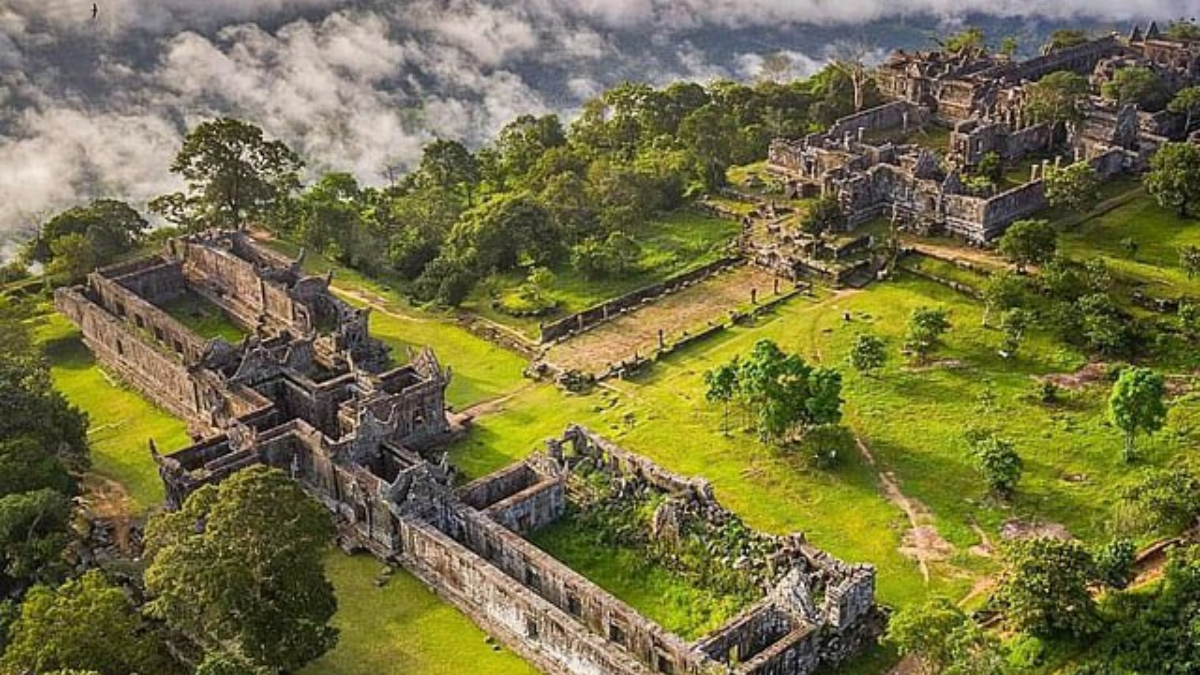
At the heart of the conflict between the two neighbours is an 11th-century Shiva temple -- the Prasat Preah Vihear. Both countries lay claim to the temple, which is the root cause of the standoff. Over the years, clashes stemming from this issue have resulted in civilian and military casualties on both sides.
Following the killing of a Cambodian soldier in May, Thai-Cambodian bilateral relations plummeted to their lowest point in over a decade.
In the past two months, the world has witnessed Cambodia banning imports from Thailand, according to the BBC. Both countries have also sent additional forces to the border. As the region fears the conflict escalating, here is what you need to know about the temple:
The Preah Vihear Temple and UNESCO
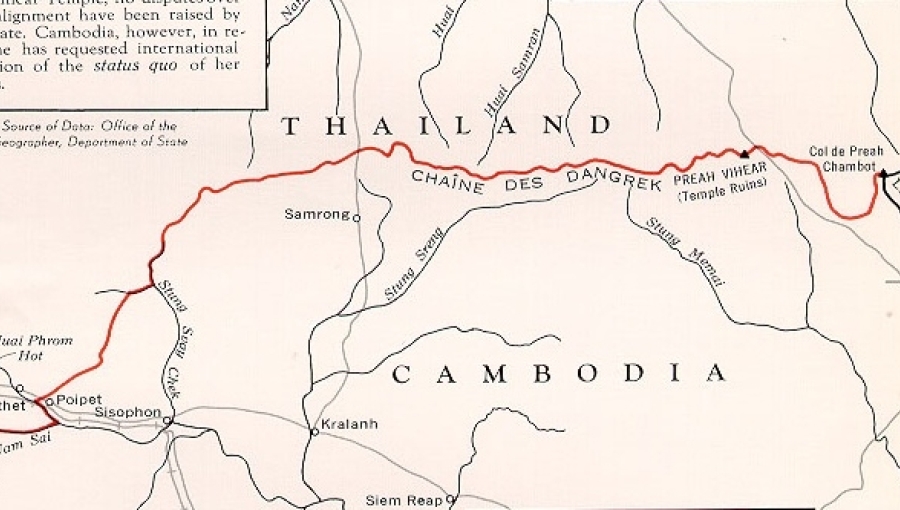
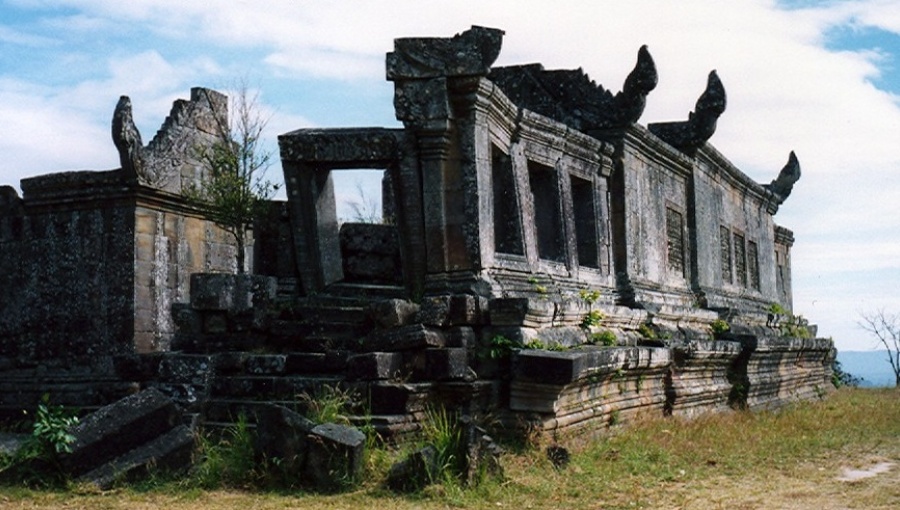
The Preah Vihear Temple, also known as Prasat Preah Vihear, was built during the Khmer Empire by King Udayadityavarman II. This Shiva temple is located atop a cliff on the Cambodia–Thailand border in the Dângrêk Mountains.
The borders of the two nations were drawn after the French occupation of Cambodia, which ended on 9 November 1953. However, the dispute between the two countries thus dates back more than a century.
During those times, Cambodia was French Indochina, and Thailand was Siam. While the demarcation by colonial masters placed the temple on the Cambodian side, Thailand began claiming sovereignty over the land around it over the years. When the matter reached the International Court of Justice (ICJ) in 1962, the ruling favoured Cambodia. Thailand was ordered to withdraw its forces from the temple's vicinity. This led to Bangkok changing its stance to dispute the exact demarcation of the 4.6 square kilometres surrounding the temple, rather than the monument itself.
Things took an ugly turn in 2008 when Cambodia attempted to register an 11th-century temple located in the disputed area as a UNESCO World Heritage Site – a move that was met with heated protest from Thailand.
In 2013, Cambodia secured another ICJ ruling in its favour, clarifying that the country had sovereignty over the entire promontory of Preah Vihear, including the contested area. However, by that time, their attempt to get UNESCO heritage site status had already been exploited by Thai nationalists and the right-wing as a political weapon against the then-incumbent government, according to reports. This resulted in recurring armed clashes from 2008 to 2013 (until the second ICJ order was issued) along the temple border area, particularly over the disputed 4.6 square kilometres.
Thailand-Cambodia conflict
"Fighting must first stop between Thailand and Cambodia before there can be negotiations," Thailand's acting premier said on Thursday. Caretaker Prime Minister Phumtham Wechayachai told a press conference that there had been no declaration of war and the conflict was not spreading into more provinces. He added that Cambodia had fired heavy weapons into Thailand without any specific targets, resulting in civilian deaths.
Cambodian residents voice fears amid ongoing conflict with Thailand at Ta Moan Thom temple
The outbreak of armed clashes near Ta Moan Thom temple has prompted several residents in Oddar Meanchey province to flee their homes in search of safety. Others living in nearby border areas remain on alert and are prepared to evacuate should the situation escalate further, according to Kiripost.
Following the recent exchange of fire between Cambodian and Thai troops at Ta Moan Thom temple, some families in the border zones, particularly in Oddar Meanchey, have begun relocating to safer areas. Meanwhile, many locals have expressed growing anxiety over the violence and say they are ready to leave at a moment’s notice if necessary.
Yem Phalla, a 50-year-old entrepreneur based in Banteay Meanchey province, told Kiripost, “My brother lives near O’ Smach, close to Ta Moan temple, where he sells goods to soldiers and Chinese workers. Since the fighting broke out, he’s been making preparations to leave for somewhere safer.”
Phalla noted that others in the community have already relocated, with some heading to Siem Reap province for refuge.
Efforts by Kiripost to obtain a comment from Oddar Meanchey Governor Mean Chanyada were unsuccessful, as he stated he was currently unavailable to speak with the media.
In Banteay Meanchey province, particularly in areas surrounding the Poipet International Border Gate, residents also expressed apprehension. “I’ve already asked my wife to pack a few essentials,” Phalla added. “If the situation turns critical, we’ll have to leave, though I’m not yet sure where we’ll go.”
Ben Choeum, a soldier stationed near the Malai border crossing in the same province, reported that while his immediate area remains calm, other zones are more volatile. He has been instructed to remain on standby to secure the crossing point.
“Although the Malai area is currently quiet, the situation near Ta Moan is far more dangerous,” he said. “If all troops are deployed to the front lines, who will guard the crossing?”
Former Prime Minister Hun Sen confirmed that Thai artillery units have been shelling locations within Oddar Meanchey and Preah Vihear provinces. He appealed to the public to stay calm and maintain normalcy across the country, except in the border regions currently under attack.
Yem Dany, a resident of Preah Vihear province, told Kiripost she had heard the sound of fighting earlier but said her village has since returned to a state of calm.
“Everything seems back to normal now,” she said. “People are continuing with their daily routines, some have even resumed farming.”
Kim Sokhum, a migrant worker who recently returned from Thailand due to the growing tension, expressed concern for her husband, who remains in Thailand for work. She also recounted receiving a troubling call from her sister, who lives in Kok Thom, Oddar Meanchey province.
“My sister phoned me in a panic, saying she was fleeing gunfire,” Sokhum shared. “I was terrified. While we were talking, I could actually hear the gunshots in the background. She said authorities were evacuating people from the area for their safety.”
Sokhum added that she felt helpless hearing the fear in her sister’s voice. “It broke my heart. She said she had narrowly escaped, and I could still hear the shooting as we spoke. Thankfully, local officials are helping relocate residents to safer locations.”
Conflict breaks out along Cambodia - Thailand border, clashes reported
Clashes broke out this morning, July 24, along the Thailand-Cambodia border at several key flashpoints, including the Ta Mone Thom and Ta Krabey temples, the Mom Bei area, and near the Preah Vihear Temple, according to the Phnom Penh Post.
Cambodian authorities have said Thai military forces initiated hostilities, following a Thai army's announcement yesterday regarding the activation of the “Chakraphong Phuvanaat military strategy”.
Prime Minister Hun Manet confirmed that Thai troops had launched coordinated assaults on Cambodian military positions located at Ta Mone Thom and Ta Krabey, both situated in Oddar Meanchey province. The offensive was reportedly extended to the Mom Bei region.
“Cambodia has consistently pursued peaceful means of resolving disputes, but in light of this armed aggression, we are left with no alternative but to respond with force,” the Prime Minister stated via his official social media channel.
He went on to say that the Royal Government of Cambodia, together with relevant ministries, provincial administrations and the country’s armed forces, is actively engaged in defending national sovereignty and territorial integrity. He also emphasised that efforts are being made to support civilians impacted by the conflict, both through military operations and diplomatic channels.
Senate President Hun Sen corroborated the account, indicating that the Thai military's actions followed their order, issued on July 24, to shut access to the Ta Mone Thom Temple on July 24, a move that preceded their attacks on Cambodian positions.
“Our armed forces are compelled to defend and retaliate. I call on our citizens not to panic, stockpile rice or other essentials, or drive up prices. Daily life should continue as normal across the country, apart from the border zones of Oddar Meanchey and Preah Vihear, which remain under Thai assault,” Hun Sen wrote on social media.
Both Hun Manet and Hun Sen urged the public to place their trust in the Cambodian government and its armed forces.
“Remain calm and maintain your daily routines,” Hun Sen advised.
Meanwhile, Thai PBS World reported that the Thai military has formally launched the “Chakraphong Phuvanaat strategy” in response to tensions with Cambodia, citing a recent incident in which a Thai soldier lost a leg due to a landmine explosion in the Chong An Ma pass.
The strategy, originally employed during the border clashes from 2008 to 2011 centred around Preah Vihear Temple, appears to have been reactivated in the wake of renewed hostilities.
Cambodian journalist Soy Sopheap, reporting from the conflict zone, stated that Thailand deployed six F-16 fighter jets to conduct airstrikes. He also reported claims from the Cambodian military that one of the jets was successfully shot down.

No comments:
Post a Comment