WAR COMMIZAR
Zelenskiy faces EU backlash over bill that guts Ukraine’s anti-corruption efforts

The mood has shifted fast as European leaders lined up to criticise, albeit in mild tones, Ukrainian President Volodymyr Zelenskiy’s decision to sign into law a controversial bill rammed through the Rada on July 23 that will gut Ukraine’s anti-corruption efforts and could threaten its EU membership bid.
Zelenskiy immediately signed the bill into law after it was passed by Zelenskiy’s Servant of the People Party, which has an absolute majority in the Rada.
The removing the EU-mandated independence of Ukraine’s main anti-corruption bodies, the triumvirate of the National Anti-Corruption Bureau of Ukraine (NABU), the Specialized Anti-Corruption Prosecutor’s Office (SAPO) and the Anti-Corruption Court (ACC) that are the backbone of the fight against corruption. Both bodies will be subordinated to the presidentially appointed Prosecutor General Ruslan Kravchenko, a Zelenskiy loyalist.
The new law instantly sparked the first anti-government protests the country has since it was invaded by Russia over three years ago. “We chose Europe, not autocracy,” read one protestor’s banner. Another protester held a sign that said, “My father did not die for this.” The well-respected ANTAC anticorruption NGO published a statement condemning the law and an AI generated picture of half Zelenskiy face mirrored by the face of the notoriously corrupt former president Viktor Yanukovych who was ousted in the 2014 Euromaidan revolution.
The scandal comes at a time when the otherwise heroic wartime president has begun to lose support and has been accused of growing increasingly authoritarian. The crisis adds fuel to the speculation that this is the beginning of the end for Zelenskiy’s government and its war against Russia. Things have changed with the Trump administration, as following US President Donald Trump)’s “big announcement” on July 14, Zelenskiy has to convince his western allies to not only continue weapons supplies, but now to pay for them too.
In a televised address on July 23, Zelenskiy tried to deflect criticism by framing the law as necessary to purge the agencies of “Russian influence”.
“There is no rational explanation for why criminal proceedings worth billions have been ‘hanging’ for years.” The agencies, he added, “would still work” but needed to be made more effective.
This line was undermined by the fact that a string of raids and arrests of NABU officers by the Ukrainian Security Service (SBU), which is also directly under the president’s control was to investigate things like tariff abuses and not their work, which includes investigating the government and presidential executive for corruption, NABU said in a statement. Both the new law and the SBU raids on NABU and SAPO offices in the last weeks are widely seen as politically motivated.
New rallies against the law are planned for the coming days in Kyiv, Dnepropetrovsk and Lviv, the publication Zerkalo Nedeli reports. Sporting one of the strongest civil societies in the Former Soviet Union (FSU) that has already ousted two presidents, Ukrainian people are not known for backing down when they feel their rights are threatened.
EU backlash
People in Ukraine are back on the streets but Ukraine’s European partners were caught unawares by the new bill. However, as the implications started to sink in, the rebukes began to flow, albeit using muted language. Some analysts have already speculated that the controversy could endanger Ukraine’s EU accession bid, which as bne IntelliNews reported stalled last week after member states refused to open negotiations on the first cluster.
A joint statement from G7 ambassadors in Kyiv said they were “closely following” the situation and had raised concerns with Ukrainian government officials.
German Foreign Minister Johann Wadephul, Ukraine’s strongest supporter in Europe, was more outspoken and specifically noted that this “complicates” Ukraine’s European integration.
"Limiting the independence of Ukrainian anti-corruption bodies complicates Ukraine's path to the EU. I expect Ukraine to consistently continue the fight against corruption. That is why I also met in Kyiv with the heads of NABU and SAPO," Wadephul said in a statement published by the German foreign ministry on X on July 23.
European Commissioner for Enlargement Marta Kos also came out strongly against the law, calling it a "serious step backwards." She also linked the law to Ukraine’s EU accession bid, stressing that the rule of law remains at the very heart of Ukraine's EU accession negotiations as part of the Fundamental Cluster, that Kyiv was already having trouble with in the EU screening process that just ended.
Later, after talking with Prime Minister Yulia Svyrydenko and Deputy Prime Minister for European and Euro-Atlantic Integration of Ukraine Taras Kachka, Kos stated that the EU would continue to work "with Ukraine on the necessary reforms in the area of the rule of law and progress on the path to the EU," Interfax reports.
The Czech Foreign Minister Jan Lipavsky, another normally ardent Ukraine supporter, lambasted the bill in public comments the day after it was signed.
"Fighting corruption is a vital part of the EU accession path. Ukraine belongs in Europe and our support goes to its people. But our support has never been and will never be a blank cheque for any actions of the government. I reminded [Ukrainian Foreign] Minister Andrii Sybiha of that today," he said on X.
EU Defence Commissioner Andrius Kubilius, also on X, noted: "In war, trust between the fighting nation and its leadership is more important than modern weapons - difficult to build and to keep, but easy to lose with one significant mistake by the leadership."
The Ukrainian branch of Transparency International stated the parliament´s voting through the bill undermines “one of the most significant reforms since 2014,” and will “damage trust with international partners” by "dismantling" the country’s anti-corruption architecture.
Andy Hunder, the chairman of The American Chamber of Commerce in Ukraine that represents a large number of foreign companies already working in Ukraine, urged Zelenskiy in a statement not to sign the proposed legislation.
“We were disappointed to see today's vote in @ua_parliament dismantle key safeguards protecting the independence of @nab_ukr and the Specialized Anti-Corruption Prosecutor's Office (SAPO). The adopted Draft Law 12414 threatens the independence of Ukraine's anti-corruption infrastructure and undermines trust in the country's anti-corruption efforts. We call on President @ZelenskiyUa to continue supporting the independence of anti-corruption institutions in Ukraine and not sign the proposed legislation,” he said in a post on social media.
The Kremlin was gleefully making hay from the controversy, and claimed a large amount of money from US and European taxpayers has been embezzled in Ukraine, Kremlin Spokesman Dmitry Peskov told reporters.
"It is obvious that a significant share of the financial assistance provided to Ukraine was stolen. Corruption is widespread in the country, meaning that the money of US and European taxpayers was misappropriated in Ukraine. This can be said with a high degree of confidence," the Kremlin spokesman said.
Why Ukraine's new anti-corruption law spells trouble for its EU accession hopes
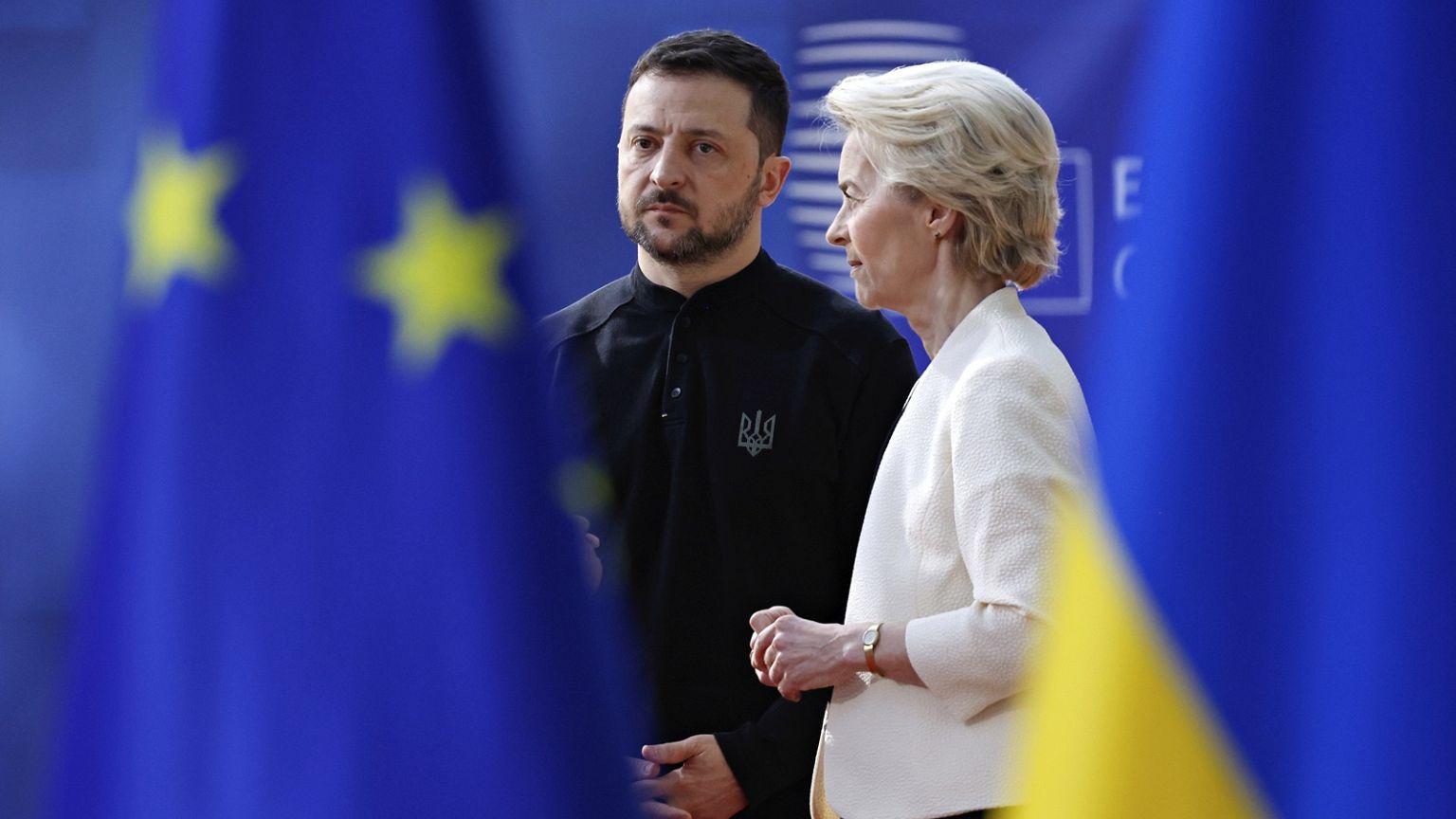
Ukraine's new law undermining the independence of two anti-corruption agencies spells trouble for its desire to join the European Union.
For the past three years, the European Union has invoked the mantra of "as long as it takes" to reaffirm, time and time again, its unyielding, all-encompassing support for Ukraine as it fights against Russia's brutal full-scale invasion.
That pledge was not merely rhetorical. It translated into financial assistance, weapons and ammunition, energy security, roaming services, a free-trade deal and temporary protection for refugees. The bloc's proposed seven-year budget features a separate, tailor-made fund worth €100 billion to help the country's long-term reconstruction.
But this week, that unbroken front cracked for the first time when the European Commission slammed, in no uncertain terms, a new law in Ukraine.
The law, passed through parliament at a speed that appeared to catch Brussels off guard, is designed to bring two anti-corruption bodies – the National Anti-Corruption Bureau of Ukraine (NABU) and the Specialised Anti-Corruption Prosecutor's Office (SAPO) – under the direct oversight of the prosecutor general, a political appointee.
The prosecutor general will now be allowed to select cases handled by NABU and SAPO and reassign them to other state entities, which critics say risks empowering the executive branch to sway and possibly derail high-profile investigations. The prosecutor general will also be able to give written instructions to the agencies.
The fact that the vote in parliament took place a day after the security services raided the NABU offices over allegations of Russian espionage added to the outrage.
Marta Kos, the European Commissioner for Enlargement, who is tasked with assessing the progress made by candidate countries, was the first to express her disapproval.
"Seriously concerned over today's vote in the Rada. The dismantling of key safeguards protecting NABU's independence is a serious step back," Kos said on social media.
The warning was stark, but futile. A few hours later, amid growing uproar from protesters across Ukraine, President Volodymyr Zelenskyy signed the bill into law.
"The anti-corruption infrastructure will work, only without Russian influence – it needs to be cleared of that. And there should be more justice," Zelenskyy said in his evening address, referring to the recent raids into the NABU offices.
"It is important that the Prosecutor General is determined to ensure that in Ukraine, the inevitability of punishment for those who go against the law is actually ensured. This is what Ukraine really needs."
The following day, the extraordinary clash escalated when Ursula von der Leyen called Zelenskyy and demanded explanations about the contentious legislation.
"President von der Leyen conveyed her strong concerns about the consequences of the amendments," a spokesperson said. "The respect for the rule of law and the fight against corruption are core elements of the European Union. As a candidate country, Ukraine is expected to uphold these standards fully. There cannot be a compromise."
A few hours after the phone call, Zelenskyy promised to submit a new bill to "ensure the strength of the rule of law system", without giving further details.
Separation of powers
The hands-on interventions signal the high-risk gamble that Kyiv is taking.
The fight against corruption has been central to Ukraine's ambition to join the bloc. It was among the first issues raised by reporters and analysts when Zelenskyy, in the first days of Russia's war, submitted the membership application and remained a prominent subject as the debate among capitals gained traction.
Corruption has been a notoriously persistent problem in Ukraine since the collapse of the Soviet Union, when oligarchs and organised crime rushed to exploit the chaos of the political transition and pillaged the up-for-grabs sectors of the economy. Corruption has been detected in elections, the judiciary, the public administration, the education system and the business sector, creating an impression of widespread penetration.
Transparency International has consistently ranked Ukraine among Europe's worst performers on corruption. Although the country's score has moderately grown over the last decade, it remains outside the top 100.
Mindful of the formidable challenge, the Commission made strengthening the fight against corruption one of the seven prerequisites that Ukraine had to fulfil before formally starting accession negotiations.
Leaders agreed to launch talks in December 2023, despite Kyiv having made only partial progress on anti-corruption, de-oligarchisation and the rights of minorities.
Since then, Brussels has encouraged Ukraine to continue its efforts, which are essential to convince international donors and investors to bring capital into the nation.
The latest edition of the enlargement report, released in October 2024, found that Ukraine had "further improved" the credibility of its anti-corruption framework and had "strengthened the independence and the institutional capacity" of NABU and SAPO, which were created in response to the 2014 revolution.
NABU investigates top-level corruption, and its cases are overseen and prosecuted by SAPO. The cases are then tried by the High Anti-Corruption Court.
"NABU and SAPO have maintained their operational effectiveness and remain important institutional pillars in the anti-corruption infrastructure," the Commission said.
The report highlighted the fact that SAPO had become a "separate legal entity" from the prosecutor general's office and recommended that the head of SAPO be allowed to open investigations into members of the parliament "independently" from the prosecutor.
These elements are rendered null by the new law, which places the prosecutor general at the top of both agencies as the ultimate arbiter.
Conscious uncoupling?
The apparent backsliding threatens to worsen the already precarious state of Ukraine's European integration.
Hungarian Prime Minister Viktor Orbán has imposed an unassailable veto that prevents the country from opening the first cluster of accession negotiations, known as Fundamentals. That cluster also covers the fight against corruption.
Orbán has focused his opposition on the fact that Ukraine is a country at war and, in his view, fails to respect the rights of its Hungarian minority. The prime minister has branded the results of a national consultation as a "strong mandate" to freeze the bid.
In response to Orbán's actions, the Commission came forcefully to Kyiv's defence, arguing there were "no objective reasons" to block the first cluster.
"Things are really clear: as we speak, Ukraine is delivering on reforms in the most difficult circumstances that one can imagine," a spokesperson said earlier this month.
The row over the anti-corruption reform provides Orbán and other sceptics with a fresh argument to derail the accession process and, perhaps inevitably, fuels speculation about a potential decoupling of Ukraine's and Moldova's bids.
The two Eastern countries applied for EU membership shortly after Russia launched the full-scale invasion and were declared candidates on the same day in June 2022. Since then, they have moved together as a "couple".
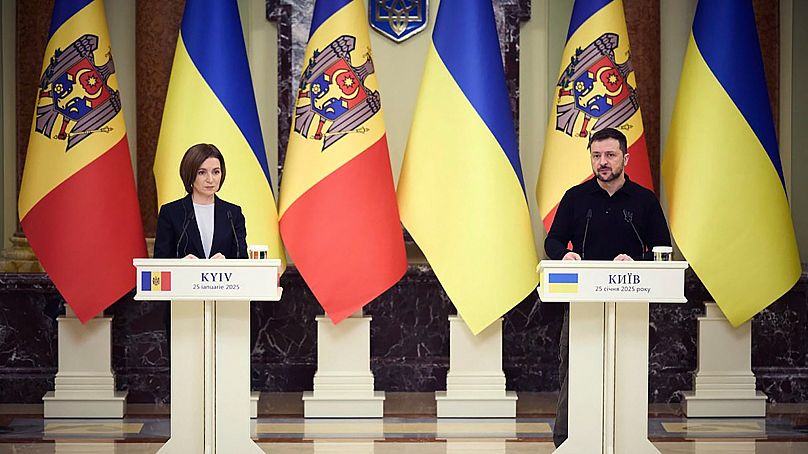
The Commission considers both equally ready to open the first cluster and is waiting for member states to give their unanimous go-ahead. Notably, Orbán has not voiced any reservations about Moldova's ambitions, which means Chișinău could unlock the next stage of negotiations while Kyiv waits for the veto to be lifted.
Until now, member states have been reluctant to decouple the bids, fearing that doing so would amount to a big victory for Orbán and a stinging defeat for Ukraine. The dispute over the anti-corruption legislation could now prompt a change of mindset.
"Events in Ukraine are extremely worrying and risk undermining Ukraine's EU accession process, which is already stalled due to Hungary’s veto on opening the fundamentals cluster," said Amanda Paula, a senior policy analyst at the European Policy Centre (EPC).
"I believe it will give momentum to discussions about uncoupling Moldova from Ukraine. It would be unfair to hold back Moldova because of developments in Ukraine."
The fight against corruption is pivotal not only to Ukraine's accession – it is also ingrained in the commitments the country made to the European Commission as a condition for receiving gradual payments under a dedicated €50 billion fund.
These payments, crucial to sustaining public services and paying for salaries, represent a powerful leverage should Brussels decide to escalate the showdown until Kyiv reverses the legal changes and restores the independence of NABU and SAPO.
A Commission spokesperson said it was premature to speculate about a possible freezing of funds at this stage.

No comments:
Post a Comment