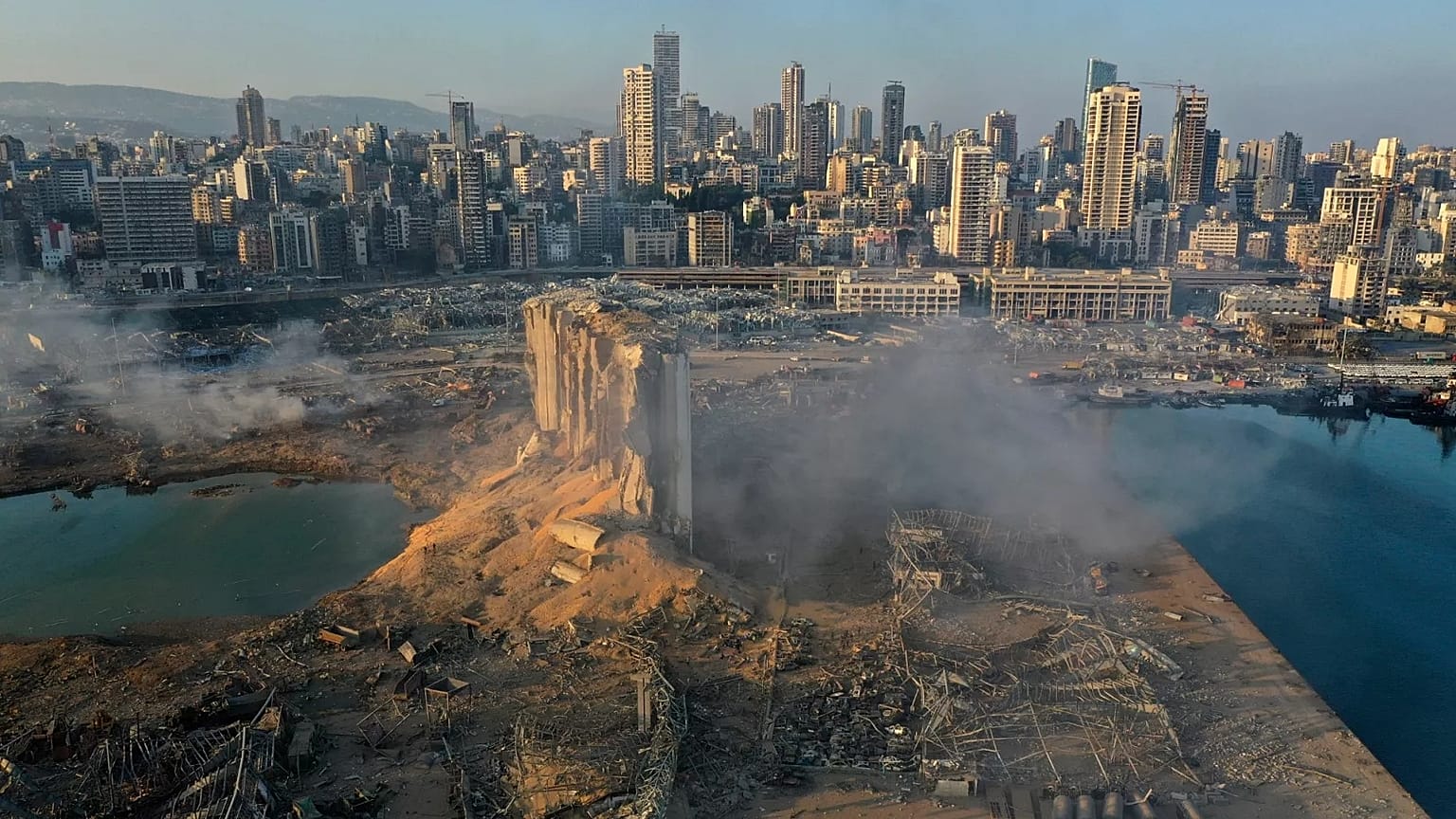
Copyright AP Photo
By Gavin Blackburn
Published on 15/09/2025 - EURONEWS
The Russian owner of a cargo ship linked to a supply of ammonium nitrate at the centre of the massive Beirut port explosion in 2020 has been arrested in Bulgaria, Lebanese judicial officials said on Monday.
The arrest of Igor Grechushkin comes nearly five years after a Lebanese investigative judge issued two arrest warrants through Interpol for him and the vessel's captain, Boris Prokoshev, also a Russian national.
The judicial officials said papers are being prepared requesting the transfer of Grechushkin to Lebanon for questioning.
They said that if Grechushkin is not handed over, Lebanese investigators could travel to Bulgaria to question him there.
The four Lebanese judicial officials said Grechushkin, who also has Cypriot nationality, was arrested last week at Vasil Levski Sofia airport after arriving on a flight from Cyprus.
They spoke on condition of anonymity in line with regulations.
Authorities in Bulgaria have been approached for comment.
Probe ongoing
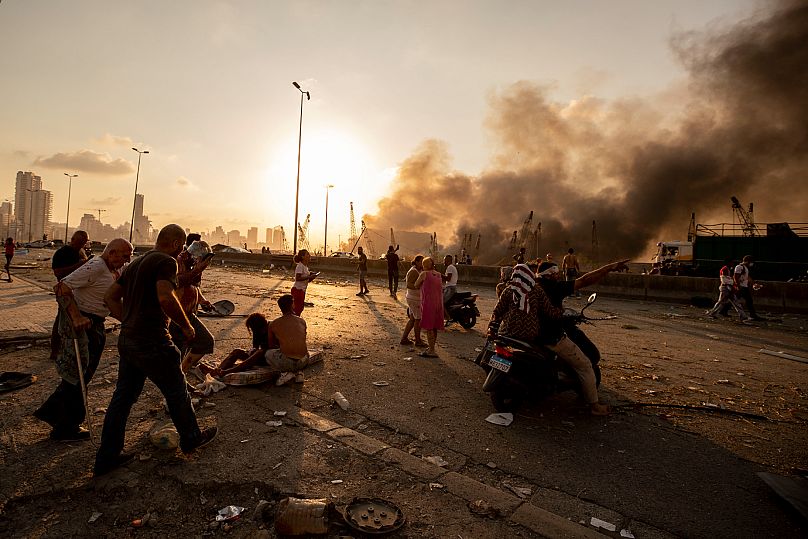
The 4 August 2020 blast killed at least 218 people and wounded more than 6,000 others. It devastated large swaths of Beirut and caused billions of euros in damages.
No Lebanese official has been convicted in connection with the incident.
Earlier this year, Lebanon elected President Joseph Aoun, Prime Minister Nawaf Salam and a Cabinet on a reformist platform who pledged to complete a probe and hold the perpetrators to account.
Authorities said the disaster was triggered by a fire in a warehouse where a vast stockpile of industrial chemical ammonium nitrate had been haphazardly stored for years.
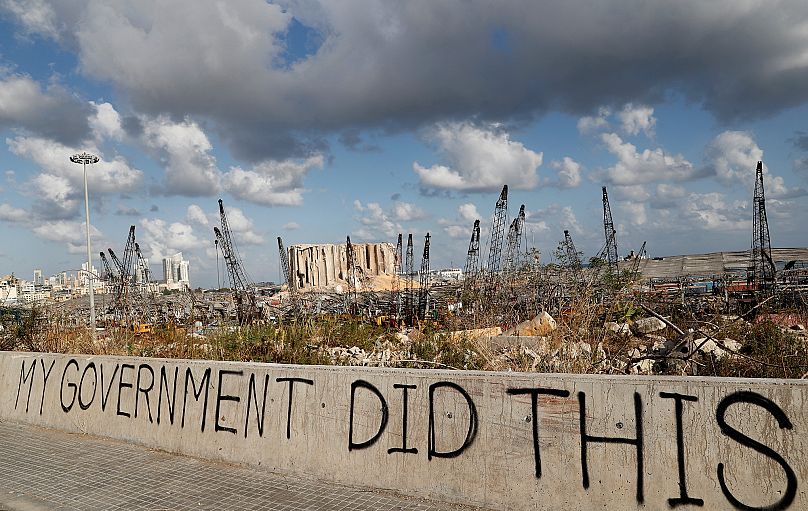
The blast struck amid an economic collapse that the World Bank has dubbed one of the worst in recent history and which is widely blamed on a governing elite accused of corruption and mismanagement.
Since its early days, the probe into the explosion has faced a slew of political and legal challenges.
In December 2020, lead investigator Fadi Sawan charged former prime minister Hassan Diab and three ex-ministers with negligence.
As political pressure mounted, Sawan was removed from the case.
But investigative judge Tarek Bitar summoned senior political, judicial and security officials in July in a renewed push to close the case.
Additional sources AP
Bulgarian Police Arrest Owner o Beirut's Notorious Explosives Shi

Officials in Bulgaria have arrested the owner of the Rhosus, the aging freighter that brought a cargo of explosives-grade ammonium nitrate into Beirut in 2013. In 2020, that cargo exploded, destroying half the port and killing more than 200 people.
The cargo of ammonium nitrate entered Beirut’s port on the Moldovan-flagged ship Rhosus in November 2013. The vessel was detained for PSC deficiencies and seized by port officials. Her cargo was a consignment of 2,750 tonnes of ammonium nitrate, officially intended for a mining firm in Mozambique, but mechanical issues forced the ship to call in Beirut (or to pick up more paying cargo, depending on the account). Rhosus never left: it was detained for PSC deficiencies, then abandoned by the owner, and it later sank at a pier. The cargo was moved to a warehouse on the grain pier, where it stayed until its detonation on August 4, 2020.
After the blast, the FBI estimated that the actual amount that detonated was about one-fifth of that, indicating that a portion of the cargo had been surreptitiously removed. The site had known security gaps: welders were working to secure the doors of the warehouse facility on the day of the blast, and likely triggered the explosion.
Attention quickly focused on the Rhosus' role in the tragedy, and on the owners who abandoned it. Shortly after the investigation into the blast got under way, the investigating judge on the case (at the time) issued an international arrest warrant for the captain and for the owner, Russian-Cypriot dual national Igor Grechushkin. His role in the vessel's operation is disputed: the Organized Crime and Corruption Reporting Project (OCCRP) has identified another Cypriot shipping magnate as the vessel's ultimate beneficial owner, and based on OCCRP's paper trail, Grechuschkin appears to have been chartering the vessel.
Grechushkin has been subject to an arrest warrant for many years, but with little effect. This may be in part because of the status of the Lebanese investigation. After the blast, the inquiry almost immediately focused in on the Lebanese political figures who allowed the explosives to sit on a dock near a residential district. The suspects began to fight back: certain officials worked to have the investigating judge removed, and the inquiry under replacement Judge Tarek Bitar also stalled. The case became an oft-cited and unpopular example of self-dealing by powerful members of Lebanon's political class.
After years of stagnation, the investigation got a reboot in January 2025 thanks to the newly-elected government of Lebanese President Joseph Aoun and Prime Minister Nawaf Salam. They campaigned on a pledge to seek justice for the thousands of people who were displaced, injured or killed by the blast, and immediately empowered Bitar to move forward. That inquiry is showing signs of progress at last, and Grechuschkin's arrest is among the first tangible steps.

No comments:
Post a Comment