World Nuclear News
Raft of US-UK nuclear deals ahead of Trump visit
_85159.jpg)
The deals have been enabled by a new agreement - called the Atlantic Partnership for Advanced Nuclear Energy - which is expected to be signed during the state visit. Under the deal, both countries will fast-track reactor design reviews, meaning if a reactor has already passed rigorous safety checks in one country, this work can be used by the other to support its assessment, avoiding duplicating work. This is expected to speed up the time it takes for a nuclear project to get a licence from about three or four years to around two years.
"This builds on collaboration between regulators for the ongoing UK assessments of GE-Vernova and Holtec reactor designs," the UK's Department for Energy Security and Net Zero said. "UK and US will also work hand-in-hand to share the workload of new projects entering site licensing, speeding up delivery, to get nuclear project sites in the UK approved more quickly. These checks are vital to ensure nuclear sites are suitable, but by closer working with the US, the UK will build world-class nuclear standards while accelerating delivery - boosting energy security, driving growth and creating jobs."
Accordingly, the UK's Office for Nuclear Regulation (ONR) and the US Nuclear Regulatory Commission (NRC) have signed a refreshed memorandum of understanding. Supported by the MoU, ONR and the Environment Agency, alongside the NRC, have also announced a new collaborative initiative to achieve this aim.
Under the agreement, the UK and USA will also work hand-in-hand to share the workload of new projects entering site licensing, speeding up delivery, to get nuclear project sites in the UK approved more quickly.
It comes as Rolls-Royce SMR announced that it has entered the US regulatory process for its small modular reactor design. The UK company submitted an engagement plan with the NRC in April.
The UK-US partnership extends to fusion energy, through coordinated experimental programmes where British and US expertise will combine with AI technology to develop advanced simulation tools, whilst test facilities will fast-track progress towards commercial fusion power.
"This landmark UK-US nuclear partnership is not just about powering our homes, it's about powering our economy, our communities, and our ambition," said British Prime Minister Keir Starmer. "These major commitments set us well on course to a golden age of nuclear that will drive down household bills in the long run, while delivering thousands of good jobs in the short term. Together with the US, we're building a golden age of nuclear that puts both countries at the forefront of global innovation and investment."
US Secretary of Energy Chris Wright said: "With President Trump's leadership, the United States is ushering in a true nuclear renaissance - harnessing the power of commercial nuclear to meet rising energy demand and fuel the AI revolution. Meeting this demand will require strong partnerships with our allies around the world and robust collaboration with private sector innovators. Today's commercial deals set up a framework to unleash commercial access in both the US and UK, enhancing global energy security, strengthening US energy dominance, and securing nuclear supply chains across the Atlantic."
Commercial deals
Among the agreements signed, British multinational energy and services company Centrica and X-energy Reactor - a subsidiary of X-energy LLC of the USA - announced the signing of a Joint Development Agreement to deploy X-energy's Xe-100 advanced modular reactors in the UK. The companies have identified EDF and Centrica's Hartlepool site as the preferred first site for a planned UK fleet of up to 6 GWe. Under their plan, a plant comprising up to 12 Xe-100 units, generating up to 960 MWe, would be developed at a site adjacent to Hartlepool's existing nuclear power station, which is currently scheduled to cease generating electricity in 2028. In addition to generating electricity, the new plant would also supply high-temperature heat to support Teesside's heavy industries.
Centrica will provide initial project capital for development with the goal of initiating full-scale activities in 2026. Subject to regulatory approval, the first electricity generation would be expected in the mid-2030s. Centrica and X-energy said they are already in discussions with additional potential equity partners, as well as leading global engineering and construction companies, with the goal of establishing a UK-based development company to develop this first and subsequent projects.
Meanwhile, Holtec International, EDF UK and real estate partner Tritax Management have signed an MoU to work together to develop Holtec's SMR-300 at the former Cottam coal-fired power plant in Nottinghamshire to provide power to new, advanced data centres on the site. The partners said the project will also enable foreign direct investment into the UK, including into nuclear fuel fabrication and services by Framatome and turbine manufacture by Arabelle Solutions. The 1 GW data centre project is targeted to come online by the end of the decade, with the SMR element becoming operational in the 2030s.
"Feasibility studies and early-stage investment discussions are now underway, with Holtec International and EDF UK engaged with relevant parties within UK and US governments, including Great British Energy - Nuclear and The National Wealth Fund," EDF said.
An MoU has also been signed between US-based micro-nuclear technology developer Last Energy and DP World, a global leader in logistics and trade, to establish the world’s first port-centric micro nuclear power plant at London Gateway. A proposed PWR-20 microreactor - to begin operations in 2030 - would supply London Gateway with 20 MWe of electricity to power the logistics hub, with additional capacity exported to the grid.
"The initiative represents a GBP80 million (USD109 million), subsidy-free investment for the development of Last Energy's first unit, unlocking clean power supply for DP World's ongoing GBP1 billion expansion of London Gateway," Last Energy said. "The partnership is closely aligned with both UK and US ambitions to increase nuclear capacity and strengthen long-term energy security."
Meanwhile, TerraPower and USA-headquartered KBR announced they will jointly conduct studies and evaluate potential sites in the UK for deployment of TerraPower's Natrium technology, which features a 345 MWe sodium-cooled fast reactor with a molten salt-based energy storage system. Each Natrium reactor is expected to create around 1,600 construction jobs and 250 full-time permanent jobs, TerraPower said.
Earlier this year, TerraPower and KBR announced a strategic alliance to establish a long-term collaboration for the commercialisation and global deployment of Natrium reactors.
TerraPower announced in April its intention to enter the UK’s generic design assessment (GDA) process, and said it remains on track to begin that regulatory process this year.
Uranium enrichment company Urenco and California-based Radiant Energy have signed a deal worth around GBP4 million, to supply high-assay low-enriched uranium - or HALEU - to the US market to support Radiant in deploying its Kaleidos model microreactor. Urenco is building an Advanced Fuels Facility in the UK co-funded with the UK Government and is exploring building a similar facility in the USA.
Agreements welcomed
The agreements were welcome by the UK's Nuclear Industry Association, with its Chief Executive, Tom Greatrex, saying: "These deals are hugely welcome and build on a summer of record government investment in nuclear which is driving an industrial revival, creating thousands of high-value jobs, and strengthening the UK's energy security. New projects with our US partners build on Sizewell C and the SMR programme, showing the power of government and industry working together. The next step is clear: a pipeline of follow-on projects to lock in skills, investment, and prosperity across the UK."
IAEA increases nuclear growth projections
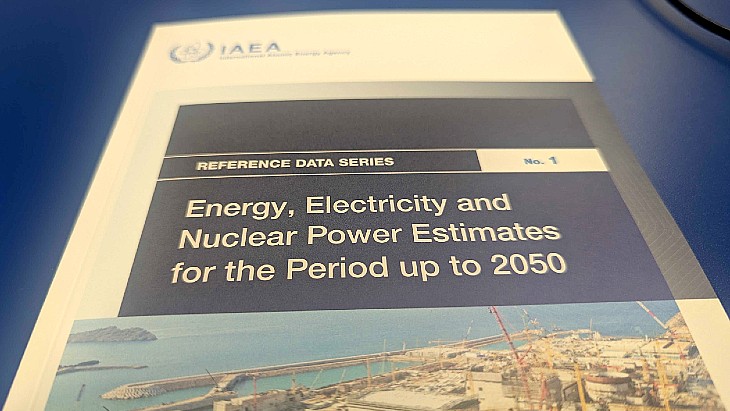
The publication of the 45th edition of Energy, Electricity and Nuclear Power Estimates for the Period up to 2050 and its findings were announced by Director General Rafael Mariano Grossi on the opening day of the International Atomic Energy Agency (IAEA) General Conference in Vienna, Austria.
At the end of 2024 there were 417 nuclear power reactors operational, providing that global capacity of 377 GW. A further 62 reactors, with a total capacity of 64.4 GW, were under construction, and 23 reactors with a total capacity of 19.7 GW were in suspended operation, the report says.
In addition to the high case scenario, the IAEA has also increased its low case projection with a 50% capacity increase to 561 GW by 2050. One big difference between the high case and low case scenarios is the role played by small modular reactors (SMRs) - the high case sees 24% of 2050's new capacity being provided by SMRs, while the low case sees SMRs providing just 5% of capacity added.
It is the fifth successive year that there has been an upward revision in the projections. The first upwards revision following the 2011 Fukushima Daiichi accident came in 2021 and since then the high case projection for 2050 has risen by 25% from 792 GW.
Grossi said: "The IAEA's steadily rising annual projections underscore a growing global consensus: nuclear power is indispensable for achieving clean, reliable and sustainable energy for all."
The publication, which is put together by an international group of experts, develops its estimates by considering all operating reactors, possible licence renewals, planned shutdowns and plausible and planned construction projects foreseen for the next few decades. The low case assumptions are that current trends continue and there are few changes in laws, policies and regulations. The high case assumptions include national intentions for expanding the use of nuclear power and the "high case projection remains both plausible and technically feasible and notes the possibility for capacity to exceed this estimate".
Enabling factors, such as national policies, supporting investment and workforce development - plus regulatory collaboration and global harmonisation - would be necessary to help facilitate at least reaching the high case.
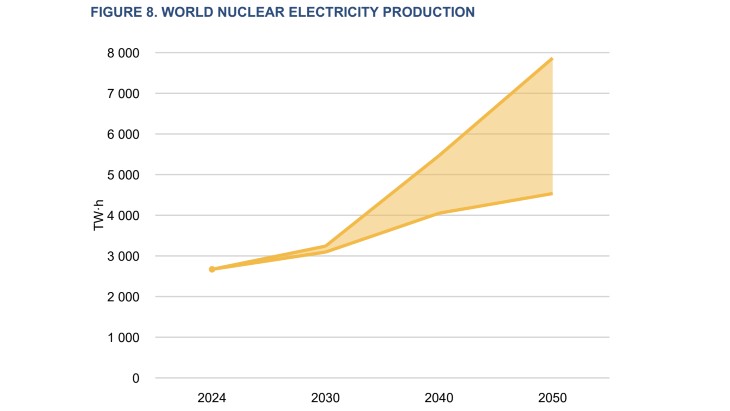
(Image: Screenshot of IAEA report)
Jessica Callen-Kovtunova, Energy Planner/ Economist at the IAEA, said that the context of this year's estimate included the increasingly positive global climate for investment, noting the demand from tech companies and the increasing forecast for future electricity demand as well as the decision of multilateral development banks - such as the World Bank - to look at backing lifetime extensions of existing nuclear plants and developing advanced modular reactors.
She also set out the scale of the challenge, noting that the high scenario would need an average of 26 GW of new capacity per year, compared with the average of 5.9 GW of new capacity each year over the past five years. Total electricity production from all energy sources increased by about 3.4% in 2024, with electricity production from nuclear power reactors up by 2.8%, meaning a slight drop in total share to 8.7%.
The report stresses the importance of extending the lifetime of existing plants: "Currently, about two thirds of the nuclear power capacity has been in operation for more than 30 years and about 40% for more than 40 years, highlighting the need for significant new nuclear capacity to offset retirements in the long term. Extending the lifetime of existing reactors is the most cost effective way to produce low emission electricity and is particularly important for those regions with ageing nuclear fleets."
In the high case, it is assumed that the operating lifetimes of most nuclear power reactors will be extended such that only about 81 GWe of the 2024 nuclear electrical generating capacity is retired by 2050. In the low case, more retirements are assumed, with 156 GWe of the 2024 nuclear electrical generating capacity retired by 2050. This is projected to result in net capacity additions (newly installed less retired) of 184 GWe by 2050.
Although the projections are based on each country's plans, the projections are published at a regional rather than at country levels:
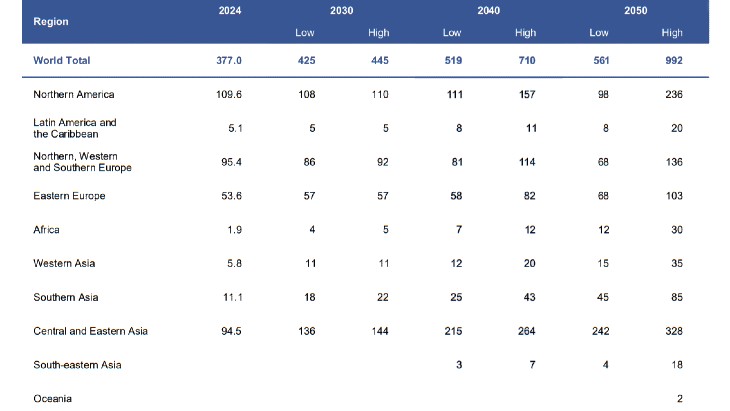
The largest increase in capacity is projected by the IAEA to come in the Central and Eastern Asia region, where total electrical generating capacity is projected to increase by 15% by 2030 and by 45% by 2050. The high case has nuclear electrical generating capacity projected to increase to 3.5 times the 2024 capacity by 2050. In the low case, nuclear electrical generating capacity is projected to increase to 2.6 times the 2024 capacity by 2050.
In his opening address to the 69th IAEA General Conference, Grossi said: "Everywhere I go, people are talking about wanting nuclear energy. In Africa, Europe, the Americas and Asia interest is growing. How do you finance a nuclear power plant? What are the necessary legal instruments and regulatory institutions? When will Small Modular Reactors come on the market?
"These are some of the questions we field every day, not only because the IAEA is the centre of global nuclear, but also because building nuclear capacity is not as simple as flipping a light switch. Here are the top three keys to unlocking global nuclear capacity: Newcomer countries require support; regulation must adapt; and financing needs to be made possible. In all three areas the IAEA is working full steam ahead.
"Today, nearly 40 countries are at different stages of development, from carrying out initial studies to constructing their first plants. More than 20 others are exploring nuclear as part of their future energy mix."
US looks to boost strategic uranium reserve for nuclear power
The Trump administration’s top energy official said the US should look to boost its strategic uranium reserve to buffer against Russian supplies and increase confidence in the long-term prospects of nuclear power generation.

US Energy Secretary Chris Wright comments underscore the Trump administration’s plans to promote nuclear energy as the demand for power soars with the electrification of the economy. Russia supplies about a quarter of the enriched uranium needed by America’s fleet of 94 nuclear reactors, which generate about a fifth of US electricity. Turning the tap off too quickly from that source could endanger about 5% of electricity in the absence of alternative suppliers or additional stockpiles.
“We’re moving to a place — and we’re not there yet — to no longer use Russian enriched uranium,” Wright said Monday in Vienna, where he’s attending the IAEA’s annual general conference.
“We hope to see rapid growth in uranium consumption in the US from both large reactors and small modular reactors,” Wright said. “The size of that right buffer would grow with time. We need a lot of domestic uranium and enrichment capacity.”
The first Trump administration proposed a uranium reserve in 2020 and sought $150 million to purchase the metal directly from US producers, though Congress only provided half of that. The concept also gained support from the administration of former President Joe Biden. The US Energy Department in 2022 awarded contracts for the purchase of hundreds of thousands of pounds of uranium for the reserve from miners including Energy Fuels, Inc. and Uranium Energy Corp.
With an average of just 14 months of uranium on inventory, data compiled by the International Atomic Energy Agency shows inventories held by US companies trail peers in Europe and Asia. The European Union has enough fuel on hand to power existing reactors for two-and-a-half years, while China maintains stockpiles equivalent to 12 years current generation, according to IAEA data published last quarter.
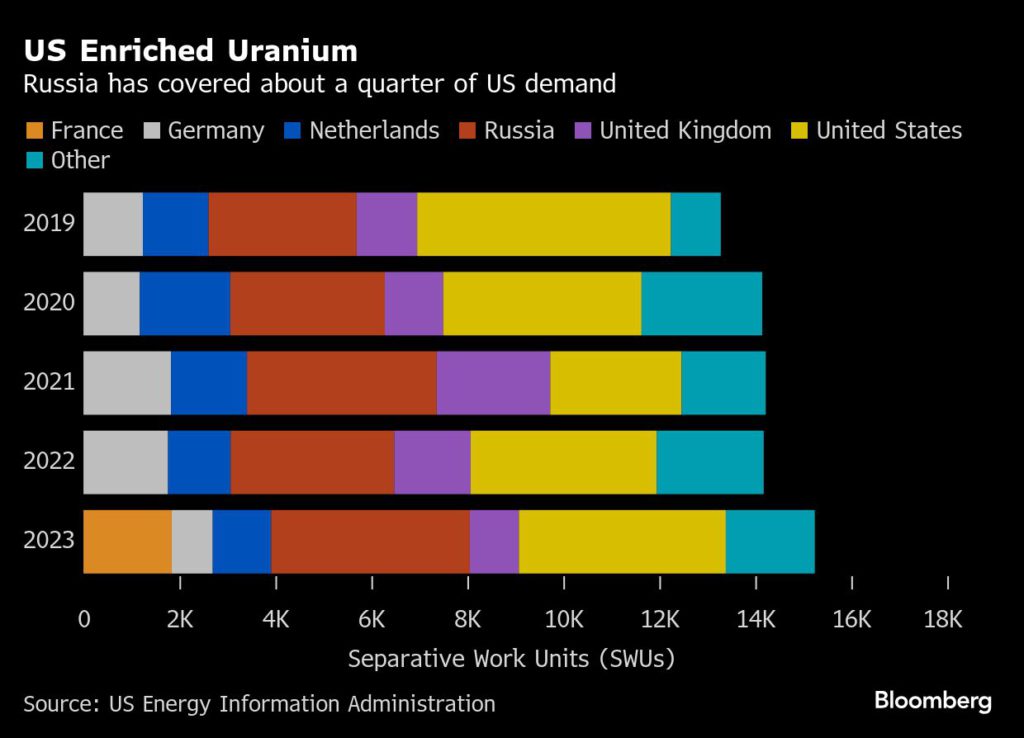
The US is “furiously at work” in its effort to remake nuclear-fuel supply chains, Wright said. In May 2024, the Biden administration signed into law legislation which requires utilities to shift away from Russian supplies by 2028. Six months later, Russia retaliated by temporarily limited exports of enriched uranium to the US
While Wright declined to say how much additional uranium inventory the US should build, he suggested the increase could be measured on a sliding scale as more reactors are built.
The US has just two commercial enrichment facilities. The largest in New Mexico, which is owned by the British, Dutch and German consortium Urenco Ltd., produces fuel for traditional light-water reactors. Centrus Energy Corp. in Ohio also recently began separating uranium isotopes for new models of advanced reactors which require higher enrichment levels.
The White House issued an executive order in May that’s intended to accelerate the deployment of advanced reactors. The energy department expects the first of those models to undergo testing by next year.
Nuclear fuel-making historically has been dominated by state-controlled entities — a function of the fact that the same industrial processes that make reactor fuel also can be used to help manufacture bombs. But Wright said the US wants to attract more private capital to the endeavor, pointing at Peter Thiel’s General Matter Corp., a startup founded to enrich uranium.
“That’s key for efficiency and innovation and pace,” he said. “That’s how you drive progress.”
(By Jonathan Tirone)
Cameco to supply Slovakian plants under long-term agreement
The long-term agreement between the Canadian uranium company and Slovenské elektrárne consists of uranium and conversion services to support operations at its nuclear plants until 2036.
"Cameco is proud to play an essential role helping Slovakia meet its nuclear fuel needs. With this long-term agreement, we are adding a new market to our global commercial portfolio and supporting Slovakia with a stable, reliable supply of uranium fuel that is expected to enhance energy security in the region," said Cameco CEO Tim Gitzel.
Conversion is the chemical process in which uranium oxide (U3O8) is refined to uranium dioxide (UO2), which can then be converted into uranium hexafluoride (UF6) gas, in which form it is suitable for enrichment. This is one of the most critical parts of the nuclear fuel cycle, Slovenské elektrárne Chairman and CEO Branislav Strýček said.
"Slovenské elektrárne has succeeded in securing a long-term and reliable supply of a significant share of this key raw material until 2036, which is a significant step for Slovakia's energy security. The contract is strategic for Slovenské elektrárne - allowing us to diversify our suppliers, reduce our dependence on one source, and at the same time guarantee the smooth operation of our nuclear power plants," he added.
Details of the contract are commercially confidential, although Cameco said the material will "support operations" at the two Slovakian plants - Bohunice and Mochovce - starting in 2028.
Blykalla, ABB expand cooperation into maritime applications
_56860.jpg)
In October 2024, Blykalla and ABB signed an MoU under which ABB would explore how its automation, electrification and digitalisation solutions could support Blykalla's small modular reactor (SMR) prototype SEALER-E, which features an electric lead-cooled reactor. This includes cyber security frameworks to ensure compliance with nuclear safety regulations.
The new MoU builds on the terms of the existing MoU, expanding the partnership and "aligning with growing momentum for nuclear energy as a marine power source", the companies said.
"ABB's expertise in system integration as well as power distribution, control, and automation technologies, will be key to ensuring the successful deployment of the SMR as a shipboard solution," Blykalla said.
"We're pleased to extend our partnership with ABB into this strategically important vertical," said Blykalla CEO Jacob Stedman. "With our compact reactor design, we see a unique opportunity to lead the way in maritime nuclear propulsion – a solution uniquely positioned to meet the sector's demand for clean energy. Realising this vision will require an ecosystem of committed partners, and this collaboration is a critical building block."
Juha Koskela, president of ABB's Marine and Ports division, added: "SMRs hold significant potential to drive decarbonisation, and our collaboration with Blykalla will help to advance their viability in maritime applications. Next-generation SMRs will enable innovative ship designs that can help to reduce emissions compared to vessels powered by carbon-based fuels. We are proud to partner with Blykalla on what represents an important step on shipping's decarbonisation journey."
Blykalla - formerly called LeadCold - is a spin-off from the KTH Royal Institute of Technology in Stockholm, where lead-cooled reactor systems have been under development since 1996. The company - founded in 2013 as a joint stock company - is developing the SEALER (Swedish Advanced Lead Reactor). A demonstration SEALER (SEALER-D) is planned to have a thermal output of 80 MW. Blykalla's goal is for its first 140 MWt SEALER-55 commercial reactor to be ready for operation in the early 2030s.
Blykalla's SEALER was one of three reactors selected in the initial phase of Norway's Nuclear Propulsion for Merchant Ships (NuProShip) project for further evaluation in the next phase. The NuProShip project is evaluating Generation IV SMR technologies for their viability in commercial shipping applications, in particular larger ships. The ultimate purpose of the research programme is to develop a commercially viable zero-emission technology for deep-sea ships that satisfies all stakeholders and requires no subsidies after the initial development process.
Kazakhstan seeks German expertise in nuclear back-end
_93097.jpg)
Under the MoU, Nukem will provide comprehensive consulting services to Kazakh authorities and operators, evaluate and optimise projects, implement best available practices in remediation and safety, and ensure compliance with global safety and regulatory standards.
The MoU on future cooperation was signed in Astana on 9 September by Thomas Seipolt, president of Nukem, and Gumar Sergazin, deputy chairman of Kazakhstan's Atomic Energy Agency. It followed a high-level meeting to discuss new prospects for cooperation between the leading nuclear institutions of Kazakhstan and Nukem.
After a presentation of Nukem's expertise relevant to Kazakhstan's nuclear programme, the participants exchanged views on specific areas of cooperation for the first time. The focus was on site remediation, waste treatment, and specialised engineering services.
"Nukem is proud to support Kazakhstan's visionary nuclear programme with its globally recognised expertise in back-end technologies," said Seipolt. "Thanks to our ability to integrate international experts into high-performing teams that operate efficiently even under challenging conditions, we look forward to working closely with local professionals to help shape a critical part of Kazakhstan's future infrastructure."
Tokyo-based IT company Muroosystems Corporation completed its acquisition of Nukem in September last year.
"Kazakhstan, Germany, and Japan have demonstrated their shared commitment to pooling their respective expertise and experience to promote the peaceful use and further development of nuclear energy in the country," said Nukem Managing Director Nobuaki Ninomiya. "Building on decades of expertise, Nukem is determined to contribute to Kazakhstan's comprehensive nuclear strategy – with the highest priority given to safety, transparency, and compliance with international standards."
Kazakhstan is the world's leading producer of uranium. Although it does not currently use nuclear energy, it is not without nuclear experience: it has three operating research reactors, and a Russian-designed BN-350 sodium-cooled fast reactor operated near Aktau for 26 years, until 1999.
Kazakhstan has been preparing for a possible nuclear power programme to reduce its reliance on fossil fuels, diversify its energy mix and reduce CO2 emissions for some time. The government's target is for nuclear to produce a 5% share of the national generation mix by 2035.
The Kazakh government has formally selected the Zhambyl district of Almaty region as the location for its first proposed nuclear power plant. In June, Rosatom was selected as the leader of an international consortium to build Kazakhstan's first planned nuclear power plant, with China reportedly being lined up to build a second one and possible third one.
Doosan Škoda Power to supply Temelín generators
\
The company won the public tender for new generators for the units at Temelín Nuclear Power Plant. The contract value has not been disclosed beyond it amounts to "to several billion" Czech Koruna. (CZK1 billion is about USD48 million).
The turbine-generator sets weigh more over 2,000 tons, with a total length of 65 metres. The generators are directly connected to one high-pressure and three low-pressure turbine sections, and currently supply the grid with a nominal 1,086 MW of electricity.
Daniel Beneš, Chairman and CEO of ČEZ Group, said: "Since the commissioning of our nuclear units, we have managed to increase their output by a total of 500 MWe. That’s a massive amount of electricity, comparable to a large coal-fired power plant - but without added emissions, land use, or other negative impacts. By replacing the generators at Temelín, we are continuing in this process."
The original turbine-generator sets at Temelín, which are approaching the end of their operational life, were supplied by Škoda Plzeň, which is now part of Doosan Škoda Power. The replacements are intended to allow greater output, but also fit with the lifetime extension of the units.
Doosan Škoda Power, which supplies turbine-generator systems to customers worldwide, is headquarted in Plzeň and is part of South Korean group Doosan Enerbility.
Seungwoo Sohn, CEO of Power Service Business Group of Doosan Enerbility, said: "We are building on our long-standing cooperation in turbine delivery and service support for Temelín. But it’s important to note that we succeeded against other global manufacturers, which confirms both our position as one of the world’s leaders in delivering power plant equipment and the strong standing of our Czech company."
Four VVER-440 units are currently in operation at the Dukovany site. Two VVER-1000 units are in operation at Temelín, which came into operation in 2000 and 2002, and the aim is for them to operate for 60 years. The Czech Republic uses nuclear power for 34% of its electricity. In addition to maintaining and upgrading its existing units, the country has plans for new gigawatt units, initially at Dukovany, and also for up to 3 GW of small modular reactor capacity.
'Innovation in existing plants can help meet growth targets'
_65082.jpg)
Extending operating lifetimes, improving efficiency, and restarting shut-down plants - not just building new capacity - will be needed to meet that tripling target - and innovation will have a big part to play, moderator Johan Svenningsson, who is chairman and CEO of Uniper Sweden, as well as being World Nuclear Association's vice chairman, said in a panel discussion on Maximising Value from Existing Nuclear Power Plants.
France's Grand Carénage investment programme to extend the operating lifetimes of its reactors has involved many activities, including the replacement of critical components and the renewal of instrumentation and control systems. Framatome CEO Gregoire Ponchon said close collaboration with French reactor operator EDF, and a focus on mitigating problems, had allowed the time taken for major activities such as the replacement of steam generators to be shortened. Using artificial intelligence (AI) tools to help with time management will also mean such tasks can be completed in a shorter time.
Lou Martinez Sancho is Chief Technology Officer at Westinghouse and acting president of the company's eVinci microreactor. As well as investing in maintaining the generating fleet, she said, continued investment and innovation in the entire fuel cycle will also be critical to achieve continued operation.
A major disruptor in the nuclear materials sector is the availability of new materials and techniques that could in future become widely used in nuclear fuel production, Martinez Sancho said, noting that Westinghouse began producing fuel containing some 3D printed components as long ago as 2020. And AI is also likely to play a key role in nuclear fuel innovation too, helping to shorten development timescales.
The timescales involved in fuel innovations have in the past been long - often longer than the time taken to design a reactor, she said: "But what we are seeing is that [in] nuclear, we have over 75 years of operations, of data - and data is what makes your AI actually develop … and allows you to understand better how closely those developments are going to happen."
Westinghouse's nuclear-specific generative AI system is called Hive. It was launched at the 2024 Symposium - and it "allows us to move that much faster", she said. As well as supporting design innovation, AI is also able to leverage that data to help improve efficiency, both in operations and in products like configuration management systems, optimising processes and supporting power uprates.
Asked if AI was just a "buzzword", Martinez Sancho was emphatic that it is not: Westinghouse is already using both "traditional" AI tools such as machine learning, and more modern tools such as generative AI, daily. But managing AI to unlock its true value is more complex than many realise, she added, needing a secure infrastructure - and full traceability of data is paramount. It needs engineers, data scientists, mathematicians, legal teams and regulators to work closely together. Access to the wealth of data from an AI, coupled with engineering knowledge, can be used to improve and speed up some process - including licensing - but "the final responsibility is always that of the engineer, not the AI", she said.
AI is also useful for knowledge management, to capture the experience of employees of many years and transfer it across generations, she said. "They need to have access to that information much faster," she said.
Never-ending story
AtkinsRéalis CEO Ian Edwards, emphasised the benefits from digitalisation in the execution of work on existing nuclear assets, allowing tasks including maintenance, life extension and even decommissioning to be performed more efficiently.
"We can digitally plan an activity in a nuclear zone to the nth degree virtually, and train our people virtually, so that the actual exposed time and the actual time, from an efficiency perspective, is reduced really consistently. And we are doing this on existing assets all the time and using technology to improve."
Maximising the use of existing nuclear assets is not just about preserving megawatts on the grid: it is also important as a foundation for future developments, Ponchon said, and nuclear companies have benefitted from the experiences of their predecessors. "Innovation is a never ending story," he added.
Operating life extensions and capacity uprates of existing nuclear plants are without doubt critically important for the industry going forward, said Kris Singh, President and CEO of Holtec International, but the challenge is how to make them affordable and also how to design plants and carry out the work in such a way as to ensure they continue to perform well and even to improve: for example, introducing features to make plants more easily inspectable.
"The owner user community and the designers, developers, consultants, they need to get together on this," he said. "There's an opportunity to make every plant last longer, be more resilient, be more reliable, be more maintainable while you are doing the life extension, while you are doing power upgrade."
World Nuclear Symposium took place in London from 3-5 September.
CNNC and Rosatom to develop skills and training cooperation
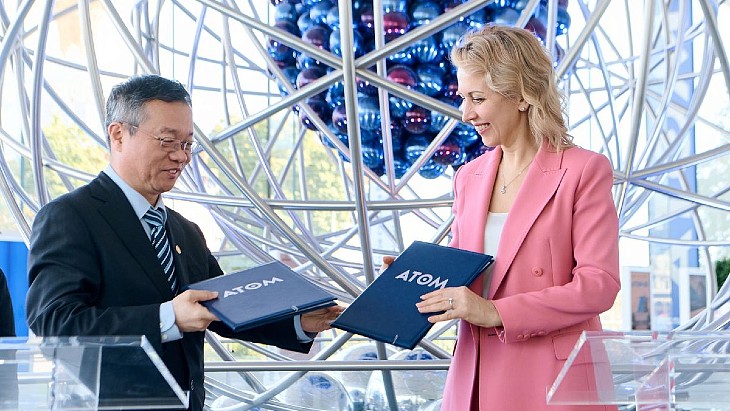
The MoU was signed by Tatiana Terentieva, Deputy Director General for Human Resources for Rosatom and by Li Changyu, Acting head of Human Resources for China National Nuclear Corporation (CNNC).
The two sides said that the agreement would see coordination in "developing a human-centred approach to training and development" including "cooperation between the youth and women's industry communities of the two countries"
Terentieva said: "We are always open to dialog and interested in developing partnership with China National Nuclear Corporation in the personnel area, including in the multilateral format that we have established within the framework of the BRICS Nuclear Energy Platform. We are convinced that the agreement and roadmap signed today will clearly define the stages, goals, and areas of responsibility, which will certainly increase the effectiveness of our joint work. We hope to strengthen bilateral cooperation in the development of the high-tech labour market and personnel potential."
The memorandum was signed during the CNNC's delegation's visit to Russia which also involved visiting the Rosatom Technical Academy in Obninsk and Rosatom Corporate Academy in Moscow.
Nuclear has a place in EU taxonomy, court rules
In 2020, the EU legislature adopted the Taxonomy Regulation, by which it established a framework to facilitate sustainable investment. That regulation is aimed at channelling finance flows towards sustainable activities with a view to achieving a climate-neutral European Union by 2050. To that end, the regulation lays down the criteria for determining whether an economic activity qualifies as environmentally sustainable for the purposes of establishing the degree to which an investment is environmentally sustainable.
In order to qualify as environmentally sustainable, an economic activity must, inter alia, according to the Taxonomy Regulation, contribute substantially to one or more environmental objectives without causing significant harm to any of those objectives, and comply with certain technical screening criteria to be established by the European Commission.
In February 2022, the European Commission adopted a delegated regulation, by which it established technical screening criteria to include certain activities in the nuclear energy and gas sectors in the category of activities contributing substantially to climate change mitigation or climate change adaptation. The European Parliament approved the regulation in August of that year, clearing the way for it to come into force from the start of 2023.
Austria filed a lawsuit against the Commission in October 2022 challenging its decision to include gas and nuclear in the EU's "taxonomy".
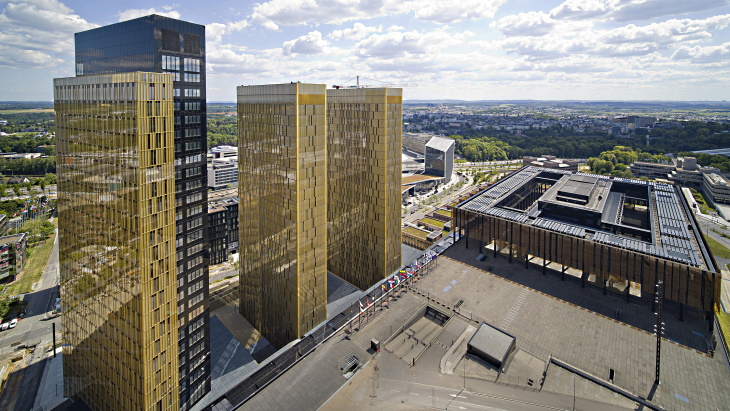
The Luxembourg-based General Court of the Court of Justice of the European Union - Europe's second-highest court - has now dismissed the action brought by Austria.
According to the General Court, by including nuclear energy and gas in the sustainable investment scheme, the Commission did not exceed the powers which the EU legislature properly conferred on it.
"Specifically, the Commission was entitled to take the view that nuclear energy generation has near to zero greenhouse gas emissions and that there are currently no technologically and economically feasible low-carbon alternatives at a sufficient scale, such as renewable energy sources, to cover the energy demand in a continuous and reliable manner," the court said.
The court concluded the Commission took "sufficient account of the risks associated with normal operation of nuclear power plants, serious reactor accidents and high-level radioactive waste". It said the arguments put forward by Austria relating to the negative effects of droughts and climate hazards on nuclear energy are "too speculative to be accepted".
The court said it "endorses the view that economic activities in the nuclear energy and fossil gas sectors can, under certain conditions, contribute substantially to climate change mitigation and climate change adaptation. The approach taken by the 2022 delegated regulation is a gradual approach based on a reduction of greenhouse gas emissions in stages, while allowing for security of supply".
Austria has two months and ten days to lodge an appeal with the Court of Justice against the decision of the General Court.
Second phase of US enrichment expansion completed
_72333.jpg)
The new cascade is the second to start up as part of an expansion of the National Enrichment Facility, which will see Urenco USA add 700,000 separative work units (SWU) of new capacity at the site between 2025-2027 and increase the plant's capacity by 15%. Urenco USA brought the initial cascade of the expansion online in May.
Urenco USA is currently the only commercial producer of enriched uranium and has sufficient the capacity to meet around a third of the enrichment needs of US commercial nuclear power plants. The expansion supports the USA's goal of reinvigorating its nuclear industrial base and strengthening the domestic nuclear fuel supply chain, the company said.
"With the current expansion campaign, our projects and operations teams are demonstrating their ability to build, install, and start up new cascades on a regular schedule, proving we are capable of growing to meet new demand as it arises," said John Kirkpatrick, Managing Director for Urenco USA. "We know how important this expansion is to our US utility customers, who have relied on us as a long-term domestic supplier of nuclear fuel, and we are confident we can deliver additional capacity on schedule in the years ahead."
Aalo delivery
In a separate announcement, Aalo Atomics said it expects to take delivery of low-enriched uranium (LEU) to fuel its Aalo-X experimental extra modular nuclear reactor from Urenco in late 2025 or early 2026, having signed a contract with the enrichment company in July.
Aalo says it will be the first US advanced reactor company to take delivery of commercially supplied enriched uranium, and the company's CTO Yasir Arafat said the uranium supplied by Urenco is an "exciting catalyst" as the company heads towards first criticality in 2026. "Not only is the uranium available immediately, but it is also completely scalable, providing us with the ability to deploy Aalo Pods for data centres again and again at gigawatt scale, keeping pace with demand," he said.
The company broke ground for the Aalo-X at a site in Idaho in August, planning to complete construction and achieve criticality by 4 July 2026, the goal date set by the Department of Energy for at least three test reactors to reach criticality under the Nuclear Reactor Pilot Program to expedite the testing of advanced reactor designs.
"We have been impressed with Aalo's unique approach of building fully modular nuclear plants, its thoughtfulness in how to execute its vision and its commitment to speed to market," said Urenco's VP Advanced Fuels, Commercial, North America, Alison Poortman. "We look forward to helping the company reach criticality next year and being part of the Aalo mission for many years to come."

No comments:
Post a Comment