COP 30: Entrenching the crisis of climate politics
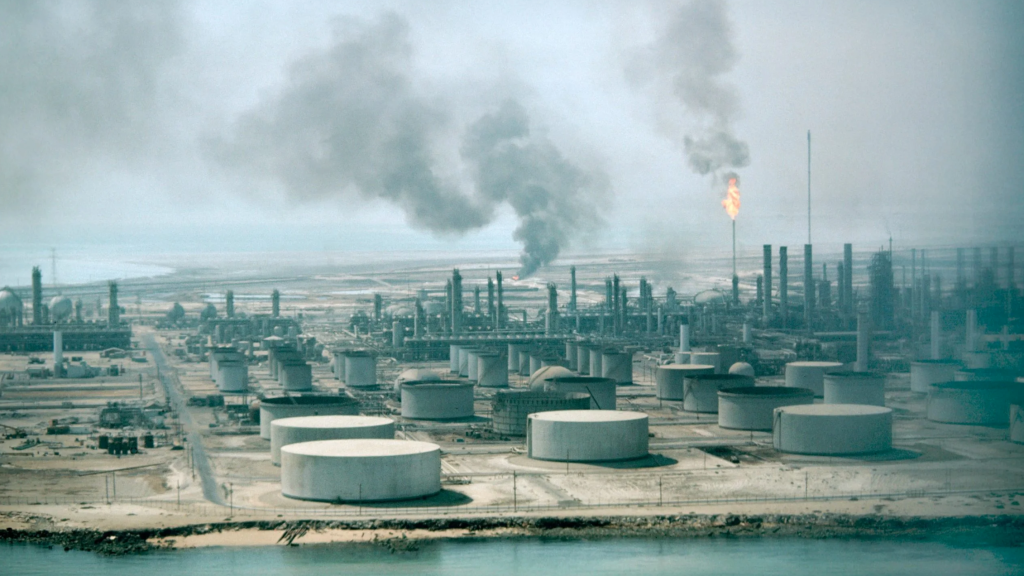
First published at Amandla!.
As the dust settles after COP30 in Belém, the scale of the failure becomes impossible to ignore. The world is on a path toward catastrophic warming, ecological systems are collapsing, and millions across the Global South face annihilation, not in the distant future, but today. The world’s political and economic elites arrived in the Amazon to negotiate when the 1.5°C target had already slipped out of reach, and they left with little more than symbolic gestures. No binding emissions cuts. No serious plan to phase out fossil fuels. No meaningful climate finance for adaptation. No accountability for the destruction already unleashed.
The gap between official international climate policy and the lived reality of a warming world has never been wider. In Belém, that gap became a chasm.
The world is heading towards roughly 2.8°C of warming by the end of the century. This is not a scenario compatible with human dignity — or even, for many, with life itself. Rising seas, extreme heat, drought, and flooding are eroding food security, displacing communities, and driving inequality to historic heights. The economic costs of climate disasters are skyrocketing, but the social and human costs are immeasurable: lives lost, livelihoods shattered, ecosystems irreversibly damaged.
These worsening crises play out in a world shaped by neoliberal austerity and debt dependency. Countries battling climate shocks are forced to cut social spending, privatise public goods, and surrender sovereignty to creditors. Governments continue pouring billions into militaries, fossil fuel subsidies, and the enrichment of corporate elites. The current political economy accelerates both warming and war.
The growing irrelevance of the COP
COP30 offered no mechanisms for enforcement, no firm deadlines, and no clear pathways to keep warming below 1.5°C. Nor did it include a fossil-fuel phase-out; oil-producing nations blocked binding language, and the final deal focused on voluntary road maps instead. What it did offer was an expanded space for corporate actors, carbon traders, and mining interests seeking to greenwash extractivist projects.
What is staring society in the face — and what too few scientists are willing to acknowledge — is that the climate-crisis regime cannot be separated from the logic of capitalism. So-called “green transitions” simply open new arenas for profit while remaining embedded in the same global system of accumulation. Renewable energy may be expanding, but it does not replace fossil fuels; it merely adds to an energy expansion rather than driving a real transition.
Climate summits have become a “safety valve” for capital. They offer the illusion of action, while allowing the core exploitative relations to continue. For workers and communities already suffering climate breakdown, it is indisputable that the COP has failed them.
The Just Transition heist
COP 30 adopted the Belem Action Mechanism for a Global Just Transition (BAM) — a proposed new institutional arrangement under the UNFCCC designed to address the current fragmentation and inadequacy of global just transition efforts. Trade unionists and workers should have no illusions about this mechanism. It has no finances or concrete plans to protect workers and communities affected by energy and other decarbonising initiatives. There are no resources for a re-industrialisation in harmony with the protection of nature. So workers and other vulnerable sectors will simply be left behind. Words and policies in COP statements are a dime a dozen. Reality is harsher.
Why mass movements matter — and why institutions don’t
If COP30 cannot deliver the mechanisms for decarbonisation or social protection, then the hope must lie in movements of people: workers, peasants, indigenous people, women, youth, and the urban poor. Outside of a global mass movement rooted in national realities, the necessary steps to confront the climate crisis will not occur. Yet such a movement cannot be built if it fails to address the immediate needs of the working classes and the poor. The fight for climate protection and ecological justice must therefore begin with the fight for life itself — for clean water, decent housing, jobs, food, and security against the elements.
Right-wing climate denialists exploit the desperation of the poor to drive a wedge between ordinary people and climate action. They present environmentalism as a threat to livelihoods rather than the path to survival. To win the majority, our movement must link ecological transformation with social justice. We must demand the redistribution of wealth and power away from the billionaire class, big tech, and ruling elites who plunder the planet for profit.
Brian Ashley is a member of Zabalaza for Socialism and serves on the Amandla! editorial collective.
As Tehran runs low on water, New York City considers divesting from planet-wrecker Blackrock. We need more of the latter to prevent more of the former.

The Jewish Youth Climate Movement, with support from the interfaith organization GreenFaith, led a nonviolent civil disobedience action outside of BlackRocks New York headquarters to demand the global asset management firm stop funding the fossil fuel industry.
(Photo by Erik McGregor/LightRocket via Getty Images)
Bill Mckibben
Nov 29, 2025
We are not getting out of the climate crisis without immense amounts of damage—the only question at this point is whether we can extricate ourselves with something like our civilizations intact. And the news from one cradle of civilization isn’t heartening: In Iran, where urban settlements date back to 4400 BC, the deepest drought in the country’s recorded history has now reached the havoc stage.
Tehran, shrouded in truly toxic smoke because the country’s power plants have run short of natural gas and begun burning “mazut, a dark residue of petroleum high in sulphur and other impurities,” is now facing a possible evacuation because it has run out of water. As Yeaganeh Torbati points out in an excellent essay, Iran’s water woes are deeply rooted in agricultural policy that prioritized irrigation above all (see also California); its international isolation has not helped it cope (including with the tragic fires that broke out last week in the Hyrcanian Forest, one of the oldest woodlands on Earth and a biodiversity hotspot). But the savage drought has been the final domino here, in a country where, as the head of one water utility points out, “Higher than normal heat has intensified the evaporation of water resources.” As the Australia Broadcasting Corporation summarized it:
Faced with a perfect storm of weather woes and decades of mismanagement, President Masoud Pezeshkian issued a warning to his country earlier this month that the situation could deteriorate even further.
“We’ve run short of water. If it doesn’t rain, we in Tehran… must start rationing,” he said.
“Even if we do ration and it still does not rain, then we will have no water at all.”
“They [citizens] must evacuate Tehran.”
While it may seem like an exaggeration, it is the shocking reality facing the Iranian population—particularly in its capital, which has in excess of 15 million people across the broader metropolitan area.
RECOMMENDED...
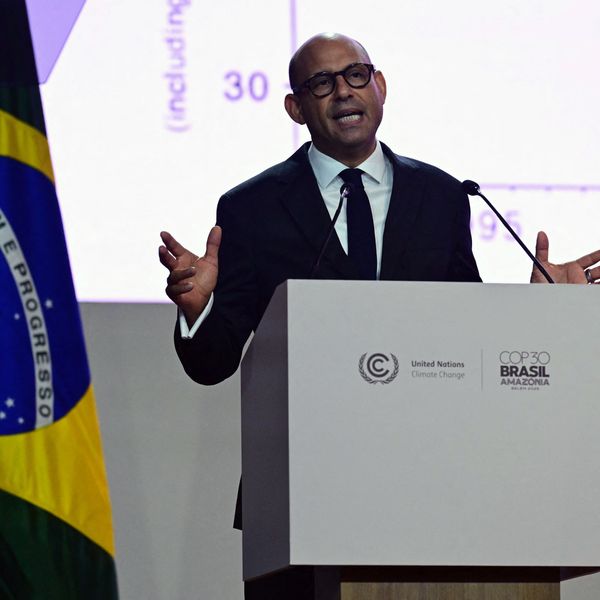
UN Climate Chief: Refusal to Halt Planetary Destruction Will ‘Never, Ever Be Forgiven’
This particular kind of disaster is becoming more common on a rapidly warming world. We’ve already had severe Day Zero scares in big cities in Brazil and South Africa; a new study earlier this month warns that:
Moments when water levels in reservoirs fall so low that water may no longer reach homes—could become common as early as this decade and the 2030s.
To find out where and when DZDs are most likely to occur, scientists at the Center for Climate Physics in Busan, South Korea ran a series of large-scale climate simulations. They considered the imbalance between decreasing natural supply (such as years of below-average rainfall and depleted river flows).
By some estimates, 2 billion humans are at risk.
The residents of New York are not at present among them. The city’s water supply system is one of the miracles of the modern world, and after six decades the “third tunnel” that will make that water system more secure is almost complete. (As a cub reporter in the early 1980s I spent several happy days underground, watching “sandhogs” from Local 147 blowing up rock walls to extend the shaft).
But that doesn’t mean New York is immune from climate danger, as anyone who lived there during Hurricane Sandy will recall. (As the financial journal Business Week printed in block letters on its cover the week after that catastrophe, “IT’S GLOBAL WARMING STUPID”).
And it certainly doesn’t mean that New York isn’t part of the cause of the global climate collapse. Not from its emissions—subway-riding New Yorkers are fairly green—but from the churn of capital through its financial markets that underwrites the ongoing expansion of the fossil fuel enterprise, in ways that scientists have said for years now simply has to stop.
A huge step in the right direction came Wednesday morning, when the city’s comptroller, Brad Lander, announced that he was recommending the city stop investing its money with Blackrock, the largest single representative of irresponsible capitalism on planet Earth.
Lander is urging three of the city’s pension funds to drop BlackRock Inc. because of “inadequate” climate plans, the latest move to penalize investment firms for failing to tackle global warming.
The guidance to reject BlackRock, the city’s largest money manager overseeing $42.3 billion of index funds for the pensions, follows a review of the firm’s efforts to press companies to decarbonize. Lander said Wednesday he’s also asking plan trustees to terminate much smaller mandates with Fidelity Investments and PanAgora Asset Management.
It’s hard to overstate the importance of this decision. To call Blackrock a “giant” is to pitifully underestimate its size—it has $13.46 trillion under management as of this fall. It owns 10% of the world’s stock market. If it wanted to stop the expansion of the fossil fuel industry, it could, more easily than any other single entity on planet Earth.
Instead it has dithered endlessly, making occasional noises of climate concern and then backtracking when red state treasurers (with far smaller portfolios than Lander’s to wave around) squawked at them. In August, Democratic officials from a dozen states sent warning letters to asset managers, calling on them to “reject pressure from the Trump administration and GOP lawmakers, and instead commit to thorough evaluations of risks tied to global warming, supply chains, and corporate governance.” Lander’s recommendation is the first concrete outcome.
Or, fairly concrete. Lander’s term ends on December 31. The advocates who have pressed for this policy—especially New York Communities for Change—are pushing him to get one of the city’s three pension plans—the New York City Employees Retirement System or NYCERS—to actually commit to the plan at its December 17 meeting. They think that with some prodding by Lander the votes are there to make the change.
If anyone has the political credibility to get it done before Christmas, that would be Brad Lander. Though he finished third in the primary, he emerged from this year’s mayoral contest with more love than any player in the city, maybe even including Zohran Mamdani. Partly that was because stood up for immigrants early, getting arrested by an Immigration and Customs Enforcement thug. Mostly it was because he figured out he was going to lose to Mamdani, took it with exceptionally good grace, and ended up playing the important role of his being his verifier—assuring people with both his insider and his Jewish credentials that the young socialist was up to the job. He comes out of 2025 both a macher and a mensch, and now he’s rumored to be planning a run for Congress; assuming he ties up some of the loose ends here, he will take on any future race with the fervent support of the environmental community, for whom he has delivered big-time. (And with the fervent opposition of Wall Street, which is proving to be a useful credential in itself).
In a larger sense, I’ve been reading accounts for months now of how climate is dead as a political issue. I think this move makes clear that isn’t true; in fact, I’d wager that as energy affordability takes center stage in next year’s midterms, the transition off fossil fuels will be a key issue for progressives to seize.
They will need to do so quickly. As events in Tehran make clear, time is now moving fast. The physics of global warming are implacable: Run out of water and you have to move your city. We’ll have to make politicians move fast to have any hope of getting ahead of the curve.
© 2022 Bill McKibben
Bill Mckibben
Bill McKibben is the Schumann Distinguished Scholar at Middlebury College and co-founder of 350.org and ThirdAct.org. His most recent book is "Falter: Has the Human Game Begun to Play Itself Out?." He also authored "The End of Nature," "Eaarth: Making a Life on a Tough New Planet," and "Deep Economy: The Wealth of Communities and the Durable Future."
Full Bio >

No comments:
Post a Comment