Hondurans vote in election shadowed by Trump aid threats
Will Grant - Mexico, Central America and Cuba correspondent; Emma RossiterSun, November 30, 2025

Rixi Moncada, Salvador Nasralla and Nasry "Tito" Asfura [Getty Images]
Hondurans are casting their ballots in a general election that is being dominated by threats from US President Donald Trump.
There are five presidential candidates on the bill, but the poll is essentially being seen as a three-way race between former defence minister Rixi Moncada of the leftist Libre party, TV host Salvador Nasralla from the centrist Liberals, and businessman Nasry "Tito" Asfura, of the right-wing National Party.
Trump has thrown his support behind Asfura and threatened to cut financial aid to the Central American nation if he does not win.
The most recent opinion poll puts Nasralla in the lead, but with 34% of voters saying they are still undecided, it could be anyone's race.
Presidents in Honduras can only serve a single four-year term so the incumbent, Xiomara Castro, who was the country's first female president when she took office in 2021 for the Libre party, is not on the ballot.
She has backed Moncada to take her place. The 60-year-old lawyer has pledged to protect "natural wealth" from "21st-century filibusters who want to privatise everything" if she wins. Moncada has also expressed her commitment to combating corruption "in all its forms".
On Saturday, Moncada accused Trump of meddling in the election, calling his endorsement of her right-wing opponent "totally interventionist".
Trump had said that the US would be "very supportive" if Tito Asfura wins Sunday's presidential election, which will also see voters choose all 128 members of congress and almost 300 local representatives.
"If he doesn't win, the United States will not be throwing good money after bad, because a wrong Leader can only bring catastrophic results to a country, no matter which country it is," Trump wrote on his social media platform, Truth Social.
The US sent more than $193m (£146m) to Honduras last fiscal year, according to the State Department website, and despite aid cuts, has sent more than $102m this year. The Trump Administration has already reportedly cut $167m in economic and governance aid that had been earmarked for 2024 and 2025, the Congress website says.
In another post, Trump wrote that he and Asfura, who is the former mayor of the capital, Tegucigalpa, could "work together to fight the Narcocommunists" and counter drug trafficking.
Nasry Asfura has pledged in a series of social media posts to bring "development and opportunities for everyone", to "facilitate foreign and domestic investment into the country" and "generate employment for all."
However, his party has been plagued by scandals and corruption accusations in recent years - including the sentencing of former party leader and ex-president Juan Orlando Hernández last year.
Hernández was jailed for 45 years in the US on drug-smuggling and weapons charges - a decision Trump now intends to overturn.
Asfura has carefully tried to distance himself from Hernández. On Friday he told news agency AFP that he has "no ties" with the ex-president, and that "the party is not responsible for his personal actions."

Nasry "Tito" Asfura is seeking to restore his party's reputation after a series of scandals in recent years [Reuters]
The current front runner, though, is 72-year-old Salvador Nasralla, who is running for president for the fourth time.
He claims that his win in 2017 was stolen due to "electoral fraud perpetrated by Hernández". This was never proven and a partial recount found no irregularities, though the decision did spark mass protests across the country.
According to his campaign website, Nasralla says his government's main focus would be "an open economy", and that he is committed to generating employment. He also says that if he wins, he will sever ties with China and Venezuela.
Tensions between Venezuela and the US have escalated recently - the US has built up its military presence in the area and carried out at least 21 deadly strikes on boats it says were carrying drugs. Venezuela's President Nicolás Maduro has said the US actions are attempt to oust him.
On Saturday, Trump declared that Venezuela's airspace should be considered closed, even though he does not have the power to do that.
Beyond Honduras' relationship with the US, many voters are asking more fundamental questions about this race as they cast their ballots.
Will the vote pass off smoothly and will the results be delivered on time?
Will the ruling Libre party accept defeat and give up power if they lose?
Crucially, will the armed forces, who have been accused of creeping politicisation, remain independent and not aligned with any individual party or politician?
Polls for the single-round elections opened at 07:00 CST (13:00 GMT) and will close after 10 hours of voting.
Pre-emptive accusations of election fraud, made both by the ruling party and opposition, have sown mistrust in the vote and sparked fears of post-election unrest.
The president backed a right-wing candidate as he announced a pardon for former President Juan Orlando Hernández—despite his involvement with drug trafficking, which Trump claims he’s fighting in Latin America.
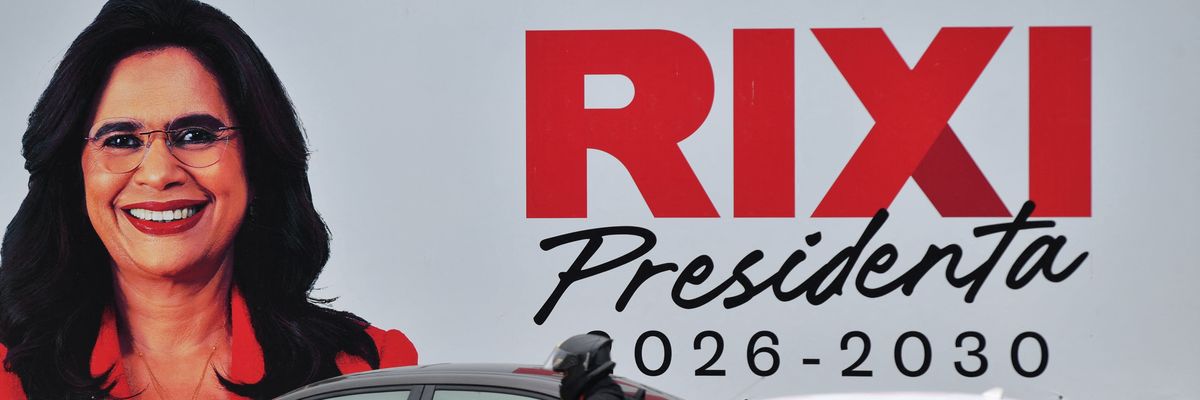
A billboard ad for Honduran presidential candidate for the LIBRE party, Rixi Moncada, is seen in Tegucigalpa on November 13, 2025.
(Photo by Orlando Sierra / AFP)
Julia Conley
Nov 29, 2025
COMMON DREAMS
The US Congressional Progressive Caucus on Friday accused President Donald Trump of “flagrantly interfering” in Honduras’ upcoming presidential election after Trump announced his endorsement of right-wing candidate Nasry “Tito” Asfura and repeated threats he’s made previously ahead of other electoral contests in which he sought to secure a conservative win.
On the social media platform X, Trump warned that only a victory for former Tegucigalpa Mayor Asfura and the National Party in Sunday’s election will allow Honduras and the US to “fight the Narcocommunists, and bring needed aid to the people” of the Central American country.
The US Congressional Progressive Caucus on Friday accused President Donald Trump of “flagrantly interfering” in Honduras’ upcoming presidential election after Trump announced his endorsement of right-wing candidate Nasry “Tito” Asfura and repeated threats he’s made previously ahead of other electoral contests in which he sought to secure a conservative win.
On the social media platform X, Trump warned that only a victory for former Tegucigalpa Mayor Asfura and the National Party in Sunday’s election will allow Honduras and the US to “fight the Narcocommunists, and bring needed aid to the people” of the Central American country.
RECOMMENDED...
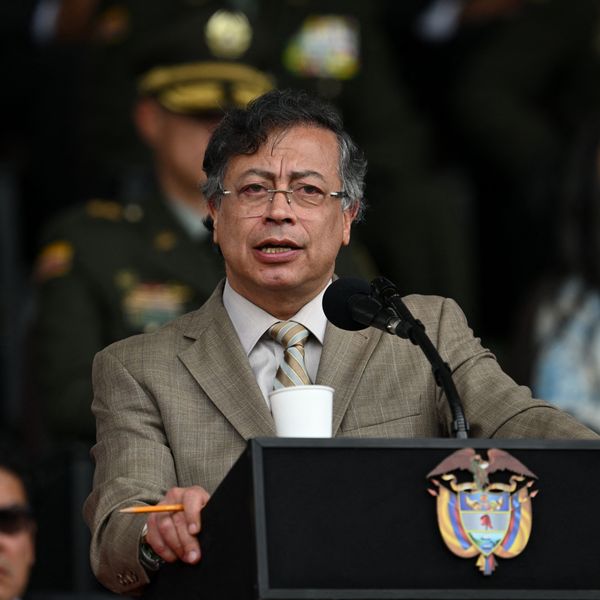
As Trump Issues New Threats to Mexico and Colombia, Democrats Push to End Unauthorized Aggression
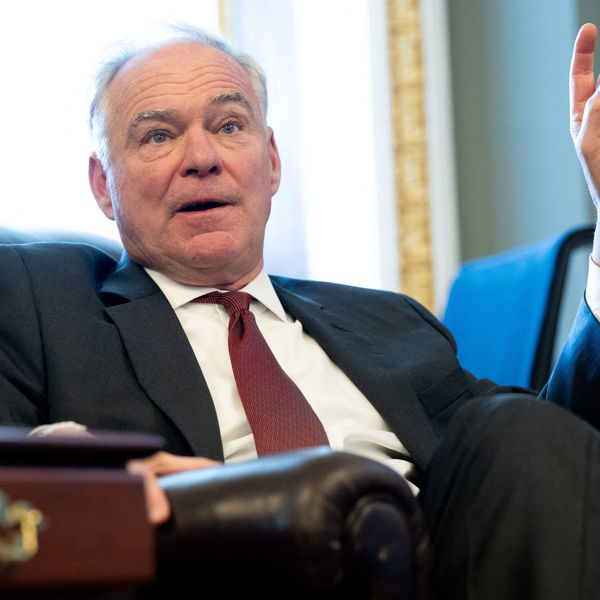
Senate Dems Aim to Stop Trump ‘From Dragging This Country Into War’ With Venezuela
He accused Asfura’s opponents—former finance and defense minister Rixi Moncada of the left-wing Liberty and Refoundation (Libre) Party, which is now in power, and sportscaster Salvador Nasralla of the centrist Liberal Party—of being communists and said Nasralla is running as a spoiler in order to split the vote and weaken Asfura. He added that a loss for the right-wing candidate would allow Venezuelan President Nicolás Maduro “and his Narcoterrorists [to] take over another country like they have taken over Cuba, Nicaragua, and Venezuela.”
The president also wrote on his social media platform, Truth Social, that “if [Asfura] doesn’t win, the US will not be throwing good money after bad,” repeating a comment he made during New York City’s mayoral election in which he urged voters to reject progressive candidate Zohran Mamdani or risk losing federal aid for the city. Trump also offered Argentina a $40 billion bailout if voters elected his ally, Javier Milei, earlier this year.
Under President Xiomara Castro, the Libre Party’s government has invested in hospitals and education, and has made strides in halting the privatization of the country’s electricity system, Drop Site News reported. The poverty rate has also been reduced by about 13% since Castro took office in 2021, although, as the outlet reported, some rights advocates have criticized Castro’s government for keeping “many of her predecessor’s militarized policies in place, despite her commitment to implement a more community-minded strategy.”
Trump added in his social media post that he was issuing a pardon to former Honduran President Juan Orlando Hernández, who represented the National Party and is currently serving a 45-year prison sentence in the US after being convicted of working with drug traffickers who paid bribes to ensure more than 400 tons of cocaine were sent to the US. The pardon was announced as Trump continues his threats against Venezuela, which he has accused of trafficking drugs to the US.
CPC Deputy Chair Ilhan Omar (D-Minn.) and Whip Jesús “Chuy” García (D-Ill.) called Trump’s “smearing” of Asfura’s opponents “completely unacceptable,” and noted that the president has been joined by other congressional Republicans in making “wild, unsubstantiated allegations” regarding Honduras’ election—including Rep. María Elvira Salazar (R-Fla.), who voiced “support for a military coup.”
Salazar said recently that “16 years ago, the military saved its country from communism and today, they need to do the same thing,” referring to the US-backed overthrow of democratically-elected President Manuel Zelaya.
“These Cold War-era threats and blatant interventions create hostile conditions for free and fair elections and must stop immediately,” said Omar and García. “We also cannot tolerate premature declarations by prominent US politicians regarding the election results before ballots are fully counted. Attempts to delegitimize the vote based on who wins could be disastrous in light of the harmful history of US interference in modern Honduran politics.”
The two progressive leaders were echoing concerns brought up by Honduran Vice Foreign Minister Gerardo Torres, who spoke at a gathering of left-wing leaders on Thursday in Tegucigalpa.
Torres warned that the Electoral Council could claim Nasry is winning “with an irreversible trend” before the actual winner of the wide-open race is clear on Sunday.
“Even Trump could congratulate him—and that’s when real trouble will erupt in this country,” said Torres.
The chaos that could result could lead election officials to “nullify the elections and hold new ones in six months, leaving Libre weakened and allowing the right to win,” reported El País. Torres posited that this is the National Party’s “strategy.”
“The right wing cannot win on Sunday; that needs to be clear and repeated ad nauseam,” Torres said, urging advocates to promote Moncada’s candidacy on social media and help mobilize voters to get to the polls early.
Omar and García noted that after Honduras’ 2017 election, the Trump administration endorsed Hernández’s reelection “despite evidence of fraud and the killing by his security forces of Hondurans who protested the results.”
More than 20 people were killed in the aftermath of the disputed 2017 election
The two progressive leaders said that “Sunday’s elections are taking place at a critical moment, as the country aims to elect and transfer political power to a new leader for the first time outside of the context of the repressive post-coup regimes that persisted from 2009 to 2021.”
“At a time of global democratic fragility, we must move beyond US bullying and political interference in Honduras’s sovereign affairs. We need a relationship based on mutual respect, including respect for the will of Honduran voters,” said Omar and García.
Torres expressed hope that Trump’s backing of Asfura will have the opposite effect that the US president intended, saying Trump’s comments on social media were “a blow to the right; it hurts one of their candidates.”
“If there was anyone who didn’t know there were elections in Honduras this Sunday, now everyone knows,” said Torres. “There are even people who went to look at a map to see where Honduras is and find out who Rixi Moncada is... It puts us in an important position, which creates a wonderful scenario, because Rixi’s victory will be more famous and important. We have no doubt about her victory.”
Torres added that many conservative voters in Honduras are likely to reject the party formerly led by Hernández.
“These are right-wing people who opposed the narcostate, who stood with us in 2015 against [Hernández’s] embezzlement of social security, and who know what those criminals are,” he said, referring to previous governments. “Trump can tweet all day and those people aren’t going to vote for the return of the conservatives.”
José Mario López of the Jesuit Reflection, Research, and Communication Team in Honduras also told Drop Site News that the “red scare” tactics that the National and Liberal parties have joined Trump in using in the final weeks of the election are likely to have some sway with older people, but are “not expected to impact younger voters.”
“It’s a discourse that doesn’t really land, in my view,” López told the outlet. “I think what can move votes is the economic issue, because historically one of the main problems identified in public opinion polls is unemployment and lack of economic opportunities.”


No comments:
Post a Comment