
Venezuelan leader Maduro may seem desperate. But his loyalty vs punishment strategy is hard to crack
REGINA GARCIA CANO
Sun, November 30, 2025

Venezuelan President Nicolas Maduro brandishes a sword said to have belonged to independence hero Simon Bolivar during a civic-military event at the military academy in Caracas, Venezuela, Tuesday, Nov. 25, 2025. (AP Photo/Ariana Cubillos)(ASSOCIATED PRESS)

Skydivers get revved to perform in the Industrial Aviation Expo at the Libertador Air Base in Maracay, Venezuela, Saturday, Nov. 29, 2025. (AP Photo/Cristian Hernandez)(ASSOCIATED PRESS)

Venezuelan President Nicolas Maduro speaks during a civic-military event at the military academy in Caracas, Venezuela, Tuesday, Nov. 25, 2025. (AP Photo/Ariana Cubillos)(ASSOCIATED PRESS)

Venezuelan President Nicolas Maduro takes part in a government-organized civic-military rally in Caracas, Venezuela, Tuesday, Nov. 25, 2025. (AP Photo/Cristian Hernandez)(ASSOCIATED PRESS)
CARACAS, Venezuela (AP) — English phrases once bothered Venezuelan President Nicolás Maduro so much that he urged his State of the Union address audience to phase out words like skatepark and fashion.
But as the White House now ponders whether the U.S. military should strike Venezuela, Maduro is embracing English, singing John Lennon’s Imagine, advocating for peace and dancing to a remix of his latest English catchphrase, “No War, Yes Peace.”
While his turnaround is seen as a sign of desperation by supporters of Venezuela’s political opposition, whose leaders have repeatedly told their backers in Washington that the threat of military action would crack Maduro’s inner circle, months of pressure have yet to produce defections or a government transition.
Loyalty vs. punishment
Behind this knack for staying in power is a system that punishes disloyal associates harshly and allows loyal ministers, justices, military leaders and other officials to enrich themselves.
“The Bolivarian Revolution possesses a remarkable ability: the capacity for cohesion in the face of external pressure,” Ronal Rodríguez, a researcher at the Venezuela Observatory in Colombia’s Universidad del Rosario, said referring to the political movement, also known as Chavismo, that Maduro inherited from the late President Hugo Chávez. “When pressure comes from abroad, they manage to unite, defend and protect themselves."
Underpinning the loyalty-or-punishment principle are corruption networks blessed by Chávez and Maduro that give the loyal permission to get richer. The policy has vexed previous efforts to unseat Maduro and has helped him and his close associates to skirt economic sanctions, obtain U.S. presidential pardons and claim an electoral victory they resoundingly lost.
Rodríguez explained that prison and torture can be part of the punishment, which is usually harsher for accused wrongdoers with military affiliation. The strategy has been crucial for an authoritarian Maduro to keep control of the military, which he lets traffic drugs, oil, wildlife and myriad goods in exchange for coup-proof barracks.
“This has been a very effective tool because Chavismo has always been able to eliminate those actors who at some point try to rise up, and it has been able to expose corrupt practices from all sorts of actors,” Rodríguez said.
Military stands by Maduro
Venezuela’s political opposition, led by Nobel Peace Prize winner María Corina Machado, had banked on the military’s support to dislodge Maduro after credible evidence showed that he lost the 2024 presidential election. But Defense Minister Vladimir Padrino López and other military leaders stood by Maduro, just like they did in 2019 during a barracks revolt by a cadre of soldiers who swore loyalty to Juan Guaidó, the opposition leader recognized at the time by the first Trump administration as Venezuela’s rightful leader.
Since returning to office, U.S. President Donald Trump has increased the pressure on Maduro and his allies, including by doubling to $50 million the reward for information that leads to his arrest on narcoterrorism charges. A 2020 indictment accused Maduro of leading the Cartel de los Soles, which the U.S. State Department on Monday designated as a foreign terrorist organization.
Maduro denies the accusations.
On Saturday, Trump said that the airspace “above and surrounding” the South American country should be considered as “closed in its entirety." Maduro's government responded by accusing Trump of making a ”colonial threat,” rallying supporters behind what it called an assault on national sovereignty.
Suspected drug boats bombed
In early September, the U.S. military began blowing up boats that the Trump administration has accused of transporting drugs in the Caribbean Sea and eastern Pacific Ocean, killing more than 80 people.
Many, including Maduro himself, see the U.S. military moves as an effort to end Chavismo’s hold on power. The opposition only added to this perception by reigniting its promise to remove Maduro from office.
Two weeks after the first boat strike, Chavismo’s loyalty was tested directly when Maduro’s pilot rebuffed efforts from the U.S. to join a plot to capture the Venezuelan leader and deliver him into custody to face the charges.
“We Venezuelans are cut from a different cloth,” Bitner Villegas, a member of the elite presidential honor guard, wrote to a retired U.S. officer trying to recruit him. “The last thing we are is traitors.”
On Tuesday, ruling party supporters marched in Caracas to demonstrate what they described as the “anti-imperialist spirit” of Chavismo. The march ended in a ceremony in which Maduro raised a jeweled sword that belonged to South American independence hero Simón Bolívar and guided attendees, including Cabinet ministers, to swear in God’s name to defend peace and freedom.
Susan Shirk, a research professor at the University of California, San Diego, said authoritarian leaders have a “fetish for unity” and like public displays of loyalty to prevent splits among leadership and social upheaval. She explained that division can lead people to believe that the risk of protesting has lessened.
‘We have to remain united’
U.S. Defense Secretary Pete Hegseth has said the designation of Cartel de los Soles provides Trump with additional options for dealing with Maduro. Hegseth hasn't provided details on those options, but administration officials have signaled that they have trouble seeing a situation in which Maduro is still in power as an acceptable endgame.
David Smilde, a Tulane University professor who has studied Venezuela for more than three decades, said that only people who don't understand Chavismo would think that a show of force will cause a government change.
“This is exactly the type of thing that unifies them,” Smilde said of the deployment of U.S. military forces. “They also talk about the $50 million reward, but what military officer in their right mind would trust the U.S. government? And more broadly, if the whole premise of the operation is that the Venezuelan armed forces are a drug cartel, what motivation could they possibly have to turn on Maduro and participate in regime change?”
Maduro's entire presidency has been marked by a political, social and economic crisis that has pushed millions into poverty and driven more than 7.7 million people to migrate. The crisis has also caused support for the ruling party to plummet across the country.
With loyalty keeping his inner circle intact despite mounting U.S. pressure, Maduro has also sought to maintain his diminished base through the long-established practices that include organizing marches in the capital.
Zenaida Quintero, a school porter, has seen the country come undone under Maduro’s watch, with vivid memories of the severe food shortages that Venezuelans experienced in the late 2010s. Her support for Maduro, however, hasn't wavered, and her commitment comes down to one fact: He was handpicked by Chávez to lead the Bolivarian Revolution.
Quintero, 60, said that Maduro, like Chávez, won't abandon his supporters.
Aoife Walsh - Washington
BBC
Venezuela has condemned US President Donald Trump's statement that the airspace around the country should be considered closed.
The country's foreign ministry called Trump's comments "another extravagant, illegal and unjustified aggression against the Venezuelan people".
The US does not have legal authority to close another country's airspace and the Venezuelan statement accused Trump of making a "colonialist threat".
The US has built its military presence in the area and carried out at least 21 strikes on boats it said were carrying drugs, killing more than 80, without providing evidence. Venezuela's President Nicolás Maduro has said the US actions are attempt to oust him.
Trump wrote on Truth Social: "To all Airlines, Pilots, Drug Dealers, and Human Traffickers, please consider THE AIRSPACE ABOVE AND SURROUNDING VENEZUELA TO BE CLOSED IN ITS ENTIRETY."
The White House did not immediately respond to the BBC's request for comment.
Some Democratic and Republican members of the US Congress have expressed anger that Trump has not sought legislative approval.
"Trump's reckless actions towards Venezuela are pushing America closer and closer to another costly foreign war," top Senate Democrat Chuck Schumer posted on X on Sunday.
"Under our constitution, Congress has the sole power to declare war."
Republican Representative Marjorie Taylor Greene, until recently a close Trump ally, said: "Reminder, Congress has the sole power to declare war."
Trump's comments come just days after the US Federal Aviation Administration (FAA) warned airlines of "heightened military activity in and around Venezuela", leading to several major airlines suspending flights there. Caracas then rescinded their take-off and landing rights.
Venezuela's foreign ministry urged "the international community, the sovereign governments of the world, the UN, and the relevant multilateral organisations to firmly reject this immoral act of aggression", in a statement on Saturday.
The same day, Venezuela's military conducted exercises along coastal areas, with state TV showing anti-aircraft weapons and other artillery being manoeuvred.
The US has deployed the world's largest aircraft carrier, the USS Gerald Ford, and about 15,000 troops to within striking distance of Venezuela.

[BBC]
It has insisted that the deployment - the largest by the US in the region since it invaded Panama in 1989 - is to combat drug trafficking.
Trump warned on Thursday that US efforts to halt Venezuelan drug trafficking "by land" would begin "very soon".
The Venezuelan government believes the aim of the US is to depose the left-wing Maduro, whose re-election last year was denounced by the Venezuelan opposition and many nations as rigged.
Fellow left-wing President Gustavo Petro of Colombia - who has also faced US sanctions - has said he believed the US was using "violence to dominate" Latin America, though other leaders in the region have welcomed Trump's stance.
The US has also designated Cartel de los Soles, or Cartel of the Suns – a group it alleges is headed by Maduro – as a foreign terrorist organisation.
Labelling an organisation as a terrorist group gives US law enforcement and military agencies broader powers to target and dismantle it.
Venezuela's foreign ministry has "categorically, firmly, and absolutely rejected" the designation.
President Donald Trump declared Saturday that all airspace over and surrounding Venezuela should be considered closed, a major declaration amid the United States’ rising escalations against the South American nation.
“To all Airlines, Pilots, Drug Dealers, and Human Traffickers, please consider THE AIRSPACE ABOVE AND SURROUNDING VENEZUELA TO BE CLOSED IN ITS ENTIRETY,” Trump wrote on his social media platform Truth Social. “Thank you for your attention to this matter!”
The Trump administration has ramped up pressure on Venezuela in recent months, starting with its lethal strikes against suspected drug-carrying vessels in the Caribbean, strikes that have killed at least 83 people and have been condemned by critics, experts and lawmakers alike as "extrajudicial killings.”
Beyond the strikes on sea vessels, the Trump administration has also discussed plans to assassinate Venezuelan President Nicolas Maduro , has deployed an aircraft carrier strike group to just off of Venezuela’s coast, and suggested that land operations would begin “very soon
“Even if unenforced, Trump’s declaration functions as an improvised, extralegal no-fly zone created through fear, FAA warnings, and military pressure,” said the anti-war group CodePink.
Julia Conley
Nov 29, 2025
COMMON DREAMS
Policy experts and advocates on Saturday denounced President Donald Trump’s claim that he had ordered the airspace above and around Venezuela “to be closed in its entirety”—an authority the US president does not have but that one analyst said signaled a “scorched earth” policy in the South American country and that others warned could portend imminent airstrikes.
Francisco Rodriguez, a senior research fellow at the Center for Economic and Policy Research, said that after months of escalating tensions driven by Trump’s strikes on boats in the Caribbean and other aggressive actions, the US government was treating the Venezuelan people as “chess pieces.”
RECOMMENDED...
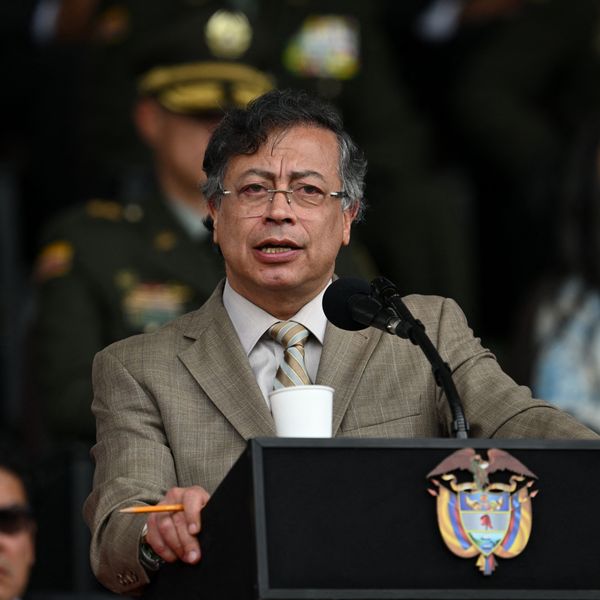
As Trump Issues New Threats to Mexico and Colombia, Democrats Push to End Unauthorized Aggression
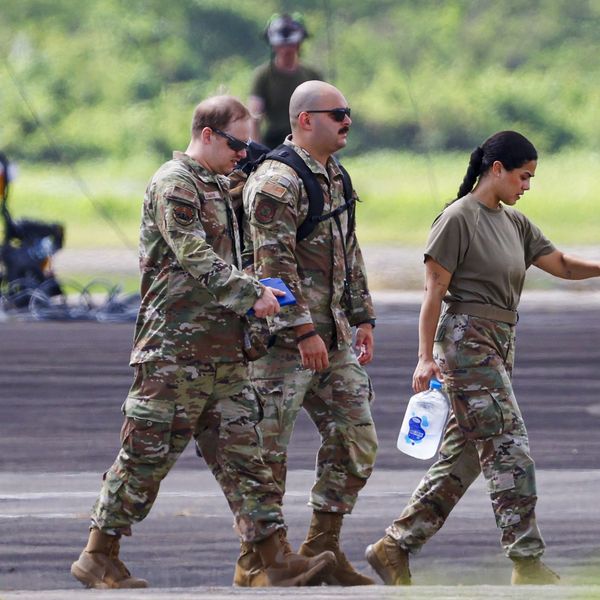
US Troops Near Venezuela Reportedly Denied Holiday Leave as Fears Grow of Unpopular and Lengthy Trump War
“A country subject to air isolation is a country where medicine and essential supplies cannot enter, and whose citizens cannot travel even for emergency reasons,” Rodriguez told Al Jazeera.
US strikes on vessels in the Caribbean and the eastern Pacific have killed at least 83 people since early September, with Defense Secretary Pete Hegseth reportedly ordering US military officers to “kill everybody” on board when he directed the first strike. The administration claims it is conducting the strikes to stop drug trafficking from Venezuela, though US and international intelligence has shown the South American country is not involved in trafficking fentanyl to the US and serves as only a transit hub—but not a major production center—of cocaine.
The Trump administration has claimed it is engaged in an “armed conflict” with Venezuela, though Congress has not authorized any such conflict. Lawmakers from both sides of the aisle have introduced war powers resolutions to stop Trump from conducting more attacks on boats and inside Venezuela, where the president has also authorized covert CIA operations and has threatened to launch strikes.
On Thursday, Trump said in a statement to US service members that the military could begin targeting suspected drug traffickers on land “very soon,” before claiming the country’s airspace was closed Saturday morning.
The US has also sent an aircraft carrier and 10,000 troops to the region in the largest US deployment to Latin America in decades.
The Federal Aviation Administration (FAA) last week urged civilian aircraft to “exercise caution” when flying over Venezuela due to the “worsening security situation and heightened military activity in or around” the country.
That warning led six airlines to suspend flights to Venezuela, which in turn prompted President Nicolás Maduro’s government to ban the companies, including Turkish Airlines, Spain’s Iberia, Portugal’s TAP, Colombia’s Avianca, Chile and Brazil’s LATAM, and Brazil’s GOL. Maduro accused the airlines of “joining the actions of state terrorism promoted by the United States government.”
The anti-war group CodePink said Trump’s claim about Venezuelan airspace represented “a dangerous escalation with no legal basis and enormous regional consequences.”
“The United States has no authority to close another country’s airspace,” said the group. “Under international law, only Venezuela can determine the status of its skies and enforcing a foreign no-fly zone without UN authorization or host-state consent would constitute an act of war. Even if unenforced, Trump’s declaration functions as an improvised, extralegal no-fly zone created through fear, FAA warnings, and military pressure.”
Trump’s actions in Venezuela in recent weeks—which come two years after the president explicitly said he wanted to take control of the country’s vast oil reserves—“form a familiar pattern,” said CodePink.
“Manufacture a crisis, then paint a sovereign government as a danger to US interests, and finally use the manufactured urgency to justify military measures that would otherwise be politically impossible,” said the group. “Trying to ‘close’ the airspace of another country is an act of aggression. It risks flight disruptions, economic panic, and aviation accidents. It is also an attempt to isolate Venezuela without admitting that the US is imposing a de facto blockade. The people of Venezuela have lived with the consequences of Washington’s reckless interventions. They deserve peace, not another manufactured war.”
“Diplomacy, not domination, remains the only path that respects international law and regional sovereignty,” added CodePink. “Hands off Venezuela. Hands off Latin America.”
Charles Samuel Shapiro, a former US ambassador to Venezuela, emphasized that Trump’s latest move in what he claims is a battle against drug trafficking came a day after he announced a pardon for right-wing former Honduran President Juan Orlando Hernández, who was convicted of working with drug traffickers.
“The whole drug trafficking thing is simply a pretext,” Shapiro told Al Jazeera. “If you look at the US government’s own reports, drugs coming into the United States from Venezuela are minimal, so declaring these people to be ‘narcoterrorists’—it makes no sense.”
Tom Boggioni
November 29, 2025
RAW STORY
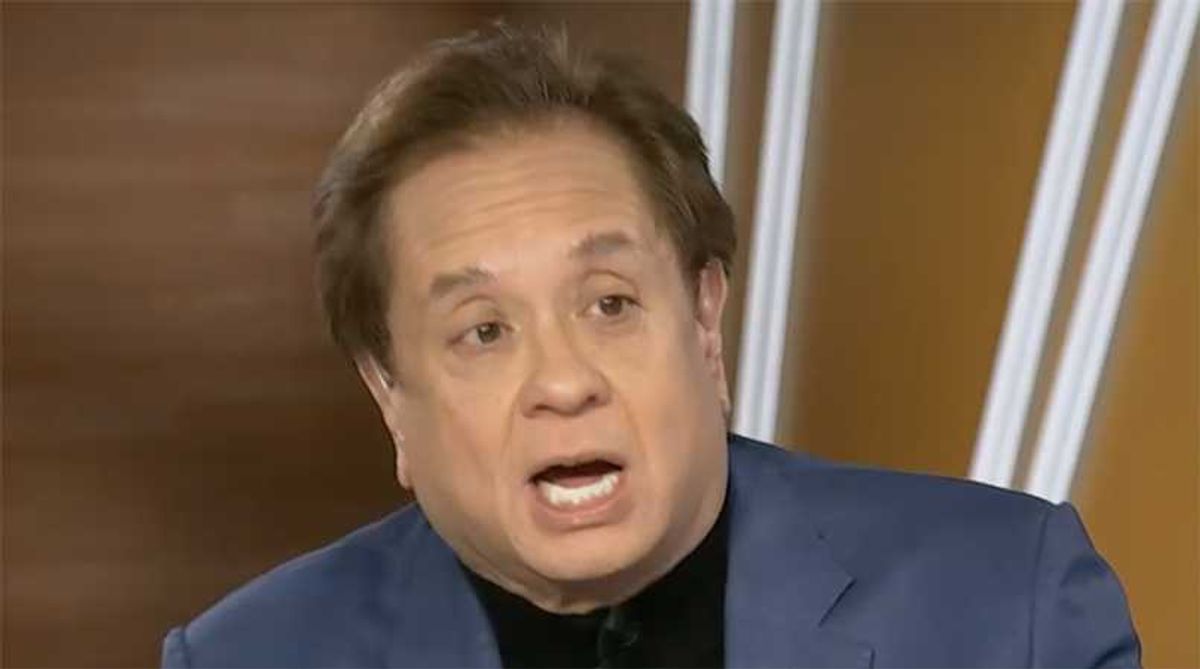
George Conway (MS NOW screenshot)
Reacting to a Washington Post report that Defense Secretary Pete Hegseth instructed military officials to “kill them all,” in an attack on what the Donald Trump administration has labeled “narco-terrorists,” attorney George Conway claimed the former Fox personality faces a wide array of criminal charges that may be beyond the president’s reach.
According to the report, there were two survivors of initial attack who were then blown up in the water with a second launch, which has only increased the outrage over the unlawful attacks.
On Saturday morning, a fuming Conway told the hosts of MS NOW’s “The Weekend,” Hegseth could be in a heap of trouble for cold-blooded murder.
“There is no war between us, Venezuela and these people were not sailors or soldiers fighting with weapons against us, so that the law of war doesn't even [apply],” he explained. “You don't even get to the law of war. But even if it were, even if these guys were a naval ship armed to the teeth and the ship was blown up and these guys were in the water, firing against them would be an act — would be a violation of the laws of war.”
“No matter how you look at this, you can apply civilian law, military law, the Uniform Code of Military Justice, international law, foreign law, domestic law, federal law, state law. No matter what legal regime you apply to, the second strike, it's murder. Period,” he added. “It's not even an argument — that's how outrageous this is.”
David McAfee
November 29, 2025
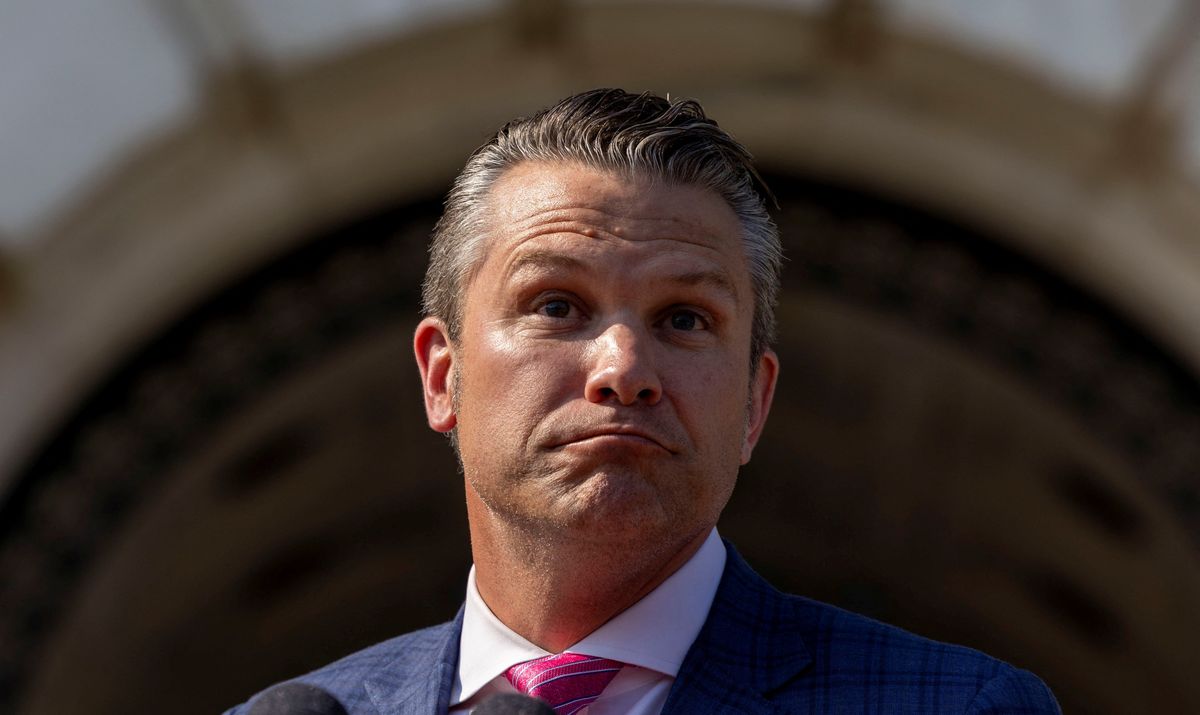
U.S. Defense Secretary Pete Hegseth reacts during a press conference to discuss the U.S. Department of Agriculture (USDA)'s "National Farm Security Action Plan," outside the USDA in Washington, D.C., U.S., July 8, 2025. REUTERS/Umit Bektas
New reporting about a September military attack involving Pete Hegseth and a purported drug vessel has led to an enhanced probe.
Observers' eyebrows were raised after it was reported that Hegseth ordered the killing of survivors of one of the controversial drug vessel bombings. Some analysts questioned whether it was murder, or even a war crime.
In an article called "Congressional committees to scrutinize U.S. killing of boat strike survivors," the Washington Post reported, "In a rare split with the Trump administration, GOP-led panels in the House and Senate say they want a full accounting in the September military attack."
"Republican-led committees in the Senate and the House say they will amplify their scrutiny of the Pentagon after a Washington Post report revealing that Defense Secretary Pete Hegseth gave a spoken order to kill all crew members aboard a vessel suspected of smuggling drugs in the Caribbean Sea several weeks ago," according to the report. "A live drone feed showed two survivors from the original crew of 11 clinging to the wreckage of their boat after the initial missile attack Sept. 2, The Post reported Friday afternoon. The Special Operations commander overseeing the operation then ordered a second strike to comply with Hegseth’s directive, according to two people with direct knowledge of the operation, killing both survivors. Those people, along with five others in the original report, spoke on the condition of anonymity because of the matter’s sensitivity."
The Post continues:
"Late Friday, Sen. Roger Wicker (R-Mississippi), the chairman of the Senate Armed Services Committee, and Sen. Jack Reed (Rhode Island), the committee’s top Democrat, issued a statement saying that the committee ''is aware of recent news reports — and the Department of Defense’s initial response — regarding alleged follow-on strikes on suspected narcotics vessels.' The committee, they said, 'has directed inquiries to the Department, and we will be conducting vigorous oversight to determine the facts related to these circumstances.'"
The report adds, "The leaders of the House Armed Services Committee, Rep. Mike D. Rogers (R-Alabama) and Rep. Adam Smith (D-Washington), followed suit late Saturday. In a brief joint statement, the pair said they are 'taking bipartisan action to gather a full accounting of the operation in question.' The committee, they noted, is 'committed to providing rigorous oversight of the Department of Defense’s military operations in the Caribbean.'"
Read the report here.
Two Peace Prizes: The Nobel Legitimizes the
Empire’s War on Venezuela While the US
Peace Prize Honors Resistance
The Nobel Peace Prize was established in 1901. In the decades that followed, Mahatma Gandhi emerged as the international symbol of world peace for resistance to the dominant imperialism of his time – the British Empire. He was never recognized by the Nobel Committee.
The Nobel Committee has honored figures ranging from the admirable Martin Luther King Jr. to the war criminal Henry Kissinger. Barack Obama received the prize after less than nine months in office, a “premature canonization” for not being George W. Bush. He then used his acceptance speech to justify US military intervention. Obama went on to kill 324 civilians by drone strikes, according to the Council on Foreign Relations, and to declare Venezuela an “extraordinary threat” to the national security of the US, thus setting the stage for Trump’s current offensive against Caracas.
The Norwegian government appoints the Nobel Committee. In 1949, Norway became a founding member of NATO, which functions as the Praetorian Guard for the now dominant imperialist power – the US.
Related to Norway’s NATO membership is its relationship to Israel. Although domestic law currently prohibits direct export of weapons to Israel, Oslo indirectly channels support via NATO supply chains. Norway exports dual-use components for Israeli weapons systems via third-party contractors and regularly allows US military equipment to be transited on its territory.
We are currently in the Age of Trump, where genocide in Gaza is unapologetically livestreamed. The Nobel Committee could have awarded the 2025 prize to Donald Trump or Benjamin Netanyahu, but the optics would have been too blatant. Instead, they selected a photogenic longtime war monger and coup collaborator, a full-throated proponent of violence, an habitual liar, a Trump sycophant, and an ardent Zionist.
That laureate is Venezuelan ultra-right politician María Corina Machado. As an added bonus for Washington, her award boosts the escalating US war against Venezuela. Marco Rubio, a senior US government official and key architect of the regime-change crusade, campaigned for her with the Nobel Committee.
In striking contrast, the US Peace Prize – an arguably more honorable honor than the Nobel –was awarded on November 23 to Gerry Condon, a Veterans for Peace former president and current board member. He accepted the award “on behalf of many wonderful activists who work for peace and solidarity with people around the globe.”
Michael Knox, chair of the US Peace Memorial Foundation, presented the award. Since 2009, its honorees have included Christine Ahn, Ajamu Baraka, David Swanson, Ann Wright, Veterans For Peace, Kathy Kelly, CODEPINK, Chelsea Manning, Medea Benjamin, Noam Chomsky, Dennis Kucinich, and Cindy Sheehan.
In contrast to the Nobel Committee, the US Peace Memorial Foundation only honors those who work to end war and militarism. By celebrating antiwar activists and their achievements, the foundation seeks to foster an “evolutionary shift” in the US political consciousness – one that inspires more people to oppose war and speak out publicly for peace.
Unlike Machado, a scion of one of Venezuela’s wealthiest families, Condon comes from a working-class background. Like many such youths, he joined the US Army and was accepted into the Special Forces (aka Green Berets). During training, he heard firsthand accounts of atrocities in Vietnam from returning GIs. Questioning whether that war had anything to do with democracy, he refused orders and was court-martialled.
Escaping to Canada and then Sweden, Condon went on to become a lifelong leader in the resistance to US imperial wars. Among many other activities, he worked with the Golden Rule peace boat, which has sailed over 20,000 miles in the past decade, promoting a world free of nuclear weapons. (See the US Peace Registry for his full peace activism dossier.)
Condon was the featured guest on what was billed as a “No War on Venezuela” indoor rally. It was one of over a hundred such actions held in the US and abroad protesting Washington’s gunboat imperialism in the Caribbean and now extending to an assault on the entire hemisphere. The domestic analogues are federal troops and ICE agents terrorizing people on US streets.
The keynote speaker at the event was international human rights lawyer Dan Kovalik. He is currently representing Colombian President Gustavo Petro, his family, and the interior minister, contesting their placement on the US Treasury’s Office of Foreign Assets Control (OFAC) list, as US violence against Venezuela spills over to the eastern Pacific. Kovalik is also representing the family of a Colombian fisherman allegedly murdered on the high seas in that offensive.
The event took place at the ornate Veterans War Memorial Building in San Francisco. Kovalik commented on a stained glass window in the building depicting the emblem of the veterans of the Spanish-American War. That conflict in 1898, he noted, is considered the first imperialist war. The insignia chillingly portrays two US soldiers standing over a completely naked woman on her knees. Besides the symbolic female figure, the emblem sports the names of the war spoils: Cuba, the Philippines, and Puerto Rico.
Fast forward to the present, and the US is embarking on yet another imperial incursion into the Caribbean and beyond, with Venezuela as the primary target. Venezuela, Kovalik explained, represents the hope of an alternative world order. That is precisely why Washington targets it.

No comments:
Post a Comment