November 24, 2025
Eurasia Review
By Massimiliano Saltori
As Europe’s clean energy capacity grows, a new wave of tech is coming into industrial practice, addressing grid volatility and emissions while keeping the EU’s industrial base competitive. The real test ahead: turning replication into good business.
The past five years have truly been a severe test for Europe’s green economy model. From the return of great-power rivalry in the East to contentious regulatory decisions—such as the rushed 2035 EU decision, later softened, to end sales of new CO₂-emitting cars—it’s easy to see why many now consider the Green Deal dead in the water. Yet that couldn’t be further from the truth.
Indeed, the last two decades have seen a steep rise in renewable energy production and consumption across the EU, largely thanks to dedicated policies and technological progress—much of which still comes from European firms. The 20% renewable energy target set by Brussels was surpassed with about 22% in 2020. And by 2023, renewable energy sources accounted for around 24.5% of the EU’s final energy use.
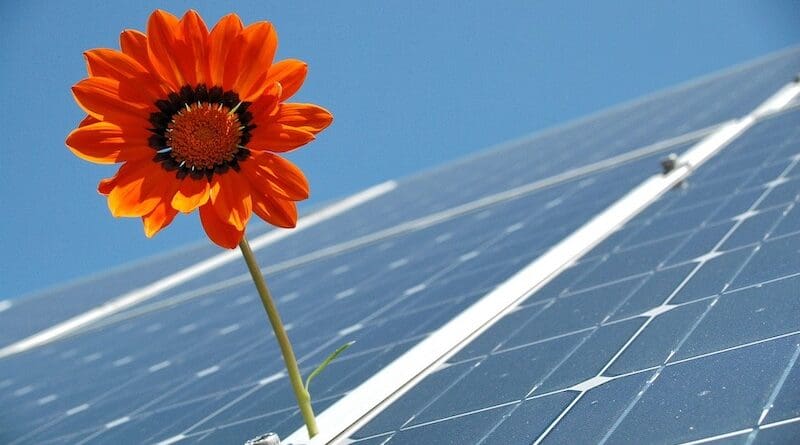
Solar panels now adorn rooftops in industrial areas and modern neighbourhoods, and wind turbines on the horizon are becoming a familiar feature of the countryside. Yet, across its overall energy mix, the EU still relies mainly on fossil fuels, suggesting that the energy transition is still very much a work in progress. Case in point: as the EU moves to decarbonise its grid, the real challenge for regulators and policymakers is increasingly how to maximise the efficient use of generated clean energy and optimise industrial processes.
In short, factories can’t schedule their production only when the sun shines or the wind blows. Nevertheless, this apparent volatility of the grid can be mitigated through energy flexibility, hopefully giving Europe’s industry a new competitive edge.
The Italian engineering firm STAM, a key technical partner in the EU initiative FLEXIndustries, has played a decisive role in this regard through the project: for them, monitoring, validating, and proving that flexibility is not merely a conference buzzword. Now that the project is entering its final year, and as pilots complete hardware installation, results are emerging from factories on integrating renewables, storage, and smart energy management systems.
We spoke with Matteo Bernabò, STAM’s representative in the FLEXIndustries project, to understand how innovation meets reality on the shop floor. This is where the energy transition stops being an aspiration and becomes a measurable result.
What’s STAM’s relation to FLEXIndustries?
The project’s goal is to develop replicable best practices for energy-intensive companies. STAM’s aim, more specifically, is to demonstrate the value of an integrated approach combining renewable energy systems, energy storage solutions, and, of course, the digital platform for energy optimisation developed within FLEXIndustries.
Ok, let’s first discuss the challenges in implementing these sustainable measures. Because energy costs, regulation, and technological gaps don’t exactly disappear, even if the price is offset by decarbonisation in the long run, right? What’s the advantage proposed here?
So, let’s first acknowledge the most crucial aspect of decarbonising the electricity grid. The issue is that investing in these solutions, however beneficial they may be for the environment, can be costly for businesses. And renewables pose a challenge due to their instability. That much is clear. What we are providing, in that regard, are the tools to make that transition smart and manageable. That can mean upgrading the monitoring infrastructure or deploying algorithms that forecast renewable production, energy market prices, and the facility’s own demand. When these capabilities are paired with on-site storage, the plant can minimise exposure to grid price volatility and optimise consumption hour by hour, instead of being at the mercy of the market. But that’s not beneficial only to the company; it also helps the grid itself.
How come?
If you maximise on-site self-consumption—meaning buying when prices are low and selling when it is convenient—you also reduce grid demand during peak hours.
And that’s not how things work today?
Not usually. Many energy-intensive businesses do not generate electricity for the grid and they rely on fixed-price contracts with energy providers. Their on-site renewable generation capacity is often limited, and energy storage systems are frequently absent. As a result, their agreements typically exclude the feeding of electricity into the grid, since their installations are designed primarily for self-consumption rather than for grid interaction.
Ok, let’s circle back to what FLEXIndustries and STAM are doing. The project should now be entering its final phase, correct?
Yes, we are now entering the final phase of the project. Most of the hardware solutions have been successfully integrated, and the monitoring phase is about to begin. This stage will allow us to quantify the effectiveness of both the installed technologies and the optimisation algorithms developed within the project. It should provide a comprehensive assessment of FLEXIndustries’ overall approach.
So, once you have all the data from the partners, how does implementation happen, and what comes “after the project”?
What really matters now is showing that these solutions can actually cut energy costs compared to where we started. If the delta is significant, that is the real proof of value for us. It basically makes the solution applicable beyond the project itself. The results will then be presented at conferences, on the project website, and in publications, as deemed appropriate. For our part, as STAM, we present the results and emphasise the key point: replicability is driven by economic evidence. So, if it pays off, it will spread. In any case, there isn’t a “proprietary technology” to showcase or sell. It’s the validation of a methodology, for the most part.
What strengths do you see in STAM that align with FLEXIndustries’ goals?
First of all, I believe deeply in the flexibility model. It is the direction Europe’s energy-intensive industry needs to go if it wants to remain resilient and competitive in a changing world. Methodologically, we also work extensively on circular economy approaches and product sustainability analysis, so we are always looking at the bigger picture of industrial transformation.
And at the company level, what sets STAM apart?
It’s definitely our commitment to research. Projects like FLEXIndustries are where new ideas become real, applicable tools, and where we can help ensure that Europe’s industry not only keeps up but leads the transition to a smarter, more sustainable future.
From Turbine Reliability To CO₂ Reduction: SUDOCO Redefines Offshore Wind Sustainability Metrics
November 24, 2025
By Eurasia Review
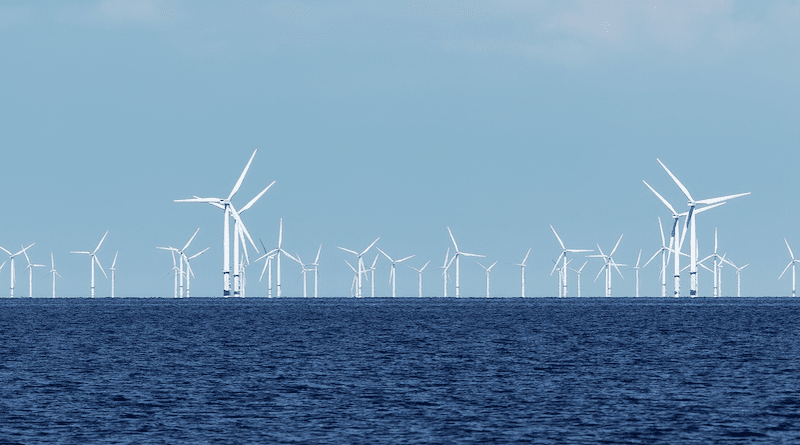
Two new scientific papers recently published within SUDOCO contribute to the project’s goal of developing a broader and more integrated approach to assessing the environmental and economic costs of offshore wind energy.
One paper introduces a new method for quantifying the reduction in greenhouse gas emissions within an energy system through wind power generation, while the other examines how the reliability and quality of turbine components affect operational costs and maintenance-related emissions.
The study “An initial study on the environmental value of wind farm control” (published in Journal of Physics: Conference Series and authored by S. Kainz, A. Scherzl, A. Guilloré, A. Anand, and C. L. Bottasso, all scholars from TU Munich) proposes a novel data-driven approach to measuring the environmental impact of wind energy. The study was conducted in collaboration with two other EU projects: MERIDIONAL and TWAIN. The work introduces the time-varying MarginalDisplacementFactor(MDF), an innovative indicator that expresses the environmental benefit of wind generation in kilograms of CO₂ equivalent per megawatt-hour (MWh). The MDF provides a new approach to quantify greenhouse gas reductions in relation to increased wind energy production within the energy system. Using the German power system and the Wikinger offshore wind farm as a case study to showcase the method, a strong positive contribution to grid emission reduction – through wind energy generation in general, and wind farm control in particular – is identified.
In “Impact of reliability parameters on O&M cost and greenhouse gas emissions of offshore wind farms”, authored by M. Gräfe, S. Kainz, A. Ludot, V. Pettas, A. Anand, and C. L. Bottasso, scholars from TU Munich and TU Delft and also published in the Journal of Physics: Conference Series, the authors highlight how turbine component quality and reliability strongly influence both operational costs and maintenance-related emissions. This study too resulted from a joint effort with TWAIN. As explained by Samuel Kainz, PhD candidate at TUM: “Improving reliability reduces failures, maintenance interventions, and vessel trips – yielding direct economic and environmental benefits. The study also emphasises the importance of including operation and maintenance processes in the overall greenhouse gas footprint assessment of wind farms, going beyond the production phase alone.”
Both studies add a new piece to the broader vision of SUDOCO, advancing the development of an integrated approach to wind farm flow control aimed at maximising not only energy production but also the overall value of wind energy in terms of efficiency, cost, and environmental impact.
November 24, 2025
By Eurasia Review
Two new scientific papers recently published within SUDOCO contribute to the project’s goal of developing a broader and more integrated approach to assessing the environmental and economic costs of offshore wind energy.
One paper introduces a new method for quantifying the reduction in greenhouse gas emissions within an energy system through wind power generation, while the other examines how the reliability and quality of turbine components affect operational costs and maintenance-related emissions.
The study “An initial study on the environmental value of wind farm control” (published in Journal of Physics: Conference Series and authored by S. Kainz, A. Scherzl, A. Guilloré, A. Anand, and C. L. Bottasso, all scholars from TU Munich) proposes a novel data-driven approach to measuring the environmental impact of wind energy. The study was conducted in collaboration with two other EU projects: MERIDIONAL and TWAIN. The work introduces the time-varying MarginalDisplacementFactor(MDF), an innovative indicator that expresses the environmental benefit of wind generation in kilograms of CO₂ equivalent per megawatt-hour (MWh). The MDF provides a new approach to quantify greenhouse gas reductions in relation to increased wind energy production within the energy system. Using the German power system and the Wikinger offshore wind farm as a case study to showcase the method, a strong positive contribution to grid emission reduction – through wind energy generation in general, and wind farm control in particular – is identified.
In “Impact of reliability parameters on O&M cost and greenhouse gas emissions of offshore wind farms”, authored by M. Gräfe, S. Kainz, A. Ludot, V. Pettas, A. Anand, and C. L. Bottasso, scholars from TU Munich and TU Delft and also published in the Journal of Physics: Conference Series, the authors highlight how turbine component quality and reliability strongly influence both operational costs and maintenance-related emissions. This study too resulted from a joint effort with TWAIN. As explained by Samuel Kainz, PhD candidate at TUM: “Improving reliability reduces failures, maintenance interventions, and vessel trips – yielding direct economic and environmental benefits. The study also emphasises the importance of including operation and maintenance processes in the overall greenhouse gas footprint assessment of wind farms, going beyond the production phase alone.”
Both studies add a new piece to the broader vision of SUDOCO, advancing the development of an integrated approach to wind farm flow control aimed at maximising not only energy production but also the overall value of wind energy in terms of efficiency, cost, and environmental impact.

No comments:
Post a Comment