
World AIDS Day highlights major innovations amid decline in global funding
As World AIDS Day is marked around the globe, rapid scientific progress is being overshadowed by funding shortfalls and weakened health systems that are putting the global fight against HIV at risk.
Issued on: 01/12/2025
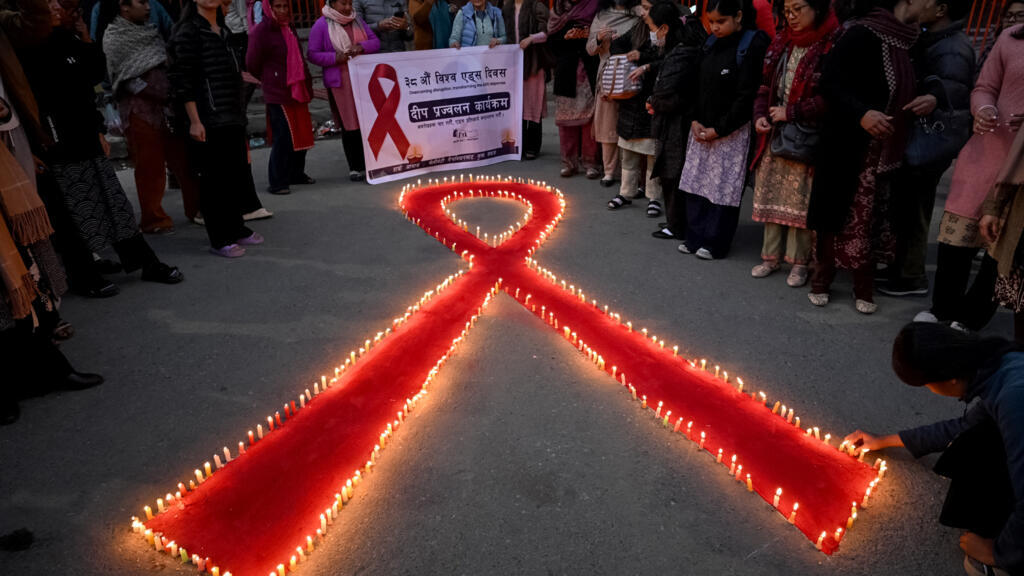 Volunteers light candles during an awareness campaign event organised on the eve of 'World AIDS Day' in Kathmandu on 30 November 2025. AFP - PRAKASH MATHEM
The global fight against HIV/Aids has found itself at a troubling crossroads. On one hand, scientific progress is picking up pace; on the other, the latest UNAIDS report paints a stark picture of a world struggling to keep its momentum.
International response is weakening, held back by falling funding and disrupted health services.
Worldwide, an estimated 41 million people are now living with HIV. Last year saw 1.3 million new infections, and 9.2 million people still lack access to life-saving antiretroviral (ARV) treatment.
According to UNAIDS Executive Director Winnie Byanyima: “the global response to HIV has suffered its biggest setback in decades.”
But she insists that “HIV is not over,” and has called for renewed global mobilisation.
Her plea follows especially disappointing news: the Global Fund to Fight AIDS, Tuberculosis and Malaria raised just over €9 billion for the next three years – far short of the €15 billion it says is needed.
This is even lower than the last replenishment round in 2022, threatening the future of crucial programmes around the world.
Positive developments in the lab
But it’s not all bleak. In research centres worldwide, scientists are making remarkable advances.
Yazdan Yazdanpanah, director of the French National Agency for Research on AIDS and Emerging Diseases (ANRS-MIE), describes the situation as a paradox: impressive scientific advances on one side, declining capacity to roll them out on the other – a sort of “double dynamic”.
One encouraging development is the arrival of long-acting antiretroviral treatments. Instead of taking a pill every day, people can now receive treatment once every two months.
This, Yazdanpanah explains, boosts adherence and generally feels more manageable for many. Some 43 percent of people living with HIV say these long-acting treatments are their first choice – even before considering side effects or tablet size.
Prevention tools are also evolving. A major breakthrough is injectable PrEP, which offers long-term protection against HIV.
Lenacapavir – recently recommended by the World Health Organization – provides six months of protection with a single shot.
“It’s one injection every six months to prevent HIV,” says Yazdanpanah. Thanks to an international pricing agreement, the cost could be around €35 per year in 120 low-resource countries, compared with roughly €25,300 per year previously charged in the United States.
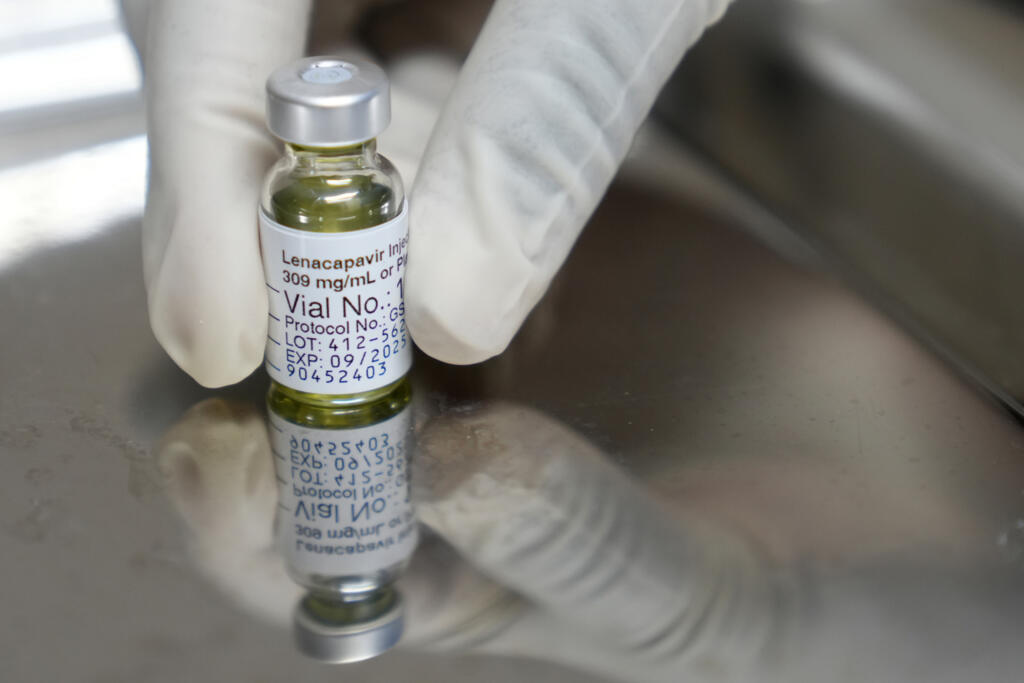 A pharmacist holds a vial of lenacapavir, the new HIV prevention injectable drug, at the Desmond Tutu Health Foundation's Masiphumelele Research Site, in Cape Town, South Africa, Tuesday, 23 July, 2024, which was one of the sites for Gilead's lenacapavir drug trial. © Nardus Engelbrecht / AP
South Africa, Eswatini and Zambia on Monday began administering the groundbreaking injection in the drug's first public rollouts in Africa.
Eastern and southern Africa account for about 52 percent of the 40.8 million people living with HIV worldwide, according to 2024 UNAIDS data.
Under the programme, manufacturer Gilead Sciences has agreed to provide lenacapavir at no profit to two million people in countries with a high HIV burden over three years.
Critics say this is far below the actual requirement and that the market price is out of reach for most people.
Progress needs power, power needs funding
These advances, impressive as they are, risk remaining theoretical unless health systems can keep up.
In 2025, global development aid for health fell by 22 percent, driven largely by reductions or withdrawals from major US programmes.
The consequences are already being felt, says Françoise Vanni, external relations director at the Global Fund.
“There has been a crisis in international financing for the fight against HIV/Aids and for global health more broadly, with drastic cuts from a number of donor countries that have really caused major interruptions in the delivery of essential services,” she explained to RFI.
With infections rising again in several countries, she is blunt about the reality for frontline programmes: “Very concretely, it means it is much more difficult to fight these diseases effectively.”
Nowhere is this fragility clearer than in sub-Saharan Africa, which bears a disproportionate share of the epidemic. The region accounts for a large share of new HIV infections and is home to 60 percent of all people living with the virus.
In 13 countries, fewer people started treatment last year. Supply shortages have been felt, too, with disruptions in Ethiopia and the Democratic Republic of Congo affecting both HIV testing and access to antiretroviral (ARV) therapy.
 Khanyiswa Kwatsha, who runs a mobile clinic for the Reproductive Health and HIV Institute (RHI) background, shows containers of PrEP medication used in the prevention of HIV infectionin in the Soshanguve Township, north of Pretoria, South Africa, Thursday, 26 November 2020. AP - Denis Farrell
The funding crisis, compounded by the lasting effects of the Covid-19 pandemic, is undermining the progress made since the early 2000s.
In Nigeria, condom distribution has dropped by 55 percent.
Community organisations – traditionally the backbone of HIV work – are also under heavy strain, with more than 60 percent of those led by women forced to suspend essential programmes.
UNAIDS makes its position clear: science alone cannot end the epidemic. The agency is urging the global community to rethink the funding model so that heavily affected countries invest more of their own resources. Without this shift, the world will almost certainly fall short of its goal to end the HIV/Aids epidemic by 2030.
At best, current trends would allow the international community merely to hold the epidemic steady. At worst, if the decline in funding continues, UNAIDS warns of a resurgence of HIV/Aids by 2030.
The global fight against HIV/Aids has found itself at a troubling crossroads. On one hand, scientific progress is picking up pace; on the other, the latest UNAIDS report paints a stark picture of a world struggling to keep its momentum.
International response is weakening, held back by falling funding and disrupted health services.
Worldwide, an estimated 41 million people are now living with HIV. Last year saw 1.3 million new infections, and 9.2 million people still lack access to life-saving antiretroviral (ARV) treatment.
According to UNAIDS Executive Director Winnie Byanyima: “the global response to HIV has suffered its biggest setback in decades.”
But she insists that “HIV is not over,” and has called for renewed global mobilisation.
Her plea follows especially disappointing news: the Global Fund to Fight AIDS, Tuberculosis and Malaria raised just over €9 billion for the next three years – far short of the €15 billion it says is needed.
This is even lower than the last replenishment round in 2022, threatening the future of crucial programmes around the world.
Positive developments in the lab
But it’s not all bleak. In research centres worldwide, scientists are making remarkable advances.
Yazdan Yazdanpanah, director of the French National Agency for Research on AIDS and Emerging Diseases (ANRS-MIE), describes the situation as a paradox: impressive scientific advances on one side, declining capacity to roll them out on the other – a sort of “double dynamic”.
One encouraging development is the arrival of long-acting antiretroviral treatments. Instead of taking a pill every day, people can now receive treatment once every two months.
This, Yazdanpanah explains, boosts adherence and generally feels more manageable for many. Some 43 percent of people living with HIV say these long-acting treatments are their first choice – even before considering side effects or tablet size.
Prevention tools are also evolving. A major breakthrough is injectable PrEP, which offers long-term protection against HIV.
Lenacapavir – recently recommended by the World Health Organization – provides six months of protection with a single shot.
“It’s one injection every six months to prevent HIV,” says Yazdanpanah. Thanks to an international pricing agreement, the cost could be around €35 per year in 120 low-resource countries, compared with roughly €25,300 per year previously charged in the United States.
South Africa, Eswatini and Zambia on Monday began administering the groundbreaking injection in the drug's first public rollouts in Africa.
Eastern and southern Africa account for about 52 percent of the 40.8 million people living with HIV worldwide, according to 2024 UNAIDS data.
Under the programme, manufacturer Gilead Sciences has agreed to provide lenacapavir at no profit to two million people in countries with a high HIV burden over three years.
Critics say this is far below the actual requirement and that the market price is out of reach for most people.
Progress needs power, power needs funding
These advances, impressive as they are, risk remaining theoretical unless health systems can keep up.
In 2025, global development aid for health fell by 22 percent, driven largely by reductions or withdrawals from major US programmes.
The consequences are already being felt, says Françoise Vanni, external relations director at the Global Fund.
“There has been a crisis in international financing for the fight against HIV/Aids and for global health more broadly, with drastic cuts from a number of donor countries that have really caused major interruptions in the delivery of essential services,” she explained to RFI.
With infections rising again in several countries, she is blunt about the reality for frontline programmes: “Very concretely, it means it is much more difficult to fight these diseases effectively.”
Nowhere is this fragility clearer than in sub-Saharan Africa, which bears a disproportionate share of the epidemic. The region accounts for a large share of new HIV infections and is home to 60 percent of all people living with the virus.
In 13 countries, fewer people started treatment last year. Supply shortages have been felt, too, with disruptions in Ethiopia and the Democratic Republic of Congo affecting both HIV testing and access to antiretroviral (ARV) therapy.
The funding crisis, compounded by the lasting effects of the Covid-19 pandemic, is undermining the progress made since the early 2000s.
In Nigeria, condom distribution has dropped by 55 percent.
Community organisations – traditionally the backbone of HIV work – are also under heavy strain, with more than 60 percent of those led by women forced to suspend essential programmes.
UNAIDS makes its position clear: science alone cannot end the epidemic. The agency is urging the global community to rethink the funding model so that heavily affected countries invest more of their own resources. Without this shift, the world will almost certainly fall short of its goal to end the HIV/Aids epidemic by 2030.
At best, current trends would allow the international community merely to hold the epidemic steady. At worst, if the decline in funding continues, UNAIDS warns of a resurgence of HIV/Aids by 2030.
Treatment and prevention of HIV/AIDS: Unfinished business
Georgetown University Medical Center
WASHINGTON – As the world marks World AIDS Day on Dec. 1, world-renowned infectious disease expert Anthony Fauci, MD, and his colleague Greg Folkers, MS, MPH, highlight advances made in the treatment and prevention of HIV that could finally end the pandemic, but caution, “History will judge us harshly should we squander this opportunity.”
Writing in PLOS Medicine (“Treatment and prevention of HIV/AIDS: Unfinished business,” December 1, 2025), Fauci, Distinguished University Professor in Georgetown’s School of Medicine and McCourt School of Public Policy, and Folkers, Fauci’s long-time chief of staff at the National Institutes of Health explore a path forward for eliminating HIV/AIDS. The number of people living with HIV globally in 2024 exceeded 40 million, with 1.3 million new infections and 660,000 deaths in that year alone.
They reflect on significant advances made in the development of powerful therapeutics to treat and prevent HIV and underscore the importance of programs such as the Global Fund and the President’s Emergency Plan for AIDS Relief (PEPFAR), which have allowed for successful implementation and scale up of treatment and prevention interventions that have saved millions of lives.
However, pauses in U.S. foreign development assistance leading to the termination of clinical services “likely has resulted in the illness and death of thousands of people with HIV. Modelling studies suggest that millions of additional HIV infections and deaths could occur if withheld funding is not reconstituted and expanded,” they write, adding, “The time is now to advocate for the US Congress to renew funding of the Global Fund and PEPFAR at robust levels.”
Fauci and Folkers acknowledge that these two programs alone will not end the epidemic and they highlight the importance of countries taking control of their own HIV responses complemented by the work of international agencies, donors, community groups, drug manufacturers, researchers and implementers.
“Only with such a multi-pronged effort will we end the HIV/AIDS pandemic,” they write.
Journal
PLOS Medicine
Method of Research
Commentary/editorial
Subject of Research
Not applicable
Article Title
Treatment and prevention of HIV/AIDS: Unfinished business
Article Publication Date
1-Dec-2025
Researchers identify why some people with HIV achieve remission after antibody treatment
Study from the Ragon Institute of Mass General Brigham, MIT and Harvard has found a property of a specific kind of immune cell that may explain why some people can keep HIV in check
Brigham and Women's Hospital
- Study from the Ragon Institute of Mass General Brigham, MIT and Harvard has found a property of a specific kind of immune cell that may explain why some people can keep HIV in check
- Insight could be harnessed to eliminate the need for daily antiviral medications
Researchers led by a team from Mass General Brigham and the Ragon Institute have discovered why some people living with HIV who are given a treatment called broadly neutralizing anti-HIV antibodies (bNAbs) can safely stop taking standard, lifelong HIV medications and maintain control of the virus for years, while others given the same treatment do not achieve this remission. The findings, which are published in Nature, could potentially be used to design combination therapies that work for more people.
“Our results show that some people can go on to control the virus on their own without treatment because of a property of a type of killer T cell,” said senior author David Collins, PhD, an investigator at the Ragon Institute of Mass General Brigham, MIT, and Harvard. “This is an important insight into how the body’s natural defenses can be harnessed to achieve durable HIV remission.”
For their study, Collins and colleagues analyzed blood samples from 12 people in four different clinical trials who received bNAbs and then stopped standard antiretroviral therapy. They compared samples from the seven participants who could control HIV after bNAb treatment for up to seven years (that is, keep the virus at very low levels) with samples from five participants who experienced viral rebound. They found that immune cells called CD8+ T cells of “post-intervention controllers” could multiply well and kill HIV cells efficiently. While bNAb treatment boosted these abilities, what mattered most was having these CD8+ T cell features before treatment.
“Control wasn’t uniquely linked to the development of new types of responses; it was the quality of existing CD8+ T cell responses that appeared to make the difference,” Collins explained. “Immunotherapies capable of enhancing virus-specific CD8+ T cells’ capacity to respond to and fight infection, and capable of restoring the cells’ ability to proliferate or renew themselves in all recipients, may dramatically enhance the likelihood of durable HIV remission elicited by bNAb administration.”
Prospective studies with additional participants are needed to support the implication that HIV-specific CD8+ T cell features can predict responses to bNAb therapy and might also be targeted to allow more people living with HIV to benefit from this line of treatment.
“Efforts are underway to induce the same immune system properties we see in the post-intervention controllers in persons living with HIV,” said Bruce Walker, MD, a co-author on the study and director of the Ragon Institute at Mass General Brigham. “Whether we will succeed remains to be seen, but I am cautiously optimistic.”
Authorship: In addition to Collins, Mass General Brigham authors include Zahra Kiani, Jonathan M. Urbach, Hannah Wisner, Mpho J. Olatotse, Daniel Y. Chang, Joshua A. Acklin, Alicja Piechocka-Trocha, Nathalie Bonheur, Ashok Khatri, Mathias Lichterfeld, and Bruce D. Walker. Additional authors include Jesper D. Gunst and Ole S. Søgaard of Aarhus University, and Marina Caskey and Michel C. Nussenzweig of Rockefeller University.
Disclosures: None.
Funding: This work was supported by funding from United States National Institutes of Health (AI184606, AI155233, AI152979,AI176579, AI44462), Howard Hughes Medical Institute, and the Lundbeck Foundation (R381–2021–1405). Funders had no role in study design, data collection and analysis, decision to publish or preparation of the manuscript.
Paper cited: Kiani Z et al. “CD8+ T cell stemness precedes post-intervention control of HIV viremia” Nature DOI: 10.1038/s41586-025-09932-w
###
About Mass General Brigham
Mass General Brigham is an integrated academic health care system, uniting great minds to solve the hardest problems in medicine for our communities and the world. Mass General Brigham connects a full continuum of care across a system of academic medical centers, community and specialty hospitals, a health insurance plan, physician networks, community health centers, home care, and long-term care services. Mass General Brigham is a nonprofit organization committed to patient care, research, teaching, and service to the community. In addition, Mass General Brigham is one of the nation’s leading biomedical research organizations with several Harvard Medical School teaching hospitals. For more information, please visit massgeneralbrigham.org.
About the Ragon Institute
The Ragon Institute of Mass General Brigham, MIT, and Harvard was established in 2009 with a gift from the Phillip T. and Susan M. Ragon Foundation, with a collaborative scientific mission among these institutions to harness the immune system to combat and cure human disease. Focusing on diseases of global importance, the Ragon Institute draws scientists, clinicians and engineers from diverse backgrounds and areas of expertise to study and understand the immune system with the goal of benefiting patients.
For more information, visit www.ragoninstitute.org
Journal
Nature
Method of Research
Data/statistical analysis
Subject of Research
People
Article Title
CD8+ T cell stemness precedes post-intervention control of HIV viremia
Article Publication Date
1-Dec-2025
South Africa’s Deputy President Mashatile
Hails Breakthrough HIV Prevention
Injection

South Africa's Deputy President Paul Mashatile. Photo Credit: SA News
December 2, 2025
By SA News
As the globe commemorates World AIDS Day, Deputy President Paul Mashatile said the introduction of lenacapavir, a long-acting preventative treatment, is set to change the landscape of HIV prevention in South Africa.
This is after government recently announced the groundbreaking development in HIV prevention that promises to revolutionise how individuals safeguard themselves against the virus.
The Deputy President, who is also the Chairperson of the South African National AIDS Council (SANAC), addressed the official commemoration at Ga-Masemola Stadium in the Sekhukhune District of Limpopo.
Lenacapavir is a revolutionary long-acting injectable drug that offers six months of protection and requires only two injections per year.
In October this year, the South African Health Products Regulatory Authority (SAHPRA) achieved regulatory readiness, making it the first in Africa and the third globally to register lenacapavir.
According to the country’s second-in-command, this innovation is particularly significant for people who struggle to adhere to daily pill regimens and touched on the profound implications for marginalised communities.
“Lenacapavir offers hope for young women who cannot negotiate condom use. It empowers adolescent girls navigating relationships marked by power imbalances. It protects key populations who face stigma and discrimination.
“Lenacapavir speaks to the reality of our people’s lives, that prevention must be practical, dignified, discreet, and compatible with the pressures of daily survival.”
Acknowledging the urgency of ensuring rapid access to life-saving tools, the Deputy President warned against the missteps of the early antiretroviral therapy (ART) era.
“Let me be clear: we cannot repeat the mistakes of the early ARV era, where life-saving tools reached our shores too slowly. This time, we move with urgency, with foresight, and with unity,” he stated.
Deputy President Mashatile described the lenacapavir as more than just a drug but a symbol of what becomes possible when science, political will, and community demand meet at the same table.
Meanwhile, to tackle the significant gap of 1.1 million individuals who need access to HIV prevention, the Deputy President called for a critical examination of efforts towards marginalised communities.
“Let us confront stigma with courage, fund research, and ensure treatment reaches everyone. This is a commitment to health, dignity, justice, and equality for all people.”
Currently, South Africa’s statistics are at 96-80-97, while global figures stand at 95-85-92.
These targets are a global strategy for ending the AIDS epidemic by 2030, aiming for 95% of all people living with HIV to know their status; 95% of those who know their status to be on sustained antiretroviral treatment; and 95% of those on treatment to be virally suppressed.
To confront the stubborn second 95 target, government launched an ambitious national recovery effort in February this year, known as the 1.1 million “Close the Gap” Treatment Acceleration Campaign.
“The campaign represents mothers who stopped treatment because transport was too costly, men who walked away after negative clinic experiences, young people who feared disclosure, and thousands who moved between provinces without continuity of care.”
He has since called for multi-sectoral coordination to ensure that the country continues to perform various community-based interventions.
South Africa marks today’s commemoration following a successful Group of 20 (G20) Leaders’ Summit, which included the Global Fund’s 8th Replenishment Summit co-hosted by President Cyril Ramaphosa and United Kingdom Prime Minister Keir Starmer.
The replenishment campaign aims to secure US$18 billion to support health efforts from 2027 to 2029, to save 23 million lives and strengthen responses to HIV, tuberculosis, and malaria.
In addition, he said government is working around the clock to implement policies that improve access, retention, and re-engagement with treatment.
This includes policies that directly address structural inequalities and work to dismantle stigma, particularly for the most vulnerable individuals, such as women and girls, people who use drugs, sex workers, and members of the lesbian, gay, bisexual, transgender, queer or questioning, intersex, asexual, and other identities (LGBTQIA+) community.
In the meantime, he said government continues to make significant improvements in HIV testing, treatment and care through expanded access to antiretroviral therapy and innovative community-led prevention efforts.
“On this World AIDS Day, we celebrate the incredible progress that has transformed HIV from a death sentence into a condition that can be managed with dignity and hope.
“Yet, our mission is far from over. Today, we stand at a defining moment – where science, compassion, and unwavering resolve can unite to end an epidemic that has cast its shadow for many years.”

SA News
Government Communication and Information System (GCIS) established the SA Government News Agency to enable all media locally and abroad to have easy and fast access to fresh government information, news and current affairs at no cost.


No comments:
Post a Comment