Vale Indonesia says 2026 mining quota won’t be enough to meet demand from new smelters
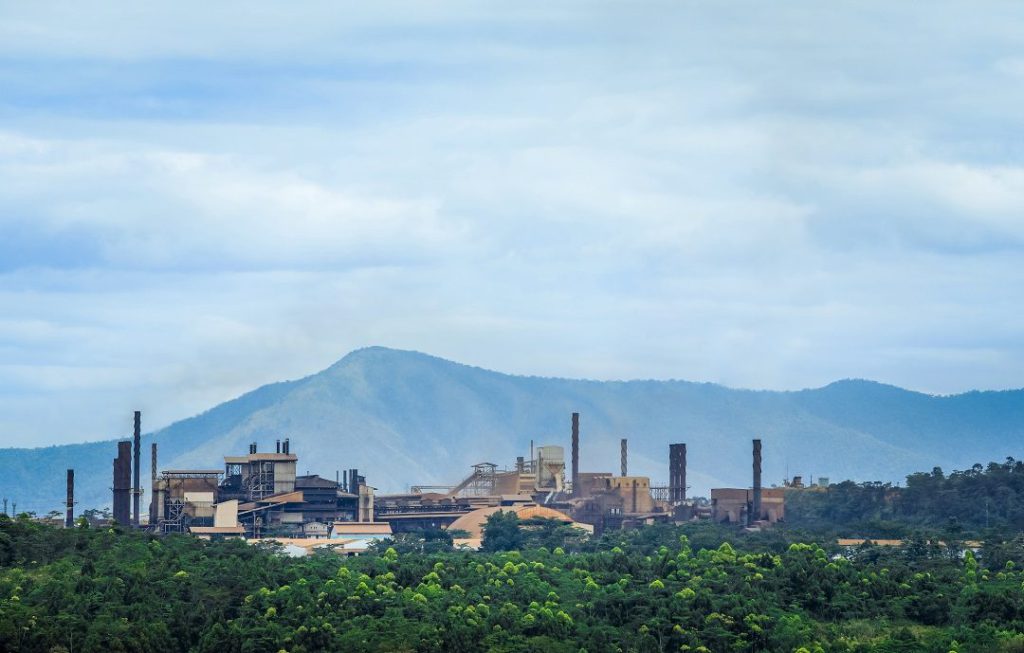 Credit: Vale Indonesia
Nickel miner PT Vale Indonesia’s mining production quota approved for this year will likely be insufficient to meet demand from the smelters that will come online later this year, the company’s chief executive said on Monday.

Vale on Thursday said it had secured the go-ahead for its annual mining production quota, known locally as RKAB, and had resumed mining activities following a halt caused by approval delays.
In a hearing with members on parliament on Monday, chief executive Bernardus Irmanto asked for support regarding the company’s production quota.
“The quota granted for PT Vale, around 30% of what we requested, will most likely not be able to meet our commitments for the plants,” he said.
Without disclosing the exact volume, he said the company requested a production quota for this year that was based on the planned input for the upcoming plants.
“We worry that when the plants are completed, there won’t be ore for them,” he added.
He said he hoped the company would be granted an additional quota.
Vale and partners are currently constructing three high-pressure acid leaching (HPAL) plants to extract nickel materials used in electric vehicle batteries.
Its HPAL plant in Pomalaa in Southeast Sulawesi is expected to start up in August, while the development of its Bahodopi plant in Central Sulawesi is expected to be completed in the fourth quarter this year, Bernardus said.
The Pomalaa plant will have an annual production capacity of 120,000 metric tons of mixed hydroxide precipitate (MHP), which will require 21 million tons of limonite nickel ore a year, company data showed.
The Bahodopi HPAL will require 10.4 million tons of limonite nickel ore a year to produce 66,000 tons of MHP.
Vale and its partners are investing $4.5 billion in the Pomalaa project and $2 billion in the Bahodopi project.
Another plant, in Sorowako, Southeast Sulawesi, is expected to start operations next year.
In 2025, Vale’s nickel matte output was higher than planned, the chief executive said.
The company set an output target of 71,234 tons of nickel matte in 2025, and up to November had produced 66,848 tons, company data showed.
(By Fransiska Nangoy; Editing by David Stanway)
Nickel miner PT Vale Indonesia’s mining production quota approved for this year will likely be insufficient to meet demand from the smelters that will come online later this year, the company’s chief executive said on Monday.
Vale on Thursday said it had secured the go-ahead for its annual mining production quota, known locally as RKAB, and had resumed mining activities following a halt caused by approval delays.
In a hearing with members on parliament on Monday, chief executive Bernardus Irmanto asked for support regarding the company’s production quota.
“The quota granted for PT Vale, around 30% of what we requested, will most likely not be able to meet our commitments for the plants,” he said.
Without disclosing the exact volume, he said the company requested a production quota for this year that was based on the planned input for the upcoming plants.
“We worry that when the plants are completed, there won’t be ore for them,” he added.
He said he hoped the company would be granted an additional quota.
Vale and partners are currently constructing three high-pressure acid leaching (HPAL) plants to extract nickel materials used in electric vehicle batteries.
Its HPAL plant in Pomalaa in Southeast Sulawesi is expected to start up in August, while the development of its Bahodopi plant in Central Sulawesi is expected to be completed in the fourth quarter this year, Bernardus said.
The Pomalaa plant will have an annual production capacity of 120,000 metric tons of mixed hydroxide precipitate (MHP), which will require 21 million tons of limonite nickel ore a year, company data showed.
The Bahodopi HPAL will require 10.4 million tons of limonite nickel ore a year to produce 66,000 tons of MHP.
Vale and its partners are investing $4.5 billion in the Pomalaa project and $2 billion in the Bahodopi project.
Another plant, in Sorowako, Southeast Sulawesi, is expected to start operations next year.
In 2025, Vale’s nickel matte output was higher than planned, the chief executive said.
The company set an output target of 71,234 tons of nickel matte in 2025, and up to November had produced 66,848 tons, company data showed.
(By Fransiska Nangoy; Editing by David Stanway)
sia targets illegal mining on 190,000 hectares of forest land
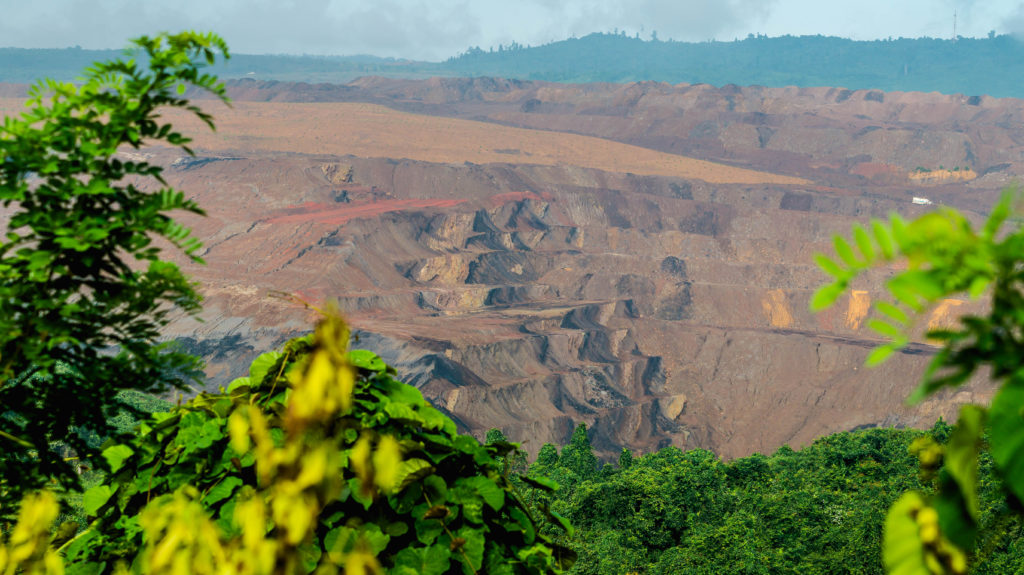
The Indonesian government could potentially seize mining activities across 190,000 hectares (733.59 square miles) of illegally cleared forest, the deputy forestry minister told a parliamentary hearing on Monday, as authorities tackle what they say is unlawful extraction in the resource-rich archipelago.
Indonesia’s unprecedented crackdown, which has seen military-led teams take over palm plantations and mines, has unnerved the industry, pushing up global palm oil prices over concerns it will hit output, and more recently, powering rallies in the prices of metals like tin.
“There were 191,790 hectares (mines) that do not have forestry use permits, which could be considered illegal,” Deputy Forestry Minister Rohmat Marzuki said. He did not name any of the companies involved or say how many were involved. Neither did he elaborate on what was being mined or provide any timeline for the seizures.
“The forestry task force has already obtained 8,769 hectares and this is still ongoing to reach 191,790 hectares,” he added.
“Along with the forestry task force, the forestry ministry remains committed in obtaining back the forest areas from illegal oil palm plantations and illegal mines,” Marzuki said.
The military-backed forestry task force said last week it had taken over 8,800 hectares of land where nickel, coal, quartz sand and limestone were being mined. It has also seized palm plantations across 4.1 million hectares (10.1 million acres), an area roughly the size of the Netherlands.
Indonesia’s Attorney General has assessed potential fines of 109.6 trillion rupiah ($6.47 billion) for palm oil companies and 32.63 trillion rupiah for mining companies, for operations in forest areas.
($1 = 16,935.0000 rupiah)
(By Bernadette Christina and Dewi Kurniawati; Editing by Gibran Peshimam and Kate Mayberry)

No comments:
Post a Comment