Not All is Rolex in Switzerland: Trump, Davos and the Crans-Montana Tragedy
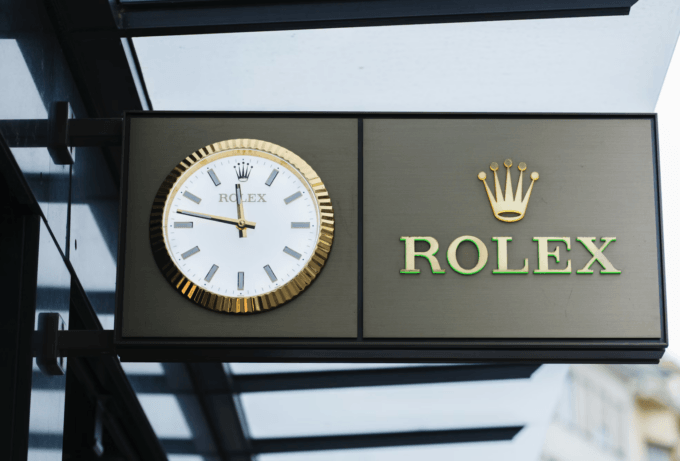
Photo by Nikolai Lehmann
Rolex watches are the ultimate symbol of Swiss precision and reliability. Yet not everything in Switzerland is precise and reliable these days. The visit of Donald Trump to the World Economic Forum (WEF) in Davos raises questions about the Forum’s relevance, the current world order, and Switzerland’s diplomatic role. And just prior to Davos, a horrific New Year’s Eve fire at a bar in the upscale ski resort of Crans-Montana killed 40 young people and left over one hundred seriously injured, challenging Switzerland’s reputation for safety and reliability.
“Is Switzerland an island of stability in a chaotic world?” Le Temps asked. The powerful head of the Swiss banking giant UBS, Sergio Ermotti, responded in another local paper: “We are a Swiss bank and we are proud of Switzerland,” he said, “But many abroad ask us: what is happening in Switzerland?” (All local quotes are translated.)
The role of the WEF has been an integral part of the Swiss image as an influential hub of high diplomacy and high rollers. Since its first meeting in Davos in 1971, the WEF has captured the world’s imagination of an exclusive elite trying to solve the world’s economic and political problems in a small Swiss mountain village. “Davos Man,” was immortalized and criticized by U.S. political scientist Samuel Huntington, who referred to political leaders and business executives attending Davos as a type of cosmopolitan, globally mobile elite disconnected from the majority of people.
And here comes The Donald to Davos, with the largest ever U.S. delegation, more than 800 American business leaders as well representatives of his administration. (Only the Swiss Green Party had the courage to say Trump shouldn’t have been invited.) But the WEF is far from its early 2000s glory. Founder and CEO Klaus Schwab is no longer there, bounced by the Board. The famous Davos pretention of a marriage between business and peace – its slogan “Committed to improving the state of the world” – has been relegated to past glory.
“The forum was no longer trusted, acknowledging a longtime worry that wasn’t usually said out loud,” the Times reported on the opening speech of Larry Fink, the BlackRock chief and interim WEF co-chair. He even suggested that the Forum’s annual event should be held outside Switzerland.
Trump has resuscitated the WEF, at least temporarily. “Until Trump’s announcement a few days ago, no other major leader had confirmed his attendance for this year — which suggests that they are coming for Trump, not for the WEF itself,” wrote economist James Breiding in the Neue Zürcher Zeitung. “This reveals the WEF’s dependence on the drawing power of external stars rather than on its own institutional credibility, which is hardly sustainable.”
Trump presence at Davos reflects his power. In order to convince him to attend, the organizers gave his administration the right to review the program. “Senior US officials asked Davos management to tone down or avoid discussions on areas including female empowerment and diversity, the green transition, climate change and international development finance as a condition of his participation,” the Financial Times reported.
The usual anti-WEF protests this year focused on Trump. Around 600 protesters set off from Küblis in southeastern Switzerland for Davos. On the Davos Promenade, a sign read: “Make America Go Away.”
Davos fits Switzerland’s long-standing role as a center of high diplomacy. Geneva hosted the pivotal 1985 Reagan–Gorbachev summit that helped end the Cold War. But that role is changing. Today, neutral Switzerland faces new choices: it backs European Union (EU) sanctions on Russia but debates EU membership; it cooperates modestly with NATO through the Partnership for Peace—yet strict neutrality still bars deeper ties.
But why change a winning game? Switzerland has one of the highest GDP Per Capita – output per person – in the world, frequently in the global top five. Henley & Partners rated Switzerland the most resilient country with the lowest risk for investors in 2025. “Until now, we were constantly told that everything was fine, that there was nothing to change,” Ermotti said. “We were satisfied with ourselves, even convinced that we could show others the way forward. Today we have reached a limit.”
The Crans-Montana Tragic Fire and the Swiss Image
Everything was certainly not fine on New Year’s Eve in Crans-Montana. Forty people died and over 100 were seriously injured in a horrific fire at a bar caused by faulty safety precautions. Several of the victims were non-Swiss, including nine dead and 21 wounded from France, and six dead and 10 injured from Italy.
“What happened [at Crans] is not simply an accident,” Italian Prime Minister Giorgia Meloni said, joining many other sharp foreign criticisms. “It is the result of too many people failing to do their jobs or trying to make easy money.”
And Switzerland’s precise and reliable image? After the tragedy, “A country with a tarnished image,” headlined Le Temps. A popular television personality called the fire “Switzerland’s September 11.” Memorial ceremonies were held throughout the country during a day of national mourning, including a minute of silence at 12:00 on January 9.
Images and perceptions are not simple to quantify, but the immediate effects of the tragedy are being felt in Switzerland. There are fewer tourists in Crans-Montana than usual. Some Swiss events at major sports competitions have been scaled back. But will that negative image last? The WEF may be on its last legs, but what about Switzerland? Rolex is Rolex. After surpassing CHF 10 billion in 2023, its growth continued in 2024 and into 2025. Can the same growth and a positive image be said for Switzerland? International Geneva as a hub of multilateralism?
Trump’s outbursts about buying or annexing Greenland – against the wishes of European allies – as well as tensions about his Board of Peace are direct challenges to the global order that has existed for the past 80 years. Although Trump ruled out direct military action to annex Greenland in his Davos speech, his usual egotistical, we-are-the-greatest presentation left little hope for international cooperation. The entire post-World War II stability is reaching its limit. Why should Switzerland be any different?
Diary of Conversations at Altitude
Photo by Samuel Ferrara
I have a friend drawn to mountains. When he isn’t in the UK, he’s usually somewhere in the Nordic region or the Himalayas, where he is now.
It’s not that he’s a mountain man pining for grappling hooks and crampons. Rather, his interests carry him to dramatic places—places that demand attention rather than conquest.
In truth, he’s one of those people who quietly does a great deal for others and accepts no credit for it.
Anyway, I was messaging him about Trump announcing another 10% tariff on NATO countries. Something about the story—Greenland, European troops misread as hostile in the fog of the Arctic—made it feel more than about tariffs.
Interestingly, my friend had explained to me before travelling how the UK’s Arctic-trained units, alongside those of the Scandinavian countries and Finland, amount to more Arctic-specialist soldiers than the United States currently has. There is also now the well known fact of Denmark suffering the highest per-capita casualty rate in Afghanistan after the US invoked Article 5 of NATO—calling for, and swiftly receiving, collective assistance from its allies.
I won’t report my friend’s response to that latest threat. Suffice it to say that explaining the apparent pettiness of a major world leader to someone who is not known as petty themselves is revealing. Far better, I was reminded, to be a human being, like my friend, enjoying a stretch of the Himalayas beneath the world’s highest peaks, than to sow seeds of discontent.
Here’s Thomas Wolfe on mountains: “They were the cup of reality, beyond growth, beyond struggle and death. They were his absolute unity in the midst of eternal change.”
The same day, someone else I know messages me, almost randomly: “The reality is, we can no longer trust the US to act rationally.”
I then watch Keir Starmer address the UK on Greenland in what one reporter describes as a holding operation. What strikes me is how little appetite there is for performance. There is no point-scoring, no attempt to turn the moment into anything larger than it is. But he does confront Trump directly over the threat of sanctions, calling it wrong between allies.
How the White House responds is with a pop at Starmer and the Chagos Islands, attempting divisions within British politics. People were still recovering from the message Trump sent to the Norwegian prime minister about Greenland and the Nobel Peace Prize. Days later he feels unmoored from any diplomatic register. All this at a time when Canada is, remarkably, discussing how it would defend itself mujahideen-style from the US, just as they once did, alongside British forces, in 1812.
Starmer says at the press conference he does not believe Trump will pursue military action against Greenland—a remark I imagine irritating figures like the notoriously thin-skinned Stephen Miller, who seems to be enjoying all this. I notice some of the Danish language is no longer modulated for diplomacy, either. Politician Rasmus Jarlov says of Miller’s own Greenland threat: “I hope he’s kept away from young women, because that’s the mentality of a rapist. You can’t defend yourself, so I’m going to take you.”
Russia meanwhile appears to be loving it, openly urging Trump to take Greenland, as if relishing the chance to demonstrate its capacity to destroy NATO. Vladimir Putin is already enjoying renewed relevance elsewhere. Despite being an apparent threat to US security along with China through Greenland, he is invited by Trump—alongside Belarusian leader Alexander Lukashenko—to join the proposed UN-busting, oddly divisive, borderline fictitious, Gaza “Board of Peace.”
I message someone who is broadly sympathetic to the US position who insists to me that, if we study the statistics and long-term dynamics, it is obvious that Western Europe will not remain “European” for very long—whatever that word is meant to carry.
Europe, this person continues, will become “balkanised,” as they put it, sectarian, tribalised, “like Lebanon,” he adds. “How this is not obvious to any intelligent person shocks me.”
I pause over that phrase. Any intelligent person does a lot of work. I don’t answer straight away. I make tea, let it go cold, then return to the message.
I say Europe’s demographic futures vary widely by country, shaped by labour markets, education systems, housing, planning, law. I have to add that Lebanon is a poor comparison—often used less to clarify than to frighten.
What really bothers me about the analogy is that Lebanon is not simply a cautionary tale but a very particular place scarred by civil war, repeatedly intervened in from outside, constitutionally sectarian.
Western European states—the same day my correspondent is forwarding me JD Vance posts—are secular, do not allocate power by religion, and still have strong administrative capacity. Invoking Lebanon feels less like analysis than mood-setting.
One of the strangest features is what little space is left for reform, adjustment, or learning. When “children and terror” are invoked—“You don’t fear your kids living in what’s coming?”—analysis drains away, replaced by something closer to dread.
“If NATO is about protecting this, then you can shove it,” the person adds.
I type slowly. NATO is not an endorsement of immigration policy. Whatever its flaws, it exists to prevent war between major powers. Rejecting it because of demographic anxiety seems to me a strategic error—though I’m no longer sure how much strategic language persuades anyone anymore.
I respect this person’s right to their view, and I think there is value in knowing what people really believe. Still, the exchange feels oddly exhausting. And I’m not convinced, in any case, that NATO—with the US—has a great deal of oxygen left presently. At the same time, as it happens, the European right is now losing support through growing anti-American feeling. Regardless of European bouts of politesse, Trump is extremely unpopular over here. Delegates at the airport the next day had their backs turned to the screen showing Trump talking live.
I had watched the latest ramble from the podium at the White House before Trump eventually left for Davos and felt lost for words. The London he kept referencing was a London few of us recognised over here, just our fleeing bankers trying to justify their desertion.
My main trouble with what reaches these shores is not migration. It is the present hateful and sometimes escalatory language from the United States. This is often voiced in neat little pellets delivered not just by Trump, or his oddly sycophantic henchmen, but now by corporate leaders and technology-sector evangelists.
The claim that immigration has happened “against the will of the people” is simplistic. European immigration policy has often been inconsistent, poorly communicated, technocratic, and elite-driven. Yet elections matter. Denmark tightened immigration dramatically because voters demanded it. Italy and Poland have pursued restrictive policies. Even Germany has altered its asylum rules.
What also unsettles me, for what it’s worth, is this language of inevitability. Once something is framed as already lost, it is as if fear has replaced agency.
Speaking of NATO, I’ve just read British investigative journalist Carole Cadwalladr on Palantir. She writes: “We have embedded a notorious US military surveillance company whose founder is a close ally of President Trump into the heart of our military at a moment in which the US is threatening to invade our NATO ally, Greenland.”
At altitude, as stocks drop hugely, then rise again, as military action is called off, along with the threat of further tariffs, history feels less linear, more like weather. Trump’s speech at Davos is littered with inaccuracies. On Greenland, he fails badly in both geography and history. As one person said, take him to Alaska and tell him it’s Greenland. And many Europeans are there for your country, Mr President. I have seen their graves.
Later, Danish PM Mette Frederickson, discussed the so-called deal between Rutte and Trump: “It is only Denmark and Greenland themselves that can make decisions.” Rutte didn’t even discuss Trump’s Greenland threat in the meeting.
Zelenskyy cited Groundhog Day in his speech. Trump was last seen threatening peace again in the real estate reimagining of a currently over-bombarded, freezing, and forgotten Ukraine.
I defer to Kurt Vonnegut on all matters of peace.
“There is no peace, I’m sorry to say. We find it. We lose it. We find it again. We lose it again.”

No comments:
Post a Comment