On Iran: a Retrospective
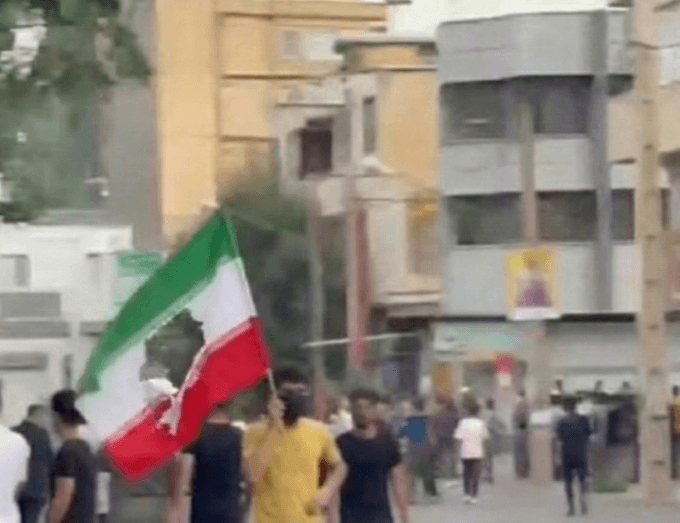
Photograph Source: راننده از تهران – CC0
The Islamic Republic of Iran has long been accustomed to challenges, relentless pressure and widely believed misrepresentations about it.
As the current crises mount, so does the quandary among members of its political classes. They all want change. The hardliners want a return to the past; the reformers want a future unburdened by the past, and many moderates want change in any form. The status quo has little or no support. The change that is inevitable will mark a monumental moment, one that could profoundly alter Iran’s trajectory.
Free of external meddling, the outcome will depend on internal dynamics and the balance of power among competing forces. Iran, however, has never been free of foreign meddling. In recent years, it has come primarily from the United States and its Israeli proxy. That Iran has survived nearly five decades of unending hostility is testament to the character of the nation and its people.
The 1979 Islamic Revolution shifted Iran from a major U.S. ally to a primary adversary. It also led to a realignment of regional partnerships and fundamentally dismantled the security architecture the United States had constructed in West Asia.
The Constitution of the Islamic Republic of Iran, based on the principles of justice and independence, would forever conflict with the foreign policies of the American empire and Israeli Zionism, that are cemented in land theft, domination and expansion. Iran’s political reinvention from monarchy to Republic brought the unremitting wrath of the United States government upon it.
Before the Revolution, Washington relied on Iran and Saudi Arabia—the “twin pillars”—to contain Soviet influence and to maintain regional dominance. The overthrow of Shah Mohammad Reza Pahlavi deprived the United States of its “regional policeman,” and a key military base it used to monitor the former Soviet Union.
Iran’s transition led Washington to expand America’s military footprint in the Persian Gulf. Today, the U.S. maintains a military presence in nearly every country in the region; positioned there to protect the uninterrupted flow of oil, to shield Israel and Arab dictators and to threaten those who would oppose its hegemony.
In the midst of an historic transition away from a centuries-old monarchical system, Iran was invaded and ultimately survived a brutal eight-year war with Saddam Hussein’s Iraq; a war supported by the U.S. and its regional allies.
Inheriting a nation wrecked and regionally isolated by war, Ayatollah Ali Khamenei, successor to the founder of the Republic, Ruhollah Khomeini (1902-1989), faced the daunting task of resurrecting Iran’s fractured economy and society. Khamenei had to manage internal dissent and rivalries within Iran’s complex clerical circles, confront unyielding international economic pressures, all while preserving the revolutionary ideals of sovereignty and independence.
Iran’s unbroken 7,000-year-old recorded historical and political presence in the world has inevitably created friends and foes—none more powerful than today. The combined force of American imperialists, Israeli Zionists and Arab rivals are positioned to leverage political and economic turmoil in Iran for gain.
Since the 1979 Revolution, Washington and Tel Aviv have sowed mischief and discord within Iran. Public anger over an economy that has been strangled by 47 years of crippling U.S. imposed economic sanctions has fueled unrest.
Various domestic, regional and international actors have benefited from the tumult, keeping Iran weak, economically stunted and unable to project power regionally. Absent foreign interference, it could resolve internal grievances and foster better relations with neighboring states.
Few countries have faced as much sustained criticism and negative portrayals in the West, most notably in the United States, as Iran. Israel has been the driving force and main beneficiary from casting the country as a regional and global villain.
It is way past time for the truth. The Iranian nation and its people have suffered too long under the weight of Israel’s lies and American economic sanctions. By examining the overlooked accounts of strategic cooperation between the U.S. and Iran, it becomes evident just who could have been and who would be a better regional partner.
After decades of U.S. efforts to destabilize Iran, President Barack Obama, upon entering office in 2009, concluded just that. In March of that year, on the occasion of the Iranian New Year, Nu-Rooz, he addressed the leaders and people of Iran, saying: “My administration is now committed to diplomacy, … and to pursuing constructive ties among the United States, Iran and the international community. We seek instead engagement that is honest and grounded in mutual respect.”
With the signing of the 2015 nuclear agreement, the Joint Comprehensive Plan of Action (JCPOA), the United States and Iran seemed intent on moving forward. The agreement inspired hope, especially in Iran, for a better future.
As expected, the beneficiary of the old order, Israel, alarmed by the policy shift, unleashed its disinformation network to dismantle Obama’s diplomatic success and to restore, as well as intensify, the “regime change” policies of old.
If not for the sustained pressure from Israeli leaders and intense lobbying efforts from powerful pro-Israel groups, it is conceivable that a normalized relationship could have emerged during the Obama administration.
The current U.S.-Israeli campaign to create chaos in order to achieve its aim of bringing down the Iranian government will have horrific destabilizing consequences. Now more than ever, it is essential to challenge the incessant propaganda that portrays Iran as an enemy nation.
It should be noted that despite the vitriolic rhetoric against it, Iran has come to the aid of the United States on a number of occasions:
• Persian Gulf War of 1990-1991
• Afghanistan after 9-11
• Iraq following the U.S. invasion of 2003
• in Iraq and Syria against the Islamic State (also known as Da’esh)
During the Persian Gulf War, the Iranian government refused Saddam Hussein’s requests for assistance, adhered to international sanctions, allowed the U.S. Air Force to use its airspace, and neutralized Iraq’s air force by impounding aircraft Saddam had flown to Iran in hopes of preserving his remaining fleet.
It is worth noting that then-Secretary of State James Baker recognized Iran for its help in preventing sectarian conflict at the end of the war. And in his presentation before the House Foreign Affairs Committee (6 February 1991), in which he outlined his postwar goals; Baker stated that Iran could play a role in future security arrangements in the Persian Gulf.
A stable Afghanistan has always been important to Iran. The United States and Iran, in 2001, found common foes in al-Qaeda and the Taliban. In the 1990s, as Washington ignored the growing presence of al-Qaeda in Afghanistan, Iran was the major supporter of the anti-Taliban Northern Alliance. Tehran cooperated with America to defeat the Taliban, served as a conduit between the U.S. and the Northern Alliance, provided crucial intelligence and pledged to rescue American pilots downed on its soil.
At a December 2001 meeting in Bonn, Germany, then-Secretary of State Colin Powell credited Tehran with helping establish a peaceful interim Afghan government, following the American invasion. It was former foreign minister, Javad Zarif (at the time, Deputy Foreign Minister for Legal and International Affairs), who mediated a compromise over the composition of Afghanistan’s post-Taliban government, ultimately leading to the adoption of the Bonn Agreement. And it was Iran that insisted that the accord include a commitment that the country hold democratic elections.
Rather than recognize its diplomatic overtures, President George W. Bush, in his 2002 State of the Union address, branded Iran among the “axis of evil” countries.
Iran’s leaders were aware that Washington had the country in its sights when it invaded Iraq in March 2003. Although it opposed the invasion and could have caused havoc, Tehran chose to reestablish a back channel to the Americans through Geneva and begin the process of normalizing relations with the United States.
Included in its May 2003 proposal, which came to be known as the Iranian “grand bargain,” its leaders offered to aid Washington in the political stabilization of Iraq, and help in establishing a democratic secular government.
President Bush chose to ignore the comprehensive initiative and instead continued to pursue the shortsighted policy of regime change. Bush and the pro-Israel war hawks in his administration were blind to the cooperative and consequential role Iran could have played in restoring war-ravaged Iraq. Since then, Iraq has continued to suffer.
In spite of American affronts, Tehran was willing to work with Washington to check expansion of the Islamic State (IS) in Iraq and Syria, especially as it gained strength after the U.S. troop withdrawal from Iraq in 2011 and with the Syrian rebellion that same year.
When Da’esh dangerously came close to capturing Baghdad in 2014, Iran, through its support of Iraqi Shia militias (Popular Mobilization Forces), helped prevent IS forces from toppling the government. And in Syria, in addition to economic assistance, significant numbers of Iranian armed forces, including the Islamic Revolutionary Guard Corps, fought alongside allied militias, with Iranian deathsnumbering more than 2,000.
On the subject of the 2015 nuclear agreement, it is important to note that when Iran entered the JCPOA it did so on the assumption that the United States would honor its obligations. It did not.
In return for economic sanctions relief, the Iranian government agreed to what international bodies and experts considered exceptionally stringent measures. Ironically, restrictions were imposed on Iran’s civilian nuclear program, since it has never had—in contrast to Israel—a nuclear weapons arsenal.
Iran was in full compliance with the terms of the agreement and it was working as intended when President Donald Trump unilaterally withdrew the United States from the JCPOA in 2018 and reimposed “maximum pressure” sanctions.
As we have seen, Iranian officials have entered into negotiations and agreements based on a framework of “mutual respect;” and most often their American counterparts have not.
The most recent instance of U.S. “legerdemain negotiating” occurred while Iran’s representatives were in Rome conducting the fifth round of nuclear talks, when, on 13 June 2025, the U.S. joined Israel in launching a surprise military attack on Iranian military and civilian targets, as well as on three UN safeguarded peaceful nuclear facilities.
Tehran fully understood after the 12-day June war, in which over 1,100 Iranians were killed, that negotiations with the United States were mere chimera.
Since then, the pressure campaign and propaganda against Iran have increased. Its leaders now believe that the country is in a full-fledged war with the United States, Israel and some European countries and that Washington seems willing to set West Asia ablaze to save Zionism.
What Western intruders seem unable to understand is that Iran has a millennia-old residence in West Asia, that there is no mythology or illusion around it, and the ancient nation cannot be bullied. Archeology, history and Scriptures bear witness to its sustained and important geopolitical presence.
Iran’s global influence is expressed through its rich political culture which includes language, literature and arts, large energy reserves, strategic location and its leadership role in the region.
The U.S.-Israel collaboration has turned West Asia into a dysfunctional menagerie. Egypt, Jordan, United Arab Emirates, Bahrain, Saudi Arabia, Qatar, Kuwait, Oman and Morocco conduct business and collude—some in the shadows and others openly—with Israel, while the Zionists slaughter and starve their fellow Arabs in Palestine.
Washington, accustomed to dealing with oil-rich ruling families and autocrats, is incapable of understanding a country that sees justice for the Palestinians intertwined with their own interests.
Ayatollah Khomeini declared, in 1979, that Iran’s revolution would be incomplete until the Palestinians had won their freedom. His statement established their cause as a central ideological component of the Islamic Republic’s identity and anti-imperialism foreign policy.
Iran will continue to demand justice for the people of Palestine, an end to genocidal Zionism and an independent sovereign West Asia. Is this the “threat,” is this what Washington and Tel Aviv want the world to fear?
Seeds of Revolt: Iran’s Economic Collapse and Inflation
January 16, 2026
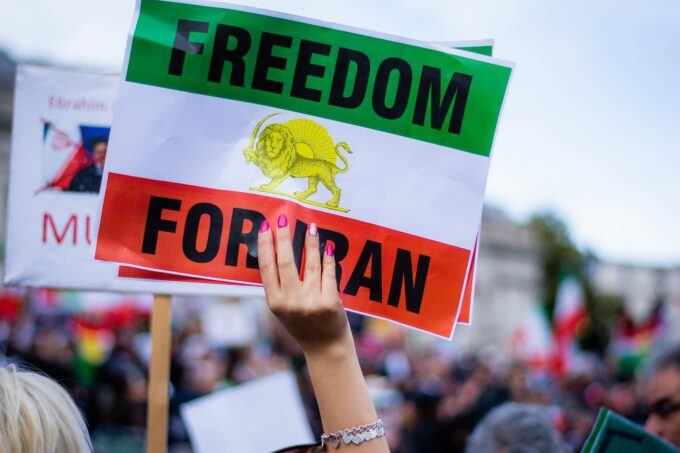
Image by Ollie Barker-Jones.
The recent protests in Iran began on 28 December 2025, mainly in Tehran, when shopkeepers and bazaar merchants started closing their businesses and marching in the streets. The immediate trigger was the sharp fall of Iran’s currency (the rial) to historic lows and rapidly rising inflation, which made basic goods increasingly unaffordable for large sections of the population. Although they are no longer headline news in the Western press and media, protests have continued in smaller and more remote parts of the country 11 days after they began.
Compared to December 2024, the rial had lost a substantial portion of its value against the US dollar. This reflected a year of accelerating currency instability rather than a sudden or unexpected shock. The prolonged decline sharply increased the cost of imported goods and raw materials, which are central to the functioning of the bazaar economy and to the circulation of everyday commodities throughout Iranian society.
A significant political aspect of the initial protests is that the bazaar has historically been a key social and economic ally of the Shia clergy and the Islamic Republic. It played a crucial role both in the 1979 revolution and in the consolidation of the post-revolutionary state. The regime’s loss of bazaar support therefore marked an important political turning point. However, given the bazaar’s structural dependence on imports and its vulnerability to currency fluctuations, as well as the continuous depreciation of the rial over the preceding months, such protests were increasingly inevitable rather than exceptional.
Within about two days, demonstrations spread beyond Tehran to many parts of the country — including Isfahan, Shiraz, Mashhad, Kermanshah, Ahvaz, Yazd, and other cities, 27 provinces in total. Ordinary residents, workers, small traders, and shopkeepers joined in. As a result, this developed into one of the largest protest waves in Iran since the Women, Life, Freedom protests of 2022–23, although the number of demonstrators in most cases is fewer than previous occasions.
The initial trigger was economic hardship however, the protests quickly took on broader political significance. Slogans criticising the government and the Supreme Leader, as well as demands for systemic political change, spread rapidly. These echoed themes and demands from earlier protest movements, showing a continuity of grievances rather than a purely spontaneous outburst.
By 30 December 2025, the protests had extended to university campuses. Students at several universities in Tehran — including Beheshti, Sharif, Amir Kabir, and others — as well as in Isfahan and Yazd, took to the streets or organised solidarity rallies. Their participation injected renewed youth mobilisation and political energy into the protests.
Students were drawn into the movement not only because they are directly affected by inflation, unemployment, and declining living standards, but also because universities have historically functioned as key centres of political activism and opposition in Iran.
Government response and class strategy
The government’s initial response to the December 2025 protests marked a significant departure from its handling of previous waves of unrest. This shift reflected not only tactical learning by the state but also changing class pressures within Iranian society. Unlike earlier protest cycles, when state media largely denied or ignored domestic demonstrations, official newspapers and broadcasters acknowledged the protests, albeit in a tightly managed and selective manner.
This shift reflects the regime’s recognition that effective information control has become increasingly impossible. Workers, students, and small traders now routinely access protest footage through social media platforms, encrypted messaging services, and foreign-based satellite television. Denial no longer suppresses unrest; instead, it risks further delegitimising the state in the eyes of broad social layers.
Alongside this limited media recognition, the government pursued a strategy of class-differentiated concessions. Measures such as the appointment of a new central bank governor and promises of dialogue were not aimed at the population as a whole. Instead, they were carefully targeted at the bazaar — a historically privileged petty-bourgeois layer that has long functioned as a core social base of the Islamic Republic.
Since 1979, the regime has relied heavily on the bazaar as a mediating force between state power and the popular classes, providing economic stability, social legitimacy, and political backing. The mobilisation of this layer therefore represented a serious warning sign for the ruling bloc.
By Sunday 4 January, members of the Majles (Iran’s parliament) proposed increasing the minimum wage by more than 40%. The government also announced that state financial assistance and the use of purchasing cards — allowing access to government-run stores — would be expanded. The Pezeshkian administration reportedly deposited four months’ worth of this assistance into the accounts of heads of households. The promised reforms have two key parts: (1) partially converting huge hidden subsidies into direct cash transfers to poor households, and (2) tackling corruption. While well-intentioned, it carries a high risk of inflation and, if mismanaged, it could actually worsen the structural imbalances it aims to correct.
On 6 January, speaking at a government ceremony, President Massoud Pezeshkian stated:
“It is the banks that are causing inflation… the parliament and the government are responsible for these problems… I repeat, it is not the fault of one person. We all brought the country to this point together. We are to blame. That is, you are to blame, me, and the parliament.”
From a class perspective, the bazaar’s participation was driven less by ideological opposition to the regime than by material pressures. The bazaar’s structural dependence on imported goods, raw materials, and currency stability made it particularly vulnerable to the prolonged depreciation of the rial. The regime’s concessions temporarily restored this alliance, and — as far as the bazaar is concerned — protest activity has largely subsided.
Limits of stabilisation and continued unrest
However, this partial stabilisation clearly highlights the limits of the government’s strategy. Popular anger in Iran extends far beyond the petty bourgeois layers of the bazaar. The deepest sources of unrest lie among working-class households, precarious labourers, unemployed youth, students, and the urban poor. For these groups, inflation, wage erosion, housing costs, and unemployment are not episodic shocks but permanent conditions.
Protests have continued in cities and towns across the country, often becoming more scattered, less coordinated, and more intense. In terms of confrontation with the protesters , the government has pursued a two-part strategy: while adopting a more cooperative approach toward powerful bazaar and business groups, it has relied on repression to control those accused of participating in “riots”. This has included deploying security forces, using tear gas, and carrying out arrests.
On Saturday 3 January, Iran’s Supreme Leader addressed a public gathering, acknowledging that protesters’ economic concerns were valid while simultaneously warning of the “hand of the enemy” behind the unrest.
This approach reflects a government attempting to hold together its core social base rather than addressing the structural causes of crisis. That said, the scale of foreign intervention should not be underestimated. This includes both Mossad-funded Persian-language satellite television stations and individuals operating inside the country.
On the same day, 3 January, former U.S. Secretary of State Mike Pompeo tweeted:
“Happy New Year to every Iranian in the streets. Also to every Mossad agent walking beside them.”
This came just one day after U.S. President Donald Trump issued a statement warning Iran that the United States would intervene if Iranian forces violently suppressed peaceful demonstrators. He stated that “if Iran shoots and violently kills peaceful protesters… the United States of America will come to their rescue. We are locked and loaded and ready to go.”
While the Iranian government often exaggerates foreign interference in domestic protests, it would be naïve to deny that Mossad and the CIA have repeatedly attempted to infiltrate protest movements. Some individuals reportedly killed by gunfire during the unrest were members of the government-affiliated Basij militia.
A revealing statement came from Sima Shine, former Director of the Iran Department at Israel’s Institute for National Security Studies, who criticised Israeli and U.S. officials:
“We are exposing ourselves and have confirmed the narrative that the riots in Iran are the work of the Mossad and the CIA!”
Sections of the British press reproduced Israeli propaganda with little scrutiny. The Sunday Times (4 January) and The Independent (6 January) repeated claims — originally circulated by the Times of Israel — that Ayatollah Khamenei planned to flee to Moscow if unrest intensified.
Sanctions, currency crisis, and structural inequality
Nevertheless, it would be wrong to attribute the continuation of protests primarily to foreign intervention. The deeper cause is a profound crisis of trust created by years of economic mismanagement, corruption, and systemic privilege for regime-connected elites. While international sanctions have worsened economic conditions, they are not the primary source of popular anger. The core issue remains the unequal distribution of burdens: working and poor classes bear the costs, while well-connected groups are protected.
That said, recurring currency devaluations are indeed uniquely shaped by U.S. sanctions. Typically, a currency crisis emerges when a country exhausts its foreign reserves and can no longer finance imports. Yet Iran’s Central Bank holds reserves exceeding $120 billion. The problem is not the absence of reserves, but their inaccessibility. Most of these funds are frozen in foreign bank accounts due to U.S. secondary sanctions, even when held in non-dollar currencies.
According to IMF estimates, only around 25% of Iran’s reserves are readily accessible — a figure that is likely an overestimate. In 2024, Iran’s total imports amounted to approximately $72 billion. Imports have risen sharply in recent years while reserves remain frozen, exerting sustained pressure on the rial.
If Iran were able to access its reserves under normal conditions — something that would require a political détente with the United States — its reserve-to-import ratio would approach 20:1, compared to a global average of around 9:1.
This has two major implications. First, from the standpoint of foreign-exchange management, Iran is facing an imposed crisis. While protesters’ demands extend far beyond currency values, many political crises are downstream from the collapse of purchasing power caused by currency devaluation and inflation. This erosion affects not only household consumption but also the state’s ability to maintain welfare spending and invest in the future.
Second, there is very little the Central Bank can do to address the crisis without access to reserves. Attempts to unify exchange rates, regulate the FX market, or improve currency allocation cannot overcome structural financial isolation. Iran is attempting to manage a large, complex, and relatively globalised economy with severely constrained liquidity.
Long-term policies – Multiple exchange rates and rent extraction
For many years, Iran has operated with multiple exchange rates — a system that has deeply damaged the economy and entrenched class inequality. There is an official or preferential rate, supposedly reserved for essential imports such as food and medicine, alongside a much higher market rate faced by ordinary people, small businesses, and most producers.
This means that the same dollar is worth several times more for ordinary citizens than for those with privileged state access. This gap is not accidental; it is a political mechanism for allocating privilege.
Entities with access to cheap dollars typically include companies linked to the Revolutionary Guards, religious foundations, regime-connected traders, and import cartels. When these groups receive dollars at the official rate, they can import goods cheaply while selling them at prices based on the market rate, generating enormous markups that consumers ultimately pay.
In other cases, importers declare shipments of essential goods but bring in lower-quality substitutes and pocket the difference, or they fail to import altogether and instead sell the cheap dollars on the informal market for instant profit. This is rent extraction created and sustained by state policy.
Ordinary people lose even when goods are officially described as subsidised. In practice, prices follow the market exchange rate rather than the official one. Inflation rises, wages fall behind, shortages emerge, and subsidies flow upward to connected groups rather than downward to the poor. This is why hoarding, artificial scarcity, and black markets are widespread.
Sanctions intensify this system rather than correcting it. By reducing the overall supply of foreign currency, sanctions increase the value of political connections and exemptions. As a result, only groups with political protection, smuggling networks, and security backing can operate. Small importers, independent traders, and ordinary manufacturers are pushed out.
Consequently, factions within the state become the primary gatekeepers for currency, licenses, and trade routes. Economic power becomes increasingly centralised, commerce becomes militarised, and normal economic activity is criminalised. This explains why sanctions enrich institutions such as the Revolutionary Guards while workers and salaried employees grow poorer.
Exchange-rate reform and its limits
Last week, Iran’s so-called “reformist” president, Massoud Pezeshkian, announced plans to abolish the system of subsidised and preferential foreign-exchange rates. He argued that the multi-tiered currency structure encourages corruption, rent-seeking, and fails to protect ordinary citizens.
Under the proposed reform, the state would discontinue offering dollars at artificially low rates — such as 280,000 or 700,000 rials — that had previously been allocated to specific imports or privileged groups. The stated goal is a transition toward a unified, market-determined exchange rate.
The proposal has been opposed by powerful military and financial factions within the regime. Even if the government succeeds in abolishing the official exchange rate, this reform may reduce one channel of corruption but will not address the deeper structural problems. Prices may rise immediately, inflation may spike, and workers and pensioners are likely to suffer first.
Over time, the same privileged groups can retain control through other mechanisms, such as import licenses, state contracts, smuggling routes, preferential credit, and access to foreign currency abroad. The form of privilege changes, but the underlying structures remain intact.
Impact of events in Caracas
Venezuela was considered Iran’s primary gateway to Latin America, serving as a base for influence, sanctions evasion, and logistical cover for oil exports. The kidnapping of Maduro, an allied, defiant leader could embolden anti-government protesters in Iran and expose the regime’s vulnerabilities. In addition the disruption of joint “shadow fleet” oil operations with Venezuela will inevitably tighten sanctions pressure on Iran, narrowing its revenues at a time of a major economic crisis. For Iran’s leadership, the core unsettling message would be that the U.S. might be willing to take direct, decapitating military action against regimes it views as hostile, regardless of geographic distance.
Iranian Opposition
The Iranian opposition is in a deeply lamentable state. The exiled left has little support inside the country, while opposition forces operating within Iran remain divided, ineffective, and often vacillate between reformism and abstract calls for revolutionary change.
In response to sanctions and frozen reserves, sections of the so-called reformist left — including some who were among the most ardent supporters of the Soviet Union in the 1980s — now echo former Foreign Minister Mohammad Javad Zarif. They call for negotiations with the United States, an end to “defying the hegemon”, and even the abandonment of slogans opposing the Zionist state.
It is difficult to understand what kind of left would propose such capitulation after two years of genocide in Palestine, especially given recent examples of imperial aggression elsewhere.
On the opposite side are those who advocate full confrontation with the United States and complete reliance on China and the BRICS bloc. This too is an illusion. China has its own strategic interests and has shown no willingness to jeopardise them for Iran’s sake. Even regarding the genocide of the Palestinians, the Chinese leadership has limited itself largely to rhetorical gestures.
As Li Promise explains in a Jacobin article, while the United States remains Israel’s primary military backer, Israel also receives crucial support from China through deep economic, military, and technological ties.
Media manipulation and labour struggles
Two Persian-language satellite TV channels — Iran International and Manoto — both linked to Israeli intelligence funding, manipulated protest footage by altering the slogans being chanted. Demonstrators originally shouted: “No to dictators — whether Shah or Rahbar (Khamenei)”. In broadcast versions, the audio was replaced to make it sound as though crowds were chanting “Javid Shah” (“Long live the Shah”).
Western media outlets, including The Independent and the BBC, initially repeated these doctored clips without verification. Iranian social-media users quickly circulated original footage alongside the manipulated versions, exposing the deception and severely undermining the credibility of these outlets.
Among working-class activists, there is a clear awareness of the need to continue struggles against the capitalist state while remaining vigilant against U.S. and Israeli intervention. This perspective is reflected in a statement by imprisoned trade-unionist Reza Shahabi:
“The main purpose of my comments has been to emphasise the necessity of defending independent workers’, leftist, and socialist movements… confronting warmongering, anti-worker, and fascist forces is a vital and urgent part of the class struggle.”
Before the nationwide unrest, several sector-specific labour protests took place:
21 December 2025: Workers at Hamadan’s Rad Steel Complex walked off the job after gas supplies were cut amid freezing conditions.
Industrial workers in Kavar (Fars province) staged strikes over unpaid wages and insecure contracts.
Retirees, medical staff, and municipal workers held rallies in Tehran, Kermanshah, Rasht, and Shush demanding wage justice.
These protests were explicitly economic, focusing on unpaid wages, inflation, energy cuts, and deteriorating working conditions. While international media emphasise bazaar closures and political slogans, labour struggles remain a central but under-reported dimension of the unrest.
The left, however, remains weak and divided, failing to offer a coherent strategy beyond abstract calls for regime overthrow. In the absence of a revolutionary alternative rooted in working-class organisation, it is difficult to be optimistic about the trajectory of the current situation.
References
Alimardani, M. (2023). Digital Control and Dissent in Iran. Cambridge University Press.
https://www.cambridge.org/core/books/digital-control-and-dissent-in-iran/
IMF (2024). Islamic Republic of Iran: Article IV Consultation.
https://www.imf.org
Keshavarzian, A. (2007). Bazaar and State in Iran. Cambridge University Press.
Saeidi, A. A. (2020). The Political Economy of Sanctions and the Rentier State in Iran. Middle East Critique.
BBC Persian (2025). Live coverage of Iran protests.
https://www.bbc.com/persian
Resisting the Respectable Opinion on Iran

Iraq. Libya. Egypt. Syria. Gaza. Somalia.
No CIA- and Mossad-constructed regime change operation in the Middle East has ever made life better for the ordinary people of the country, nor even delivered the promised increase in personal and political freedoms.
The only limited improvement that might be gained comes from the lifting of Western sanction regimes. Apparently you can now buy M&Ms much more freely in Damascus. But that in itself is a reminder that the alleged “misgovernance” of non-puppet regimes is often the direct result of sanctions.
That is entirely true of the current situation in Iran, where the current unrest was almost entirely sparked by economic hardship attributable directly to Western sanctions on what should be a very wealthy country.
If anybody really wanted to help actual Iranians, they should be campaigning to lift the sanctions. Making that dependent on the installation of a Zionist Shah shows that this is actually about support for Israel, not about helping ordinary Iranians.
How many of those Western political and media commentators now obsessed with the rights of women not to wear a hijab, with the rights of gays, and with the stopping of executions, are campaigning for the violent overthrow of their Saudi Arabian ally on precisely the same grounds?
How many of them support the installation of the al-Jolani regime in Damascus, which is actively and newly imposing the very things they claim to oppose in Iran?
Did you know that the number of women in the Syrian parliament has just fallen from 28 under Assad to 6 under al-Jolani?
Did you know that over half of university students in Iran are female? That in STEM subjects it is over 60%?
Did you know that approximately 15,000 Jews live in Iran? The community has been there 2,700 years and their rights and synagogues are protected. There is even a dedicated Jewish seat in Parliament.
I do not paint Iran as a paradise. I am not, personally, in favour of theocratic government anywhere. I respect people’s right to live according to religious observance if they so wish, but not the right to compel religious observance on those who do not wish it or to impose law on the grounds of divine ordination.
If you wish to live in a pure religious society, then enter a closed religious order or wait until you reach your Heaven.
I oppose theocracy in Israel, in Saudi Arabia, in Iran; equally. I deplore the Christian Zionist influence bringing effective theocracy to the United States. I deplore bishops in the House of Lords.
I have a great deal of respect for the teachings of Islam. But religious leaders should not have the command of worldly affairs anywhere, on the basis of institutional appointment. Those who wish to live their lives outside of religious guidelines should be free to do so.
In addition to which, Iran is as susceptible as the rest of the world to the misuse of power by individuals, to corruption and to abuse of office, to inequality and the abuse of power. I should like to see reform in Iran, as I should like to see reform everywhere, towards a freer and more equal society.
But that reform will not be obtained by a violent movement of protest that seizes on the economic suffering under sanctions to whip up people to murder and arson.
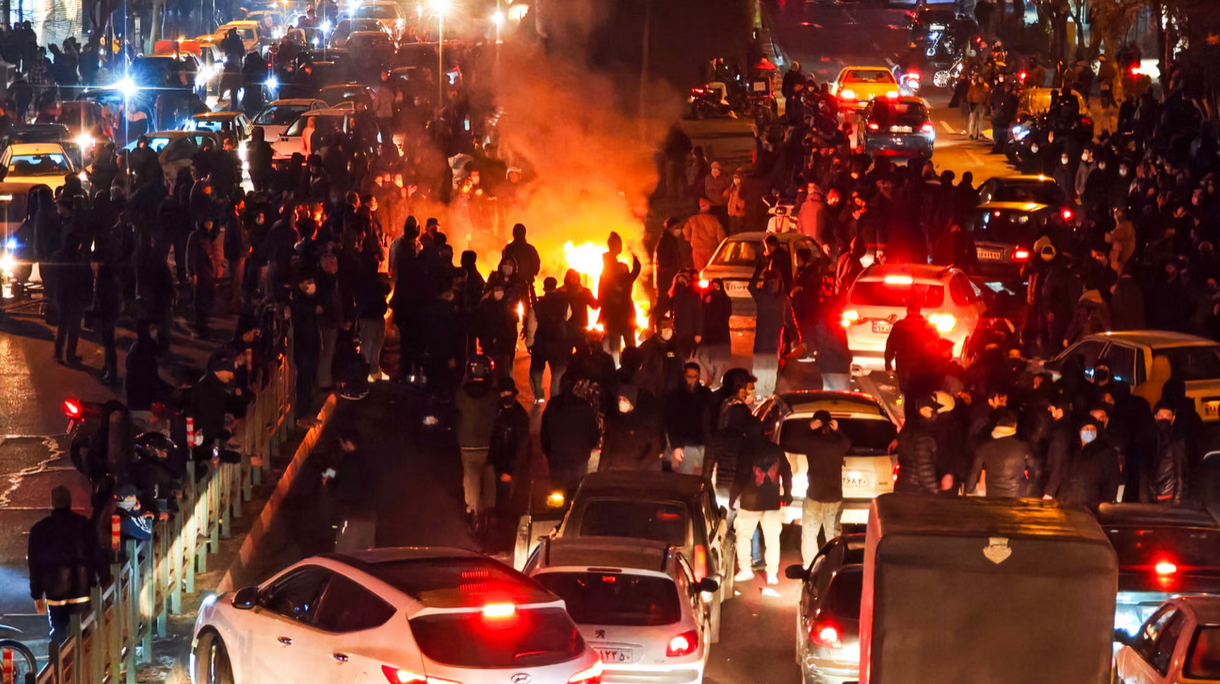
Israel is boasting that it is arming and organising protestors in Iran.
Again I do not view the Iranian government as blameless. If it had allowed more space for reasonable reformists to operate, for opposition figures to campaign, then you would not have a situation where the crowds are shouting the name of the sickening Zionist Pahlavi stooge, simply because it is the only “opposition” name they have heard.
It does seem the moment of greatest madness has passed. I do hope that the Iranian government reflects on opening more political space in the medium term.
But I have nothing but contempt for those in the West who have jumped on the anti-Iranian bandwagon.
Iran is the only remaining power in the Middle East that stood up against the genocide in Gaza. The Iranian sponsored resistance have been the only military opposition to the expansion of Greater Israel. Houthis aside, those resistance forces have been set back badly in the last two years, though not entirely defeated nor disbanded.
The installation of the Zionist puppet al-Jolani was a great boon for the expansion of Israel. They are now gunning for Iran itself.
Those in the West who pretend this is about human rights, and not about eliminating the last elements of physical resistance to Greater Israel, are sickeningly hypocritical.
Opposition to the government of Iran and support for its violent overthrow has become the new entry ticket to the Overton Window Show of British media and politics. It is the new “Do you condemn Hamas?”
Those who bow the knee before the latest ruse of Western Imperialist conquest, in the interests of maintaining their establishment respectability, should be treated with contempt.

No comments:
Post a Comment