Russian and Ukrainian Strikes Are Raising War Risk Insurance Costs
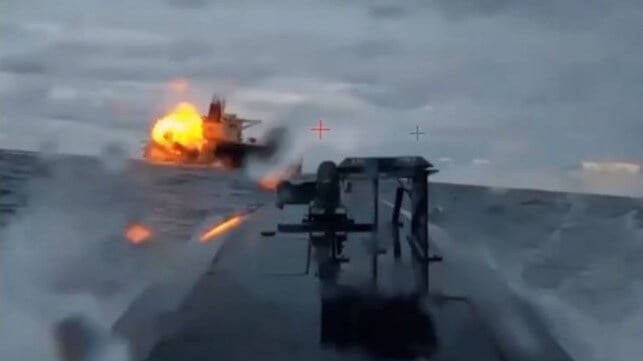
War risk insurance is one of the biggest factors affecting whether shipowners will trade in a conflict zone, and high insurance rates are an effective means of deterring vessel traffic. When excessive, it adds hundreds of thousands of dollars in cost for every week spent in the coverage area. The recent intensification of conflict in the Black Sea has raised the stakes for insurers, and the costs are getting passed on to shipowners: costs are now as high as one percent of hull value for a port call in Ukrainian or Russian ports in the region, according to Bloomberg. For a newer Suezmax, war risk cover alone could cost $800,000 per voyage.
The rates are changing rapidly based on events on the ground, industry outlet BeInsure reports, and insurers are reviewing their offered contracts on a daily cycle. Fresh attacks happen every week, both at Odesa on the Ukrainian side and Novorossiysk on the Russian side.
On Tuesday, Ukrainian drones hit two Greek-owned tankers near the Caspian Pipeline Consortium terminal, the Matilda and the Delta Harmony. The two ships were operating within compliance with Western sanctions, and were in the area to pick up crude piped across the border into Russia from fields in Kazakhstan. One of the vessels was reportedly chartered by American oil major Chevron. Both were in ballast at the time of the strike, and both sustained only minor damage on deck. No injuries were reported.
The attack was unusual in the selection of targets, as Ukraine has previously held off from striking compliant tanker tonnage, even though it has previously attacked the CPC terminal itself.
In the wake of the attack, Greece's shipping ministry advised owners to take extra precautions near Russian Black Sea ports. In guidance seen by Reuters, the ministry recommended that ships should "proceed with an updated threat assessment for commercial ships located in the Black Sea and the maritime areas close to it."
Previously, Ukraine focused its attacks on terminal infrastructure, pipelines, offshore production platforms and shadow-fleet tankers. The vessels in the shadow fleet generally use obscure or second-tier insurers, as the leading marine insurance companies are all based in the G7 nations, where sanctions on Russia prohibit the act of insuring certain market-rate Russian oil cargoes. The shadow fleet is already a high-risk, under-insured or uninsured category; strikes on compliant vessels are a departure from the pattern, and a new risk factor for Western insurance companies.
The situation is just as risky on the western side of the Black Sea. Russia has repeatedly hit terminals in and around Odesa, damaging vessels and injuring multiple crewmembers. On Thursday, a seafarer was injured in a Russian strike on the port of Chornomorsk, Ukraine; several containers were damaged, and a nearby vessel sustained minor damage.
Seafarer Injured in Russian Strike on Port of Chornomorsk
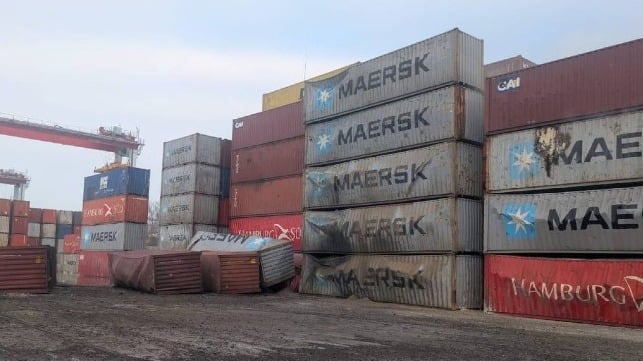
On Thursday, Russian forces attacked the port of Chornomorsk, Ukraine with a ballistic missile strike, destroying several containers. One crewmember from a nearby container ship was injured, according to development minister Oleksiy Kuleba.
The crewmember was evacuated and is receiving medical care, Kuleba said.
Three containers were damaged, and an oil spill occurred as a result, he added. The area has been boomed off to prevent pollution.
"This is another act of Russian terror against civilian port infrastructure, international trade and navigation safety. Russia deliberately attacks facilities that ensure exports, logistics and food security," Kuleba said. "Ukraine continues to ensure the operation of ports and fulfill its international obligations, despite constant attacks by the aggressor."
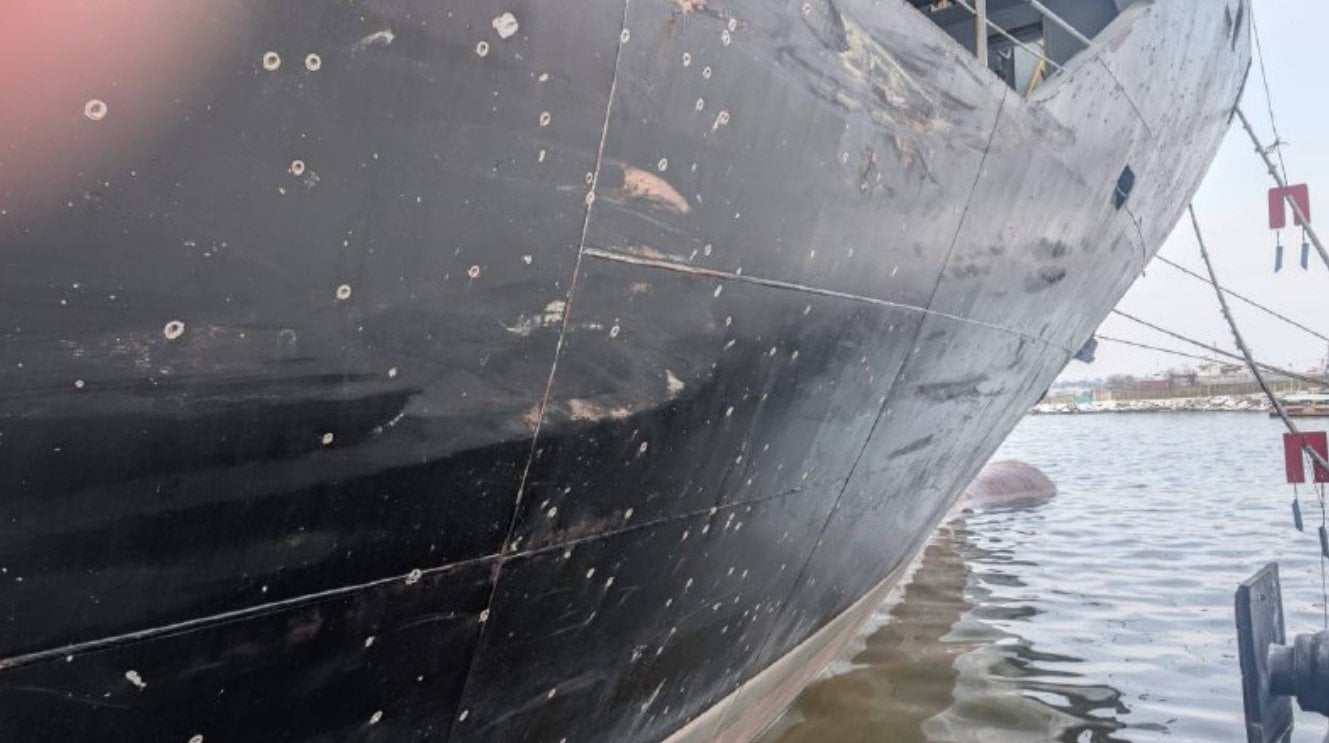
Courtesy Oleksiy Kuleb
The strike is the latest in a series of tit-for-tat exchanges between Ukrainian and Russian forces. Ukraine has repeatedly attacked the tankers that call at Russia's Black Sea loading terminals, disrupting their operations, and it is widely suspected of a campaign to damage other Russia-linked vessels at far-flung locations abroad. It has also inflicted serious damage on Russia's Black Sea and Caspian Sea oil infrastructure. In retaliation, Russia has waged a campaign of missile strikes in and around Odesa, damaging merchant ships and impeding Ukraine's agricultural exports.
On January 9, a Russian strike killed a seafarer and injured another in attacks on two cargo ships, one at Chornomorsk and another under way in the Black Sea. Two more people were killed in a Russian attack on the Chornomorsk and Pivdennyi port complexes on January 7. Over the Christmas holidays, Russia conducted consecutive nightly attacks on Odesa's port, damaging administrative buildings, grain elevators and warehouses. Two vessels were reported damaged in the attacks, one of which was rendered unseaworthy.
Video: Shadow Tanker Attacked by Ukraine Refloated After 12 Days Aground
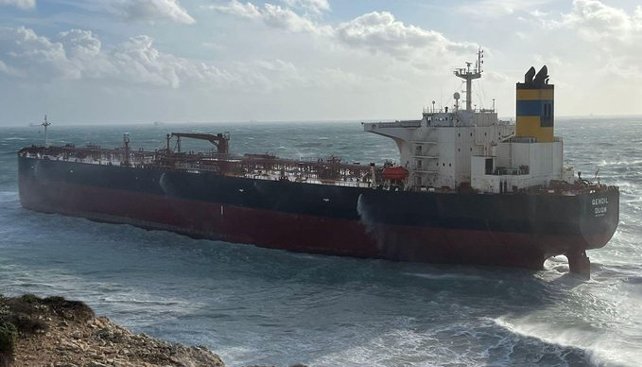
Turkish officials reported they have finally been able after 12 days to refloat a grounded shadow fleet tanker. The ship was pulled from the rocks near Bozcaada, south of the Canakkale Strait.
The ship named Qendil and reporting registry in Qatar has been operating for the past three years in the shadow fleet, making frequent trips between the Russian oil terminals near St. Petersburg and India. It was during the return from one of those trips that the tanker was attacked by Ukraine in the Mediterranean. The long-range drone attack struck the ship south of Crete, more than 2,000 km (1,250 miles) from the Ukrainian border.
Ukraine claimed to have heavily damaged the vessel, but it continued operating under its own power after making a sharp turn heading toward Greece. The ship made it to Aliaga, Turkey, and then, around December 30, anchored in a position near the Canakkale Strait. It was reportedly bound for the repair facilities at Yalova, Turkey.
On January 4, it was spotted drifting reportedly in a strong storm, high waves, and wind. It came to rest aground about 100 meters offshore along the rocky coast. Turkey’s maritime safety agency, KEGM, responded and reported the ship was in ballast condition and there was no pollution.
There had been several attempts to reposition the vessel. Today, KEGM reports that three tugs, along with its emergency response vessel and two KEGM boats, undertook the effort. The 249-meter (817-foot) tanker was finally refloated. The video shows the ship being moved to a more secure location.
The ship, which was built in 2006, has been under sanctions from the UK since February 2025 and the EU in July 2025. It is an Aframax tanker (115,338 dwt) with the databases listing its owners in India. The ship is reported to have had three names in 2025 and been flag-hopping. It currently lists its flag as Oman, but earlier this year was listing Palau, Guinea-Bissau, and Djibouti.

No comments:
Post a Comment