TAKE THAT TRUMP!
California Approves $42.75M for Port Development to Support Offshore Wind
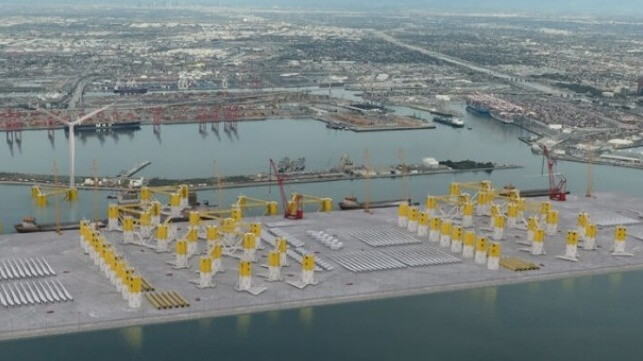
The California Energy Commission approved $42.75 million in grants to five of the state's ports to support the development of port facilities for the staging, assembly, and maintenance of offshore wind farms. The monies are coming from a climate bond measure approved by the state's voters and is part of a total of $136 million in new clean energy technology investments approved by the commission while highlighting that it was bucking the Trump administration’s efforts to derail clean energy initiatives in favor of fossil fuel.
The largest of the awards, $20 million, is going to the Port of Long Beach, which has proposed devoting 400 acres within the port to Pier Wind, a staging, storage, and assembly facility for floating offshore wind turbines. Other grants were awarded to Oakland, Richmond, Port San Luis, and Humboldt Bay.
Six weeks ago, the U.S. Department of Transportation announced that it had withdrawn or terminated a total of $679 million in funding for 12 offshore wind projects across America. Calling the grants “wasteful,” DOT said it would redirect federal monies to other projects. Among the ones it withdrew was nearly $427 million previously awarded to Humboldt Bay Offshore Wind.
“California’s offshore wind energy goals cannot be achieved without onshore development at port facilities like Pier Wind, which will create thousands of manufacturing jobs across the U.S.,” said Long Beach Harbor Commission President Frank Colonna. “We are grateful for this state funding to make offshore wind a part of California’s energy portfolio.”
The Port of Long Beach has been pushing forward with environmental reviews and soliciting community input for its proposed Pier Wind. With news of the state grant, the Port of Long Beach announced it would match $11 million to complete engineering, environmental, business planning, and community outreach for Pier Wind. The proposed facility, which would cost $4.7 billion, is seen as a critical part of the state’s plan to generate 25 GW of offshore wind energy by 2045.
Construction on Pier Wind could start, the port said, as soon as 2027. The first 200 acres could be completed by 2031, and the final 200 acres would come online by 2035.
The state is also awarding $18.25 million in grants to Humboldt Bay. The grant will help to advance the design of the Humboldt Bay Offshore Wind Heavy Lift Terminal. Humboldt Bay is near one of the two wind areas leased by the Biden administration.
Another $3 million was awarded to the Port San Luis Harbor District. The project will build upon the feasibility efforts already undertaken to develop an operation and maintenance terminal for offshore wind.
The cities of Oakland and Richmond are each receiving grants of $750,000. The Port of Oakland will conduct a technical feasibility assessment to identify, evaluate, and design a project to redevelop an underutilized area. The goal is to improve site readiness for the offshore wind supply chain and logistics operations. Richmond will conduct conceptual design and preliminary engineering to evaluate, plan, and design purpose-built offshore wind infrastructure.
California is pushing forward with its strategy, ignoring what it calls Trump’s focus on the past for energy. The state is seeing rapid growth in solar and battery storage projects and is devoting money to developing more EV charging and expanding battery storage and next-generation clean energy technologies. The state highlights that it is on the verge of eliminating coal from its power supply.
The new grants are the first release of money from the Proposition 4 climate bond, and the state plans to release more funding in the future. The Port of Long Beach said it will seek additional proceeds from the bonds as it works to push forward with Pier Wind.


Wind Turbine Installation Vessel
Seatrium Considers Legal Action After Maersk Terminates Order for WTIV
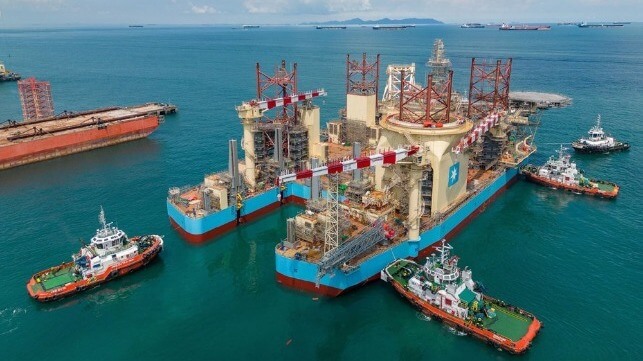
Singapore shipyard group Seatrium has been hit with a surprising contract termination notice for Maersk Offshore Wind's nearly completed wind turbine installation vessel. The companies had been hailing the vessel, which uses an innovative design, reporting that it is nearly 99 percent complete.
Seatrium announced that it had received a notice of termination on October 9 from Maersk Offshore Wind, nearly three and a half years after the vessel was contracted. It said the contract is valued at approximately $475 million and that it would be reviewing the terms of the contract and “allegations” in the notice of termination. Maersk Offshore Wind, which is owned by A.P. Moller Holdings, is reportedly citing delays and "construction issues."
Maersk terminated the contract five months after celebrating the float out of the vessel at Seatrium yard in Singapore. The vessel, which is approximately 475 feet (145 meters) in length, was floated from the building dock and repositioned to the outfitting berth in May, where it was being prepared for its crane installation. Last month, Maersk Offshore Wind released photos showing the vessel in its jack-up position and reported the “pioneering locking system” had been installed.
The vessel has been described as futuristic with capabilities to meet the needs of the U.S. offshore wind industry, including handling the largest offshore wind turbines and improving installation efficiency by up to 30 percent. It is designed to “dock” feeder barges carrying equipment from the staging sites and ensure stability during the loading using the locking system.
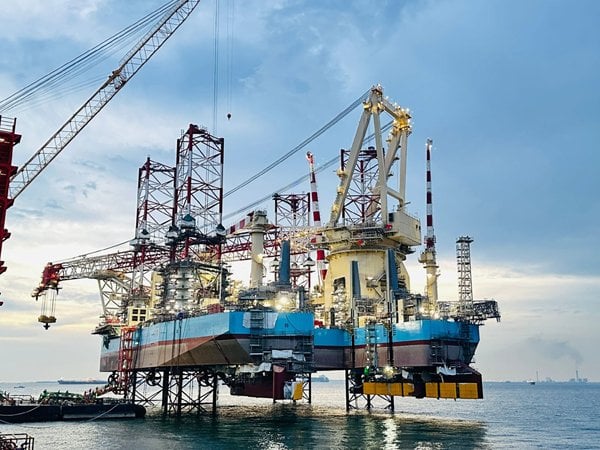
Vessel with its locking system installed (Maersk Offshore Wind)
Maersk Offshore Wind has also partnered with Edison Chouest Offshore for the construction of a purpose-built windfarm feeder spread, specifically designed for pairing with the Maersk Wind Installation Vessel. This custom-built feeder spread includes two tugs and two barges, both U.S.-flagged, that will be owned and operated by Edison Chouest and constructed by Bollinger Shipyards.
The vessel is under contract to Equinor to deploy at the Empire Wind offshore wind farm. The project, which is located 15 to 30 miles south of Long Island, New York, started offshore work in May after resolving a stop work order from the Trump administration. The installation calls for 54 15MW turbines and was due to start in 2026, with first power before the end of the year, and completion in 2027.
“Seatrium is currently reviewing the validity of the notice of termination, as well as the allegations set out therein. Seatrium is also evaluating its legal and commercial options in respect of the contract, including the right to contest the notice of termination, and/or to commence legal proceedings to seek all available remedies for wrongful termination,” the company said in a notice of the termination.
Seatrium said it now intends to “explore viable solutions,” including raising the matter with the end-customer, Empire Offshore Wind.

No comments:
Post a Comment