Right-wing media watch: Where are the cries of “crisis and chaos”? The Telegraph sale falls through – again
Gabrielle Pickard-Whitehead
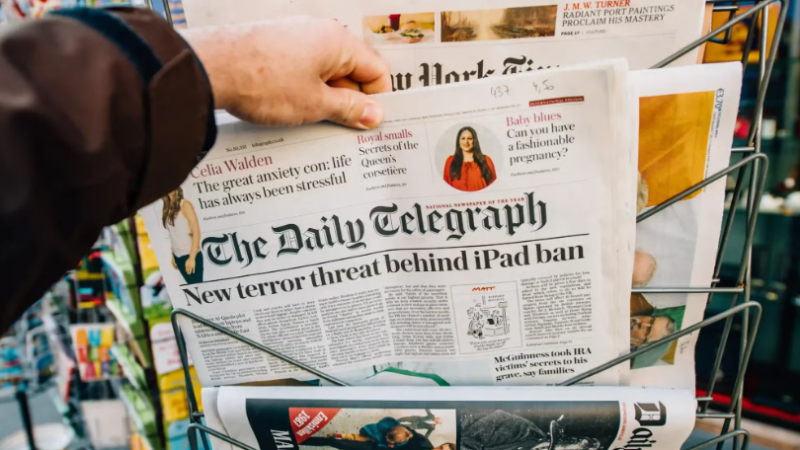
The Telegraph – the perpetuator of last week’s BBC’s ‘crisis’ over alleged left-wing bias – has, once again, hit its own crisis. Yet when it comes to the Telegraph’s very prolonged crisis, the paper and its ideological allies, it seems, suddenly lose their voice.
This week, with barely a murmur from the right-wing press, the Telegraph’s long-running ownership saga collapsed yet again.
Earlier this week, Sky News reported that RedBird Capital Partners had abandoned its proposed £500m takeover of the Telegraph Media Group. RedBird, alongside Abu Dhabi-based International Media Investments (IMI), formally withdrew its offer, confirming:
“RedBird has today withdrawn its bid for the Telegraph Media Group. We remain fully confident that the Telegraph and its world-class team have a bright future ahead of them and we will work hard to help secure a solution which is in the best interests of employees and readers.”
The Telegraph has been stuck in ownership limbo for more than two and a half years, ever since lenders seized control from the Barclay family. A complex financing arrangement with RedBird IMI was scuppered after objections to foreign state ownership of British media.
In May, the government changed the rules, raising the cap on foreign state-owned investors from 5 percent to 15 percent. This in theory reopened the door for IMI, which would have taken a 15 percent stake. Yet even after the rule-change, the consortium walked away without explanation. Again, the outcry one might expect for a major national newspaper in disarray didn’t materialise.
Yet inside the Telegraph, the situation was anything but quiet. Sky News reports that newsroom unrest played a role in RedBird’s withdrawal. Senior figures, including former editor Charles Moore and former Spectator editor Fraser Nelson, launched an attack on RedBird, publishing articles demanding scrutiny of alleged links to Chinese influence.
RedBird denies any such influence, and no evidence has been publicly established. Nonetheless, the campaign within the Telegraph became so fierce that Moore accused RedBird founder Gerry Cardinale of threatening to “go to war with our entire newsroom.”
When journalists are openly attacking their would-be buyers, something is clearly amiss. Yet the wider right-wing media, normally so quick to frame instability elsewhere as symptomatic of a broader “crisis in public trust,” suddenly found no such narrative to deploy here.
Only a handful of outlets, such as the Guardian, have given the collapse the attention it warrants.
Potential new bidders are reportedly circling again, including GB News investor Sir Paul Marshall, and a previous consortium led by Lord Saatchi and Lynn Forester de Rothschild. But nothing is guaranteed, and the asking price remains contentious.
Meanwhile, morale inside the Telegraph newsroom is reportedly deteriorating.
“We’re sick of being the story,” one frustrated member of the newsroom told the Guardian.
“This sorry saga has dragged on for more than two years now and most of us just want to see the back of it,” they add.
For a paper that delights in diagnosing institutional malaise elsewhere, the irony is striking.
None of this is to say the BBC is above criticism. It isn’t. But surely, media scrutiny should be consistent, not weaponised selectively.
Gabrielle Pickard-Whitehead
Yesterday
Right-Wing Watch
Surely, media scrutiny should be consistent, not weaponised selectively.
Surely, media scrutiny should be consistent, not weaponised selectively.
The Telegraph – the perpetuator of last week’s BBC’s ‘crisis’ over alleged left-wing bias – has, once again, hit its own crisis. Yet when it comes to the Telegraph’s very prolonged crisis, the paper and its ideological allies, it seems, suddenly lose their voice.
This week, with barely a murmur from the right-wing press, the Telegraph’s long-running ownership saga collapsed yet again.
Earlier this week, Sky News reported that RedBird Capital Partners had abandoned its proposed £500m takeover of the Telegraph Media Group. RedBird, alongside Abu Dhabi-based International Media Investments (IMI), formally withdrew its offer, confirming:
“RedBird has today withdrawn its bid for the Telegraph Media Group. We remain fully confident that the Telegraph and its world-class team have a bright future ahead of them and we will work hard to help secure a solution which is in the best interests of employees and readers.”
The Telegraph has been stuck in ownership limbo for more than two and a half years, ever since lenders seized control from the Barclay family. A complex financing arrangement with RedBird IMI was scuppered after objections to foreign state ownership of British media.
In May, the government changed the rules, raising the cap on foreign state-owned investors from 5 percent to 15 percent. This in theory reopened the door for IMI, which would have taken a 15 percent stake. Yet even after the rule-change, the consortium walked away without explanation. Again, the outcry one might expect for a major national newspaper in disarray didn’t materialise.
Yet inside the Telegraph, the situation was anything but quiet. Sky News reports that newsroom unrest played a role in RedBird’s withdrawal. Senior figures, including former editor Charles Moore and former Spectator editor Fraser Nelson, launched an attack on RedBird, publishing articles demanding scrutiny of alleged links to Chinese influence.
RedBird denies any such influence, and no evidence has been publicly established. Nonetheless, the campaign within the Telegraph became so fierce that Moore accused RedBird founder Gerry Cardinale of threatening to “go to war with our entire newsroom.”
When journalists are openly attacking their would-be buyers, something is clearly amiss. Yet the wider right-wing media, normally so quick to frame instability elsewhere as symptomatic of a broader “crisis in public trust,” suddenly found no such narrative to deploy here.
Only a handful of outlets, such as the Guardian, have given the collapse the attention it warrants.
Potential new bidders are reportedly circling again, including GB News investor Sir Paul Marshall, and a previous consortium led by Lord Saatchi and Lynn Forester de Rothschild. But nothing is guaranteed, and the asking price remains contentious.
Meanwhile, morale inside the Telegraph newsroom is reportedly deteriorating.
“We’re sick of being the story,” one frustrated member of the newsroom told the Guardian.
“This sorry saga has dragged on for more than two years now and most of us just want to see the back of it,” they add.
For a paper that delights in diagnosing institutional malaise elsewhere, the irony is striking.
None of this is to say the BBC is above criticism. It isn’t. But surely, media scrutiny should be consistent, not weaponised selectively.
Telegraph mocked for Brexit and tumble dryer story
Yesterday
Left Foot Forward
“Well at least the Telegraph was warning us Brexit would be a terrible idea."
Left Foot Forward
“Well at least the Telegraph was warning us Brexit would be a terrible idea."
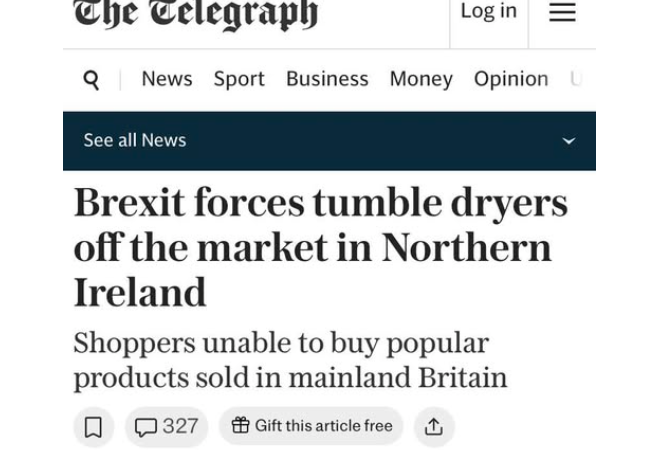
The Telegraph, a paper whose Eurosceptic editorial line has been a fixture since the early 1990s, and which championed the Leave campaign during the 2016 EU referendum, found itself mocked this week after publishing a story about tumble dryers disappearing from the Northern Irish market – because of Brexit.
The article, headlined: “Brexit forces tumble dryers off the market in Northern Ireland,” reports that some popular models sold in Great Britain are no longer available in Northern Ireland because of new EU rules. According to the piece, shoppers are unable to buy certain appliances after updated European eco-design and energy-labelling regulations came into force.
Under the Windsor Framework, the post-Brexit agreement designed to keep the Irish border invisible and protect the peace process, Northern Ireland continues to follow EU product and environmental rules that the rest of the UK no longer applies. The deal introduced Irish Sea checks on goods entering Northern Ireland from Britain to ensure EU standards are met.
Unionists argue these arrangements weaken Northern Ireland’s place in the UK and encourage a drift towards a united Ireland. They also warn that the divergence will push supply chains away from long-established British suppliers in favour of those in the Republic of Ireland.
The Telegraph article explains that Northern Ireland’s alignment with EU eco-design rules means consumers can no longer buy certain types of traditional condenser tumble dryers and must instead purchase more energy-efficient appliances, such as heat-pump dryers.
Robin Swann, the Ulster Unionist Party MP for South Antrim, raised the matter after being contacted by a constituent. He told the paper:
“Unfortunately, this is reflective of the ongoing issues facing Northern Ireland consumers because of the divergence caused by the Windsor Framework.”
“This outworking of the framework once again unacceptably limits the range of products available to customers here, and risks sending customers out of the Northern Ireland market and into the Republic of Ireland to purchase these tumble dryers.”
The article sparked an onslaught of mockery online.
“Tumble dryer update…” Leeds for Europe posted on Facebook.
“Well at least the Telegraph was warning us Brexit would be a terrible idea,” another user mocked.
Others pointed out that the appliances still available in Northern Ireland are newer and more efficient. “But, unlike us, they have access to better, more efficient ones, so it doesn’t bloody matter,” read one comment.
Another observer didn’t beat around the bush: “It’s embarrassing how desperate the Torygraph has become. It promoted Brexit based on xenophobia and lies. Just a posh Daily Mail for narrow-minded people.”
The article, headlined: “Brexit forces tumble dryers off the market in Northern Ireland,” reports that some popular models sold in Great Britain are no longer available in Northern Ireland because of new EU rules. According to the piece, shoppers are unable to buy certain appliances after updated European eco-design and energy-labelling regulations came into force.
Under the Windsor Framework, the post-Brexit agreement designed to keep the Irish border invisible and protect the peace process, Northern Ireland continues to follow EU product and environmental rules that the rest of the UK no longer applies. The deal introduced Irish Sea checks on goods entering Northern Ireland from Britain to ensure EU standards are met.
Unionists argue these arrangements weaken Northern Ireland’s place in the UK and encourage a drift towards a united Ireland. They also warn that the divergence will push supply chains away from long-established British suppliers in favour of those in the Republic of Ireland.
The Telegraph article explains that Northern Ireland’s alignment with EU eco-design rules means consumers can no longer buy certain types of traditional condenser tumble dryers and must instead purchase more energy-efficient appliances, such as heat-pump dryers.
Robin Swann, the Ulster Unionist Party MP for South Antrim, raised the matter after being contacted by a constituent. He told the paper:
“Unfortunately, this is reflective of the ongoing issues facing Northern Ireland consumers because of the divergence caused by the Windsor Framework.”
“This outworking of the framework once again unacceptably limits the range of products available to customers here, and risks sending customers out of the Northern Ireland market and into the Republic of Ireland to purchase these tumble dryers.”
The article sparked an onslaught of mockery online.
“Tumble dryer update…” Leeds for Europe posted on Facebook.
“Well at least the Telegraph was warning us Brexit would be a terrible idea,” another user mocked.
Others pointed out that the appliances still available in Northern Ireland are newer and more efficient. “But, unlike us, they have access to better, more efficient ones, so it doesn’t bloody matter,” read one comment.
Another observer didn’t beat around the bush: “It’s embarrassing how desperate the Torygraph has become. It promoted Brexit based on xenophobia and lies. Just a posh Daily Mail for narrow-minded people.”

No comments:
Post a Comment