Tuesday, January 27, 2026

FRENEMIES

Not allies, not enemies: Britain’s ties with China


By AFP
January 26, 2026


Britain's Keir Starmer is in China this week, marking the first visit by a UK prime minister in eight years - Copyright POOL/AFP Jordan Pettitt

Britain’s Keir Starmer is in China this week, marking the first visit by a UK prime minister in eight years.

It is the latest in a string of Western leaders seeking a rapprochement with Beijing, as US President Donald Trump turns on traditional allies.

Starmer hopes to boost trade after years of strained relations, but must balance this with security concerns raised in the UK over a potential threat posed by China.

Here are the three key questions surrounding the visit:


– Where do relations stand? –


London and Beijing enjoyed what they describe as the “Golden Era” a decade ago — a time when then-prime minister David Cameron and Chinese President Xi Jinping famously enjoyed beers together at a British pub.

But relations soured since 2020, when Beijing imposed a national security law on Hong Kong and cracked down on pro-democracy activists in the former British colony.

Human rights abuses, alleged spying and cyber attacks, and China’s perceived support for Russia’s war in Ukraine also strained ties.

Nevertheless, China remains Britain’s third-largest trading partner, though UK exports to the East Asian country plummeted 52.6 percent year-on-year in 2025, according to British government statistics.

And in December, Starmer said that it would be a “dereliction of duty” not to engage with Beijing.


– Why is Starmer visiting now? –


Relations began to thaw soon after Starmer took the helm in 2024 following a closed-door meeting with Xi in Brazil in which the UK prime minister said Britain would look to cooperate with China on issues such as climate change.

But a protracted row over Chinese plans to build a vast new embassy in London complicated plans for Starmer to visit.

Beijing purchased the building, on the site of the former Royal Mint, in 2018, but opponents argued that the “mega embassy” will be used for espionage and pressure rights activists in Britain.

The plan was finally approved on Tuesday and made way for China’s invitation to Starmer with a UK government spokesperson saying intelligence agencies have plans to “manage any risks”.

Starmer’s trip also comes as Britain faces a rift with its closest ally, the United States, following Trump’s bid to seize Greenland and his brief threat of tariffs against Britain and other NATO allies.

With Trump increasingly tearing apart the global order, “China might not be an ally, but it is also not an enemy”, Kerry Brown, director of the Lau China Institute at King’s College London told AFP.

Facing a lacklustre British economy, Starmer will also be looking to seal trade deals to boost growth at home.


– What’s on the table? –


Starmer will arrive with an entourage of industry executives hoping to promote British business through a UK-China CEO Council, a body that has lain dormant for years.

Created in 2018, the council once brought business and industry executives from both countries together when relations were in their “golden era”.

Starmer is also expected to raise the case of Hong Kong media mogul and democracy supporter Jimmy Lai, a British citizen and founder of the now-shuttered Apple Daily tabloid.

The 78-year-old is facing years in prison after being found guilty of collusion charges in December under the new national security law.

Xi and Starmer are also likely to discuss Ukraine, where Beijing is accused of enabling Russia’s invasion through its close economic ties to Moscow.

The visit will represent a “shift toward managed re-engagement rather than renewed strategic trust”, according to Jinghan Zeng, an international relations scholar at City University of Hong Kong.

While progress could be made on climate change, trade, and people-to-people exchanges, “concrete outcomes will probably be modest”, he said.
Canada’s Marineland gets ‘conditional approval’ to sell whales to US

By AFP
January 26, 2026


An aerial view of belugas at Canada's now-shuttered Marineland theme park - Copyright AFP/File Angelos TZORTZINIS

Canada’s federal government on Monday gave Marineland conditional approval to sell its 30 imperilled beluga whales to parks in the United States, after rejecting an export request to China.

Marineland, a once lucrative tourist attraction near Niagara Falls, has said it is in deep financial trouble, cannot afford to care for the whales, and will be forced to euthanize them if it can’t find them a new home.


The park has been mired in controversy for years. Twenty animals, including 19 belugas, have died there since 2019, according to a tally by The Canadian Press.


Marineland, which is closed to visitors, thought it had a solution last year when it forged a plan to sell the whales to the Chimelong Ocean Kingdom, a lavish theme park in China.

Fisheries Minister Joanne Thompson rejected that plan, saying it would perpetuate the whales’ exploitation.

Marineland presented Ottawa with a new plan last week to sell the 30 whales to a series of parks in the United States.


“Today, I met with Marineland regarding their proposal to export the remaining whales to US facilities,” Thompson said in a statement.

“I provided conditional approval,” Thompson said, adding that final permits would be granted once Marineland provides additional information.

Marineland has said all the beluga deaths at the park resulted from natural causes, but animal welfare officials from the province of Ontario have been investigating the park for several years.
Clickbait and ‘AI slop’ distort memory of Holocaust


ByAFP
January 26, 2026


The Auschwitz concentration camp -- seen here in a genuine AFP photo -- was liberated in January 1945
 - Copyright POOL/AFP Dominique JACOVIDES


Johanna Lehn and Pierrick Yvon

An emaciated and apparently blind man stands in the snow at the Nazi concentration camp of Flossenbuerg: the image seems real at first but is part of a wave of AI-generated content about the Holocaust.

As the world marks International Holocaust Remembrance Day on Tuesday, experts warn that such content — whether produced as clickbait for commercial gain, or for political motives — threatens efforts to preserve the memory of Nazi crimes.

AFP’s Fact Check team has noted a surge of such imagery on social networks, distorting the history of Nazi Germany’s murder of six million European Jews during World War II.

Among the AI-generated images that have gone viral is one of a little girl with curly hair on a tricycle.

She is presented as Hannelore Kaufmann, a 13-year-old Berliner who purportedly died at the Auschwitz extermination camp, of which the 1945 liberation by Soviet troops is commemorated on Tuesday.

However, there is no record of her ever having existed.

Another example is a fake image created to illustrate the invented story of a Czech violinist called “Hank” at Auschwitz, which was called out as false by the camp museum.

After early examples emerged in the spring of 2025, by the end of the year “AI slop” on the subject “was being shown very frequently”, historian Iris Groschek told AFP.

On some sites such content was posted once a minute, said Groschek, who works at memorial sites in Hamburg, including the Neuengamme concentration camp.

With the exponential advances in AI, “the phenomenon is growing,” said Jens-Christian Wagner, director of the foundation that manages the Buchenwald and Mittelbau-Dora memorials.


– Exploiting ’emotional impact’ –


Several Holocaust memorials and commemorative associations this month issued an open letter warning about the rising number of these “entirely fabricated” pieces of content.

Some of them are churned out by content farms which exploit “the emotional impact of the Holocaust to achieve maximum reach with minimal effort”.

The picture supposedly from Flossenbuerg camp falls into this category, as it was shown on a page claiming to share “true, human stories from the darkest chapters of the past”.

The memorials warned that fake content was also being created “specifically to dilute historical facts, shift victim and perpetrator roles, or spread revisionist narratives”.

Wagner points for example to images of “well-fed prisoners, meant to suggest that conditions in concentration camps weren’t really that bad”.

The Frankfurt-based Anne Frank Educational Centre warned of a “flood” of AI-generated content and propaganda “in which the Holocaust is denied or trivialised, with its victims ridiculed”.

By distorting history, AI-generated images have “very concrete consequences for how people perceive the Nazi era”, says Groschek.

The results of trivialising or denying the Holocaust are in evidence in the attitudes of some younger visitors to the camps, particularly from “rural parts of eastern Germany… in which far-right thinking has become dominant”, said Wagner.


– ‘Confident, loud, aggressive’ –


Staff have observed Hitler salutes as well as other provocative and disrespectful actions and comments.

Such behaviour is only “by a minority, but a minority that is increasingly confident, loud and aggressive”, he told AFP.

In their open letter, the memorials called on social media platforms to “proactively combat AI content that distorts history” and to “exclude accounts that disseminate such content from all monetisation programmes”.

“The challenge for society as a whole is to develop ethical and historically responsible standards for this technology,” they said, adding: “Platform operators have a particular responsibility in this regard.”

German Culture Minister Wolfram Weimer said in a statement to AFP: “I support the memorials’ call to clearly label AI-generated images and remove them when necessary.”

He said that making money from such imagery should be prevented.

“This is a matter of respect for the millions of people who were killed and persecuted under the Nazis’ reign of terror,” he said, reminding the platforms that they had “obligations” under the EU’s Digital Services Act.

Groschek said that none of the American social media giants responded to the memorials’ letter, including Meta, the owner of Facebook and Instagram.

TikTok responded by saying it wanted to exclude the accounts in question from monetisation and implement “automated verification”, according to Groschek.

Some of the fake Facebook posts about Hannelore and Hank were still online on the eve of Holocaust Remembrance Day.


Greece probes factory fire as fifth victim found


By AFP
January 27, 2026


The explosion early on Monday gutted an entire section of the Violanta factory
 - Copyright Eurokinissi/AFP Thanasis Kalliaras

Investigators in Greece on Tuesday were looking into the causes of a fire that killed five workers at a biscuit factory in the country’s worst industrial accident in years.

The explosion early on Monday, caught on nearby security cameras, gutted an entire section of the Violanta factory outside the city of Trikala, 245 kilometres (150 miles) northwest of Athens.

“The case will be investigated to the end… possibly, even today, we may have an initial picture of what caused the fire,” Civil Protection Minister Giannis Kefalogiannis told state TV ERT.

Five women died and company staff told local media the toll would probably have been higher had other staff not been taking a break at the time.

Four of the victims were found soon after the blast but the fifth was only recovered on Tuesday morning as pockets of fire made the operation difficult, the fire department said.

The deaths have shocked local communities around Trikala, which provide much of the company’s workforce.

Colleagues and relatives said the women who died had chosen to work the night shift so they could be with their children during the day.

The Violanta company in a statement insisted it “strictly applies protocols and procedures, adhering to all measures for the safety of our staff and facilities”.

“We are mourning five of our own,” the company said, adding that it was “fully” cooperating with the investigating authorities.

The blaze is one of the deadliest industrial accidents in Greece for many years.

A local trade union on Monday said it had never been allowed to inspect the facility that burnt down.

Over 200 people died in work-related accidents in 2025, according to the federation of technical company employees.

In 1992, 15 people died in a refinery explosion in the industrial zone of Elefsina, near the port of Piraeus.

Three people had died in a dynamite factory explosion in Itea, central Greece, in 2022.

The Violanta plant in Trikala, the company’s first and biggest, produced 12,500 tonnes of biscuits, cookies and wafers per year, according to the company website.

The brand is among the fastest growing in Greece, with a major presence in shops, and exports to around 40 countries.


GLOBALIZATION REDUX

China’s Anta Sports to become top Puma shareholder


By AFP
January 27, 2026


Puma has been struggling with weak demand in recent months and saw sales decrease more than 15 percent in the third quarter of last year - Copyright AFP/File Christof STACHE

Chinese athletic goods giant Anta Sports will buy a controlling stake in historic German sportswear brand Puma for $1.79 billion, a stock exchange filing showed Tuesday, as it expands its international presence.

Anta will buy 43 million shares for 35 euros apiece from the French billionaire Pinault family’s Artemis group, the statement to the Hong Kong exchange said, giving it a 29 percent stake.

The price is a more than 60 percent premium to Puma’s last close, according to Bloomberg data, and values the deal at 1.51 billion euros.

Anta said in the statement that the stake would “further enhance its presence and brand recognition in the global sporting goods market”, including China.

“We believe Puma’s share price over the past few months does not fully reflect the long-term potential of the brand,” Anta chairman Ding Shizhong said.

While the statement said Anta had no plans to launch a full takeover of Puma, it will “carefully assess the possibility of further deepening the partnership between the two parties in the future”.

Artemis said the sale would allow it to “redeploy its resources to new value-creating sectors”.

The deal is expected to close by the end of the year, though it is subject to regulatory approvals, and the company will buy shares with cash.

Anta declined to comment on the deal when contacted by AFP.

The firm, based in China’s southeastern Fujian province, is one of the world’s largest sportswear companies.

Founded in 1991, it is the parent company of many global brands through its subsidiary Amer Sports, including Wilson, Arc’teryx and Salomon.

Anta closed its acquisition of Finland-based Amer in 2019, leading a consortium in a deal worth about $5.2 billion.

It also controls rights in the vast Chinese market for foreign sportswear firms including Fila and Descente.

Anta has become the world’s third-largest sportswear brand following Nike and Adidas, according to data analytics firm Euromonitor International.

Puma, however, has been struggling with weak demand in recent months and saw sales decrease more than 15 percent in the third quarter of last year.

CEO Arthur Hoeld, who was appointed last year, has said the brand had become “too commercial” and was undergoing a “reset” last year to improve on brand heat, distribution quality and product offering.

Hoeld told investors in October that the company’s goal was to “become a top three sports brand in the future again”.

He deemed 2026 a “year of transition”, vowing a return to growth in 2027.

Puma is set to release its 2025 full-year financial results on February 26.
Spain unemployment drops below 10% in first since 2008


By AFP
January 27, 2026


A busy restaurant terrace in Palma Beach, in Palma de Mallorca, on July 18, 2025 - Copyright AFP JAIME REINA

Spain’s historically stubborn unemployment fell below 10 percent in the fourth quarter of last year, official data showed on Tuesday, a first since the 2008 financial crisis.

The jobless rate in the European Union’s fourth-largest economy was 9.93 percent in the period, 0.52 percentage points below the preceding quarter, the National Statistics Institute said.

It was the lowest reading since hitting 9.6 percent in the first quarter of 2008, at the onset of a global recession that left deep scars in the Spanish economy.

“For the first time since 2008, unemployment falls below 10 percent. Spain has almost 22.5 million people with jobs, a new record,” Socialist Prime Minister Pedro Sanchez posted on X.

The service sector, which includes the vital tourism industry that represents around 13 percent of annual economic output, accounted for the bulk of the fall, alongside agriculture and industry, the statistics office said.

Spain’s economic growth has been consistently outperforming peers in the developed world, but its unemployment rate has been the highest in the European Union.

The rate peaked at around 27 percent in early 2013 in the wake of the economic crises but has steadily fallen in recent years as the tourism sector performed strongly after the Covid-19 pandemic.

The leftist government is aiming to bring it down to around eight percent by the end of its term in 2027, which it says corresponds to full employment.
Spain to regularise 500,000 undocumented migrants


By AFP
January 27, 2026


Spain is one of Europe's main gateways for migrants fleeing poverty, conflict and persecution - Copyright AFP Antonio SEMPERE

Spain’s left-wing government approved Tuesday a plan to regularise around 500,000 undocumented migrants by decree, the country’s latest break with harsher policies elsewhere in Europe.

Migration Minister Elma Saiz the beneficiaries would be able to work “in any sector, in any part of the country”, and extolled “the positive impact” of migration.

“We are talking about estimations, probably more or less the figures may be around half a million people,” she told public broadcaster RTVE.

Saiz said at a news conference after Tuesday’s cabinet meeting that “we are strengthening a migration model based on human rights, integration, coexistence, and compatible with economic growth and social cohesion”.

The measure will affect those living in Spain for at least five months and who applied for international protection before December 31, 2025.

Applicants must have a clean criminal record. The regularisation will also apply to their children who already live in Spain.

The application period is expected to open in April and continue until the end of June.

The plan will be passed through a decree that will not need approval in parliament, where the Socialist-led coalition lacks a majority.

The conservative and far-right opposition lashed out at the government, saying the regularisation would encourage more illegal immigration.

Alberto Nunez Feijoo, head of the Popular Party, the main right-wing opposition group, wrote on X that the “ludicrous” plan would “overwhelm our public services”.

“In Socialist Spain, illegality is rewarded,” he said, vowing to change migration policy “from top to bottom” if he took power.


– ‘Social justice’ –


The Spanish Catholic Church was among the organisations praising the move, commending “an act of social justice and recognition”.

Socialist Prime Minister Pedro Sanchez says Spain needs migration to fill workforce gaps and counteract an ageing population that could imperil pensions and the welfare state.

Sanchez has said migration accounted for 80 percent of Spain’s dynamic economic growth in the last six years.

Official data released Tuesday showed that 52,500 of the 76,200 people who pushed up employment numbers in the final quarter of last year were foreigners, contributing to the lowest jobless figure since 2008.

Spain’s more open stance contrasts with a trend that has seen governments toughen migration policies under pressure from far-right parties that have gained ground across the European Union.

Around 840,000 undocumented migrants lived in Spain at the beginning of January 2025, most of them Latin American, according to the Funcas think-tank.

Spain is one of Europe’s main gateways for irregular migrants fleeing poverty, conflict and persecution, with tens of thousands of mostly sub-Saharan African arrivals landing in the Canary Islands archipelago off northwestern Africa.

According to the latest figures published by the National Statistics Institute, more than seven million foreigners live in Spain out of a total population of 49.4 million people.
Teens underwhelmed by France’s social media ban


By AFP
January 27, 2026


France became the first country in Europe to pass a ban on children using social media - Copyright GETTY IMAGES NORTH AMERICA/AFP MARIO TAMA


Marine Pennetier with Simon Dennis and Benjamin Massot

Teens and tweens were split Tuesday over a looming ban on social media for under-15s in France, with some admitting the risks of overuse — while others laughed off the measure and vowed to dodge it.

France’s National Assembly passed a bill in a marathon overnight session that would impose a minimum age for using social media, becoming the first country in Europe to follow Australia, which banned under-16s from TikTok, Snapchat, Facebook and other sites last year.

Parents keen to curb their kids’ phone use cautiously welcomed the measure, which was championed by President Emmanuel Macron and must now pass the Senate.

The legislation’s targets themselves were divided — some acknowledging the dangers social media can bring, others venting their incomprehension and plotting ways to get around a ban.

Esther, a high school student in Paris, said the idea was “super” — on paper.

“But the problem is, when (kids) turn 15, they’re going to get submerged by this wave. That’s the year you start high school, and you need to be focussing on other things besides social media. They should ban it for under-14s instead,” she said.

And not all social networks are equal, she insisted.

“The ones where you scroll non-stop (should be banned), because that’s what ruins your brain,” she said. But other apps “are key for social life”.

That view is shared by 11-year-old middle-schooler Aya, also from Paris.

“Social media makes some kids crazy, they stop doing anything else. And there are disgusting things on TikTok, it’s not appropriate for kids,” she said.

But “at the same time, it’s important in an emergency. I use WhatsApp to talk to my parents. They’re not going to ban WhatsApp, are they?”

WhatsApp and other private messaging platforms are not covered by the ban.

At a high school in Marseille, one 16-year-old said she had already imposed a ban on herself.

“I deleted TikTok, it was taking up too much of my time,” she said.

“I couldn’t get my homework done, my head was always somewhere else… Honestly, I think it’s a great idea.”

An August 2025 poll found 79 percent of parents and 67 percent of young people in France favoured a social media ban for under-15s.

Polling firm Odoxa found 46 percent of young people said they had felt low self-esteem comparing themselves to others on social networks, and 18 percent said they had been harassed or insulted online.


– Brother’s ID –


Parents meanwhile questioned the feasibility of the ban, while some said more attention needed to be focussed on prevention.

A ban “is a start, but it’s not enough”, said Emmanuelle Poudreas, whose son Clement took his own life in 2024 at age 15 after being cyberbullied on WhatsApp.

“We need the state to mobilise at every level to prepare our young people to be digital citizens,” she told AFP.

“How can we ban digital tools in middle and high schools when regional governments are financing those tools and they are being provided to students to use?”

National parents’ federation PEEP raised similar concerns.

“There’s this impression we’ve solved a problem. No. We’ve become aware of a problem, but we haven’t fixed it,” the organisation’s president, Emmanuel Garot, told AFP.

He called for more education on the risks of social media and stricter regulation of tech companies and “their damned algorithms”.

“Let’s not fool ourselves, kids are inventive. They’ll find ways to get around the ban soon enough — VPN or other social networks we barely know about.”

Ylies, a third-year middle-schooler in Paris who uses Snapchat and TikTok, already has a plan.

“What am I supposed to do? Stare at the wall?” he said.

“I’ll just open a new account and say I was born in 2004. If they ask me for ID, I’ll use my brother’s or one of his friends’.”


Hidden rhythm brings microscopic particles into unison


By Dr. Tim Sandle
SCIENCE EDITOR
DIGITAL JOURNAL
January 27, 2026


Scientists have long known that injecting a large quantity of reflective particles into the upper atmosphere could cool the planet - Copyright NATIONAL INSTITUTE OF INFORMATION AND COMMUNICATIONS (JAPAN)/AFP Handout

Swimming in a shared medium makes particles synchronise without touching, according to a new academic study. This means particle physics meets nature – from blinking fireflies to cells in a beating heart, synchronization occurs across nature. Researchers found similar behaviour emerges in a simple system of microscopic particles.

The study showed how , when suspended in liquid, the particles naturally oscillated together as though they sensed one another’s motion. By using computational modelling, the scientists found the particles influence each other’s motion by stirring their shared medium. Applications include vibration control and improving acoustics.

In terms of significance, the research offers a framework for designing adaptive, frequency-tuneable materials. These are advanced, smart materials designed to dynamically adjust their operating frequencies, stiffness, or resonance properties in response to external stimuli like temperature, electricity, magnetism, or mechanical deformation.

Northwestern University engineers have discovered what happens when many of particles come together. The y discovered that groups of tiny particles suspended in liquid oscillate together, keeping time as though they somehow sense one another’s motion. Nearby particles fall into sync, forming clusters that appear to sway in unison — rocking back and forth with striking coordination.

According to computer simulations, the conductor behind this coordination is the liquid itself. As each particle oscillates, it gently stirs the surrounding fluid. Those tiny ripples flow outward to nudge neighbouring particles.

Even though the particles do not directly touch one another, they influence each other’s motions. The motion of the fluid enables the particles to “feel” one another at a distance.

The findings could help explain how complex, collective behaviour emerges without communication or signalling. By moving through a shared medium, individual components can influence one another’s timing. The results suggest that in biological systems, too, the environment itself — whether fluid, tissue or air — may play a crucial role in orchestrating collective rhythms.

Called synchronization, emerging coordination across a group of individuals is common in nature and engineered technologies. Yet the researchers did not expect to see this phenomenon emerge so clearly in a simple physical system.

By combining the detailed simulation with experiments and a simplified mathematical model, the team demonstrated that fluid-driven interactions alone could explain why the particles synchronized. The researchers even could predict which colour (or oscillation phase) each particle would adopt based on its position within the group.

Now that the underlying mechanism is clear, the researchers wish to learn how to control the synchronisation. By tuning particle density, geometry and confinement, future work could turn the collective motion on and off — laying groundwork for programmable materials and microscale systems with functions that emerge from coordinated behaviour.

The findings also offer a new physical framework for understanding how synchronization arises in living systems, where motion through shared fluids plays a central role.

The research appears in the journal Nature Communications, titled “Self-oscillating synchronematic colloids”.
Lula, Macron push for stronger UN to face Trump ‘Board of Peace’


By AFP
January 27, 2026


Trump launched his "Board of Peace" initiative last week in Davos - Copyright AFP/File Fabrice Coffrini

Brazil’s Luiz Inacio Lula da Silva and France’s Emmanuel Macron on Tuesday defended the United Nations in the wake of US President Donald Trump’s creation of a “Board of Peace.”

Both Brazil and France were invited by Trump to join his new global conflict resolution organization, to be headed by Trump himself.

France has already declined the invitation.

The leftist Lula has echoed concerns that Trump is seeking to create a rival to the UN “where he is the owner.”

In a phone call on Monday, he asked Trump to limit the activities of the “Board of Peace” to Gaza and “include a seat for Palestine.”

In a separate call on Tuesday, Lula and Macron “defended the strengthening of the United Nations” and agreed that “peace and security initiatives must be in line with the mandates of the (UN) Security Council,” Brazil’s presidency said.

Trump launched his “Board of Peace” initiative last week in Davos, flanked by allies including Hungary’s Viktor Orban and Argentina’s Javier Milei.

Although originally intended to oversee Gaza’s rebuilding, its charter does not seem to limit its role to the Palestinian territory.

Permanent members must pay $1 billion to join, leading to criticisms that the board could become a “pay to play” version of the UN Security Council.

Israeli Prime Minister Benjamin Netanyahu, who faces an International Criminal Court arrest warrant over the war in Gaza, has said he will join.
PUTIN'S WAR ON CIVILIANS
‘Just a show’: Ukrainians believe Russia wants war, not talks


By AFP
January 27, 2026


Stretched Ukrainian forces have struggled to hold the line in the east and south of the country - Copyright AFP Antonio SEMPERE


Jonathan BROWN with Stanislav DOSHCHITSYN

Hours after Russian and Ukrainian negotiators ended their first round of peace talks in the United Arab Emirates last Friday, Russian forces pummelled Ukraine with hundreds of drones and missiles.

The bombardment knocked out lighting and heating to Ukrainians in freezing temperatures, but it also sent a signal, according to Kyiv, of Russia’s true intention: to fight on.

“Peace efforts? Trilateral meeting in the UAE? Diplomacy? For Ukrainians, this was another night of Russian terror,” Ukrainian Foreign Minister Andriy Sybiga wrote, as emergency services surveyed the destruction.

The talks brokered by the United States are the latest diplomatic initiative in the brutal war launched by Russia nearly four years ago — all of which have failed to end the fighting.

Announcing the fresh talks last week, President Volodymyr Zelensky issued a key warning. Putin, he said, “really doesn’t want” peace.


– ‘Endurance of our people’ –


Zelensky has said for months that Russia must be forced into real negotiations through biting sanctions on it and accumulated battlefield losses.

The two sides are in deadlock primarily over the fate of strategic eastern Ukrainian territory. Russia says Ukraine’s forces must withdraw. Kyiv refuses.

Zelensky’s scepticism over whether Russia genuinely wants to end the war through talks is widespread among Ukrainians, who have suffered years of relentless assaults that have displaced million and killed tens of thousands.

“It’s all just a show for the public. Russia will not sign any agreements. We must prepare for the worst and hope for the best,” Kyiv resident Petro told AFP.

“These negotiations don’t even give us any hope for the better. Our only hope is in the endurance of our people,” another resident, Iryna Berehova, 48, said.

Previous rounds of talks since Moscow invaded — in Turkey multiple times, Saudi Arabia, Switzerland and Belarus — have seen no let up in the killing or Russian bombardments.

This time, scepticism in Ukraine extends not only to the Russians, but to the American mediators.

Since returning the White House last year, Donald Trump has on multiple occasions voiced pro-Kremlin talking points and a willingness to give concessions to Putin.

Polling shows Ukrainians have gradually lost faith in the United States as a reliable broker. One survey found 74 percent said Trump was bad for their country.

More than just the format of the negotiations, the two sides remain far apart on what a potential deal would look like.

“There won’t be any quick, concrete or effective results now or in the near future, because the positions are fundamentally different,” Ukrainian political analyst Volodymyr Fesenko said on state-run television.

Russia is demanding that Ukrainian forces withdraw from Donbas, an industrial region in the east that has suffered the worst of fighting and was partially controlled by Russian forces before the full-scale invasion.


– ‘Hit a dead end’ –


But this is a politically and militarily fraught prospect for Ukrainians who believe Russia will continue its attacks anyway.

Zelensky is seeking robust security guarantees from allies to deter future attacks from Moscow’s army.

“If the Russians insist on discussing only the Donbas issue and the withdrawal of Ukrainian troops from Donbas, and the Americans agree to that, then — after a while — the talks will hit a dead end,” Fesenko, the analyst, added.

The Kremlin has said the talks were held in a “constructive spirit” but cautioned that there was still “significant work ahead”.

A source in the Ukrainian presidency told AFP that negotiators were still engaging with the talks despite this widespread belief that Moscow wants to keep fighting.

The hope is that Trump will see that Russia is the obstacle to peace, not Ukraine, lose patience with Putin, and then “we will get more weapons”, the source said.

With the next round of talks expected later this week, there are some that still hold out hope.

Ruslan, a 35-year-old Ukrainian soldier in the central Ukrainian city of Pavlograd, is one of them.

“Everyone has been waiting for this,” he told AFP in the mining town that Russian forces are inching towards.

“It’s not realistic to beat the Russians on the front line, so we have to come to some kind of agreement. The military understands this,” he added


Russian strikes in Ukraine kill 12, target passenger train


By AFP
January 27, 2026


Ukrainian energy company DTEK said the attack cause 'enormous' damage on its facilities - Copyright AFP ROBERTO SCHMIDT

Russian forces in Ukraine killed 12 people and struck energy infrastructure and a passenger train overnight on Tuesday, authorities said, days after negotiators from both sides held direct talks aimed at ending nearly four years of war.

In northeastern Kharkiv region, a drone hit a carriage of a train transporting nearly 200 passengers, killing at least five people, Ukraine’s Prime Minister Yulia Svyrydenko posted on X.

“There is not and cannot be any military justification for killing civilians in a train carriage,” Ukrainian President Volodymyr Zelensky said on Telegram.

Prosecutors posted images of the smouldering carriage on social media, which regional emergency services later said had been extinguished.

A barrage of more than 50 Russian drones killed three people and wounded more than 30 in the southern city of Odesa, regional officials said.

The Black Sea city key for Ukrainian exports has been routinely pummelled by Russian forces.

Regional governor Oleg Kiper said a woman, 39 weeks pregnant, and two girls were among the wounded.

An AFP journalist at the scene saw the collapsed facade of a residential building and rescue workers searching the rubble for victims.

Zelensky said the bombardment undermined peace efforts and urged allies to step up pressure on Moscow to end the war.

“Every such Russian strike erodes the diplomacy that is still ongoing and undermines the efforts of partners who are helping to end this war,” he wrote on social media.

Deadly strikes on energy infrastructure that have left many Ukrainians without power in freezing temperatures have continued since Russian and Ukrainian negotiators met in the United Arab Emirates last week for US-brokered talks aimed at ending the conflict.

The next round is expected to take place on February 1, according to Zelensky.


– Millions without power –


Ukrainian private energy firm DTEK said Russian forces had inflicted “enormous” damage on one of its facilities in the Odesa region overnight.

Kiper said dozens of residential buildings, a church, kindergarten and schools had been damaged in the attacks.

A married couple aged 45 and 48 were killed in Sloviansk in the eastern Donetsk region, which the Kremlin claims to have annexed. Their 20-year-old son survived the attack, local prosecutors said.

In the southern region of Zaporizhzhia, a 58-year-old man was killed in a drone attack. A 72-year-old was killed in her home by Russian shelling in the southern Kherson region.

Russian drone and missile attacks have knocked out power, lighting and heat to millions of Ukrainians across the country.

The Ukrainian air force said Russia had launched 165 attack drones overnight, and officials said an infrastructure facility in the western Lviv region was hit.

State gas company Naftogaz said the attack had left one of its facilities on fire in western Ukraine, describing it as the fifth attack of its kind this month.

Russian forces are slowly advancing across the front. The Russian defence ministry announced on Tuesday it had captured two more villages in the Zaporizhzhia and Kharkiv regions.

bur-jbr-fv-blb/tw/gv/ceg/mjw


Sleeping with one eye open: Venezuelans still reel from US strikes


By AFP
January 27, 2026


Dozens of people died in the US assault on Caracas and other Venezuelan cities - Copyright AFP ROBERTO SCHMIDT


Andrea TOSTA

Since the January 3 capture of autocrat Nicolas Maduro in a US military raid that killed dozens, Caracas resident “J” has been unable to sleep — one of countless Venezuelans left psychologically scarred by the event.

When she closes her eyes, she relives the wild shaking of her bed, her teenaged son clinging to her in fear, as explosions lit their apartment in an eery yellow glow and neighbors’ screams filled the air.

“I feel insecurity, shame, anger. I feel many things, but mainly I feel fear,” the 50-something woman told AFP in a trembling voice weeks after the strike.

“J” and others who spoke to AFP were too afraid to give their names at a time the state machinery is rounding up anyone perceived to support the US attack.

Venezuela was estimated to have hundreds of political prisoners before the US intervention. And though it has started to release them under pressure from Washington, new arrests of government critics have been reported.

“J” is jumpy, wakes up at the slightest noise at night, and has to take sleeping pills to suppress the fear-inducing memory of the pre-dawn attack on the Fuerte Tiuna military complex, just a stone’s throw from her Caracas apartment.

In a country that has not seen war since the 19th century, the unprecedented US military incursion rattled many.

“People are deeply affected — we could even say they’re experiencing post-traumatic stress. That means they have sleep problems, recurring thoughts, negative thoughts, intense fear,” psychologist Yorelis Acosta told AFP.

“They’re truly in a heightened state of alert that requires specialized care.”


– ‘Have to keep going’ –


US President Donald Trump has warned that further military action remains possible in Venezuela if its interim government does not toe Washington’s line, especially on access to its vast oil resources.

And this worries Venezuelans who never expected to see American bombs dropped on their cities.

“I know another bombing can happen,” said another woman, who called herself “L.”

Since witnessing the aerial attack on Fuerte Tiuna, she has a change of clothes hanging near the front door and an emergency grab bag at the ready with canned food, water, a knife and first aid articles.

“I still need to pack a flashlight and some crackers,” she said, determined that any future strikes won’t “catch me napping.”

“I can’t put my life on hold just to let terror win. I wouldn’t say I don’t feel it, but we have to keep going,” said L, a mother of two.

She said she had no intention of seeking out therapy in a country where mental health treatment is taboo and an unaffordable luxury for many.

After the US incursion, the Venezuelan Psychologists’ Federation extended the hours of its free hotline.

The phones haven’t stopped ringing.

Half of the calls are from people with “symptoms linked to anxiety, panic attacks, callers who are highly agitated and distressed,” said hotline coordinator Paola Hernandez, a psychologist herself.


– ‘We can only pray –


A third woman, who goes by “M,” showed AFP a photo on her mobile phone of an orange and gray plume of smoke rises from Fuerte Tiuna.

Then she deleted it.

“I can’t be walking around with that,” she said. “Imagine if they find it on me in the street.”

NGOs including Espacio Publico have reported a trend of warrantless cellphone searches at police checkpoints in Caracas and elsewhere.

Officers comb through phones for words such as “bombing,” “Trump” or “Maduro” on messaging platforms, and check people’s photo galleries.

For her part, “J” says she is equally scared at home or out on the street.

“We can only pray they don’t put us in the same situation again,” she said.

“All we have is the here and now.”


US sued over deadly missile strikes on alleged drug boats


By AFP
January 27, 2026


US President Donald Trump and Defense Secretary Pete Hegseth have defended the US military strikes on alleged drug boats 
- Copyright GETTY IMAGES/AFP CHIP SOMODEVILLA

Relatives of two Trinidadian men killed last year in a US military strike on a boat allegedly carrying drugs filed a wrongful death lawsuit on Tuesday against the US government.

It is the first such case to be brought against the Trump administration over the three dozen missile strikes in the Caribbean and eastern Pacific, which have left at least 125 people dead since September.

The suit, filed in a federal court in Massachusetts, is being brought by the families of Chad Joseph, 26, and Rishi Samaroo, 41, who were among six people killed in an October 14 strike in the Caribbean.

President Donald Trump alleged at the time that “six male narcoterrorists” were killed in a boat allegedly ferrying drugs from Venezuela to the United States.

Washington has yet to release any evidence supporting its claims that the targeted boats have links to drug cartels designated by Trump as terrorist organizations.

“The United States’ unlawful killings of persons at sea including Mr Joseph and Mr Samaroo constitute wrongful deaths and extrajudicial killings,” the complaint says. “These premeditated and intentional killings lack any plausible legal justification.

“Thus, they were simply murders, ordered by individuals at the highest levels of government and obeyed by military officers in the chain of command.”

The case is being brought under the Death on the High Seas Act, which allows for redress for wrongful deaths at sea, and the Alien Tort Statute, which allows foreigners to file suit in US courts for rights violations.

Plaintiffs in the case are Lenore Burnley, Joseph’s mother, and Sallycar Korasingh, Samaroo’s sister, and they are being represented by the American Civil Liberties Union (ACLU) and the Center for Constitutional Rights (CCR).

The family members are seeking punitive damages, the amount of which would be determined at trial.

“These are lawless killings in cold blood; killings for sport and killings for theater,” CCR legal director Baher Azmy said.

The suit is “a critical step in ensuring accountability, while the individuals responsible may ultimately be answerable criminally for murder and war crimes,” Azmy added.

– ‘Must be held accountable’ –

In a statement, Korasingh said her brother, who had spent 15 years in prison for participation in a homicide, “was a hardworking man who paid his debt to society and was just trying to get back on his feet again.”

“If the US government believed Rishi had done anything wrong, it should have arrested, charged, and detained him, not murdered him,” she said.

According to the complaint, neither man was affiliated with drug cartels and they were simply hitching a ride back to Trinidad from Venezuela, where they had been engaged in fishing and farm work.

In December, the family of a Colombian man killed in another strike lodged a complaint with the Washington-based Inter-American Commission on Human Rights (IACHR).

The family of Alejandro Carranza Medina, 42, who was killed on September 15, rejected assertions there were drugs on his vessel and said he was a fisherman doing his job on the open sea.

The complaint accuses the United States of violating Carranza’s right to life and to due process.

The IACHR is a quasi-judicial body of the Organization of American States, created to promote and protect human rights in the region.
Netherlands faces ‘test case’ climate verdict over Caribbean island


By AFP
January 27, 2026


The effects of climate change have made life on Bonaire 'unbearable', according to some of the island's 27,000 residents - Copyright AFP/File David GRAY
Richard CARTER

A Dutch court will decide Wednesday if the Netherlands must do more to protect the tiny Caribbean island of Bonaire from climate change, in a potentially landmark environmental justice ruling.

Residents of the Dutch territory off the coast of Venezuela have teamed up with Greenpeace to sue the Dutch government, demanding “concrete measures” to shield the island from rising waters.

The ruling by the Hague District Court follows an advisory opinion from the International Court of Justice, which found that states violating their climate obligations were committing an “unlawful” act.

“The Bonaire case is the first major test case on a state’s mitigation and adaptation ambition following the ICJ’s groundbreaking ruling and could set a precedent with global relevance,” said Greenpeace.

The low-lying Netherlands is famous for its protective measures against rising waters, mainly based on an extensive system of barriers and dykes.

But campaigners argue that it does not provide the same protection for its overseas territories such as Bonaire.

They want a plan in place for Bonaire by April 2027 and the Netherlands to reduce CO2 emissions to zero by 2040 rather than 2050 as agreed at an EU level.

The government argues it is an “autonomous task” of the local authorities to develop a plan to counter the ravages of climate change.

Campaigners point to a survey by Amsterdam’s Vrije Universiteit showing the sea could swallow as much as a fifth of Bonaire by the end of the century.

Bonaire is a former Dutch colony in the Caribbean.

In 2010, it became one of three so-called special municipalities of the Netherlands along with Saba and St Eustatius.


– ‘Unbearable’ –


During court hearings last year, some of the island’s 27,000 residents shared their experiences battling rising seas and temperatures.

“Climate change is not a distant threat for us,” Bonaire farmer Onnie Emerenciana told judges.

“Where we used to work, play, walk, or fish during the day, the heat is now often unbearable.”

The use of courts and other legal avenues to pursue climate litigation has grown rapidly over the past decade, with most lawsuits targeting governments.

Claimants argue a relatively small number of major polluters bear a historic liability for losses caused by droughts, storms and other climate-fuelled extremes.

The ICJ opinion, requested by the United Nations, aimed to clarify international law as it relates to climate change.

In what was largely seen as a win for environmental campaigners, the judges said polluters could be liable for reparations to countries suffering from climate damage.

Wednesday’s case “is the first European adaptation ruling on overseas territories that could have groundbreaking legal consequences worldwide”, said Greenpeace.

“It should not matter where you were born: everyone has the right to protection against floods, storms, and extreme heat,” said Marieke Vellekoop, director of Greenpeace Netherlands.
WTF!
‘This Is a Militia That Kills’: Milan Mayor Decries ICE Involvement in Winter Olympics Security

“Can’t we just say no to Trump for once?” asked Mayor Giuseppe Sala.


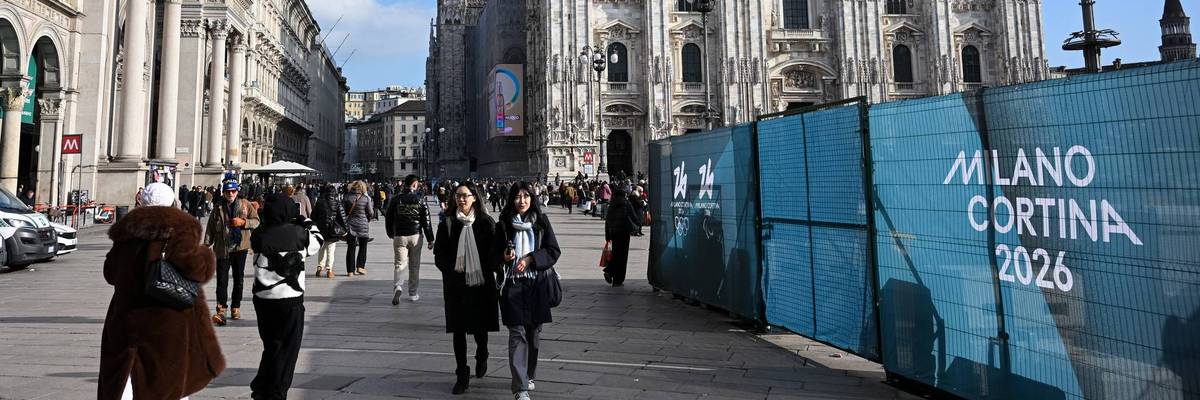
People walk past fences at Piazza Duomo ahead of the 2026 Olympic Games in Milan, Italy on January 26, 2026.
(Photo by Piero Cruciatti/AFP via Getty Images)

Julia Conley
Jan 27, 2026
COMMON DREAMS

The mayor of Milan, which is set to host the 2026 Winter Olympics starting February 6, was not convinced Tuesday by assurances that US immigration officials fulfilling security duties at the games will only be providing protections for top US officials.

US Immigration and Customs Enforcement (ICE) agents, said Giuseppe Sala, “are not welcome in Milan, there’s no doubt about it.”
.


‘Moral and Political Debacle’: Right-Wing Media, CEOs Urge Trump to Stop Deadly ICE Crackdown


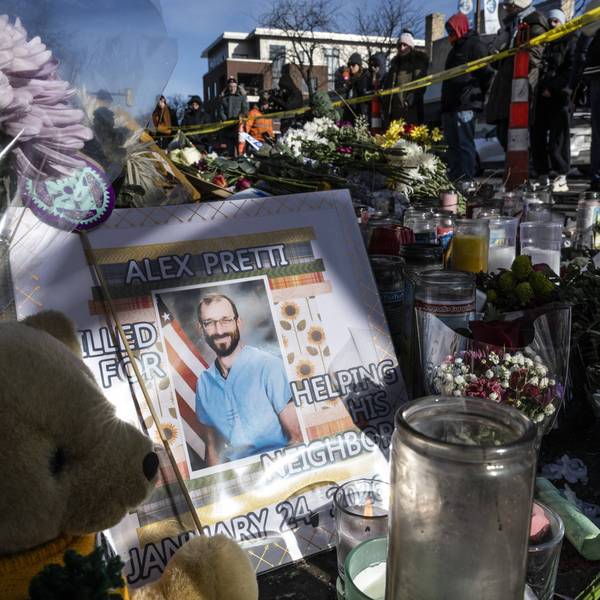
Sala’s comments came after the US Embassy in Rome confirmed an official statement from ICE saying that federal officers are scheduled to provide “diplomatic security” during the Milan Cortina games—days after US immigration agents fatally shot Alex Pretti, the third US citizen killed by employees of the Department of Homeland Security in less than four weeks.

ICE has also garnered international outrage with its detention of people without criminal records even as President Donald Trump’s administration continues to claim it is working to deport the “worst of the worst violent criminals,” and particularly its abduction of young children including 5-year-old Liam Ramos, 7-year-old Diana Crespo, and 2-year-old Chloe Renata Tipan Villacis.

Two Italian journalists were also threatened by ICE agents on Sunday while they were reporting on immigration enforcement in Minneapolis, with the officers telling them, “This is your only warning, if you keep following us, we will break your window and we will pull you out of the vehicle.” Filming and observing ICE agents, as long as one is not interfering with their operations, is a protected right under the US Constitution.

ICE told Al Jazeera that “obviously, ICE does not conduct immigration enforcement operations in foreign countries,” but Sala suggested that it was not entirely obvious that officers with the agency would not perpetrate violence at the Olympics.

Officers with ICE, he told RTL 102.5 radio, “don’t guarantee they’re aligned with our democratic security management methods.”

“This is a militia that kills,” he added. “Can’t we just say no to Trump for once?”

ICE told Agence France-Presse that ICE’s Homeland Security Investigations (HSI) department will be “supporting the US Department of State’s Diplomatic Security Service and host nation to vet and mitigate risks from transnational criminal organisations.”

“All security operations remain under Italian authority,” said the agency.

If mitigating risks is the goal, said Alessandro Zan, a member of European Party representing Italy’s Democratic Party, “it’s paradoxical to entrust it to those who are the first to commit crimes, operating with violence, and killing innocents in cold blood.”

“In Italy, we don’t want those who trample human rights and act outside any democratic control,” said Zan. “It’s unacceptable to think that an agency of this kind could have a role, whatever it may be, in our country.”

HSI typically investigates “the illegal movement of people, goods, money, contraband, weapons, and sensitive technology into, out of, and through the United States,” according to its website.

The Associated Press reported that HSI is among the federal agencies that have helped provide security for US officials at previous Olympic games.

In Milan, the US delegation attending the February 6 opening ceremony will be led by Vice President JD Vance, along with Second Lady Usha Vance and Secretary of State Marco Rubio.

Sala told RTL that the city “can take care of their security ourselves. We don’t need ICE.”

Renew Europe, a centrist group within European Parliament, added that it is “not acceptable” for ICE officers to be welcomed in Milan as the agency carries out a violent immigration crackdown across the US.


The Green and Left Alliance (AVS) and Azione, two Italian opposition parties that counter the right-wing government, have started petitions calling on officials to bar any agents with ICE from involvement with security operations at the Milan Cortina games.

La Repubblica reported that the Italian government considered blocking ICE from attending the games as part of the security detail, but declined to do so.

Prime Minister Giorgia Meloni, said Zan, “should clearly state what is happening and provide guarantees that Trump’s political police will not set foot in our country.”


Italians furious as ICE agents sent to Milan's Olympic Games: 'A militia that kills'

Nicole Charky-Chami
January 27, 2026 
RAW STORY


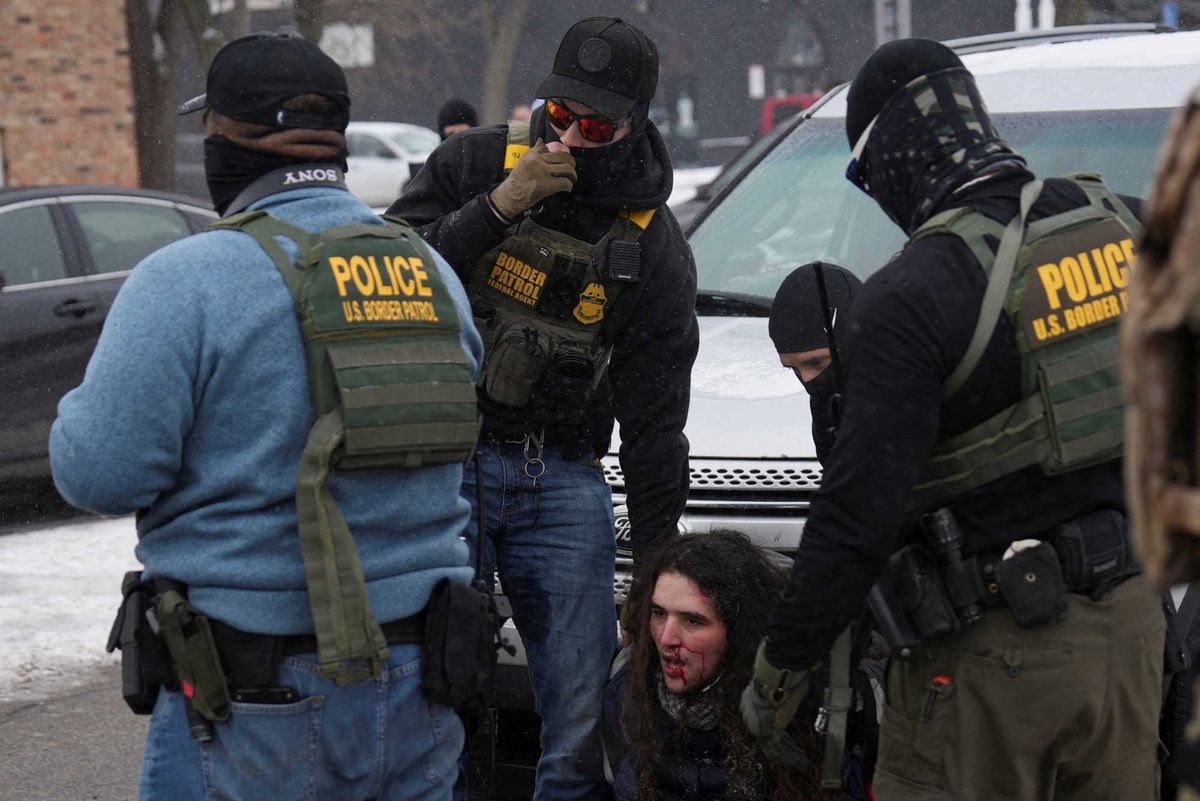
Federal agents detain a resident as immigration enforcement continues after an ICE agent fatally shot Renee Nicole Good on January 7 during an immigration raid, in Minneapolis, Minnesota on Jan. 21, 2026. REUTERS/Leah Millis


Italians were angry Tuesday after news that the US was sending ICE agents to the Winter Olympics in Italy.

The announcement reportedly set off confusion after the Department of Homeland Security confirmed that the unit was heading to Europe to apparently work as "a security role" for the US delegation at the international event, a DHS spokesperson confirmed with CNN.

“They don’t do immigration enforcement (operations) in a foreign country obviously,” the spokesperson said.

DHS spokesperson Tricia McLaughlin told CNN that “All security operations remain under Italian authority.”

“At the Olympics, ICE’s Homeland Security Investigations is supporting the U.S. Department of State’s Diplomatic Security Service and host nation to vet and mitigate risks from transnational criminal organizations,” McLaughlin said in a statement to CNN.

The move set off outrage among Italians, citing major concern among the Europeans who have watched ICE attack and kill US citizens, including the most recent fatal shootings of Alex Pretti and Renee Good in Minneapolis.

Milan Mayor Giuseppe Sala said he would not welcome ICE in his city, which is set to host the opening ceremony on Feb. 6, according to The Associated Press. Vice President JD Vance was expected to attend the event in Milan, where most of the ice sports will be.

“This is a militia that kills, a militia that enters into the homes of people, signing their own permission slips. It is clear they are not welcome in Milan, without a doubt,” Sala told RTL Radio 102.


Anger as branch of ICE to help with security at Winter Olympics

By AFP
January 27, 2026


The news that a branch of US Immigration and Customs Enforcement (ICE) will help with security at the upcoming Winter Olympics has sparked an angry reaction - Copyright AFP ROBERTO SCHMIDT


Alice RITCHIE

A branch of the US Immigration and Customs Enforcement (ICE) will help with security for the Winter Olympics in Italy, it confirmed Tuesday, sparking anger and warnings they were not welcome.

Reports had been circulating for days that the agency embroiled in an often brutal immigration crackdown in the United States could be involved in US security measures for the February 6-22 Games in northern Italy.

In a statement to AFP, ICE said: “At the Olympics, ICE’s Homeland Security Investigations (HSI) is supporting the US Department of State’s Diplomatic Security Service and host nation to vet and mitigate risks from transnational criminal organisations.

“All security operations remain under Italian authority.”

The State Department said that the HSI has in the past taken part in other Olympics events.

“As in previous Olympic events, multiple federal agencies are supporting the Diplomatic Security Service, including Homeland Security Investigations, ICE’s investigative component,” a State Department spokesperson said.

“For the Olympics, the United States is preparing an operations room at its consulate in Milan where representatives from U.S. agencies potentially interested in the event will be present,” Italian Interior Minister Matteo Piantedosi said in a statement after a meeting with the US ambassador in Rome.

“Experts from the Department of Homeland Security will also be in this same room,” he added.

According to Piantedosi, these experts are present “in more than 50 countries and have been in Italy for years as well,” emphasising that “security operations within the country are the sole responsibility of the Italian authorities”.

Piantedosi specified that approximately 6,000 law enforcement personnel would be deployed, along with the use of drones and other aerial surveillance equipment, to ensure security at the Games.

According to the ICE website, the HSI investigates global threats, including the illegal movement of people, goods, money, contraband, weapons and sensitive technology into, out of, and through the United States.

ICE made clear its operations in Italy were separate from the domestic immigration crackdown, which is being carried out by the Enforcement and Removal Operations (ERO) department.

“Obviously, ICE does not conduct immigration enforcement operations in foreign countries,” it said.

– Vance and Rubio in Milan –


The protection of US citizens during Olympic Games overseas is led by the State Department’s Diplomatic Security Service (DSS).

Yet the outrage over ICE immigration operations in the United States is shared among many in Italy, following the deaths of two civilians during an immigration crackdown in Minneapolis.

The leftist mayor of Milan, which is hosting several Olympic events, said ICE was “not welcome”.

“This is a militia that kills. It’s clear that they are not welcome in Milan, there’s no doubt about it, Giuseppe Sala told RTL 102.5 radio.

“Can’t we just say no to (US President Donald) Trump for once?”

Alessandro Zan, a member of the European Parliament for the centre-left Democratic Party, condemned it as “unacceptable”.

“In Italy, we don’t want those who trample on human rights and act outside of any democratic control,” he wrote on X.

Italian authorities initially denied the presence of ICE and then sought to downplay any role, suggesting they would help only in security for the US delegation.

US Vice President JD Vance and Secretary of State Marco Rubio are attending the opening ceremony in Milan on February 6.

Giovanni Malago, president of the Milan-Cortina organising committee, said he believed ICE agents would be present “for the high-ranking US government officials” and have “nothing to do with the Games’ security aspects”.

“It’s not about the Olympics, but about individuals,” he said.

The International Olympic Committee, when contacted by AFP, replied that “security at the Olympic Games is the responsibility of the authorities of the host country, who work closely with the participating delegations”.

“We kindly refer you to the USOPC (the United States Olympic and Paralympic Committee)”, it said.

US Judge Orders ICE Chief To Appear Personally In Court, Warns Of Contempt

Judge Schiltz said Lyons’ personal appearance was necessary to explain the lapses and outline steps to ensure future compliance.


Outlook News Desk
Curated by: Jinit Parmar
Updated on: 27 January 2026 


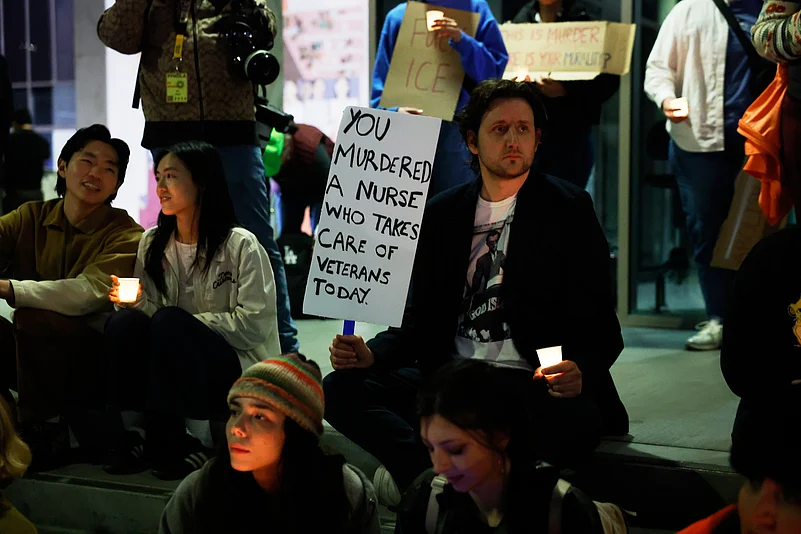
Demonstrator holds a sign during a candlelight vigil during a protest in response to the fatal shooting of 37-year-old Alex Pretti in Minneapolis earlier in the day Saturday, Jan. 24, 2026, in Los Angeles. (AP Photo/Caroline Brehman)

Summary of this article

A US federal judge in Minnesota ordered ICE acting chief Todd Lyons to appear personally in court over repeated failures to comply with court orders.

Chief Judge Patrick J. Schiltz called the move extraordinary and warned that continued non-compliance could lead to contempt proceedings.

The order reflects increased judicial scrutiny of ICE’s adherence to legal and court-mandated obligations.

Minnesota’s chief federal judge has ordered the acting head of US Immigration and Customs Enforcement (ICE), Todd Lyons, to appear personally in court on Friday, citing repeated failures by the agency to comply with court orders.

Chief Judge Patrick J. Schiltz said the directive was an “extraordinary step,” but added that “the extent of ICE violations of court orders is likewise extraordinary.” The judge warned that continued non-compliance could lead to contempt proceedings.

According to the order, the court has issued multiple directives to ICE in recent cases that were either ignored or inadequately addressed, prompting judicial concern over the agency’s adherence to legal obligations. Judge Schiltz said Lyons’ personal appearance was necessary to explain the lapses and outline steps to ensure future compliance.

Federal immigration officers shot and killed a 37-year-old intensive care nurse during an operation in Minneapolis on Saturday, triggering clashes between protesters and authorities and prompting the deployment of the Minnesota National Guard, according to AP and state officials.

Family members identified the man as Alex Pretti, an intensive care unit nurse at a VA hospital, who they said was deeply upset by President Donald Trump’s immigration crackdown and had protested against it in his city. The shooting took place on January 24, 2026, in a neighbourhood already on edge after another fatal immigration-related shooting earlier this month.

According to AP, hundreds of people gathered at the scene after the shooting, confronting federal immigration officers who responded with batons and flash bangs. The Minnesota National Guard was activated on the orders of Governor Tim Walz and deployed to both the site of the shooting and a nearby federal building that has been the focus of daily protests.

Details of what led up to the shooting remained limited. Minneapolis Police Chief Brian O’Hara said authorities were still piecing together the events. In a statement, Department of Homeland Security spokesperson Tricia McLaughlin said federal officers fired “defensive shots” after a man with a handgun approached them and “violently resisted” when they attempted to disarm him.
Health threat of global plastics projected to soar

By AFP
January 26, 2026


The world's addiction to plastic is a 'global public health crisis', a researcher warned - Copyright AFP/File Angelos TZORTZINIS


Daniel Lawler

The threat posed by plastic production, usage and disposal to human health will skyrocket in the coming years unless the world does something to address this global crisis, researchers warned Tuesday.

A British-French team of researchers attempted to cover all the different ways that plastic affects health, from oil and gas extraction during production to all the products that end up in landfills.

However they said that their modelling study still does not take into account an array of other ways plastic could harm health, such as microplastics or chemicals that can leach out of food packaging.

“This is undoubtedly a vast underestimate of the total human health impacts,” lead study author Megan Deeney of the London School of Hygiene & Tropical Medicine told AFP.

The study, published in The Lancet Planetary Health, said it was the first to estimate the number of healthy years of life lost due to the lifecycle of plastic worldwide.

The researchers used a measure called DALYs, which represents the number of years lost to either early death or diminished quality of life from illness.

Under a business-as-usual scenario, the number of DALYs caused by plastic was projected to more than double from 2.1 million in 2016 to 4.5 million in 2040.

Planet-heating greenhouse gas emissions from plastic production had the biggest health impact, followed by air pollution and toxic chemicals.

– ‘Public health crisis’ –

Deeney gave the example of a plastic water bottle.

Like more than 90 percent of all plastic, its production begins with the extraction of oil and gas.

A series of chemical processes then transform those fossil fuels into Polyethylene terephthalate — or PET — which the bottle is made from.

Deeney pointed out that a stretch of more than 200 petrochemical plants involved in plastic production in the US state of Louisiana is known as “cancer alley”.

Once made, the plastic bottle is transported across the world to a shop.

Then it gets chucked in the rubbish — or littered.

Despite recycling efforts, most plastic ends up in landfills where it can take centuries to decompose, leaching out chemicals during that time, Deeney said.

The researchers also modelled a scenario where the world tried harder to fight the health effects of plastic.

They found that plastic recycling made little difference.

The most effective measure was reducing the amount of “unnecessary” plastic created in the first place, Deeney said.

Talks to seal a world-first treaty to fight plastic pollution fell apart in August under opposition from oil-producing countries.

However Deeney emphasised that countries can still act at a national level to address this “global public health crisis”.


How to assess microplastics in our bodies? Scientists have a plan

By AFP
January 27, 2026


Scientists have been battling over exactly how much microplastics we have inside us - Copyright AFP/File LOUISA GOULIAMAKI


Daniel Lawler

How many tiny pieces of plastic are currently inside your body?

A series of headline-grabbing studies in the last few years have claimed to have found microplastics throughout human bodies — inside blood, organs and even brains.

However, some of this research — particularly one claiming to have found a plastic spoon’s worth of microplastic in the brains of cadavers — has recently come under stinging criticism from scientists.

Some have warned that the studies could not rule out contamination from plastic inside laboratories, or that certain techniques could be confusing human tissue with plastic.

Seeking a solution to this escalating dispute, 30 scientists from 20 research institutions across the world proposed a new framework on Tuesday for evaluating microplastic research.

The proposal, inspired by how forensic science weighs evidence found at crime scenes, offers researchers a consistent way to communicate how confident they are that microplastic has actually been detected.

No one disputes that these mostly invisible pieces of plastic are ubiquitous throughout the environment — they have been found everywhere from the tops of mountains to the bottom of oceans.

It is also “very likely” that we are regularly ingesting microplastics from air and food, Imperial College London researcher Leon Barron told AFP.

But there is simply not enough evidence yet to say whether they are bad for our health, added the senior author of the new proposal.

– Inside our brains? –

Microplastics — and even smaller nanoplastics — are very difficult to detect.

Yet some research in this new and rapidly expanding field has claimed to have found particles in “less-plausible” areas of the human body, Barron explained.

For example, a study published in Nature Medicine early last year announced it had detected relatively large particles — the researchers claimed it was a plastic spoon’s worth — inside the brains of recently deceased people.

Some scientists were sceptical because this would require the particles to cross the powerful defences of the blood-brain barrier.

Experts have also pointed out that the technique used in the research, which is called pyrolysis-GC-MS, can confuse fat with polyethylene, which is commonly used in plastic packaging. This technique was also used in several other criticised studies.

Matthew Campen, the senior author of the brain study, did not respond to AFP’s request for comment.

Other research has been disparaged for not using proper quality-control measures.

Without these measures, “it is impossible to know whether detected plastics originate from the tissue itself or from containers, chemicals, laboratory equipment or plastic particles present in the air,” researcher DuÅ¡an Materić told AFP.

This would mean the results are “simply not scientific”, said the expert at Helmholtz Centre for Environmental Research in Germany.

– Inspired by forensic science –

The new framework proposal, published in the journal Environment & Health, calls for researchers to use several different techniques when looking for microplastics to rule out any potential false positives.

Barron compared the proposal to a framework once agreed among forensic scientists about how to evaluate fibres found in clothes during a criminal investigation.

The idea is to bring “all of the different labs doing this type of work into an aligned language” that expresses how confident they are that they detected microplastic, he said.

The idea is already “starting to gain momentum”, he added.

The proposal requires scientists and journal articles to be transparent about their research, release all the raw data and include quality-control measures.

“To be clear, microplastics are a problem,” Barron emphasised.

All the research conducted thus far has been carried out in good faith, he said, adding that these are relatively normal growing pains for a new scientific field.

But precision is important — to determine whether microplastics are harmful for our health, researchers need to know just how much of them is in our bodies.

If the ongoing scientific debate “derails that effort to try and understand if they’re bad for us, that’s not helpful”, he said.

“Scientists trashing each other in the media is not constructive.”