Saturday, May 31, 2025

Online disgrace


DAWN
Editorial 
Published May 30, 2025


WE live in times of instant humiliation. In a toxic online setting, civility is a tall order and anyone is fair game. The threat of being disgraced lurks with impunity. A cyber harassment horror has been unfolding since last month in Kasur where 55 men and women were arrested from what the police say was an ‘illegal’ rave party. Their videos were recorded in a local police station and published on social media. Among them was a female influencer who will now grapple with lifelong shame because her video went viral. Although five officers have been suspended for the odious crime, the scandal should jolt the administration, forcing a rapid review of internet security protocols.

The digital sphere is, shockingly, being used by some in law enforcement to not only exploit young and underprivileged people, but also to exhibit their own ‘achievements’ for public adulation. A violation of Article 14 of the Constitution, which stipulates that an individual’s dignity is “inviolable”, the abhorrent practice is rampant in Punjab thanks to the absence of a vigilant online reporting system. The danger then is that perpetrators, despite clear guidelines — the Punjab police rules forbid officers from recording videos that reveal the identity of suspects and under-trials — will continue their hunt unless the government commits to investing in cybersecurity with a cyber-patrolling squad, training for appropriate and prompt response and above all, weeding out the rogue elements in the police force. While an ever-evolving web is a challenge to guard, shaming people online can turn into a life sentence as the presence of such videos haunts victims even after acquittals. The government must shift its focus from internet surveillance to ensuring morally upright LEAs, effective implementation of laws and justice for victims of cybercrime. Unchecked repulsive behaviour triggers remorse, anger and a bullying-victim cycle, thereby producing more offenders. The lack of accountability means that common citizens will continue to suffer.

Published in Dawn, May 30th, 2025
PAKISTAN

Development challenges


Published May 30, 2025 
DAWN
The writer is a former health minister and currently a professor of health systems & population health at the Shifa Tameer-i-Millat University.


DURING the watershed events of early May, Pakistan has once again proved what it is capable of. The repercussions amount to redefining the balance of power in the region and the world.

It was a demonstration of strategic excellence, immaculate coordination, and an iron resolve. Now we need another national Operation Bunyanum Marsoos to address our pathetic human development situation.

What do we mean by human development? The proxy metric for human development is the Human Development Index (HDI). The HDI was created to emphasise that people and their capabilities should be the ultimate criteria for assessing the development of a country, not economic growth alone. It is a composite index measuring average achievement in three basic dimensions of human development — a long and healthy life, knowledge, and a decent standard of living.

The calculation of a healthy life is life expectancy at birth; its knowledge dimension is measured as expected years of schooling and mean years of schooling; and its standard of living is expressed in gross national income per capita or GNI per capita. All three components have their own indices as well ie life expectancy index; education index; and GNI index.

Human development is the most critical dimension of national security.

The HDI is the geometric mean of normalised indices of each of the three dimensions. Human Development Report (HDR) Office is part of the United Nations Development Programme and produces annual thematic reports on human development, and also calculates HDI for nearly 190 countries and territories in the world. HDR was initiated in 1990, and we have national, regional and global trends available since then.

Ironically, the idea of HDI was developed by Dr Mahbub ul Haq, a brilliant Pakistani economist whom The Economist called “one of the visionaries of international development”. He was Pakistan’s finance minister in 1985-86 and then again in 1988. He would be remembered for three things: pointing out that 22 industrial family groups dominate the economic and financial life-cycle of Pakistan; five-year development planning; and developing HDI while he was serving as a special adviser to UNDP.

Let us look at the human development situation in Pakistan. For the purposes of this column, I have looked at Pakistan’s HDI over the last 10 years. Sadly, Pakistan’s HDI ranking has been declining since 2015. We ranked at 147 in 2015 and according to the latest report this year, we have plummeted to 168, a fall of 21 notches in 10 years. This is abysmal, but are we surprised? Let us go down the notches and observe our plummet up close.


Current life expectancy in Pakistan is 67.6 years. More than 140 countries have a higher life expectancy than us. An average Pakistani lives 17.9 years less than a citizen of Hong Kong, who has the highest life expectancy, 85.5 years. An average Pakistani’s lifespan is almost 10 years less than a Sri Lankan, Iranian, or Chinese citizen, and seven years less than a Bangladeshi. We live shorter, and qualitatively worse lives.


Expected years of schooling ie number of years of schooling that a child of school entrance age can expect to receive in Pakistan is 7.9 years and mean years of schooling is only 4.3 years. Out of 193 countries, 167 countries in the world do better than Pakistan on both accounts. We have more than 25 million school-age children out of school, which is roughly 36 per cent of all Pakistani children.

In nominal terms this is the second largest population of children in the world in any country, after Nigeria. Seventy-four per cent of these children are in rural areas. Seventy-seven per cent of our children cannot read two sentences in any language. As for those attending school, according to a survey, 45pc of students in fifth grade cannot solve simple, second grade maths questions.


Pakistan’s population growth rate (2.5pc) is more than its economic growth rate (2.4pc). Low levels of social development, high inflation and stark inequality of income result in poverty. Around 100m people in Pakistan live in income poverty. HDI considers poverty from a multidimensional perspective rather than solely monetary poverty, which is the proportion of the population that is multi-dimensionally poor, adjusted by the intensity of various deprivations. According to the multidimensional poverty index, 38.9pc of Pakistan’s population is poor. Our gender gap index is also one of the poorest in the world.

The abysmal description of human development above puts Pakistan, along with Afghanistan, in a group of countries with “low human development”. Almost all other countries in this group are from sub-Saharan Africa.

If we can be the first Muslim nuclear country and have one of the best air forces in the world, we can also take good care of our stunted children,


Human development is the most critical dimension of national security. We have grown to think of security only in traditional terms of borders, military, and arsenal. A great contribution was made by Dr Moeed Yousuf, as national security adviser by giving Pakistan its first National Security Policy which broadens the concept of security to human security. “The policy links the security of Pakistan with the economic and social well-being of its people.”

The first step towards achieving economic and social well-being of people would be to bring political stability to the country. The supremacy of the Constitution, rule of law, good governance and democratic conduct are essential conditions for sustainable human development. Last year’s Nobel prize was shared by three economists, Daron Acemoglu, Simon Johnson, and James Robinson, for demonstrating why some nations are rich and others are poor through their research.

The laureates explained: countries that developed “inclusive institutions” — which uphold the rule of law and property rights — have over time become prosperous, while those that developed “extractive institutions” — which “squeeze” resources from the wider population to benefit their elite — have experienced persistently low economic growth.

In order to move up the HDI ladder, all stakeholders in Pakistan have to be on the same page for our national development priorities.

If we can be the first Muslim nuclear country and have one of the best air forces in the world, we can also take good care of our stunted children, anaemic mothers, those out of school and those struggling to come out of poverty.

Published in Dawn, May 30th, 2025
SPACE/COSMOS
Astronomers scrutinise a star behaving unlike any other


Reuters Published May 30, 2025 

The location (circled) of a star residing near the edge of a supernova remnant situated 15,000 light-years from Earth, that cycles in radio wave intensity every 44 minutes, placing it into the category of celestial objects called long period radio transients, is seen in this image released on May 28. — Reuters


WASHINGTON: Astronomers have spotted a star acting unlike any other ever observed as it unleashes a curious combination of radio waves and X-rays, pegging it as an exotic member of a class of celestial objects first identified only three years ago.

It is located in the Milky Way galaxy about 15,000 light-years from Earth in the direction of the constellation Scutum, flashing every 44 minutes in both radio waves and X-ray emissions. A light-year is the distance light travels in a year, 5.9 trillion miles (9.5 trillion km).

The researchers said it belongs to a class of objects called “long-period radio transients,” known for bright bursts of radio waves that appear every few minutes to several hours. This is much longer than the rapid pulses in radio waves typically detected from pulsars — a type of speedily rotating neutron star, the dense collapsed core of a massive star after its death.

Pulsars appear, as viewed from Earth, to be blinking on and off on timescales of milliseconds to seconds. “What these objects are and how they generate their unusual signals remain a mystery,” said astronomer Ziteng Wang of Curtin University in Australia, lead author of the study published this week in the journal Nature.

In the new study, the researchers used data from Nasa’s orbiting Chandra X-ray Observatory, the ASKAP telescope in Australia and other telescopes. While the emission of radio waves from the newly identified object is similar to the approximately 10 other known examples of this class, it is the only one sending out X-rays, according to astrophysicist and study co-author Nanda Rea of the Institute of Space Sciences in Barcelona.

The researchers have some hypotheses about the nature of this star. They said it may be a magnetar, a spinning neutron star with an extreme magnetic field, or perhaps a white dwarf, a highly compact stellar ember, with a close and quick orbit around a small companion star in what is called a binary system.

“However, neither of them could explain all observational features we saw,” Wang said. Stars with up to eight times the mass of our sun appear destined to end up as a white dwarf. They eventually burn up all the hydrogen they use as fuel. Gravity then causes them to collapse and blow off their outer layers in a “red giant” stage, eventually leaving behind a compact core roughly the diameter of Earth — the white dwarf.

The observed radio waves potentially could have been generated by the interaction between the white dwarf and the hypothesised companion star, the researchers said.

“The radio brightness of the object varies a lot. We saw no radio emission from the object before November 2023. And in February 2024, we saw it became extremely bright. Fewer than 30 objects in the sky have ever reached such brightness in radio waves. Remarkably, at the same time, we also detected X-ray pulses from the object. We can still detect it in radio, but much fainter,” Wang said. Wang said it is thrilling to see a new type of behavior for stars.

“The X-ray detection came from Nasa’s Chandra space telescope. That part was a lucky break. The telescope was actually pointing at something else, but just happened to catch the source during its ‘crazy’ bright phase.

Published in Dawn, May 30th, 2025
US visa hell

rafia.zakaria@gmail.com
May 31, 2025
DAWN

The writer is an attorney teaching constitutional law and political philosophy.


THIS week, the Trump administration imposed an abrupt pause on visa interviews for international students wanting to study in the US.

The move comes at a crucial time since the hundreds of thousands of international students that have been accepted to degree programmes in America are currently applying for visas so that they may begin their studies in September. Now their prospects appear grim if not completely doomed.

Central to the Trump administration’s war on international students is the idea that the latter cohort should not have any anti-American views, such as support for Palestine. The requirement for visa applicants to turn in their social media handles was put in place during the first Trump administration and was continued during Joe Biden’s presidency.

This policy is going to be expanded and the pause in interviews is being attributed to the administration’s move to scrutinise applicants more closely. President Donald Trump wants international students who “can love our country. We don’t want to see shopping centres exploding”.

The move was legally challenged in 2019. In 2023, the Knight First Amendment Institute, an American think tank at Columbia University obtained government documents showing that the policy was ineffective. However, such assessments are not likely to stop the administration. Secretary of State Marco Rubio recently announced that the US would “aggressively revoke visas for Chinese students”, including for those who had links with the Chinese Communist Party or those working in “critical fields”.

This means tens of thousands of Chinese students working in tech and engineering fields could lose their visas and be sent back to China. Over 270,000 Chinese students study in the US. The targeting of Chinese students was met with opposition by China, particularly since it negates US efforts to de-escalate tensions with Beijing following the tariffs that President Trump imposed, and then later reduced, recently.

In the long term, the damage will be to America itself.

In the meantime, US consulates all around the world have been instructed to halt visa interviews for J, M and F applicants. The student visa stoppage could have a considerable impact on the US economy. Figures show that in 2023-2024, international students contributed about $44 billion to the American economy and created thousands of jobs.

None of this seems to affect the Trump administration, however. Statements by President Trump, particularly in relation to his ongoing enmity with Harvard University, suggest that he does not like foreign students studying at Ivy League campuses. Trump’s battle with Harvard, which refused to accede to his demands to allow scrutiny of its admission policies, hit an obstacle last weekend when a federal judge pulled the plug on the government’s bid to stop the university from enrolling foreign students

President Trump has criticised the fact that over a quarter of Harvard’s student body is made up of foreign students; he wants more American students. These sorts of statements are part of an effort to appease his anti-intellectual support base that sees elite institutions like Harvard as sidelining natural-born Americans in favour of foreign students.

Meanwhile, the US healthcare system relies on foreign medical graduates in its residency programmes. In exchange for training and a basic strategy, these foreign medical graduates provide relatively low-cost labour to keep the US healthcare system going. The pause in granting these visas means that when medical tra­ining begins this year, tho­usands of spots will be un­­fil­led be­­cause trainee doctors wou­ld not have been able to obtain their visas. This less-discussed aspect of the pause in visa interviews and grants is likely to have a huge impact on the US healthcare sector, unless it is halted.

Not only do such moves spell doom for the careers of doctors and students who thought they were headed to the US, they are also going to destroy America’s reputation as a meritocratic haven for research and educational achievement. In the short term, these moves will only impact the unlucky ones whose visas are still in the pipeline. In the long term, however, the damage will be to America itself.

The banishment of so many students and researchers will mean that the US will lose its edge in the very fight over technology and research advancement that it is seeking to win.

America, once a haven for progressive intellectual achievement and innovation, has, within the space of a few grim months of the Trump administration, been transformed into a right-wing fortress of narrow-minded, morally bankrupt and retrogressive ideas.


Published in Dawn, May 31st, 2025
PAKISTAN

Massive irregularities detected in Gwadar water projects

Saleem Shahid 
Published May 31, 2025
DAWN


QUETTA: The Public Accounts Com­mittee (PAC) of the Balochistan Assembly has detected massive financial irregularities while reviewing the audit findings related to the Public Health Engineering (PHE) Department and key infrastructure projects.

Chairman Asghar Ali Tareen, while presiding over the PAC meeting, uncovered un­­accounted expenditures, violations of procurement laws, and delayed mega projects.

The meeting was attended by committee members engineers Zamrak Khan Achak­zai, Zabid Ali Reki, Ghulam Dostgir Badini, Fazal Qadir Mandokhail, PHE Secretary Imran Gichki, DG Audit Balochistan Shuja Ali, Additional Accountant General Hafiz Noorul Haq, PAC Additional Secretary Siraj Lahri, Director Audit Dr Faiz Muhammad Jaffar, and Chief Accounts Officer Syed Idris. Opposition Leader Younis Aziz Zehri and Maulana Hidayatur Rahman were invited as special guests.

During the meeting, the DG audit presented a special audit report conducted in November 2022 covering the financial years from 2018 to 2021 for the PHE department, Gwadar.

The report revealed that the department incurred expenses exceeding Rs5.9 billion, however, significant amounts remained unaccounted for in official records, raising serious transparency concerns.

Audit shows over Rs5.9bn in unaccounted-for expenses between 2018 and 2021

It further disclosed that no income tax deductions were made on payments totaling nearly Rs240m, which were disbursed without legal deductions.

Work worth approximately Rs4.9bn was awarded to various companies without tenders, violating procurement laws. The audit also pointed to irregularities worth over Rs380m in schemes for water supply during drought conditions.

Irregularities were also found in the procurement of fuel, oil, lubricants, and repair materials. The executive engineer in Gwadar made multi-crore purchases from different companies without proper documentation, leading the committee to classify these expenditures as suspicious.

The members of the committee expressed strong reservations and demanded inquiry proceedings against responsible officers for failing to provide complete records.

Mr Tareen emphasised in his address that safeguarding public funds is a top priority and warned that anyone found misusing national resources would not be spared. He assured that while an opportunity for explanation would be given, strict action would follow if irregularities were confirmed.

Maulana Hidayatur Rahman, speaking on the occasion, criticised the Gwadar water project expenditures, stating billions had been spent but honest utilisation could have ensured water availability from Singapore by ship.

In his remarks, Fazal Qadir Mandokhail suggested referring the matter to the National Accountability Bureau (NAB), though other members advocated for full fact-finding before the chairman exercises his authority.

The meeting also reviewed the audit report of the Mangi Dam project, which was due to be completed in June 2022 but faced extraordinary delays and a 42 per cent cost overrun. The initial estimated cost of Rs7bn has now crossed to over Rs18bn. The audit attributed these issues to consultant inefficiency and poor planning, with key aspects ignored in the initial PC-1 document and recurring revision needs.

The DG audit reported that the department had not yet submitted any progress report on the project, drawing strong condemnation from the committee. PAC Chairman Tareen described this as an example of extreme institutional failure, pointing out that despite such a major project, public still live without access to clean drinking water.

He announced plans to personally visit the Mangi Dam site with committee members for on-ground assessment.

The project director informed the meeting that completion was possible by December 2025 if the required funds were released promptly. Mr Tareen decided to write to the Balochistan chief secretary to expedite fund release and warned of another special audit if the project fails to complete on time.

Further disclosures included that over 1.43 million litres of diesel were used to supply water to Gwadar, with fuel distributed to tankers without proper record keeping or storage details in logbooks, violating procurement rules.

The chairman stated that the committee would not only expose financial corruption but also initiate strict legal action to restore public trust in Balochistan’s governance.

Published in Dawn, May 31st, 2025

THE INDUS WATERR TREATY
 (IWT)

‘Cold Start’ for collaboration
aisha@csccc.org.pk
Published May 31, 2025 
DAWN


The writer is the chief executive of Civil Society Coalition for Climate Change.

THE Indus Waters Treaty (IWT) is the subject of many ongoing discussions these days. A variety of opinions are being shared by people looking at the treaty through different lens.

However, the most important question remains whether India has the capacity to use water as a weapon of war against Pakistan. This at once gives a new dimension to the treaty, requiring a perspective that is not merely legal but also political, with many layers of complexities.

The IWT is not merely a treaty between an upper and lower riparian country. It is a treaty between two states that have gone to war many times previously, with no sign of any long-term cessation in hostilities. The IWT can be re-examined, taking into account the changes that have taken place since 1960 when it was signed. This includes both climatic factors and changes in the political landscape.

Climate change has already reduced the snow mass by 30 per cent in the upper Indus basin lar­g­e­­ly due to the depletion of wetlands, urbanisation, and glacier melt. This trend is likely to increase, ca­­using a reduction in flow and a decrease in water availability as well as making water more contentious.

The political landscape has undergone a massive change after Indian Prime Minister Narendra Modi’s 2016 statement that water and blood cannot flow together.

Any discussion on the IWT will remain incomplete and unrealistic if it does not factor the above-mentioned points into the calculus. This also means that if both are not addressed simultaneously, water will remain a live threat looming over the fate of the region. The nuclear red line offers retaliatory action but is not a solution to the problem.


India’s plans for the Chenab are a matter of deep concern for Pakistan.

While accelerated melting and concomitant reductions in flows due to global warming are not within the management capacity of the two countries, both can, in the interest of peace, collaborate on issues related to water and security.

On the political front, the currently volatile situation is unsustainable, making water a source of continued regional tension. Having a single basin, a single river and being a lower riparian to a hostile upper riparian, Pakistan has reservations about discussing the treaty as it might derail the current arrangement without adding additional safeguards.

While the concern is legitimate, the country can propose a conversation that is built on the principles of ensuring sustainable flows and equitable water-sharing.

Supplementary protocols within the existing treaty and under the jurisdictional purview of the IWT commissioners can address issues like the permissible cumulative capacity for live storage, environmental flows, demographic changes, telemetric information-sharing, and most importantly, the environmental impact assessment (EIA) of planned infrastructure as part of the discussion agenda.

After 2019, India has given an EIA exemption to all infrastructure being built within 100 kilometres of the LoC. While technical studies rule out the possibility of earthquakes getting triggered by the construction of dams in this highly seismic geography, it does not exclude the possibility of dams collapsing and causing massive losses to downstream communities.

Pakistan does not face any serious threat on the Jhelum River from India. Most people in India-occupied Kashmir have shifted from agriculture to horticulture which does not require large quantities of water. Moreover, diverting water in a mountainous territory for the construction of canals and tunnels is not easy. With its current capacity, India could delay the release of water by 16 to 24 hours at best. Beyond that, it risks flooding the whole area including big towns like Jammu.

However, India’s plans for the Chenab are a matter of deep concern for Pakistan. India started plans in 2016 to develop the capacity to weaponise water. This is being done by building capacity purely for storage to withhold water. These projects on the Chenab are not designed as hydroelectric projects but as military structures to use water as a weapon of war.

A discussion on the treaty will allow Pakistan to address issues that were not a concern in 1960 but which now pose an existential threat to the country. However, none of this will be possible without lowering tensions and improving the overall environment for a conducive conversation.

The 2022 Pakistan National Security Policy made a statement of intent to prioritise geo-economics, but circumstantial roadblocks prevented the agenda from moving forward.

Regional water security will hang in the balance till we untie the Gordian knot. This can be done by decoupling politics from other issues or reaching a collaborative arrangement on climate. Both nations need to take a cue from countries that are separating politics from the economy and moving forward with a new paradigm.

After 78 years of conflict, Pakistan and India need to realise that climate change is a bigger enemy and poses a greater threat to their survival. All contentious issues will become irrelevant in the face of the existential threat that confronts us.

We have a ‘Cold Start’ for conflict, but what we need is a ‘Cold Start’ for collaboration to be better prepared for a rapid response to combat the forces of nature.

The IWT will come under increasing pressure if political issues are not addressed. The treaty stood the test of time for 65 years because climate imp­acts had not become so threatening and political tensions had not mounted to the current incendiary levels. It is time for both countries to shift from a ‘Mutually Assured Destruction’ (MAD) to a ’Mu­­tually Assured Survival Strategy (MASS). Passion in politics is a poisonous recipe for South Asia and its two billion inhabitants. It is time to pause, reflect and think about the future pragmatically.

Published in Dawn, May 31st, 2025


Pakistan won’t allow India to cross IWT red line, PM Shehbaz tells int’l glaciers conference

APP | Dawn.com
Published May 30, 2025 

Prime Minister Shehbaz Sharif addresses the International Conference on Glaciers’ Preservation in Dushanbe on May 30. — PID

Prime Minister Shehbaz Sharif on Friday, rejecting the weaponisation of water, warned that Pakistan would not allow India to cross the red line by holding the Indus Waters Treaty in abeyance and endangering millions of lives for narrow political gains.

Delhi suspended its participation in the Indus Waters Treaty (IWT) of 1960, which governs the usage of the Indus river system, shortly after 26 civilians in India-held Kashmir were killed in what India called an act of terror.

Pakistan has denied involvement in the incident, but accord remains “in abeyance” by India despite the two nuclear-armed neighbours agreeing to a ceasefire this month following the worst fighting between them in decades.

After the April 22 attack, Indian Prime Minister Narendra Modi ordered officials to expedite planning and execution of projects on the Chenab, Jhelum and Indus rivers, three bodies of water in the Indus system that are designated primarily for Pakistan’s use, six people told Reuters.

The three-day International Conference on Glaciers’ Preservation is being held in Tajikistan’s capital Dushanbe from May 29-31.

It is being attended by over 2,500 delegates from 80 UN member states and 70 international organisations, including prime ministers, vice presidents, ministers, and UN assistant secretaries-general.

The event is being hosted by the Tajikistan government in collaboration with the United Nations, UNESCO, WMO, the Asian Development Bank, and other key partners as a historic moment for climate ambition, glacier preservation, and international cooperation.

“India’s unilateral and illegal decision to hold in abeyance the Indus Waters Treaty, which governs the sharing of the Indus Basin’s water, is deeply regrettable,” PM Shehbaz said while addressing the conference.

“Millions of lives must not be held hostage to narrow political gains, and Pakistan will not allow this. We will never allow the red line to be crossed,” he said.

During his address, PM Shehbaz touched upon all relevant issues, including glacial preservation, Pakistan’s climate vulnerability, the 2022 floods in Pakistan, global climate action and responsibility, scientific projections on glacial melt, weaponisation of water and call to protect nature and humanity’s shared destiny.

“The world today bears fresh scars from the use of conventional weapons in Gaza that have left deep wounds. As if that were not enough, we are now witnessing an alarming new low—the weaponisation of water,” PM Shehbaz observed.

He added that Pakistan, being home to over 13,000 glaciers, was the most concerning as glaciers contributed nearly half of the annual flows in the Indus river system — “the lifeline of our civilisation, culture and economy”.

“The five great rivers that shape our geographical landscape—Indus, Jhelum, Chenab, Ravi, and Sutlej—all depend on the stability of glacial systems. This makes Pakistan one of the most vulnerable countries to any climatic changes that impact glaciers,” he continued.

He told the gathering that Pakistan had faced the peril of glacial melt in the form of devastating floods in 2022 that destroyed millions of acres of standing crops, thousands of houses as well as infrastructure — despite the country contributing only less than half a per cent of the total world’s emissions and yet being one of the 10 most vulnerable countries.

He prayed that no other country faced such devastation, which necessitated a comprehensive plan and immediate implementation.

Referring to the “sobering” scientific projections, he highlighted that glacial melt in the country’s region was expected to accelerate flooding in the coming decades, followed by a drastic decline in river flows as glaciers recede further.

“These changes threaten our fragile ecosystem. As we inch closer to these grim new realities, we must heed the alarm bells, deflection signs of haunting consequences—lost livelihoods, displaced families, and deep chaos,” he warned.

Highlighting Pakistan’s commitment to shared responsibility and collective action, he called for enhanced global climate action to mitigate the negative impacts of climate change.

“The developed countries must meet their climate financial commitments without any delay and with a balanced focus on adaptation and mitigation as well as loss and damage.

“Adequate funding for climate resilience, infrastructure, and overcoming financing gaps remains critical for climate-vulnerable countries,” the prime minister emphasised.

“Investment must be made in early warning systems and disaster preparedness and management.”

PM Shehbaz reflected on his childhood memories of swimming in the Ravi river, underscoring how rivers like Ravi and Tajikistan’s Vakhsh river, fed by glaciers, sustained life across regions, and that the shared water sources symbolised a common ecological destiny, requiring collective efforts for their preservation.

“Let us protect and preserve nature’s precious bounties for our planet and our peoples,” he urged.

The prime minister is currently returning to Pakistan after capping off his four-nation tour of friendly countries, state-run PTV News reported.


Earlier this week, the PM and his delegation, including Chief of Army Staff (COAS) Field Marshal Asim Munir, visited Turkiye, Iran and Azerbaijan, expressing gratitude for their support during a recent military escalation with India.

On Wednesday, the PM took part in a trilateral summit with Turkiye and Azerbaijan. He reiterated Pakistan’s willingness to hold talks with India on the Kashmir dispute and counterterrorism, stressing New Delhi wanted the same “in all sincerity”.


ANTHROPOLGY OF COLONIALISM


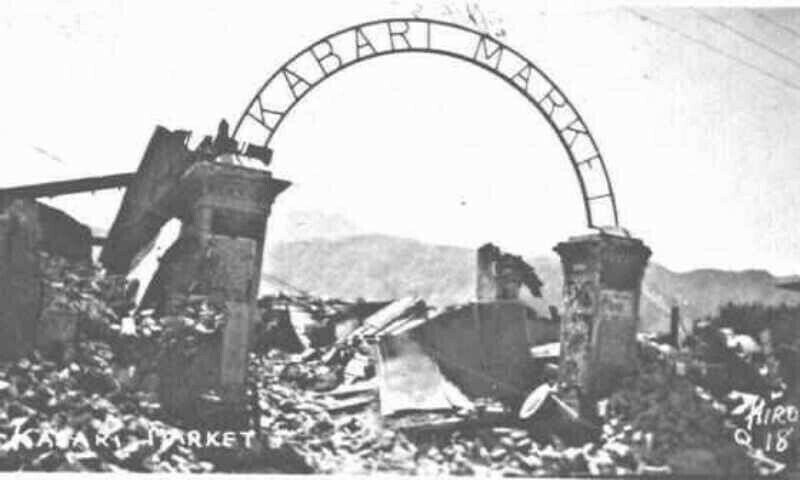
Quetta, 1935: Empire, earthquake, and the limits of control


Research on the 1935 Quetta earthquake is shockingly limited, where anthropologists and historians can study colonial policies and particularly as they stand with reconstruction efforts following the disaster.


Saeed Husain 
Published May 31, 2025 
PRISM/DAWN

In the 1930s, the British Raj summered in Quetta. While day temperatures could reach the blistering highs of the plains, nights in Quetta were far cooler than what the lowlands of the Indian Subcontinent offered. Given the lakes, mountains, and serenity of the area, Quetta’s population swelled in the summer months, adding thousands more people compared to those who generally resided in the city.

Over time, Quetta had been established as one of a string of garrison towns along the future Durand Line dividing Afghan territories with the plains and other towns including Razmak, Peshawar, Dir, and Chitral.

After the death of Ranjit Singh in 1839, which had kept Punjab and Ranjit’s Sikh army as a buffer between the Afghans and the British, the colonists aimed to find a new layer of protection. This was also after the events of the first Anglo-Afghan War in 1839, where, after the British captured Kandahar and Ghazni, they later installed Shah Shuja in Kabul.

Shah Shuja’s tyranny and the Afghans’ displeasure at having foreign invaders and a puppet ruler being installed, rebelled incessantly and by 1843, any British they could find in their territories was slaughtered.


Photo from the book ‘Thirty Seconds at Quetta’ by Robert Jackson.

Soon, the Balochistan Agency was established in 1877 following the “Sandemanisation” of Balochistan, in which tribal chiefs were given patronage by the British. At the same time, Russian influence was growing in Afghanistan and in 1878, the British launched the second Anglo-Afghan War and once again occupied Kabul. The second success of the British was even more short-lived, however, since in September 1879, the British envoy was killed in Kabul, and an even larger number of British forces had to be sent to the city. By 1880, Abdur Rehman Khan became Emir of Afghanistan, and the Durand Line was drawn in 1893. The last British troops had left Afghanistan by April 1881.

An Afghanistan that the British could not quite control placed Quetta and the line of garrison towns that dotted the Durand Line at increased importance as the years went by. Quetta would later become the home of the Royal Air Force’s No. 31 Squadron, becoming one of the first military units to fly in British India. During the Third Anglo-Afghan War (May-August 1919), No. 31 Squadron RAF conducted raids in Jalalabad and, for the next decade, would be involved in military operations suppressing any insurgencies in the region.

It was through this military lens that the British primarily saw Quetta.


When the earth trembled

When the earthquake on May 31 struck a few minutes after 3am, [how do we know this so precisely? Pictures and text from government accounts of the earthquake show that the clock at the Central Post Office was stuck at 3:03am] the city of Quetta had been flattened in a mere 45 seconds. Quetta Cantonment in the north-east of the city suffered far less.


A seismograph at Selfridge’s in London registers the violent earth tremors 4,000 miles away. — photo from the book ‘Thirty Seconds at Quetta’ by Robert Jackson.

Even in the design of the city — much like the city today — the Cantonment featured wide streets. The main municipality of Quetta, however, was not only its most populous area, but also had narrow streets and houses made with mud or bricks with poor mortar. When the earthquake struck, not only could people not leave their homes since it was so early in the morning, but the narrowness of the streets meant that even if one were to miraculously dig themselves out of the rubble, navigating outside of it was impossible.

At around 3:30am, Lieutenant General Sir Henry Karslake, witnessing the city from the Cantonment, could see multiple large fires that had erupted across the landscape.

Writing 18 months after the disaster in the ‘Report on The Quetta Earthquake of 31st May 1935’, Captain LAG Pinney, who was serving as the additional political agent, Quetta, listed eight “major problems” at dawn when first light appeared.

Some of the major problems, which rose at daybreak on the morning of May 31, can be summarised as follows:The subordinate civil officials and the Quetta Police Force had been practically wiped out and were not available for any of their usual functions
The most pressing need of all was the rescue of those in the city who were buried under the débris and were still alive
Communication with the outside world had to be established - All the houses of the civilian population had been destroyed, and as food supplies were cut off, immediate shelter, food and medical attention had to be provided.
The water supply had to be assured
The ingress of people into Quetta had to be stopped, as the rations at the disposal of the Military were limited in quantity
Arrangements had to be made to evacuate all survivors, particularly those who were injured, and to provide them with food and clothing for their journey
The prevention of looting by irresponsible people in the city or by tribesmen

For the first point, the Pinney Report states that Karslake, as General Officer Commanding (GOC), gave control of his command to the Agent to the Governor General (and Chief Commissioner of Balochistan) Sir Norman Carter.

Carter and Karslake then decided that since the civilian administration and the police force had been completely decimated by the earthquake, martial law had to be imposed on Quetta immediately. Karslake then began rescue efforts, carving the city into units to expedite recovery efforts, while also imposing complete martial law over the city.

As news of the earthquake reached other cities in the morning, several people asked to help in relief efforts. Miraculously, the railway link between Quetta and the rest of British India was still operational, which not only meant that survivors could quickly be taken out of the city, but aid workers could come in to rescue those who were trapped in the rubble.


The remains of a shop with first-floor living quarters. Most shops were destroyed. — photo from the book ‘Thirty Seconds at Quetta’ by Robert Jackson.

As the list in the Pinney Report shows, while rescuing survivors was one priority that emerged, Karslake and Pinney also decided to have a cordon of British troops patrolling the perimeter and streets of Quetta. Pinney wrote, “Those troops who were not required for rescue work were put on duty round the city and on patrol work in the city to prevent any untoward events, and to deal with the various outbreaks of fire which occurred.”
The controversies

Official British accounts mention repeatedly that a cordon was thrown around the city because of a fear of looting from Pashtun and Brahui tribesmen. While Quetta today is predominantly a Pashtun city, Quetta in 1935 was home to a large Punjabi population, which had settled there following the Sandeman Plan. As The Times of India reported on June 17, 1935, the largest number of refugees out of Quetta were coming back to their hometowns in Dera Ghazi Khan, Lahore, Amritsar, Gujranwala, Multan, Rawalpindi and Ludhiana.

Workers and entrepreneurs had gone to Quetta not only for its climate, but also for work, the remittances of which they would send back to their hometowns. The Government of Punjab had to send in police and medical staff to aid in evacuation efforts and tend to refugee camps, the largest of which were at Quetta’s Racecourse and Polo Ground.

Photo from the book ‘Thirty Seconds at Quetta’ by Robert Jackson.

Meanwhile, rumours were also rife, in which it seems that word had gotten out that the city would be “sealed” or that it would be completely levelled with dynamite. According to The New York Times, Indian leaders protested against any measures by the British to completely destroy the city, and referred to survivors from the Bihar Earthquake of 1934 being found even after a week of the earthquake.

However, while this was later touted to be a confusion or a rumour, a cable to The New York Times on June 3, 1935, four days after the earthquake, came with the headline, “Quake-Ruined City Will be Abandoned” where a communique by the British government in Delhi not only wrote that the city has been sealed under military guard on medical advice, but also, “it is estimated that 20,000 corpses remain beneath the debris. There is no hope of rescuing more of the living”.

As we also see in the June 3 news report, the British Raj had quoted 20,000 people dead with 10,000 survivors — later government reports would show that 30,000 people died. The same New York Times article mentions that those survivors reaching Karachi claimed that the number of dead was much higher. On June 5, the number of dead had reached 56,000 according to an Associated Press wire. However, officially still on June 17, the Under-Secretary of the India Office, Richard Butler (later Deputy Prime Minister of the UK), placed the death toll at 40,000.

Photo from the book ‘Thirty Seconds at Quetta’ by Robert Jackson.

However, the greatest controversy that emerged from the time was still the matter of not allowing anyone else to enter the city. Karslake and Carter argued that there were not enough provisions, that outsiders would start looting, and that ultimately that an epidemic could arise from the sheer amount of dead bodies that were rotting inside the rubble and outside on the streets.

Efforts were underway to properly bury the bodies, and a pamphlet issued by the Raj in August 1935 titled “The Quetta Earthquake 1935” noted how, on the first day, 18,000 pounds of firewood was supplied for cremating the Hindus that had died.

The same report from August 1935 attempted to respond criticism that volunteers were not allowed to enter the city, in which while it accepted that the first 48 hours are the most critical in rescue work, it stated that “the first application from any political organisation for permission to carry on relief work was made several days after the earthquake”. Why was permission needed? The British had imposed martial law in the area and would not allow any outsiders to come in unless approved prior. The report does not mention which political organisation made the request, though newspaper articles mention that Mahatma Gandhi, with his Congress Party, had been stopped from entering the area.

Calls for inquiry

Controversy over the conduct of British troops reached a head in September 1935, when Kumaraswami Raju moved a resolution in the Legislative Assembly, where “a committee consisting of officials and non-officials be forthwith appointed to investigate the report as to whether the situation arising out of the recent earthquake in British Baluchistan, and particularly in the town of Quetta, was properly handled, particularly with regard to the search for the rescue of the living, wounded and buried, salvage of property and transference of the wounded and injured to places outside the affected area”.

Sir Abdullah Haroon was in support of the motion, and spoke on how the authorities had not only not taken the help of the honorary magistrates in Quetta, but that anyone who opposed the martial law was removed. Lalchand Navalrai then quoted a telegram from Sir Norman Carter, who had refused him permission to enter Quetta on June 3 and also refused the excavation of a building of his relative. Additionally, he spoke about how “trainloads of people left Karachi for Quetta on May 31, but they were held up at Sibi”. Lastly, quoting the opinion of “a Dewan Bahadur in Quetta”, Carter had been willing to allow volunteers in, but the military authority denied these requests.

Bhulabhai Desai, who had drafted the resolution, said that the motion “contained no charge and no insinuation” against the Raj, and speakers in the assembly were all in agreement that the army had done an incredible feat in what it had accomplished in saving human lives. However, it was a practice of the government to conduct inquiries after calamities such as famine to use as a reference in the future. Desai then read from a report (not mentioned which one) where rescue work was abandoned on June 2, and when the Mayor of Karachi (Qazi Khuda Buksh) had offered volunteers, the military had replied, “We are able to cope with all work.”


Photo from the book ‘Thirty Seconds at Quetta’ by Robert Jackson.

British authorities, however, felt that the resolution was unfairly putting blame on the Raj, and even Indian leaders debated against an inquiry. Sir Cowasjee Jehangir was quoted as saying that “he had never had the misfortune to hear a more atrocious speech” and that the resolution “contained malicious insinuations against the British and Indian troops and the speaker would be no party to it”. Dr Ziauddin Ahmed also explained how it would be difficult for anyone to be alive after three days of lying under debris.

Sir Zafarullah Khan, in his speech, said that the “governments are not prepared to agree to an inquiry” but were ready for the appointment of a committee to assist authorities in the salvage of property (which became the Quetta Claims Committee) and the resettlement of the civilian population.

Congress’ resolution for the formation of a committee by the Legislative Assembly was lost by 4 votes on September 21, a day after debates. Officially, 30,000 people died in Quetta; unofficially, 60,000 perished. No. 31 Squadron RAF moved to Karachi at RAF Drigh Road, today PAF Base Faisal.

Research on the Quetta earthquake of 1935 has remained shockingly limited, where anthropologists and historians can study colonial policies and particularly as they stand with reconstruction efforts following the disaster. The Directorate of Archives Balochistan has a treasure trove of reconstruction documents and has also republished the Pinney Report, which it has available for sale. Images of the earthquake surface not only on eBay auctions, but also from the children of survivors and troops who were involved in rescue efforts.


Photo taken of documents at the Directorate of Archives Balochistan.

Daniel Haines at University College London has written on the lens through which tensions emerged between the Raj and South Asians following the earthquake.

A recent monograph titled ‘Acts of Aid: Politics of Relief and Reconstruction in the 1934 Bihar–Nepal Earthquake’ by Eleonor Marcussen shows that archival work on natural disasters in South Asia during the British Raj might find some pace. Marcussen analyses the role of the British Raj and civil society in rebuilding their lives following the 8.0-magnitude earthquake, which killed 7,000 people in Bihar alone, and nearly 12,000 in its total destruction.

While 60,000 people died, the 1935 Quetta earthquake is remembered as a footnote in colonial records — a logistical challenge that was overcome by the Raj rather than a human catastrophe. As we see from the lack of an independent inquiry, its memory remains fragmented, and its survivors’ voices largely absent from the official record.

Header image: The aftermath of the disastrous earthquake that shook Quetta in 1935. — photo from X/Zia Khan

The author is Managing Editor of Folio Books. He holds an MPhil in Social Anthropological Research from the University of Cambridge.


CRIMINAL CAPITALI$M

Busted: 'We Buy Ugly Houses' franchise owner to plead guilty in $40 million fraud scheme


Photo by Breno Assis on Unsplash
May 31, 2025 |

The former operator of one of the largest HomeVestors of America franchises has agreed to plead guilty to federal wire fraud in connection with a sprawling Ponzi scheme targeting people who believed they were investing in his real estate empire.


Federal prosecutors in Texas identified 80 victims defrauded of nearly $40 million by Charles Carrier since 2018. Though Carrier agreed to plead guilty to only one count of felony wire fraud involving one $200,000 transfer, he admitted to the broader scheme as part of the deal and agreed to pay restitution — the amount of which has yet to be determined.

The charge also carries a maximum 20-year prison sentence and the possibility of millions of dollars in fines. A federal judge will decide the sentence.

Carrier owned Dallas-based C&C Residential Properties, one of the most successful franchises in the HomeVestors chain, which is known for its “We Buy Ugly Houses” slogan. HomeVestors terminated Carrier’s franchise in October 2024, after receiving a tip that he had been defrauding investors. It has since sued him for infringing on the company’s assiduously protected trademark. Carrier has not yet responded to the lawsuit.

In a story published this month, ProPublica detailed how Carrier bilked millions of dollars from scores of investors across Texas, including both wealthy businesspeople and older adults of more modest means who depended on the investment income for daily expenses. According to new court documents, losses to individual investors range from $35,000 to $11.6 million. The plea agreement was filed in court two weeks after the article was published.

Carrier took loans from investors to finance his house-flipping business, initially using the money to buy and renovate older houses to sell for a profit. Carrier promised each loan would be secured by an ownership interest in a house and that he would pay 8%-10% interest in monthly installments over the course of the loan.

For many years, investors received reliable monthly payments. In 2018, however, Carrier started taking out multiple loans on individual properties, sometimes providing investors with deeds he never recorded and racking up debt far beyond the value of the houses, according to court documents. Carrier also admitted to forging signatures and notary stamps so he could sell properties without notifying the investors or paying off their notes, according to court documents. Carrier admitted to using investor money to “pay personal credit card balances, business operating expenses and interest obligations to earlier investors,” according to court documents.
Series Timeline


April 18, 2023


We sent HomeVestors of America questions about the findings of our reporting. Soon after, the CEO praised the reporting in a meeting with franchise owners but added that the company would “bury” the story once it was published.

May 11, 2023


Despite HomeVestors’ promise to hold its franchises to the highest ethical standards, we found some used deception and targeted the elderly, infirm and financially vulnerable while offering to buy their homes for far below market prices.

May 15, 2023


Five families discussed their experiences doing business with HomeVestors franchises, including a man who later died while waiting to be kicked out of his home. Some franchises had sued homeowners after they tried to unwind their deals.

June 13, 2023


The head of the Consumer Financial Protection Bureau cited ProPublica’s reporting before a U.S. Senate committee and called for more oversight of HomeVestors’ practices.

July 1, 2023


Despite HomeVestors’ efforts to “bury” ProPublica’s reporting, millions read the investigation and more than 40 media outlets featured our work, including The Washington Post, The Dallas Morning News and Apple News Today.

Aug. 1, 2023


Shortly after ProPublica asked for comment on reporting that showed a top HomeVestors franchise owner had stayed involved in operating the business despite a felony conviction, HomeVestors CEO David Hicks stepped down.

Jan. 24, 2024


HomeVestors continued to reform business practices in response to ProPublica’s reporting, including requiring franchises to provide homeowners considering selling to them with a disclosure that allows deals to be terminated within three days.

The fact that Carrier’s plea deal contains only a single charge left some victims even more angry.

“That’s ridiculous,” said Ron Carver, who lost $300,000 and whose father lost $200,000 before he died. “They will let him plead out and he might get a slap on the wrist.”

A spokesperson for the U.S. attorney’s office said they can’t comment on a pending case.

Carrier’s lawyer, Tom Pappas, said it wasn’t Carrier’s “intention to defraud anybody of their money.”

“Pretty much all of his money was put into his business to try and make it successful so investors would be successful,” Pappas said, adding that Carrier didn’t fund a lavish lifestyle. Without providing details, Pappas said changes in the real estate market “overtook” Carrier and “the thing just got away from him.”

Although Carrier agreed to plead to only one count, the entirety of the fraud identified by prosecutors will be considered by the judge during sentencing.

Pappas said Carrier is “committed to repaying every investor every dollar he can to make them whole.” Pappas said he expects the restitution will likely be “much lower” than the $40 million in losses identified by prosecutors, as the lawyers are wrangling over the value of the investors’ losses. In February, Carrier signed an asset liquidation agreement allowing prosecutors to oversee the sale of his remaining properties, with the proceeds going toward restitution.

Pappas said he expects Carrier will serve time in prison.

“Depending on the amount of the loss, there’s a strong possibility he may go to jail,” he said. “But again, we are doing everything we can to make everybody as whole as we can.”
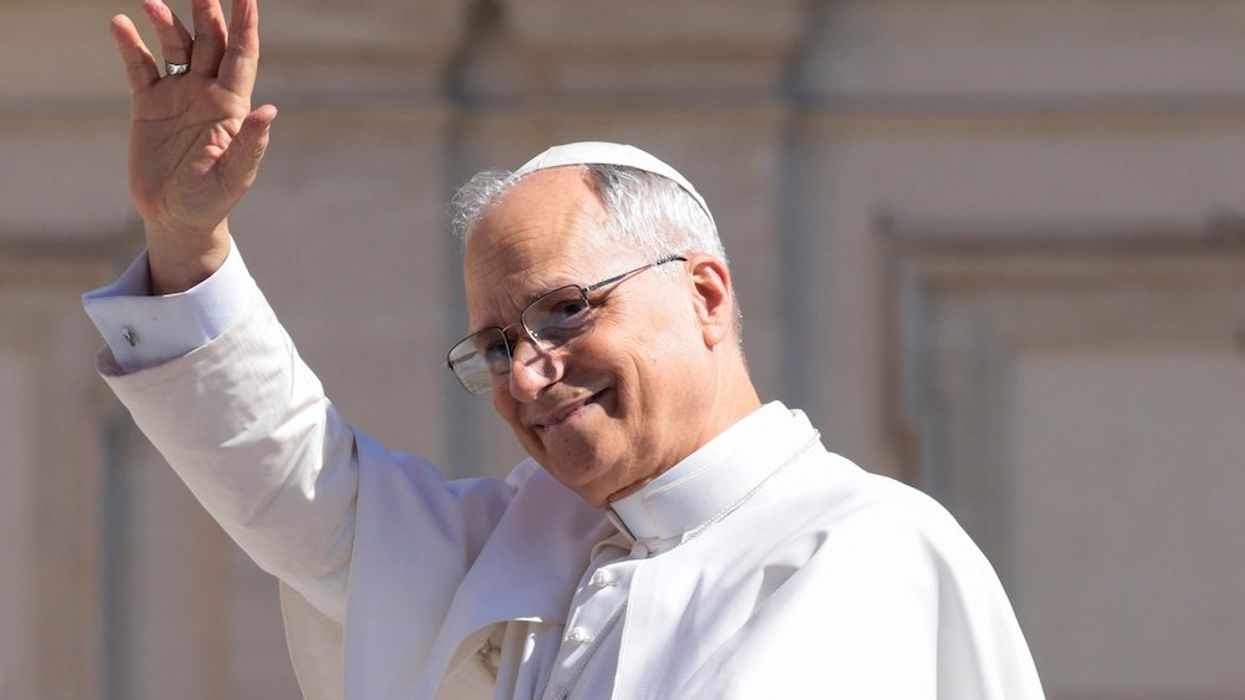
'Divine trolling': Pope schedules Chicago Youth Day mass on the same day as Trump's military parade


Pope Leo XIV waves on the day he holds a general audience in St. Peter's Square at the Vatican, May 28, 2025. REUTERS/Remo Casilli
May 30, 2025
ALTERNET

As President Donald Trump prepares to celebrate the Army's birthday with a military parade in Washington, D.C., on June 13, Pope Leo XIV will deliver a special message to young people from the heart of Chicago on the same day, ABC7 Chicago reported Thursday.

The large-scale celebration is set for Saturday, June 14 at Rate Field, home of the Chicago White Sox, where the pope will issue a video message. This marks the pope’s first public greeting to the city since his election earlier this month.

The event will include live music, film presentations, personal testimonies, and communal prayer.

A centerpiece of the gathering will be the premiere of a special video message from Pope Leo XIV addressed to the youth of the world. The Archdiocese of Chicago says the message will be unveiled during the celebration before being shared globally.

Cardinal Blase J. Cupich will preside over the Mass, and longtime Chicago Bulls announcer Chuck Swirsky will serve as master of ceremonies.

With major national and global attention focused on the day’s events, the pope’s appearance is expected to draw thousands to Chicago and mark a rare moment of spiritual focus amid a politically charged weekend.

June 14 also marks Trump’s birthday, and critics have accused him of organizing the military parade to coincide with his personal celebration.

In response to the announcement, social media users jokingly suggested that the pope is attempting to "upstage" Trump. Pope Leo's opposition to several of Trump's policies is well-documented.

An account bearing the pope’s name on social media frequently voiced criticism of the Trump administration — particularly targeting Vice President J.D. Vance — in the period leading up to his election to the papacy.

Journalist Ben Collins of The Onion wrote on the social platform Bluesky: "Pope actively counterprogramming Donald Trump's birthday parade on the same day. Some real WCW Nitro s---, I love it."

"The pope is upstaging Trump 😂 On June 14, while DJT's Soviet-style military parade is going on for his birthday, Leo XIV will speak directly to the global youth population in a video broadcast at a Mass in his honor at the White Sox ballpark in Chicago," wrote a user.

READ MORE: 'My show!' CNN host corners Stephen Miller in off-the-rails interview

"So…. Pope Leo XIV is going to have his first event on June 14th in Chicago. The same day as Trump’ stupid military parade. Pope Leo Divine Trolling?" said another user on BlueSky.
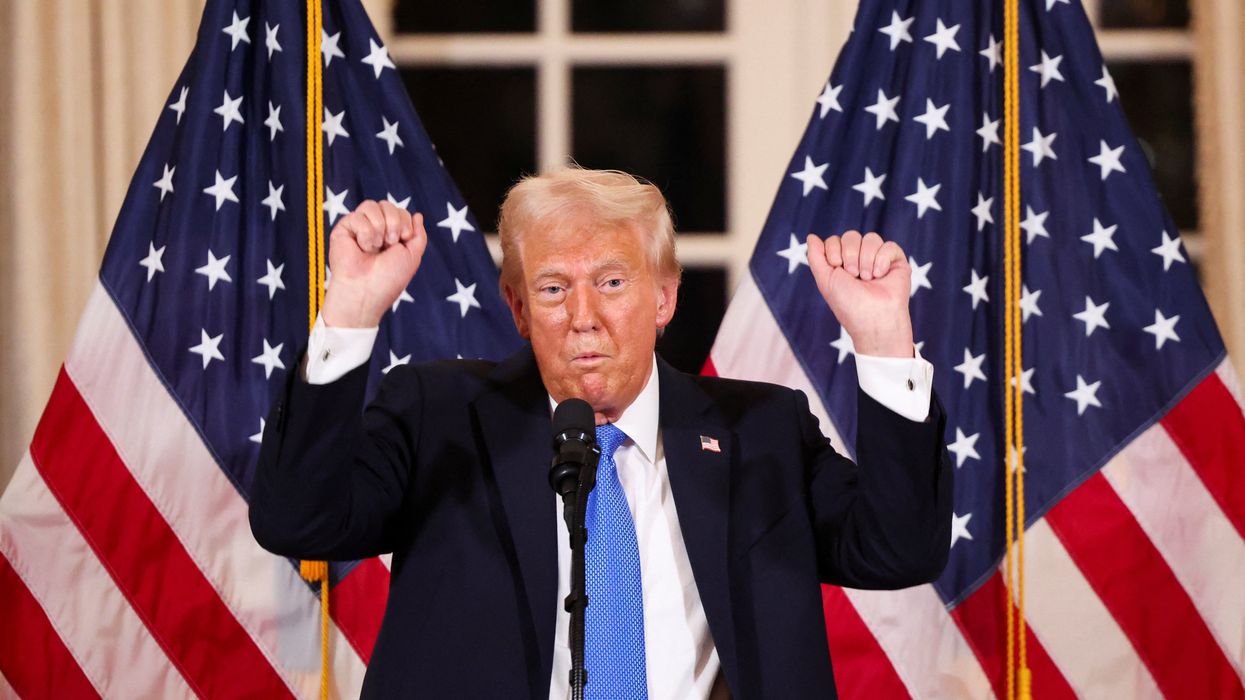
Trump doesn't just think of himself as the president


REUTERS/Kevin Lamarque

The Conversation
May 30, 2025 |

The American Revolution was a result of the tyranny experienced by colonists under the British monarchy. Many Americans had fled from Europe where they had been persecuted under the rule of powerful monarchs. The government produced by the revolution was designed to ensure no such tyranny could be reproduced in the newly formed United States.

The framers of the constitution created a checks-and-balances system of government to ensure that no single branch of the federal government (executive, judicial or legislative) could dominate the others. Each branch has powers to curtail or empower the others.

However, some Americans are concerned about a return of absolute rule due to the steps taken by Donald Trump’s second administration. This has sparked around 100 “no kings” protests all over the US, organised to coincide with Trump’s birthday on June 15.

Increasing presidential power


The second Trump administration has made a determined effort to strengthen presidential power and reduce oversight of the executive branch (the presidency). Achieving this could mean the president acting in an arbitrary manner similar to absolute monarchs of the past, free of congressional or judicial interference.

Trump’s “big beautiful bill”, which has been passed in the House of Representatives and now must go to the Senate, contains certain provisions that strengthen the role of the president and undermine the checks-and-balances system.

Previous presidents, such as Franklin D. Roosevelt during the New Deal era of the 1930s, had many of their executive orders cancelled by Supreme Court rulings. Over the last five months, the judiciary has ruled on the constitutionality of Trump’s executive actions, putting at least 180 on hold.

As a consequence, the president has continually questioned the validity of the courts to act. At last week’s West Point graduation ceremony, Trump claimed that last November’s election result “gives us the right to do what we wanna do to make our country great again”.

As Robert Reich, the former US secretary of labor, wrote recently, this “big beautiful bill” will remove the courts’ ability to hold executive officials in contempt and undermine any efforts to stop the administration. Supreme Court rulings could be ignored by the executive branch, and Congress would be unable to enforce its subpoenas and laws. “Trump will have crowned himself king,” Reich concluded.

Just like the judicial branch, the legislative branch (Congress) also has the ability to check the executive branch. Congress can override the presidential veto if both the House and Senate pass legislation with a two-thirds majority. And the executive branch (the president) cannot fund any initiatives without the budget being approved by Congress first.

But Trump and his supporters have minimised the impact that Congress can have on this particular bill by including all of the provisions within a budget reconciliation bill. This is a special legislative procedure that is designed to pass bills through Congress quickly.

Bills usually require 60 votes to bypass a filibuster – a tactic used by senators to delay voting on the bill by refusing to end the debate and speaking for exceptionally long times without a break.

But because this is a budget reconciliation, it only requires a majority – 51 votes – to pass the Senate. And because the Republicans have 53 seats in the Senate, Trump is confident the bill will pass without any Democratic interference.

The House narrowly passed the bill, despite some opposition from Republicans. And some Republican senators have also expressed concerns. But this is the latest move to centralise greater power within the presidency.

ABC NEWS: Trump makes the commencement speech at the West Point military academy.

Trump v the courts

Trump’s apparent belief that he is above the law has, in part, been supported by last year’s Supreme Court ruling which stated that former presidents had immunity from prosecution for official presidential acts. The Trump v United States decision decided such acts included command of the military, control of the executive branch, and execution of laws.

However, this week’s federal court ruling on the legality of Trump’s economic tariffs represents a setback to the administration’s efforts to strengthen presidential power. The Court of International Trade ruled that the White House’s use of emergency powers did not grant it the authority to impose tariffs on every country, and that the constitution states such power resides within Congress.

The Trump administration immediately said it would be appealing the decision. “It is not for unelected judges to decide how to properly address a national emergency,” Kush Desai, the White House deputy press secretary, said on the ruling, and that Trump would use “every lever of executive power” to “restore American greatness”.

All of which has led Trump to quote another authoritarian leader, Napoleon, on social media. His post – “He who saves his Country does not violate any Law” – was a clear rebuke to those who have tried to limit executive authority while he has been in office, and echoes that of former president Richard Nixon who, in an interview with David Frost about the Watergate scandal, argued that the constitution allowed the president to break the law.

This is an extension of the notion that Article II of the constitution has granted the president the authority to act without checks and balances when dealing with the executive branch. It is a theory much touted within Project 2025, believed to be the blueprint for the Trump presidency.

There are other historical comparisons that could be made of Trump’s authoritarian actions, such as the rule of Charles I of England (1625-49), who believed he could govern without consulting parliament except when he needed to raise taxes to conduct overseas campaigns. Ultimately, this led to a period of civil wars and the execution of the king for treason.

While none of these consequences are likely to be replicated, it is clear the US is currently in a constitutional crisis. The Supreme Court has a number of rulings to make on the judicial challenges to Trump’s executive authority. These will have generational consequences – but it is unclear in which way the court, where conservative judges have a 6-3 majority, will lean.

While Trump may not be seeking a crown for his head, he is certainly arguing that he has the right to control the executive branch in the way he sees fit, without any interference from Congress or the judiciary. This is not the separation of powers as prescribed by the framers of the US constitution, but more like the absolutism of medieval monarchs.

Dafydd Townley, Teaching Fellow in US politics and international security, University of Portsmouth

This article is republished from The Conversation under a Creative Commons license. Read the original article.


'Nothing can stop what is coming': MAGA staff fueling Trump's belief ‘he is a tool of God’


Adam Lynch
May 30, 2025
ALTERNET

Politico Magazine reporter Michael Kruse says President Donald Trump has always “seen himself as special, and he has always, of course, been notably self-aggrandizing,” but the president is now moving into a new phase.

“His rhetoric has gone from borderline nihilistic to messianic,” writes Kruse.

Many of Trump’s followers have described him as “chosen,” or “anointed,” or a “savior,” or “the second coming” or “the Christ for this age.” Only now Kruse says Trump is in on it and his “narcissism and grandiosity has metastasized into notions of omnipotence, invincibility and infallibility.”

READ MORE: No administration has ever been this corrupt – and you just can't look away anymore

And that matters, says Kruse, “because it offers a window into how he is approaching his second term — even more emboldened, even more unilaterally oriented, even more apparently uncheckable and untouchable than the first.”

“I run the country and the world,” Trump told The Atlantic last month.

“I have no reason to doubt that he would … prefer to believe he was saved [from assassination] by a supreme being because he himself is special rather than the would-be assassin was a lousy shot or he got lucky,” said former Trump consultant and publicist Alan Marcus to Kruse in an interview. “… His world is fantasy, scripted like a movie — not biblical unless, of course, that helps bring a particular scene or chapter to life.”


Marie Griffith, the director of the John C. Danforth Center on Religion and Politics tells Kruse it is likely a combination of “opportunism and genuine belief” driving the president’s evolving self-view, while author Stephen Mansfield (‘Choosing Donald Trump: God, Anger, Hope, and Why Christian Conservatives Supported Him’, 2018, by Baker Publishing) said Trump probably believes “he is a tool of God.”

And now, four months into his term, Kruse says “Trump is on a spree of a show of supremacy.”

“He’s pledged a ‘Golden Age.’ He’s punished Trump and MAGA unbelievers. He’s exacted or attempted to exact subservience and acquiescence from media execs and tech titans and major law firms and top universities and both chambers of Congress that he and his party control,” Kruse writes. “He’s tried to command the global economy and crack intractable issues of war and peace as if he were wielding a scepter over subjects far and wide.”

Kruse notes a point from journalist Ezra Klein that a big difference between Trump’s first and second terms is the willingness of his staff to buy into the belief, too. The first group was “perfectly comfortable thinking: President Donald Trump is very wrong about this. His judgment is bad. His impulses need to be foiled. We are the resistance inside the Trump administration,” said Klein. “In Trump 2.0 … there is both a sense that they’re there to serve him but also a sense there is something in Trump … that exists beyond argumentation,” Klein said.

One late Wednesday post from Trump on Truth Social features a meme of the president walking confidently down a dark city street.

“HE’S ON A MISSION FROM GOD,” read the words. “NOTHING CAN STOP WHAT IS COMING.”

“Does the president mean with the post of this meme,” Kruse says he asked White House communications director Steven Cheung, “that he’s literally on a mission from God?”

“As people of faith, we are all on missions from God,” Cheung responded. “The President has the biggest mission — to Make America Great Again and to help bring peace across the world. And he’s doing just that.”

Read the full Politico Magazine report here.


'Almost cartoonish': Expert says 'Trumpy style' of MAGA women about 'signaling allegiance'

BLOND WHITE WOMEN WITH CROSS JEWELRY

Attorney General Pam Bondi and White House Press Secretary Karoline Leavitt. (screengranb, Fox News)

May 30, 2025 
ALTERNET

Many fashion critics suggest that men and women aligned with President Donald Trump's ideology tend to embrace a distinct style.

In a report published Friday, the New York Times noted that Trump along with his close advisers and family members, plunged into the traditionally subdued world of government attire with a bold and unwavering aesthetic.

The fashion choices of key Make America Great Again (MAGA) figures: makeup, and even physical appearances have followed a clearly defined and attention-grabbing theme, the report notes.

If fashion serves as a form of expression, and politics is deeply rooted in messaging, then the emergence of a distinct "MAGA look" during Trump’s second term is a cultural shift worth paying attention to, the piece argues.

Vanessa Friedman, The Times’s fashion critic, weighed in on the MAGA world's style and fashion.

When asked by reporter Jess Bidgood what the "key elements of MAGA beauty" are, she said it "encompasses Mar-a-Lago face and conservative girl makeup — plays up classically feminine features to an almost cartoonish degree, thus underscoring a retrograde gendered paradigm."

"Think long, blow-dried, bouncy Breck girl hair; false eyelashes and lots of mascara; plumped lips; and, often, filler in the cheeks. Fashion is there to essentially reinforce that proposition. Hence the figure-hugging sheath dress and high heels," she added.

Friedman noted that during Trump’s first term, several fashion designers were vocal about refusing to style Melania Trump. However, in his second term, the fashion and beauty industry seems to be taking a more muted, hands-off approach — largely avoiding public statements and opting for neutrality.

Bidgood then asked, "There is an important distinction between the style we see in Trump’s world — his close aides, his social circle, the people who frequent Mar-a-Lago — and the style that his followers have embraced at Trump rallies or gatherings like CPAC, where people wear themed T-shirts or fake Trump hair. How do you think about those differences?"

"I think of it as the difference between dressing to be a member of a private club and dressing to be a member of the larger community. In both cases, however, it’s about belonging and signaling allegiance," Friedman responded.

When asked if the "Trumpy style" sends a political message, she said: "What’s so effective and powerful about these choices is that they serve as representations of many of Trump’s positions, be it the two-gender executive order or his relentless claim that he loves the country so much and is the only one who can make America great again."

"See something often enough, and it sinks into your subconscious without your even realizing it, and before you know it a Pavlovian call-and-response situation has been created in your lizard brain. Thinking a suit or a hairdo is simply about beauty or fashion is to miss the strategic role that image now plays in shaping opinion," Fiedman added.