Saturday, January 17, 2026

Trump Isn’t the First to Be Gifted a Nobel Prize He Didn’t Win—Joseph Goebbels Got One Too

In 1943, the Norwegian writer Knut Hamsun gave his Nobel Prize for Literature to the infamous Nazi criminal.
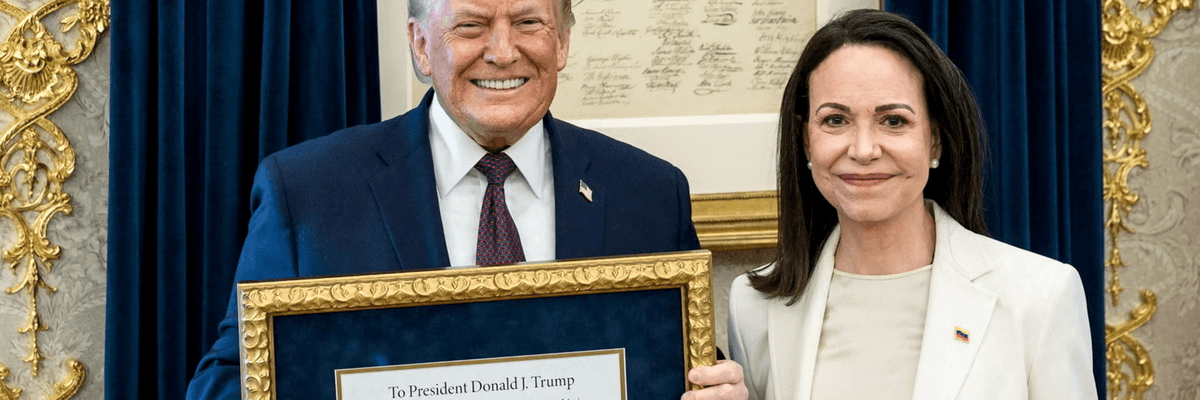


US President Donald Trump holds a framed Nobel Peace Prize medal given to him by Venezuelan opposition leader María Corina Machado—the actual 2025 winner—at the White House in Washington, DC on January 15, 2026.
(Photo by the White House)

Brett Wilkins
Jan 16, 2026
COMMON DREAMS

Venezuelan opposition leader María Corina Machado’s gifting of her 2025 Nobel Peace Prize to US President Donald Trump raised eyebrows around the world Friday—but it wasn’t the first time that the winner of the prestigious award gave it away.

Last month, the Norwegian Nobel Committee awarded the peace prize to the 58-year-old opposition leader “for her tireless work promoting democratic rights for the people of Venezuela and for her struggle to achieve a just and peaceful transition from dictatorship to democracy.”

Machado joined a notorious group of Nobel Peace laureates who either waged or advocated for war, as she backed Trump’s aggression against her country. This has included a massive troop deployment, military and CIA airstrikes, bombing of boats allegedly transporting drugs, and the abduction earlier this month of Venezuelan President Nicolás Maduro and his wife, Cilia Flores.

Trump has ordered the bombing of nine other countries during his two terms, more than any other president in history. US forces acting on his orders have killed thousands of civilians in Afghanistan, Iran, Iraq, Libya, Nigeria, Pakistan, Somalia, Syria, Venezuela, and Yemen. While running for president in 2016, Trump vowed to “bomb the shit out of” Islamic State militants and “take out their families,” and then followed through on his promise.

Despite being passed over by Trump for installation in any leadership role in Venezuela so far, Machado presented Trump with her framed Nobel medal along with a certificate of gratitude during a Thursday meeting at the White House. Trump subsequently posted on his Truth Social network that “María presented me with her Nobel Peace Prize for the work I have done. Such a wonderful gesture of mutual respect.”


That gesture prompted the Norwegian Nobel Committee to issue a statement noting that the prize cannot be given away.

“Even if the medal or diploma later comes into someone else’s possession, this does not alter who was awarded the Nobel Peace Prize,” the committee said. “A laureate cannot share the prize with others, nor transfer it once it has been announced. A Nobel Peace Prize can also never be revoked. The decision is final and applies for all time.”

The committee’s statement was extraordinary—but this is not the first time that a Nobel winner gave away their prize. In 1943, Norwegian author Knut Hamsun gifted his 1920 Nobel Prize for Literature—awarded for his novel Markens Grøde (Growth of the Soil)—to Nazi Propaganda Minister Joseph Goebbels after a trip to Germany. Other Nobel laureates have donated or sold their medals.

The progressive media outlet Occupy Democrats said on social media: “Clearly, the similarities between Trump and Goebbels extend beyond just a mutual admiration for fascism. Both men possess(ed) the kind of spiritually sick, egotistical temperament that allows one to accept a prize that someone else has earned.”

“Obviously, Donald Trump does not deserve the Nobel Peace Prize,” the outlet continued. “He has bombed Iran, Yemen, Nigeria, innocent fishing boats in the Caribbean, Venezuela, and is in the process of turning the United States into a war zone. That said, Machado doesn’t deserve it either.”

“Anyone spineless enough to surrender the prize to an evil man like Trump in the hopes of obtaining power is not someone we should be celebrating,” Occupy Democrats added.

Last month, Wikileaks founder and multiple Nobel Peace Prize nominee Julian Assange sued the Nobel Foundation—the Swedish organization that manages administration of the approximately $1.2 million-per-winner prize—in a bid to prevent Machado from receiving the money.

Machado’s win also sparked protests outside the Norwegian Nobel Institute in Oslo.


Can a Nobel Prize be gifted or sold? Some have done it in the past

Copyright AP Photo

By Aleksandar Brezar
Published on 16/01/2026 
EURONEWS

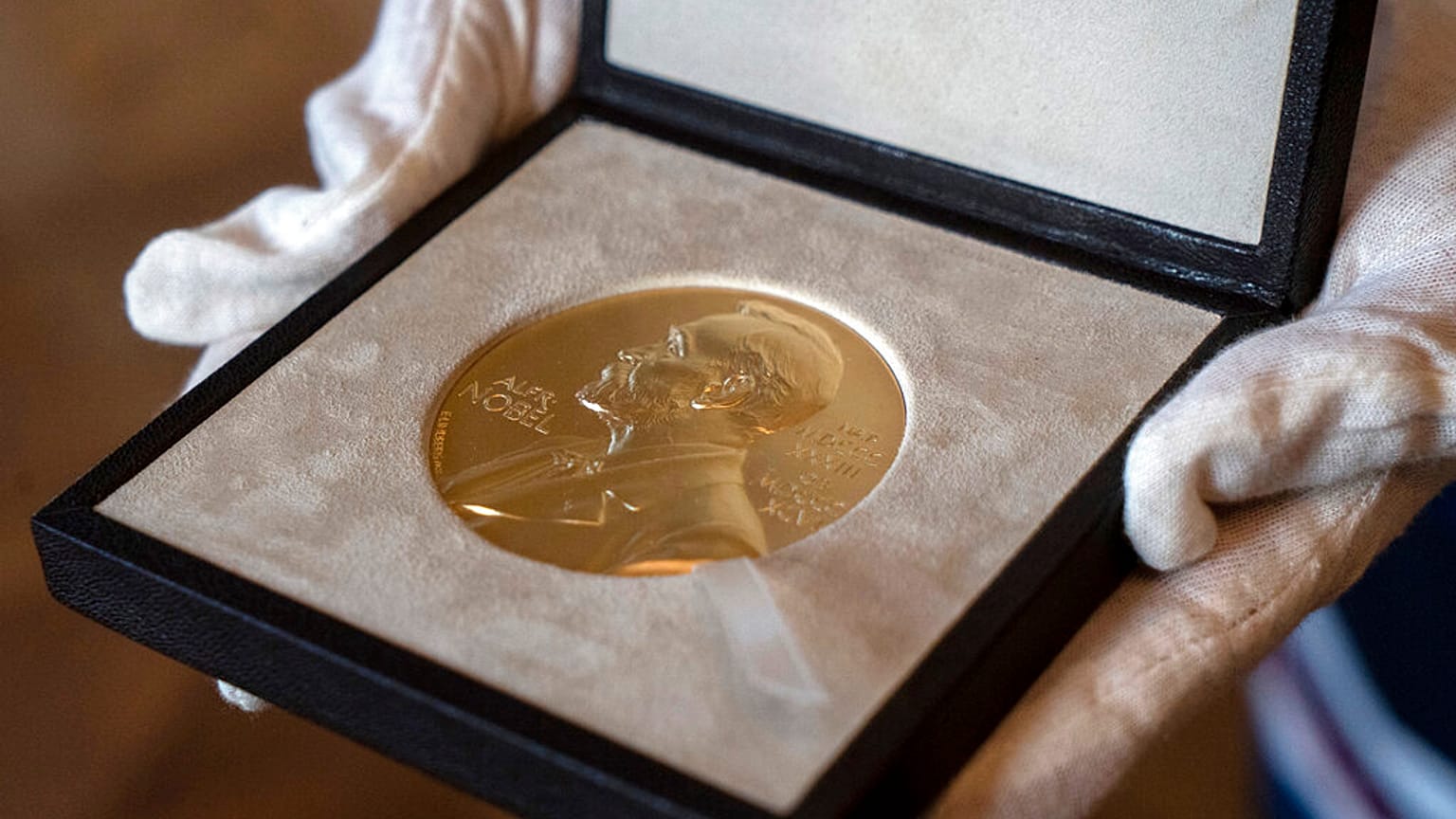
Although Machado's gesture marks a rare instance of a living laureate parting with their medal shortly after receiving it, it is not unprecedented. Rules state that Machado could give away her actual medal but not the honour itself.

In a largely unusual move, Venezuelan opposition leader María Corina Machado presented her Nobel Peace Prize medal to US President Donald Trump at the White House on Thursday, in what she said was "recognition for his unique commitment to our freedom."

Machado was awarded the 2025 Nobel Peace Prize for her leadership of Venezuela's opposition movement amid a crackdown by Nicolas Maduro, most notably in the much-maligned 2023 presidential election in the South American country.

In the meantime, Trump ordered a blitz US military operation on 3 January that resulted in Maduro's capture. The former Venezuelan leader and his spouse now face drug trafficking-related charges in New York.

“I presented the president of the United States the medal, the Nobel Peace Prize,” Machado told reporters as she departed the White House on Thursday.

Trump confirmed on social media that Machado had left the medal for him to keep, and he said it was an honour to meet her.

“She is a wonderful woman who has been through so much. María presented me with her Nobel Peace Prize for the work I have done,” Trump said in his post. “Such a wonderful gesture of mutual respect. Thank you María.”

Although Machado's gesture marks a rare instance of a living laureate parting with their medal shortly after receiving it, it is not unprecedented, and rules state that Machado could give away her actual medal but not the honour itself.

The Nobel Foundation's statutes and Alfred Nobel's will — which dictate the merits awardees should have — state that the title of the winner belongs personally to the individual and cannot be legally shared or reassigned to another person.

The medal or the associated diploma can be physically given, sold or auctioned, but this does not confer the award's title on anyone else.

Several other Nobel laureates have previously given away or sold their medals, although the circumstances and motivations varied.


Auction for Ukrainian refugees


Russian journalist Dmitry Muratov, who won the Nobel Peace Prize in 2021 — alongside Maria Ressa of the Philippines — for his efforts to safeguard freedom of expression in Russia, auctioned his medal in June 2022 for a record-breaking $103.5 million (€89.1m).

All proceeds from the sale held at Heritage Auctions in New York to an anonymous buyer were donated to UNICEF's fund for Ukrainian child refugees following Russia's full-scale invasion of Ukraine in February of that year.
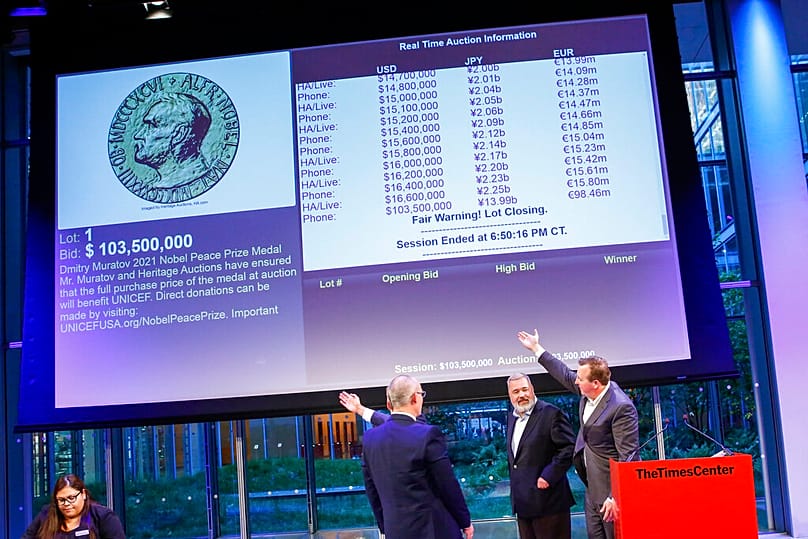

People point to the screen showing the final price for Dmitry Muratov's 23-karat gold medal of the 2021 Nobel Peace Prize after being auctioned in New York 20 June 2022 AP Photo

The auction came just months after Russia launched its full-scale invasion of Ukraine in February 2022.

Muratov is the editor-in-chief of Novaya Gazeta, one of Russia's last independent newspapers.

The publication suspended operations in March 2022 after receiving warnings from Russian authorities amid a crackdown on dissent and criticism of the Kremlin's actions during the early weeks of the war.

Wartime fundraising and infamous gestures

In the early days of World War II, Nobel medals belonging to Danish physicists Niels Bohr and August Krogh, who won in 1922 and 1920 respectively, were auctioned to raise funds for Finnish civilian relief during the Winter War between Finland and the Soviet Union in 1939-1940.

The medals were later donated to museums in Denmark.

During World War II, German physicists Max von Laue and James Franck, both Nobel laureates, gave their medals to Niels Bohr as Nazi Germany occupied their countries.

To prevent the medals from falling into Nazi hands, Hungarian chemist George de Hevesy, who worked in Bohr's laboratory, dissolved them in acid.

After the war, the gold was recovered, and the Nobel Foundation recast the medals, which were returned to von Laue and Franck's family.

The aftermath of Mosquito planes of the Royal Air Force raid on factories working for the Nazis in Copenhagen, 10 February 1943 AP Photo

Not all stories around Nobel Prize medals are positive, however, and some of the choices made by laureates were quite controversial.

Norwegian author Knut Hamsun, who won the Nobel Prize in Literature in 1920, reportedly gave his medal to Nazi Germany's Minister of Propaganda Joseph Goebbels during World War II.

Hamsun, who met with Adolf Hitler and Goebbels in 1943, was a Nazi sympathiser who supported the German occupation of Norway. Historical accounts indicate he gave his Nobel medal to Goebbels as a symbolic gesture of support.

Hamsun's reputation was destroyed after the war, although his literary works continue to be studied.

The case of James Watson

James D Watson sold his medal amid controversy at Christie's auction house in December 2014 for about $4.8 million (€4.13m).

Watson, who won the Nobel Prize in Physiology or Medicine in 1962 alongside Francis Crick and Maurice Wilkins for discovering the structure of DNA, said proceeds would support scientific research institutions and conservation causes.

He became the first living Nobel laureate known to sell his medal.

Russian billionaire Alisher Usmanov purchased the medal only to return it to Watson at an official ceremony in Moscow in 2015, saying the scientist "deserved" to have it.
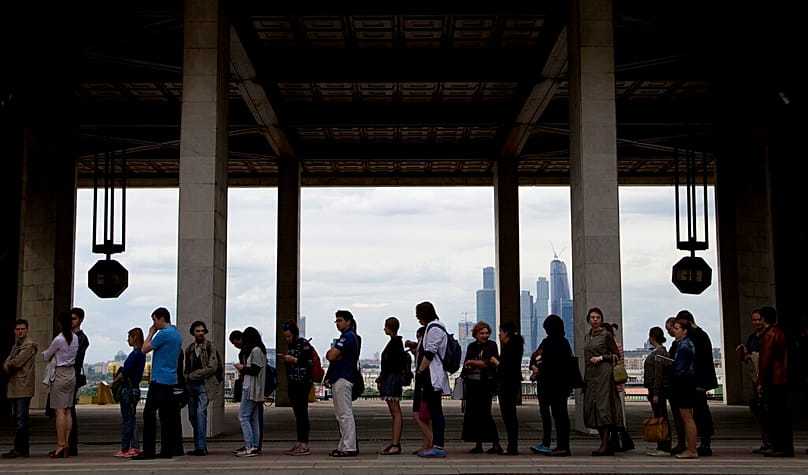
People queue to attend a lecture by US Nobel laureate biologist James Watson, at the Russian Academy of Sciences, Moscow, 17 June 2015 AP Photo

Watson's decision to sell came amid financial difficulties and following controversial statements about race and intelligence, especially regarding people of African heritage, that damaged his reputation and led to his departure from Cold Spring Harbor Laboratory, where he had served as chancellor.

The laboratory stripped Watson of his titles and cut all ties with him in 2019. Watson initially apologised over his remarks, but later said his views remained unchanged.

The EU sanctioned Usmanov in 2022, imposing a bloc-wide travel ban on him and freezing all his assets over his links to Russian President Vladimir Putin and his government. Watson enjoyed close ties with Russia late in his career.


Venezuela’s Machado presents Trump with her Nobel Peace Prize during White House meeting

Crick's Nobel Prize medal, won together with Watson and Crick, was also sold at Heritage Auctions in 2013 for $2.27 million (€1.95m). Part of the sale proceeds were donated to the Francis Crick Institute in London.

Norman Angell's Nobel Peace Prize medal from 1933, won for promoting international understanding, was sold at Sotheby's in 1983. The medal is now held by the Imperial War Museum in London.

Aage Bohr, who won the Nobel Prize in Physics in 1975, had his medal sold at auction in 2011 and again in 2019. Bohr was the son of Niels Bohr, who won the Nobel Prize in Physics in 1922.
Prize money donations

Some laureates have donated their Nobel prize money rather than parting with their medals.

Albert Einstein, who won the Nobel Prize in Physics in 1921, left his prize money to his first wife Mileva Marić and their children under a pre-arranged divorce settlement. The agreement was made before Einstein won the prize.

In 1979, Macedonian-born Albanian Peace Prize laureate Mother Teresa asked for the traditional Nobel banquet to be cancelled and that the funds, together with the prize money, be donated directly to the poor.

Paul Greengard, who won the Nobel Prize in Physiology or Medicine in 2000, donated his full prize earnings to establish the Pearl Meister Greengard Prize, an annual award supporting women scientists.
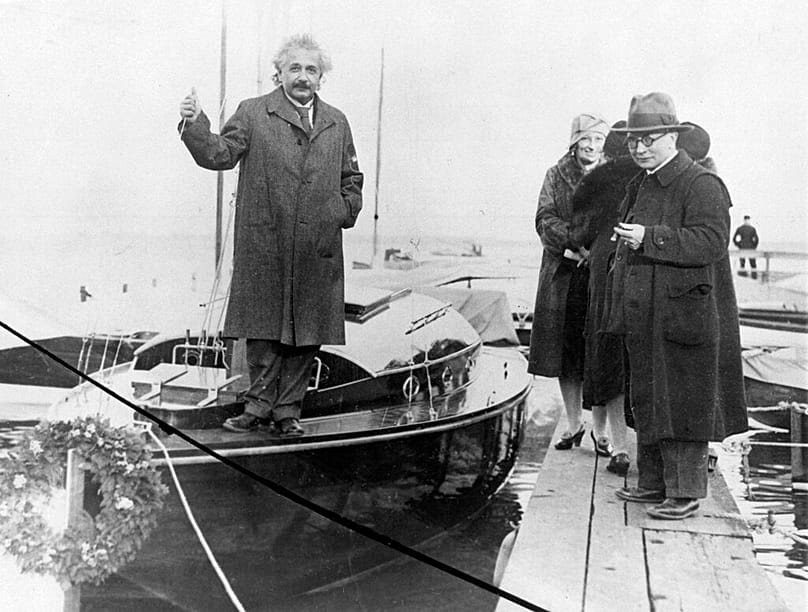
Prof Albert Einstein poses with sailboat presented to him for his 50th birthday by Berliner Handelgesellschs Ftm, a German bank, June 1929 AP Photo

Günter Blobel, who won the Nobel Prize in Physiology or Medicine in 1999, donated his prize money to restoration projects for Dresden and to the construction of a synagogue in his hometown.

E Donnall Thomas, who won the Nobel Prize in Physiology or Medicine in 1990, donated his prize money to his research centre to support ongoing work in bone marrow transplantation.

The Nobel Prize currently includes a monetary award of 11 million Swedish kronor (around €1 million), although the amount has varied over the decades.



Here’s How We Pressured an Airline to End Its Contract With ICE


ICE is not invulnerable. The Avelo Airlines win proves what happens when we refuse inevitability and fight together.


January 14, 2026

A rally near the Albany International Airport along Albany Shaker Road on July 26, 2025, in Colonie, New York. Protesters called on Albany County to drop Avelo Airlines from the airport roster because of its participation in ICE deportation flights.
Jim Franco / Albany Times Union via Getty Images

The same day that Immigration and Customs Enforcement (ICE) agent Jonathan Ross killed 37-year-old Renee Nicole Good, a little-known airline named Avelo announced that it would no longer fly deportation flights. Though the announcement was overshadowed by the news in Minneapolis, it is a major victory: The biggest commercial carrier of kidnapped and detained souls is ending its estimated $150 million contract with ICE.

The campaign targeting Avelo was more than just a boycott. Like the historic grape boycott or the more recent Tesla Takedown movement, it required a mix of local and national organizing, direct action, and political pressure alongside the better-known boycott. Organizers targeted an ICE-enabling contractor with a public-facing brand, financial fragility, and political dependencies. This was not a symbolic protest — it was leverage. It sent a definitive signal to other commercial airlines to keep distance from ICE deportations and opened space for pressure on other ICE enablers.

Exposing a Hidden Pillar of Support

The campaign did not begin as a national strategy. It began the way many effective movements do: with people noticing something meant to remain unnoticed.


In Connecticut, word got out in March that Avelo — a commercial airline branded as a local carrier — had quietly signed a contract with the Department of Homeland Security and was scheduled to begin ICE deportation flights in May 2025. Avelo was headquartered in the state, received public subsidies, and now stood to profit from deportation — all without public debate, disclosure, or consent.

Related Stor

Activists Are Fighting Tax Subsidies for Airline Running ICE Deportation Flights
Connecticut activists are making big gains in their campaign against the airlines ICE is using to abduct people. By Umme Hoque , Truthout  May 15, 2025


“Avelo used to call itself New Haven’s hometown airline,” Anne Watkins, an organizer with the New Haven Immigrants Coalition, explained. “We don’t want a company that is profiting directly off of [deportation and detention] to be here in New Haven.”

Experts on civil resistance explain that defeating an authoritarian requires removing a regime’s “pillars of support.” An authoritarian leader can give orders — but they are only enacted if multiple institutions implement them. As noted in The Nation, “even the most despotic of regimes can’t rule without the backing or consent of powerful external institutions. Businesses are society’s most important non-state institutions, and most of the biggest ones in America are collaborating with Trump, making themselves a very steady pillar of support for his rule.”

This understanding led the campaign. It wasn’t a symbolic protest; it was built on the understanding that without the logistical support of Avelo, ICE deportations would be materially hampered.

Before flights started, the New Haven Immigrants Coalition launched a local campaign: protests, a demand for an end to public subsidies, and a boycott petition. Within days, tens of thousands had signed the petition, many outside the state.

Small, decentralized actions emerged, including protests in other cities, alongside social media pressure. The flight attendants’ union raised alarms about safety, stating: “Having an entire flight of people handcuffed and shackled would hinder any evacuation and risk injury or death.… We cannot do our jobs in these conditions.”

These efforts weren’t centrally coordinated. They didn’t yet add up to enough significant pressure to win. But they did the most important thing at that moment: raise awareness of a vulnerable target and begin assembling the people needed to win.


Identifying the Target’s Weaknesses

Deportation flights are rarely debated in city councils or mentioned in glossy corporate reports. They are subcontracted, routed through regional airports, and handled by companies designed to be forgettable — mostly private charter firms insulated from scrutiny. Deportation infrastructure depends on that invisibility.

Nikki Marín Baena — co-director of Siembra NC, a Latino base-building organization leading efforts to protect community members from ICE and build power in North Carolina, where Avelo also had multiple bases — told us: “These flights are purposely hidden and purposely in the shadows. It’s despicable that any U.S. corporation would seek to profit off our government’s immoral actions, and we needed to bring what they were doing — and why — more visibly into the light.” (We are connected to Baena because Umme Hoque leads national campaigns and trainings at Siembra NC.)

With Avelo now a target, campaigners began to home in on its vulnerabilities. Matthew Boulay, an activist in Oregon, put together a website and an ad hoc coalition (involving calls and shared spaces) for groups working to Stop Avelo. Siembra NC added this campaign to its many ICE defense campaigns and strategies, including leaning on the research firm LittleSis to identify Avelo’s weaknesses.

Avelo proved unique: a commercial airline with a recognizable brand dependent on ticket sales. Like many airlines, Avelo needed state and municipal subsidies and struggled to raise capital in a tight market.

That made it vulnerable to public pressure — even as it hoped deportation flights would, as CEO Andrew Levy explained, “provide us with the stability to continue expanding our core scheduled passenger service.”

Working with Mijente and the Coalition to Stop Avelo, Siembra NC’s national immigration defense network, Defend and Recruit, called on more groups around the country to join the campaign and take action. In this fast-moving phase, research, tactics, and approaches began to be shared across the movement.

Local demands were tailored based on how that location or group intersected with Avelo. In cities on flight routes — including Mesa, Arizona; Burbank, California; Baltimore, Maryland — the focus was airport and airport authorities. And if Avelo didn’t fly into a city, protests were held to make it clear it never could.


Deportation infrastructure is not sustained by ideology alone. It is sustained by contracts, zoning decisions, labor, reputational cover, and silence. Those can be undone.

Subsidies, previously framed as an economic opportunity, were recast as citizen investments in state violence and to be opposed in places like Delaware. Activists pushed elected officials to pass resolutions and legislation to refuse to fly the airline, their own form of boycott, and won in California. Connecticut moved from stopping subsidies to severing partnerships. In New York, pressure targeted both state policy and Jefferies Group, an investment firm raising money for Avelo.

The tactics varied but were based on a consistent theory: Deportation infrastructure is not sustained by ideology alone. It is sustained by contracts, zoning decisions, labor, reputational cover, and silence. Those can be undone.

Scale Without Flattening

Things started bubbling: Activists pulled together a nationwide week of protests in late May, with actions across 22 states. First-time activists joined with seasoned labor organizers. Faith leaders, activists, and frequent flyers played central roles.

Rev. Cathy Rion Starr from the Unitarian Universalists Association, which mobilized congregations nationwide, shared why: “As people of faith, we know that safety is created through care, not punishment — and that transformation happens in the community.”

An elected official in New Hampshire paid for protest billboards himself. Attorneys general released letters.

More national organizations began to join the campaign. Tristan Call, an international committee member of the Democratic Socialists of America (DSA), saw opportunities to get involved. “We had DSA chapters in 44 of Avelo’s 51 key cities, many of whom were already looking for ways to get involved in defending their immigrant members and neighbors,” Call told Truthout. “So we saw the Avelo campaign as a tremendous opportunity both to bring the leverage of tens of thousands of DSA members to the fight against ICE’s corporate profiteers, and to train our members in how to run effective corporate boycott campaigns.”

By July, the fight notched its first win: Avelo stopped its West Coast flights. Nationwide, this small win barely registered outside of the movement. But it promoted momentum inside the movement’s orbit.

How national groups showed up really mattered. They amplified local fights, shared research and tools, and helped grow local pressure from everywhere at once. Groups like Jobs with Justice, the SEIU, and other worker bodies grew more involved with local leaders and workers. Pilot whistleblowers sharing inside intel and responses from the company and stakeholders helped all groups understand whether tactics were having an impact inside the company.

Rolling weeks of action augmented local pressure and strategies. While Indivisible chapters across the country had already been active, nationally it, too, joined the effort — adding to what was now a stampede of hundreds of cities finding ways to pressure and cause economic pain to Avelo.

No group controlled a brand, created a singular identity, or created a singular national approach; instead, they allowed multiple strategies and shared resources across the movement to pressure the target. Over a few months, at least 40 groups took action across the country, with hundreds of people joining protests. Tens of thousands boycotted Avelo.

Similar to the Tesla Takedown campaign, it was a generative combination of centralization and decentralization. The pressure proved too great for the airline.

In early January, Avelo quietly announced that it would shutter its operations at Mesa Gateway Airport in Phoenix, Arizona. It was getting out of the deportation business.

Why We Won

This was the mosquito strategy: many tiny bites until it was too painful to continue. Some city bites were quite painful, forcing Avelo to leave the West Coast entirely or to re-evaluate its own “hometown” brand. Others were less successful — but still part of the overall effect.

“From the tarmac to the ticket counter, our organizing created a sustained pressure campaign that Avelo could no longer ignore.”

This was a victory — and it should be named as one. As Boulay explained, “At a time when immigrant communities are under relentless attack, [this campaign] offers proof that resistance works. From the tarmac to the ticket counter, our organizing created a sustained pressure campaign that Avelo could no longer ignore.”

But no one mistakes this victory for an ending to our organizing. ICE’s aggression is escalating. People continue to be harmed and killed by immigration enforcement and policing.

Still, removing one company from ICE’s chain weakens the overall system. It adds to the win of the Spotify boycott: Spotify is no longer airing ICE recruitment ads, likely in part due to collective pressure.

The networks formed through this Avelo fight are now turning to new contractors, other state and municipal policies, and toward a national story that we can do better. One key strategy to reduce ICE’s power is to target ICE collaborators.

Organizers in Minneapolis have called for residents to stop giving ICE and other federal occupation forces food, shelter, and transportation. These include companies like Signature Aviation, Hilton, and Enterprise. Their first victory — coupled with — was getting a local Hilton to refuse service to the Department of Homeland Security and ICE.

As Adam Shah, director of national policy for Jobs with Justice, has stated, now is a choice point for these pillars:

From Avelo to Amazon, all corporations must weigh their options. Democracy or authoritarianism. Community or violence. If you are profiting from a partnership with ICE, then you are in opposition to democracy and will face an organized coalition of working people determined to win a future free from the exploitation of the deportation machine.

More than anything, this campaign proves the fragility of the system. ICE and the security forces of this current government are not invulnerable. This win proves what happens when we refuse inevitability and fight together. That lesson is dangerous to any system that survives on our silence and our resignation to the idea that we can’t change anything. Because we can and did — and there’s more to come.


This article is licensed under Creative Commons (CC BY-NC-ND 4.0), and you are free to share and republish under the terms of the license.


Umme Hoque
Umme is a writer, editor, and organizer leading campaigns and trainings at Defend and Recruit, a national network supporting the movement for immigrant defense. A Bangladeshi-Texan, she’s spent the past two decades fighting local and global campaigns with trade unions and worker bodies, immigrant rights and racial justice organizations, climate justice groups, and debtor unions. Her writing has appeared in Prism, In These Times, Filter, The Guardian, and The Progressive.
Staggering cost of Pentagon push to change DoD to 'Department of War' revealed

 name change could cost anywhere from $10 million at the low end to $125 million on the high end.


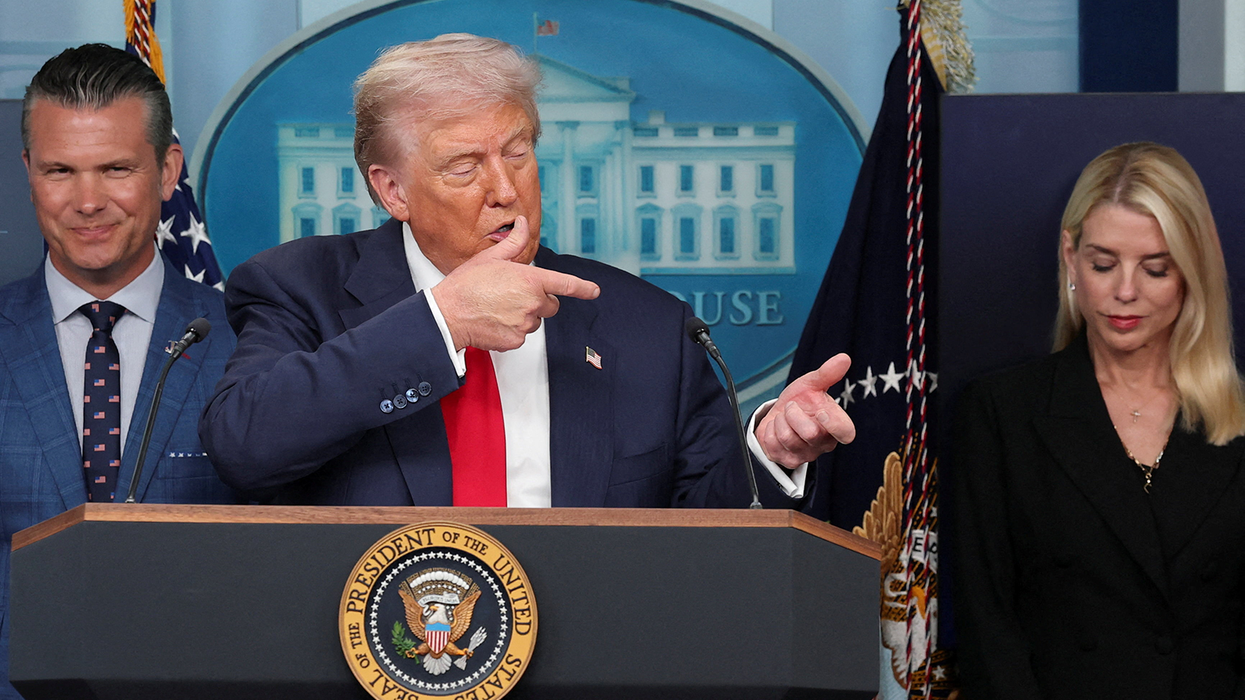
U.S. President Donald Trump gestures as he speaks about Javelin anti-tank missiles next to U.S. Defense Secretary Pete Hegseth and U.S. Attorney General Pam Bondi in Washington D.C., U.S., August 11, 2025. REUTERS/Jonathan Ernst
January 14, 2026
ALTERNET

One of the more high-profile changes to the federal government that President Donald Trump made early on in his second term was to change the name of the Department of Defense to the Department of War. The total cost could be in the nine-figure range.

That's according to an estimate released Wednesday by the Congressional Budget Office (CBO) and posted to X by CBS reporter Scott MacFarlane. The CBO estimated the cost under two scenarios — a per-person approach and a per-organization approach. MacFarlane crunched the numbers and estimated that the name change could cost anywhere from $10 million at the low end to $125 million on the high end.

The new estimate sparked outrage among multiple elected officials, journalists and others on social media. Sen. Tammy Duckworth (D-Ill.) — who is a retired lieutenant colonel in the U.S. Army and Purple Heart veteran — noted that the $125 million cost could be used to "feed 55,000 hungry Veterans."

"Find someone who loves you the way this administration loves wasting money," New York Times contributor Molly Jong-Fast wrote on X.

Army veteran Drew Rogers, who describes himself as a "former Republican" on X, noted that the Trump administration's attempted name change isn't official without an act of Congress. He called the name change "illegal" and said all money dedicated to the effort should be "swiftly refunded to taxpayers."

"It’s DoD until the legislative (lawmaking) branch of the U.S. gov’t says otherwise," Rogers wrote.

Rogers' point was recently made in December, when the House of Representatives was writing the 2026 National Defense Authorization Act (NDAA) to fund the military through next year. Despite Trump's executive order announcing he was changing the name of the Department of Defense to the Department of War, the final version of the NDAA used the old name, meaning the Pentagon will be formally known as the Department of Defense through the next calendar year.

Friday, January 16, 2026

Canada’s new arrangement with China stuns as Trump drives biggest ally into arms of foe


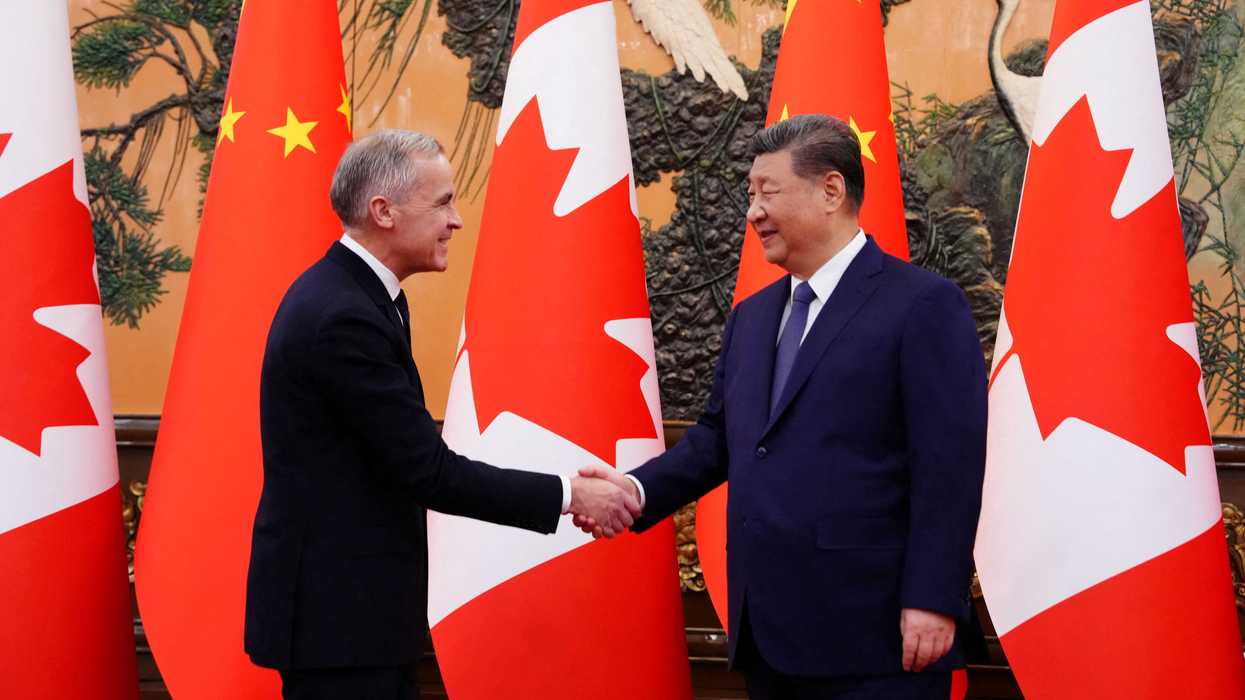
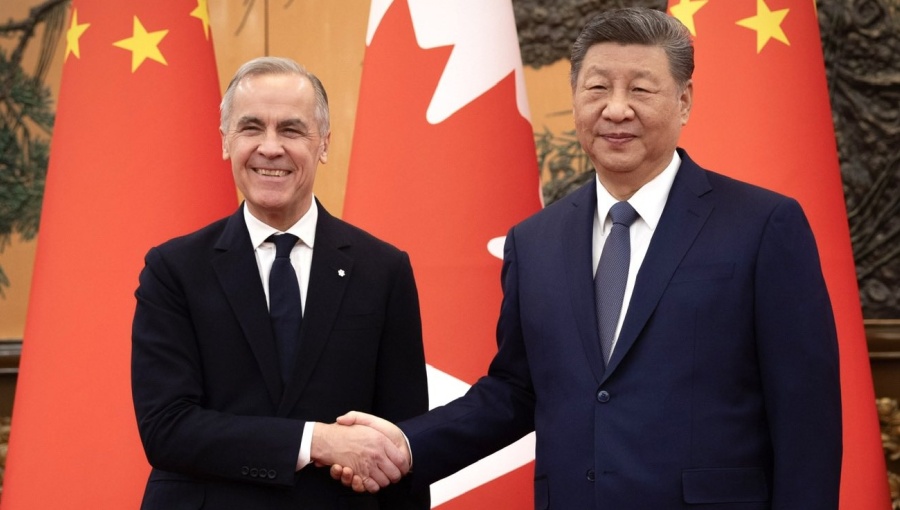
Canadian Prime Minister Mark Carney shakes hands with President of China Xi Jinping at the Great Hall of the People in Beijing, China on Friday, Jan. 16, 2026. 
January 16, 2026
ALTERNET

For many years, Canada and the United States enjoyed a mutually beneficial relationship. Canadian visitors spent money in Seattle and Boston; U.S tourists patronized businesses in Montreal, Toronto and Vancouver. And Americans in real estate spent a lot of money on the building and construction materials imported from Canada.

But during U.S. President Donald Trump's nonconsecutive second term, his policies have been a persistent source of frustration for Canada — from tariffs to Trump wanting its neighbor to the north to become "the 51st state." Canadian Prime Minister Mark Carney is adamant in saying that Canada is a sovereign nation that has zero desire to become part of the United States.

Now, according to the Associated Press (AP), tensions between Trump and Canada are pushing Carney closer to Mainland China.

AP journalists Ken Moritsugu and Rob Gillies, in an article published on Friday, January 16, report, "Breaking with the United States, Canada has agreed to cut its 100% tariff on Chinese electric cars in return for lower tariffs on Canadian farm products, Prime Minister Mark Carney said Friday. Carney made the announcement after two days of meetings with Chinese leaders. He said there would be an initial annual cap of 49,000 vehicles on Chinese EV exports to Canada, growing to about 70,000 over five years. China will reduce its total tariff on canola seeds, a major Canadian export, from 84 percent to about 15 percent, he told reporters."

At a press conference, Carney explained, "Our relationship has progressed in recent months with China. It is more predictable, and you see results coming from that."

Canada's new arrangement with China is generating a lot of reactions on X, formerly Twitter.

Bloomberg News' Joe Weisenthal, tweeting AP's article, commented, "Wow there it is."

Tech reporter Eric Okafor tweeted images of a car and posted, "D---! Canadians about to enjoy this baby without breaking the bank."

Television journalist Brian Fantana posted, "I hope Canada know what they are doing… look how it turned out for Europe… they are banning Chinese evs and cars!"

Jeanette Sautnert, Canadian ambassador to Lithuania, described the new arrangement as "excellent news" for Canada, adding, "Canadian agricultural products to be tariff free in China Reduction on tariffs from 100% To 6.1% for Chinese EVs."

Politico's Adam Wren noted the effect Trump's tariffs are having in a border state: Michigan, posting, "Trump’s signature tariffs are still roiling one of the most closely watched midterm states in 2026. I went to the Detroit Auto Show, where the Trump administration is dispatching three Cabinet members tomorrow, and wrote about the tension between tariffs and affordability."Investor David Lee tweeted
, "Mark Carney: Canada will allow up to 49,000 Chinese EV into Canadian market at 6.1% tariff rate Canadians can now enjoy low cost high value Chinese EV This is massive for Canadian auto market China is also opening up market for Canadian agricultural products including canola seed."


China, Canada move to ease trade tensions as tariffs are slashed

China, Canada move to ease trade tensions as tariffs are slashed
/ Mark Carney - X
By bno - Taipei Office January 16, 2026

China and Canada have agreed to scale back tariffs following a closely watched meeting in Beijing between President Xi Jinping and Prime Minister Mark Carney, signalling a tentative reset in relations after several years of strain.

As a result, Beijing will now slash duties on Canadian canola oil from 85% to 15% starting in March according to the BBC. In return, Canada will also use a most-favoured-nation tariff rate of 6.1% to a limited number of Chinese electric vehicles (EVs). The agreement marks the most significant breakthrough between the two sides since their relationship deteriorated in the late 2010s, and is largely seen as a reflection of the issues both are having with the US.

For Carney, the first Canadian leader to visit China in almost a decade, the deal supports his broader push to diversify trade away from the US amid continuing uncertainty over American tariff policy. The easing of tensions with Beijing also opens the door to a limited revival of Chinese investment in Canada, a prospect closely watched in Washington.

The BBC adds that the agreement follows a prolonged trade dispute. In 2024, Canada imposed steep tariffs on Chinese electric vehicles, mirroring measures taken by the US. Beijing responded by levying duties on more than $2bn of Canadian agricultural and food exports, including canola products, contributing to a sharp fall in Chinese imports from Canada last year.

As part of the new framework, Canada will allow up to 49,000 Chinese EVs to enter at the lower tariff rate, reflecting domestic concerns about an influx of cheaper imports. China will also reduce duties on other Canadian exports such as lobsters, crabs and peas.

Beyond tariffs, the visit underscored a more pragmatic tone on both sides. Carney has emphasised the need for clear boundaries in the relationship, particularly on issues such as human rights, election interference and geopolitical tensions, while still pursuing cooperation where interests align. Chinese officials, for their part, have sought to present Beijing as a stable and predictable partner at a time of global trade fragmentation.

China is Canada’s second-largest trading partner, though trade volumes remain far below those with the US. During his trip, Carney met senior executives from major Chinese companies and oversaw the signing of several agreements covering energy and trade cooperation.


Canada's Carney hails new 'strategic partnership' with China

Dmytro Hubenko | Mahima Kapoor 
DW with AFP and Reuters
16/01/2026

Chinese President Xi Jinping welcomed Carney after years of diplomatic tensions between Ottawa and Beijing, as both countries move to rebuild ties amid US tariff pressures.


Canada's Prime Minister Mark Carney, left, meets with Chinese President Xi Jinping at the Great Hall of the People in Beijing  
Both China and Canada are looking to strengthen trade ties amid Trump's tariffs
Image: Sean Kilpatrick/AP Photo/picture alliance

Ottawa and Beijing are forging a new strategic partnership which will yield "historic" gains for both nations, Canada's Prime Minister Mark Carney told China's President Xi Jinping on Friday.

Carney made the comments in Beijing while on a visit to rebuild ties with its second-largest trading partner after the United States.


"It is important to start this ‍new strategic partnership at a time of division," ​Carney ​told Xi. He urged the nations focus on areas that can bring "historic gains" for both, such as agriculture, agri-food, energy, and finance.

"That is where I believe we can make immediate and sustained progress," he added.


Canada's Prime Minister Mark Carney sits for a meeting with Chinese President Xi Jinping at the Great Hall of the People in Beijing Carney's trip marks the first time a Canadian premier has visited Beijing since 2017
Image: Sean Kilpatrick/dpa/picture alliance

Xi welcomed Carney and his delegation to Beijing, saying Canada-China relations were on the mend after their last meeting at a summit in October.

"It can be said that our meeting last year opened a new chapter in turning China-Canada relations toward improvement," Xi told Carney.

"The healthy and stable development of China-Canada relations serves the common interests of our two countries," he said

Carney and Xi reach deal to reduce tariffs

After meeting in Beijing, Carney announced a preliminary deal with Xi that would see tariffs on products from both countries reduced, with Canada agreeing to cut its 100% tariff on Chinese electric cars in return for lower tariffs on Canadian farm products.

"By March the first, Canada expects that China will lower tariffs on Canadian canola seed. The combined rate of approximately 15%... this change represents a significant drop from the current combined tariff levels of 84%," the Canadian leader announced.

Carney added that Canada has agreed to allow up to 49,000 Chinese electric vehicles into the country, applying the most favoured nation tariff rate of 6.1%. "This is a return to levels prior to ⁠recent trade frictions, but under an agreement that promises much more for Canadians," he explained.

The government of former Prime Minister Justin Trudeau imposed a 100% tariff on Chinese electric vehicles in 2024, in line with similar penalties imposed by the US.

Carney also said that China will allow Canadian visitors to enter the country without a visa.

In response to media queries as to whether China was a more predictable and reliable partner than the United States, Carney said, "In terms of the way our relationship has progressed in recent months with China, it is more predictable, and you see results coming from that.


Canada and China edge closer amid Trump tariffs

Carney is the first Canadian prime minister to visit China since 2017.


Ties between the two nations had soured when Huawei's Chief Financial Officer Meng Wanzhou was arrested in Vancouver in 2018.


The tensions triggered retaliatory detentions, mutual tariffs and disputes over human rights and allegations of electoral interference.


Carney's trip comes after months of diplomacy to resolve earlier tensions, amid Ottawa's efforts to diversify trade amid tariffs from the US.


China, also hit by US tariffs, has been strengthening ties with the Group of Seven (G7) nations — traditionally in the sphere of US influence.


China has been strengthening its exports in markets other than the US. Beijing has been banking on trade to drive the economy amid a prolonged property slump and sluggish demand at home.


Edited by: Kieran Burke


Dmytro Hubenko Dmytro covers stories in DW's newsroom from around the world with a particular focus on Ukraine.

Mahima Kapoor Digital journalist based in New Delhi
Trump Unleashes Feds on US Cities While Giving Free Rein to Corporate Criminals

The president’s “law and order” claims, said the watchdog group Public Citizen, “lose all credibility when cast against the lawlessness Trump allows for the pursuit of corporate profits.”


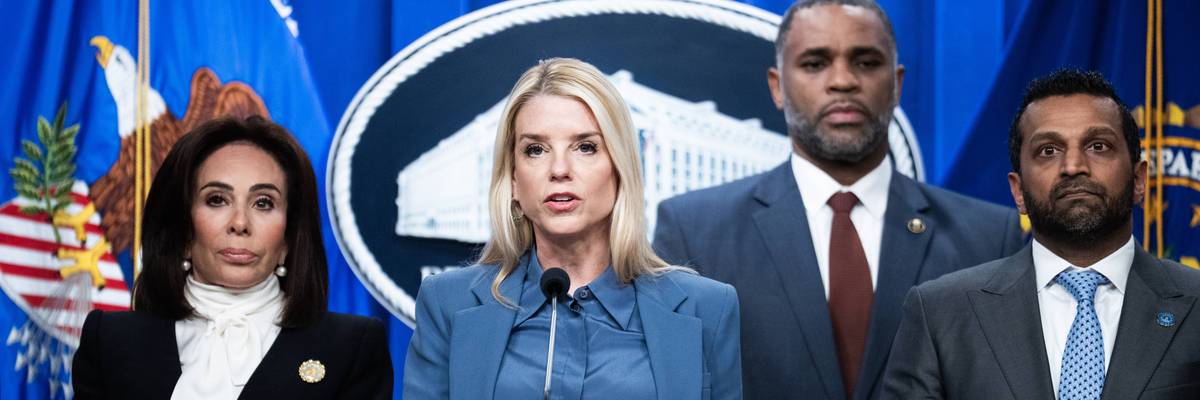
Attorney General Pam Bondi conducts a news conference at the Department of Justice on December 4, 2025.
(Photo by Tom Williams/CQ-Roll Call, Inc via Getty Images)

Jake Johnson
Jan 15, 2026
COMMON DREAMS

US President Donald Trump is letting corporate criminals—including some of his donors—run wild with no accountability as he unleashes federal immigration agents across the country and threatens to deploy troops against protesters in Minneapolis in the name of “law and order.”

A report published Thursday by the watchdog group Public Citizen shows that the Trump administration in the president’s second term has so far canceled or halted 159 enforcement actions—from federal investigations to lawsuits—against 166 corporations accused of illegal conduct.

“As a result of Trump’s corporate enforcement retreat, at least eighteen corporations accused of lawbreaking avoided paying $3.1 billion in penalties for misconduct, including 12 that benefited from canceled enforcement and six that settled enforcement actions with penalties significantly reduced from those sought under” former President Joe Biden, the report observes.

Public Citizen estimates that a third of the corporations that have benefited from dropped or frozen enforcement efforts during Trump’s second term have ties to his administration, including more than 30 that donated to the president’s inaugural fund or ballroom project.

Those corporations include Amazon, Coinbase, Microsoft, Meta, and Pfizer. The pharmaceutical giant, which Pam Bondi represented before becoming US attorney general, has benefited from three canceled Justice Department enforcement actions since the start of Trump’s term—more than any other company.

Rick Claypool, a Public Citizen research director and author of the new report, said the findings further undercut Trump’s claim to care about the rule of law.

“The Trump administration is canceling accountability for corporate predators that cheat consumers, exploit workers, and illegally abuse their power at home and abroad,” said Claypool. “The ‘law enforcement’ claims the White House uses as pretext for authoritarian anti-immigrant crackdowns, city occupations, and imperial resource seizures abroad lose all credibility when cast against the lawlessness Trump allows for the pursuit of corporate profits.”


Public Citizen’s analysis came hours after Trump, in an early morning social media post, threatened to invoke the Insurrection Act to crush protests against Immigration and Customs Enforcement in Minneapolis, where federal agents have shot at least two people over the past week—one fatally—and brutalized many others.

Lisa Gilbert, Public Citizen’s co-president, said Thursday that “invoking the Insurrection Act to deploy military forces against the American people is the exact opposite of what Minneapolis—and the country—needs right now.”

“Trump should abandon this idea immediately and stop threatening to use the military against the American people,” said Gilbert.
The Trump Administration’s $3 Meal: ‘A Piece of Chicken, a Piece of Broccoli, Corn Tortilla, and One Other Thing’

“What a slap in the face to struggling working families,” Rep. Pramila Jayapal said of Agriculture Secretary Brooke Rollins’ interview.


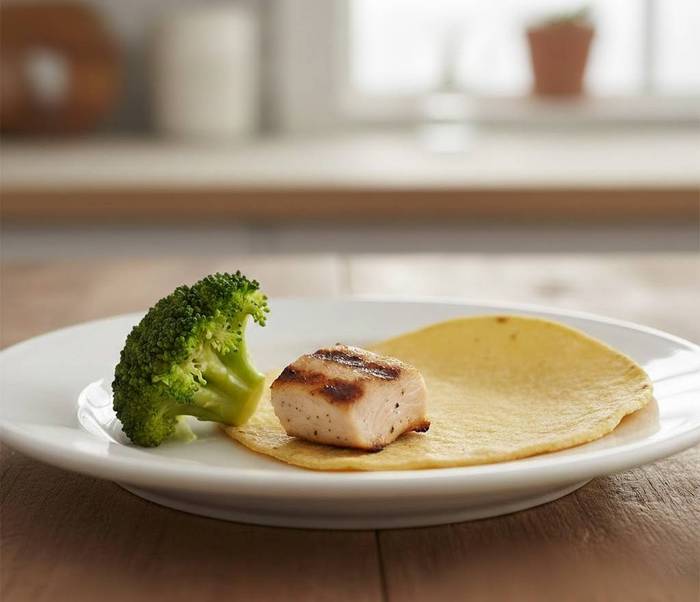
Agriculture Secretary Brooke Rollins “says Americans can afford this delicious $3 meal,” Rep. Ted Lieu (D-Calif.) wrote on social media alongside an image made with artificial intelligence.
(AI image: Rep. Ted Lieu/X)

Jessica Corbett
Jan 15, 2026
COMMON DREAMS

The Trump administration was again blasted for grocery prices this week after Agriculture Secretary Brooke Rollins discussed the new federal dietary guidelines during a NewsNation appearance.

“We’ve run over 1,000 simulations,” Rollins said in a clip shared on social media by journalist Aaron Rupar on Wednesday. “It can cost around $3 a meal for a piece of chicken, a piece of broccoli, corn tortilla, and one other thing.”

“So there is a way to do this that actually will save the average American consumer money,” Rollins continued, pushing back against host Connell McShane’s inquiry about whether the new guidelines expect people to spend more money on food.

The Guardian noted that “data from the consumer price index, as referenced by McShane, showed that food prices kept rising in December, increasing by 0.7%, the biggest month-to-month jump since October 2022. Prices for produce rose 0.5%, coffee increased by 1.9%, and beef went up 1% over the month and 16.4% compared with a year earlier.”


Responding to the clip, Chasten Glezman Buttigieg, an author and teacher married to former Democratic Transportation Secretary Pete Buttigieg, said, “Private jets and tax breaks for them and their rich friends, and one piece of broccoli *AND* a tortilla for you!”

Noting a similarly mocked statement from President Donald Trump before the holidays, Civic Media political editor Dan Shafer said: “You will eat one piece of broccoli and your child will have one Christmas toy. This is the Golden Age.”

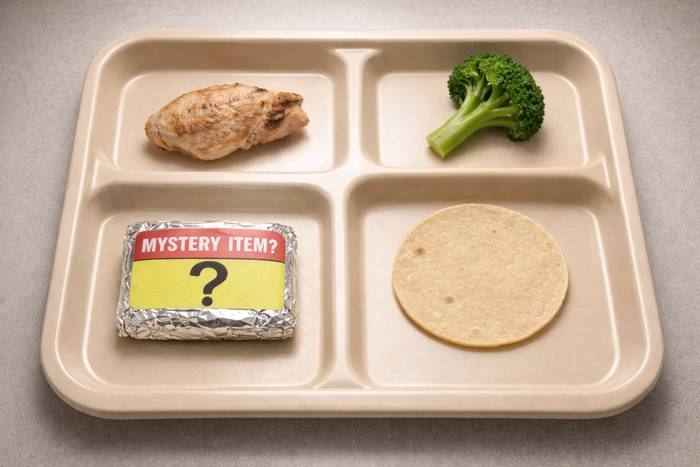
Other critics, including Democratic lawmakers, used artificial intelligence programs to generate images of what they called Rollins’ proposed “depression meal.”

“Due to Trump’s tariffs, last month was the largest spike in grocery prices in three years. So now this is what the Trump administration suggests you can afford for a meal,” wrote US Rep. Ted Lieu (D-Calif.), sharing the image below.


(AI image: Rep. Ted Lieu/X)


Rep. Jason Crow (D-Colo.) said: “Trump gets a gold-plated new ballroom. You get a piece of chicken, broccoli, and one corn tortilla.”


(AI image: Rep. Jason Crow/X)

“MAHA!” declared Democrats on the House Ways and Means Committee, invoking a phrase seized on by Trump after he won the support of Health and Human Services Secretary Robert F. Kennedy Jr., “Make America Healthy Again.”

(AI image: House Ways and Means Committee Democrats/X)

Sharing an edited video clip of Rollins’ interview, Rep. Pramila Jayapal (D-Wash.) said, “What a slap in the face to struggling working families.”


Marlow Stern, who teaches at the Columbia University Graduate School of Journalism, suggested that “you should eat prison meals” was “prob not the best message” from the Trump administration to the public.

The video went viral as the congressional Joint Economic Committee’s (JEC) Democratic staff on Thursday released a report showing that “a typical American family paid $310 more for groceries” during the first year of Trump’s second term compared to 2024.

Some of the biggest estimated jumps in annual cost documented in the report were for coffee (+$76.06), ground beef (+$70.99), eggs (+$51.66), candy (+$47.21), potato chips and salty snacks (+$22.59), orange juice (+$14.18), whole chickens (+$12.51), and chicken breasts (+$11.55).

“Despite President Trump’s promises that he would lower grocery costs, families across America are paying higher prices at the cash register,” said Sen. Maggie Hassan (D-NH), the JEC ranking member. “This report provides proof of what the American people are experiencing every day: Costs are too high, and Trump’s policies are only making them worse.”
Donations to Auto Worker Suspended for Heckling Trump Soar Past $800,000

“We greatly appreciate the outpouring of support!” autoworker TJ Sabula said to donors.


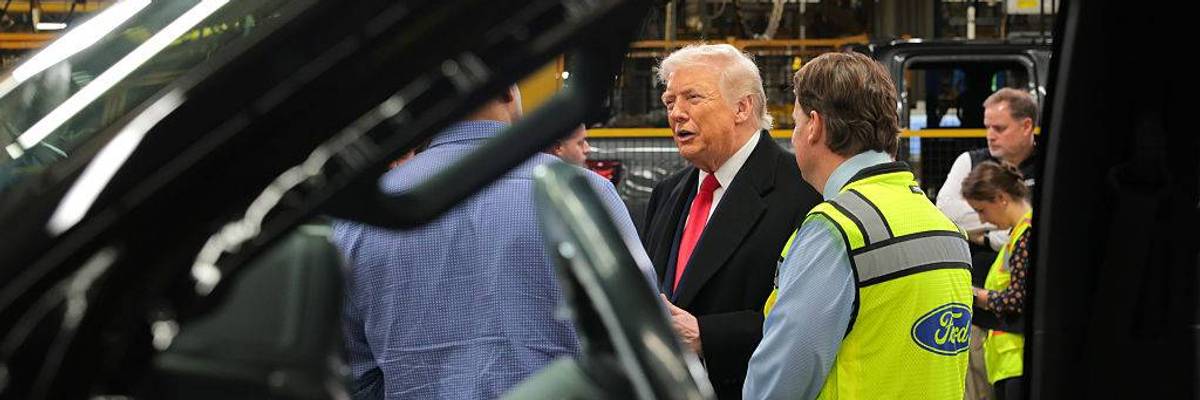
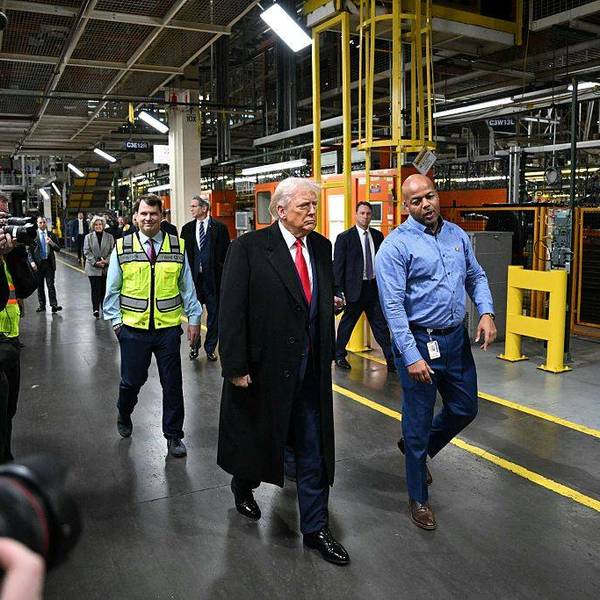
President Donald Trump tours the assembly line at the Ford River Rouge Complex on January 13, 2026 in Dearborn, Michigan.
(Photo by Anna Moneymaker/Getty Images)

Brad Reed
Jan 16, 2026
COMMON DREAMS


Fundraisers for TJ Sabula, the auto worker who called President Donald Trump a “pedophile protector,” are being flooded with cash from supporters following news that he was suspended from his job at a Ford truck plant in Dearborn, Michigan.

Two separate GoFundMe campaigns aimed at raising money for Sabula have raked in a total of over $800,000 just three days after the auto worker heckled Trump for his attempts to block the release of files related to late billionaire sex offender Jeffrey Epstein.


‘He Believes in Freedom of Speech’: UAW Stands Behind Michigan Worker Flipped Off by Trump


Trump responded to Sabula’s taunts by giving him the middle finger, while appearing to mouth or yell “fuck you” back at the auto worker.

Sabula on Wednesday expressed gratitude to all the people who had chipped in for the crowdfunding campaign so far.

“We greatly appreciate the outpouring of support!” he wrote at the “TJ Sabula is a Patriot” GoFundMe page. “At this time we are closing donations to this campaign and encourage you to look for other causes and organizations to support. We appreciate every single donation, comment, share, and sign of support!”

In addition to the outpouring of support from strangers, Sabula got the backing of the United Auto Workers (UAW), which described the suspended worker as “a proud member of a strong and fighting union,” further noting that “he believes in freedom of speech, a principle we wholeheartedly embrace, and we stand with our membership in protecting their voice on the job.”

UAW vowed that Sabula will receive “the full protection of all negotiated contract language safeguarding his job and his rights as a union member.”

In a Tuesday interview published by the Washington Post, Sabula said he had “no regrets whatsoever” about yelling at the president, despite the uncertain future he now faces at his job.

“I don’t feel as though fate looks upon you often, and when it does, you better be ready to seize the opportunity,” Sabula told the Post. “And today I think I did that.”

Fundraisers for worker suspended for heckling Trump top $800K

Carl Gibson
January 14, 2026 
ALTERNET

A Michigan-based Ford worker who went viral for heckling President Donald Trump has now received a flood of financial support after being suspended from his job.

The Detroit Free Press reported Wednesday that two separate crowdfunding campaigns on the GoFundMe platform for suspended Ford employee T.J. Sabula — which have been verified by the platform as legitimate — have brought in hundreds of thousands of dollars. As of 7 PM Eastern Time, the two fundraisers have brought in a total of $810,780. Both have been transferred over to Sabula, and he is now refusing additional donations due to the wave of money that's come in over the last 24 hours.

"We greatly appreciate the outpouring of support!" Sabula wrote in the final update to the fundraisers. "At this time we are closing donations to this campaign and encourage you to look for other causes and organizations to support. We appreciate every single donation, comment, share, and sign of support!"

Sabula was present at the Dearborn, Michigan Ford plant that Trump visited on Tuesday ahead of his speech at the Detroit Economic Club. When Trump walked by a crowd of workers, Sabula could be heard accusing Trump of protecting child predators. Trump appeared to mouth "f—— you" to Sabula and responded by extending a middle finger in his direction. Despite being suspended from his job, Sabula took pride in the confrontation with the president.

"As far as calling him out, definitely no regrets whatsoever," Sabula told the Washington Post.

"I don’t feel as though fate looks upon you often, and when it does, you better be ready to seize the opportunity," he continued. "And today I think I did that."

White House communications director Steven Cheung defended Trump's gesture toward the Ford worker and stated: "A lunatic was wildly screaming expletives in a complete fit of rage, and the President gave an appropriate and unambiguous response."

Click here to read the Detroit Free Press' full article.
Coordinated State-Level ‘Tax the Rich’ Campaigns Kick Off Nationwide

“A billionaire tax is not radical. It is a necessary response to a crisis made worse by federal decisions.”


A coalition of activist groups participates in a demonstration in front of Trump Tower on July 4, 2025 in New York City.
(Photo by Stephanie Keith/Getty Images)

Brad Reed
Jan 16, 2026
COMMON DREAMS

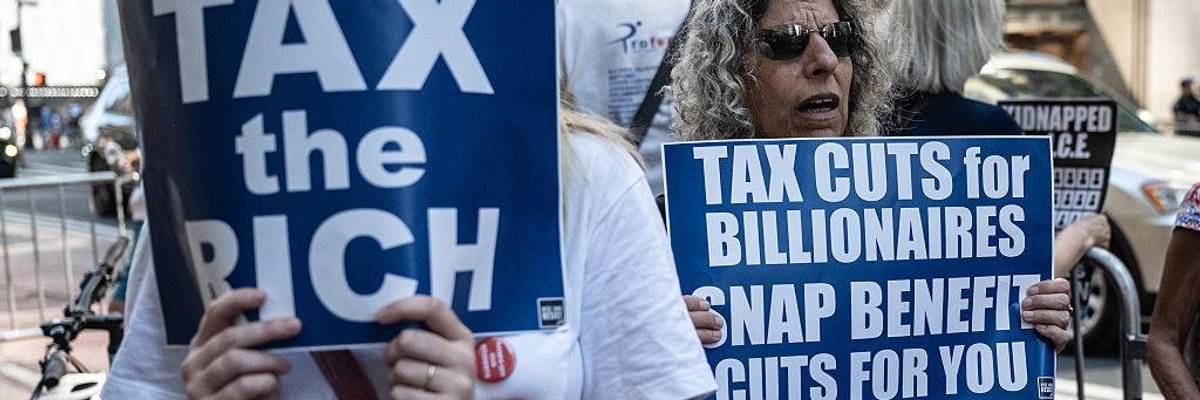
A broad coalition of labor organizations and community advocates are coming together to launch a campaign aimed at raising taxes on the ultrawealthy.

In a press briefing on Thursday, organizers outlined their plan to pressure state governments to enact a “Tax the Rich” agenda aimed at mitigating the harms done by the RepublicansOne Big Beautiful Bill Act, which in the coming years is set to take an axe to funding for programs such as Medicaid and the Supplemental Nutrition Assistance Program (SNAP), while showering corporations and the wealthy with more tax cuts.


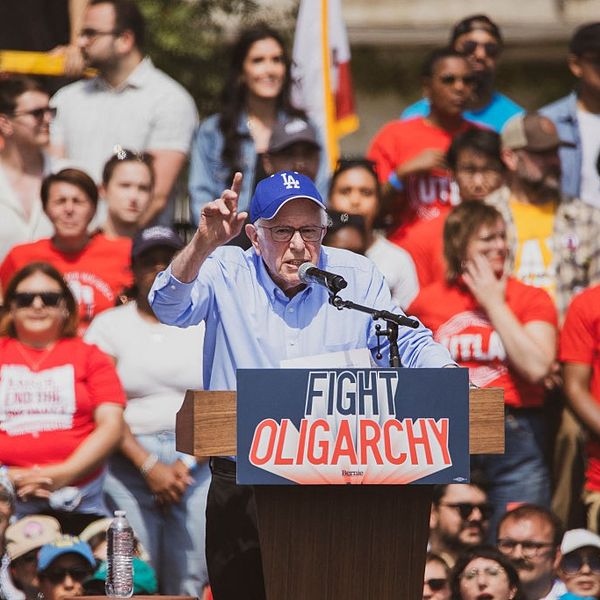
Sanders Backs Push for Billionaire Tax in California as Newsom Raises Money to Fight It


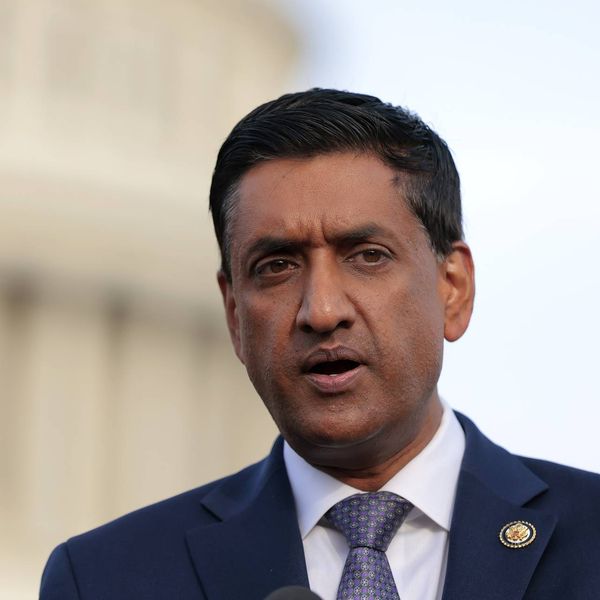
Khanna Hits Back as Silicon Valley Oligarchs Threaten Primary Challenge Over California Billionaires Tax

The coalition is planning to lobby states to pass laws similar to the so-called “millionaires tax” in Massachusetts that has raised billions in revenue to fund schools, mass transit, and other important public goods.

Max Page, president of the Massachusetts Teachers Association, said during the press briefing that the Bay State’s law has proven to be such a success that it should be a model for states across the US.

“In 2022 we won a constitutional amendment that allows a four penny surtax on annual income over $1 million,” said Page. “This past year alone, Fair Share brought in $3 billion from just 25,000 households in a state of 8 million people. That is how concentrated wealth is in the state of Massachusetts.”

Campaigners noted that laws similar to the Massachusetts law are now being proposed in Rhode Island, Michigan, and California, and they planned to push other states to follow their lead in the coming year to avoid facing major revenue shortages caused by the GOP’s budget law.

Liz Perlman, executive cirector of AFSCME 3299, argued that California in particular could benefit from such a law, which has drawn opposition from Democratic California Gov. Gavin Newsom.

“California has about 200 people who hold roughly $2.1 trillion in wealth,” said Perlman. “That is about a quarter of all billionaire wealth in the United States, concentrated in a single state. A billionaire tax is not radical. It is a necessary response to a crisis made worse by federal decisions.”


Vonda McDaniel, President of the Central Labor Council of Nashville and Middle Tennessee, argued that Democratic strongholds such as California and Massachusetts shouldn’t be the only ones pushing for tax hikes on the ultrawealthy, arguing that GOP-led states such as Tennessee should be adopting them as well.

“A working mother in Memphis faces a combined sales tax on groceries that can approach or exceed 9%,” McDaniel explained. “Meanwhile, the Tennessee Department of Revenue has reported more than 60% of corporations are paying zero in state corporate income tax.”

Democratic US Senate candidate Graham Platner on Tuesday held a town hall event in Portland, Maine to help promote legislation written by Democratic state Rep. Ann Matlack (43) to change the state’s income brackets to place more burden on the wealthiest households.

“For us to build the future that we want, it begins with a more equitable tax system,” Platner said during the event, according to local news station WMTW. “And it begins with us thinking about healthcare as a public good and not as something that deserves the profit motive.”