Syria threatens to strike Aleppo's Kurdish district as fighters refuse to evacuate
ISLAMIST CENTRALISTS VS FEDERALIST KURDISTAN
Syria's army on Friday threatened to renew strikes on a Kurdish district of Aleppo after fighters from the minority refused to leave. Early on Friday, Syrian authorities announced a truce with forces linked to the US-backed, Kurdish-led Syrian Democratic Forces (SDF). But Kurdish fighters rejected any "surrender" and said they would stay and defend their districts.
Issued on: 09/01/2026
By: FRANCE 24
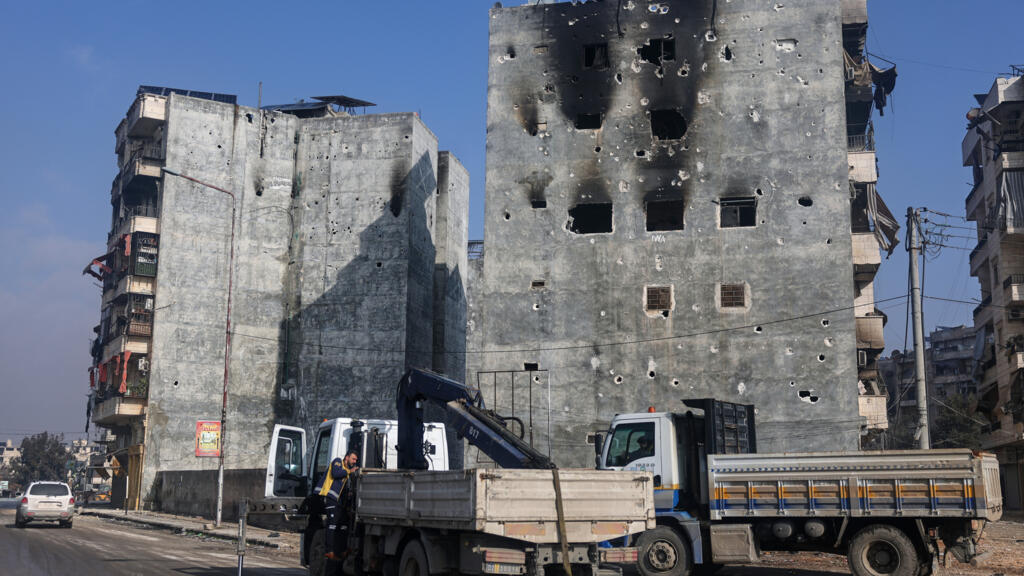
Syrian municipal workers near damaged residential buildings in the Achrafieh neighborhood of Aleppo, Syria, on Friday, January 9, 2026. © Ghaith Alsayed, AP
Syria's army said it would renew strikes on a Kurdish district of Aleppo on Friday after fighters from the minority refused to leave, as a fragile ceasefire deal to halt days of fighting faltered.
The government and Kurdish forces have traded blame over who started the violence in Syria's second city on Tuesday as they struggle to implement a deal to merge the Kurds' de facto autonomous administration and military into the country's new government.
At least 21 people have been killed and tens of thousands have fled the worst clashes in Aleppo since Syria's new Islamist authorities took power, with the fighting presenting yet another challenge for a country struggling to forge a new path since the ousting of longtime ruler Bashar al-Assad a year ago.
Early on Friday, Syrian authorities announced a truce with Kurdish forces linked to the US-backed, Kurdish-led Syrian Democratic Forces (SDF) and said fighters and their light weapons would be sent to Kurdish areas further east.
Syria's army said it would renew strikes on a Kurdish district of Aleppo on Friday after fighters from the minority refused to leave, as a fragile ceasefire deal to halt days of fighting faltered.
The government and Kurdish forces have traded blame over who started the violence in Syria's second city on Tuesday as they struggle to implement a deal to merge the Kurds' de facto autonomous administration and military into the country's new government.
At least 21 people have been killed and tens of thousands have fled the worst clashes in Aleppo since Syria's new Islamist authorities took power, with the fighting presenting yet another challenge for a country struggling to forge a new path since the ousting of longtime ruler Bashar al-Assad a year ago.
Early on Friday, Syrian authorities announced a truce with Kurdish forces linked to the US-backed, Kurdish-led Syrian Democratic Forces (SDF) and said fighters and their light weapons would be sent to Kurdish areas further east.
© France 24
05:56
05:56
But Kurdish fighters rejected any "surrender" and said they would stay and defend their districts.
Later on Friday, Syria's army warned it would renew strikes on the Kurdish-majority district of Sheikh Maqsud and urged residents to evacuate, publishing maps of what it said were military targets and urging Kurdish fighters to lay down their weapons.
An AFP correspondent saw residents laden with belongings fleeing before a two-hour humanitarian corridor closed at 6:00 pm (1500 GMT).
'Apply pressure'
The Kurds then said in a statement the neighbourhood was coming "under intense and heavy shelling".
State television accused the Kurds of launching drones on residential areas of Aleppo.
Turkey's Defence Minister Yasar Guler welcomed the government operation, saying "we view Syria's security as our own security and that we support Syria's fight against terrorist organisations".
Sheikh Maqsud and Ashrafiyeh have remained under the control of Kurdish units linked to the SDF, despite Kurdish fighters agreeing to withdraw from the areas in April.ects a shift away from technical negotiation toward more coercive forms of leverage," Hawach said in a statement.
READ MORECivilians flee Kurdish areas of Aleppo as Syrian army begins shelling
The SDF controls swathes of Syria's oil-rich north and northeast, and was key to the defeat of the Islamic State group in 2019. But Ankara views their main component as an extension of the Kurdistan Workers' Party (PKK), which earlier this year agreed to end its four-decade armed struggle against Turkey.
Elham Ahmad, a senior official in the Kurdish administration in Syria's northeast, accused Syria's authorities of "choosing the path of war" by attacking Kurdish districts in Aleppo and of "seeking to put an end to the agreements that have been reached. We are committed to them and we are seeking to implement them".
The March integration agreement was meant to be implemented last year, but differences, including Kurdish demands for decentralised rule, have stymied progress.
Ahmad said that "the United States is playing a mediating role... we hope they will apply pressure to reach an agreement".
A diplomatic source told AFP that US envoy Tom Barrack was headed to Damascus.
'More coercive' leverage
Syrian President Ahmed al-Sharaa discussed the situation in a telephone call with Turkish leader Recep Tayyip Erdogan and said he was determined to "end the illegal armed presence" in the city, a Syrian presidency statement said.
Turkey, which shares a 900-kilometre (550-mile) border with Syria, has launched successive offensives to push Kurdish forces from the frontier.
Separately, French President Emmanuel Macron told Sharaa of his country's keenness on a united Syria "where all society's components are represented and protected", a French foreign ministry statement said.
Paris urged the implementation of the March integration deal, and is seeking to facilitate dialogue between the government and the SDF in coordination with Washington, the statement added.
Syria's authorities have committed to protecting minorities, but sectarian bloodshed rocked the country's Alawite and Druze communities last year.
Nanar Hawach, senior Syria analyst at the International Crisis Group, said the clashes "are testing the already fragile Damascus-SDF integration framework" and "highlighting the growing gap between the framework on paper and realities on the ground".
"The turn to military pressure refl
(FRANCE 24 with AFP)
Syria: Deadly Aleppo clashes raise fears of wider war
Deadly fighting between Kurdish forces and Syria's national army in Aleppo has led to new widespread displacement. As thousands flee amid shelling, can international mediators stop a full-scale war?

Difficult peace deal
On March 10, 2025, three months after Syrian longtime dictator Bashar Assad was ousted by a rapid offensive led by the Islamist militia Hayat Tahrir al-Sham, the Kurdish-led Syrian Democratic Forces signed a landmark integration deal with Syria's interim President Ahmed al-Sharaa. The agreement stipulated an end of the hostilities between the Turkish-backed Syrian forces and the US-backed Kurdish forces.
It also specified that the Kurdish-controlled area with a population of around 2.5 million Kurdish people, and the region's significant oil- and energy sources will come under the control of the central government. The deal further underscored the recognition of Kurdish communities as part of a unified Syrian state.
The key sticking point, however, has been the inclusion of the around 60,000 Kurdish fighters into Syria's national army by the end of 2025.
In the past 10 months, negotiations have been stalling and the latest clashes erupted a few days after the deadline expired.
Julien Barnes-Dacey, director of the Middle East and North Africa programme at the European Council on Foreign Relations, links the deadlock to fundamental political differences. "There is continued discord between the government vision for central control over the country and the SDF push for a federalized model that gives them a strong degree of continued regional autonomy," he told DW.
Irreconcilable goals?
For Guido Steinberg, senior associate at the Berlin-based think tank German Institute for International and Security Affairs, and author of several books on terrorism in the Middle East, the positions of the Kurds and the administration in Damascus are irreconcilable.
"The Kurdish side will not give up its weapons as it would be tantamount to suicide, given what happened to the Alawites and Druze," he told DW. Since al-Sharaa assumed power, various bouts of violence against religious minorities have killed thousands.
"While Damascus detests the Kurds, it has a pragmatic leadership that wants a [unified] nation state," Steinberg said.
But he sees Damascus as too weak to force the Kurds to surrender their weapons and integrate into the Syrian army. "Without Turkish help, this will not happen," he told DW. Yet, he doubts that Turkey would seek military intervention in view of Turkey's domestic situation.
Turkey considers the SDF a terrorist organization due to its links to the now dissolved Kurdistan Workers' Party, or PKK. Also, observers widely agree that Turkish President Recep Tayyip Erdogan is set to remain president for a fourth term in office. This requires a constitutional amendment for which Erdogan depends on the support of pro-Kurdish parliamentarians in the upcoming presidential elections in 2028.
On Thursday, a Turkish Defence Ministry official said that Turkey's military was ready to "support" Syria in its battle against Kurdish fighters if Damascus asks for help. However, another statement specified that the Syrian army was entirely responsible for the operation in Aleppo, framing Turkey as willing to assist de-escalation rather than intervene directly. Turkish Parliament Speaker Numan Kurtulmus said that Turkey was ready "to provide all kinds of support for the immediate end of the clashes in Aleppo and the establishment of peace and stability."
Humanitarian situation
Meanwhile, Crisis Group's Nanar Hawach warns that the violence in Syria's northeast compounds an already fragile political situation and severe humanitarian crisis which was prompted by more than a decade of civil war, a devastating earthquake in February 2023 and a particularly strong winter 2025-2026. "Once more, tens of thousands of displaced civilians need shelter and extended fighting will strain services in areas that are already stretched thin," Nanar told DW.
On Tuesday, the UN Office for the Coordination of Humanitarian Affairs also warnedthat, of the required $112 million (€96.2m) to deliver life-saving winter assistance, only $29 million (€24.8m) has been received, leaving a 74% gap.
Immediate priorities include emergency heating, shelter repairs, distribution of winter supplies and clearing roads to maintain access to humanitarian aid — efforts that are under increased strain due to funding shortfalls and security constraints, the UN says.
Edited by: Andreas Illmer

Jennifer Holleis Editor and political analyst specializing in the Middle East and North Africa.
DW
09/01/2026
Deadly fighting between Kurdish forces and Syria's national army in Aleppo has led to new widespread displacement. As thousands flee amid shelling, can international mediators stop a full-scale war?

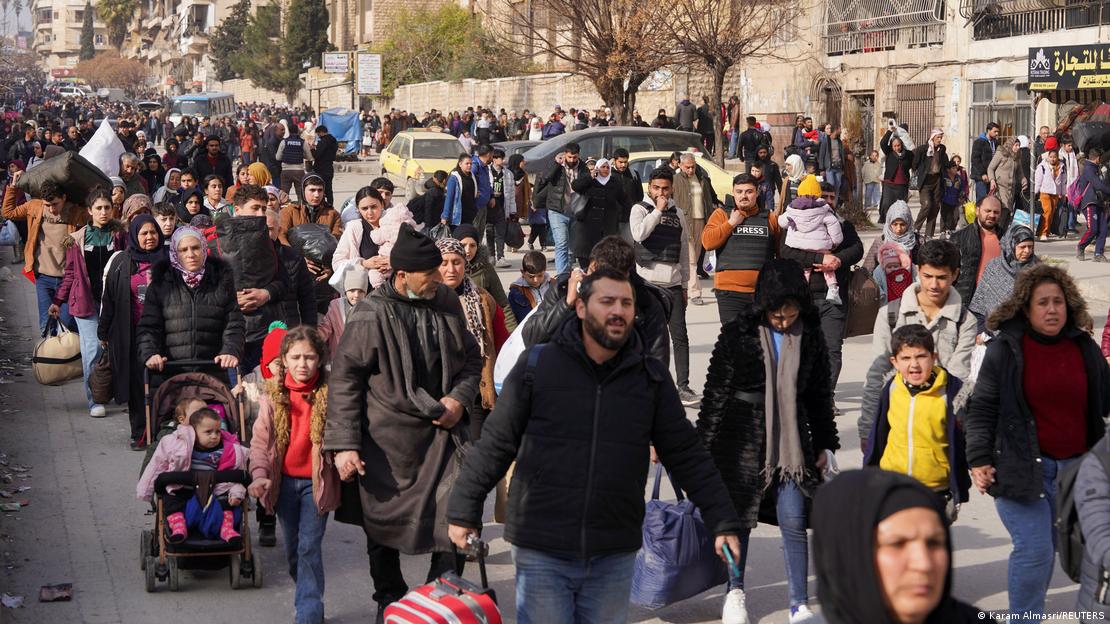
Clashes in Syria's Aleppo have led to a new displacement crisis
Image: Karam Almasri/REUTERS
On Friday, the Syrian Ministry of Defense announced a ceasefire for contested areas in Aleppo. According to witnesses on the ground, fighting has largely stopped.
Tensions between Syria's government and Kurdish forces had boiled over into deadly clashes in the country's northern city of Aleppo on Tuesday. At least 12 civilians have been killed, while several members of government forces and one Kurdish fighter have also died, according to the London-based Syrian Observatory for Human Rights. More than 60 people have been wounded.
The violence has also triggered a significant displacement crisis. Aleppo's Central Response Committee reports that 142,000 civilians have sought shelter as of Thursday. Schools are closed, and air traffic to and from the airport remains suspended.
According to Syria's government in Damascus, the military operations are "solely aimed at preserving security, preventing any armed activity within residential areas."
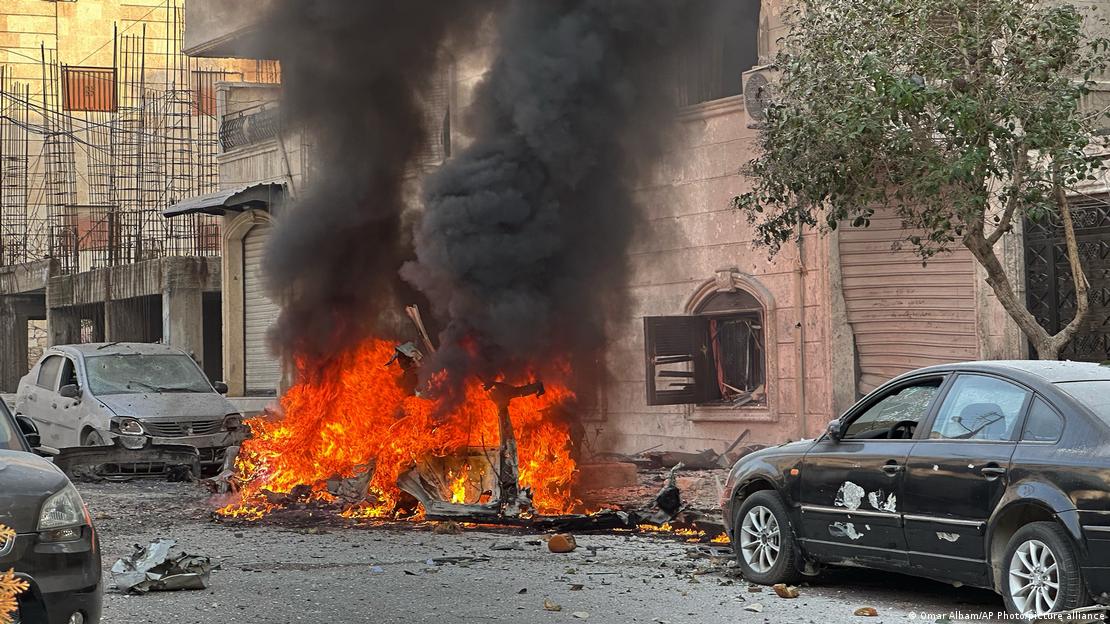
Damascus declared Aleppo's Sheikh Maqsoud and Achrafieh neighbourhoods, two Kurdish-held districts in the city, as "closed military zones" after humanitarian corridors allowed civilians to leave the areas on Wednesday and Thursday until midday. However, according to estimates, around 100,000 people remain trapped.
The Kurdish-led Syrian Democratic Forces (SDF), which govern the region, denied any military targets in these areas. Instead, they accused the military of targeting civilians and warned that the conflict could drag Syria back into full-scale war.
"The Aleppo escalation carries direct implications for Syria's stability," Nanar Hawach, senior Syria analyst at the International Crisis Group, an independent organization working to prevent wars, told DW, adding that in case of a prolonged stand-off, localized violence could spread to further areas.
Meanwhile, both sides trade blame over who started the fighting while US mediators are trying to de-escalate the situation. Stephane Dujarric, spokesman for UN Secretary-General Antonio Guterres, also called on all actors to "immediately deescalate, exercise maximum restraint and take all measures to prevent further harm to civilians." He further urged a prompt resumption of negotiations to implement the March deal.
On Friday, the Syrian Ministry of Defense announced a ceasefire for contested areas in Aleppo. According to witnesses on the ground, fighting has largely stopped.
Tensions between Syria's government and Kurdish forces had boiled over into deadly clashes in the country's northern city of Aleppo on Tuesday. At least 12 civilians have been killed, while several members of government forces and one Kurdish fighter have also died, according to the London-based Syrian Observatory for Human Rights. More than 60 people have been wounded.
The violence has also triggered a significant displacement crisis. Aleppo's Central Response Committee reports that 142,000 civilians have sought shelter as of Thursday. Schools are closed, and air traffic to and from the airport remains suspended.
According to Syria's government in Damascus, the military operations are "solely aimed at preserving security, preventing any armed activity within residential areas."
Damascus declared Aleppo's Sheikh Maqsoud and Achrafieh neighbourhoods, two Kurdish-held districts in the city, as "closed military zones" after humanitarian corridors allowed civilians to leave the areas on Wednesday and Thursday until midday. However, according to estimates, around 100,000 people remain trapped.
The Kurdish-led Syrian Democratic Forces (SDF), which govern the region, denied any military targets in these areas. Instead, they accused the military of targeting civilians and warned that the conflict could drag Syria back into full-scale war.
"The Aleppo escalation carries direct implications for Syria's stability," Nanar Hawach, senior Syria analyst at the International Crisis Group, an independent organization working to prevent wars, told DW, adding that in case of a prolonged stand-off, localized violence could spread to further areas.
Meanwhile, both sides trade blame over who started the fighting while US mediators are trying to de-escalate the situation. Stephane Dujarric, spokesman for UN Secretary-General Antonio Guterres, also called on all actors to "immediately deescalate, exercise maximum restraint and take all measures to prevent further harm to civilians." He further urged a prompt resumption of negotiations to implement the March deal.
Violence exacerbates Syria's dire humanitarian situation, and has prompted thousands of civilians to flee from the fighting
Image: Karam Almasri/REUTERS
Difficult peace deal
On March 10, 2025, three months after Syrian longtime dictator Bashar Assad was ousted by a rapid offensive led by the Islamist militia Hayat Tahrir al-Sham, the Kurdish-led Syrian Democratic Forces signed a landmark integration deal with Syria's interim President Ahmed al-Sharaa. The agreement stipulated an end of the hostilities between the Turkish-backed Syrian forces and the US-backed Kurdish forces.
It also specified that the Kurdish-controlled area with a population of around 2.5 million Kurdish people, and the region's significant oil- and energy sources will come under the control of the central government. The deal further underscored the recognition of Kurdish communities as part of a unified Syrian state.
The key sticking point, however, has been the inclusion of the around 60,000 Kurdish fighters into Syria's national army by the end of 2025.
In the past 10 months, negotiations have been stalling and the latest clashes erupted a few days after the deadline expired.
Julien Barnes-Dacey, director of the Middle East and North Africa programme at the European Council on Foreign Relations, links the deadlock to fundamental political differences. "There is continued discord between the government vision for central control over the country and the SDF push for a federalized model that gives them a strong degree of continued regional autonomy," he told DW.
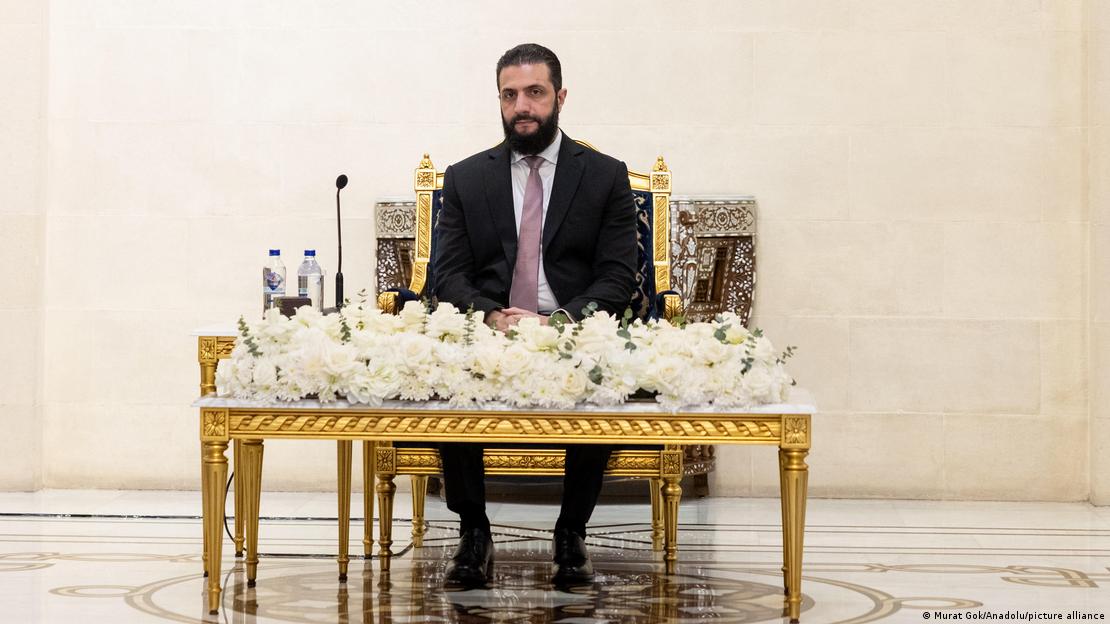
Syrian interim President Ahmad al-Sharaa seeks territorial control over Syria but his forces are not strong enough to disarm the Kurdish forces in Syria's Aleppo.Image: Murat Gok/Anadolu/picture alliance
Irreconcilable goals?
For Guido Steinberg, senior associate at the Berlin-based think tank German Institute for International and Security Affairs, and author of several books on terrorism in the Middle East, the positions of the Kurds and the administration in Damascus are irreconcilable.
"The Kurdish side will not give up its weapons as it would be tantamount to suicide, given what happened to the Alawites and Druze," he told DW. Since al-Sharaa assumed power, various bouts of violence against religious minorities have killed thousands.
"While Damascus detests the Kurds, it has a pragmatic leadership that wants a [unified] nation state," Steinberg said.
But he sees Damascus as too weak to force the Kurds to surrender their weapons and integrate into the Syrian army. "Without Turkish help, this will not happen," he told DW. Yet, he doubts that Turkey would seek military intervention in view of Turkey's domestic situation.
Turkey considers the SDF a terrorist organization due to its links to the now dissolved Kurdistan Workers' Party, or PKK. Also, observers widely agree that Turkish President Recep Tayyip Erdogan is set to remain president for a fourth term in office. This requires a constitutional amendment for which Erdogan depends on the support of pro-Kurdish parliamentarians in the upcoming presidential elections in 2028.
On Thursday, a Turkish Defence Ministry official said that Turkey's military was ready to "support" Syria in its battle against Kurdish fighters if Damascus asks for help. However, another statement specified that the Syrian army was entirely responsible for the operation in Aleppo, framing Turkey as willing to assist de-escalation rather than intervene directly. Turkish Parliament Speaker Numan Kurtulmus said that Turkey was ready "to provide all kinds of support for the immediate end of the clashes in Aleppo and the establishment of peace and stability."
Kurdish-dominated areas in Aleppo are declared "military zones" by Damascus after humanitarian corridors allowed civilians to leave by Wednesday midday
Image: Omar Albam/AP Photo/picture alliance
Humanitarian situation
Meanwhile, Crisis Group's Nanar Hawach warns that the violence in Syria's northeast compounds an already fragile political situation and severe humanitarian crisis which was prompted by more than a decade of civil war, a devastating earthquake in February 2023 and a particularly strong winter 2025-2026. "Once more, tens of thousands of displaced civilians need shelter and extended fighting will strain services in areas that are already stretched thin," Nanar told DW.
On Tuesday, the UN Office for the Coordination of Humanitarian Affairs also warnedthat, of the required $112 million (€96.2m) to deliver life-saving winter assistance, only $29 million (€24.8m) has been received, leaving a 74% gap.
Immediate priorities include emergency heating, shelter repairs, distribution of winter supplies and clearing roads to maintain access to humanitarian aid — efforts that are under increased strain due to funding shortfalls and security constraints, the UN says.
Edited by: Andreas Illmer
Jennifer Holleis Editor and political analyst specializing in the Middle East and North Africa.

Dr. Hamza al-Mustafa says Syria seeks peaceful solution, accuses SDF of failing to honour agreement
Issued on: 09/01/2026 - FRANCE24
Dr. Hamza al‑Mustafa, Syria’s Information Minister in Damascus, articulates the Syrian government’s position on the ongoing confrontation with the Syrian Democratic Forces (SDF). At its core, the exchange centres on competing visions for the future of Syria: one that emphasises state sovereignty and territorial unity under a single government, and one that involves elements within the SDF seeking de facto autonomy. Dr. al‑Mustafa frames the conflict not as a spontaneous escalation, but as a continuation of unresolved political agreements.
Video by: Gavin LEE
Issued on: 09/01/2026 - FRANCE24
Dr. Hamza al‑Mustafa, Syria’s Information Minister in Damascus, articulates the Syrian government’s position on the ongoing confrontation with the Syrian Democratic Forces (SDF). At its core, the exchange centres on competing visions for the future of Syria: one that emphasises state sovereignty and territorial unity under a single government, and one that involves elements within the SDF seeking de facto autonomy. Dr. al‑Mustafa frames the conflict not as a spontaneous escalation, but as a continuation of unresolved political agreements.
Video by: Gavin LEE


No comments:
Post a Comment