The Trump administration's decision this week to pull the United States out of key climate bodies is an act of "profound cowardice" designed to escape accountability for the country's greenhouse gas emissions, says leading French climatologist Valérie Masson-Delmotte.
Issued on: 09/01/2026
RFI
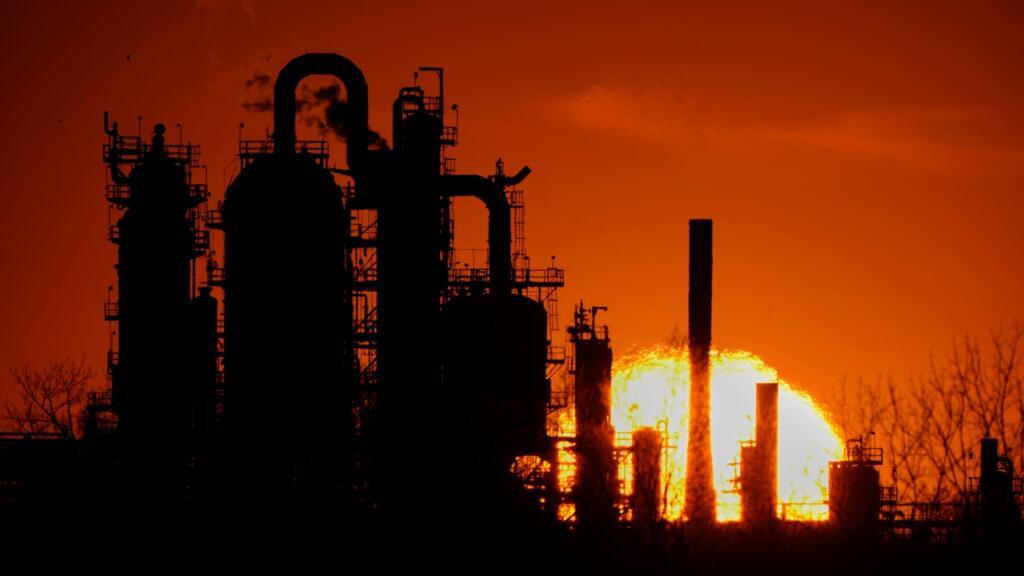
An oil refinery in El Dorado, Kansas. The United States is the world’s largest historical emitter of greenhouse gases and a major producer of fossil fuels. © AP - Charlie Riedel
On Wednesday, President Donald Trump ordered the withdrawal of the US from 66 international organisations – roughly half of them linked to the UN.
Masson-Delmotte, former chair of Working Group 1 of the Intergovernmental Panel on Climate Change (IPCC) and now a climatologist at France's Alternative Energies and Atomic Energy Commission, accuses the White House of "sabotage" aimed at destroying scientific knowledge and keeping it from the American people.
RFI: How do you interpret this latest US attack on global climate diplomacy?
Valérie Masson-Delmotte: Under the Trump administration, the United States is breaking away from multilateralism on climate and biodiversity. It's also breaking away from objective, rigorous and factual scientific assessment work.
This is reflected in the withdrawal from the IPCC, the biodiversity panel IPBES, the United Nations Framework Convention on Climate Change and the International Union for Conservation of Nature.
The move forms part of a policy of brutal attacks against climate science, environmental science and biodiversity science in the US, but also against the place of scientific facts at all levels within the American federal framework and internationally.
RFI: For Donald Trump, these organisations no longer serve American interests. Yet the United States, like other countries in the world, is affected by climate change.
VM-D: Yes, of course. The National Academies of Sciences, Medicine and Engineering have updated their assessment of the state of knowledge on the links between greenhouse gas emissions and harmful impacts on the health and wellbeing of Americans. The state of knowledge on this point is only becoming more refined, showing just how much climate change is a threat to Americans.
And what we can clearly see is that the Trump administration is pursuing a policy of obstructing all environmental regulation, going as far as destroying scientific facts and the production of scientific knowledge.
It's also an attack on academic freedom, which is one of the legacies of the Enlightenment and a key aspect of democratic life.
RFI: Is the United States shooting itself in the foot?
VM-D: I'd call it sabotage. Sabotage aimed at making scientific knowledge inaccessible. At destroying the capacity to produce knowledge by targeting climate research centres, adaptation centres and water research centres.
In fact, the American administration is trying to present itself as powerful and brutal, but it's above all profound cowardice because ultimately, the policies being implemented are designed to avoid any accountability.
The US is the world's largest historical emitter of greenhouse gases and the second-largest emitter today, with highly polluting oil and gas multinationals. I think the goal is simply to escape all responsibility and accountability.
This is an administration whose compass seems to be guided only by fossil fuel interests and nothing else.
On Wednesday, President Donald Trump ordered the withdrawal of the US from 66 international organisations – roughly half of them linked to the UN.
Masson-Delmotte, former chair of Working Group 1 of the Intergovernmental Panel on Climate Change (IPCC) and now a climatologist at France's Alternative Energies and Atomic Energy Commission, accuses the White House of "sabotage" aimed at destroying scientific knowledge and keeping it from the American people.
RFI: How do you interpret this latest US attack on global climate diplomacy?
Valérie Masson-Delmotte: Under the Trump administration, the United States is breaking away from multilateralism on climate and biodiversity. It's also breaking away from objective, rigorous and factual scientific assessment work.
This is reflected in the withdrawal from the IPCC, the biodiversity panel IPBES, the United Nations Framework Convention on Climate Change and the International Union for Conservation of Nature.
The move forms part of a policy of brutal attacks against climate science, environmental science and biodiversity science in the US, but also against the place of scientific facts at all levels within the American federal framework and internationally.
RFI: For Donald Trump, these organisations no longer serve American interests. Yet the United States, like other countries in the world, is affected by climate change.
VM-D: Yes, of course. The National Academies of Sciences, Medicine and Engineering have updated their assessment of the state of knowledge on the links between greenhouse gas emissions and harmful impacts on the health and wellbeing of Americans. The state of knowledge on this point is only becoming more refined, showing just how much climate change is a threat to Americans.
And what we can clearly see is that the Trump administration is pursuing a policy of obstructing all environmental regulation, going as far as destroying scientific facts and the production of scientific knowledge.
It's also an attack on academic freedom, which is one of the legacies of the Enlightenment and a key aspect of democratic life.
RFI: Is the United States shooting itself in the foot?
VM-D: I'd call it sabotage. Sabotage aimed at making scientific knowledge inaccessible. At destroying the capacity to produce knowledge by targeting climate research centres, adaptation centres and water research centres.
In fact, the American administration is trying to present itself as powerful and brutal, but it's above all profound cowardice because ultimately, the policies being implemented are designed to avoid any accountability.
The US is the world's largest historical emitter of greenhouse gases and the second-largest emitter today, with highly polluting oil and gas multinationals. I think the goal is simply to escape all responsibility and accountability.
This is an administration whose compass seems to be guided only by fossil fuel interests and nothing else.
The impact of US withdrawal from global climate pacts
Tamsin Walker
The US has pledged to pull out of dozens of international organizations and treaties established to advance the protection of the planet. But it doesn't spell the end of environmental action.

Petter Lyden, co-head of the international climate policy division at environmental NGO Germanwatch, said the move is bad news both in terms of missing out on funding that the US has provided in the past, but also because "the substance to agree on international cooperation to address the climate crisis is more difficult when one such big country is missing from the negotiation."
Reactions from Europe
In response to the White House announcement, European Union climate chief Wopke Hoekstra wrote on LinkedIn that the UNFCCC "underpins global climate action," adding that the decision to "retreat from it is regrettable and unfortunate."
But he said Europe would "unequivocally continue to support international climate research, as the foundation of our understanding and work."
German Environment Minister Carsten Schneider said the decision "did not come as a surprise." Referencing the UN climate conference in Brazil at the end of last year, he said it was clear the US was alone in its stand on climate protection.
He cited "numerous new alliances" on international carbon markets, accelerating the phaseout of fossil fuels and even combating fake news about climate issues, as evidence that other countries were committed to taking action.
Tamsin Walker
DW with EPD, AFP
01/08/2026
The US has pledged to pull out of dozens of international organizations and treaties established to advance the protection of the planet. But it doesn't spell the end of environmental action.

The Trump administration dismisses climate science despite the evidence of increased extreme weather events connected to the burning of oil, gas and coal
Image: BRYAN R. SMITH/AFP
Described by US nonprofit science advocacy organization, the Union of Concerned Scientists (UCS) as a "new low", Donald Trump is planning to withdraw his country from 66 organizations on the grounds that they no longer serve American interests.
Besides cutting funding and contact with groups including the UN Democracy Fund, UN Women and the Global Forum on Migration and Development, there is a clear anti-climate, anti-environment tone to this latest White House move.
The International Union for Conservation of Nature, the International Renewable Energy Agency and the Intergovernmental Panel on Climate Change are among the environmental bodies on the list of 66. As is the United Nations Framework Convention on Climate Change (UNFCCC), which is based in the German city of Bonn and organizes the annual UN climate conferences.
In 2015, parties to the convention adopted the 2015 Paris Agreement, pledging to prevent runaway heating. Trump, who makes no secret of his support for the oil industry and who has referred to climate change as a "hoax," announced his plans to exit the accord shortly after taking office for his second term.
In a statement issued following Wednesday's White House announcement, Rachel Cleetus, policy director and lead economist for the Climate and Energy Program of the UCS, said Trump's withdrawal from the UNFCCC is "yet another sign that this authoritarian, anti-science administration is determined to sacrifice people's well-being and destabilize global cooperation."
Described by US nonprofit science advocacy organization, the Union of Concerned Scientists (UCS) as a "new low", Donald Trump is planning to withdraw his country from 66 organizations on the grounds that they no longer serve American interests.
Besides cutting funding and contact with groups including the UN Democracy Fund, UN Women and the Global Forum on Migration and Development, there is a clear anti-climate, anti-environment tone to this latest White House move.
The International Union for Conservation of Nature, the International Renewable Energy Agency and the Intergovernmental Panel on Climate Change are among the environmental bodies on the list of 66. As is the United Nations Framework Convention on Climate Change (UNFCCC), which is based in the German city of Bonn and organizes the annual UN climate conferences.
In 2015, parties to the convention adopted the 2015 Paris Agreement, pledging to prevent runaway heating. Trump, who makes no secret of his support for the oil industry and who has referred to climate change as a "hoax," announced his plans to exit the accord shortly after taking office for his second term.
In a statement issued following Wednesday's White House announcement, Rachel Cleetus, policy director and lead economist for the Climate and Energy Program of the UCS, said Trump's withdrawal from the UNFCCC is "yet another sign that this authoritarian, anti-science administration is determined to sacrifice people's well-being and destabilize global cooperation."
Hawaii's youth forges path out of climate crisis 16:45
Petter Lyden, co-head of the international climate policy division at environmental NGO Germanwatch, said the move is bad news both in terms of missing out on funding that the US has provided in the past, but also because "the substance to agree on international cooperation to address the climate crisis is more difficult when one such big country is missing from the negotiation."
Reactions from Europe
In response to the White House announcement, European Union climate chief Wopke Hoekstra wrote on LinkedIn that the UNFCCC "underpins global climate action," adding that the decision to "retreat from it is regrettable and unfortunate."
But he said Europe would "unequivocally continue to support international climate research, as the foundation of our understanding and work."
German Environment Minister Carsten Schneider said the decision "did not come as a surprise." Referencing the UN climate conference in Brazil at the end of last year, he said it was clear the US was alone in its stand on climate protection.
He cited "numerous new alliances" on international carbon markets, accelerating the phaseout of fossil fuels and even combating fake news about climate issues, as evidence that other countries were committed to taking action.
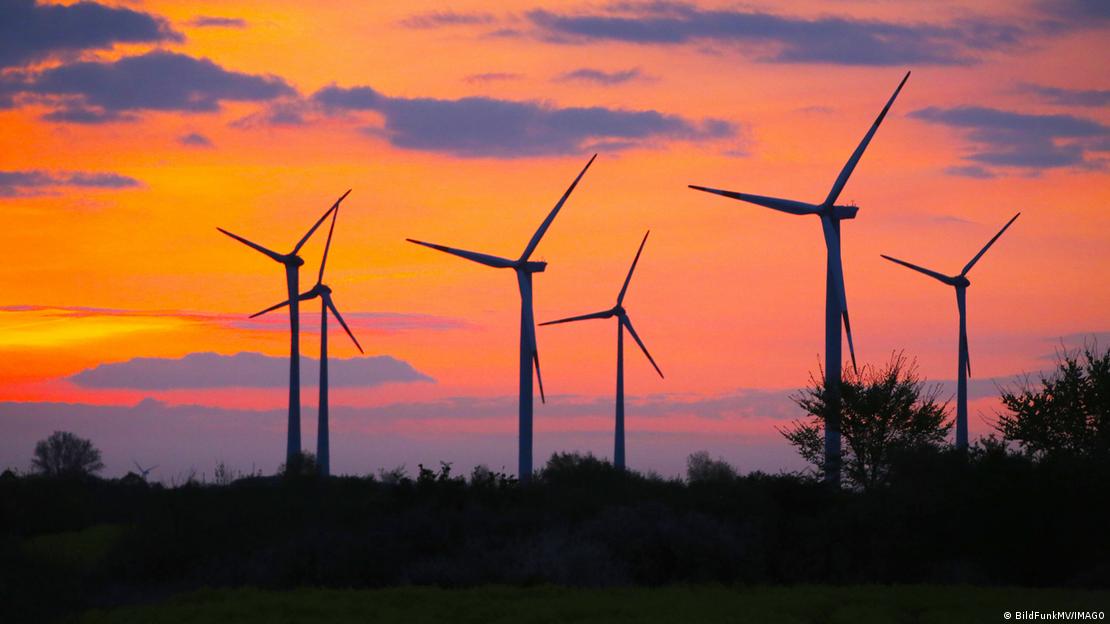
The global uptake in renewable energy sources is higher than ever before
Image: BildFunkMV/IMAGO
Lyden said the US direction of travel would not change the fact that the transition to a low-carbon future is ongoing. "The expansion of renewable energy will continue," he said, adding that countries transitioning to climate-friendly solutions were gaining economic benefits.
Will it slow climate action in the US?
Trump's latest play has met with condemnation from American climate leaders.
Gina McCarthy, the first national climate adviser to the White House under former President Joe Biden and now chair of the climate action coalition America Is All In (AIAI), said pulling out of the UNFCCC was "a shortsighted, embarrassing, and foolish decision."
McCarthy said it would mean forfeiting the "ability to influence trillions of dollars in investments, policies, and decisions that would have advanced our economy and protected us from costly disasters wreaking havoc on our country."
But she added that the AIAI coalition, whose members include local governments, states, businesses, universities and more, remained committed to collaborating at an international level to deliver on the goals of the Paris Agreement.
Lyden said the US direction of travel would not change the fact that the transition to a low-carbon future is ongoing. "The expansion of renewable energy will continue," he said, adding that countries transitioning to climate-friendly solutions were gaining economic benefits.
Will it slow climate action in the US?
Trump's latest play has met with condemnation from American climate leaders.
Gina McCarthy, the first national climate adviser to the White House under former President Joe Biden and now chair of the climate action coalition America Is All In (AIAI), said pulling out of the UNFCCC was "a shortsighted, embarrassing, and foolish decision."
McCarthy said it would mean forfeiting the "ability to influence trillions of dollars in investments, policies, and decisions that would have advanced our economy and protected us from costly disasters wreaking havoc on our country."
But she added that the AIAI coalition, whose members include local governments, states, businesses, universities and more, remained committed to collaborating at an international level to deliver on the goals of the Paris Agreement.
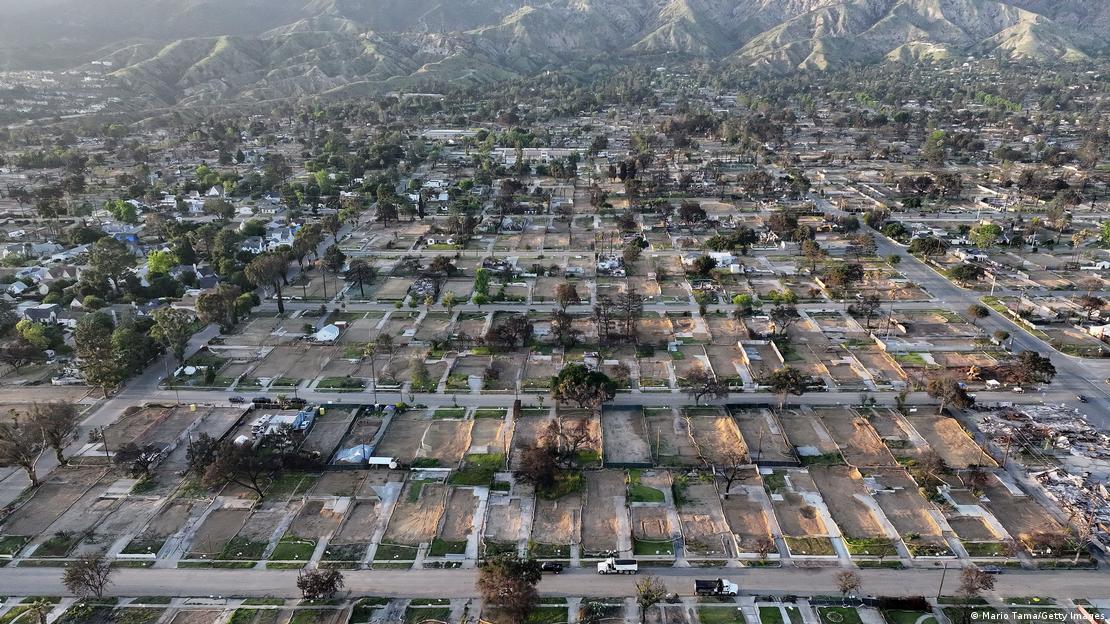
California is prone to drought and fire, but the wildfires that reached LA in January 2025 wiped engine residential areas off the map
Image: Mario Tama/Getty Images
Lyden of Germanwatch believes it would be hard for California or other states to fully fill the gap left by an absent federal government. However, he said there is a lot happening beyond "formal decisions" where "local and regional levels could even have more agency than the federal one."
McCarthy said AIAI will expand its efforts "to work at the local level to build hope and opportunity," and would not allow this administration to deny Americans access to the "huge health, safety, and economic benefits clean energy provides."
Rachel Cleetus also said forward-looking US states and the rest of the world understand the mounting threat of climate change and recognize that "collective global action remains the only viable path to secure a livable future for our children and grandchildren."
Additional reporting from Jeannette Cwienk.
Edited by: Anke Rasper

Tamsin Walker Senior editor with DW's environment team
Lyden of Germanwatch believes it would be hard for California or other states to fully fill the gap left by an absent federal government. However, he said there is a lot happening beyond "formal decisions" where "local and regional levels could even have more agency than the federal one."
McCarthy said AIAI will expand its efforts "to work at the local level to build hope and opportunity," and would not allow this administration to deny Americans access to the "huge health, safety, and economic benefits clean energy provides."
Rachel Cleetus also said forward-looking US states and the rest of the world understand the mounting threat of climate change and recognize that "collective global action remains the only viable path to secure a livable future for our children and grandchildren."
Additional reporting from Jeannette Cwienk.
Edited by: Anke Rasper
Tamsin Walker Senior editor with DW's environment team

No comments:
Post a Comment