Why Greenland's melting ice cap threatens humanity, and could serve Trump
As the White House looks to take control of Greenland, US President Donald Trump is eyeing not just a strategic foothold in the Arctic but the territory's vast underground resources. While the melting of the island's glaciers could make land and minerals easier to exploit, it could also wipe hundreds of thousands of cities off the map.
Issued on: 08/01/2026 - RFI
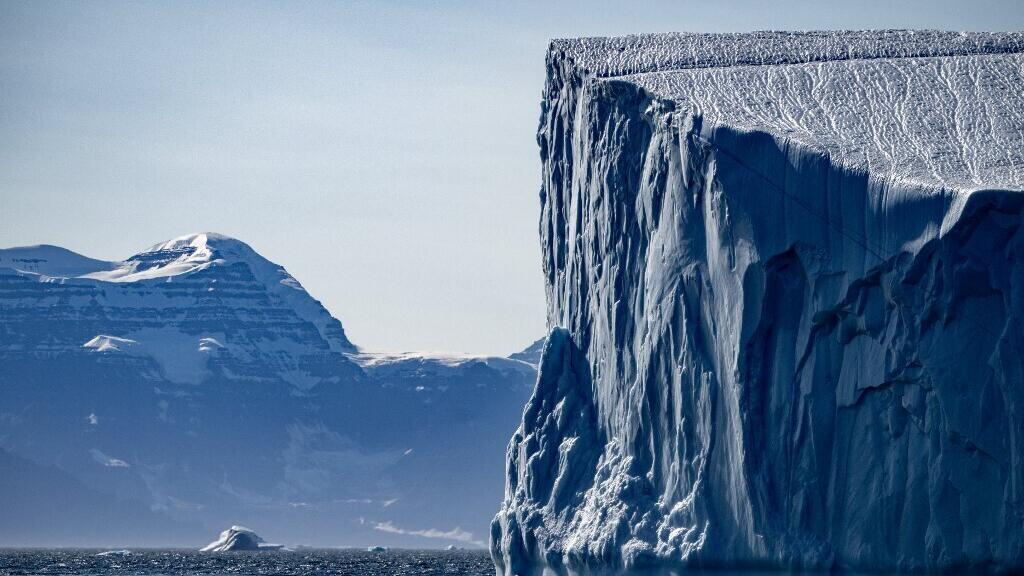
An iceberg melting in Scoresby Fjord, eastern Greenland.
© AFP - OLIVIER MORIN
Greenland is vast, and highly coveted. Covering some 2 million square kilometres, it is almost four times the size of France.
Above all, it is the second-largest body of ice on Earth after Antarctica, at the opposite pole.
The ice mass is beginning to melt and could ultimately trigger a dramatic rise in sea levels. Unlike sea ice, which floats, Greenland’s ice sheet lies on land. And that makes all the difference.
"In Greenland, we are dealing with extremely large masses, enormous volumes, covering the entire island," says Glenn Yannic, a lecturer and researcher at Savoie Mont Blanc University. "We're talking about an ice sheet that can be several hundred metres thick. It is estimated that the complete melting of Greenland could raise sea levels by five, six or seven metres."
The melting of the ice sheet – rather than the summer thaw of Arctic sea ice – is what causes sea levels to rise, the Greenland specialist explains. "When sea ice melts, it's like putting an ice cube into a glass filled to the brim: the ice cube melts, but the water level does not rise," he tells RFI.
Greenland melted recently, says study that raises future sea level threat
Greenland is vast, and highly coveted. Covering some 2 million square kilometres, it is almost four times the size of France.
Above all, it is the second-largest body of ice on Earth after Antarctica, at the opposite pole.
The ice mass is beginning to melt and could ultimately trigger a dramatic rise in sea levels. Unlike sea ice, which floats, Greenland’s ice sheet lies on land. And that makes all the difference.
"In Greenland, we are dealing with extremely large masses, enormous volumes, covering the entire island," says Glenn Yannic, a lecturer and researcher at Savoie Mont Blanc University. "We're talking about an ice sheet that can be several hundred metres thick. It is estimated that the complete melting of Greenland could raise sea levels by five, six or seven metres."
The melting of the ice sheet – rather than the summer thaw of Arctic sea ice – is what causes sea levels to rise, the Greenland specialist explains. "When sea ice melts, it's like putting an ice cube into a glass filled to the brim: the ice cube melts, but the water level does not rise," he tells RFI.
Greenland melted recently, says study that raises future sea level threat
Accelerating warming
According to Copernicus – the Earth observation component of the European Union's Space programme – for every centimetre of sea level rise, around 6 million more people are exposed to coastal flooding.
A rise in sea levels of five to seven metres by the end of the century would lead to the disappearance of thousands of coastal cities worldwide, affecting millions of people.
Such a scenario is becoming increasingly plausible, because Greenland is one of the fastest-warming regions on the planet. Last spring, glaciers melted 17 times faster than average amid record temperatures.
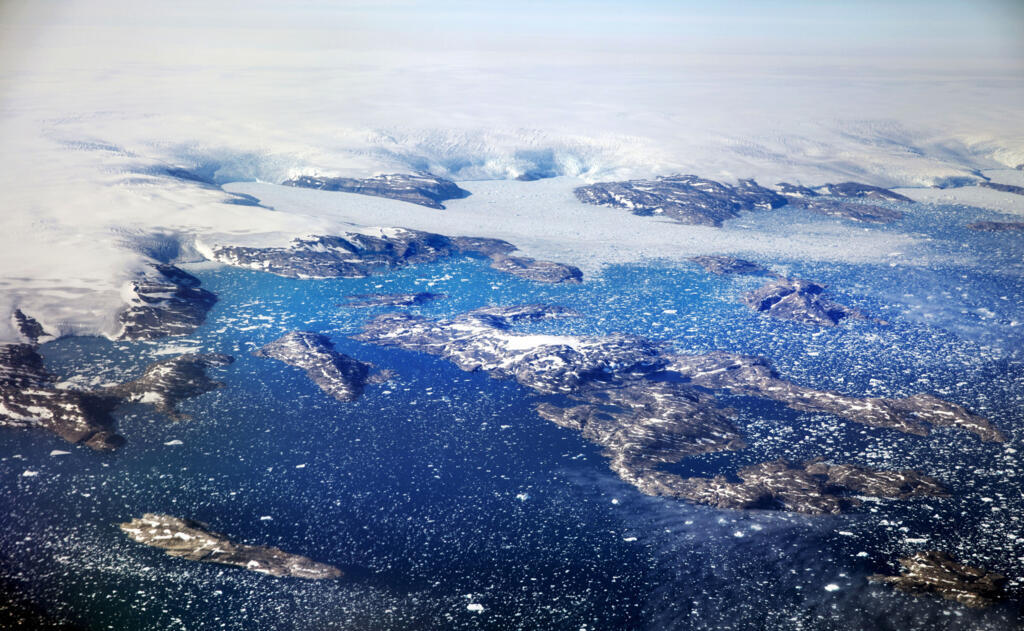
Icebergs float in a fjord after calving off from glaciers on the Greenland ice sheet in south-eastern Greenland, August 2017. © AP - David Goldman
New research, published by US scientists on 5 January in Nature Geoscience, has also alarmed the scientific community. Using ice core samples, researchers found that Greenland's ice dome last melted around 7,000 years ago, during the early Holocene period, when "temperatures were three to five degrees C higher than those currently observed", Yannic says.
"They showed that part of northern Greenland was ice-free. That's the whole significance of this study, and why it's had such an impact. Three to five degrees C – we are almost there, we are on the brink. By the end of the century, we can predict that all the ice currently covering Greenland will have melted."
Arctic sees unprecedented heat as climate impacts cascade
New research, published by US scientists on 5 January in Nature Geoscience, has also alarmed the scientific community. Using ice core samples, researchers found that Greenland's ice dome last melted around 7,000 years ago, during the early Holocene period, when "temperatures were three to five degrees C higher than those currently observed", Yannic says.
"They showed that part of northern Greenland was ice-free. That's the whole significance of this study, and why it's had such an impact. Three to five degrees C – we are almost there, we are on the brink. By the end of the century, we can predict that all the ice currently covering Greenland will have melted."
Arctic sees unprecedented heat as climate impacts cascade
In Trump’s sights
A wealth of natural resources lies beneath Greenland’s ice, including rare earth elements and suspected fossil fuel reserves.
Trump has made no secret of his desire to exploit them.
And since the US ousting of Venezuela’s president Nicolás Maduro, partly to secure Venezuelan oil, Trump has renewed calls for a US takeover of the Arctic territory.
On Sunday, he said that he needed Greenland "very badly" for reasons of "national security", given its strategic position between the US and Russia. But Trump is also eyeing resources such as hydrocarbons, minerals and even water – so pure it is said to be worth its weight in gold.
Access to Greenland's ice-capped resources has remained a challenge, but "the acceleration in the melting of the ice sheet will free up areas and make it easier to access certain mineral deposits", says Yannic.
If Trump were to succeed, the man who called climate change a "con job" could could end up benefitting from global warming.
“The issue of the search for minerals and hydrocarbons, and their exploitation, has already been put before the Greenland government, which decided several years ago to impose a moratorium on such activities,” Yannic says.
Prospecting was halted in order to protect the environment. For the moment, Greenland is holding firm – but for how long?
This article, adapted from the original in French by RFI's Florent Guinard, has been lightly edited for clarity.
Trump's grotesque Greenland fantasy ignores very real crisis bubbling under the surface
TRUMP: We need Greenland. Right now, Greenland is covered with Russian and Chinese ships.
REPORTER: What would the justification be for a claim to Greenland?
TRUMP: The EU needs us to have it.
None of this makes any actual sense — Greenland is not covered with Chinese and Russian ships, the EU does not want us to have it (European leaders united Tuesday to say, “Greenland belongs to its people. It is for Denmark and Greenland, and them only, to decide on matters concerning Denmark and Greenland,” which seems pretty clear), and Denmark asserts control over Greenland in pretty much the same way Washington asserts control over, say, Alaska or Vermont.
In fact, though, Denmark has been slowly loosening that control over the decades — not because it wants to sell it to America, but because it recognizes that the people who live there, most of whom are Inuit, should have the greatest say in how it’s managed. Greenlanders have exercised that say in ways that would be uncongenial to the White House: for instance, civil partnerships for gay people have been standard since 1996, and gay marriage legal since 2016 when the island’s parliament approved it by a 28-0 vote. Under the Kinguaassiorsinnaajunnaarsagaaneq pillugu inatsit law, sex changes have been allowed since 1976.
In other words, Trump’s claim that Greenlanders “want to be with us” is palpable nonsense — a poll last January found that 85 percent of the population opposed the idea.
Discerning Trump’s “real” reason for wanting Greenland is a pointless exercise; he’s a sad, ancient baby, and babies just want.
He seems to think that the point of a ruler is to acquire more territory, and that he more or less owns by divine right the land masses adjacent to our country. (MAGA bloggers this week were busily talking about “vassal states” across the hemisphere). There are minerals there, but hard to get at. Oh, and there’s petroleum in and around Greenland as well, and that usually sings a siren song to this child of the oil-driven 20th century.
Really, however, there’s only one truly vital strategic asset in Greenland, one thing that could change the world. And that’s the ice that covers almost all its landmass.
I’ve been up on this ice sheet — I’ve hiked up glaciers from the tideline, climbing and climbing till the sea disappears behind you and all you can see in every direction is white. It is uncannily beautiful.
I helped organize a trip there in 2018 so that two very fine poets could record a piece from atop this ice sheet. Kathy Jetnil-Kijiner came from her home in the Marshall Islands, which is already slipping under a rising sea (and which has long known about US imperialism; part of the atoll is still radioactive and off limits, thanks to US bomb testing in the 1950s); Aka Niviana is a native Greenlander whose home has begun to melt, a melt that if it continues will guarantee the submersion of Polynesia, and much else.
They stood there on that ice, in a chill summer wind, and recited their long and majestic poem for a camera; my job was to stand just outside its range with a pair of sleeping bags that they could wrap themselves in between takes. “Rise: From One Island to Another,” as their work was called, has won both prizes and large audiences on YouTube; it will, I think, be one of the documents of this global warming era that someday people will look at in a kind of outraged awe, one more proof that we knew exactly what was coming and did nothing about it.
We were camped above the Eagle Glacier — Jason Box, the American-born climatologist now living in Denmark who helped lead the trip, had named it that because of its shape when he first visited five years earlier, “but now the head and the wings of the bird have melted away. I don’t know what we should call it now, but the eagle is dead.” And that’s true of so much of the island; we watched as one iceberg after another came crashing off the head of glaciers, each one raising the level of the ocean by some infinitesimal amount.
Greenland holds 23 feet of sea-level rise, should we eventually melt it all. That will take a while, but we’re doing our best. It’s been losing mass steadily for the last quarter-century — it lost 105 billion tons of ice (billion with a b) in 2025, and the ice was melting well into September, unusual in a place where winter usually descends in late August. The people of Greenland, by the way, recognize all this: They passed a law in 2021 banning all new oil exploration and drilling — the government described it as “a natural step” because Greenland “takes the climate crisis seriously.” (More than two-thirds of their power comes from renewables, mostly hydro).
I found those Greenlanders I met to be hardy, thrifty people very much in tune with their place. I spent a memorable afternoon with Box planting trees outside the former American air base in Narsarsuaq in an effort to, among other things, soak up some carbon dioxide. And I spent an equally pleasant afternoon drinking beer with him and the rest of our party at a microbrewery in Saqqannguaq (one of several in the country) which brews “with the purest drinking water on Earth, coming from the Greenlandic ice cap” and hence “free of toxins, chemicals, and microplastics.” Highly recommend the IPA, reminder of yet another imperial adventure.
Obviously seizing Greenland would be a terrible idea because it would break up NATO and put America at loggerheads with the liberal democracies of Europe (though that may be the single biggest incentive for the administration). Obviously, it would be a gross example of modern colonization, obliterating the rights of the people who live there. Obviously, it would raise tensions around the world even higher, and send the strongest possible signal that Beijing should just go grab Taiwan. Lots of people are talking about those things, though there’s not the slightest sign that anyone in power is listening. (Miller’s wife has tweeted out a map of Greenland decked out in red and white stripes).
But in a rational world what we’d mostly be talking about is all that ice. That’s what, for the other 8 billion people on the planet, actually matters about this island. It could easily add a foot or more to the level of the ocean before the century is out, all by itself (the Antarctic, much bigger but slower to melt, will eventually add much more). A foot is a lot — on a typical beach on, say, the Jersey shore, which slopes up at about 1°, that brings the ocean about 90 feet inland.
And the fresh water pouring off Greenland seems already to be disrupting the great conveyor belt currents that bring warm water north from the equator, maintaining the climates of the surrounding continents. That too could raise—by significant amounts—the level of the sea, especially along the coast of the southeast US (and also plunge Europe into the deep freeze even as the rest of the planet warms).
The stakes are so enormous that they make the Trumpian greed for this land seem all the punier and more puerile. Here’s how Jetnil-Kijiner and Niviana put it in their poem:
We demand that the world see beyond
SUVs, ACs, their pre-package convenience
Their oil-slicked dreams, beyond the belief
That tomorrow will never happen
And yet there’s a generosity to their witness — a recognition that whoever started the trouble, we’re now in it together.
Let me bring my home to yours
Let’s watch as Miami, New York,
Shanghai, Amsterdam, London
Rio de Janeiro and Osaka
Try to breathe underwater…
None of us is immune.
Life in all forms demands
The same respect we all give to money…
So each and every one of us
Has to decide
If we
Will
Rise
Common Dreams
January 8, 2026
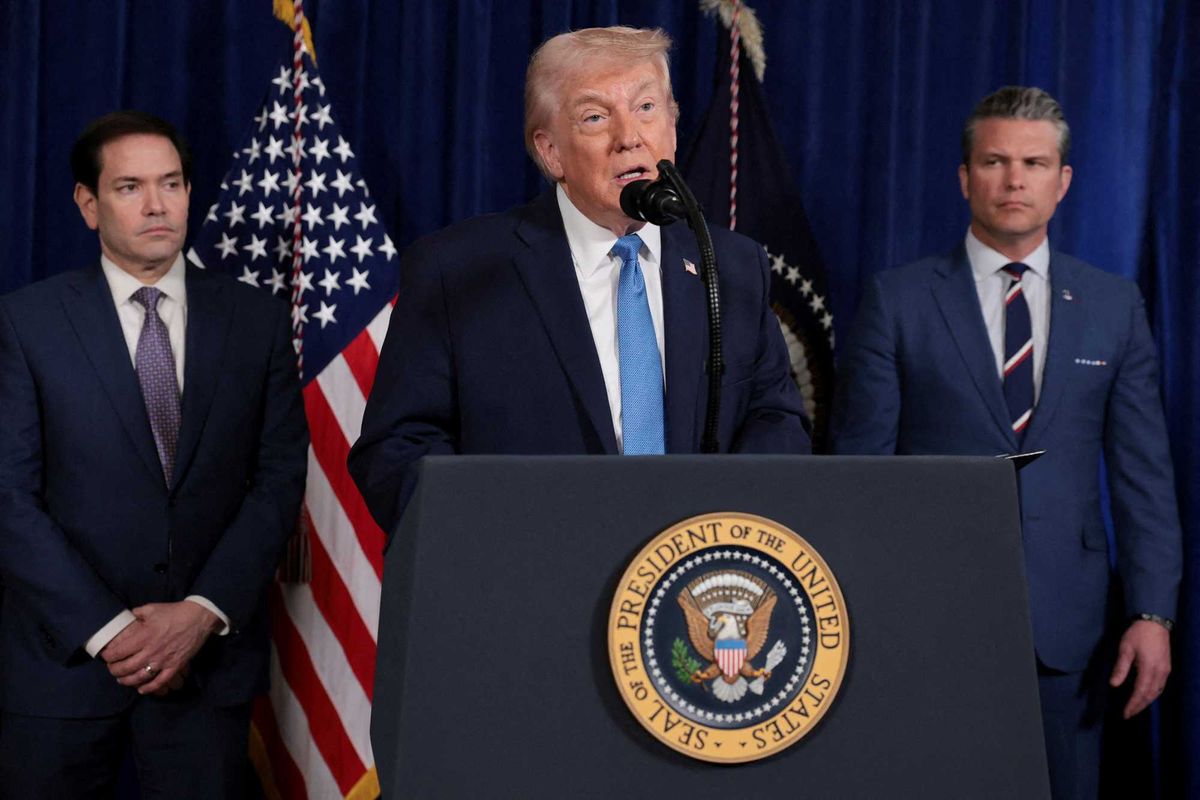
Donald Trump speaks at Mar-a-Lago, with Marco Rubio and Pete Hegseth. REUTERS/Jonathan Ernst
When President Donald Trump first started fantasizing about seizing Greenland for the US, it sounded farcical — a little Gilbert and Sullivan, or maybe The Mouse that Roared. In the wake of America’s attack on Caracas, however, it now seems as likely as not that we’ll soon be landing troops in Nuuk, a truly hideous prospect that we should all try to head off. Here’s my small effort:
First off, I think it’s a very real possibility. Here’s Stephen Miller on Monday, talking with Jake Tapper:
TAPPER: Can you rule out the US is going to take Greenland by force?
MILLER: Greenland should be part of the US. By what right does Denmark assert control over Greenland? The US is the power of NATO.
TAPPER: So force is on the table?
MILLER: Nobody is gonna fight the US militarily over future of Greenland.
And here’s our leader himself, speaking to a press gaggle on Air Force One while a beaming Sen. Lindsay Graham (R-Obsequious) grinned by his side:
January 8, 2026
Donald Trump speaks at Mar-a-Lago, with Marco Rubio and Pete Hegseth. REUTERS/Jonathan Ernst
When President Donald Trump first started fantasizing about seizing Greenland for the US, it sounded farcical — a little Gilbert and Sullivan, or maybe The Mouse that Roared. In the wake of America’s attack on Caracas, however, it now seems as likely as not that we’ll soon be landing troops in Nuuk, a truly hideous prospect that we should all try to head off. Here’s my small effort:
First off, I think it’s a very real possibility. Here’s Stephen Miller on Monday, talking with Jake Tapper:
TAPPER: Can you rule out the US is going to take Greenland by force?
MILLER: Greenland should be part of the US. By what right does Denmark assert control over Greenland? The US is the power of NATO.
TAPPER: So force is on the table?
MILLER: Nobody is gonna fight the US militarily over future of Greenland.
And here’s our leader himself, speaking to a press gaggle on Air Force One while a beaming Sen. Lindsay Graham (R-Obsequious) grinned by his side:
TRUMP: We need Greenland. Right now, Greenland is covered with Russian and Chinese ships.
REPORTER: What would the justification be for a claim to Greenland?
TRUMP: The EU needs us to have it.
None of this makes any actual sense — Greenland is not covered with Chinese and Russian ships, the EU does not want us to have it (European leaders united Tuesday to say, “Greenland belongs to its people. It is for Denmark and Greenland, and them only, to decide on matters concerning Denmark and Greenland,” which seems pretty clear), and Denmark asserts control over Greenland in pretty much the same way Washington asserts control over, say, Alaska or Vermont.
In fact, though, Denmark has been slowly loosening that control over the decades — not because it wants to sell it to America, but because it recognizes that the people who live there, most of whom are Inuit, should have the greatest say in how it’s managed. Greenlanders have exercised that say in ways that would be uncongenial to the White House: for instance, civil partnerships for gay people have been standard since 1996, and gay marriage legal since 2016 when the island’s parliament approved it by a 28-0 vote. Under the Kinguaassiorsinnaajunnaarsagaaneq pillugu inatsit law, sex changes have been allowed since 1976.
In other words, Trump’s claim that Greenlanders “want to be with us” is palpable nonsense — a poll last January found that 85 percent of the population opposed the idea.
Discerning Trump’s “real” reason for wanting Greenland is a pointless exercise; he’s a sad, ancient baby, and babies just want.
He seems to think that the point of a ruler is to acquire more territory, and that he more or less owns by divine right the land masses adjacent to our country. (MAGA bloggers this week were busily talking about “vassal states” across the hemisphere). There are minerals there, but hard to get at. Oh, and there’s petroleum in and around Greenland as well, and that usually sings a siren song to this child of the oil-driven 20th century.
Really, however, there’s only one truly vital strategic asset in Greenland, one thing that could change the world. And that’s the ice that covers almost all its landmass.
I’ve been up on this ice sheet — I’ve hiked up glaciers from the tideline, climbing and climbing till the sea disappears behind you and all you can see in every direction is white. It is uncannily beautiful.
I helped organize a trip there in 2018 so that two very fine poets could record a piece from atop this ice sheet. Kathy Jetnil-Kijiner came from her home in the Marshall Islands, which is already slipping under a rising sea (and which has long known about US imperialism; part of the atoll is still radioactive and off limits, thanks to US bomb testing in the 1950s); Aka Niviana is a native Greenlander whose home has begun to melt, a melt that if it continues will guarantee the submersion of Polynesia, and much else.
They stood there on that ice, in a chill summer wind, and recited their long and majestic poem for a camera; my job was to stand just outside its range with a pair of sleeping bags that they could wrap themselves in between takes. “Rise: From One Island to Another,” as their work was called, has won both prizes and large audiences on YouTube; it will, I think, be one of the documents of this global warming era that someday people will look at in a kind of outraged awe, one more proof that we knew exactly what was coming and did nothing about it.
We were camped above the Eagle Glacier — Jason Box, the American-born climatologist now living in Denmark who helped lead the trip, had named it that because of its shape when he first visited five years earlier, “but now the head and the wings of the bird have melted away. I don’t know what we should call it now, but the eagle is dead.” And that’s true of so much of the island; we watched as one iceberg after another came crashing off the head of glaciers, each one raising the level of the ocean by some infinitesimal amount.
Greenland holds 23 feet of sea-level rise, should we eventually melt it all. That will take a while, but we’re doing our best. It’s been losing mass steadily for the last quarter-century — it lost 105 billion tons of ice (billion with a b) in 2025, and the ice was melting well into September, unusual in a place where winter usually descends in late August. The people of Greenland, by the way, recognize all this: They passed a law in 2021 banning all new oil exploration and drilling — the government described it as “a natural step” because Greenland “takes the climate crisis seriously.” (More than two-thirds of their power comes from renewables, mostly hydro).
I found those Greenlanders I met to be hardy, thrifty people very much in tune with their place. I spent a memorable afternoon with Box planting trees outside the former American air base in Narsarsuaq in an effort to, among other things, soak up some carbon dioxide. And I spent an equally pleasant afternoon drinking beer with him and the rest of our party at a microbrewery in Saqqannguaq (one of several in the country) which brews “with the purest drinking water on Earth, coming from the Greenlandic ice cap” and hence “free of toxins, chemicals, and microplastics.” Highly recommend the IPA, reminder of yet another imperial adventure.
Obviously seizing Greenland would be a terrible idea because it would break up NATO and put America at loggerheads with the liberal democracies of Europe (though that may be the single biggest incentive for the administration). Obviously, it would be a gross example of modern colonization, obliterating the rights of the people who live there. Obviously, it would raise tensions around the world even higher, and send the strongest possible signal that Beijing should just go grab Taiwan. Lots of people are talking about those things, though there’s not the slightest sign that anyone in power is listening. (Miller’s wife has tweeted out a map of Greenland decked out in red and white stripes).
But in a rational world what we’d mostly be talking about is all that ice. That’s what, for the other 8 billion people on the planet, actually matters about this island. It could easily add a foot or more to the level of the ocean before the century is out, all by itself (the Antarctic, much bigger but slower to melt, will eventually add much more). A foot is a lot — on a typical beach on, say, the Jersey shore, which slopes up at about 1°, that brings the ocean about 90 feet inland.
And the fresh water pouring off Greenland seems already to be disrupting the great conveyor belt currents that bring warm water north from the equator, maintaining the climates of the surrounding continents. That too could raise—by significant amounts—the level of the sea, especially along the coast of the southeast US (and also plunge Europe into the deep freeze even as the rest of the planet warms).
The stakes are so enormous that they make the Trumpian greed for this land seem all the punier and more puerile. Here’s how Jetnil-Kijiner and Niviana put it in their poem:
We demand that the world see beyond
SUVs, ACs, their pre-package convenience
Their oil-slicked dreams, beyond the belief
That tomorrow will never happen
And yet there’s a generosity to their witness — a recognition that whoever started the trouble, we’re now in it together.
Let me bring my home to yours
Let’s watch as Miami, New York,
Shanghai, Amsterdam, London
Rio de Janeiro and Osaka
Try to breathe underwater…
None of us is immune.
Life in all forms demands
The same respect we all give to money…
So each and every one of us
Has to decide
If we
Will
Rise

No comments:
Post a Comment