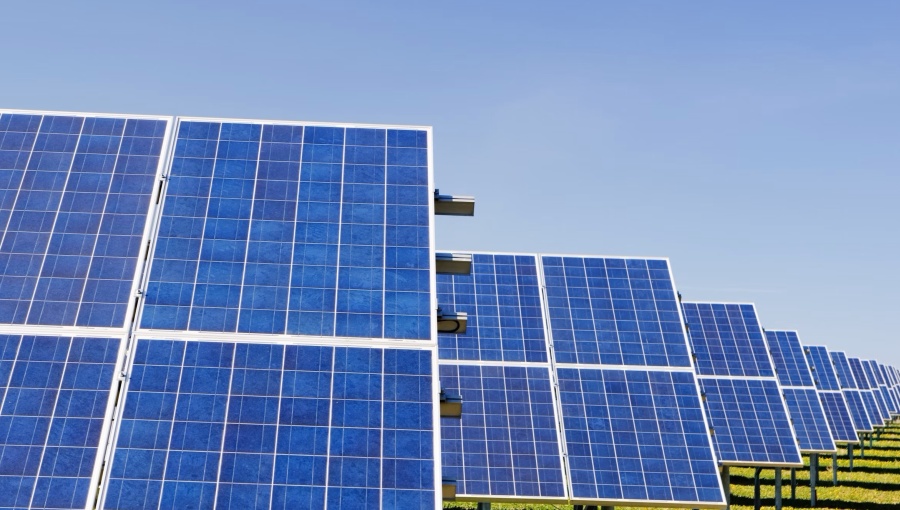
/ Zbynek Burival - Unsplash
By bno - Tokyo Office January 9, 2026
The Japanese government has formally sanctioned a monumental draft budget of JPY122.31 trillion ($780bn) for the fiscal period commencing April 1 2026, Eco-Business reports. This record-breaking financial roadmap signals a decisive pivot towards "green transformation" (GX), prioritising the modernisation of the national energy grid and the bolstering of resource independence.
This budget serves as a critical litmus test for Japan's ability to synchronise its industrial survival with aggressive climate targets. By heavily subsidising perovskite solar and next-generation nuclear, Tokyo is attempting to secure a competitive edge in the global decarbonisation race while insulating its economy from volatile external energy markets.
A significant portion of the capital is directed through the Ministry of Economy, Trade and Industry (METI), which has secured JPY605bn ($3.8bn) specifically for GX and renewable energy projects. According to Eco-Business, this funding is designed to harmonise the nation’s 2050 carbon-neutrality pledge with the burgeoning electricity requirements of its digital and industrial sectors. Notably, JPY84bn ($536mn) is earmarked for energy-saving upgrades within manufacturing plants, while JPY36.3bn ($231mn) will facilitate the adoption of expensive clean fuels, such as hydrogen, by narrowing the price disparity with traditional fossil fuels.
Technological innovation remains a cornerstone of the April 2026 strategy. METI has allocated JPY49.7bn ($317mn) to scale the production of perovskite solar cells—a flexible, lightweight alternative to traditional silicon panels that Japan hopes will revolutionise urban energy harvesting. Furthermore, JPY12.2bn ($77.8mn) is dedicated to exploring offshore wind potential within the country's exclusive economic zone, moving beyond coastal waters to tap into more powerful deep-sea winds.
Eco-Business also reports that the government is also incentivising regional decarbonisation through a new strategic initiative. This programme provides JPY2.1 trillion over a five-year window to encourage corporations to establish factories and data centres powered exclusively by renewable or nuclear sources. For the upcoming fiscal year, JPY40bn ($255mn) has been set aside to launch this regional shift.
Nuclear energy is seeing a robust resurgence in the national priorities. The April 2026 budget designates JPY122bn ($778mn) for the advancement of experimental reactors, including fast-neutron technologies. To ensure local cooperation, the state has increased subsidies for municipalities hosting these power facilities to JPY79.4bn ($506mn).
Beyond power generation, the Ministry of the Environment is focusing on the circular economy and emerging tech. Funding for the reclamation of rare earth elements and metals has surged to JPY37.9bn ($241.8mn), a 60% increase over the previous year's initial figures. This move is intended to shield Japanese manufacturers from global supply chain disruptions. Simultaneously, the ministry is tackling the environmental footprint of the AI boom, dedicating JPY900mn ($5.7mn) to pioneer cooling systems for power-hungry data centres, Eco-Business reports.
The budget also addresses carbon management and ecological stability. JPY2.6bn ($16.5mn) will support carbon capture, utilisation, and storage (CCUS) projects, alongside research into artificial photosynthesis. On the domestic front, JPY6.2bn ($39.5mn) is allocated to manage human-wildlife conflicts, specifically regarding bear populations, through the use of drones and specialised personnel.
These financial commitments are essential milestones on Japan’s path to slash emissions by 46% by 2030 (against 2013 benchmarks) and 73% by 2040. By integrating nuclear stability with renewable innovation, Tokyo aims to forge a resilient, low-carbon economy that can sustain both its ecological promises and its industrial prowess.

No comments:
Post a Comment