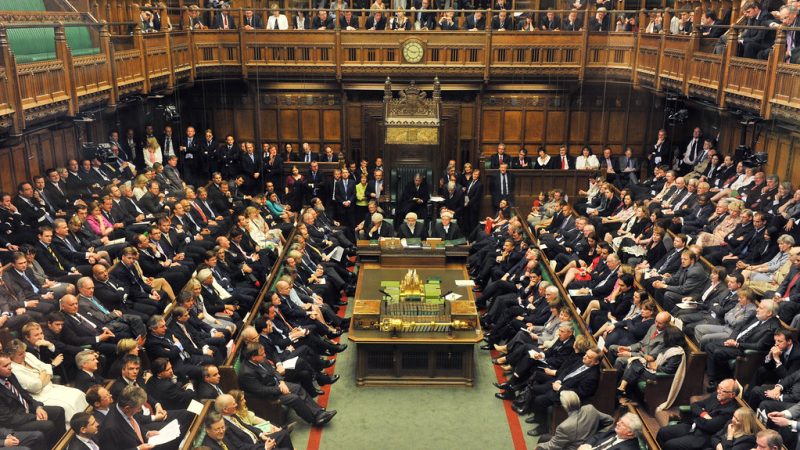
GMB Union: It’s time to tackle inequality within UK Parliament’s workforce. That’s why we’ve launched the One Parliament, One Employer campaign
'In October 2025, the GMB MPs’ and Peers’ Staff Branch launched a report, exposing vast pay inequalities in Parliament'
By Holly Williamson, Office Manager and GMB MPs’ and Lords’ Staff Branch Equalities Officer and Philip Hutchinson, Senior Parliamentary Researcher and GMB MPs’ and Lords’ Staff Branch Youth Officer
In October 2025, the GMB MPs’ and Peers’ Staff Branch launched a report, exposing vast pay inequalities in Parliament. The report showed that women earn £1,000 less than men, non-white staff £2,000 less than white staff, and disabled staff £600 less than non-disabled staff. Moreover, these inequalities also compound, with a non-white woman, for example, earning £6,000 less than white men.
This report demonstrated what many of us already knew: that the systems and structures that exist in Parliament reinforce inequality, and with women, non-white, disabled, non-straight and trans staff all suffering as a result. We hoped this report would be a wake-up call that would cause MPs to ask deep and searching questions about how to end these systemic inequalities.
At the heart of these inequalities lies a power imbalance between MPs and their staff. Politics relies on networks and building a good relationship with the MP you work for can help to advance a staffer’s own political career.
However, this power imbalance is grossly exacerbated by the fact that, instead of being employed by Parliament, staff are employed directly by individual MPs. This creates a system rife for abuse, where staff who raise complaints risk professional isolation, career damage, and loss of access to vital networks of support and advice.
Most constituents would be shocked if they discovered that in electing an MP, they are also appointing someone to run a quasi-mini business, responsible for hundreds of thousands of pounds of staff expenditure, and for managing small teams of staff who often have to work in stressful and toxic environments.
Although this situation is bad for all staff, it particularly impacts women, those from minority groups and younger staff, who are groups that already tend to experience higher levels of bullying and exploitation in the workplace.
However, it does not need to be this way. In many established democracies, such as in Australia, New Zealand, Sweden and the European Parliament, staff are employed directly by Parliament rather than by individual MPs. In these countries, Parliament manages contracts, conditions and complaints while MPs continue to choose their team and direct their day-to-day work.
The One Parliament, One Employer campaign, launched by the GMB MPs’ and Peers’ Staff Branch, is therefore calling for the UK Parliament to follow these examples and make Parliament the legal employer for all MPs’ staff. Rather than just addressing the symptoms, this campaign seeks to remove one of the main systemic issues driving inequality.
Having Parliament as the single employer for all MPs would also drive greater levels of transparency. According to UK legislation, only employers with 250 or more staff must report their gender pay gap. Given that each MP currently acts as a separate employer, there is no requirement for Parliament to report on the gender pay gap between MPs’ staff, even though all large businesses, charities and institutions are required to do so.
The proposed Equality (Race and Disability) Bill will also require all large employers to report ethnicity and disability pay gaps. Yet, the existing structures mean that once again, these requirements will not apply to MPs’ staff.
A problem cannot be solved unless it is first identified, and the existing system meant that until recently, the scale of inequality in Parliament was unknown. When we sent a Freedom of Information request to the Independent Parliamentary Standards Authority (IPSA), asking for data on pay, we were told that they did not have available information about ethnicity, gender and disability, with only data on age and sex available. As a result, we had to collect the relevant data by surveying staff members ourselves.
At the heart of this problem is that Parliament does not live up to the values it legislates for others. As long as Parliament maintains inequality within its own workforce, it will also be blind to inequalities that exist within society more widely.
These inequalities and power imbalances also mean that MPs lose out on talented and capable staffers, as experienced workers leave Parliament rather than remain in an unsafe and unequal system. The British Parliament is known for its constant and fast turnover of staff, meaning that it continually bleeds experience and institutional knowledge.
As a union branch with over 1,500 members working for MPs, we also see a concerning number of cases that stem from the current system. This high caseload would make any other employer ashamed and makes clear that this problem can only be fixed by changing the existing employment model.
The One Parliament, One Employer campaign provides MPs with a chance to create a modern and professional workplace, fit for the 21st century. Our democracy has always evolved in order to adjust to new challenges and to address existing problems.
Through the One Parliament, One Employer campaign, we have the chance to create a more equal Parliament and, ultimately, therefore, a more equal country. It is a campaign that now requires MPs’ full support.
Fire, Farage and his first anniversary in post: LabourList interviews FBU General Secretary Steve Wright
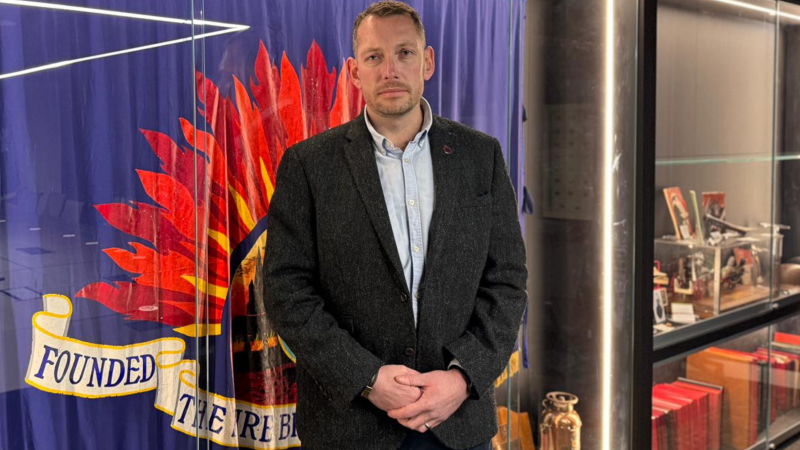
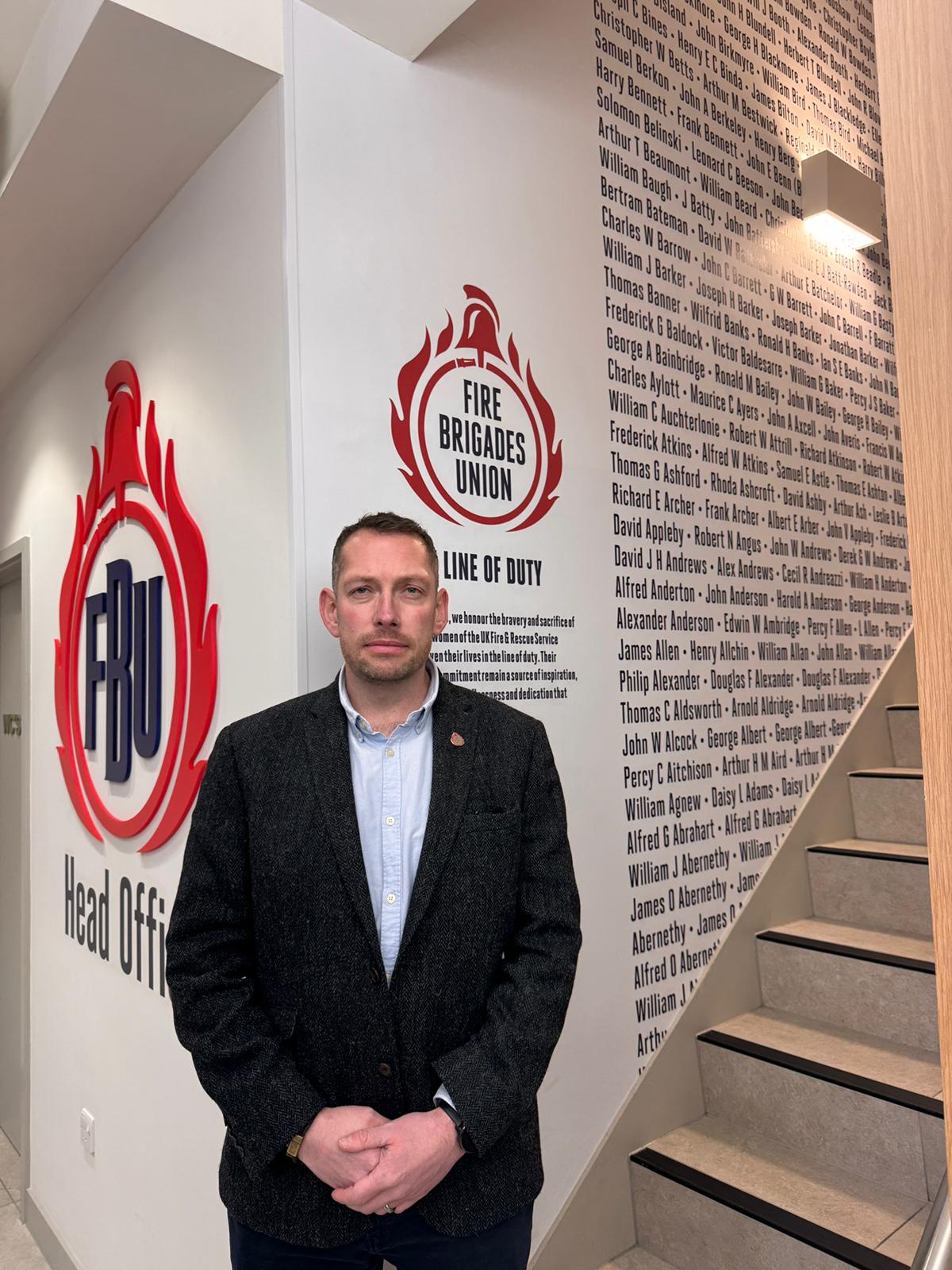
The headquarters of the Fire Brigades Union has a poignant reminder of the job’s cost, with the names of fallen firefighters lining the walls of the building’s staircase. This cost is felt more acutely for general secretary Steve Wright and the union more widely following the addition of two extra names to that long list, commemorating the deaths of Jennie Logan and Martyn Sadler in a fire in Oxfordshire last May.
As he marks a year as FBU general secretary, Wright sees his number one job as not just fighting for better pay and conditions for his members, but also making firefighting safer.
That mission is incredibly close to home for Wright – his father died of cancer after a long career in the fire service and his son, Ben, marks two years as a firefighter this month.
“He gets a decent pay rise courtesy of the FBU,” Wright notes.
“We’re on the front foot, taking an industrial fight to the bosses, which I think was long overdue. The cuts we have faced in the fire service over the past 14 years under a Conservative government were to dangerous levels – and we’ve seen the effects of that. We’re seeing slower response times, we’ve seen firefighters – our members – killed last year, and we’re seeing fire deaths going up.
“We’re taking the fight to employers and to the government on all those issues, and this is what we are going to press ahead with this year.”
‘More unions should be affiliated to Labour’
Wright’s first year as general secretary has also involved building relationships with the party and with ministers, with Lucy Powell credited for being useful in forging closer relations with trade unions.
“We’re working closely with Hollie Ridley and Labour head office to do some more work and, as part of TULO, I get the opportunity to speak to and question Keir Starmer or one of his ministers, which is good fun. It’s useful to do that. I think they should hear the truth on the floor, and I can talk from years as a public servant extensively about how public services in this country have been downgraded.”
Wright’s work to reset the FBU’s relationship with Labour has come amid calls from some in the union to pursue the road of disaffiliation – a path being actively considered by Unite and also by Unison’s incoming general secretary Andrea Egan.
However, Wright argues trade unions should stay within Labour and be active in trying to change the direction of the party.
“I certainly see elements of the Labour Party that would not want the FBU or any union part of the party, and I think it’s down to general secretaries to make the case for being there.
“Whilst we are affiliated, I do believe that we get opportunities – I get opportunities as a general secretary of an affiliated union to speak out on wider issues.
“I think it would be advantageous if more of the TUC-affiliated unions were affiliated to Labour. There’s only 11 of us – we would have far greater strength if there were more sector-only unions, like ourselves and ASLEF.”
‘Labour have crossed many red lines at the moment’
Is there a red line that would lead to Wright considering disaffiliation?
“My personal point of view is they’ve crossed many red lines at the moment – but my position is to get the best thing for firefighters and FBU members, and I think we’re best placed to do that at the moment with a Labour government.
“We’ve backed the Labour government, we backed the party – and we still do, but our members do want to see some change.
“I think the red line of our members would be job losses, fire station closures and a reduction in our numbers.”
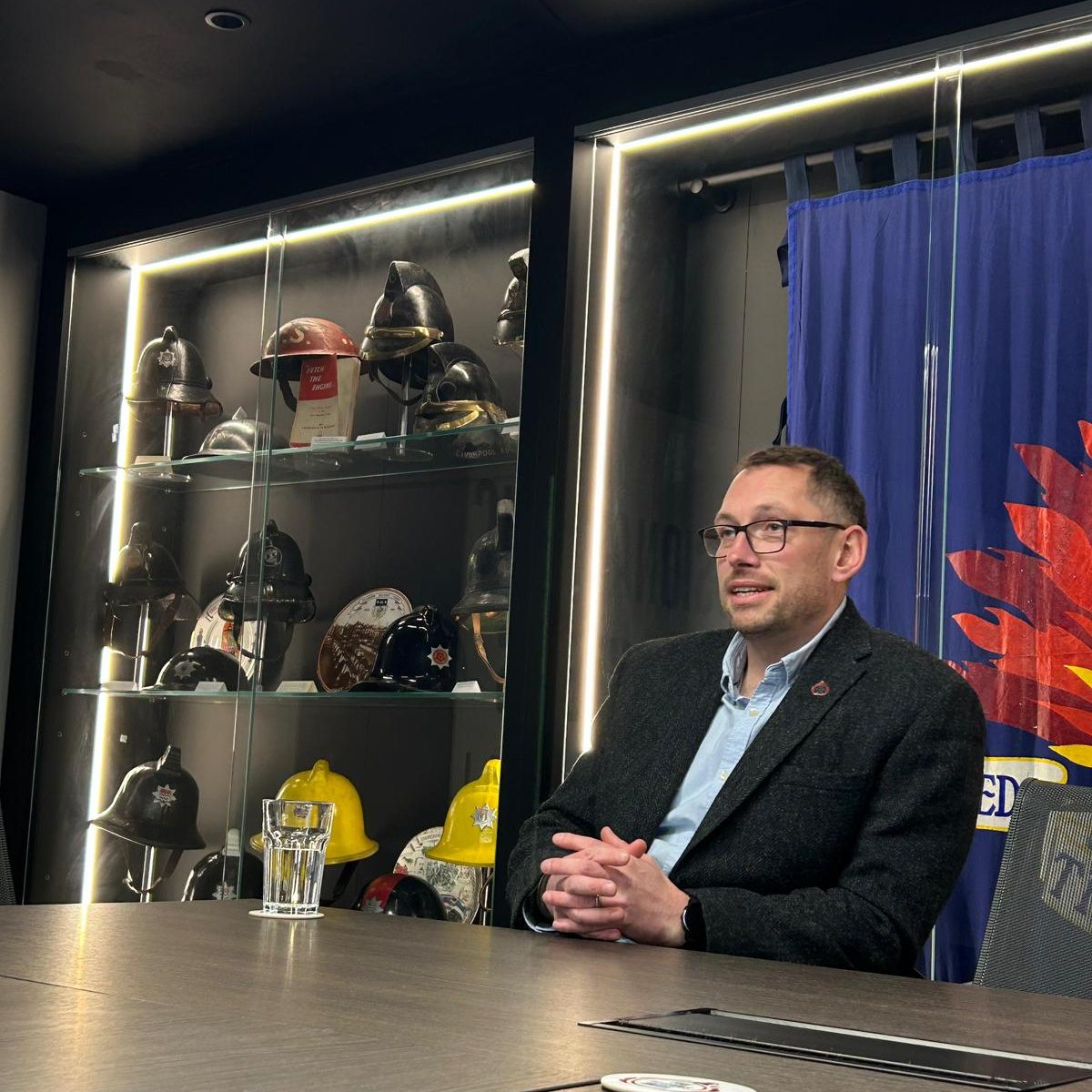
Starmer should be prepared to stand aside, says Wright
The last year has seen increasing questions about Keir Starmer’s future as Prime Minister, but Wright is cautious about a return to the revolving door of leaders from the Conservatives’ years in office.
“There is some argument to be made for keeping people in position for a period of time to make change.”
However, Wright’s caution came with an important caveat: “I think if it gets to the point where the door keeps opening wider and wider for Nigel Farage – which it feels like it is at the moment – and Keir Starmer becomes unable to beat him in the polls, then I think he should step aside.”
Wright said that May would be “a big turning point for that” and suggested that Starmer would “probably” stand down if those circumstances came to pass: “I think actually he will put the country first.”
READ MORE: FBU on ‘industrial footing’ as general secretary prepared for strikes this year
‘God knows what it would be like with Reform running the country’
Wright warned of the spectre of a potential Farage-led government and the dangers such a prospect would bring.
“We’ve had experience of it already. Their flagship council is Kent County Council – the council is responsible for the fire service there, and it fell apart at the end of the last year.
“That was having knock-on effects and repercussions for the fire service in Kent, not being able to make decisions.
“It was absolute chaos with them in charge, so God knows what it would be like if they were running the country.”
He also highlighted Richard Tice’s proposal to attack public sector pensions: “We went on strike, I went on strike, in 2014/15 over our pensions when we faced that attack and our members would stand up for our pensions like we did before.
“Nigel Farage is no friend of working people.”
So concerned is Wright about the rise of the far-right that the FBU joined the Together Alliance of over 80 civil society organisations and unions to challenge their influence – with the union even hosting the group’s first in-person meeting at their headquarters.
“I was there on September 13 at the opposition to the Unite the Kingdom rally and that was frightening. We took members there and what we saw on the streets was quite frightening. I hope that the Together Alliance can make sure there is a big showing in this country of decent people to fight back against them.”
‘Firefighters look at Christmas differently’

Speaking to Wright shortly after the Christmas holidays, he reflected that the festive season is often different for firefighters and their families.
“The calls we attend, the shifts we work, do not stop at Christmas. I’ve worked many a Christmas Day and Boxing Day away from my family, and I also remember my dad not being there on Christmas, having to wait to open your presents until dad got home from work.
Subscribe here to our daily newsletter roundup of Labour news, analysis and comment– and follow us on Bluesky, WhatsApp, X and Facebook.
“My son was off this Christmas, but last Christmas worked it.
“I think they look at [the holidays] differently, because things don’t stop for them and it’s also a historically busy period for us as well.”
Wright’s plans for the year ahead
What does Wright hope to achieve in the year ahead?
“We are going to take this industrial fight on, and if that means strike action, that’s where we’ll take it.
“I want to make headway in progress on presumptive legislation, so we are having the first-ever health and safety standalone summit in April to push that ahead.”
One other area Wright wants to work on this year is on ensuring the FBU remains as a sector-only union.
“We’ve seen lots of unions in the past be sucked up by the likes of Unite and Unison. I’m sure they do a great job, but I think our power and strength comes from our elected officials having worked in fire stations and in control rooms and I want to make sure that the longevity of that continues. I’m not saying that’s a threat, but it’s something to be mindful of.”
‘Biden hung around too long – we can’t make the same mistake again’
As we concluded our conversation, Wright’s New Year’s message to the Prime Minister was a clear one.
“It would be not to fall into the trap that the Democratic Party did under Joe Biden. I think he hung around and stayed too long and that allowed the monster that is Donald Trump to come to power in Washington, and I think we can’t make the same mistake again.
“I’d like to think that when the time comes, I want to see another Labour government. I want to see it more progressive, I want to see it more transformative – and I think there are better placed people to do that in the years ahead.”
Does Wright have a person in mind? “I don’t think there is a specific candidate at the moment, but I think someone who is going to be bold. I think with three and a half years away from the election, people want to see change.
“The way you beat Reform is not by out-Reforming Reform. I think that tactic is being tried, and it’s certainly not cutting through with our members or with decent people in society.
“The way you beat them is you start turning things around, so they start seeing meaningful change, they start seeing investment in their communities, they start seeing investment in their public services, they see cuts stopping in the fire service.”

No comments:
Post a Comment