No, Says Rights Coalition, Recording ICE Agents Is Not Illegal
“The First Amendment unequivocally protects the right to observe, monitor, and take pictures and video of government officials conducting their duties in public.”
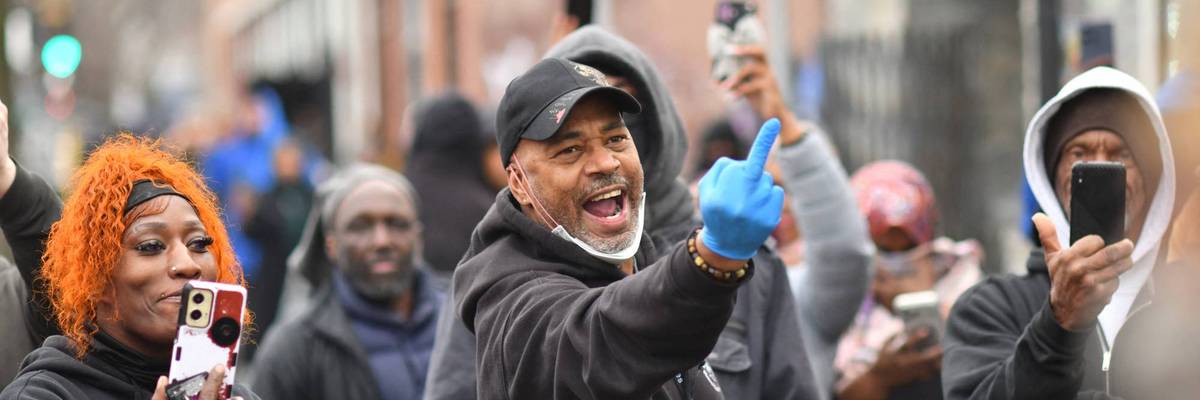
A man gestures at US Border Patrol agents as they detain an unidentified man of Somali descent in Minneapolis, Minnesota, on January 8, 2026.
(Photo by Octavio Jones/AFP via Getty Images)
Jessica Corbett
Jan 14, 2026
COMMON DREAMS
Since President Donald Trump returned to power and unleashed Immigration and Customs Enforcement on US cities, members of the National Coalition Against Censorship have periodically reminded Americans that “yes, you have the right to film ICE.” The NCAC did so again on Tuesday, as videos emerge of agents telling observers to stop recording.
“We join together as nonprofit civil rights and free expression advocates to condemn the Trump administration’s statements that it is illegal to record videos of ICE agents. These claims are incorrect as a matter of law, directly contrary to our First Amendment values, and deeply troubling for democratic governance,” NCAC said in a statement.
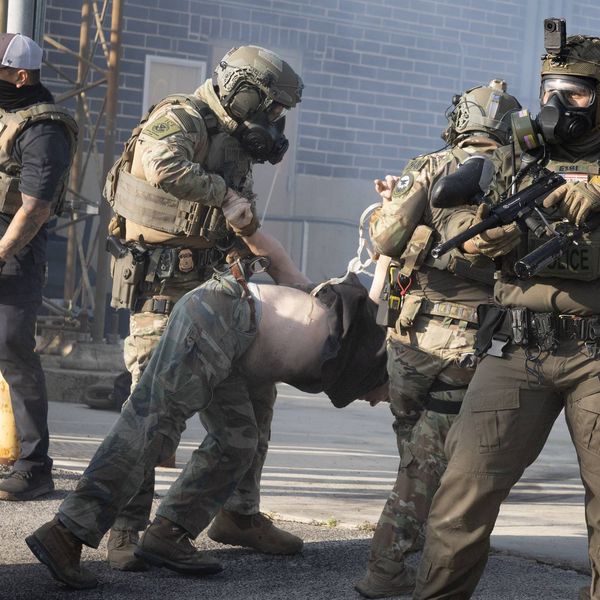
‘Reign of Terror’: ICE Builds Appalling Record of Killings, Beatings, Kidnappings, and More
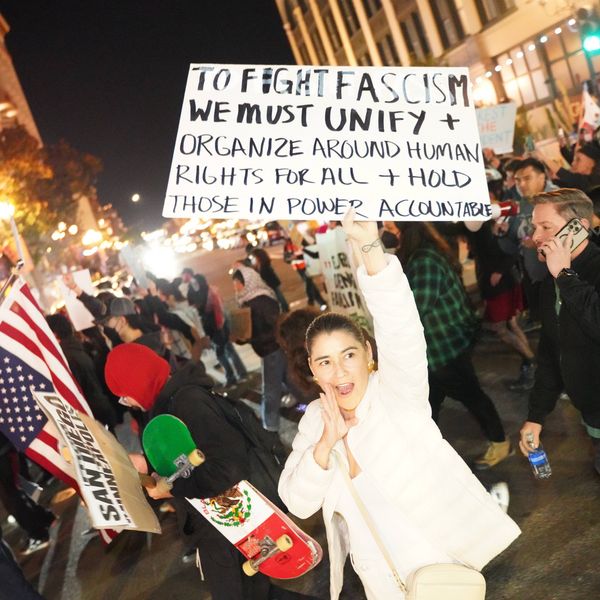
‘To Be Clear,’ Contrary to Vance’s Claims, ICE Agents Do Not Have ‘Absolute Immunity,’ Say Legal Experts
“The ability to hold the government accountable is at the very core of our democracy. To preserve that ability, the First Amendment unequivocally protects the right to observe, monitor, and take pictures and video of government officials conducting their duties in public. This explicitly includes law enforcement officers engaged in their public duties,” the coalition continued, citing decisions from all federal appellate courts that have addressed the issue.
In a Wednesday appearance on KQED‘s podcast Close All Tabs, CJ Ciaramella, a criminal justice reporter at Reason, similarly highlighted that while the US Supreme Court “actually hasn’t put out a ruling saying there’s an unambiguous First Amendment right to film the police,” the circuit courts “that have considered the issue have pretty much said there is a First Amendment right to record the police and observe the police, and they’ve all decided that pretty unambiguously.”
“And this ranges from, you know, the 9th Circuit, which is traditionally a pretty liberal leaning court, to the 5th Circuit, which has a reputation as a more conservative circuit court,” Ciaramella explained. “The 5th Circuit looked at it and said, you know, based on the First Amendment tradition, the Supreme Court precedents, this seems pretty unambiguous to us.”
“So it’s not a completely like black and white issue, but it’s also not... a thorny or divisive First Amendment question. Every court that’s looked at it has said, yeah, based on our long First Amendment traditions. And in America, you have a right to record the police,” he added. “Now, Minnesota is in one of the circuits that hasn’t yet ruled on this.”
The NCAC statement comes amid a flurry of videos of violent and otherwise problematic ICE actions, especially in Minneapolis, where Trump has sent thousands of troops and ICE officer Johnathan Ross fatally shot Renee Nicole Good in the head last week. Ross was recording on his phone, and amid mounting calls for his arrest and prosecution, the Department of Homeland Security (DHS) has put out a “propaganda” video defending the actions of ICE agents.
Journalists and other critics of Good’s killing have debunked DHS claims in part by pointing to bystanders’ footage from the scene.
While the NCAC statement doesn’t point to any specific incidents with agents, it does sound the alarm about Homeland Security Secretary Kristi Noem’s suggestion last July that videotaping ICE operations is “violence” and anyone “doxing” agents will be prosecuted.
After playing a clip of Noem’s remarks on Close All Tabs, host Morgan Sung said: “Notice the use of the word doxing here. That’s the act of posting private information about someone to target and harass them, usually like their home address or personal phone number. The Trump administration has equated identifying and publicly naming ICE agents to doxing.”
NCAC argued that “statements such as Secretary Noem’s misinform the public about their First Amendment rights and chill constitutionally protected speech. As a policy matter, threats to punish those who monitor law enforcement increase the likelihood that people will be intimidated out of exercising their constitutional rights and lead to precisely the outcome such oversight is intended to prevent—law enforcement agents who act with impunity as transparency is demonized by political leaders.”
Like ICE, agents with Customs and Border Protection, another DHS agency, have been sent to various cities and recorded behaving violently in recent months, often while donning masks. After Ross killed Good, Border Patrol Commander Greg Bovino—who is currently in Minnesota—sent a “legal refresher” to agents in the field stating that taking photos and recordings is protected activity under the First Amendment.
The coalition said that “regardless of one’s views on immigration policy, the increased budget and enforcement operations of ICE were a core campaign issue in the presidential election, and are a widespread topic of conversation and concern.”
“Recordings of law enforcement directly inform the public, shape policy discussions, and even serve as the catalyst for large-scale political movements across the political spectrum. They have helped to expose horrific and illegal acts by the government,” NCAC pointed out. “At the same time, they also protect law enforcement officers. If an officer is acting within the bounds of the law, a recording will help prove as much.”
“We stand behind the public’s well-established right to record public officials, law enforcement, and ICE agents engaged in their public duties. We jointly condemn this administration’s refusal to recognize the First Amendment right to record officers in public. And we call on this administration to recognize that constitutional rights are a feature, not a bug, of democratic governance,” the coalition concluded. “For our constitutional rights to be real, our public officials must uphold them—as they have sworn to do.”
The groups that signed on to the statement are the ACLU, Center for Democracy & Technology, Center for Protest Law & Litigation at the Partnership for Civil Justice Fund, Defending Rights & Dissent, Electronic Frontier Foundation, Freedom of the Press Foundation, Government Information Watch, Knight First Amendment Institute, National Coalition Against Censorship, People for the American Way, Public Citizen, Tully Center for Free Speech, and Woodhull Freedom Foundation.
Joining them as individuals are writer and historian Pat McNees, and three experts from Yale Law School: David A. Schulz, Stacy Livingston, and Tobin Raju.
“The First Amendment unequivocally protects the right to observe, monitor, and take pictures and video of government officials conducting their duties in public.”
A man gestures at US Border Patrol agents as they detain an unidentified man of Somali descent in Minneapolis, Minnesota, on January 8, 2026.
(Photo by Octavio Jones/AFP via Getty Images)
Jessica Corbett
Jan 14, 2026
COMMON DREAMS
Since President Donald Trump returned to power and unleashed Immigration and Customs Enforcement on US cities, members of the National Coalition Against Censorship have periodically reminded Americans that “yes, you have the right to film ICE.” The NCAC did so again on Tuesday, as videos emerge of agents telling observers to stop recording.
“We join together as nonprofit civil rights and free expression advocates to condemn the Trump administration’s statements that it is illegal to record videos of ICE agents. These claims are incorrect as a matter of law, directly contrary to our First Amendment values, and deeply troubling for democratic governance,” NCAC said in a statement.
‘Reign of Terror’: ICE Builds Appalling Record of Killings, Beatings, Kidnappings, and More
‘To Be Clear,’ Contrary to Vance’s Claims, ICE Agents Do Not Have ‘Absolute Immunity,’ Say Legal Experts
“The ability to hold the government accountable is at the very core of our democracy. To preserve that ability, the First Amendment unequivocally protects the right to observe, monitor, and take pictures and video of government officials conducting their duties in public. This explicitly includes law enforcement officers engaged in their public duties,” the coalition continued, citing decisions from all federal appellate courts that have addressed the issue.
In a Wednesday appearance on KQED‘s podcast Close All Tabs, CJ Ciaramella, a criminal justice reporter at Reason, similarly highlighted that while the US Supreme Court “actually hasn’t put out a ruling saying there’s an unambiguous First Amendment right to film the police,” the circuit courts “that have considered the issue have pretty much said there is a First Amendment right to record the police and observe the police, and they’ve all decided that pretty unambiguously.”
“And this ranges from, you know, the 9th Circuit, which is traditionally a pretty liberal leaning court, to the 5th Circuit, which has a reputation as a more conservative circuit court,” Ciaramella explained. “The 5th Circuit looked at it and said, you know, based on the First Amendment tradition, the Supreme Court precedents, this seems pretty unambiguous to us.”
“So it’s not a completely like black and white issue, but it’s also not... a thorny or divisive First Amendment question. Every court that’s looked at it has said, yeah, based on our long First Amendment traditions. And in America, you have a right to record the police,” he added. “Now, Minnesota is in one of the circuits that hasn’t yet ruled on this.”
The NCAC statement comes amid a flurry of videos of violent and otherwise problematic ICE actions, especially in Minneapolis, where Trump has sent thousands of troops and ICE officer Johnathan Ross fatally shot Renee Nicole Good in the head last week. Ross was recording on his phone, and amid mounting calls for his arrest and prosecution, the Department of Homeland Security (DHS) has put out a “propaganda” video defending the actions of ICE agents.
Journalists and other critics of Good’s killing have debunked DHS claims in part by pointing to bystanders’ footage from the scene.
While the NCAC statement doesn’t point to any specific incidents with agents, it does sound the alarm about Homeland Security Secretary Kristi Noem’s suggestion last July that videotaping ICE operations is “violence” and anyone “doxing” agents will be prosecuted.
After playing a clip of Noem’s remarks on Close All Tabs, host Morgan Sung said: “Notice the use of the word doxing here. That’s the act of posting private information about someone to target and harass them, usually like their home address or personal phone number. The Trump administration has equated identifying and publicly naming ICE agents to doxing.”
NCAC argued that “statements such as Secretary Noem’s misinform the public about their First Amendment rights and chill constitutionally protected speech. As a policy matter, threats to punish those who monitor law enforcement increase the likelihood that people will be intimidated out of exercising their constitutional rights and lead to precisely the outcome such oversight is intended to prevent—law enforcement agents who act with impunity as transparency is demonized by political leaders.”
Like ICE, agents with Customs and Border Protection, another DHS agency, have been sent to various cities and recorded behaving violently in recent months, often while donning masks. After Ross killed Good, Border Patrol Commander Greg Bovino—who is currently in Minnesota—sent a “legal refresher” to agents in the field stating that taking photos and recordings is protected activity under the First Amendment.
The coalition said that “regardless of one’s views on immigration policy, the increased budget and enforcement operations of ICE were a core campaign issue in the presidential election, and are a widespread topic of conversation and concern.”
“Recordings of law enforcement directly inform the public, shape policy discussions, and even serve as the catalyst for large-scale political movements across the political spectrum. They have helped to expose horrific and illegal acts by the government,” NCAC pointed out. “At the same time, they also protect law enforcement officers. If an officer is acting within the bounds of the law, a recording will help prove as much.”
“We stand behind the public’s well-established right to record public officials, law enforcement, and ICE agents engaged in their public duties. We jointly condemn this administration’s refusal to recognize the First Amendment right to record officers in public. And we call on this administration to recognize that constitutional rights are a feature, not a bug, of democratic governance,” the coalition concluded. “For our constitutional rights to be real, our public officials must uphold them—as they have sworn to do.”
The groups that signed on to the statement are the ACLU, Center for Democracy & Technology, Center for Protest Law & Litigation at the Partnership for Civil Justice Fund, Defending Rights & Dissent, Electronic Frontier Foundation, Freedom of the Press Foundation, Government Information Watch, Knight First Amendment Institute, National Coalition Against Censorship, People for the American Way, Public Citizen, Tully Center for Free Speech, and Woodhull Freedom Foundation.
Joining them as individuals are writer and historian Pat McNees, and three experts from Yale Law School: David A. Schulz, Stacy Livingston, and Tobin Raju.
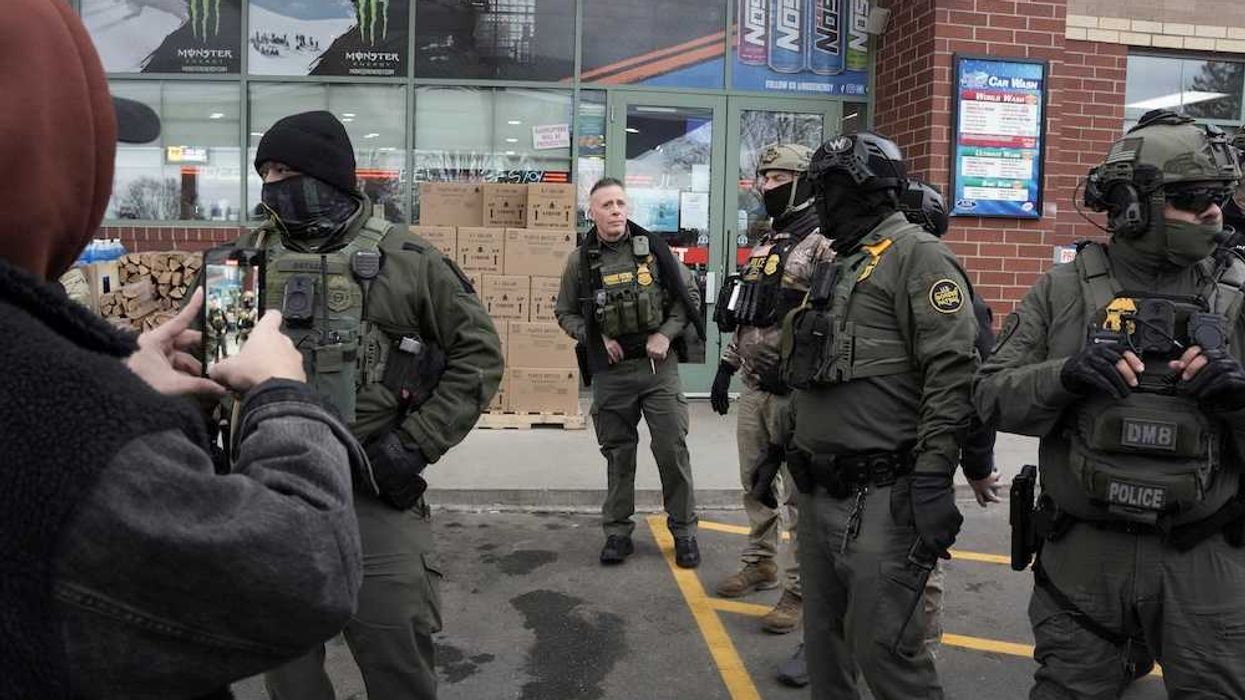
An observer uses a mobile phone to document Border Patrol commander Greg Bovino and his convoy, days after an ICE agent fatally shot Renee Nicole Good in Minneapolis, as Bovino stops at a gas station in Columbia Heights, Minnesota, U.S., January 13, 2026. REUTERS/Tim Evans
January 13, 2026
ALTERNET
President Donald Trump's Department of Justice (DOJ) is now claiming that Americans do not have a Constitutional right to film law enforcement officers.
NOTUS reported Tuesday that the DOJ made the claim during a hearing in U.S. District Judge Katherine Menendez's courtroom. The hearing was the result of ongoing litigation by Minneapolis residents over claims that U.S. Immigration and Customs Enforcement (ICE) agents pepper-sprayed and arrested them without cause. While the initial complaint was filed prior to the fatal shooting of U.S. citizen Renee Nicole Good by ICE agent Jonathan Ross, the plaintiffs cited Good's death as reason to issue a temporary restraining order against federal agents.
DOJ attorney Jeremy Newman defended the recent trend of ICE agents drawing their weapons on civilian vehicles following them, saying that "following" can lead to "dangerous activity," and that it was "reasonable for officers to be concerned about their safety. NOTUS further reported that Newman cited the 2023 Molina v. Book case to support his argument that "observing and recording police is not a clearly established First Amendment right."
"It’s very clear that this is an ongoing emergency," Newman said.
However, other court cases decided at the federal appellate court level have ruled that Americans do indeed have the right to document police officers in the course of their duties. In the 2022 Irizarry v. Yehia case, the U.S. Court of Appeals for the Tenth Circuit ruled that the First Amendment guaranteed the right to film police officers "subject to reasonable time, place and manner restrictions."
Judge Menendez – an appointee of former President Joe Biden — reportedly chided ICE agents for not including copies of any police reports, body camera footage or statements from agents involved in altercations with plaintiffs. Newman responded that the agency "did the best we could" as their response to the litigation was cobbled together over the holiday season.
Menendez also told plaintiffs she would rule on their petition for emergency relief by Thursday or Friday, and hinted that any ruling would pertain to their specific case, rather than a broader decision impacting all protesters in Minneapolis.
Click here to read NOTUS' article in its entirety.

No comments:
Post a Comment