Thousands attend Gaddafi son’s funeral, highlighting Libya’s divided loyalties
Thousands of mourners gathered in the western Libyan town of Bani Walid on Friday for the funeral of former Libyan leader Muammar Gaddafi's son, Saif al-Islam Gaddafi, who was killed this week. The turnout in a town that has long been a Gaddafi stronghold underscored the divisions that have split Libya since the 2011 Arab Spring uprising, plunging the country into instability.
Issued on: 06/02/2026
By: FRANCE 24
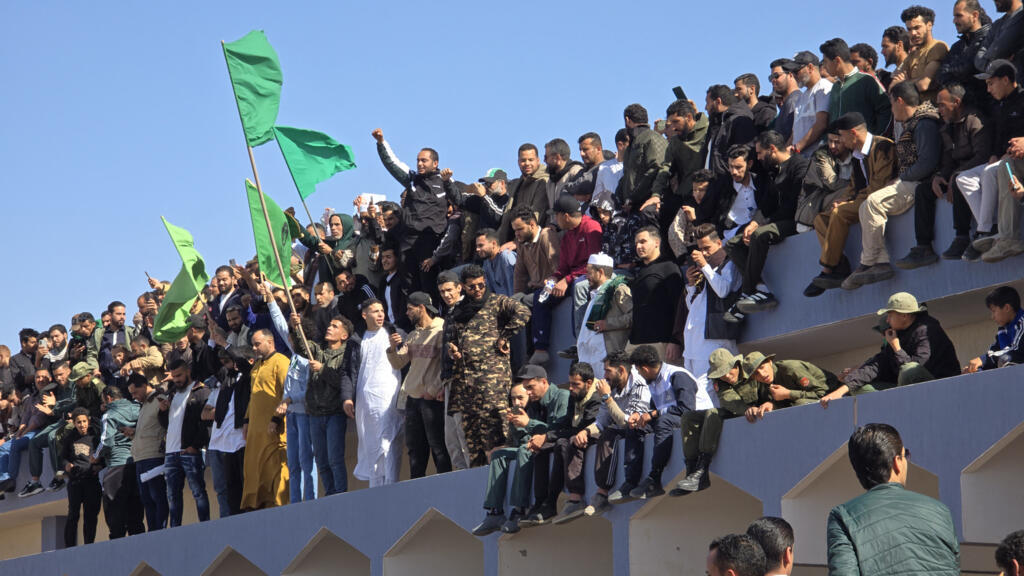
Libyans gather for the funeral of Saif al-Islam Gaddafi in Bani Walid on February 6, 2026. © Mahmud Turkia, AFP
Thousands turned out on Friday for the burial of the slain son of former Libyan ruler Muammar Gaddafi in a town that still holds allegiance to the late longtime leader.
Saif al-Islam Gaddafi, once seen by some as Libya's heir apparent, was shot dead in his home in the northwestern city of Zintan on Tuesday.
His burial in the town of Bani Walid, some 175 kilometres (110 miles) south of Tripoli, brought together thousands of Gaddafi loyalists, nearly 15 years after the ruler was toppled and killed in a 2011 NATO-backed uprising.
Libya has struggled to recover from chaos that erupted since. It remains split between Prime Minister Abdelhamid Dbeibah's UN-backed government based in Tripoli and an eastern administration backed by Khalifa Haftar.
Dbeibah condemned the killing, saying that "assassinations never provide stability... but rather deepen division".
His interior ministry had announced that it would "ensure the security of the funeral" in the town of some 100,000 people.
Each year, Bani Walid celebrates the anniversary of a 1969 coup that brought Gaddafi to power, with people parading through the streets with portraits of the ex-leader and Libya's green flag from before the Arab Spring uprising.
Ahead of the burial on Friday, locals also carried those portraits and flags while chanting pro-Gaddafi slogans and declaring that "the martyrs' blood will not be shed in vain".
Marcel Ceccaldi, a French lawyer who had been representing Seif al-Islam, told AFP a "four-man commando" killed him.
Authorities said they were probing his death as the assailants remained at large.
Saadi Gaddafi, Saif al-Islam's younger brother, said his dead sibling would be buried "next to his brother Khamis Gaddafi", who was killed during the 2011 unrest.
Under his father's iron-fisted 40-year rule, Seif al-Islam was described as the de facto prime minister, cultivating an image of moderation and reform despite holding no official position.
But that reputation soon collapsed when he promised "rivers of blood" in retaliation for the 2011 uprising.
He was arrested that year on a warrant issued by the International Criminal Court for alleged crimes against humanity, and a Tripoli court sentenced him to death, although he was later granted amnesty.
In 2021 he announced he would run for president but the elections were indefinitely postponed.
(FRANCE 24 with AFP)
Thousands turned out on Friday for the burial of the slain son of former Libyan ruler Muammar Gaddafi in a town that still holds allegiance to the late longtime leader.
Saif al-Islam Gaddafi, once seen by some as Libya's heir apparent, was shot dead in his home in the northwestern city of Zintan on Tuesday.
His burial in the town of Bani Walid, some 175 kilometres (110 miles) south of Tripoli, brought together thousands of Gaddafi loyalists, nearly 15 years after the ruler was toppled and killed in a 2011 NATO-backed uprising.
Libya has struggled to recover from chaos that erupted since. It remains split between Prime Minister Abdelhamid Dbeibah's UN-backed government based in Tripoli and an eastern administration backed by Khalifa Haftar.
Dbeibah condemned the killing, saying that "assassinations never provide stability... but rather deepen division".
His interior ministry had announced that it would "ensure the security of the funeral" in the town of some 100,000 people.
Each year, Bani Walid celebrates the anniversary of a 1969 coup that brought Gaddafi to power, with people parading through the streets with portraits of the ex-leader and Libya's green flag from before the Arab Spring uprising.
Ahead of the burial on Friday, locals also carried those portraits and flags while chanting pro-Gaddafi slogans and declaring that "the martyrs' blood will not be shed in vain".
Marcel Ceccaldi, a French lawyer who had been representing Seif al-Islam, told AFP a "four-man commando" killed him.
Authorities said they were probing his death as the assailants remained at large.
Saadi Gaddafi, Saif al-Islam's younger brother, said his dead sibling would be buried "next to his brother Khamis Gaddafi", who was killed during the 2011 unrest.
Under his father's iron-fisted 40-year rule, Seif al-Islam was described as the de facto prime minister, cultivating an image of moderation and reform despite holding no official position.
But that reputation soon collapsed when he promised "rivers of blood" in retaliation for the 2011 uprising.
He was arrested that year on a warrant issued by the International Criminal Court for alleged crimes against humanity, and a Tripoli court sentenced him to death, although he was later granted amnesty.
In 2021 he announced he would run for president but the elections were indefinitely postponed.
(FRANCE 24 with AFP)
Kadhafi clan’s path back to power fades with killing of Saïf al-Islam
The death of Saïf al-Islam Kadhafi – the last political heir of Libya’s former ruling family – is reshaping the country’s political landscape, dealing a decisive blow to any remaining hopes of the Kadhafi clan returning to power.
Issued on: 07/02/2026 - RFI
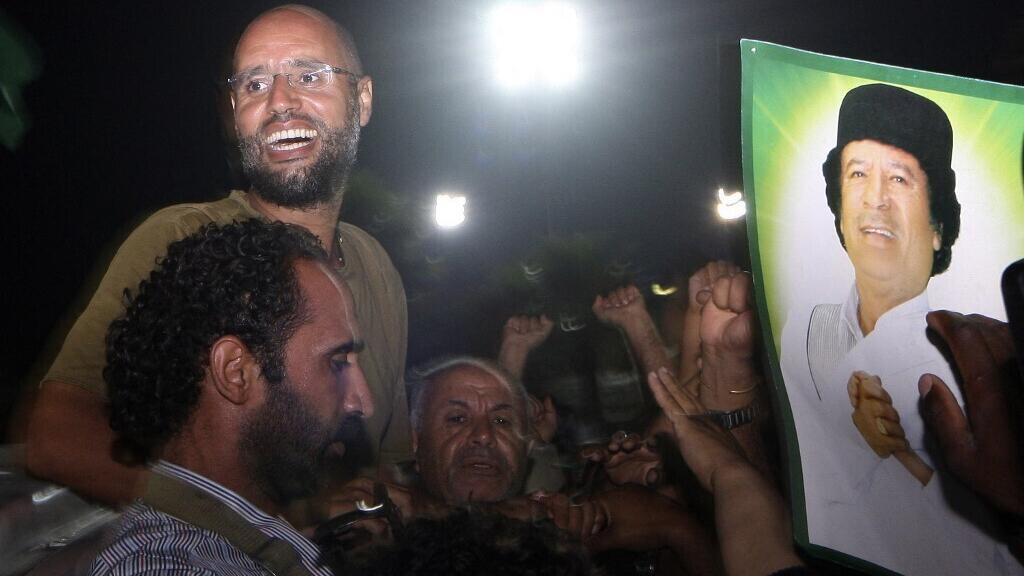
Saïf al-Islam Kadhafi pictured with supporters and journalists at his father’s residential complex in Tripoli in August 2011. Saïf al-Islam, long seen as the last political heir of the Kadhafi clan, was killed this week. AFP - IMED LAMLOUM
Nearly 15 years after the fall of his father, former Libyan leader Muammar Kadhafi, Saïf al-Islam was shot dead on Tuesday at his home in the city of Zintan, north-western Libya.
Media reports said Saïf al-Islam, 53, was at home alone when four armed men broke into the residence and opened fire.
He remained, for many Libyan tribes and especially for his own clan, a powerful symbol of a possible Kadhafi comeback.
His assassination is expected to have lasting consequences for Libya’s political future. No other member of the clan, experts say, can match his level of popularity or influence.
Son of former Libyan dictator Moamer Kadhafi shot dead in home
Rival political camps in Libya could also be affected. The loss of a figure seen as capable of bringing different factions together is widely viewed as unlikely to serve the country’s broader interests.
However, Saïf al-Islam’s death benefits a number of political actors who viewed him as a rival, said Virginie Collombier, a political scientist at Luiss Guido Carli University in Rome.
“Saïf al-Islam Kadhafi was carrying the torch of a united Libya, brought together around a major project of national reconciliation,” she told RFI.
“That was not well received by the two main centres of power, which saw the emergence of a third force as a potential threat to their ability to reach agreement and share power and resources.”
Nearly 15 years after the fall of his father, former Libyan leader Muammar Kadhafi, Saïf al-Islam was shot dead on Tuesday at his home in the city of Zintan, north-western Libya.
Media reports said Saïf al-Islam, 53, was at home alone when four armed men broke into the residence and opened fire.
He remained, for many Libyan tribes and especially for his own clan, a powerful symbol of a possible Kadhafi comeback.
His assassination is expected to have lasting consequences for Libya’s political future. No other member of the clan, experts say, can match his level of popularity or influence.
Son of former Libyan dictator Moamer Kadhafi shot dead in home
Rival political camps in Libya could also be affected. The loss of a figure seen as capable of bringing different factions together is widely viewed as unlikely to serve the country’s broader interests.
However, Saïf al-Islam’s death benefits a number of political actors who viewed him as a rival, said Virginie Collombier, a political scientist at Luiss Guido Carli University in Rome.
“Saïf al-Islam Kadhafi was carrying the torch of a united Libya, brought together around a major project of national reconciliation,” she told RFI.
“That was not well received by the two main centres of power, which saw the emergence of a third force as a potential threat to their ability to reach agreement and share power and resources.”
Reconciliation hopes fade
National reconciliation appears to be the first casualty of Saïf al-Islam Kadhafi’s murder. Efforts to bring Libyans into a genuine national dialogue have repeatedly failed.
So far, seven United Nations special envoys have been unable to make progress, blaming a lack of willingness among those in power to commit to reconciliation.
In 2019, the United States administration gave Field Marshal Khalifa Haftar the green light to attack Tripoli 10 days before a planned meeting. That episode led to the resignation of the UN envoy at the time, Ghassan Salamé.
Saïf al-Islam was the third high-profile Libyan figure to be killed in recent months. Observers say a series of political assassinations risks destabilising the country's internal balance and undermining the political process under way.
His death also comes at a sensitive moment, as the UN attempts to relaunch a new format for national dialogue – with a possible deadline mooted for November.
“The risk now is that this dialogue process will be seriously disrupted,” Collombier warned, adding that renewed tensions cannot be ruled out.
Regional and international players could also benefit from Kadhafi’s demise. He had frequently criticised the way Libya is currently run, which he believed was heavily influenced by foreign powers, including the US and Turkey.
Saïf al-Islam was wanted by the International Criminal Court for crimes against humanity, linked to his alleged role in the suppression of opposition protests in 2011.

No comments:
Post a Comment