Thursday, January 29, 2026


From biocidal coatings to medicines: A nanocomposite sting for microorganisms


The Henryk Niewodniczanski Institute of Nuclear Physics Polish Academy of Sciences


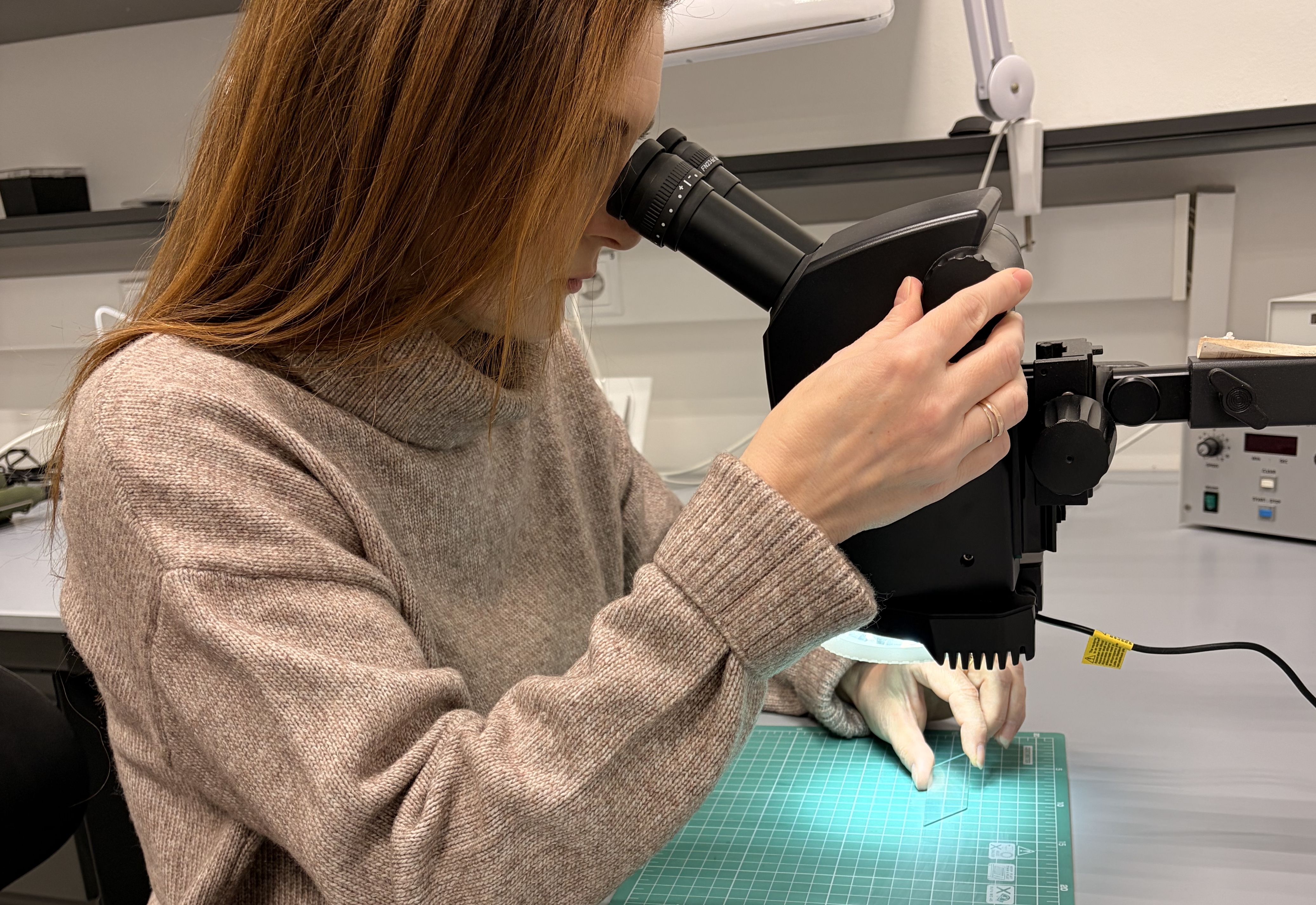
Magdalena Laskowska (IFJ PAN) examines a glass plate covered with a B-STING material. 

image: 

Magdalena Laskowska from the Institute of Nuclear Physics of the Polish Academy of Sciences in Cracow examines a glass plate covered with a layer of B-STING material.

view more 

Credit: Source: IFJ PAN


A surface capable of responding to chemical signals generated by microorganisms and automatically producing biocidal substances – this is not a futuristic vision, but a description of how the B-STING silica nanocomposite works. The new material, developed at the Institute of Nuclear Physics Polish Academy of Sciences in Cracow, acts as a nanofactory of reactive oxygen species, activating itself only when necessary.

Can a hospital treat patients? The question seems trivial until we clarify that we are referring to the building itself and its standard fittings, not the institution, doctors or medical equipment. So, could a hospital window kill bacteria? Could door handles, handrails and light switches disinfect themselves? The answer is yes, if they are covered with a thin layer of a carefully designed silica nanocomposite, in whose mesopores molecular factories of reactive oxygen species are placed. Just such a material, called B-STING (Biocidal Silica-Templated Immobilised Nano-Groups), has been designed, manufactured and characterised by scientists from the Institute of Nuclear Physics Polish Academy of Sciences (IFJ PAN) in Cracow.


“When we use nanoparticles of, say, gold or silver for biocidal purposes, they have to interact directly with microorganisms. Our material is the result of a decade of work on a radically different approach to the issue. It is not in itself a biologically active substance. However, what it is, is a nanofactory that produces reactive oxygen species that are lethal to microorganisms and effectively penetrate the cell membranes of bacteria and fungi,” says Dr. Magdalena Laskowska (IFJ PAN), the first author of an article published in the renowned scientific journal Applied Surface Science.


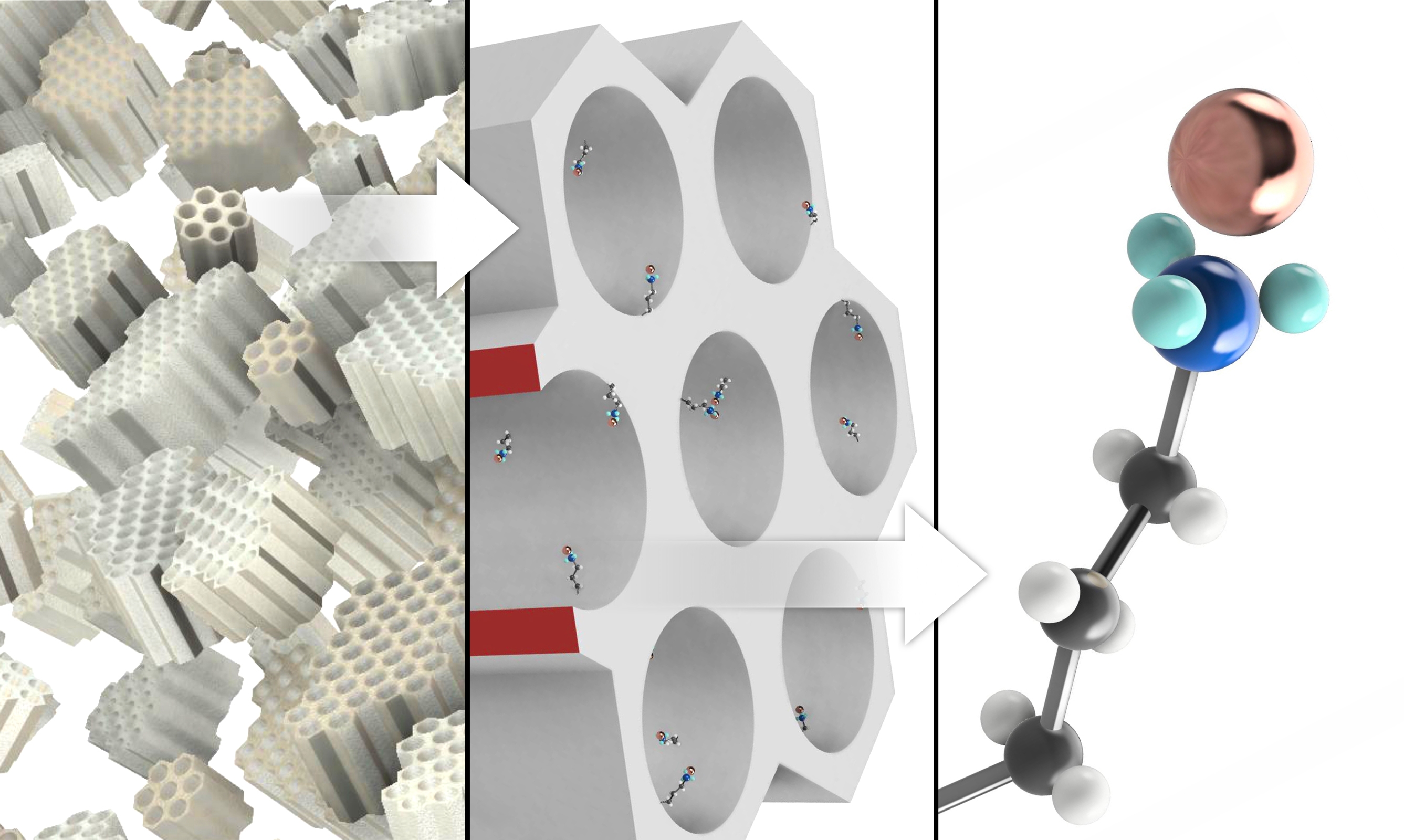
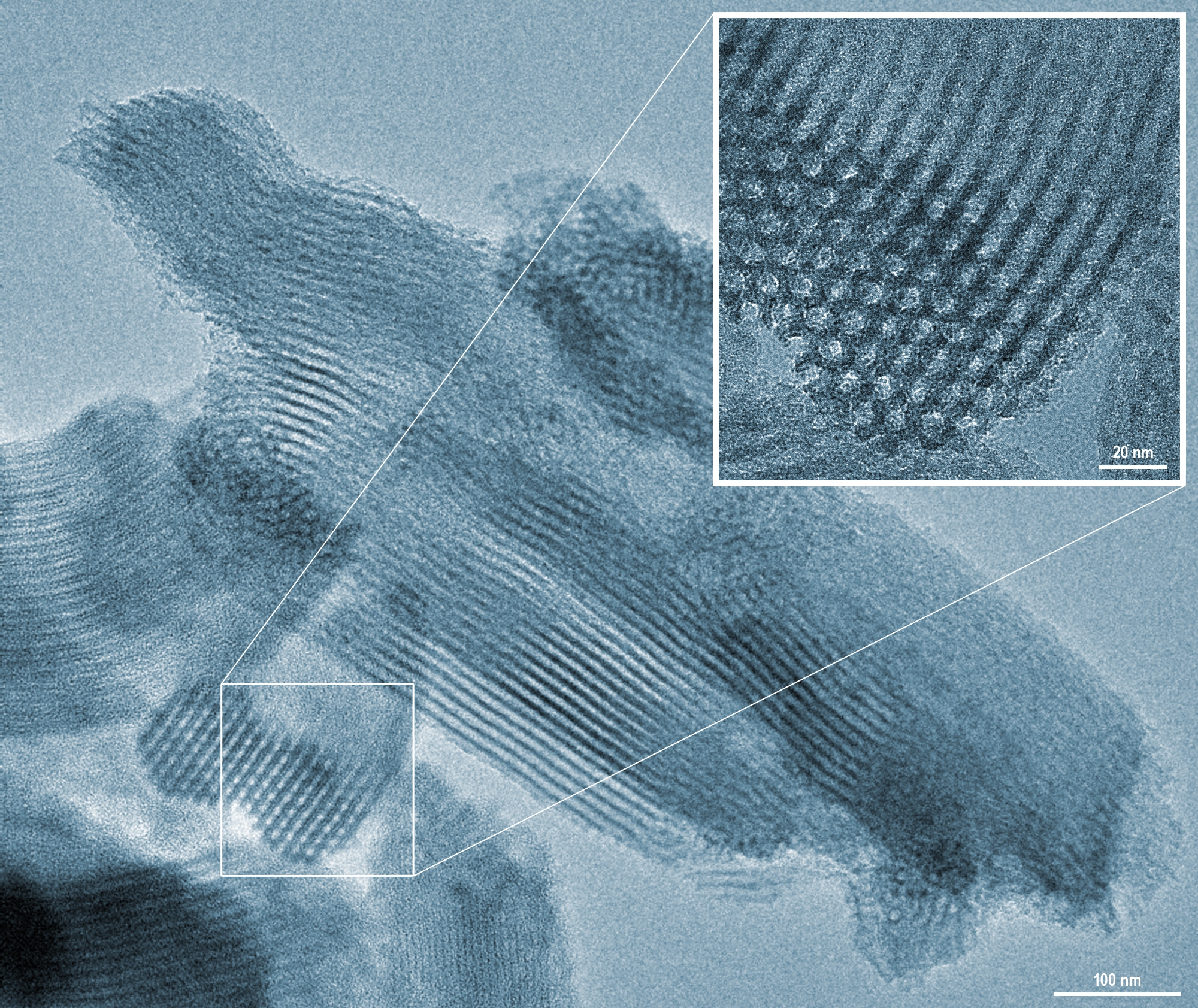
The structural foundation of the new material is silica with cylindrical mesopores eight nanometres in diameter, spatially arranged in a layer with hexagonal regularity, resembling a honeycomb in appearance. The surface area of a flat sample covered with a 100-nanometre-thick layer increases almost 80-fold. On the expanded surface, inside the pores, functional groups containing single metal atoms, which in the case of the samples in question were copper, are attached at appropriate distances from each other using propyl bridges. In a material constructed in this way, the functional groups are protected by the walls of the mesopores, which guarantees high durability. At the same time, each copper atom has the ability to act effectively as a single-atom catalyst.


“Gold and silver nanoparticles, currently popular in various applications, are agglomerates consisting of many thousands of atoms. Most of them are shielded by their neighbours and are therefore unable to perform their intended role. Meanwhile, the precise architecture of our material ensures that each metal atom has access to its surroundings and can catalyse the production of reactive oxygen species from water and oxygen contained in the air penetrating the mesopores. As a result, B-STING does not need any external trigger, such as light or ultrasound, so it can work even in the dark,” notes Dr. Lukasz Laskowski, professor at the IFJ PAN.


It should be emphasised that, unlike many types of nanoparticles which wear out or require activation, the copper centres in the new material catalyse the production cycles of reactive oxygen species without the need for permanent chemical restructuring. In other words, the material does not need to be regenerated and works as long as it has access to oxygen and water.


Thanks to cooperation with the Medical University of Lublin, it was possible to conduct more extensive research into the biocidal effect of samples coated with the new nanocomposite. It turned out that coatings made from it kill a number of pathogenic bacteria, fungi and even viruses. At the same time, tests carried out on human fibroblasts proved that it is safe for them, which came as a huge surprise to the researchers. In practice, this means that biocidal substances are produced by the new material only when necessary. The material does not detect bacteria directly, but reacts to changes in the environment caused by them – such as a drop in pH, the presence of sulphur compounds (thiols) or local fluctuations in oxygen availability – and adjusts the composition of the reactive oxygen species it produces accordingly. Importantly, the production of disinfectants is not constant, and when there are no microorganisms nearby, its profile changes. Details of the outlined mechanism cannot be disclosed at this time due to the patent process.


“If further research does not reveal any negative effects of introducing our material into the body, it could even become a component of medicines in the future – as a substance that is at least potentially more effective than antibiotics in combating a wide range of microorganisms,” says Prof. Laskowski.


Years of research are necessary before therapies involving the use of drugs containing B-STING silica nanocomposite become available. In the meantime, biocidal coatings made from this material can already be widely used. They are safe, durable (mechanically similar to glass), resistant to dirt (dirt particles are larger than the pores and do not block the flow of air to the catalytic centres), and maintain a constant readiness for on-demand production, activating automatically in response to changes in the chemical environment. These coatings can be applied to various materials – especially polymers, metals and glass – as well as to objects with complex shapes. In the long term, the lack of a trigger and long-term operation also allow for intrabody applications, in the form of coatings on implants or dental fillings.


Researchers from the IFJ PAN also emphasise the economic aspects of producing these coatings. Even very thin layers are effective (after applying the material to glass, there is no significant change in transparency), the small amounts of precious metals used in production, the price of copper being significantly lower than the price of silver or gold, and the moderate cost of the compounds necessary for production suggest that the production of coatings from the new silica nanocomposite will be economically viable.


The Henryk Niewodniczański Institute of Nuclear Physics (IFJ PAN) is currently one of the largest research institutes of the Polish Academy of Sciences. A wide range of research carried out at IFJ PAN covers basic and applied studies, from particle physics and astrophysics, through hadron physics, high-, medium-, and low-energy nuclear physics, condensed matter physics (including materials engineering), to various applications of nuclear physics in interdisciplinary research, covering medical physics, dosimetry, radiation and environmental biology, environmental protection, and other related disciplines. The average yearly publication output of IFJ PAN includes over 600 scientific papers in high-impact international journals. Each year the Institute hosts about 20 international and national scientific conferences. One of the most important establishments of the Institute is the Bronowice Cyclotron Centre (CCB), which is an infrastructure unique in Central Europe, serving as a clinical and research centre in the field of medical and nuclear physics. In addition, IFJ PAN runs four accredited research and measurement laboratories. IFJ PAN is a member of the Marian Smoluchowski Kraków Research Consortium: “Matter-Energy-Future”, which in 2012-2017 enjoyed the status of the Leading National Research Centre (KNOW) in physics. In 2017, the European Commission granted the Institute the HR Excellence in Research award. As a result of the categorization of the Ministry of Education and Science, the Institute has been classified into the A+ category (the highest scientific category in Poland) in the field of physical sciences.


SCIENTIFIC PUBLICATIONS:


“Mesoporous silica-based nanocomposite surfaces with ROS-generating copper phosphonate functional groups in the fight against dangerous microorganisms”

M. Laskowska, M. Doskocz, A. Karczmarska, K. Pogoda, A. Olender, E. Gumbarewicz, A. Bogut, M. Gagoś, A. Stepulak, W. Dąbrowski, Ł. Laskowski

Applied Surface Science 720, Part A, 165228, 2026

DOI: 10.1016/j.apsusc.2025.165228


LINKS:


http://www.ifj.edu.pl/

The website of the Institute of Nuclear Physics, Polish Academy of Sciences.


http://press.ifj.edu.pl/

Press releases of the Institute of Nuclear Physics, Polish Academy of Sciences.


IMAGES:


IFJ260128b_fot01s.jpg

HR: http://press.ifj.edu.pl/news/2026/01/28/IFJ260128b_fot01.jpg

Magdalena Laskowska from the Institute of Nuclear Physics of the Polish Academy of Sciences in Cracow examines a glass plate covered with a layer of B-STING material. (Source: IFJ PAN)


IFJ260128b_fot02s.jpg

HR: http://press.ifj.edu.pl/news/2026/01/28/IFJ260128b_fot02.jpg

Structure of the B-STING material. The silica framework (left) contains parallel tubes (center) internally coated with functional groups containing single copper atoms (right). (Source: IFJ PAN)


IFJ260128b_fot03s.jpg

HR: http://press.ifj.edu.pl/news/2026/01/28/IFJ260128b_fot03.jpg

Microscopic images of the B-STING material, illustrating its silica structure. False colors. (Source: IFJ PAN)


A promising new method for early warning of volcanic eruptions


With the help of a single seismological measuring instrument, extremely subtle ground movements can be identified in real time as early precursors of volcanic eruptions.


GFZ Helmholtz-Zentrum für Geoforschung

Volcanic eruption 

image: 

Eruption of the Piton de la Fournaise on La Réunion on July 31, 2015.

view more 

Credit: A. Peltier / OVPF-IPGP


Summary

Forecasting volcanic eruptions in time to alert authorities and populations remains a major global challenge. In a study published in Nature Communications, researchers and engineers from the Institut de Physique du Globe de Paris (IPGP) and the GFZ Helmholtz Centre for Geosciences present a new detection method, called “Jerk”, using a single broadband seismometer. It is capable of identifying, in real time, very early precursor signals of volcanic eruptions generated by subtle ground movements associated with magma intrusions. The researchers evaluated their method over a period of ten years at a volcanological observatory on the island of La Réunion. They were able to predict 92 % of the 24 volcanic eruptions that occurred between 2014 and 2023, with warning times ranging from minutes to eight hours. 14 % of the warnings turned out to be false positive: although they identified magma movements, these did not lead to an eruption. The Jerk tool thus promises to be a successful early warning method for predicting volcanic eruptions and, with its low instrumental requirements, offers a potential alternative especially for poorly monitored volcanoes.

Background: Signals before volcanic eruptions

Before volcanic eruptions, there are usually changes in the seismic activity, ground deformation and gas flows or gas composition.  However, it remains a major challenge to use these signals to predict the probability and characteristics of a possible eruption – its timing, duration and strength. In particular, it is essential to avoid false alarms, which can be associated with high economic costs, social disruption and a loss of credibility.

New method for real-time detection of extremely subtle ground movements

Previous prediction approaches have often been probabilistic in nature, i.e. they search for statistical correlations in a large amount of measured data. A research team led by Dr. François Beauducel from the Institut de Physique du Globe de Paris, in collaboration with Dr. Philippe Jousset from the GFZ Helmholtz Centre for GeoResearch in Potsdam, is now proposing a direct approach that enables an automatic warning system: The “Jerk” method enables real-time detection of extremely subtle ground motions associated with deep magma injections.

The method is based on so-called “Jerk” signals. These appear as very low-frequency transients i.e. impulse-like transition or settling signals observed in horizontal ground motion, both in acceleration and tilt. The authors show that they are likely generated by dynamic rock-fracturing processes preceding an eruption.

The researchers had already discovered these Jerk signals more than ten years ago when analysing a large amount of data collected during past eruptions of the Piton de la Fournaise volcano on the island of La Réunion. They have amplitudes in the order of a few nanometres per second cubed (nm/s³) and can be detected using a single very broadband seismometer. Incorporating specific data processing that i.e. includes correction for Earth tides, the researchers have developed a warning system that gives alarm as soon as the characteristic signal exceeds a threshold value.

Ten-year time series of automatically collected data on La Réunion

In April 2014, the tool was implemented at the Piton de la Fournaise volcanological observatory, run by the Institut de Physique du Globe de Paris (IPGP) of the Université Cité Paris (OVPF-IPGP, Reunion Island) as a fully automated module of the WebObs system, using data from a broadband seismological station of the global Geoscope network located 8 km from the summit of the volcano (Rivière de l’Est). On June 20, 2014, a first alert was sent 1 hour and 2 minutes before the start of an eruption.

For more than 10 years, this Jerk signal detection and analysis system operated continuously, issuing automatic alerts for 92% of the 24 eruptions that occurred between 2014 and 2023. Warning times vary from a few minutes to 8.5 hours before the magma reaches the surface.

As Piton de la Fournaise is a heavily instrumented and monitored volcano, conditions here are almost laboratory-like. The data from the jerk tool could be validated using numerous other warning signs from the wide range of complementary observation data: they confirmed that a magmatic intrusion had actually taken place and that there was therefore a high probability of an eruption. The method was also tested a posteriori on data from 24 old eruptions between 1998 and 2010, showing that the Jerk alert works systematically.

“The great originality of this work lies in the fact that the Jerk method was tested and validated in real time in an automatic and unsupervised manner for more than 10 years, and not in post-processing of data as is the case in the vast majority of studies of eruptive precursors published in the literature,” explains Dr Philippe Jousset, co-author of the study and scientist in GFZ-Section 2.2 Geophysical Imaging.

Reporting and significance of false positive events

The system, however, sometimes produced “false positives” – clear alerts but not followed by eruptions. This occurred in 14 % of the cases where the alarm was raised. However, they all turned out to be real magma intrusions or “aborted eruptions”, an interpretation consolidated by all the other observables such as seismicity, deformation and analyses of volcanic gases. “In addition to the effectiveness of the Jerk alert for eruptions, the tool proves to be a perfect and unequivocal detector of magmatic intrusions,” resumes Philippe Jousset.

This was also the case during the last seismic crisis at Piton de la Fournaise on December 5, 2025:  associated with low deformations and gas anomalies, a small Jerk signal was emitted (only 0.1 nm/s3), confirming that a magma intrusion had indeed taken place.

Outlook: Use on Mount Etna and on poorly instrumented volcanoes

In principle, the researchers believe that, following the more than ten-year real-time run and successful evaluation on La Réunion, the Jerk tool could be used as a simple and effective method of early warning of volcanic eruptions on other volcanoes which are less well instrumented.

At the same time, the scientists want to further evaluate their method and in particular test it on other active volcanoes, starting with Etna (Italy) where the project “POS4dyke”  aiming at detecting the Jerk signal will use a new network of broadband seismometers from the GIPP Geophysical Instrumental Pool of Potsdam. The deployment should begin in 2026, in collaboration with the INGV (Italy), and will be supported by the project SAFAtor, that researches the use of optic fibre cables for earthquake and volcanic eruption early warning.


The “Grand Canyon” of the Atlantic


How a shifting plate boundary and hot mantle material formed one of the largest canyons in the ocean


Helmholtz Centre for Ocean Research Kiel (GEOMAR)

A scientist aboard the METEOR cuts through a volcanic rock sample recovered from King's Trough from a depth of several thousand meters (photo: Fabian Hampel) 

image: 

Volcanic rock acts as an archive of Earth's history. Here, a scientist on board the METEOR cuts through a rock sample recovered from King's Trough.

Photo: Fabian Hampel, GEOMAR

view more 

Credit: Photo: Fabian Hampel, GEOMAR


Deep canyons on land, such as the Grand Canyon, are typically carved by the erosive power of flowing water. No comparable process occurs in the ocean. Yet there are structures underwater that exceed even the largest terrestrial canyons in size. One such colossal submarine canyon lies roughly 1,000 kilometres off the coast of Portugal: The King’s Trough Complex. It comprises a system of parallel trenches and deep basins extending some 500 kilometres. At its eastern end, Peake Deep represents one of the deepest points in the Atlantic Ocean.

What caused this extraordinary feature to form? An international team led by the GEOMAR Helmholtz Centre for Ocean Research Kiel now presents new insights in Geochemistry, Geophysics, Geosystems (G-Cubed), published by the American Geophysical Union (AGU).

“Researchers have long suspected that tectonic processes – that is, movements of the Earth’s crust – played a central role in the formation of the King’s Trough,” says lead author Dr Antje Dürkefälden, marine geologist at GEOMAR. “Our results now explain for the first time why this remarkable structure developed precisely at this location.”

Seafloor opened like a zipper

The study suggests that between approximately 37 and 24 million years ago, a plate boundary between Europe and Africa temporarily ran through this part of the North Atlantic. Along this boundary, the crust was stretched and fractured – similar to a zipper opening from east to west.

What is particularly notable is that even before the plate boundary shifted here, the oceanic crust in this region was unusually thick and thermally altered. This was caused by upwelling hot material from the Earth’s mantle – a so-called mantle plume, a long-lasting stream of molten rock rising from deep within the Earth. The researchers interpret this as an early branch of the present-day Azores mantle plume.

“This thickened, heated crust may have made the region mechanically weaker, so that the plate boundary preferentially shifted here,” explains co-author PD Dr Jörg Geldmacher, marine geologist at GEOMAR. “When the plate boundary later moved further south towards the modern Azores, the formation of the King’s Trough also came to a halt.”

The King’s Trough therefore provides a vivid example of how processes deep in the mantle and movements of the overlying tectonic plates are linked, and how earlier mantle activity can influence the location of subsequent tectonic deformation.

The results not only improve our understanding of the geodynamic evolution of the Atlantic Ocean, but also offer insights into how similar processes are occurring today. In the Azores region, a comparable trench system – the so-called Terceira Rift – is currently forming, again in an area of unusually thickened oceanic crust.

Expedition, rock samples and age dating

The findings are based on data from research expedition M168 with the research vessel METEOR in 2020, led by Antje Dürkefälden. Using a high-resolution sonar system, the team first created a detailed map of the area, then selectively recovered volcanic rocks from different parts of the trench system using a chain bag dredge.

In the laboratory, the researchers analysed the chemical composition of the samples. The age of selected rocks was determined at the University of Madison (Wisconsin, USA). Additional bathymetric data were provided by the Portuguese research centre Estrutura de Missão para a Extensão da Plataforma Continental (EMEPC). Researchers from Kiel University and Martin Luther University Halle-Wittenberg were also involved in the study.