
Gaza, Cuba, and the Politics of Genocidal Blockade
These days, I find myself thinking of a character from the old Yugoslav partisan film Battle of Sutjeska. The film is dedicated to the heroic battle and Tito’s brilliant tactical maneuver to extricate the surrounded partisan units. However, that is not my subject here, even if we are now speaking of a far greater encirclement tightening around humanity. In one scene, the young nurse Dana tries to help her fallen comrades. They are dropping one by one. Cries come from all sides: “Dana, here!” “Dana, help!”. She is frantic. She does not know where to turn first, unable to save the mortally wounded. It may sound pretentious, but I increasingly identify with that role, even if only as an intellectual who does not heal, yet jumps from one end of the world to the other. If I cannot help, I can at least speak, raise the alarm… But what out of that? What can our written words truly accomplish? As if Gaza were not enough to awaken the conscience (by the way I served as a juror at the Jury of Conscience at the Gaza Tribunal last October)… We leap like Dana from one place to another, trying to draw attention, to warn of new genocides (Sudan, Congo), new military interventions (Iran), kidnappings of legitimate politicians (Venezuela), tariffs and secondary sanctions – all illegal … The political elites don’t give a damn.
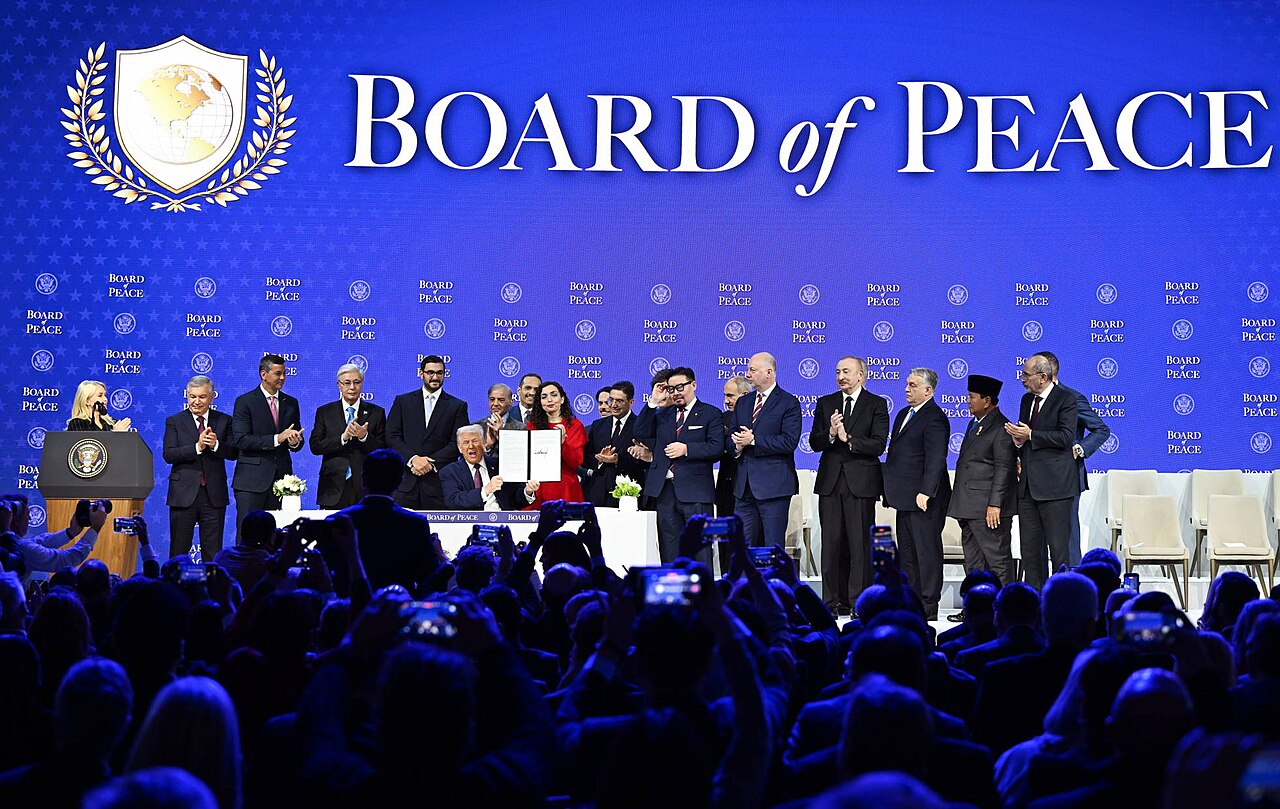
While waiting for something to “explode” in Iran, we warn of possible escalation, as if Gaza were slipping into the background. And yet people are dying there even while the so-called Trump Peace Board is being discussed. Then Venezuela erupts with scenes straight out of an American action film: not only the president abducted, but his wife as well. An American court postures as an institution dispensing justice over a foreign statesman, while the Epstein files generate more interest and debate (especially the disappointment surrounding Chomsky and others) than the ongoing crimes against children, the elderly, the prisoners, and the sick. Are our personal disillusionments and misjudgments truly more important than what is happening on the ground?
Behind all the evils of this world stands a single superpower — the United States; everyone knows it, yet no one can restrain it. What follows are merely words of moral condemnation and political support for those subjected to its various methods of killing. This is not surprising; the cult of death in the U.S. has a bizarre imagination. One need only look at crime series such as CSI: Crime Scene Investigation — in all their versions — to see the countless ways a human being can be killed. But the state (political, military and corporate power combined) has perfected this imagination on entire nations and states. They fall one after another like dominoes, and no one so much as lifts a finger. We have both classical and non-classical methods of destroying a state. Yet today, the most ‘modern’ are genocide, strangulation, and wars of attrition — all to plunder, eliminate the indigenous population, and strip it of agency (sovereignty).
A few years ago, a colleague from Belgrade who had just returned from a holiday in Cuba told me: if you intend to see that beautiful country, hurry. Yesterday, at our regular weekly meeting with comrades from No Cold War, Cuba was our first agenda item. Our comrade Gisela said something that echoed in my mind for hours afterward: genocidal blockade. Indeed, it is easy to indulge in the belief that those with whom we express solidarity are brave, stronger than everything, survivors of many past ordeals — our inspiration. But the images from the ground are not sobering; they are shocking: paralysis of the entire country is expected, hunger, disease (in a country with an extraordinary healthcare system — what irony!). In truth, Cuba has long been on its knees; we are merely waiting for an even more extreme act by the U.S. before we pay attention. (Much as with Iran, Syria, or any other country…) For more than sixty years, it has lived under siege, only now the rope around its neck is tightening. Marco Rubio confirms the old Balkan saying, “Worse the convert than the Turk.” (In English, one could say: there is no zealot like a convert). Born to Cuban parents, he has become an advocate of the glory of the conquistadors and American predators, who cannot tolerate resistance or the offer of a society different from their own, which is sick to its roots. His Munich speech was fit for the heirs of neo-Nazism and neocolonialism; yet worse than the words spoken was the applause of the Europeans.
I will be blunt in conclusion (for we have had enough of wise analyses and verbal acrobatics). First, I am ashamed of my country, which does not even mention the name Gaza (not even accidentally); so sanitized is its subservient rhetoric before the master. Until last year, at least formally, it raised its hand in the UN General Assembly to call for the lifting of the illegal sanctions on Cuba. We stood with the overwhelming majority (even if everyone knows that such symbolic voting is futile). But in October 2025, we became more American than the Americans, placing ourselves among only SEVEN states that voted to maintain the sanctions. Some of us spoke out: shameful! And that was it. Even “Dana” had other issues to address in her writings. Our president continues to pose with children, as befits a kindly granny, yet gives no thought to the children of Gaza or Cuba. She remains silent and enjoys sessions in which she proclaims that “storks do not bring babies” — without mentioning who kills babies.
Recently, in a close intellectual circle, we discussed the unenviable position of Venezuela’s acting president and the necessity of negotiating with the Empire. A comrade, a courageous and inspiring man, said something that froze my blood. In trying to help us grasp the situation of total dependency and threats against the innocent, he said: “They do not want Venezuela to become a new Gaza.” And now, when we speak of Cuba, a similar parallel is drawn. If one does not negotiate with the naked and enraged Emperor, he will turn Cuba into a new Gaza for its eleven million inhabitants. Iran has been suffering for decades. Is it just a different form of killing a nation?
What does international solidarity mean today, when fear has been driven into everyone’s bones? Each state looks to its own vital and national — primarily economic — interests. What of BRICS? Is it a mirage, part of our wishful thinking? Do they not see that the empire’s sword is severing the arteries of the Global Majority at all the key points of the world? Will they continue to whisper: let it not become worse, we will endure. To paraphrase Dante, you who expect an alternative world, abandon all hope. Until the countries of the Global Majority recognize that the epicenter of the new fascism has shifted from Europe to North America, they will not form a genuine anti-fascist alliance –or at least, an alliance that would resist spreading barbarity.
This article was produced by Globetrotter and No Cold War.

No comments:
Post a Comment