Monday, February 16, 2026

‘Anti-Social Media’: The Changing Tech Of Terror – Analysis

February 16, 2026 
Manohar Parrikar Institute for Defence Studies and Analyses (MP-IDSA)
By Dr. Adil Rasheed

The limited span of attention of today’s dopamine-fed and adrenaline-rushed social media junkies, be they on TikTok, X, YouTube Shorts or Instagram posts, often bypasses the cortex of cerebral consciousness and directly targets the pre-cognitive instinctual and visceral seat of the collective unconscious.

Thus, a serious debate is currently raging over whether anti-social elements or violent extremists exploit social media platforms for their insidious purposes, or whether most social media outlets and their apps intentionally design provocative hashtags to spur prolonged, polarising debates and profit from them.

By providing content creators with anonymity and by stripping censorship regulations, the steady livestreaming of visceral online responses has become difficult to regulate, given the speed at which messages are communicated and exchanged.
Medium is the Message

In fact, the business models of many social media platforms are based on engagement algorithms, hashtags and rabbit holes that spur further online debate and thereby increase advertising revenue. In the words of Carlos Diaz Ruiz, “Incendiary, shocking content – whether it is true or not – is an easy way to get our attention, which means advertisers can end up funding fake news and hate speech.” [i]

Thus, Marshall McLuhan’s famous phrase “The Medium is the Message”[ii] renders highly interactive social media platforms a real-time hazard to public safety and security, particularly in relation to sensitive societal issues.

In an August 2019 internal memo (leaked in 2021), a Facebook staffer admitted that “the mechanics of our platforms are not neutral”[iii] and concluded that, to maximise profits, optimisation for engagement is necessary. To increase engagement, hate and misinformation become profitable. Thus, the memo states: “The more incendiary the material, the more it keeps users engaged (and) the more it is boosted by the algorithm.”[iv] Although Facebook has taken commendable steps to prevent incendiary material from appearing on its platforms, the complexities of regulating problematic content appear to be increasing.

According to a 2018 MIT Sloan study, “false rumours spread faster and wider than true information, which supports the adage that ‘A lie can travel halfway around the world while truth is still putting on its shoes’”. Thus, the study states that falsehoods are 70 per cent more likely to be retweeted than the truth, and reach their first 1,500 people six times faster. This effect is more pronounced for political news and for content targeting particular races, nationalities, or religions.

Thus, before examining the damage caused by encrypted social media platforms in online radicalisation, one must not overlook mainstream social media apps, which arguably serve as the first layer for the dissemination of extremist content.
The Anti-Social Media

In the wake of the white noise generated by mainstream social media channels and apps, a new trend of ‘anti-social media’ has emerged in recent years, which seeks to abandon mainstream platforms, reduce screen time, and seek private, intimate, or even ‘analogue’ communication to avoid algorithm-driven polarisation, surveillance and loneliness.[v]

However, some of these so-called anti-social media platforms have also become off-the-wall mediums for disseminating extremist propaganda. Young users strategically construct online identities and cultivate large numbers of online ‘friends’ based on shared interests. They even use specialised, encrypted apps in the deep web and dark web to ensure anonymity and security, and often inadvertently enter rabbit holes and echo chambers of radical forces, thus risking being radicalised and recruited by terror groups.[vi]

ISIS is known to have utilised social media platforms between 2013 and 2017 to marshal their terrorist forces, agents and operatives during their terror ops. They broadcast wartime events in near-real time, transforming the Syrian conflict into one of the most socially mediated conflicts in history.

In fact, terrorists use social media for eight main purposes:For propaganda
For scouting radical recruits
For indoctrination and radicalisation of recruits
For generating finances through apps for terrorist activities
For conducting cyberattacks (hacking, doxxing, flaming)
For combat training and explosives/weapons manufacturing
For making terror plans and for coordinating terror attacks
For marshalling terrorists/agents/forces during terror ops

Despite best efforts to curb misuse, we often find that even popular social media platforms such as Facebook and Twitter struggle to prevent radicals from disseminating their messages, spreading propaganda and indoctrination, and building large networks. It is often too late for these social media platforms to detect such activities and remove them from public view.

In addition, end-to-end encrypted (E2EE) apps, such as WhatsApp, Telegram, Signal, Viber, Discord and Olvid, are widely used by extremist and radical actors to create so-called ‘secure echo chambers’ for radicalisation, recruitment and attack planning.[vii]
Algorithmic AI

The For You Page (FYP) on TikTok demonstrates how algorithms can push users towards far-right, hateful, or violent content through a continuous stream of recommendations.[viii] Similar pathways exist even on YouTube, where users exploring mainstream political topics can be guided towards extremist channels and conspiracy theories such as QAnon. In fact, YouTube has stated it plans to purge conspiracy theory content used to justify real-world violence.[ix]

Algorithms pose dual risks in terrorism: extremists use them for sophisticated recruitment, propaganda (deepfakes, targeted messaging), cyberattacks and planning. The rise of deepfake AI technologies has increased the risk of data theft, socio-cognitive community hacking, fake-identity fraud and forgeries, online trolling, flaming and doxxing, as well as the proliferation of incriminating memes and hate content.

Governments and intelligence agencies around the world have also begun utilising AI to analyse vast datasets (e.g., communications and financial records) to identify patterns and potential threats. It helps process diverse data from CCTV, emails and internet logs to build intelligence. It can also help detect and respond to AI-augmented cyber threats against infrastructure.[x]

Social media platforms have also become a highly critical channel for terrorist financing (TF), with reports by institutions like the Financial Action Task Force (FATF) indicating that the highest percentage of internet-based terror activities relate to terror funding.[xi] In fact, after initiating contact on public platforms, organisers often move to encrypted messaging apps to provide bank transfer, hawala, or cryptocurrency details.

Many terrorist groups use social media platforms to promote cryptocurrency addresses, thereby masking the movement of their funds and evading sanctions. Terrorists also abuse legitimate crowdfunding platforms by setting up campaigns disguised as humanitarian aid, charity, or supporting families of terror inmates.
Social Media Exploitation: India’s Strategy

India’s strategy against social media exploitation employs a ‘whole-of-government’ approach, combining legal frameworks, advanced technology and international cooperation to combat online radicalisation, propaganda and terrorist financing.

The Information Technology (IT) Rules 2021 empower law enforcement to mandate the removal of unlawful content within 24 hours. Section 69A of the IT Act is used to block websites, URLs and social media accounts related to extremist groups. Under the same legal provisions, Indian authorities have enhanced their capacity to track suspicious accounts, with a particular focus on encrypted platforms.[xii]

Artificial Intelligence (AI), big data analytics and facial recognition tools are being used to detect terrorist networks, monitor radical discourse and map influence. The Defence Research and Development Organisation (DRDO) has developed NETRA (Network Traffic Analysis) to monitor encrypted communication.[xiii] In 2024, the Ministry of Electronics and Information Technology (MeitY) blocked thousands of terror-tainted accounts.[xiv]


Conclusion

In addition to the present efforts at reforming digital platforms to counter disinformation, where efforts seem to be focused on blocking, content moderation and fact-checking, attention may also be paid to reforming the online advertising market, which should be barred from financially backing extremist content. Credible punitive action should also be taken against popular ‘influencers’ who are found to be undermining democratic values and institutions or to be engaged in disseminating hate speech and anti-social propaganda. In the end, there needs to be a concerted campaign at the global, regional and national levels in creating standards and legislative frameworks along with mechanisms for information sharing and joint actions to counter the abuse of social media for extremist and terrorism purposes.

Source: This article was published by the Manohar Parrikar Institute for Strategic Studies and Analyses (MP-IDSA).

[i] Carlos Dias Ruiz, “Disinformation is Part and Parcel of Social Media’s Business Model, New Research Shows”, The Conversation, 23 November 2023.

[ii] Marshall McLuhan, The Medium Is the Massage: An Inventory of Effects, Bantam Books, New York, 1967.

[iii] Clare Duffy, Aditi Sangal, Melissa Mahtani and Meg Wagner, “Internal Facebook Documents Revealed”, CNN, 26 October 2021.

[iv] Ibid.

[v] Sara Wilson, “The Era of Anti-Social Media”, Harvard Business Review, 5 February 2020.

[vi] Benjamin Kevaladze, “Yes, Online Communities Pose Risks for Young People, But They Are Also Important Sources of Support”,The Conversation, 21 April 2021.

[vii] “Secure Messaging Apps like Signal, Telegram Major Challenge to Counter Online Radicalisation: Government”, The Economic Times, 11 December 2024.

[viii] Morgan Keith, “How TikTok’s Algorithm Enables Far-right Self-radicalization”, Business Insider, 6 November 2021.

[ix] Kari Paul, “Youtube Announces Plans to Ban Content Related to QAnon”, The Guardian, 15 October 2020.

[x] “AI and National Security: Promise and Peril”, Cognyte, 17 October 2025.

[xi] “Comprehensive Update on Terrorist Financing Risks”, FATF Report, July 2025.

[xii] “From Social Media to OTT Platforms: Government Enforces Strict Accountability to Curb Obscenity, Misinformation and Cyber Offences Online”, Press Information Bureau, Ministry of Information & Broadcasting, Government of India, 17 December 2025.

[xiii] “NETRA: A Vigilant Eye on the Internet”, Research Matters, 8 March 2017.

[xiv] “MEITY Blocked Over 9,000 Accounts and Websites in 2020”, SabrangIndia, 12 March 2021.


Views expressed are of the author and do not necessarily reflect the views of the Manohar Parrikar IDSA or of the Government of India.

About the author: Dr Adil Rasheed is Research Fellow (Selection Scale) and Coordinator of the Counter Terrorism Centre at the Manohar Parrikar Institute for Strategic Studies and Analyses (MP-IDSA).


Manohar Parrikar Institute for Defence Studies and Analyses (MP-IDSA)

The Manohar Parrikar Institute for Defence Studies and Analyses (MP-IDSA), is a non-partisan, autonomous body dedicated to objective research and policy relevant studies on all aspects of defence and security. Its mission is to promote national and international security through the generation and dissemination of knowledge on defence and security-related issues. The Manohar Parrikar Institute for Defence Studies and Analyses (MP-IDSA) was formerly named The Institute for Defence Studies and Analyses (IDSA).
Why Sri Lanka Needs To Preserve Culture To Survive Post De-Globalized World? – OpEd


Colombo, Sri Lanka.

February 16, 2026 
By Indika Hettiarachchi

Recent geopolitical, security and trade tensions between powerful nations accelerated the “de-globalization” momentum marked by a shift from rapid trade integration toward protectionism, economic nationalism, and fragmented supply chains. Global trade and investment are being reorganized around national security and resilience, regionalization and “friend-shoring”, rather than cost-driven integration.

Small and developing countries like Sri Lanka face significant and disproportionate challenges from de-globalization. These challenges include suppressed economic growth, increased vulnerability to external shocks, and reduced influence in global decision-making. Sri Lanka’s trade dependency, stagnant foreign inflows, small domestic markets, limited export product basket make Sri Lanka a highly vulnerable country.

The World Economic Forum, the world’s leading pro-globalization think tank calls de-globalization as “re-globalization” and forecasts the outcome of currently ongoing changes will be “a multi-nodal, regionally and politically clustered world that still operates on a global scale, but with resilience and security prioritized alongside cost and efficiency”.

During last few decades, Sri Lanka’s frequent reliance on IMF support programs resulted Sri Lanka’s economic policies to align with neo-liberalism with underlying globalization agenda. Although, Sri Lanka’s trade dependency ratio of around 44 percent is comparatively moderate, persistent trade deficit, concentration of import and export markets and products, small domestic market make Sri Lanka a highly impacted country due to de-globalization. Moreover Sri Lanka’s lack of natural and financial resources, together with unfavorable demographic shift make Sri Lanka’s economy extremely vulnerable.

Sri Lanka has limited strategic options to weather the impact of de-globalization. Perhaps the most effective option Sri Lanka has is the opportunity to leverage the strategically important geographical location. Sri Lanka is already emerging as a critical global geopolitical hub due to its strategic location in the Indian Ocean, acting as a pivotal maritime, logistical, and economic link between East and West. Apart from Sri Lanka being a critical part of China’s Belt and Road initiative, Sri Lanka’s maritime infrastructure is of strategic interest to India and the U.S, as two-thirds of the world’s oil trade and half of all container cargo passes through the waters surrounding Sri Lanka.


It goes without saying that leveraging country’s strategic location to catalyze economic growth needs well planned geo-political strategy. In order to cultivate geo-political influence requires a multi-dimensional strategy that integrates economic strength, military capability, diplomatic alliances, and technological advancement. These can be secured through securing strategic trade routes, building robust infrastructure, fostering, and utilizing soft power to align with international interests.

At present Sri Lanka has a very weak global influence as reflected in weak ratings in Global Soft power Index. Hence it is essential that Sri Lanka boost its “soft power” through appropriate actions focusing on culture, political values, and foreign policy. Cultural aspects are considered the most important pillar of nation’s soft power, and Sri Lanka can benefit from further enhancing existing cultural foundation rather risking to change it. Even Joseph Nye, the American Political Scientist who developed the “International Theory of Neo-Liberalism” stressed that “culture” of a country is the most important pillar of a country’s soft power.

Many analysts point out that the Sri Lanka’s current political regime is attempting to change existing socio-cultural fabric which is deeply rooted in Buddhist heritage. Moreover Sri Lanka’s fast expanding tourism industry is also deeply rooted in country’s existing cultural foundation and attempts to change it could impact tourism industry negatively. Even recent public discussions on alleged state interventions on LGBT related matters, could work negatively for the country as so far Sri Lanka is neither known as a country that discriminate LGBT persons nor a country that promote it.

Sri Lanka has a wide range of monetizeable opportunities based on its strategic location and also existing domestic business landscape. Currently on going T20 Cricket World Cup is one example. No other country in South Asia, other than Sri Lanka, will find it possible to host a match between India and Pakistan. Hence it is time that Sri Lanka work towards leveraging its geographical location to weather global trade reset, and Sri Lanka can effectively leverage its existing cultural foundation to boost its global soft power.


Indika Hettiarachchi is a Colombo based Independent Private Market Investment professional. He can be contacted on indika.h@jupitercapitalpartners.com
Africa’s Energy Future Cannot Be Built On Exclusion – OpEd

February 16, 2026
By African Energy Chamber


Across many Western countries, anti-energy activists attack the very oil and gas industry that provides tax revenue to build schools, pave roads and fund universities. Unreasonable limits on oil and natural gas activity do not just target companies – they ultimately harm societies, weaken economies and destroy jobs. Africa cannot afford to follow that path. At the African Energy Chamber (AEC), we have always believed we must remain organized to defend this industry and fight back when necessary.

The Chamber has personally invested significant effort in this fight because supporting the oil and gas industry is essential to Africa’s development and economic sovereignty. At the AEC, we reject the idea that governments should pick energy winners and losers instead of allowing free‑market principles to work. By rallying continued investment into Africa, we defend the same market foundations that built many of today’s strongest global economies. That is why regulatory clarity, efficient permitting and consistent enforcement are essential to attracting both domestic and foreign capital – work the AEC advances every day.

Africa’s Energy Must Deliver for Africans

For many Africans, skepticism about oil and gas has long centered on one question: where are the jobs and opportunities? This is why we remain unapologetic advocates of local content. Expecting the industry to create jobs for Africans is not radical – it is right.

To be clear, the industry has made meaningful progress. It has trained professionals, developed talent and produced African entrepreneurs who are now acquiring assets across the continent. The leadership of companies such as Seplat, Renaissance Energy, Oando, Etu Energias, First E&P, ND Western and numerous service firms reflects careers built inside major IOCs and global service companies. From Angola and Mozambique to Nigeria, South Sudan, Tanzania and Senegal, few industries have created comparable pathways for African leadership. In many cases, this progress required governments to push firmly for African inclusion – something regulators such as the NUPRC, ANPG, Ghana Petroleum Commission and authorities in Namibia, Tanzania, Equatorial Guinea, Gabon, The Gambia, Liberia, Sierra Leone, Senegal and South Africa must never forget.


Inclusion Is Not Optional

Yet serious concerns remain. Policies or practices that exclude Black professionals from employment opportunities contradict the very principles of growth, fairness and partnership the industry claims to uphold. Frontier Energy Network’s hiring practices – widely understood across the industry to exclude Black professionals – are wrong. Full stop. This is not who our industry claims to be, and it is not compatible with partnership in Africa. Frontier’s leadership, including Daniel Davidson, has remained stubborn on this issue, and we are prepared to take this fight to the end. An organization that earns the lion’s share of its revenue from Africans cannot expect to benefit from African markets, governments and capital while denying fair employment to Africans.

This moment calls for our industry to show moral conviction. Africans are watching. No organization seeking partnership, investment or credibility in Africa can ignore inclusion or dismiss legitimate concerns about discrimination. In 2026, we should not still be confronting barriers rooted in the past. If the Africa Energies Summit wants African support, it must be ready to do the right thing by hiring Black professionals. When Daniel Davidson refuses to hire Black professionals and actively locks them out, the industry feels it – it is like a one‑eyed quarterback seeing only half the field.


The Industry Must Choose

We are therefore considering a targeted, lawful and selective boycott – yes, exactly that – against institutions that refuse to uphold inclusive hiring. Quite frankly, companies that still treat Black professionals as second‑class participants in this industry must face consequences. Inclusion drives growth, and when this industry grows, everybody wins. It is simply good business.

Service companies, investors, conference organizers and partners all share responsibility. One cannot seek licenses, approvals, and government goodwill while tolerating exclusionary behavior. Companies such as TGS – and others participating in platforms perceived by many Black professionals as unwelcoming – must recognize their influence and act accordingly. As Martin Luther King Jr. reminded us, “There comes a time when silence is betrayal.” Companies must pick a side. You cannot promise governments local hiring while endorsing exclusion.

African ministers and regulators who attend the Africa Energies Summit cannot claim to value local content while aligning with institutions that refuse to hire Black professionals. The days when Black professionals are merely spectators in Africa’s oil and gas development are over. Our industry must remain vigilant. We cannot repeat the mistakes of the past or give anti‑oil extremists an opportunity to tell African youth, “We told you so.”

Ignoring local content risks undermining the future of Africa’s oil and gas industry. The Chamber takes this position not lightly, but from decades of advocacy, criticism endured and unwavering belief in the sector’s importance to the continent. Listening to Black professionals who feel excluded is not optional – it is necessary. Many may come for me because of this stance, but honesty demands that I speak for the Black men and women who have been unfairly treated by Daniel Davidson and the Africa Energies Summit.

In the coming weeks, The Chamber will engage African officials and industry leaders to seek clear commitments to inclusive hiring and equal opportunity. Where progress is absent, we will exercise our lawful right to protest. Oil and gas professionals are good people, and this industry remains vital to ending energy poverty and strengthening global energy security. God bless the oil and gas industry – and yes, Drill Baby Drill.

We cannot allow division to weaken our shared mission. The Chamber has consistently been a model of pragmatic leadership, especially when facing distractions such as those posed by Frontier Energy Network and the Africa Energies Summit. Africa’s energy future must be built on investment, opportunity and inclusion for all. We shall overcome.


African Energy Chamber

The African Energy Chamber upholds a results-focused business environment for companies operating in Africa’s dynamic energy industry. The African Energy Chamber works with indigenous companies throughout the continent in optimizing their reach and networks.
Trump Kabuki Theater In Ukraine: Nothing Of Substance Gets Resolved – OpEd

February 16, 2026 
By Alastair Crooke

It is not a glitch (that nothing gets resolved). It’s a feature. For it opens rather, a path for ‘Business’ to be done – for ‘stakeholder’ deals to be cut, and for billions to be shared out in payoffs. This is Trump’s geo-political transactional model: Business displaces traditional negotiation (at least while the money flows); Money is the politics.

Trump, Witkoff and Kushner are said to be confident that they can construct a financial reward system for western debt-holders, investors and politicians (and the Zelensky entourage, in the case of Ukraine) that succeeds in “retaining the financial rewards of war – without the ancillary ingredient of bloodshed”.

Once payments are apportioned – from the Trump-Witkoff perspective – the “territorial issues, security guarantees, EU membership status and the position of NATO are downstream details once the larger payment system is organized. Put another way, they are down to the stuff that really matters, the money”.

With this worldview, negotiations between the U.S. and Russia are being pursued by two New York real-estate ‘gurus’ (Witkoff and Kushner), together with Josh Gruenbaum, who has also been appointed as secretary to Trump’s ‘Gaza Peace Board’. Gruenbaum’s previous work experience has been with the KKR fund, which, although not strictly a ‘vulture fund’, is specialist in aggressive distressed-debt investing.

Where are the experienced professionals from Russia’s foreign service in these talks? They are notably absent. Foreign Minister Lavrov does not attend.

Why? Because the Trump-Witkoff hypothesis is that the Ukraine conflict can be “solved by a system where the opportunity for financial benefit continues. That is – that those who have had a financial benefit in the Ukraine war – the ‘stakeholders’ – continue to enjoy financial benefit. Put more cynically, ‘The Prosperity Agenda to Support Ukraine’s Reconstruction’ is codespeak for the U.S. Senate and EU to retain a financial mechanism to exploit for personal benefit”.

Essentially, this is the Trump-New York real-estate experience transferred to a real-life conflict – in which ‘blood’ usually represents the true currency invested in a conflict. This approach underlines the West’s degradation into a nihilism that views sacrifices made by men and women in support of their country as a trifle to be bought out.

Look at the Witkoff team — on the one hand, there is Blackrock and its CEO Larry Fink, who are commissioned by Witkoff to raise the reconstruction funds for Ukraine. Larry Fink also liaises closely with the Witkoff team on divvying out the potential re-construction ‘opportunities’ (but is not directly involved in the Moscow talks with President Putin).

Then there are the Rothschilds who are the principal advisers to Kiev’s Ministry of Finance and who are responsible for managing the huge Ukrainian bond debt of more than $216 billion – that is to say, the Rothschilds are responsible for negotiating with bond creditors and managing their claims on Kiev. There are also sovereign creditors who have guaranteed loans to Ukraine from financial institutions, such as the IMF and World Bank. The EU alone has guaranteed €193 bn.

These ‘stakeholders’ in the Witkoff framework — the creditors of Ukraine, the interests of Blackrock and possibly KKR — stand to do well out of a reconstruction package, in the case of a political settlement agreed between the U.S. and Moscow. “As of February 2026, Ukraine’s sovereign dollar bonds are trading in the 60 to 76 cents on the dollar range, reflecting intense market sensitivity to potential peace proposals. Prices have rallied significantly from lows in the 19–20 cent range seen in late 2024 and early 2025 as diplomatic momentum builds”.

Rothschilds may, or may not, have a direct interest in the Ukraine debt package, but as a ‘firm’ they have a bitter history in their dealings with President Putin over what happened to Yukos. The latter was the largest oil and gas enterprise in Russia in the 1990s.

In 2003, Mikhail Khodorkovsky, then head of the Russian oil giant Yukos, appointed Lord Jacob Rothschild as the “guarantor” or “protector” of his controlling stake in the company. The transfer of control of Yukos (which consisted of much of Russia’s oil and gas resources) to Lord Rothschild was triggered automatically in 2003 by Khodorkovsky’s arrest by Russian authorities. The intent was to put these resources beyond President Putin’s reach. However, Yukos subsequently was nationalised and wiped out by tax impositions which effectively voided its assets of any value.

On the new ‘money-in’ side to the Witkoff ‘balance sheet’, the EU and the U.S. are pitching for an $800 billion post-settlement rebuilding fund for Ukraine war damage. All of Witkoff’s identified stakeholders have an interest in getting a slice of this cake — Zelensky needs a slice to share around his ‘stakeholders’ and the EU is lining up its defence contractors to claim their portion of the $800 billion action, too.

And on the Russian side, there is Kirill Dmitriev, the Wall Street-trained Head of Russia’s National Wealth Fund, who initiated efforts to offer investment opportunities to the United States as part of the stakeholder strategy to restore economic ties and foster negotiations. These included joint projects on rare earth minerals and Arctic development.

From Moscow’s perspective – and with Moscow’s clear understanding of the Trump’s mercantilist and transactional psyche — perhaps having Washington pulled by ‘deal’ opportunities into talking with Russia (after a long period of severed communications) and when the U.S. leadership is inconstant and capricious – engagement with Witkoff and Kushner may have been seen as the better side to valour.

However, this ‘business first’ methodology has a major flaw: The ‘negotiations’ with the Witkoff team are not working. Matters are moving in the wrong direction, as Foreign Minister Lavrov has underlined in frank language in two recent interviews (last week with Rick Sanchez on Russia Today, and on Tuesday with Russia’s NTV television channel).

FM Lavrov emphasised that the understandings reached at Anchorage are stuck – and in fact are being rowed back, “moving in the wrong direction”, Lavrov warned. Not only are relations cooling; asymmetrical actions are increasing and the risk of escalation growing, Lavrov suggested.

So what is going on?

Firstly, underlying Trump’s approach to his ‘business strategy’ are several distinct parameters — the principal one being the deal-making culture centred on a ‘financial rewards system’. This approach ignores reality. The issue of Russia’s relations with Ukraine (and the U.S.) are not centred on the notional cutting up of a billion dollar re-construction cake.

The crux rather, is the imperative to reach an agreement on where exactly the boundary to NATO’s sphere of interest should be limited. And by extension, to where Russia and Central Asia’s boundary extends.

But matters are moving in the opposite direction: Lavrov’s frustration is very evident in these interviews. Trump is becoming more and more focussed on American domination (driven in no small part by the U.S.’ dollar and debt crisis).

Trump’s debt-driven focus on domination lies in diametric contradiction to a multi-polarity of powers based on respect for each other’s national security interests.

This leads to the second parameter — it is simply that conflicts and wars are not all susceptible to monetary buy-offs. There is ‘history’ and lives sacrificed. Only a resolution that encompasses an understanding of the full context which brought the conflict into being in the first place is likely to succeed.

And it is the root causes to the dispute that are precisely what is excluded under the Witkoff framing.

Separately, the legacy culture of European and U.S. banking and financial interests provides the predisposition to preserving the Ukrainian status quo as parcel to their historic stance.

The ‘taking care of stakeholders’ approach then automatically devolves into seeking a continuation of existing structures of power and authority in Kiev, without which the monetary worth of Ukrainian bonds — many of which are held by European governments – will fall to zero.

Market analyst Alex Krainer has stated that “European nations, including the UK, are in a catastrophic fiscal position, partly because they have lent (or guaranteed) hundreds of billions to Ukraine that are likely to become “bad debts””.

Moscow has been very clear that there must be a transformation made to the leadership culture in Ukraine for any stable coexistence between Russia and Kiev to be viable. For Moscow, the continuation of the Zelensky regime culture of radical hostility would be viewed as setting up Russia to face a future of regular bouts of repeated conflict as Ukraine is periodically rearmed and re-grouped by European states.

Any mooted change of Ukrainian leadership style however, would pull the rug from under Witkoff’s carefully arranged ‘financial reward system’. An outcome to the conflict brought about by military facts on the ground leading to a transformed culture in Kiev would be anathema to the stakeholder benefit scheme.

The ‘stakeholders’ are united in opposing such eventuality. The Witkoff plan effectively fuels their opposition to any change in the status quo.

It is not surprising then that Foreign Minister Lavrov is signalling a backing off from the Witkoff negotiation enterprise. It is not working. It is distancing Russia from its security imperatives. Rather, it paves the path for a continuation of war against Russia.

Alastair Crooke is a former British diplomat, founder and director of the Beirut-based Conflicts Forum.
Bulgaria Investigating Six Mountain Deaths As Group Suicide And Murder


A camera recording from the Petrohan mountain lodge, released by the prosecution, taken on February 1, before three of the four men allegedly committed suicide. Photo: Bulgarian Prosecution.


February 16, 2026 
 Balkan Insight
By Svetoslav Todorov

Bulgarian authorities are investigating six deaths in two incidents in the country’s northwestern mountains as a suspected murder-suicide case linked to one of the dead, a cave explorer who established himself as a Buddhist spiritual teacher.

On Friday, the prosecution sent a detailed report to MPs amid concerns about the alleged lack of institutional response to earlier warnings of wrongdoing connected to the cave explorer, 51-year-old Ivaylo Kalushev.

Six people were found dead at two separate crime scenes but motives behind the incidents remain vague. The mysterious deaths by shooting have been dubbed ‘Bulgaria’s Twin Peaks’ by media.

On February 2, police arrived at the Petrohan mountain lodge, 62 kilometres from the nearest border point with Serbia, to find three men shot in the head. On Thursday, forensic analysis of the dead suggested that they died from likely self-inflicted gun shots, fired from point-blank range.

The men, Ivaylo Ivanov, 49, Detcho Vassilev, 45, and Plamen Statev, 51, were all part of a wildlife NGO that trained rangers to protect the area from illegal logging and poaching in 2022-25, in agreement with the Environment Ministry.

On February 8, their partner and the owner of the lodge, cave explorer Kalushev, was found dead in his camper along with 15-year-old Alexander Makulev and 22-year-old Nickolay Zlatkov. They were also all shot in the head.

On February 9, the prosecution released a short video from a security camera, which showed four of the six men parting amicably on February 1. The footage has raised questions about whether they had suicidal intent.

Officials have raised suspicions about Kalushev, who reportedly established himself as a Buddhist spiritual teacher, and his followers.

The head of the National Police Directorate Zachary Vaskov said on February 3 that police thought the first three men who died may have been involved in “a secret society that bares resemblances to a sect”.

Numerous, often conflicting, personal testimonies of people close to the deceased have been published by media. Some have claimed that Kalushev may have acted inappropriately towards teenage male followers who went to live with him.

Investigative website bird.bg interviewed one former follower who alleged sexual exploitation by Kalushev during hypnotherapy sessions starting from the age of 14 or 15 and continuing for the next four years. He claimed that Kalushev’s group of followers was “definitely a sect”.

The former follower, now 31, also claimed he warned the family of a 10-year-old boy he met with Kalushev at the time. He said the boy was the 22-year-old who died with Kalushev in the camper.

In 2024, grandparents of an eight-year-old boy filed a request for a probe with the State Agency for Child Protection about their grandson attending Kalushev’s ‘youth rangers’ programme. The investigation was dropped.

These accounts raised further questions about official inaction despite past suspicions of wrongdoing.


Balkan Insight

The Balkan Insight (formerly the Balkin Investigative Reporting Network, BIRN) is a close group of editors and trainers that enables journalists in the region to produce in-depth analytical and investigative journalism on complex political, economic and social themes. BIRN emerged from the Balkan programme of the Institute for War & Peace Reporting, IWPR, in 2005. The original IWPR Balkans team was mandated to localise that programme and make it sustainable, in light of changing realities in the region and the maturity of the IWPR intervention. Since then, its work in publishing, media training and public debate activities has become synonymous with quality, reliability and impartiality. A fully-independent and local network, it is now developing as an efficient and self-sustainable regional institution to enhance the capacity for journalism that pushes for public debate on European-oriented political and economic reform.


For Trump, It’s Crunch Time In Gaza – Analysis

February 16, 2026 
By James M. Dorsey

It’s crunch time when Donald Trump’s Board of Peace meets in Washington this week to finalise the implementation of the second phase of the president’s Gaza ceasefire plan.

Mr. Trump needs the 20-member Board to demonstrate significant progress on multiple thorny issues that will define the success of his plan and whether war-ravaged Gaza will stabilise or be the target of a renewed full-scale Israeli assault.

The interconnected issues include the disarmament of Hamas, the demilitarisation of Gaza, Israeli withdrawal from the Strip, the introduction of an international stabilisation force and a Palestinian police force, the reconstruction of Gaza, and the linkage between breaking stalemates in Gaza and resolving the Israeli-Palestinian conflict with the creation of an independent Palestinian state.

Arab and Muslim-majority members of the Board, including Saudi Arabia, the United Arab Emirates, Qatar, Egypt, Turkey, Indonesia, and Pakistan, are reluctant to commit troops to an international stabilisation force and funds for the reconstruction of Gaza without Hamas agreeing to disarm and a timetable for the complete Israeli withdrawal from the Strip.

Speaking at the Munich Security Conference this weekend, Saudi Foreign Minister Faisal bin Farhan said, “We need to see a real end to the conflict. That means we need to have clarity on when Israel is going to withdraw, when Hamas is going to disarm, when everyone is going to comply with all 20 points of the 20-point plan.”

Indonesia has gone furthest by preparing up to 8,000 troops for service in Gaza. Even so, Army Chief of Staff Maruli Simanjuntak cautioned, “We are just preparing ourselves in case an agreement is reached.”

In a statement, the Indonesian Foreign Ministry insisted that the potential role of the country’s troops would “focus on protecting civilians, humanitarian and health assistance, reconstruction as well as training and strengthening the capacity of the Palestinian Police,” not disarming Hamas.

The ministry said the West Bank-based, internationally recognised Palestine Authority would have to approve Indonesian participation in the stabilisation force.

Established in January by Mr. Trump and countries eager to cater to the president’s narcissism, the Board projects itself as a potential rival to United Nations peacekeeping efforts with Gaza as its first project.

So far, Mr. Trump’s plan has produced mixed results in its first phase, which saw the release of the remaining living and deceased Hamas-held captives abducted by the group during its October 7, 2023, attack on Israel.

However, the plan has failed to silence Israeli guns as Israel launches daily air and drone strikes that violate the ceasefire.

While the truce has significantly reduced the number of daily Palestinian casualties, some 600 have been killed since the ceasefire took effect on October 10 of last year.

Similarly, Israel has selectively allowed an increased flow of humanitarian aid into Gaza that averted the risk of a famine but has done little to alleviate the health crisis.

Moreover, Israel severely throttles the number of Palestinians allowed to either leave the Strip for medical treatment or return to Gaza through the recently reopened Rafah Crossing between the territory and Egypt.

Kickstarting the plan’s second phase requires Mr. Trump to twist not only Hamas’s arm but also Israeli Prime Minister Binyamin Netanyahu’s. So far, Mr. Trump has harped on Hamas, threatening it with dire consequences if it fails to disarm, while turning a blind eye to Israel’s ceasefire violations.

The Board of Peace High Representative for Gaza, Nikolay Mladenov, implicitly suggested that Mr. Trump no longer can afford to do so because it undermines the credibility and legitimacy of the Palestinian committee that is tasked with running Gaza’s day-to-day affairs under the Board’s supervision.

“If you put the committee tomorrow in Gaza and the violations of the ceasefire continue the way they are now, we’re only embarrassing the committee and ultimately making it ineffective,” Mr. Mladenov said in Munich.

While insisting on its right to resist Israeli occupation, Hamas has suggested it could decommission what’s left of its heavy weaponry but keep its sidearms. US officials have floated the idea of a weapons buyback that would compensate individual fighters for surrendering their arms and grant them immunity.

Israel has rejected anything but the total disarmament of Hamas and asserted that only it can do so, a goal Israel has failed to achieve in almost 2.5 years of war.

Israeli Cabinet Secretary Yossi Fuchs said this week that Israel intended to give Hamas 60 days to disarm and would renew its assault if it does not.

Israel may have timed the announcement in recent days of widely denounced measures that enhance Israel’s control of the West Bank, curtail the power of the Palestine Authority in those parts it nominally controls, and expand Israel’s ability to seize Palestinian lands to coincide with the Board of Peace’s meeting in Washington.

Many in the international community beyond Arab and Muslim states see the measures as violations of international law and a prelude to Israeli annexation of the West Bank.

Like Israel’s ceasefire violations, the measures are likely to reinforce Hamas’s refusal to unconditionally lay down its arms and Arab and Muslim resolve to condition their commitment of troops to an agreed formula for the disarmament of Hamas, a timetable for the Israeli withdrawal, and steps to pre-empt an Israeli annexation of the West Bank.

In doing so, Mr. Netanyahu hopes Mr. Trump will give him a free hand in Gaza.

For Mr. Trump, it’s a high-stakes game. A renewed Israeli assault on Gaza would generate public pressure on Arab and Muslim-majority states to withdraw from the Board of Peace, which already many view as a vehicle that serves US and Israeli rather than Palestinian interests.

So far, Mr. Trump has gotten away with having Israel’s back when it comes to the Palestinians. However, with deeds rather than words likely to determine the fate of his Gaza ceasefire plan, Mr. Trump may have to accept that it’s crunch time on an issue that will co-define how he is remembered.

This article was published at The Turbulent World with James M. Dorsey

Dr, James M. Dorsey is an award-winning journalist and commentator on foreign affairs who has covered ethnic and religious conflict and terrorism across the globe for more than three decades. Over his career, Dorsey served as a foreign correspondent for, among others, The Wall Street Journal, The New York Times, The Christian Science Monitor and UPI in the Middle East, Europe, Africa, Central America and the US. He is currently a senior fellow at the S. Rajaratnam School of International Studies at Nanyang Technological University in Singapore and the author of the Substack, "The Turbulent World."

Italy, Romania To Join Trump’s ‘Board Of Peace’ As Observers

February 16, 2026 
EurActiv
By Nicoletta Ionta

(EurActiv) — Italy and Romania are preparing to join US President Donald Trump’s proposed “Board of Peace” as observers, stopping short of full membership amid mounting legal and constitutional concerns in European capitals.

Italian Prime Minister Giorgia Meloni said on Saturday that Rome had been invited to participate in an observer capacity and was likely to accept. “In our view, this is a good solution given the constitutional compatibility issues we would face with full membership,” she told reporters in Addis Ababa, on the sidelines of the African Union summit.

The inaugural meeting of the Board, convened by Trump, is scheduled to take place in Washington next Thursday.

Romanian President NicuÈ™or Dan also confirmed he would attend as an observer. “Next week I will take part in the first meeting of the Board of Peace in Washington, responding to the invitation addressed by the President of the United States of America, Donald Trump,” he wrote on X.

European Commission President Ursula von der Leyen has also received an invitation to the February 19 meeting. EU Mediterranean Commissioner Dubravka Å uica is expected to represent the bloc in Washington, a Commission spokesperson told Euractiv on Sunday.

Brussels has nonetheless signalled continuing reservations. “Our position remains unchanged and has been very clear from the outset,” a spokesperson said, citing “a number of questions regarding several elements of the Peace Council’s charter, including its scope, governance and compatibility with the UN Charter.”

So far, Bulgaria and Hungary are the only EU countries to have formally joined the Board as full participants. Bulgaria’s participation remains subject to ratification and carries consultative voting rights in the interim.

Hungarian Prime Minister Viktor Orbán has said he will travel to Washington to attend the meeting.

An internal European External Action Service document dated January 19, first reported by Euractiv, warned that the Board’s charter could raise issues under EU constitutional principles.

Several other EU capitals are weighing their position. One EU diplomat said governments were conscious that remaining outside the initiative risked marginalisation, given Washington’s central role in shaping the process.

Cyprus, Germany and Italy are among those exploring participation in some form, the diplomat added.Eddy Wax contributed to this report.
EU-Banned Pesticides Widely Used In Latin America

A study of hundreds of pesticide ingredients used on crops in some Latin American countries has found that almost half are disallowed in the European Union. Copyright: Víctor Flores (CC BY-NC-SA 2.0).

February 16, 2026 
By Rodrigo de Oliveira Andrade

Almost half of the pesticides authorised for use on major agricultural crops in Latin America are banned or not approved in the European Union (EU) due to health and environmental risks, according to researchers.

The study published in Proceedings of the Royal Society B, analysed the legal status of hundreds of pesticide active ingredients used in eight countries—Argentina, Bolivia, Brazil, Chile, Colombia, Costa Rica, Mexico and Uruguay—and compared them with EU regulations, considered among the strictest in the world.

Active ingredients are the specific chemicals in pesticides that kill or control the pests.

The researchers reviewed publicly available information on pesticide approvals in Latin America, drawing on government and private-sector documents.

They identified 523 active ingredients approved for use in the region’s ten main crops—soybeans, maize, rice, sugarcane, wheat, apples, avocados, coffee, sunflowers and grapes—up to December 2020. Of these, 256 (48.9 per cent) were banned or not authorised in the EU.

These include acetochlor (a herbicide), bifenthrin (an insecticide) and carbendazim (a fungicide), which are highly toxic to the environment and to animal and human life, according to Grecia de Groot, a postdoctoral researcher at Argentina’s National Scientific and Technical Research Council (CONICET) and lead author of the study.

Costa Rica had the highest number of active ingredients approved for agricultural use that are banned or not authorised in Europe (140), followed by Mexico (135), Brazil (115), Argentina (106) and Chile (99).

“The results reveal a profoundly unequal regulatory framework between the two regions, which is considerably less rigorous in the Latin American countries analysed,” de Groot told SciDev.Net.


High value crops

Using statistical models to assess economic factors that may influence pesticide approvals in Latin America—such as crop production volumes and export values—the study found that crops with the highest production and export value, including soybeans, maize, wheat and rice, contained a higher concentration of substances not permitted in the EU.

“These findings are alarming because these are crops of enormous importance in the region, particularly in countries whose economies depend heavily on agricultural exports,” de Groot added.

Latin America is the region with the highest growth in pesticide use, the study says. Consumption increased about 500 per cent between 1990 and 2019, according to the researchers’ analysis of UN Food and Agriculture Organization data.

Rural workers and communities living near agricultural areas are directly affected by exposure to pesticides, while indirect exposure affects the general population through pesticide residues in food, water, air and soil.

Cancer risks

Research involving women diagnosed with breast cancer in Paraná state, Brazil, found that chronic occupational exposure to pesticides is associated with more aggressive tumours.

Carolina Panis, the researcher from the State University of Western Paraná who conducted that study and was not involved in the Proceedings B study, said many of the women worked in soybean and maize fields.

“Many are employed as assistants to pesticide applicators and come into contact with these substances while decontaminating protective equipment such as gloves, masks and goggles,” she told SciDev.Net.

Similarly, a 2024 study published in the Journal of Public Health detected pesticides in breast milk in at least ten Latin American countries.

“These compounds can reach breast milk because they accumulate in the environment and, once in the body, can cause hormonal disruption, infertility or cancer,” said Rafael Junqueira Buralli, a professor at the University of São Paulo’s School of Public Health, who was not involved in the Proceedings B study.

“The region remains permissive towards these substances despite evidence of their impacts on health and the environment, so although the findings of the Proceedings B study are robust, they are not surprising,” Panis said.

Closing gaps


To address regulatory disparities between Latin America and Europe, the study’s authors recommend an immediate ban on the production, sale and use of all active ingredients classified as highly hazardous.

Regulatory gaps must be closed so that countries with weaker legislation no longer bear the consequences of global trade in these toxic compounds, says de Groot.

The study also highlights the need for improved local and regional risk-management systems, including pesticide approval processes based on updated evaluation protocols and monitoring programmes tailored to specific contexts.

According to Panis, a free trade agreement signed in January between the South American trade bloc Mercosur and the EU could help introduce standards that restrict the use of these substances.

This article was produced by SciDev.Net’s Latin America and Caribbean desk

Rodrigo de Oliveira Andrade writes for SciDev.Net.
The Invisible Backbone: The Geopolitical Gravity Of Uranium – Analysis


Energy Fuels' White Mesa mill in Utah is the only currently operating conventional uranium mill in the USA for ore from underground mining operations. (Image: US NRC/Energy Fuels)

February 16, 2026 
By Ioritz Abecia Bermudez


For decades, the global energy conversation was dominated by the thick, black sludge of crude oil and the invisible flow of natural gas. Maps were drawn and wars were fought over pipelines and shipping lanes in the Strait of Hormuz. However, as the world pivots toward a decarbonized future, a different element—dense, silvery-white, and deceptively quiet—has reclaimed its seat at the head of the geopolitical table: Uranium.

Uranium is no longer just the “spicy rock” associated with Cold War anxieties and the specter of “Mutually Assured Destruction.” Today, it is the primary fuel for the carbon-free baseload power that modern economies crave. Its importance is not merely technical; it is a profound lever of statecraft. To understand the geopolitics of the 21st century, one must understand the journey of uranium from the depths of a Kazakh mine to the core of a reactor in Illinois or Lyon.


1. The Energy Density Paradigm

To appreciate why nations obsess over uranium, we must first look at the physics. Uranium’s energy density is unparalleled.

A single uranium fuel pellet, roughly the size of a gummy bear, contains as much energy as three barrels of oil, one ton of coal, or 17,000 cubic feet of natural gas.

This density creates a unique geopolitical advantage: stockpiling. While a nation can only store enough oil or gas for a few months before storage costs and logistics become prohibitive, a country can easily store several years’ worth of nuclear fuel in a modest-sized warehouse. This inherent “energy security in a box” makes nuclear power a hedge against the volatile “just-in-time” supply chains of fossil fuels.

2. The Geography of Extraction: A Fragile Monopoly

Unlike oil, which is found in many regions (even if concentrated in the Middle East), the production of uranium is remarkably top-heavy. The “Big Three” of uranium mining—Kazakhstan, Canada, and Australia—control the vast majority of the world’s supply.

Top Uranium Producers (2023 Estimates)
Country Percentage of Global Production Strategic Alignment
Kazakhstan ~43% Multi-vector (Leans Russia/China)
Canada ~15% Western/NATO
Namibia ~11% Non-aligned (Heavy Chinese Investment)
Australia ~8% Western/AUKUS
Uzbekistan ~7% Central Asian/Independent


The dominance of Kazakhstan is the most significant geopolitical reality in the sector. Through its state-owned giant, Kazatomprom, Kazakhstan produces nearly half of the world’s uranium. Because Kazakhstan is landlocked and historically tied to Moscow, much of its export infrastructure has traditionally run through Russian territory. This gives the Kremlin a degree of “soft” oversight over the world’s most vital uranium supply line.


3. The Enrichment Bottleneck: Russia’s Hidden Ace

If mining is the first act of the play, enrichment is the climax. Natural uranium consists mostly of the isotope 238U, which is not “fissile” (it won’t sustain a chain reaction). To work in a light-water reactor, the concentration of the isotope 235U must be increased from its natural state of 0.7% to about 3%–5%.

This is where the West faces its greatest vulnerability. Russia controls approximately 40% of the world’s uranium conversion and enrichment capacity. While the U.S. and Europe have moved aggressively to sanction Russian oil and coal following the invasion of Ukraine, nuclear fuel was—for a long time—conspicuously left off the list. Why? Because Western reactors, particularly in Eastern Europe and the United States, were physically and economically dependent on Russian-enriched uranium. Rosatom, Russia’s state nuclear corporation, isn’t just a company; it is a diplomatic tool that creates 60-year dependencies between Russia and any nation that buys its reactors and fuel.


4. The “New Great Game” in Africa and Central Asia

As the West seeks to “de-risk” from Russia, the geopolitical competition has shifted to Africa, specifically Niger and Namibia.

The 2023 coup in Niger sent shockwaves through the European Union, particularly France. For decades, France (which derives ~70% of its electricity from nuclear) relied on Niger for about 15% to 17% of its uranium. When the junta took power, the threat of a supply cutoff highlighted a bitter truth: the transition to “green” energy doesn’t eliminate foreign dependence; it simply shifts the map from the oil fields of Riyadh to the mines of Arlit.

Meanwhile, China has been playing the long game. Chinese state-owned enterprises have been aggressively buying equity in Namibian mines and securing long-term offtake agreements in Kazakhstan. China’s goal is clear: to build a “Nuclear Silk Road.” By securing the raw materials now, they ensure that when the world eventually pivots to Small Modular Reactors (SMRs), China will be the one holding the keys to the fuel supply.


5. The Renaissance: Climate Change as a Geopolitical Driver

For years, nuclear energy was the “black sheep” of the environmental movement. However, the reality of “Net Zero” targets has forced a massive U-turn. At COP28, more than 20 countries pledged to triple nuclear energy capacity by 2050.

This shift has turned uranium from a niche commodity into a strategic asset.The United States is now subsidizing the revival of its domestic enrichment industry (HALEU) to break the Russian monopoly.
Japan is restarting its fleet, recognizing that a resource-poor island nation cannot survive on wind and solar alone.
Eastern Europe (Poland, Czech Republic, Romania) is choosing American or South Korean reactor technology over Russian designs to anchor their security architecture within the Western sphere.


6. The Risks: Proliferation and Sovereignty

The geopolitical importance of uranium is inseparable from the risk of proliferation. The same technology used to enrich uranium to 5% for a power plant can, with more time and centrifuges, enrich it to 90% for a weapon.

Consequently, the uranium trade is the most regulated commerce on Earth. Nations that provide nuclear technology and fuel (the “suppliers”) wield immense “normative power.” They can dictate the non-proliferation standards of the “buyers.” When the U.S. or South Korea sells a reactor, they aren’t just selling hardware; they are exporting a legal and regulatory framework that lasts for nearly a century. This creates a “geopolitical marriage” that is much harder to divorce than a simple oil supply contract.
7. Conclusion: The Yellowcake Horizon

Uranium is the ultimate paradox. It is a source of nearly limitless, clean energy that can save a warming planet, yet it remains tethered to the most dangerous weapons ever devised. In the current geopolitical climate, it has become the “invisible gold.”

The nations that will lead the 21st century are those that can secure a “cradle-to-grave” nuclear cycle: from the mines in the Outback to the high-tech enrichment halls, and finally to the deep geological repositories for waste. As we move away from carbon, we aren’t moving away from resource competition. We are simply trading the geopolitics of the pipe for the geopolitics of the pellet.

The struggle for uranium is a struggle for autonomy. In a world of volatile weather and even more volatile politics, the ability to split the atom is the ultimate guarantee of a nation’s light—and its power.


Ioritz Abecia Bermudez

Ioritz Abecia Bermúdez is a Graduate in a Double Degree in Law and Labor Relations from the University of Deusto. Currently pursuing a Master’s Degree in Access to the Legal Profession. He has a strong professional interest in Labor Law and Corporate Law, with a dedicated focus on the evolving landscape of International and European Union Law
.


US Central Intelligence Agency announced that it will no longer be publishing its World Factbook


Credit: CIA website

February 16, 2026 
By Binoy Kampmark

For those with a sense of humour, consulting alleged facts compiled by an agency specialising in subterfuge, subversion, deception and plain mendacity must surely have been a delightful exercise. That delightful exercise would seem to have concluded earlier this month with an announcement by the US Central Intelligence Agency that it would no longer be publishing its World Factbook. Presumably the publication did not fall within what Director John Ratcliffe sees as a core mission of the agency.

The World Factbook was initially published in classified form in 1962 as “The National Basic Intelligence Factbook” intended for officials in the military and government. In 1971, an unclassified version was released, with a print version made available to the public in 1975. In 1981, it was renamed “The World Factbook” and became a web publication in 1997. “The World Factbook,” the announcement mentions, “served the Intelligence Community and the general public as a longstanding, one-stop basic reference about countries and communities around the globe.” That any reference about countries should be strapped to a one-stop point of reference compiled by an intelligence agency already bedevils the learning exercise with precarious shallowness. But scribblers, hacks and travellers often like the curated shortcut.

The World Factbook was short on the destabilising role played by the CIA in foreign countries it sought to describe, but became something of an institution for the unadventurous, uncritical researcher. It provided a tool easily and lazily accessible on rudimentary material. The Factbook, as CIA historian Tim Weiner says with admiration, “has been for 30 years an invaluable goldmine of reliable information used by students, scholars, reporters and the general public.”

This was data on the grab, with the overview of complex hinterland best left to others. John Devine of the Boston Public Library is of the view that the database was most useful on population statistics. “We’re going to have to find things from other sources. Again, how well can we trust them? How well are we going to be able to get data on developing or even barely developing countries?” This has more than a tinge of snobbery, especially in ignoring manifold sources of information from the United Nations, let alone any number of encyclopedias and reference sets that lack the shadow of espionage, let alone the operating interests of the CIA.

American journalists also seemed to see the repository as a golden option for starting research on a story and, it would seem, rarely going beyond it. A misty-eyed Bill Chappell reflected on this for National Public Radio (NPR), recalling his days as a callow editor at CNN International: “If journalists aim to write the first draft of history, I figured, then the Factbook, culling data from Cabinet agencies and other official outlets, could be a reliable primary source.” Librarians in the employ of CNN and NPR would be able to use the database to work out “whether a country is majority Shiite and Sunni, and what kind of government it has.”


Before heading off to Afghanistan in 1988, Weiner did not hesitate to consult the World Factbook. “It’s like you wouldn’t go off on a trip as a reporter without a map, and you wouldn’t go off to a strange country without consulting the CIA World Factbook.” The document was “a compass to discover the world.”

Teachers are also moaning about the sudden cessation of access to the material provided by an intelligence agency, a troubling state of affairs suggesting flawed pedagogy. CNN gives us this curious line: “The elimination of The World Factbook has left educators and others in the information space scrambling.” In a world of seemingly borderless information and sources, such a statement is stunningly untutored.

Rather oddly, Taylor Hale, a social studies teacher based in Oklahoma City, seems to believe that the agency’s assessments are accurate because others are more likely to fudge facts. “It’s so hard to use corporate or private company resources, whether they’re talking about international data or banking or currency exchanges or whatever, because they have a vested interest to lie,” argues Hale. “I can go debunk stuff, I can go redact stuff, but I don’t want the kids exposed to the lie in the first place.” Corporations lie out of cold self-interest, but the good instructor fails to appreciate that the CIA is also paid to traffic fibs in the national interest.

The closure of the Factbook’s website, including the digital shuttering of its old entries, stranded the students of Jay Zagorsky’s business class at Boston University, reportedly battling through an exam “due at midnight the next day.” According to a report in The New York Times, Zagorsky’s “exams are regularly open-Factbook, and two questions relied upon in its famously tidy tables of economic certainty.” Is setting exams to such data sets the highpoint of prudence and practice?

Some of the Factbook’s followers are devotees of the first rank. Simon Willison, a programmer dedicated to data journalism, has made archival material available through his own efforts. (The material ceases after 2020.) He regards his labour as a tribute to cultural preservation, and actions of the bureaucrats behind the site’s removal a travesty of barbarism. “In a bizarre act of cultural vandalism they’ve not just removed the entire site (including the archives of previous versions) but they’ve also set every single page to be a 302 direct to their closure announcement.”

High time for members of the public to find other sources. (The Encyclopaedia Britannica would be a capital start.) Time to stop mourning a publication by an agency that failed to do with any accuracy what it was intended to do: assess with credible accuracy the political, military and economic health of the Soviet Union, a country that imploded under its very nose in 1991.


Binoy Kampmark was a Commonwealth Scholar at Selwyn College, Cambridge. He lectures at RMIT University, Melbourne. Email: bkampmark@gmail.com


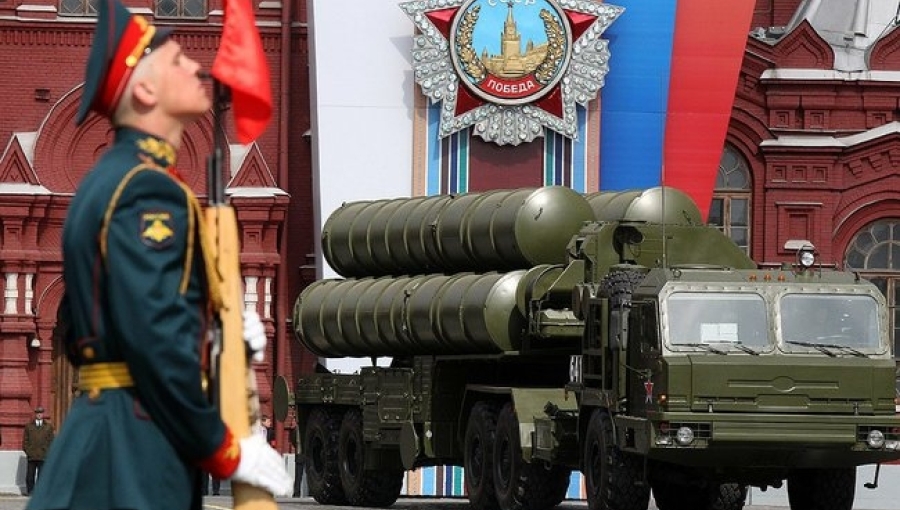
India accelerates S-400 missile procurement from Russia

India accelerates S-400 missile procurement from Russia
/ Kremlin.ru - wiki
By bno Chennai Office February 16, 2026

Geopolitical tensions and the need to bolster layered air defence are driving India to fast-track additional interceptors for its Russian-supplied S-400 systems, underscoring New Delhi’s focus on deterrence and readiness.

India’s Defence Acquisition Council (DAC) cleared an accelerated purchase of 288 missiles for the S-400 Triumf surface-to-air platform from Russia, in a deal valued at about $1bn. The decision aims to sustain operational availability across deployed regiments and ensure timely replenishment of interceptor inventories.

According to a report by Hindustan Times, the Acceptance of Necessity (AoN) clearance by the DAC also covers the acquisition of much shorter ranged Pantsir air defence systems which can become a close range component of India’s already robust air defence grid.

India’s central government has prioritised rapid procurement procedures to address evolving regional security dynamics. Trends indicate the acquisition will strengthen multi-layer coverage against aircraft, cruise missiles and certain ballistic threats, while supporting integration with India’s wider air-defence network.

The S-400, inducted in phases since 2021 by New Delhi, is designed to track multiple targets at long ranges and engage them with a mix of interceptor types. India’s Ministry of Defence expects the additional missiles to improve readiness levels and reduce logistical constraints linked to sustained deployments.

While there is no specific information available about the indigenisation of the S-400 or Pantsir systems, India has a history of seeking auxiliary benefits to prop up its defence industrial base with major defence deals and ask for localised production and offset investment clauses and even transfer of technology.

For investors, the move highlights continued defence outlays and supply-chain engagement with Russia despite global sanctions pressures. Market participants will watch payment mechanisms, delivery timelines and potential offsets for domestic industry. Further orders or upgrades could follow as India expands indigenous capabilities and balances procurement across partners.

Analysts expect spending to remain elevated as India modernises air and missile defences, with budget allocations likely to rise y/y and procurement pipelines supporting domestic manufacturing and technology transfer over the medium term. Investors will monitor financing structures and delivery risks closely in the years ahead.