It’s possible that I shall make an ass of myself. But in that case one can always get out of it with a little dialectic. I have, of course, so worded my proposition as to be right either way (K.Marx, Letter to F.Engels on the Indian Mutiny)
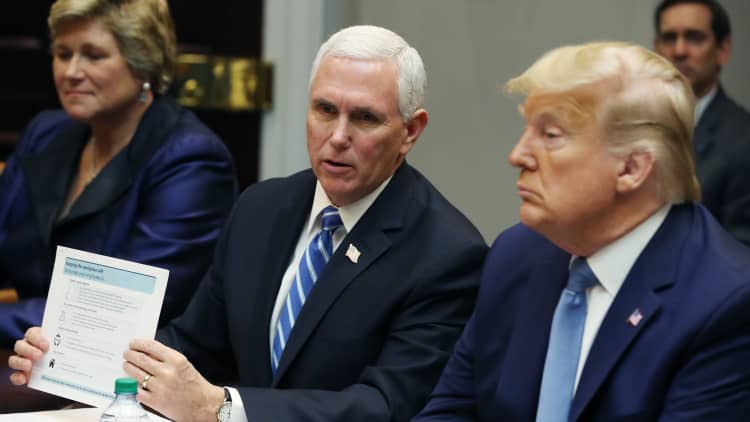
November 28, 2021· Supporters of former President Trump are seen the North Carolina Republican Party Convention on June 5
The Republican Party is becoming a cult. Its leaders are in thrall to Donald Trump, a defeated former president who refuses to acknowledge defeat. Its ideology is MAGA, Trump's deeply divisive take on what Republicans assume to be unifying American values.
The party is now in the process of carrying out purges of heretics who do not worship Trump or accept all the tenets of MAGA. Conformity is enforced by social media, a relatively new institution with the power to marshal populist energy against critics and opponents.
What's happening on the right in American politics is not exactly new. To understand it, you need to read a book published 50 years ago by Seymour Martin Lipset and Earl Raab, "The Politics of Unreason: Right-Wing Extremism in America, 1790-1970." Right-wing extremism, now embodied in Trump's MAGA movement, dates back to the earliest days of the country.
The title of Lipset and Raab's book was chosen carefully. Right-wing extremism is not about the rational calculation of interests. It's about irrational impulses, which the authors identify as "status frustrations." They write that "the political movements which have successfully appealed to status resentments have been irrational in character. [The movements] focus on attacking a scapegoat, which conveniently symbolizes the threat perceived by their supporters."
The most common scapegoats have been minority ethnic or religious groups. In the 19th century, that meant Catholics, immigrants and even Freemasons. The Anti-Masonic Party, the Know Nothing Party and later the American Protective Association were major political forces. In the 20th century, the U.S. experienced waves of anti-immigrant sentiment. After World War II, anti-communism became the driving force behind McCarthyism in the 1950s and the Goldwater movement in the early 1960s ("Extremism in the defense of liberty is no vice").
The roots of the current right-wing extremism lie in the late 1960s and 1970s, when Americans began to be polarized over values (race, ethnicity, sex, military intervention). Conflicts of interest (such as business versus labor) can be negotiated and compromised. Conflicts of values cannot.
You see "the politics of unreason" in today's right-wing extremism. While it remains true, as it has been for decades, that the wealthier you are, the more likely you are to vote Republican (that's interests), what's new today is that the better educated you are, the more likely you are to vote Democratic, at least among whites (that's values, and it's been driving white suburban voters with college degrees away from Trump's "know-nothing" brand of Republicanism).
Oddly, religion has become a major force driving the current wave of right-wing extremism. Not religious affiliation (Protestant versus Catholic) but religiosity (regular churchgoers versus non-churchgoers). That's not because of Trump's religious appeal (he has none) but because of the Democratic Party's embrace of secularism and the resulting estrangement of fundamentalist Protestants, observant Catholics and even orthodox Jews.
The Democratic Party today is defined by its commitment to diversity and inclusion. The party celebrates diversity in all its forms - racial, ethnic, religious and sexual. To Democrats, that's the tradition of American pluralism - "E pluribus unum." Republicans celebrate the "unum" more than the "pluribus" - we may come from diverse backgrounds, but we should all share the same "American values."
One reason right-wing extremism is thriving in the Republican Party is that there is no figure in the party willing to lead the opposition to it. Polls of Republican voters show no other GOP figure even close to Trump's level of support for the 2024 GOP presidential nomination. The only other Republican who seems interested in running is Gov. Larry Hogan of Maryland, who recently criticized "Trump cancel culture."
If Trump does run in 2024, as he seems inclined to do, can he win?
It all depends on President Biden's record. Right now, Biden's popularity is not very high. In fact, Biden and Trump are about equally unpopular (Biden's job approval is 52 to 43 percent negative, while Trump's favorability is 54 to 41.5 percent negative). Biden will be 82 years old in 2024. If he doesn't run, the Democrats will very likely nominate Vice President Harris. When a president doesn't run for reelection, his party almost always nominates its most recent vice president, assuming they run (Richard Nixon in 1960, Hubert Humphrey in 1968, Walter Mondale in 1984, George H.W. Bush in 1988, Al Gore in 2000, Joe Biden in 2020). Democrats would be unlikely to deny a black woman the nomination. There is also some talk of Transportation Secretary Pete Buttigieg running if Biden doesn't.
The 2024 election could be a rematch between Trump and Biden. Or a race between Trump and a black woman. Or between Trump and a gay man with a husband and children. Lee Drutman, a political scientist at the New America think tank, recently told The New York Times, "I have a hard time seeing how we have a peaceful 2024 election after everything that's happened now. I don't see the rhetoric turning down. I don't see the conflicts going away. ... It's hard to see how it gets better before it gets worse."
Anti-immigrant cartoon showing two men labeled "Irish Wiskey" and "Lager Bier," carrying a ballot box. Everett Collection Historical / Alamy Stock Photo
Like Fight Club, there were rules about joining the secret society known as the Order of the Star Spangled Banner (OSSB). An initiation rite called “Seeing Sam.” The memorization of passwords and hand signs. A solemn pledge never to betray the order. A pureblooded pedigree of Protestant Anglo-Saxon stock and the rejection of all Catholics. And above all, members of the secret society weren’t allowed to talk about the secret society. If asked anything by outsiders, they would respond with, “I know nothing.”
So went the rules of this secret fraternity that rose to prominence in 1853 and transformed into the powerful political party known as the Know Nothings. At its height in the 1850s, the Know Nothing party, originally called the American Party, included more than 100 elected congressmen, eight governors, a controlling share of half-a-dozen state legislatures from Massachusetts to California, and thousands of local politicians. Party members supported deportation of foreign beggars and criminals; a 21-year naturalization period for immigrants; mandatory Bible reading in schools; and the elimination of all Catholics from public office. They wanted to restore their vision of what America should look like with temperance, Protestantism, self-reliance, with American nationality and work ethic enshrined as the nation's highest values.
Know Nothings were the American political system’s first major third party. Early in the 19th century, two parties leftover from the birth of the United States were the Federalists (who advocated for a strong central government) and the Democratic-Republicans (formed by Thomas Jefferson). Following the earliest parties came the National Republicans, created to oppose Andrew Jackson. That group eventually transformed into the Whigs as Jackson’s party became known as the Democrats. The Whig party sent presidents William Henry Harrison, Zachary Taylor and others to the White House during its brief existence. But the party splintered and then disintegrated over the politics of slavery. The Know Nothings filled the power void before the Whigs had even ceased to exist, choosing to ignore slavery and focus all their energy on the immigrant question. They were the first party to leverage economic concerns over immigration as a major part of their platform. Though short-lived, the values and positions of the Know Nothings ultimately contributed to the two-party system we have today.
Paving the way for the Know Nothing movement were two men from New York City. Thomas R. Whitney, the son of a silversmith who opened his own shop, wrote the magnum opus of the Know Nothings, A Defense of the American Policy. William “Bill the Butcher” Poole was a gang leader, prizefighter and butcher in the Bowery (and would later be used as inspiration for the main character in Martin Scorsese’s Gangs of New York). Whitney and Poole were from different social classes, but both had an enormous impact on their chosen party—and their paths crossed at a pivotal moment in the rise of nativism.
In addition to being a successful engraver, Whitney was an avid reader of philosophy, history and classics. He moved from reading to writing poetry and, eventually, political tracts. “What is equality but stagnation?” Whitney wrote in one of them. Preceded in nativist circles by such elites as author James Fenimore Cooper, Alexander Hamilton, Jr. and James Monroe (nephew of the former president), Whitney had a knack for rising quickly to the top of whichever group he belonged to. He became a charter member of the Order of United Americans (the precursor to the OSSB) and used his own printing press to publish many of the group’s pamphlets.
Whitney believed in government action, but not in service of reducing social inequality. Rather, he believed, all people “are entitled to such privileges, social and political, as they are capable of employing and enjoying rationally.” In other words, only those with the proper qualifications deserved full rights. Women’s suffrage was abhorrent and unnatural, Catholics were a threat to the stability of the nation, and German and Irish immigrants undermined the old order established by the Founding Fathers. From 1820 to 1845, anywhere from 10,000 to 1000,000 immigrants entered the U.S. each year. Then, as a consequence of economic instability in Germany and a potato famine in Ireland, those figures turned from a trickle into a tsunami. Between 1845 and 1854, 2.9 million immigrants poured into the country, and many of them were of Catholic faith. Suddenly, more than half the residents of New York City were born abroad, and Irish immigrants comprised 70 percent of charity recipients.
At the same time as this influx of immigrants reshaped the makeup of the American populace, the old political parties seemed poised to fall apart.
“The Know Nothings came out of what seemed to be a vacuum,” says Christopher Phillips, professor of history at University of Cincinnati. “It’s the failing Whig party and the faltering Democratic party and their inability to articulate, to the satisfaction of the great percentage of their electorate, answers to the problems that were associated with everyday life.”
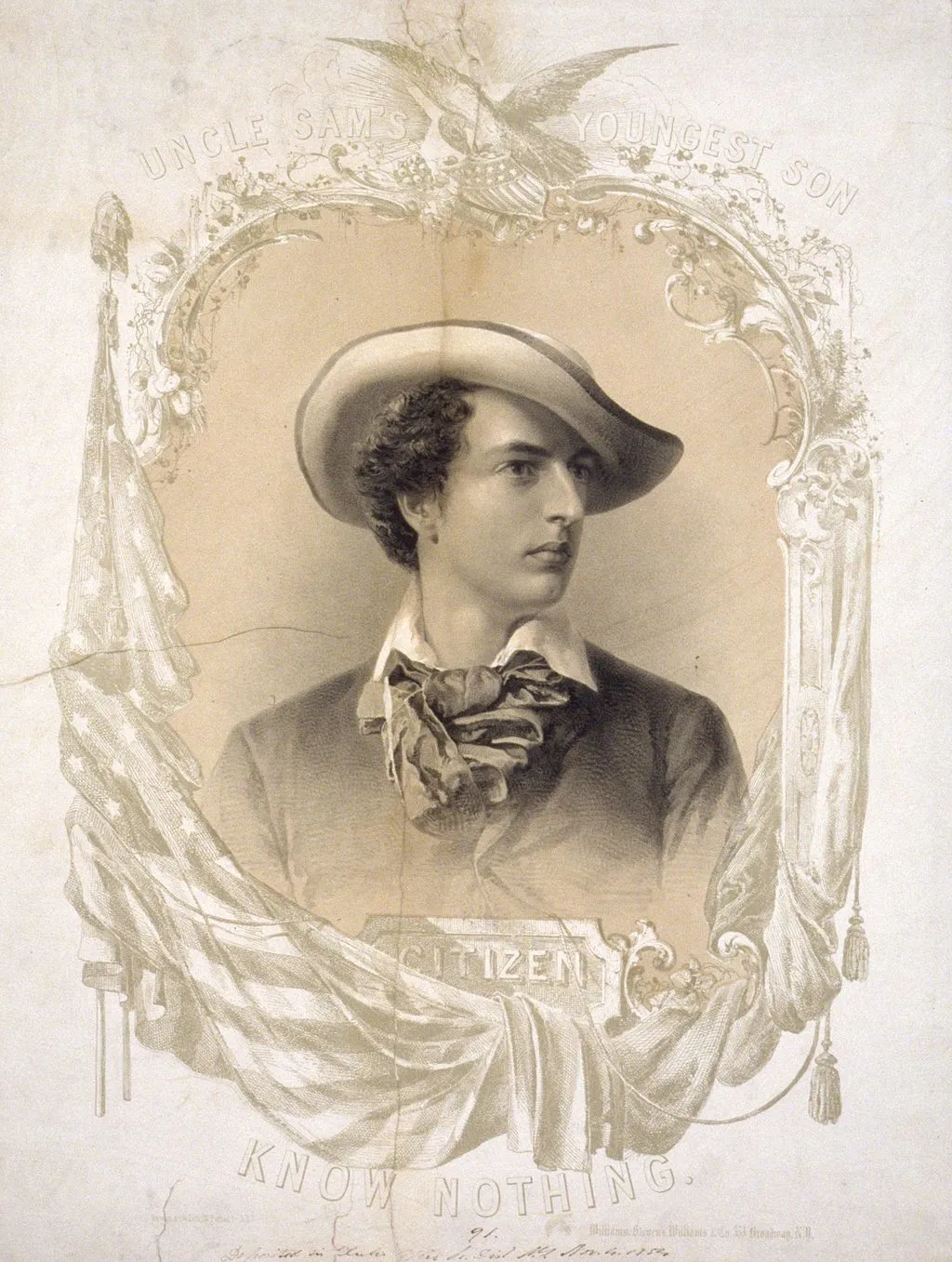
Citizen Know Nothing. Wikimedia Commons
Phillips says the Know Nothings displayed three patterns common to all other nativist movements. First is the embrace of nationalism—as seen in the writings of the OSSB. Second is religious discrimination: in this case, Protestants against Catholics rather than the more modern day squaring-off of Judeo-Christians against Muslims. Lastly, a working-class identity exerts itself in conjunction with the rhetoric of upper-class political leaders. As historian Elliott J. Gorn writes, “Appeals to ethnic hatreds allowed men whose livelihoods depended on winning elections to sidestep the more complex and politically dangerous divisions of class.”
No person exemplified this veneration of the working class more than Poole. Despite gambling extravagantly and regularly brawling in bars, Poole was a revered party insider, leading a gang that terrorized voters at polling places in such a violent fashion that one victim was later reported to have a bite on his arm and a severe eye injury. Poole was also the Know Nothings’ first martyr.
On February 24, 1855, Poole was drinking at a New York City saloon when he came face to face with John Morrissey, an Irish boxer. The two exchanged insults and both pulled out guns. But before the fight could turn violent, police arrived to break it up. Later that night, though, Poole returned to the hall and grappled with Morrissey's men, including Lewis Baker, a Welsh-born immigrant, who shot Poole in the chest at close range. Although Poole survived for nearly two weeks, he died on March 8. The last words he uttered pierced the hearts of the country’s Know Nothings: “Goodbye boys, I die a true American.”
Approximately 250,000 people flooded lower Manhattan to pay their respects to the great American. Dramas performed across the country changed their narratives to end with actors wrapping themselves in an American flag and quoting Poole’s last words. An anonymous pamphlet titled The Life of William Poole claimed that the shooting wasn’t a simple barroom scuffle, but an assassination organized by the Irish. The facts didn’t matter; that Poole had been carrying a gun the night of the shooting, or that his assailant took shots to the head and abdomen, was irrelevant. Nor did admirers care that Poole had a prior case against him for assault with intent to kill. He was an American hero, “battling for freedom’s cause,” who sacrificed his life to protect people from dangerous Catholic immigrants.
COUNT THE STEREOTYPES
On the day of Poole’s funeral, a procession of 6,000 mourners trailed through the streets of New York. Included in their number were local politicians, volunteer firemen, a 52-piece band, members of the OSSB—and Thomas R. Whitney, about to take his place in the House of Representatives as a member of the Know Nothing Caucus.
Judging by the size of Poole’s funeral and the Know Nothing party’s ability to penetrate all levels of government, it seemed the third party was poised to topple the Whigs and take its place in the two-party system. But instead of continuing to grow, the Know Nothings collapsed under the pressure of having to take a firm position on the issue the slavery. By the late 1850s, the case of Dred Scott (who sued for his freedom and was denied it) and the raids led by abolitionist John Brown proved that slavery was a more explosive and urgent issue than immigration.
America fought the Civil War over slavery, and the devastation of that conflict pushed nativist concerns to the back of the American psyche. But nativism never left, and the legacy of the Know Nothings has been apparent in policies aimed at each new wave of immigrants. In 1912, the House Committee on Immigration debated over whether Italians could be considered “full-blooded Caucasians” and immigrants coming from southern and eastern Europe were considered "biologically and culturally less intelligent."
From the end of the 19th century to the first third of the 20th, Asian immigrants were excluded from naturalization based on their non-white status. “People from a variety of groups and affiliations, ranging from the Ku Klux Klan to the Progressive movement, old-line New England aristocrats and the eugenics movement, were among the strange bedfellows in the campaign to stop immigration that was deemed undesirable by old-stock white Americans,” writes sociologist Charles Hirschman of the early 20th century. “The passage of immigration restrictions in the early 1920s ended virtually all immigration except from northwestern Europe.”
Those debates and regulations continue today, over refugees from the Middle East and immigrants from Latin America.
Phillips’s conclusion is that those bewildered by current political affairs simply haven’t looked far enough back into history. “One can’t possibly make sense of [current events] unless you know something about nativism,” he says. “That requires you to go back in time to the Know Nothings. You have to realize the context is different, but the themes are consistent. The actors are still the same, but with different names.”
THIS MORNING ON SQUAWK ON THE STREET CNBC'S JIM CRAMER CALLS FOR SOCIALISM TO PROP UP BUSINESS SO THEY CAN PAY THEIR WORKERS, AND NOT HAVE TO WORRY ABOUT DEBT, CALLS FOR THE FED TO ANNOUNCE DEBT FORGIVENESS FOR 90 DAYS TWITTER CALLS HIM A COMMUNIST Cramer slams government on coronavirus: ‘They know nothing,’ evoking his epic 2007 Fed rant
CNBC’s Jim Cramer blasted the U.S. government’s response to the coronavirus on Thursday, arguing “this is the time for radical action.”
“They know nothing. We know more than they do, and that’s not acceptable either,” he said.
Cramer said he is worried that multiple companies in the S&P 500 could go bankrupt within four weeks.
CNBC’s Jim Cramer blasted the U.S. government’s response to the coronavirus on Thursday, arguing “this is the time for radical action.”
“They know nothing. They know nothing. We know more than they do, and that’s not acceptable either,” Cramer said, hearkening back to his famous 2007 rant about the Federal Reserve before the financial crisis.
“I want the federal government to know more than me. I knew more than they did in 2007, and I know more than they do now and it is disappointing,” he said on “Squawk on the Street.”
Later Thursday, President Donald Trump said that markets will be “just fine.” Trump made the comment as he was meeting with Irish Prime Minister Leo Varadkar.
Cramer said he is worried that multiple companies in the S&P 500 could go bankrupt within four weeks due to the economic slowdown caused by the coronavirus. “Are we going to sit here and let so many companies go bankrupt because of an illness? I think that is stupid,” Cramer said. “Once we settle that out and stop worrying about money, we can worry about health simultaneously. Right now we can’t do both.”
Cramer argued the government should temporarily suspend all manner of tax collection.
“Everyone owes the government at all time. Everyone in this country, individuals, corporations. That has to be suspended right now so they have more money,” Cramer said.
“Are these radical actions? You bet they are,” he added. “This is the time for radical action and the action can be done by the federal government.”
About 30 minutes later, Cramer took a phone call live on CNBC at 9:38 a.m. ET. After hanging up, he said he believes the government is debating some big options to tackle the economic and financial markets crisis due to the outbreak.
“You’re going to get clarity,” he said.
Cramer’s comments come after Trump’s prime-time address on Wednesday, in which the president announced travel restrictions that would curtail travel from most of Europe to the U.S. for 30 days in an attempt to slow the coronavirus pandemic.
Trump also said he will be asking Congress to provide payroll tax relief for Americans and instructing the Small Business Administration to “provide capital and liquidity” for small businesses.
Jim Cramer believes the White House is debating big plans to combat coronavirus and ease markets
CNBC’s Jim Cramer said Thursday that he believes the government is debating some big options to tackle the economic and financial markets crisis arising from the coronavirus pandemic.
Cramer made these comments after the S&P 500′s first-level, 7% down circuit breakers kicked in and paused trading for 15 minutes and following a call he took live on CNBC. “I think that’s about to change,” Cramer said about the uncertainty about what further actions the Trump administration may take to deal with the coronavirus fallout.
CNBC’s Jim Cramer said Thursday that he believes the government is debating some big options to tackle the economic and financial markets crisis arising from the coronavirus pandemic.
Cramer made these comments after the S&P 500′s first-level, 7% down circuit breakers kicked in and paused trading for 15 minutes and following a call he took live on television around 9:38 a.m. ET on CNBC’s “Squawk on the Street.”
“I think that’s about to change,” Cramer said about the uncertainty about what further actions the Trump administration may take to deal with the coronavirus fallout.
“I think that they will perhaps consider the idea that the federal government does not need to be paid during this period so therefore the people, the working people, get paid and are protected,” the “Mad Money” host said.
“I think they are debating the notion about whether they should have a trust fund ... also debating the notion right now about whether the Federal Reserve should be able to guarantee credit lines,” Cramer said. “The Treasury trust fund would indeed, perhaps, take advantage of the lower rates and make it so that people feel their credit lines would be backed up.”
“I believe that some of these plans that I mentioned are being debated right now and I feel better,” he said. “You’re going to get clarity.”
“They know nothing. They know nothing. We know more than they do, and that’s not acceptable either,” Cramer said, hearkening back to his famous 2007 rant about the Federal Reserve before the financial crisis.
“I want the federal government to know more than me. I knew more than they did in 2007, and I know more than they do now and it is disappointing,” he said.
Cramer said he’s worried about companies going bankrupt from the economic damage cause by the coronavirus. “Are we going to sit here and let so many companies go bankrupt because of an illness? I think that is stupid.”
Trump’s address Wednesday night failed to ease concerns about the possible economic from downturn the coronavirus. Wall Street opened sharply lower Thursday, with the S&P 500 down about 6% midmorning after reopening from the circuit breaker trading pause.
In his prime-time address from the White House, Trump announced a ban on most travelers to the U.S. from much of Europe for the next 30 days. He also said he will be asking Congress to provide payroll tax relief for Americans and instructing the Small Business Administration to “provide capital and liquidity” for small businesses.
Friday, January 17, 2020
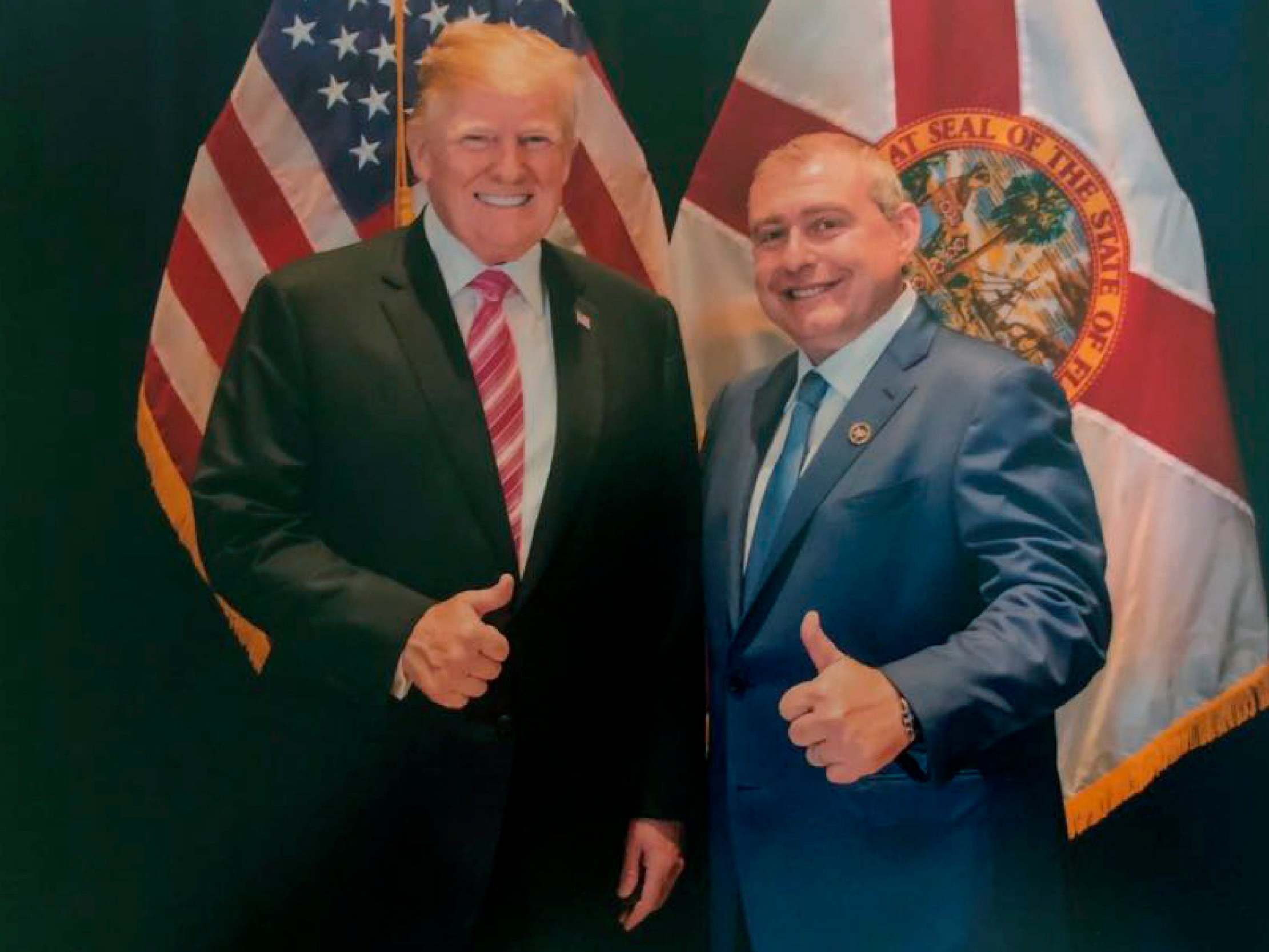
‘Quiet!’ Trump snaps at reporter in Oval Office for grilling him on lies about Lev Parnas TRUMP WAXES BIBLICAL DENYING LEV PARNAS THRICE HIS EVANGELICALS HAVE HAD AN INFLUENCE ON HIM Published on January 16, 2020 By David Edwards
President Donald Trump snapped at CNN’s White House correspondent on Thursday after he repeatedly asked questions about Lev Parnas, an associate of Rudy Giuliani who has been implicated in the Ukraine scandal.
CNN’s Jim Acosta said that he asked the president about Parnas’ claim that Trump knew about his actions in Ukraine.
“Quiet,” Trump reportedly at one point.
Trump claims he doesn’t know who Lev Parnas is and says he takes lots of pictures with people and has never spoken to Parnas. Trump once claimed he didn’t have anything to do with the payoff to porn star Stormy Daniels.
Just asked Trump about Parnas claim that admin efforts in Ukraine were “all about 2020.” Trump insisted he’s only posed for photos with Parnas. Kept repeating that defense. Eventually told me to be “quiet.” Video coming… More to come… — Jim Acosta (@Acosta) January 16, 2020 Per WH pooler @debrajsaunders:
Questions Parnas? “I don’t know him” except they had quick photo “I meet thousands of people” Told Acosta “quiet” “I will probably be going to Davos” — S.V. Dáte (@svdate) January 16, 2020
Trump to reporters in Oval Office on Lev Parnas: “I don’t believe I’ve ever spoken to him.” Says Parnas is part of a “big hoax” and that he doesn’t know him “at all” other than taking pictures together, per @MichaelCBender. — Rebecca Ballhaus (@rebeccaballhaus) January 16, 2020
Trump calls @RudyGiuliani one of the “great crimefighters” and a “very legitimate guy” but says he doesn’t know about his letter to Zelenskiy House Dems obtained from Lev Parnas. — Ben Siegel (@benyc) January 16, 2020
Trump continues to insist that he has no idea who Lev Parnas is: “Well, I don’t know him. I don’t know Parnas other than I guess I had pictures taken… I don’t know him at all, don’t know what he’s about. Don’t know where he comes from.” pic.twitter.com/Srl3iSo5LW — Justin Baragona (@justinbaragona) January 16, 2020
“I don’t know him at all, don’t know what he’s about.\ Don’t know where he comes from. Know nothing about him. I can only tell you, this thing is a big hoax.” – @realDonaldTrump denies knowing Lev Parnas, indicted Ukrainian associate of @RudyGiuliani. pic.twitter.com/aO4N7UGUxx — Washington Examiner (@dcexaminer) January 16, 2020
Despite a warning from Lev Parnas, President Trump claimed not to know him again Thursday. "I don't know Parnas, other than I guess I had pictures taken, which I do with thousands of people," Trump told reporters in the Oval Office. "I don't know him at all, don't know what he's about, don't know where he comes from, know nothing about him. ... I don't believe I've ever spoken to him."
Jospeh Bondy, Parnas' lawyer, brought the receipts, posting a video taken at Mar-a-Lago in December 2016, where Trump is clearly talking with Parnas, who is standing next to him and also Roman Nasirov, a former Ukrainian official charged with embezzlement.
The Washington Post used that video in a jaunty roundup of Parnas posing, often on multiple occasions, next to Trump and other Republicans who claimed not to know him.
Calling Parnas a "Giuliani associate" is "way too limited — he is a full-fledged member of Trump Co," Chris Cuomo said on CNN Thursday night. As he ran through the details, he showed photo after photo of Parnas and Trump or members of his family and inner circle. "There are so many that I had to leave pictures out," Cuomo said.
In fact, Parnas' connection to Trump stretches back to the 1980s, when he sold real estate for Trump's father, Fred Trump, The Washington Post reported in October. "When Parnas was 16, he worked at Kings Highway Realty, selling Trump Organization co-ops." Adam Entous elaborated at The New Yorker. Parnas told The New Yorker that job "was my first time knowing who Trump was, but, growing up in that area, you knew who Trump was, because his name was all over the place." After Parnas moved to Florida in 1995, Entous added, "on visits to New York, he stayed at Trump properties."
In this holiday special, we speak to the acclaimed Indian writer Arundhati Roy on her new memoir, Mother Mary Comes to Me. The book focuses on her mother Mary Roy and how Arundhati was shaped by her, both as a source of terror and of inspiration. We also talk to Arundhati about Gaza and the rise of authoritarianism from India to the United States.
Transcript
This is a rush transcript. Copy may not be in its final form.
AMY GOODMAN: In this Democracy Now! special, we’re joined by one of the world’s most acclaimed writers, Arundhati Roy, author of many books, including the novels The God of Small Things and The Ministry of Utmost Happiness. Roy has been a frequent guest on Democracy Now! for over two decades, talking about her novels, as well as her nonfiction work and her activism. She’s been a vocal critic of U.S. foreign policy, from the 2003 U.S. invasion of Iraq to the U.S. arming of Israel.
In India, she has been repeatedly targeted by authorities for criticizing Prime Minister Narendra Modi and his far-right ruling BJP party. In August, authorities in Indian-occupied Kashmir banned a list of books, including her collection of essays titled Azadi: Freedom. Fascism. Fiction.
Earlier this year, Arundhati Roy published her new memoir, Mother Mary Comes to Me. The critically acclaimed book focuses on her mother, the celebrated educator Mary Roy, and how Arundhati was shaped by her, both as a source of terror and of inspiration. The Times writes, quote, “In this unsparing yet darkly funny memoir, the prizewinning novelist captures the fierce, asthmatic, impossible, inspirational woman who shaped her as a writer and an activist — and left her emotionally bruised for a lifetime,” unquote.
In September, Democracy Now!‘s Nermeen Shaikh and I spoke to Arundhati Roy. We began the interview by asking her about the title of her book, which is based on the lyrics of The Beatles’ song “Let It Be.”
ARUNDHATI ROY: The title, I think it chose me. You know, The Beatles play a big part in the book somehow, even though it was a little after my — I mean, I was a little late for them, but I loved that music, and it gave me the sort of steel in my spine and the smile on my face to leave home, which I did when I was 18, for a whole host of reasons. But I did listen to “She’s Leaving Home” on a loop, you know, weeks before I left. And, of course, it was interesting, because the book was launched in Cochin in St. Teresa’s Girls’ College, and the hall, by chance, was called Mother Mary Hall. Then my brother sang, “Let It Be.” And I said, “Well, there are three Mother Marys here: One is the Virgin Mary, one is Paul McCartney’s mother, and the third is ours. And they are all very different.”
NERMEEN SHAIKH: So, your first book, God of Small Things, is also dedicated to your mother. You wrote, “She loved me enough to let me go,” which your brother joked was the only bit of real fiction in the book.
ARUNDHATI ROY: Yes. Well, when I wrote The God of Small Things, you know, I had, of course, left home and lived as a adult for many years. I mean, I put myself through architecture school, working and all that. And we never — I mean, there was years of estrangement. She never asked why I left or what happened or anything. She didn’t need to, because we both knew. And I was aware that the — you know, she was still the principal of a school she founded in this small town, and for her to have a daughter leaving would have been something —
AMY GOODMAN: At the age of 16.
ARUNDHATI ROY: Yes, and it was a very complicated thing, The God of Small Things, too, you know, coming out in that town. So, I said we settled on a lie, a good one, which I crafted, and I said she loved me enough to let me go, which my brother jokes was the only piece of real fiction in the book. But, yeah, it was just — you know, all my life, I had to sort of manage this relationship with a woman who was amazing and also very, very dark, you know? And so, as I said, in order for her to shine her light on her students and generations of them to challenge a law, which eventually she won, and Christian women won equal inheritance rights.
AMY GOODMAN: Just talk about that for a minute, and then we’ll go into the internal, deeper, darker place. But what she was to India and to women?
ARUNDHATI ROY: So, she — I mean, she came from a very small community of people who live in Kerala called the Syrian Christians, very — let’s say, very — I won’t say elite, but, you know, a very protected, yeah, somewhat elite, you know, land-owning, for the most part, people, very conservative, very parochial. And then she married, outside of the community, my father, and then got divorced and came back. And she had no money and nowhere to go, and she was living in a little cottage outside of Kerala, which belonged to her rather cruel father, who had died by then. And her mother and brother — we were little. I was 3, and my brother was 4. And her mother and brother came and tried to evict us by saying that, according to the Travancore Christian Succession Act, women could inherit a fourth of what a son could, or 5,000 rupees, which is, you know, at that time, a little bit of money, but whichever is less — in effect, couldn’t inherit.
So, she — you know, she nurtured this mortification, and she waited for — she started — you know, once she came out of this poverty, she started a little school, and it became a huge success. It is a huge success. And when she had the means, she challenged the law and said it was unconstitutional. And eventually, it was struck down by the Supreme Court, and women, Christian women, were given equal inheritance rights. So it was revolutionary, but so was her school — and so is her school, a really amazing place, you know? So, I was always able to see this public figure, who was extraordinary, and, you know, there was some other story going on in private.
NERMEEN SHAIKH: I mean, there’s several incidents in the book. We want — I’ll go back to the things that you said earlier about your decision to leave home when you did, but your mother’s extremely strong personality, her courage. She was a radical feminist, bold and uncompromising, in perhaps all aspects of her life. But you — so, first, if you could give us a couple of examples of that from the book? But then, you write that the way that your mother treated your brother has, quote, “queered and complicated” — this is you writing — “queered and complicated my view of feminism forever, filled it with caveats.” So, if you could explain that for us, a couple of examples, and then what happened?
ARUNDHATI ROY: So, I mean, you know, when people label her like a radical feminist or something, those labels don’t sit well with her or me, because she was so eccentric and so nonrighteous about what she did, and she was such a wild character. So, I wouldn’t, you know, use those words to describe her. But, yes, she was an iconic person in feminist circles, because — especially because of the case that she won, less so because of the school, because fewer people know about the school. But to me, it’s as revolutionary. And when she — we lived in this little town where there was so much conservativeness and all kinds of passive and active violence against women. And she would just go into courtrooms, to hospitals, to places where she had heard, you know, women had been beaten up or raped or whatever, and she would try and tell them, “Look, there’s an option. You don’t have to be like this.” You know, so, it was — it was a wonder to watch that.
But at the same time, she was my — I mean, she had left my father because he was addicted to alcohol. I didn’t know my father ever, and — until I was about 25. And she would — she’d be very — she was hard on both of us, but especially on my brother. And so, there’s a part in the book where my brother was a little older than me, so he suffered the pain of losing his father or of having this crazy, violent, single parent, you know? And from being a really wonderful, excellent student, he just began to drop in his grades. And we were sent away to another school, because her school did not have classes up to, you know, class six and seven and so on. So we were sent away.
And there’s an incident where one night our report cards came, and we were both awake, and she came and took him at night to her room. And I followed and looked through the keyhole, and I saw — I saw her just beating him ’til the thing broke, and sort of shout — shouting in a whisper, because the school was also — our home was also the hostel for little children, and saying, “No son of mine can come with a report that says average student.” And then, in the morning, he came back to bed, and we both knew — we were awake. But in the morning, she came and hugged me and said, “You have a brilliant report.” And I just felt like I just hated myself. And I felt like — even now, I feel, you know, that if ever I’m sort of celebrated, there’s someone quiet being beaten in the other room.
And that, from being a very personal thing, has also become a very political thing. And I know that as my book comes out, what is going on in Gaza, you know, children are being starved. Hospitals are being bombed. A whole genocide is taking place in public light. And we have to continue to do our work, always cognizant of the fact that it’s not just one thing that’s happening to you. You know, many things are happening, and the quiet person is being beaten. Yes.
NERMEEN SHAIKH: I mean, one could say that, in fact, you dedicated your life, as a result, to being with those who are being beaten, or at least standing in solidarity with them.
ARUNDHATI ROY: Yeah, I mean, “dedicated” sounds a little pious. But for me, I think what happens is that once you’ve — once you’ve been unsafe in that safest place — I suppose the safest place is the mother. And once that is unsafe, safety is very hard to find again, and you’re constantly — you’re constantly aware of the unsafe, you know, constantly aware of that other thing that’s happening, and unable to sort of settle into safety in some way.
AMY GOODMAN: And yet, the way you describe how she beat your brother and then congratulated you, it is not as if you were the favored child. I mean, after your mom passed away a few years ago, and you were so wrecked by it, your brother said to you, “She treated nobody as badly as she treated you.” Talk about your relationship with your mother.
ARUNDHATI ROY: Well, both of us believe that of each other. You know, I think that she treated him worse, and he thinks she treated me worse. But the relationship was — you know what? I think what happened was, to me, I could see it almost like a chemical experiment, you know, like a chemical reaction, because she had left her husband, and she was living in this conservative community. She was being humiliated. She was being evicted. She was being, you know, whispered about. And all the anger that accumulated, the only safe harbor she had to unload it on was me and my brother, you know? And it’s — so, it’s such a patriarchal community, so they used to call us, in Malayalam, ”adrasillatha pilleru,” meaning the children with no address, because we didn’t have a home as such, you know, a parental place. And with me, I mean, she — I think she — you know, I came along at a time when her relationship with her husband was already over, so she didn’t want another child. And, I mean, now as an adult, I can understand it. But —
AMY GOODMAN: And she made it clear to you.
ARUNDHATI ROY: Yeah. She kept saying, “I wish I had dumped you in an orphanage,” and all this.
AMY GOODMAN: Or that she had had an abortion.
ARUNDHATI ROY: Yes. And then she — and at the same time, she also reinforced me by — you know, because it was made clear to me that I’m on the edge of this community, not at the bottom, but on the edge, and its reassurances were not for me, the arranged weddings and the protections and the whatever. So, she knew that I had to — I had to go, like I could not be there, you know? And she — in some ways, she prepared me, but sometimes it was harsh. Like, she just kept telling me, “I’m going to die,” because she was a very, very severe asthmatic. And so, there was this constant thing of “Any moment, I’m going to die.” And I was like her spare lung. I was like breathing for her, you know, and saying, “I’ll breathe for you.” And then, as I grew up, that sort of dependency obviously began to change. And for her, it was a hostile thing, you know?
And so, of course, like, there’s a part in my book where I say she taught me how to write, then she raged against the author I became, and she taught me to be free, and then she raged against my freedom. But she did — she did put that steel in my spine, you know? And she did teach me something in harsh ways, which did help me survive, you know, on my own in a city. You know, from Kerala to Delhi, it’s like three days and two nights by train, and you don’t speak Hindi, and you don’t know what’s going on. But at the same time, there was that sense of I’m just looking for a better life. I’m not looking to suffer here. You know, I’m looking for some joy. I’m looking for some happiness. I’m looking for something great to happen, not as an ambitious, but, you know, surely things are going to be better. You know, that’s why I left. And I say that in the book, not because I didn’t love her, but in order to be able to continue to love her.
To me, the book was a writing challenge, you know? Like, can I — can I share with people a person that you simply cannot make up your mind about, you know? Because there are so many wonderful things and then terrible things and then wonderful things, and it just keeps turning over and over. I keep saying she’s like an airport with no runways, like you can never land your plane. And also, there are so many people who are people of — you know, who have a calling, whether they are musicians or whether they are politicians or whether they are poets or, you know, so many people who — whose primary concern may not have been their own children, you know? But in my case, my mother’s calling was other people’s children, you know, which was what made it a bit complicated for us, why we had to call her Mrs. Roy, because, you know, we were just students in her school and so on. But yeah, it was — it was continuously that process of, you know, being gifted something, and then being shredded, and then — you know, but learning to hold on to those gifts, you know, and not let them smash along with the shredding.
AMY GOODMAN: You not only called her Mrs. Roy in public, because she didn’t want you to seem favored, and you felt that maybe she was harsher on you and your brother so that you wouldn’t seem favored, but you also called her Mrs. Roy privately.
ARUNDHATI ROY: But we didn’t have any private, you see, because what happened was that she started a school initially in the rented halls of Kottayam Rotary Club. We had to go with brooms every day and sweep up all the men’s cigarette stubs and wash all their glasses and put them away, put down these little tables. And that was the school. And then, when the school started doing better, she rented a little house nearby and started a hostel. So, there was no home as such. I never, actually, in my entire life with her, never lived in a home, because it was always the school. There was no private. I left home and, many years later, came back, and then she had built herself a home, which was not my home, you know? So there was no private. We did have to just — private was public. And all this anger and humiliation, therefore, happened in public. You know, that was the problem. It wasn’t behind closed doors.
NERMEEN SHAIKH: So, I mean, you said — and this is, of course, you say it in the book — that you left home not because you didn’t love your mother, but so that you could continue to love her. And I don’t know, the book itself, it seems — I mean, the writing of it — and again, this is my reading — the writing of it, the recounting of it, is a means of both relinquishing something of your relationship to her, while also maintaining the greatest intimacy with certain aspects of her, because this split — and it is a split, because it goes from one extreme to another — wouldn’t necessarily result in a book that is so close to her, not only in dialogue, but — I don’t know. There’s something in the book.
ARUNDHATI ROY: Emotionally.
NERMEEN SHAIKH: Yeah.
ARUNDHATI ROY: Well, you know, it’s interesting, I think, that, you know, I was thinking — all of it happened instinctively, but the release of the book in Cochin, taking all my publishers from New York and London and everywhere who had come to Kerala to the school, there was my brother sharing the stage with me, even though, you know, we had very different — like, he has a different anger towards her. Mine is so ambiguous, and his is clearer, more settled in some ways. And I was thinking, “Why did I do it?” You know? And I think it was because it’s not just for me. All this was hidden in plain sight. Like, everybody knew what was going on. But it wasn’t spoken about. And somehow, it just felt like everybody just felt, “OK. It’s OK, you know? We can — we can all celebrate her, but we don’t have to pretend that what happened didn’t happen.”
And I actually called the teachers in the school before the book came out. I said, “You know, there’s a difference between hagiography and literature, coming soon to a theater near you.” It’s literature, and it isn’t going to diminish her or the school at all. But I just feel that the world also needs to know about this complex woman and the fact that you don’t have to be — I mean, there’s so much pressure on women to be perfect mothers, perfect daughters, perfectly obedient, perfectly nice, perfectly — you know, my mother was just unvarnishedly her. And that, I think, is a relief for many women, you know?
AMY GOODMAN: Talk about writing this book after your mother died. And you don’t like to use the word “abuse,” though clearly today it would be seen very much in those terms. Your brother would certainly use that term. And what you most learned about yourself and your relationship, as you talk about two women also, most of your life with your mother. She died at the age of —
ARUNDHATI ROY: Eighty-nine.
AMY GOODMAN: — 89, even though she was a severe asthmatic. Most of your life, the two of you were women.
ARUNDHATI ROY: I didn’t learn, honestly — I mean, like, I didn’t learn anything about myself or about this relationship in the process of writing the book, because I already knew. I had already lived through it, talked about it. From the time I was 3 years old, I had had to be this person who disassociated from myself. Like I think I said in some interview, one half of me was taking the hits and the love and the instructions, and one half was taking notes. And so, it’s not that I set out to learn something or that it was therapeutic for me to write this book. Nothing like that.
But it was — somehow, it was a challenge to the craft of writing, like, “Can I — can I do this? You know, can I try to share her with people in all her various aspects?” Because that was what she was, this incredibly unmediated person, you know? And I don’t use those words, only because they may be true or not true, but, you know, they quickly label someone and flatten everything into some sort of acceptable language, and then we all sort of try to fit into that language, whereas, for me, language is something very, very, very important, you know?
AMY GOODMAN: Arundhati Roy, author of the new memoir, Mother Mary Comes to Me. Coming up, Arundhati will read from her book and talk about the rise of authoritarianism, from India to the United States, and more.
[break]
AMY GOODMAN: This is Democracy Now!, democracynow.org. I’m Amy Goodman. In this holiday special, we’re continuing our conversation with Arundhati Roy, author of the new memoir Mother Mary Comes to Me. I interviewed her in September with Democracy Now!’s Nermeen Shaikh.
NERMEEN SHAIKH: I mean, you write in the first few pages of the book — and this captures a little bit of the ambivalence, as well as this conversation, I think — you write, quote, “Perhaps what I am about to write is a betrayal of my younger self by the person I have become. If so, it’s no small sin. But I’m in no position to be the judge of that.” So, did you mean — well, why don’t you just explain what precisely you meant by that, and, you know, what people can learn from it?
ARUNDHATI ROY: Well, what I meant was that, you know, to leave home at the age of 16, 17, 18 — I mean, it was like in stages, and 18 was the final goodbye, you know. But, obviously, you know, it wasn’t — I mean, obviously, at that time, I wasn’t the person who — the person that I am now, who hasn’t broken or ended up in prison or, you know, on drugs or something. And so, all those risks were there when I left, you know? And so, for me, perhaps there’s a sort of calmer person remembering that jagged younger person, you know. So, I don’t know whether I’m betraying that jagged younger person because I landed on my feet. And what would this book have been, had I not? You know?
AMY GOODMAN: I’d like you to read something from your book, Mother Mary Comes to Me. We’re talking to Arundhati Roy, the great writer, the activist. Her new book, Mother Mary Comes to Me, is just out. It is a memoir.
ARUNDHATI ROY: Often people ask me about — like you just did, you know, about the therapeutic process, or whether there was one while I was writing this. But for me, it was really, you know, all these things that were happening to me and the fact that we all live in this multilingual world. My father’s from Bengal. My mother’s from Kerala. I’m born in Shillong. I studied in Delhi, in Tamil Nadu for a while. So, language was like — how do you describe this multilingual world? Not for any reason of writing a great book, but just for speaking to yourself about what was happening to you, you know? So, I want to just read a little bit about my search for language, because, to me, that search was what resulted in everything I wrote, plus this book.
So, “All through school I did consistently badly in English language and literature. I never understood the rules. Mrs. Roy would slash through my essays and compositions, mark me three out of ten, and write comments like Horrible. Nonsense. And she was right — they were complete and utter rubbish. Even then I knew that the language I wrote in was not mine. And by mine I don’t mean mother tongue, and by language I don’t mean English, Hindi, or Malayalam. I mean a writer’s language. Language that I used, not language that used me. A language in which I could describe my multilingual world to myself. I knew even then that language was outside me, not inside me. It would not come to me on its own. I needed to hunt it down like prey. Disembowel it, eat it. And when I did, I knew that language, my language, would ease the way blood flowed through my body. It was out there somewhere, a live language-animal, a striped and spotted thing, grazing, waiting for me the predator. That was the law of my jungle. It wasn’t a nonviolent, vegetarian dream.”
NERMEEN SHAIKH: That’s beautiful. That’s beautiful. Now, a predator looking for a language-animal. But it’s not just one language you found, because the language in God of Small Things, the language in Ministry of Utmost Happiness and the language in Mother Mary Comes to Me, would you say — I mean, you can see something, but it’s not uniform.
ARUNDHATI ROY: Yes, it’s — you know, everything — for me, everything I choose to write, whether it was The God of Small Things, or whether it’s every single political essay, or whether “Walking with the Comrades,” or whether it was the essay on the dams, or Mother Mary Comes to Me, the first thing is to search for the language. You know, the first thing is to search for the language, the structure and how does — how do I — how do I create this universe, you know? So, that’s my enterprise when I write, you know?
AMY GOODMAN: Talk about the difference between writing fiction and nonfiction. You had gotten away from fiction for a while. You were deeply involved in politics in Kashmir. And what it means to be an activist and to speak out in India? And then we want to take it to what it means to come here, to go from Modiland to Trumpland.
ARUNDHATI ROY: Well, you know, honestly, Amy, there is a part in this book where I make little jokes about the fact that people call me an activist, because I say this is what writers do. You know, this is what writers have done through the ages. But now we are being domesticated and made to live on best-seller lists and literature festivals, and therefore a writer that writes politically or writes about what’s going on in her world isn’t a writer, but a writer-activist, you know? But to me, that reduces the scope and the power of literature, you know?
So, for me, as I said, you know, everything that I do has to do with what is the most effective way of communicating what I want to communicate. Like, is it an essay? Is it a book of fiction? Nothing is less political than the other thing. And, you know, people often pit my nonfiction against my fiction. And my most beloved writer, John Berger, who wrote Ways of Seeing, of course, famously, which all of us grew up on, he once — I didn’t know him, and I saw this fax coming through in those days, the fax machine, and he said, “Your fiction and your nonfiction, they walk you through the world like your two legs.” You know? And I loved him for understanding that, to me, they were not — they were separate artistic enterprises, but they were not separate political enterprises. They were not separate silos. And I just — you know, for me, it was always just searching — and cinema. I mean, before that, I was working in film and architecture, too. You know, all these things, they are not separate for me. They are like layers and layers, which make me this sedimentary rock, you know?
NERMEEN SHAIKH: Just to go back to the book, this book, more specifically, you said, you know, that this is — that it may have been the question of whether it was a betrayal of your younger self or not. In part, it’s informed by the fact that you did not — you were able to write this book because you did not, though there was a risk, end up on drugs or broken, etc., after you left home when you were so young. That certainly didn’t happen. But you do have a certain — the impact of this childhood on your intimate relationships, as you recount them. You mentioned this in passing right now, that one of the lessons you learned — and you say it a couple of times in the book — one of the lessons you learned as a child was that the safest place can be the most dangerous. And as an adult, even when the safest place was the safest, you experienced it as dangerous, or made it so.
ARUNDHATI ROY: Yeah, that’s — that’s a very hard thing to cope with and deal with, because that was true for me. The safest place was the most dangerous. And then, you just — you just don’t trust safety. Even when it’s offered to you, you don’t trust it, you know? And I had — obviously, apart from everything else, there was massive financial insecurity, and I spent a great deal of my youth just thinking about money. I had no ambitions. I just was like, “How am I getting through this week, or how am I getting through the next week?” And then, you know — and then came a stage when I wrote The God of Small Things, and I had more money than I wanted or needed. And then I thought about money just the same amount, but in a different way, like “How do you share it? How do you deploy it politically?” and all of this.
And I naturally gravitate towards the unsafe, you know? Someone asked me, you know, “How do you keep this conversation going with your childhood?” And I said, “It’s because I was a very adult child, and maybe there’s something childish about me as an adult.” But that communication is always open, and you always got your eye on those who are unsafe, you know? And so, there’s one part of me that, I suppose, moves towards trying to make it less bad for them, or trying to — trying to use, especially, you know, the money that comes from being a writer whose books sell a lot, to help others do the work they really want to do, which nobody would fund or, you know, which are not sort of NGOized and foundationized and corporatized and, you know, sort of what we call ”paltu sher,” like making people into a tiger on a leash, pretend, pretend dangerous, you know? But…
AMY GOODMAN: So, talk — speaking of danger, although it’s not exactly in the same context, talk about what it has been like to write, to speak out, to be politically involved, as you’ve been for decades, under Narendra Modi. What is happening in India right now, the crackdown on dissent? And then we’ll talk about your views and observations about the United States.
ARUNDHATI ROY: Well, let’s say that what is happening in the United States today happened to us in 2014, you know. And I often say the attempted coup of January 6th over here succeeded in India, and the people in antlers and furs actually rule us. You know, it is so. And today, the problem is that it’s not just the regime, but that poison has actually seeped down into the population. And so, you have a situation where people are policing people. People are lynching people. Thousands of people can come out on the street with swords and call for the rape or the death of Muslims. And it’s all getting normalized, you know? You watch lynching, and it’s uploaded on YouTube.
And people who actually speak up are in jail. There’s a lot of that in this book. You know, a friend of mine who was put into prison for 10 years and then acquitted, he was almost completely paralyzed when he went in, a professor of literature — acquitted, saying that he should not have spent one day in prison. But 10 years he spent, came out, and six months later, he was dead, because his body just had lost its resilience, you know?
So, we’re in a — we’re in a nightmare that now is just normalized, and nobody even thinks of it as much of a nightmare, which is the most dangerous thing. You know, you have — if you have protests in the United States by so many people who are disturbed about Gaza, the police, you know, end it. But in India, once a friend of Palestine, there have been no protests. And there are — you know, 200 people show up. The police don’t stop it. The Hindu right wing comes out and stops it, you know. So, “How do you unpoison this river?” Is the question.
AMY GOODMAN: And explain Narendra Modi’s relationship with this Hindu right.
ARUNDHATI ROY: So, he belonged to an organization called the RSS, the Rashtriya Swayamsevak Sangh, which is now going to celebrate its 100th year this year. It is an organization that believed that India should be declared a Hindu nation, and Hindus should be its first citizens. And the political party that Modi is the head of, BJP, it’s just the front desk of the RSS, which has worked very, very hard, I have to say, in education and in culture, in agriculture, in — it has organization. It has hundreds of thousands of volunteers, they call themselves, you know? And it has penetrated every institution in India.
And so, when I say the same thing happened to us in 2014, it’s so unnerving, because you think, “Do they have a real, physical playbook, or is this just how this kind of fascism works?” You know, the attack on universities, the attack on intellectuals, the attack on citizenship, the attack on the economy, the changing of history, the reversing of any kind of moves on social justice. You know, it’s so similar, except that in India it’s, first of all, much more organized, because it’s a 100-year-old organization.
And second of all, although I know that, you know, Democracy Now! and so many other non-mainstream channels rage against the American mainstream, it’s nothing compared to what the media in India has done. You know, the media in India has been criminal. I mean, seriously, they should be tried in front of a war tribunal for the violence that they have endorsed, for the poison they have intravenously dripped into people, for the TV anchors behaving like captains of lynch mobs, for the fake news, for the absolutely unforgivable decades of support, where, you know, corporate news channels — so, the fascism is completely underwritten by Indian corporations, and has been, because they own all the media. You know, they own — like, some of them own 20 channels — 24-hour news channels, you know?
NERMEEN SHAIKH: You mentioned — and this is actually one of the most, at least on the global stage, one of the most dramatic reversals in India’s policy, which is no longer backing Palestine, which goes against, I mean, decades of India’s position. So, let’s just talk about, in fact, what’s happening in Palestine today, which you have also spoken out about and been deeply critical about Israel’s war on Gaza, deemed now by most international legal and human rights organizations to be genocide. So, if you could, I don’t know, just respond to what’s happening in Gaza, and the response, the split, what appears to be a split, among most countries in the Global South — that is, the Global South on one side — and the Global North, although now it seems there are at least some countries shifting their position?
ARUNDHATI ROY: Look at the psychology that is being forced upon us. We are, all of us, able to reach at night for an image of a child starving or a person being blown up in Gaza easier than reaching for a glass of water. And we are helpless. We are able to do nothing more than keep speaking about it.
And I’ve come to a stage where I feel humiliated to have to discuss it, because what is there to discuss? What is there to discuss when you’re murdering children, destroying hospitals, destroying universities, murdering journalists, and boasting about it, boasting about it? And everybody’s sort of ambiguous — I mean, what we are witnessing also is, I think, there are surveys that say that almost 90% of the population of the world wants this to stop, but there is no connection between democratically elected governments and the will of the people. It’s ended. So, the whole charade of Western liberal democracy is as much of a corpse under the rubble as the tens of thousands of Palestinians.
AMY GOODMAN: The trajectory you see? I remember you standing in the iconic church, Riverside Church, giving your speech against President George W. Bush invading Iraq, and what that means, and the level of global revulsion, the mass protest of millions, and yet still it happened. And where you see us today, and whether you hold out any hope?
ARUNDHATI ROY: One of my — oh, one of the books that you mentioned of mine, Azadi, it has been banned by the Indian government. And we are in this process of living through a time when everyone thinks we have free speech, but we are actually being policed in such crazy ways. You know, the internet is switched off by any government whenever they want to, and so on. But —
AMY GOODMAN: Wasn’t it just recently banned?
ARUNDHATI ROY: Yes, yes.
AMY GOODMAN:Azadi: Fascism, Fiction, and Freedom in the Time of the Virus.
ARUNDHATI ROY: Yes. But, you see, one of — one of my books of essays has been dedicated to those who have learned to divorce reason from hope. And we have to hope. We have to be unreasonable, and we have to hope, and we have to do what we have to do, you know? I can’t — I don’t want to — I don’t want to sound like some cute, you know, person saying, “Oh, everything will be all right.” But at the same time, I mean, the end of my talk about Alaa Abd El-Fattah in London a few months ago was that it can’t — it can’t continue like this. I mean, Israel, yes, it has devastated Gaza, but it has devastated itself, too. It is reviled in the eyes of the world for what it has done, you know? And it has also — I’m sure that all the young people that committed those horrible crimes, one day it will — it will destroy them, you know?
AMY GOODMAN: Arundhati Roy, author of her new memoir, Mother Mary Comes to Me.Email
Arundhati Roy (born November 24, 1961) is an Indian novelist, activist and a world citizen. She won the Booker Prize in 1997 for her first novel The God of Small Things. Roy was born in Shillong, Meghalaya to a Keralite Syrian Christian mother and a Bengali Hindu father, a tea planter by profession. She spent her childhood in Aymanam, in Kerala, schooling in Corpus Christi. She left Kerala for Delhi at age 16, and embarked on a homeless lifestyle, staying in a small hut with a tin roof within the walls of Delhi's Feroz Shah Kotla and making a living selling empty bottles. She then proceeded to study architecture at the Delhi School of Architecture, where she met her first husband, the architect Gerard Da Cunha.The God of Small Things is the only novel written by Roy. Since winning the Booker Prize, she has concentrated her writing on political issues. These include the Narmada Dam project, India's Nuclear Weapons, corrupt power company Enron's activities in India. She is a figure-head of the anti-globalization/alter-globalization movement and a vehement critic of neo-imperialism.In response to India's testing of nuclear weapons in Pokhran, Rajasthan, Roy wrote The End of Imagination, a critique of the Indian government's nuclear policies. It was published in her collection The Cost of Living, in which she also crusaded against India's massive hydroelectric dam projects in the central and western states of Maharashtra, Madhya Pradesh and Gujarat. She has since devoted herself solely to nonfiction and politics, publishing two more collections of essays as well as working for social causes.Roy was awarded the Sydney Peace Prize in May 2004 for her work in social campaigns and advocacy of non-violence.In June 2005 she took part in the World Tribunal on Iraq. In January 2006 she was awarded the Sahitya Akademi award for her collection of essays, 'The Algebra of Infinite Justice', but declined to accept it.