Samraong (Cambodia) (AFP) – Thailand and Cambodia clashed for a third day on Saturday, as the death toll from their bloodiest fighting in years rose to 33 and Phnom Penh called for an "immediate ceasefire".
Issued on: 26/07/2025 - AFP
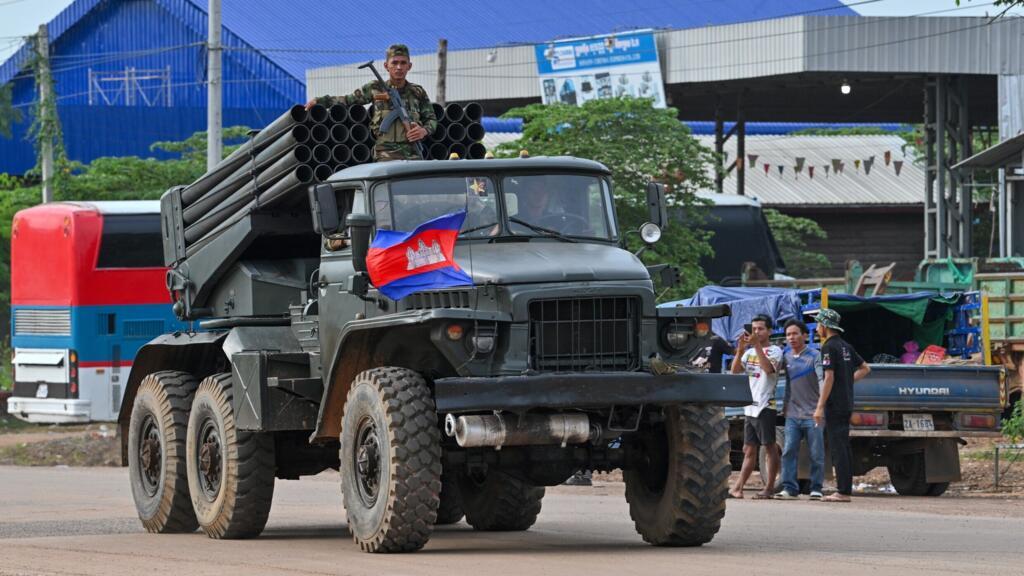
A long-running border dispute erupted into intense conflict involving jets, artillery, tanks and ground troops on Thursday, prompting the UN Security Council to hold an emergency meeting on the crisis Friday.
Cambodia's defence ministry said 13 people were now confirmed killed in the fighting, including eight civilians and five soldiers, with 71 people wounded.
In Thailand, the army said five soldiers were killed on Friday, taking the toll there to 20 -- 14 civilians and six military.
The death toll across the two countries is now higher than the 28 killed in the last major round of fighting between 2008 and 2011.
Both sides reported a clash around 5:00 am (2200 GMT Friday), with Cambodia accusing Thai forces of firing "five heavy artillery shells" into locations in Pursat province, which borders Thailand's Trat province -- on the coast some 250 kilometres (160 miles) southwest of the main frontlines.
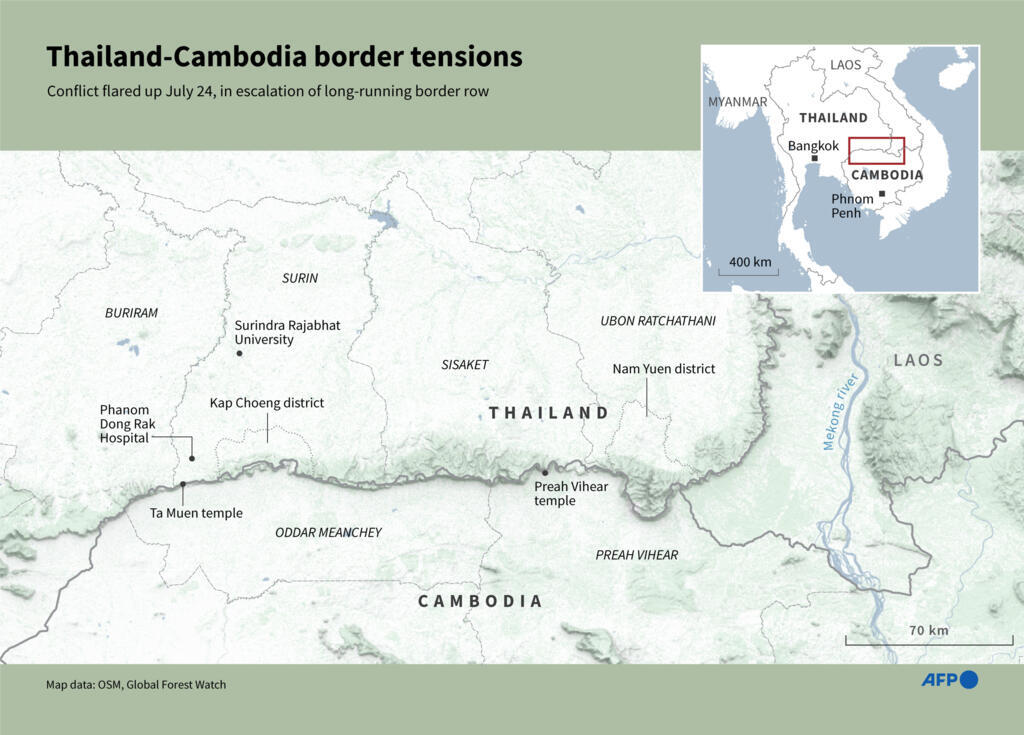
AFP journalists in the Cambodian town of Samraong, near the ridge of forest-clad hills that marks the border and has seen the bulk of the fighting, heard the thump of artillery early Saturday afternoon.
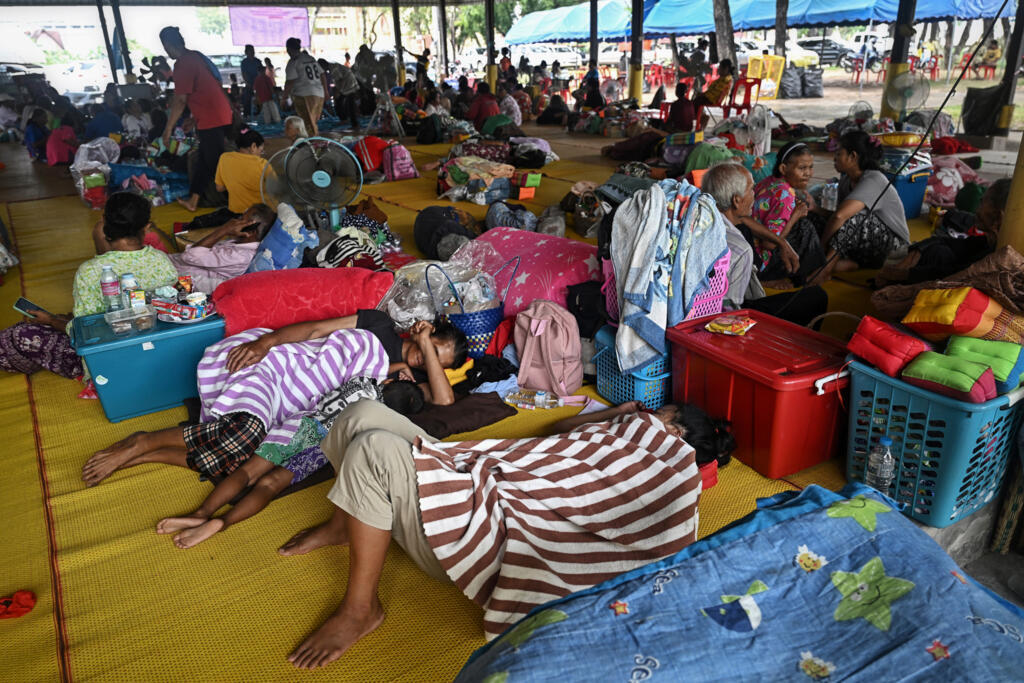
A Thai villager reached by phone as he sheltered in a bunker in Sisaket province, just 10 kilometres from the frontier, also reported hearing artillery.
"I just want this to end as soon as possible," Sutian Phiewchan told AFP.
The fighting has forced more than 138,000 people to be evacuated from Thailand's border regions, with more than 35,000 driven from their homes in Cambodia.
After the closed meeting of the Security Council in New York, Cambodia's UN ambassador Chhea Keo said his country wanted a ceasefire.
"Cambodia asked for an immediate ceasefire -- unconditionally -- and we also call for the peaceful solution of the dispute," he told reporters.
Border row
Thai Foreign Minister Maris Sangiampongsa said Saturday that for any ceasefire or talks to proceed, Cambodia needed to show "genuine sincerity in ending the conflict".

"I urge Cambodia to stop violating Thai sovereignty and to return to resolving the issue through bilateral dialogue," Maris told reporters.
Thai Foreign Ministry spokesman Nikorndej Balankura said Friday, before the UN meeting was held, that Bangkok was open to talks, possibly aided by Malaysia.
Malaysia currently holds the chair of the Association of Southeast Asian Nations regional bloc, of which Thailand and Cambodia are both members.
Both sides have blamed the other for firing first, while Thailand accused Cambodia of targeting civilian infrastructure, including a hospital hit by shells and a petrol station hit by at least one rocket.
Cambodia has accused Thai forces of using cluster munitions.
Former Thai prime minister Thaksin Shinawatra -- still an influential figure in the kingdom -- visited shelters on Saturday to meet evacuees.
"The military needs to complete its operations before any dialogue can take place," Thaksin told reporters.
The 76-year-old said he had no plans to contact Hun Sen, Cambodia's powerful ex-prime minister who was long a close ally.
"His actions reflect a disturbed mindset. He should reflect on his conduct," Thaksin said of Hun Sen.
The fighting marks a dramatic escalation in a long-running dispute between the neighbours -- both popular destinations for millions of foreign tourists -- over their shared 800-kilometre (500-mile) border.
Dozens of kilometres in several areas are contested and fighting broke out between 2008 and 2011, leaving at least 28 people dead and tens of thousands displaced.
A UN court ruling in 2013 settled the matter for more than a decade, but the current crisis erupted in May when a Cambodian soldier was killed in a new clash.
The leak triggered a political crisis in Thailand as Paetongtarn -- Thaksin's daughter -- was accused of not standing up for Thailand enough, and of criticising her own army.
She was suspended from office by a court order.
burs-pdw/mtp
© 2025 AFP
Thailand and Cambodia clash: A border dispute fuelled by nationalism
Issued on: 25/07/2025 -
Fighting between Thai and Cambodian troops over a disputed border intensified on Friday, with Bangkok warning that the clashes could escalate into a full-blown war. Rooted in a border dispute dating back to colonial times, the deadly flare-up reflects the domestic political turmoil currently gripping both countries.
Cambodian evacuees sheltering in temple pray for end to Thai clashes
Oddar Meanchey (Cambodia) (AFP) – In the leafy grounds of a Buddhist pagoda, hundreds of Cambodians fleeing deadly clashes with Thailand take refuge in the open air, most sitting on the ground while a lucky few doze in hammocks.
Issued on: 25/07/2025 -

The deadliest fighting in over a decade between the two neighbours has sent thousands of villagers fleeing the border zone in Cambodia.
As artillery clashes erupted Thursday, Salou Chan, 36, grabbed some belongings, clothes, his two kids, and sped away from his home, about 20 kilometres (12 miles) from disputed temples on the frontline.
"I fear for the safety of my children, they are still small. For me, I could have stayed at home, but I worried for my children -- they were scared of the sound of gunfire," he told AFP.
"I don't know when I will be able to return home but I want them to stop fighting soon. Nobody's looking after my rice paddy and livestock."
He and his family have joined hundreds of others in the grounds of the temple in Oddar Meanchey province.
With no proper shelter, most sit on the bare ground and rig up makeshift tents with plastic sheeting.
The evacuees have only the food and water they brought with them to sustain them while they wait for the chance to go home.
'Praying this will end'
A long-running border dispute erupted into intense fighting on Thursday with jets, artillery, tanks and ground troops doing battle, and more exchanges on Friday.
Thailand says more than 138,000 people have been evacuated from its border regions, and 15 people killed.
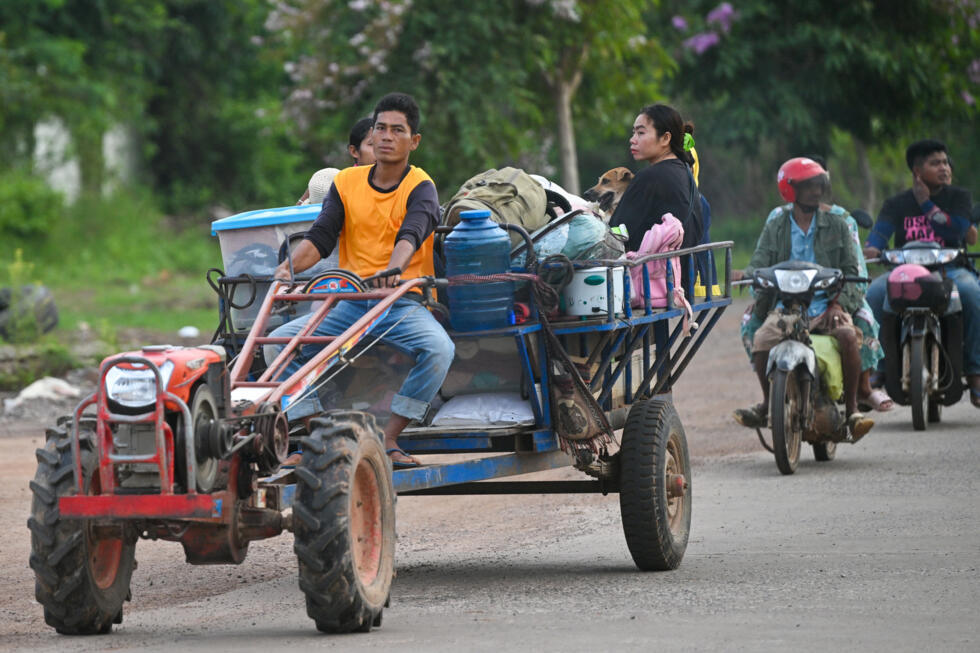
Cambodia has been more tight-lipped about casualties, though Oddar Meanchey provincial authorities reported one civilian -- a 70-year-old man -- had been killed and five more wounded.
Chhorn Khik, 55, who fled to the pagoda with her two grandchildren, said she was relieved to have escaped the conflict zone.
"I am no longer scared. Yesterday I was so scared, I was crying along the way," she told AFP.
"I feel pity for the soldiers at the frontline. We are scared, but we could escape, but those soldiers, they are fighting for us and the nation."
Thailand has said it is willing to start talks but also warned that the conflict could develop into a full-blown war if Cambodia is not willing to de-escalate.
Yoeun Rai, 55, who fled with 10 of her family, said she was so anxious she could not eat.
"I am praying this will end soon so that we can go back home," she told AFP.
© 2025 AFP
Issued on: 25/07/2025 -
Recent clashes between Thailand and Cambodia have led to the displacement of over 130,000 civilians as both countries evacuate residents near the border. The fighting continues to escalate with jets, artillery, and tanks, resulting in numerous casualties and prompting international calls for a ceasefire. For in-depth analysis and a deeper perspective on the escalating border conflict FRANCE 24's William Hilderbrandt welcomes Dr. David Camroux, Honorary Research Fellow at the Center for International Studies at Sciences-Po and Senior Lecturer in Asian Studies.
Video by: William HILDERBRANDT
ASEAN chair urges Cambodia and Thailand to cease hostilities and pursue dialogue
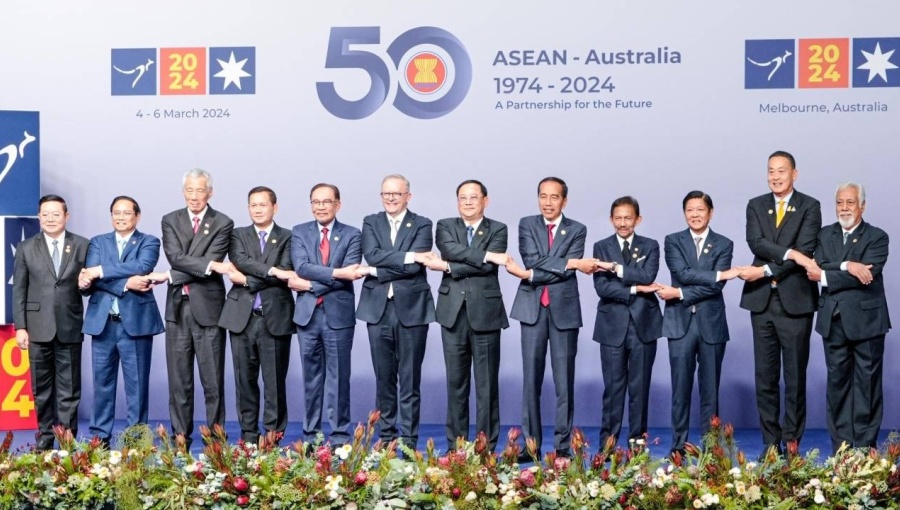
ASEAN Chairperson Anwar Ibrahim has called on Cambodia and Thailand to de-escalate the current military conflict and enter into negotiations, following clashes that erupted on Thursday morning, July 24, after weeks of rising tensions along the border.
According to Malaysia’s national news agency Bernama, Anwar, who also serves as Malaysia’s Prime Minister, urged Cambodian Prime Minister Hun Manet and Thai interim Prime Minister Phumtham Wechayachai to “stand down” and seek a diplomatic resolution.
Speaking at the ASEAN Semiconductor Summit 2025 in Kuala Lumpur, Anwar described the situation as “deeply concerning” and said he plans to speak directly with both leaders later in the day. “At the very least, we hope both parties can de-escalate the situation and make room for negotiations,” he said. “Attempts have been made, but I believe peace remains the only viable path.”
He noted the significance of both nations to the region, particularly given their proximity to Malaysia, and expressed optimism that constructive talks could still be pursued.
Anwar also mentioned plans to arrange further discussions with both leaders, adding that he had previously raised the matter with Cambodian officials and then-Thai Prime Minister Paetongtarn Shinawatra during bilateral meetings in June.
When asked whether the ongoing conflict might impact regional trade, Anwar declined to speculate, calling such concerns “premature.” “This is likely a temporary development. Both leaders are acting in the interest of their respective nations and are committed to a peaceful outcome. Both want ASEAN to remain actively engaged, and we will do exactly that,” he said.
Meanwhile, Cambodian Prime Minister Hun Manet has appealed to the United Nations Security Council to urgently intervene to halt what he described as Thai military aggression, which began on Thursday morning. He reaffirmed Cambodia’s commitment to peaceful and lawful mechanisms for resolving the dispute, including engagement with the International Court of Justice (ICJ).
In a letter sent to Ambassador Asim Iftikhar Ahmad, Pakistan’s Permanent Representative to the UN and President of the Security Council for July 2025, Mr Hun Manet condemned Thailand’s actions, stating that they were in direct contradiction to regional and international appeals for restraint.
He cited Cambodia’s recent efforts to pursue dialogue, including the hosting of a Joint Boundary Commission meeting in Phnom Penh on June 14-15, as evidence of the country’s good faith in seeking peaceful solutions.
The Cambodian government has formally submitted four disputed border areas—Mom Bei, Ta Moan Thom Temple, Ta Moan Touch Temple, and Ta Krabey Temple—to the ICJ for adjudication. The current violence follows an earlier skirmish on May 28, which resulted in the death of a Cambodian soldier.
Bernama reports that tensions between the two countries have steadily intensified in the weeks leading up to Thursday’s conflict.
ASIA BLOG: If the Thailand-Cambodia conflict escalates, Vietnam won’t stand idle – nor will the US and China

The current flare-up between Thailand and Cambodia feels different from previous disputes. What initially appeared to be a limited skirmish over disputed borderland and nationalist rhetoric now carries the faint, unmistakable whiff of escalation.
Should this bilateral tension spiral into a broader conflict, the ramifications for neighbouring Vietnam and indeed for the wider region could be far-reaching, dragging in not just ASEAN members but also the United States and China.
To begin with, Vietnam shares cultural, political and economic ties with both Thailand and Cambodia, though it has a complex and often fraught historical relationship with Phnom Penh. The legacy of Vietnam’s occupation of Cambodia in the 1980s still casts a long shadow, particularly among older Cambodians, while Hanoi remains wary of any instability spilling across its long and porous southwestern border.
If the current border standoff between Thailand and Cambodia worsens into outright conflict, Vietnam will be forced to make difficult choices.
It has no formal defence obligations to either side, but it would not sit back and allow chaos to unfold next door. The Vietnamese military, one of the most capable in mainland Southeast Asia, would likely ramp up its border presence and increase surveillance, especially in the Mekong Delta region. Intelligence sharing within the region would spike, with Vietnam quietly cooperating with Laos and perhaps even with Thailand, depending on how the conflict evolves.
The real risk, however, lies in how this crisis might fracture ASEAN unity. The ten – soon to be eleven – member bloc has long prided itself on consensus-building, non-interference and the ability to manage disputes internally. Yet recent years have seen growing doubts over its effectiveness, particularly in dealing with issues like Myanmar’s civil war or Chinese aggression in the South China Sea. If fighting were to erupt in earnest between two ASEAN members, it could well paralyse the organisation further, or worse, expose the limits of regional diplomacy altogether.
Vietnam, which currently maintains a delicate balancing act between resisting Chinese maritime pressure and fostering trade ties with the US, would find itself under new geopolitical pressure. An escalating Thailand-Cambodia conflict would create a vacuum that the world’s great powers would be tempted to fill – but likely for their own strategic purposes.
China, for its part, has deep ties with Cambodia, including significant investments under the Belt and Road Initiative. Phnom Penh is seen in many circles as Beijing’s closest ally within ASEAN.
An embattled Cambodian government would almost certainly look to China for diplomatic cover, military assistance, or at the very least, intelligence support. Beijing might seize the opportunity to expand its influence in mainland Southeast Asia under the guise of stabilisation or "conflict prevention".
Vietnam would see such a move as a direct threat. Already locked in an uneasy relationship with China over the South China Sea, Hanoi would be deeply alarmed by any large-scale Chinese involvement in Cambodia. It would prompt calls within the Vietnamese leadership to accelerate its diversification strategy – strengthening security ties with India, Japan, and most significantly, the United States.
Washington, meanwhile, would not remain a passive observer. The US has been gradually increasing its military and diplomatic presence in Southeast Asia as part of its broader Indo-Pacific strategy. Any major disruption to ASEAN stability would give Washington both cause and justification to become more assertively engaged. If Cambodia were to lean more heavily on China, the US might pivot towards Thailand and there are already indications this has happened. At the same time, it might use the opportunity to deepen strategic ties with Vietnam, offering security cooperation, port visits or even expanded arms deals, something Hanoi has previously approached with cautious pragmatism.
However, the risk here is not merely of great power competition playing out across ASEAN capitals, but of the entire region becoming polarised. A divided Southeast Asia, with states pulled towards either China or the US, would threaten the very cohesion that has underpinned the region’s economic success and relative peace over the past three decades.
For Vietnam, therefore, the ideal response would need to be agile and multifaceted. It cannot afford to appear beholden to either Beijing or Washington. More than any other country in the region, Vietnam has demonstrated a unique capacity for hedging – building partnerships with the West while maintaining stable, if wary, ties with China. Should conflict erupt on its doorstep, that balancing act would become even more critical, and considerably more perilous.
In the best-case scenario, ASEAN would intervene early, appointing a special envoy or facilitating shuttle diplomacy before matters spiral out of control. Vietnam could and should play a leading role in that process, using its clout and experience to defuse tensions and push for dialogue. Failing that, the region faces not only a humanitarian crisis, but a fundamental reshaping of Southeast Asia’s geopolitical map.
Cambodia denounces Thai assault on Preah Vihear Temple, calls for immediate end to hostilities
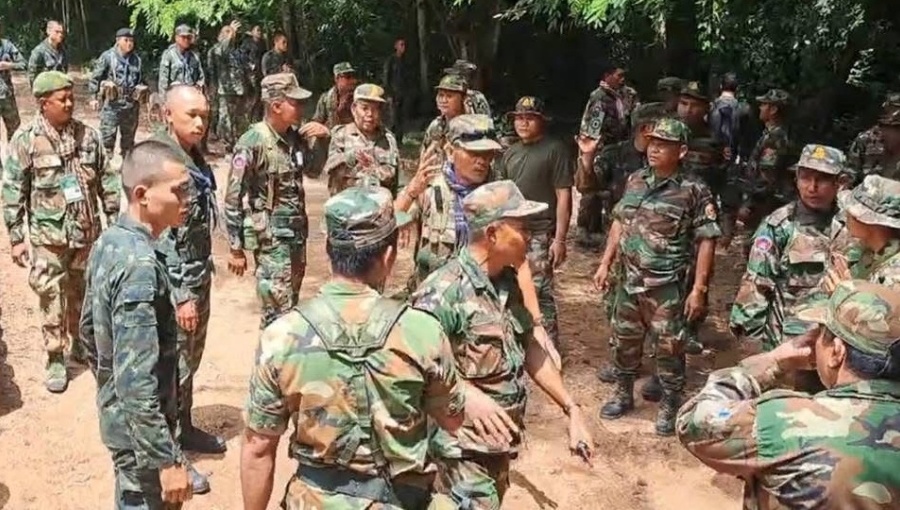
Cambodia’s Ministry of Culture and Fine Arts has strongly condemned recent Thai military actions that have caused serious damage to the Preah Vihear Temple, a sacred site and UNESCO World Heritage monument. The ministry has called for an immediate cessation of all military activity in and around the temple area, according to Cambodianess.
In an official statement released on July 24, the ministry described the attacks, which reportedly included artillery shelling and airstrikes, as a blatant violation of international law and a direct threat to cultural heritage.
Preah Vihear Temple, which was inscribed as a UNESCO World Heritage Site in 2008, holds immense historical and cultural significance for Cambodia and is regarded as part of the shared heritage of humanity. The ministry stated that its destruction constitutes a breach of multiple international treaties aimed at safeguarding cultural property.
The attacks were described as violations of the 1954 Hague Convention for the Protection of Cultural Property in the Event of Armed Conflict, its Second Protocol adopted in 1999, and the 1972 UNESCO Convention Concerning the Protection of the World Cultural and Natural Heritage.
As a signatory to these agreements, Thailand is legally bound to respect and protect cultural heritage sites, including by avoiding their use for military purposes and refraining from any actions that could compromise their Outstanding Universal Value.
“The deliberate targeting of cultural property, as well as violations of international law, may amount to war crimes,” the ministry warned.
Initial assessments indicate that several parts of the ancient temple complex have sustained damage, including the first, second, third, and fifth gopuras (gate towers), the northern staircase, Ta Di ravine, and adjacent areas.
Situated atop the Dangrek mountain range, Preah Vihear Temple is a symbol of Khmer civilisation and national identity. The Ministry of Culture underscored that any attack on the site not only endangers Cambodia’s cultural legacy but also threatens the global community’s shared heritage.
The ministry further criticised the Thai military’s actions as a “serious breach” of international obligations, demonstrating what it described as a wilful disregard for the preservation of humanity’s irreplaceable cultural treasures.

No comments:
Post a Comment