WHEN IN DOUBT START A WAR ON DRUGS
Trump signed secret order for military action against Latin American drug cartels: ReportDirective authorizes US military operations abroad against groups designated as terrorist organizations by Trump administration, says The New York Times
Asiye Latife Yılmaz |08.08.2025 - TRT/AA

ISTANBUL
US President Donald Trump has reportedly signed a secret directive ordering the Pentagon to launch military operations against certain Latin American drug cartels, according to The New York Times, citing people familiar with the matter.
The secret order authorizes potential direct military action at sea and on foreign soil against Latin American drug cartels designated as terrorist organizations by the Trump administration.
US military officials have begun drafting plans to target the cartels. However, the move raises legal concerns, including whether using force outside an authorized conflict could be considered unlawful.
Upon returning to the presidency for a second term this January, Trump signed an order instructing the State Department to designate drug cartels as foreign terrorist organizations, leading to the designation of groups like Tren de Aragua and MS-13.
The decision shows Trump’s strategy of using military forces in roles usually handled by law enforcement, as part of a broader effort to combat the trafficking of fentanyl and other illegal drugs.
Earlier this year Trump sent National Guard troops and Marines to Los Angeles, citing what he called public unrest and riots. The California governor and city leaders blasted the move, calling it both unnecessary and dangerous.
Critics say Trump wants to use the military, which is directly under his command, as his own personal police force, doing his bidding regardless of the law or the US Constitution.
Trump rattles Latin America by eyeing military force against drug cartels

U.S. President Donald Trump walks from Marine One to Air Force One at Joint Base Andrews in Maryland on Aug. 1. | Haiyun Jiang / The New York Times
BLOOMBERG
Aug 9, 2025
The U.S. under President Donald Trump is crafting a confrontational approach toward Latin America that signals a willingness to use military force against drug cartels, discarding the previous administration’s preference for carrots over sticks to coax countries into alignment with U.S. interests.
The New York Times reported Friday that the president ordered the Defense Department to prepare options to take military action against Latin American drug cartels. A U.S. agreement with Mexico to expand security cooperation, expected to be signed in the coming weeks, would facilitate joint monitoring of criminal organizations by security forces and coordination on the border.
But the pending agreement won’t provide legal grounds for direct U.S. military action on Mexican territory, officials have said. Any such intervention would risk inflaming anti-U.S. sentiments already whipped up by the Trump administration’s wave of tariffs.
"This could call into question the security agreement that was drawn up, which is based on a great deal of trust,” said Victoria Dittmar, a researcher at Insight Crime who specializes in Mexico.
Trump, asked about the possibility of using military force Friday at the White House, said he would have "more to say about that soon.”
"Latin America has got a lot of cartels. They’ve got a lot of drugs flowing. So, you know, we want to protect our country,” Trump said.
A Pentagon spokesperson declined to comment.
The emerging plans to deal with cartels build on the Trump administration’s already more aggressive presence in a region that is deeply integrated into the U.S. economy, from cross-border gas pipelines to maritime logistics.
Secretary of State Marco Rubio visited Central America on his first overseas trip, pushing for concessions on U.S. military use of the Panama Canal. The administration has engaged in a war of words with Colombia’s leftist President Gustavo Petro and may be preparing to decertify that country’s efforts against narcotics. Officials have also stepped up allegations against Venezuelan President Nicolas Maduro as a drug lord, doubling a reward for information leading to his arrest to $50 million this week.
The hardening of U.S. policy toward Latin America has been met with varying responses in the region, from open arms to strident opposition. In Ecuador, the pro-U.S. government is preparing a referendum that would allow foreign military installations in national territory, a move seen as clearning the way for the U.S. to reactivate the use of a base in the violence-torn country.
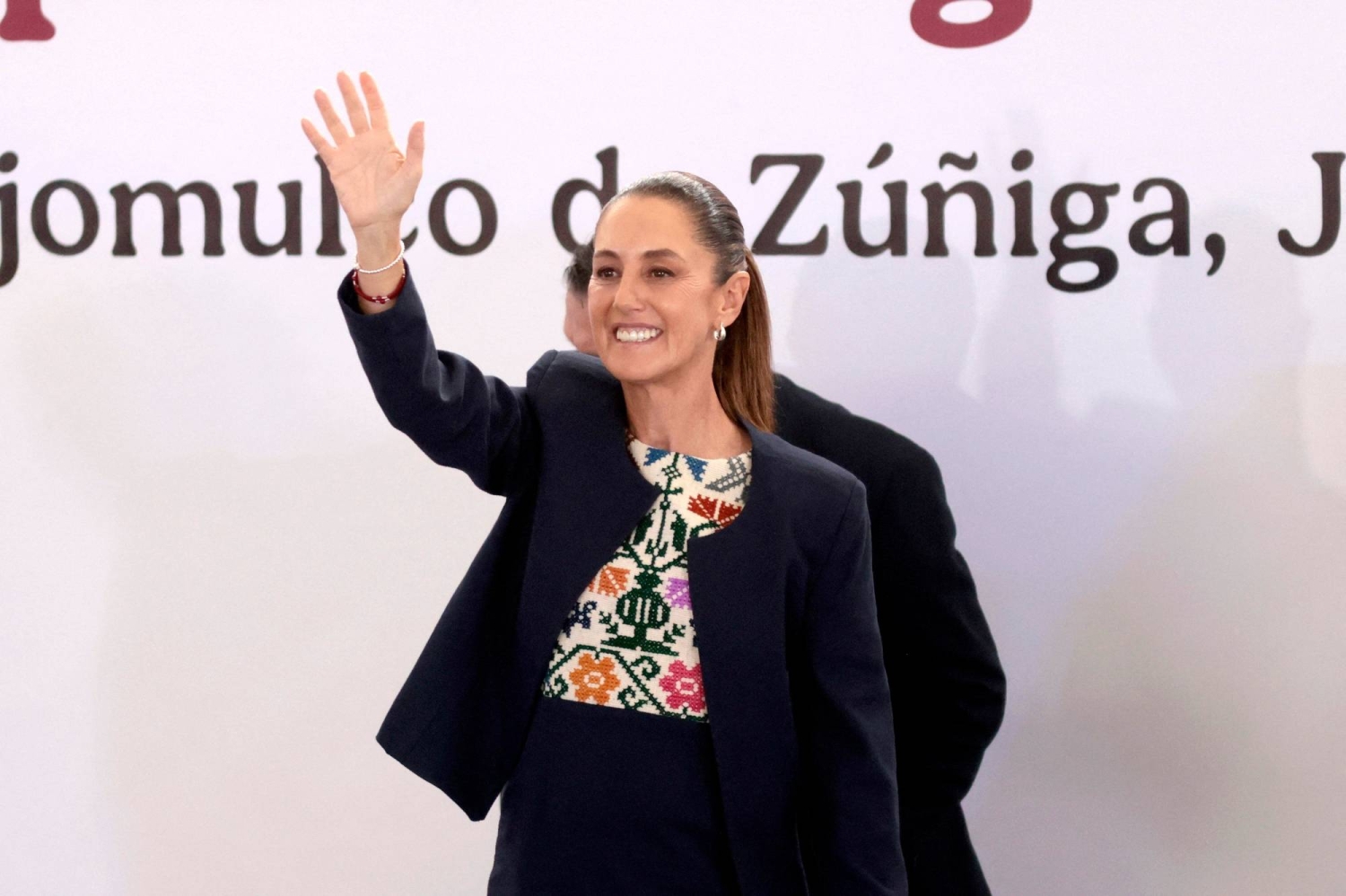
Mexican President Claudia Sheinbaum waves during an event in Tlajomulco de Zuiga, in Mexico's Jalisco state, on Friday. | AFP-JIJI
But in Mexico, President Claudia Sheinbaum has responded defiantly to any suggestion that American soldiers would take a combat role in her country. Any agreement with the Trump administration must respect the nation’s sovereignty, she reiterated Friday at her daily news conference.
"The United States is not going to come to Mexico with the military,” she said Friday. "We cooperate, we collaborate, but there will be no invasion. That is out of the question, absolutely out of the question. What has been stated in all the calls is that it is not permitted, nor is it part of any agreement, much less.”
The security deal in the works rests on the idea that the U.S. won’t intervene in Mexico, said Dittmar of Insight Crime.
"If that were to be broken, it would indeed break the relationship of trust and would require a rethinking of joint security strategies,” she said.
The Trump administration’s approach risks inviting a broader backlash in a region still scarred by decades of Cold War-era intervention from Guatemala to Chile.
"This will strengthen autocratic regimes like the ones in Venezuela or Nicaragua, and the anti-American sentiment in Mexico, Guatemala and even in Colombia,” said Jorge Restrepo, an economics professor who directs CERAC, a Bogota-based research institution that monitors the nation’s civil conflict.
"Just the announcement will have the unintended effect of strengthening governments which are not cooperating as much as they could with the United States,” Restrepo said.
U.S. interests in the region could become soft targets for criminal organizations, said James Bosworth, founder of political risk firm Hxagon, in a phone interview. The cartels have the ability to take the fight to U.S. territory in a way that al-Qaeda "could only dream of,” according to Bosworth.
While Venezuela, Colombia and Honduras are all potential targets, Mexico is the country that is most vulnerable, especially since Trump officials are much more worried about fentanyl then they are about cocaine, Bosworth said. Trump made a promise to fight trafficking of fentanyl, originating in China and responsible for tens of thousands of U.S. deaths, a key point of his 2024 campaign.
Despite stepped-up rhetoric from Washington, Venezuela could be shielded from intervention by U.S. oil interests and concerns about disrupting a steady flow of reverse migration, said Geoff Ramsey, who tracks Venezuela at the Atlantic Council.
"This is an instance in which Trump is seeking to project strength but ultimately understands that any kind of military action in Venezuela would run completely contrary to U.S. interests,” said Ramsey. "Unfortunately, Maduro knows that this is a bluff. But the opposition doesn’t. And I think this is going to fuel a lot of counterproductive daydreaming from the opposition. And my fear is that this is only going to lead them down the path of magical thinking.”
The U.S. posturing also risks playing into Venezuela’s siege narrative. The country’s armed forces on Friday vowed "to confront, combat, and neutralize any action that threatens the stability and peace of our citizens, as well as the safeguarding of our national territory.”
And on state television, Defense Minister Vladimir Padrino Lopez reiterated denials that Venezuela hosts organized crime groups. "There are no criminal gangs operating here, they have taken the story of the Tren de Aragua, they have been completely dismantled, they do not exist, nor do cartels or bosses exist,” Padrino said.
Ramsey said U.S. military action in Venezuela "would risk destabilizing the entire country, and potentially the region itself.”
Trump Signs Directive That Could Deploy US Military in Mexico: Report
Published Aug 08, 2025
President Donald Trump ordered the United States military to target drug cartels and Foreign Terrorist Organizations (FTOs) on Friday, prompting concerns over diplomacy and presidential overreach, the New York Times reported.
Citing sources close to the matter, the Times reported that Trump signed an order directing the Pentagon to begin using military force against overseas targets. It's not clear if the order includes language about obtaining Congress' consent.
The Department of Defense declined to comment to Newsweek, deferring to the White House. A White House spokesperson said Trump remains committed to "protecting the homeland".
Newsweek reached out to the Mexican embassy in the U.S. for comment via email Friday afternoon.
Why It Matters
The Trump administration declared multiple cartels and criminal gangs as FTOs earlier this year, saying the designation was necessary to counter their activities in the U.S., including fentanyl trafficking.
Using the military to target the groups would mark a significant escalation in enforcement—one that could significantly impact relations with two countries: Mexico and Venezuela.
What To Know
The order signed by Trump reportedly provides an official basis for direct military operations at sea and on foreign soil against cartels, which would likely mean in the Gulf of Mexico and potentially within Mexico itself.
Making such moves without the approval of Congress opens up legal questions about whether the military could be seen as murdering suspected cartel members, rather than acting in the defense of the U.S., the Times noted.
"Previous efforts to escalate the war on drugs through partnered operations in Colombia and Mexico failed to eliminate drug trafficking organizations or stem the flow of illicit drugs into the United States," Brandan Buck, Cato Institute foreign policy research fellow, told Newsweek. "Unilateral action would assuredly fail to stem the flow of drugs into the United States while causing significant diplomatic fallout."
The justification for the shift would likely be ongoing efforts to cut off fentanyl smuggling, which continues to impact American communities, with the synthetic opioid linked to thousands of deaths.
When Secretary of State Marco Rubio first declared eight groups as terrorist organizations in February, he opened up the possibility of military action against the MS-13 and Tren de Aragua gangs, as well as dominant cartels including Sinaloa and Jalisco, for their roles in fentanyl trafficking, murders and other violent crimes across the U.S.
At the time, experts told Newsweek that the designation could prompt dangerous blowback from the cartels, putting the lives of Americans living and working in Mexico and Venezuela at risk.
Mexican President Claudia Sheinbaum also criticized the FTO designation, saying it could infringe on Mexican sovereignty. Trump's reported directive on Friday now opens the door to the possibility of American troops crossing the border into her country.
Trump's latest order comes after the administration designated the Venezuelan-based Cartel de los Soles as an FTO late last month, alleging that it's led by the country's president, Nicolás Maduro.
What People Are Saying
Henry Ziemer, associate fellow at the Center for Strategic and International Studies, told Newsweek: "Certainly the most extreme possibility would be that the United States could use this directive to target members of the Venezuelan government and military up to and including President Nicolas Maduro, now linked to the "Cartel de los Soles" now designated by the Treasury as a global terrorist entity.
"For the time being, I do not believe this is a likely outcome given the Trump administration's aversion to entanglement in major overseas military operations. Nevertheless, these reports are undoubtedly causing sleepless nights for the regime."
Buck told Newsweek: "This move, if true, will likely reignite debates on Capitol Hill about the use of military force as it bypasses Congress's prerogative to declare war."
White House spokesperson Anna Kelly said in a statement to Newsweek: "President Trump's top priority is protecting the homeland, which is why he took the bold step to designate several cartels and gangs as foreign terrorist organizations."
What's Next
As of Friday afternoon, the Trump administration has not made an official announcement regarding the directive, making it unclear if Congress would be consulted on the matter.
Published Aug 08, 2025
President Donald Trump ordered the United States military to target drug cartels and Foreign Terrorist Organizations (FTOs) on Friday, prompting concerns over diplomacy and presidential overreach, the New York Times reported.
Citing sources close to the matter, the Times reported that Trump signed an order directing the Pentagon to begin using military force against overseas targets. It's not clear if the order includes language about obtaining Congress' consent.
The Department of Defense declined to comment to Newsweek, deferring to the White House. A White House spokesperson said Trump remains committed to "protecting the homeland".
Newsweek reached out to the Mexican embassy in the U.S. for comment via email Friday afternoon.
Why It Matters
The Trump administration declared multiple cartels and criminal gangs as FTOs earlier this year, saying the designation was necessary to counter their activities in the U.S., including fentanyl trafficking.
Using the military to target the groups would mark a significant escalation in enforcement—one that could significantly impact relations with two countries: Mexico and Venezuela.
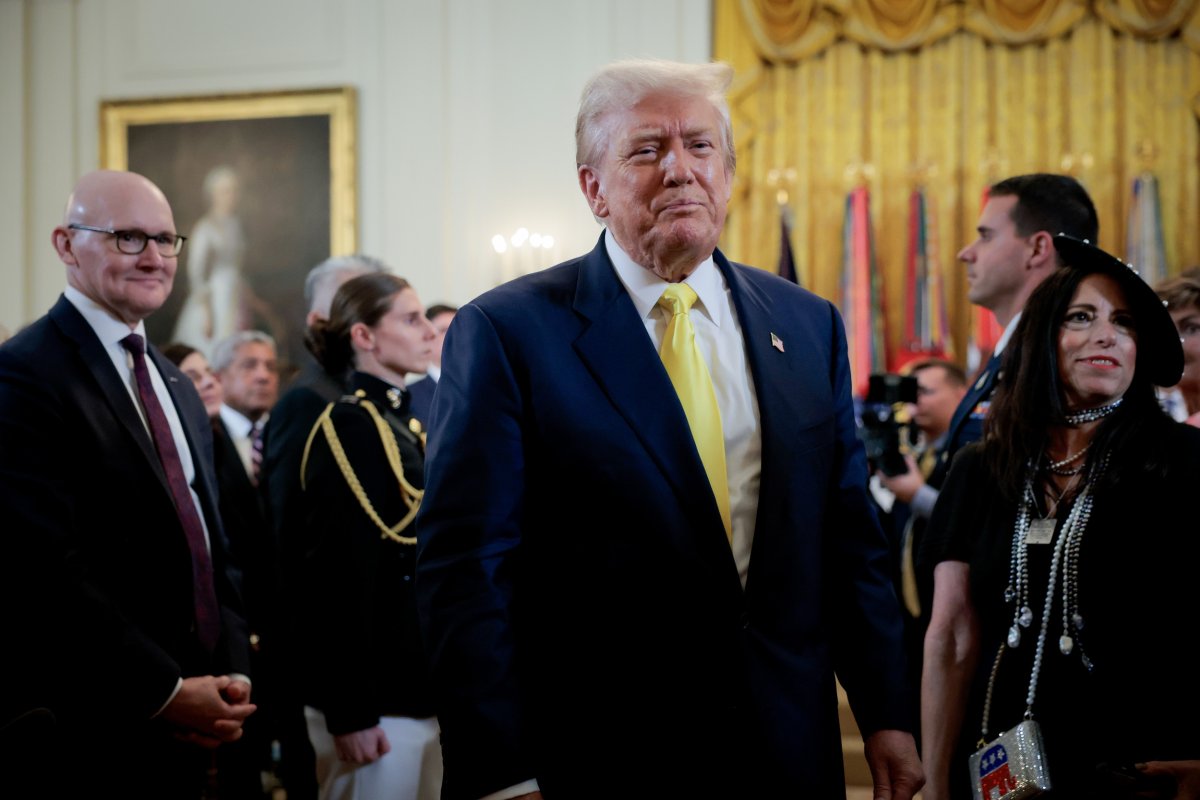
President Donald Trump departs an event to honor recipients of the Purple Heart in the East Room of the White House on August 07, 2025 in Washington, DC. Anna Moneymaker/Getty Images
What To Know
The order signed by Trump reportedly provides an official basis for direct military operations at sea and on foreign soil against cartels, which would likely mean in the Gulf of Mexico and potentially within Mexico itself.
Making such moves without the approval of Congress opens up legal questions about whether the military could be seen as murdering suspected cartel members, rather than acting in the defense of the U.S., the Times noted.
"Previous efforts to escalate the war on drugs through partnered operations in Colombia and Mexico failed to eliminate drug trafficking organizations or stem the flow of illicit drugs into the United States," Brandan Buck, Cato Institute foreign policy research fellow, told Newsweek. "Unilateral action would assuredly fail to stem the flow of drugs into the United States while causing significant diplomatic fallout."
The justification for the shift would likely be ongoing efforts to cut off fentanyl smuggling, which continues to impact American communities, with the synthetic opioid linked to thousands of deaths.
When Secretary of State Marco Rubio first declared eight groups as terrorist organizations in February, he opened up the possibility of military action against the MS-13 and Tren de Aragua gangs, as well as dominant cartels including Sinaloa and Jalisco, for their roles in fentanyl trafficking, murders and other violent crimes across the U.S.
At the time, experts told Newsweek that the designation could prompt dangerous blowback from the cartels, putting the lives of Americans living and working in Mexico and Venezuela at risk.
Mexican President Claudia Sheinbaum also criticized the FTO designation, saying it could infringe on Mexican sovereignty. Trump's reported directive on Friday now opens the door to the possibility of American troops crossing the border into her country.
Trump's latest order comes after the administration designated the Venezuelan-based Cartel de los Soles as an FTO late last month, alleging that it's led by the country's president, Nicolás Maduro.
What People Are Saying
Henry Ziemer, associate fellow at the Center for Strategic and International Studies, told Newsweek: "Certainly the most extreme possibility would be that the United States could use this directive to target members of the Venezuelan government and military up to and including President Nicolas Maduro, now linked to the "Cartel de los Soles" now designated by the Treasury as a global terrorist entity.
"For the time being, I do not believe this is a likely outcome given the Trump administration's aversion to entanglement in major overseas military operations. Nevertheless, these reports are undoubtedly causing sleepless nights for the regime."
Buck told Newsweek: "This move, if true, will likely reignite debates on Capitol Hill about the use of military force as it bypasses Congress's prerogative to declare war."
White House spokesperson Anna Kelly said in a statement to Newsweek: "President Trump's top priority is protecting the homeland, which is why he took the bold step to designate several cartels and gangs as foreign terrorist organizations."
What's Next
As of Friday afternoon, the Trump administration has not made an official announcement regarding the directive, making it unclear if Congress would be consulted on the matter.

No comments:
Post a Comment