Norway Renews Commitment to Offshore Oil & Gas With 57 New E&P Leases
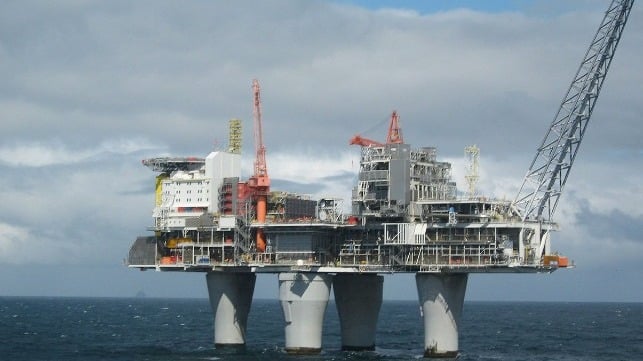
Though Norway may be known best for leadership in green solutions like electric ferries and carbon sequestration, it remains firmly committed to oil and gas E&P, its energy minister reaffirmed this week. The ministry has just approved 57 new offshore energy licenses in the North Sea, Norwegian Sea and Bering Sea, which will help to extend the time horizon of its regional leadership in energy production.
"Norway is Europe’s most important energy supplier, but in a few years production will begin to decline. Therefore, we need new projects that can slow the decline and deliver as much production as possible," said Minister of Energy Terje Aasland in a statement. "That activity is important for jobs, value creation, and Europe's energy security."
Offshore energy has strong mutual benefits for Norway and for Europe. In the wake of the Russian invasion of Ukraine, Norwegian natural gas has become more important to EU energy security than ever. Norway now accounts for about one third of all EU gas imports; Russia is now in second place, providing only 12 percent as of 2024 (from pipeline and LNG import pathways combined). In turn, oil and gas revenue provides the Norwegian state with about $60 billion in revenue each year, and it underpins the vast wealth of Norway's $2 trillion Government Pension Fund - the world's largest sovereign wealth fund. About 200,000 Norwegians are employed directly or indirectly by the domestic petroleum sector.
This round of licensing awarded leases to 19 different companies for areas on the Norwegian continental shelf, including five leases in the Barents Sea. 13 firms hold operator status. Participants include Equinor, ConocoPhillips, Aker BP, TotalEnergies, Repsol and a wide variety of independent producers. To keep the leases, the holders will have to execute a work program to explore and develop their claims.
Oil prices are at an ebb compared to recent years, but interest in the lease auction remained strong. Aasland said that the high turnout among bidders showed "faith in the opportunities that lie in further exploration" in the region.
Climate advocates protested the awards. On Tuesday, activists from Greenpeace, Extinction Rebellion, Nature and Youth and other groups gathered outside of the meeting hall for the award ceremony to demonstrate their opposition.
"We have just left behind the warmest year ever measured. The fact that the government chooses to respond to this development by handing out even more oil licenses is a threat to our future," said Elise Åsnes, advisor at Greenpeace Norge.
Equinor Secures 35 New Licenses to Boost Norwegian Shelf Exploration
Equinor has been awarded 35 new production licenses on the Norwegian continental shelf (NCS) as part of Norway’s 2026 Awards in Predefined Areas (APA) licensing round, the company said Tuesday. The licenses span the North Sea, Norwegian Sea, and Barents Sea, with Equinor named operator on 17 of them.
The new acreage strengthens Equinor’s exploration pipeline at a time when Norway’s offshore sector is under pressure to offset natural production decline while maintaining stable energy supplies to Europe. Twenty-one of the licenses are located in the mature North Sea, ten in the Norwegian Sea, and four in the Barents Sea, reflecting a balance between near-field exploration and frontier opportunities.
Equinor said the awards support its ambition to sustain a high level of drilling activity, with plans to drill between 20 and 30 exploration wells annually. Roughly 80% of that activity will be focused near existing infrastructure, enabling faster and lower-cost tie-backs, while the remaining 20% will target less-explored areas and new geological concepts.
The APA system has long been a cornerstone of Norway’s petroleum policy, encouraging incremental exploration around established infrastructure to maximize resource recovery and extend the life of offshore hubs. For Equinor, access to new acreage is critical as it seeks to develop between six and eight new subsea projects per year through 2035 - significantly above current levels.
The company reported a strong exploration performance in 2025, with 14 discoveries from 31 wells drilled, including seven operated by Equinor. Those finds added an estimated 125 million barrels of recoverable oil equivalent, underscoring the continued prospectivity of the NCS despite its maturity.
Equinor has repeatedly emphasized that new discoveries are essential to curb the expected decline in Norwegian oil and gas output over the next decade. The company is targeting production of around 1.2 million barrels of oil and gas per day from the NCS in 2035, roughly in line with 2020 levels—an ambitious goal that hinges on sustained exploration success.
The new licenses also align with Equinor’s broader role in European energy security. As Europe’s largest supplier of gas, the company operates a vast offshore and onshore infrastructure network, including gas processing plants, pipelines, terminals, and an LNG facility. Phasing new oil and gas volumes into this existing system remains a core pillar of its strategy.
Technology is playing an increasing role in that effort. Equinor has highlighted the use of artificial intelligence and machine learning to accelerate seismic interpretation, improve well planning, and support real-time decision-making, tools that are particularly valuable when exploring complex or lesser-known geology.
While the energy transition continues to reshape investment priorities across Europe, Norway’s offshore sector remains a critical source of reliable supply. Equinor’s latest APA awards signal that exploration on the NCS will remain a central part of that equation well into the next decade.
By Charles Kennedy for Oilprice.com

No comments:
Post a Comment