After Supreme Court Kills Tariffs, Trump Plots ‘15% Tax Out of YOUR Pockets to Feed HIS Deranged Ego’
“Donald Trump is a gangster with no respect for the rule of law and no understanding of economics,” said former Democratic presidential candidate Tom Steyer.
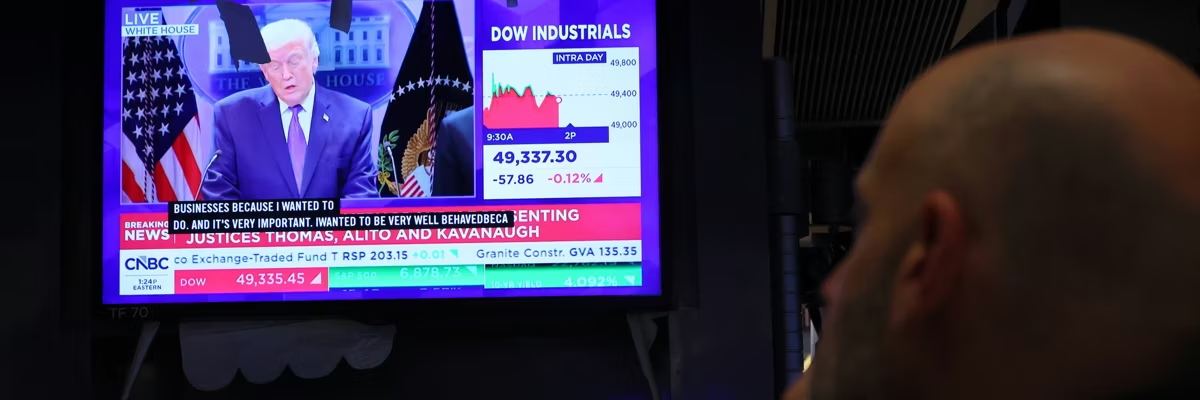
President Donald Trump’s press conference on tariffs is displayed on a television as traders work on the floor of the New York Stock Exchange on February 20, 2026 in New York City.
(Photo by Michael M. Santiago/Getty Images)
“Donald Trump is a gangster with no respect for the rule of law and no understanding of economics,” said former Democratic presidential candidate Tom Steyer.
President Donald Trump’s press conference on tariffs is displayed on a television as traders work on the floor of the New York Stock Exchange on February 20, 2026 in New York City.
(Photo by Michael M. Santiago/Getty Images)
Jessica Corbett
Feb 21, 2026
COMMON DREAMS
Shortly after the US Supreme Court on Friday ruled against President Donald Trump’s use of emergency powers to impose sweeping tariffs, the Republican announced plans for a 10% global import tax under another law. By Saturday, he’d hiked it to 15%.
In a 6-3 decision penned by Chief Justice John Roberts, the high court found that “nothing” in the text of the 1977 International Emergency Economic Powers Act (IEEPA) “enables the president to unilaterally impose tariffs.” Trump responded by not only lashing out at the justices but also invoking Section 122 of the Trade Act of 1974 for a 10% global tariff beginning February 24.
Then, in a Saturday morning Truth Social post, Trump said:
Based on a thorough, detailed, and complete review of the ridiculous, poorly written, and extraordinarily anti-American decision on tariffs issued yesterday, after MANY months of contemplation, by the United States Supreme Court, please let this statement serve to represent that I, as President of the United States of America, will be, effective immediately, raising the 10% Worldwide Tariff on Countries, many of which have been ‘ripping’ the US off for decades, without retribution (until I came along!), to the fully allowed, and legally tested, 15% level. During the next short number of months, the Trump Administration will determine and issue the new and legally permissible Tariffs, which will continue our extraordinarily successful process of Making America Great Again GREATER THAN EVER BEFORE!!! Thank you for your attention to this matter.
Critics across the country swiftly blasted the announcement. Democratic strategist Jon Cooper argued that “Trump CANNOT legally impose a 15% global tariff because the US doesn’t meet the clear emergency economic conditions envisioned by Section 122. If Trump tries to invoke it, it would certainly face immediate legal challenges, economic pushback, and potential congressional scrutiny.”
Former Democratic presidential candidate Tom Steyer declared that “Donald Trump is a gangster with no respect for the rule of law and no understanding of economics. This is a 15% tax out of YOUR pockets to feed HIS deranged ego.”
California Gov. Gavin Newsom, who’s expected to seek the Democratic presidential nomination in 2028, similarly said that “Donald Trump just announced a NEW 15% TAX on the American people. He does not care about you.”
Another California Democrat, Congressman Ted Lieu, quipped that “crybaby Trump woke up this morning and still feels hurt from the Supreme Court slapping him. So he’s taking it out on the American people by increasing his 10% tax increase to 15%. These temporary tariffs will be challenged in court and Democrats will kill them when they expire.”
Elected Democrats have often spoken out against Trump’s legally dubious duties, but the GOP-controlled Congress hadn’t forcefully countered them. As Politico detailed Friday:
Before the ruling, while congressional Republicans had occasionally grumbled about the policy, they had largely fallen in line when actually required to vote on it. Now, the Supreme Court’s decision could put more pressure on them to break with the president...
Six House Republicans voted alongside Democrats last week to condemn Trump’s tariffs on Canada, sending the measure to the Senate, which has already seen significant GOP defection in other votes on the duty measures. Senior House Democrats have vowed to bring up at least three more similar resolutions that will force GOP members to choose between their adherence to free trade principles and their MAGA base.
Last week, Sen. Ed Markey (D-Mass.), ranking member of the Senate Committee on Small Business and Entrepreneurship, released a report laying out how Trump’s economic policies, particularly the tariffs, “are making life unaffordable for millions of American small businesses, their workers, and their customers.”
Markey held a virtual press conference with Massachusetts small business owners celebrating the Supreme Court’s Friday ruling. The senator said that “for the last year, Trump has created Pain on Main with an affordability crisis plaguing communities across the country. At the heart of it are Trump’s tariff taxes.”
“The Supreme Court did what was right and struck down these illegal tariffs. Trump said the small businesses who brought this case hate our country. He’s wrong. Small businesses are our country,” Markey continued. “I will keep fighting until every cent illegally collected from small businesses, consumers, and families in Massachusetts and across the country has been returned.”
Feb 21, 2026
COMMON DREAMS
Shortly after the US Supreme Court on Friday ruled against President Donald Trump’s use of emergency powers to impose sweeping tariffs, the Republican announced plans for a 10% global import tax under another law. By Saturday, he’d hiked it to 15%.
In a 6-3 decision penned by Chief Justice John Roberts, the high court found that “nothing” in the text of the 1977 International Emergency Economic Powers Act (IEEPA) “enables the president to unilaterally impose tariffs.” Trump responded by not only lashing out at the justices but also invoking Section 122 of the Trade Act of 1974 for a 10% global tariff beginning February 24.
Then, in a Saturday morning Truth Social post, Trump said:
Based on a thorough, detailed, and complete review of the ridiculous, poorly written, and extraordinarily anti-American decision on tariffs issued yesterday, after MANY months of contemplation, by the United States Supreme Court, please let this statement serve to represent that I, as President of the United States of America, will be, effective immediately, raising the 10% Worldwide Tariff on Countries, many of which have been ‘ripping’ the US off for decades, without retribution (until I came along!), to the fully allowed, and legally tested, 15% level. During the next short number of months, the Trump Administration will determine and issue the new and legally permissible Tariffs, which will continue our extraordinarily successful process of Making America Great Again GREATER THAN EVER BEFORE!!! Thank you for your attention to this matter.
Critics across the country swiftly blasted the announcement. Democratic strategist Jon Cooper argued that “Trump CANNOT legally impose a 15% global tariff because the US doesn’t meet the clear emergency economic conditions envisioned by Section 122. If Trump tries to invoke it, it would certainly face immediate legal challenges, economic pushback, and potential congressional scrutiny.”
Former Democratic presidential candidate Tom Steyer declared that “Donald Trump is a gangster with no respect for the rule of law and no understanding of economics. This is a 15% tax out of YOUR pockets to feed HIS deranged ego.”
California Gov. Gavin Newsom, who’s expected to seek the Democratic presidential nomination in 2028, similarly said that “Donald Trump just announced a NEW 15% TAX on the American people. He does not care about you.”
Another California Democrat, Congressman Ted Lieu, quipped that “crybaby Trump woke up this morning and still feels hurt from the Supreme Court slapping him. So he’s taking it out on the American people by increasing his 10% tax increase to 15%. These temporary tariffs will be challenged in court and Democrats will kill them when they expire.”
Elected Democrats have often spoken out against Trump’s legally dubious duties, but the GOP-controlled Congress hadn’t forcefully countered them. As Politico detailed Friday:
Before the ruling, while congressional Republicans had occasionally grumbled about the policy, they had largely fallen in line when actually required to vote on it. Now, the Supreme Court’s decision could put more pressure on them to break with the president...
Six House Republicans voted alongside Democrats last week to condemn Trump’s tariffs on Canada, sending the measure to the Senate, which has already seen significant GOP defection in other votes on the duty measures. Senior House Democrats have vowed to bring up at least three more similar resolutions that will force GOP members to choose between their adherence to free trade principles and their MAGA base.
Last week, Sen. Ed Markey (D-Mass.), ranking member of the Senate Committee on Small Business and Entrepreneurship, released a report laying out how Trump’s economic policies, particularly the tariffs, “are making life unaffordable for millions of American small businesses, their workers, and their customers.”
Markey held a virtual press conference with Massachusetts small business owners celebrating the Supreme Court’s Friday ruling. The senator said that “for the last year, Trump has created Pain on Main with an affordability crisis plaguing communities across the country. At the heart of it are Trump’s tariff taxes.”
“The Supreme Court did what was right and struck down these illegal tariffs. Trump said the small businesses who brought this case hate our country. He’s wrong. Small businesses are our country,” Markey continued. “I will keep fighting until every cent illegally collected from small businesses, consumers, and families in Massachusetts and across the country has been returned.”
'Brilliant' Costco to reap rewards for opposing Trump early: report
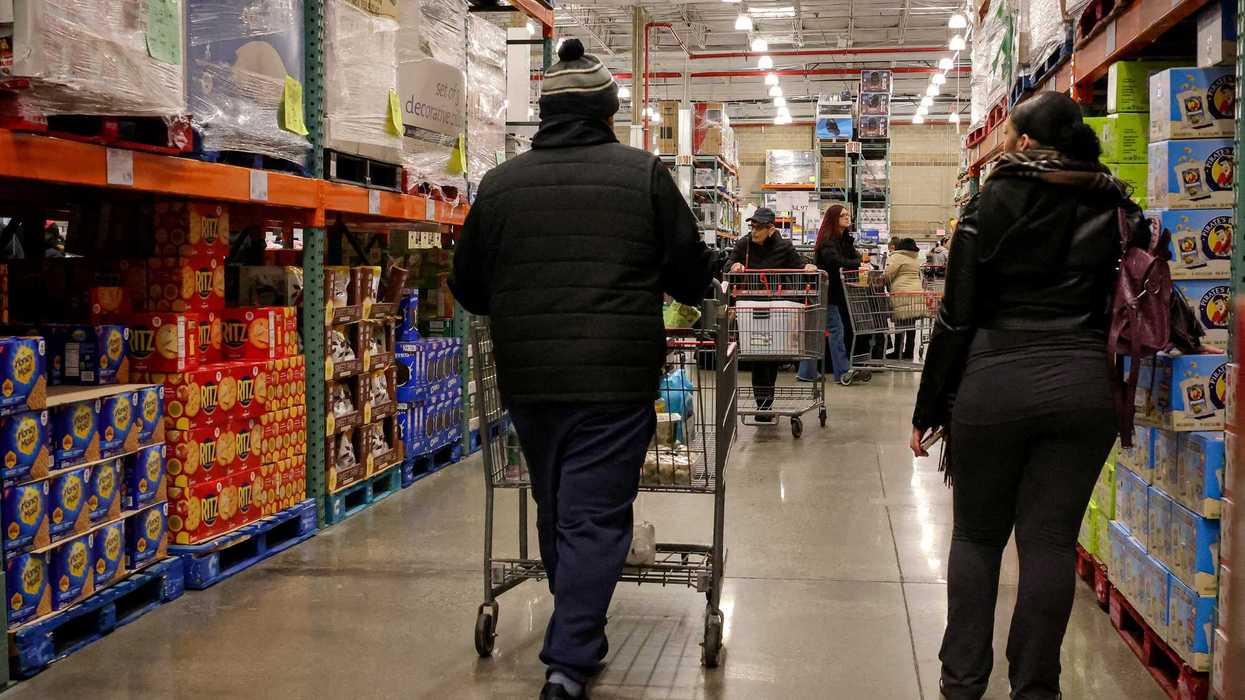
People shop at a Costco store in the Staten Island borough of New York City, U.S., January 16, 2026. Brendan McDermid/File Photo
Costco’s decision to buck President Donald Trump appears to have paid off now that a majority od Supreme Court Justices have destroyed his self-appointed power to impose arbitrary international tariffs at the whim of a social media post
“Back in December, I wrote about how Costco became the first major retailer — and the largest company — to sue the Trump administration over tariffs. At the time, the question practically asked itself: brilliant or insane?” said Inc. reporter Bill Murphy. “Two months later, there is a much clearer answer.”
When SCOTUS deemed Trump’s tariffs to be illegal on Friday it left open the door of what exactly to do about the tens of billions of dollars the Trump administration has been slurping up from U.S. consumers and businesses with its import tax.
“If the refunds materialize as many companies hope, Costco’s decision to jump into court early could look less like a gamble and more like sharp strategic timing,” said Murphy.
Costco was not the only company to sue the Trump administration over its tariffs, but it was the most visible among similar filings by similar tariff challenges EssilorLuxottica, Kawasaki Motors, Revlon, Bumble Bee Foods, Goodyear, and others.
But the Supreme Court’s decision was primitive and singular. It delivered no plans or tactic for Trump to return his ill-gained money to companies, nor for companies to reimburse their consumers the added fees they were forced to collect for tariffed purchases. So, Murphy predicted the administrative process to be “complex.”
Murphy pointed out that the mechanics of tariff refunds likely will depend on “preserving claims while entries are still legally contestable,” which is something early filers have already worked out.
The result, he said, is not a literal “front of the line” reimbursement in the way creditors recoup their fees. However, companies that moved first “may face fewer procedural hurdles as the government unwinds what could be more than $170 billion in collected duties.”
Costco, by being one of the first companies to speak up against the Trump administration in defense of their consumers, could conceivably benefit from direct cash recovery on tariffs that it has already paid, earlier administrative positioning because it recorded and kept tabs on its claims for its attorneys, and “strategic credibility with investors for having acted decisively,” said Murphy.
People shop at a Costco store in the Staten Island borough of New York City, U.S., January 16, 2026. Brendan McDermid/File Photo
February 20, 2026
ALTERNET
Costco’s decision to buck President Donald Trump appears to have paid off now that a majority od Supreme Court Justices have destroyed his self-appointed power to impose arbitrary international tariffs at the whim of a social media post
“Back in December, I wrote about how Costco became the first major retailer — and the largest company — to sue the Trump administration over tariffs. At the time, the question practically asked itself: brilliant or insane?” said Inc. reporter Bill Murphy. “Two months later, there is a much clearer answer.”
When SCOTUS deemed Trump’s tariffs to be illegal on Friday it left open the door of what exactly to do about the tens of billions of dollars the Trump administration has been slurping up from U.S. consumers and businesses with its import tax.
“If the refunds materialize as many companies hope, Costco’s decision to jump into court early could look less like a gamble and more like sharp strategic timing,” said Murphy.
Costco was not the only company to sue the Trump administration over its tariffs, but it was the most visible among similar filings by similar tariff challenges EssilorLuxottica, Kawasaki Motors, Revlon, Bumble Bee Foods, Goodyear, and others.
But the Supreme Court’s decision was primitive and singular. It delivered no plans or tactic for Trump to return his ill-gained money to companies, nor for companies to reimburse their consumers the added fees they were forced to collect for tariffed purchases. So, Murphy predicted the administrative process to be “complex.”
Murphy pointed out that the mechanics of tariff refunds likely will depend on “preserving claims while entries are still legally contestable,” which is something early filers have already worked out.
The result, he said, is not a literal “front of the line” reimbursement in the way creditors recoup their fees. However, companies that moved first “may face fewer procedural hurdles as the government unwinds what could be more than $170 billion in collected duties.”
Costco, by being one of the first companies to speak up against the Trump administration in defense of their consumers, could conceivably benefit from direct cash recovery on tariffs that it has already paid, earlier administrative positioning because it recorded and kept tabs on its claims for its attorneys, and “strategic credibility with investors for having acted decisively,” said Murphy.
Trump hikes global tariffs while still fuming over Supreme Court’s ‘ridiculous’ ruling
Alexander Willis
February 21, 2026
RAW STORY
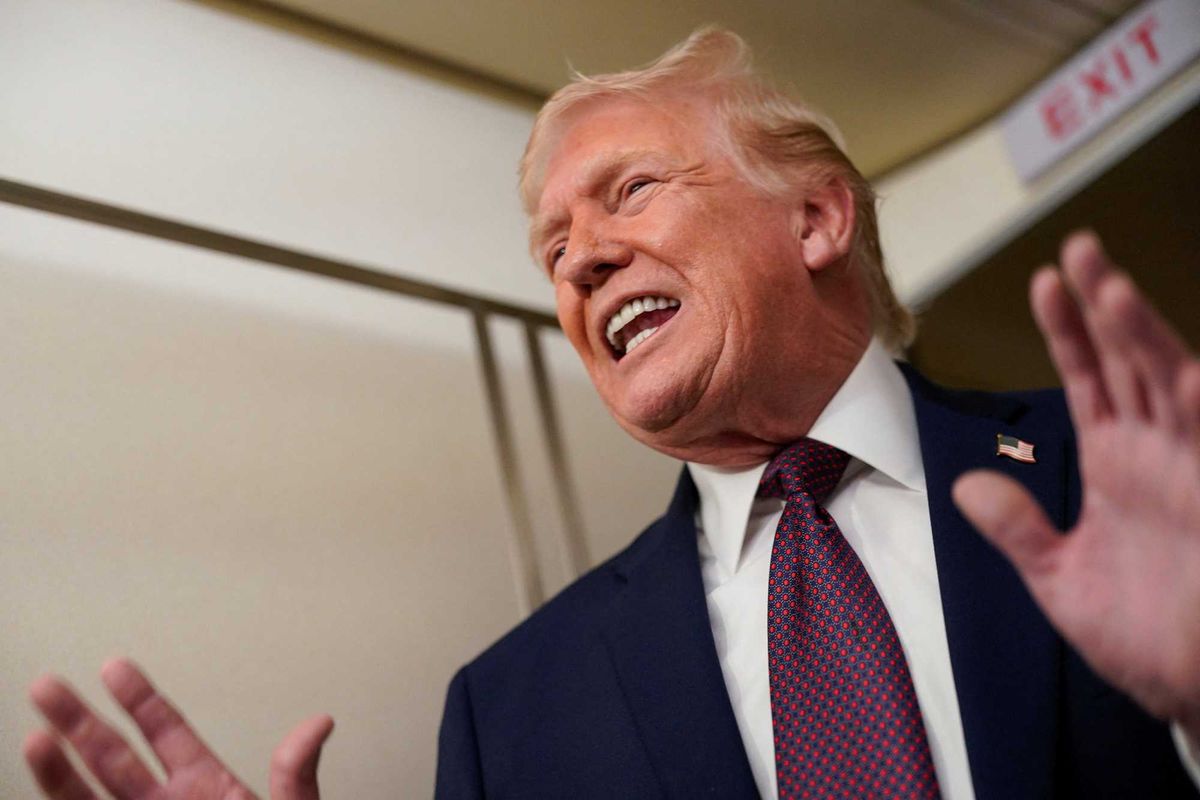
U.S. President Donald Trump speaks with members of the media aboard Air Force One en route from Florida to Washington, U.S., January 11, 2026. REUTERS/Nathan Howard
President Donald Trump announced a dramatic increase to global tariffs on Saturday in response to the Supreme Court’s ruling the day before against his so-called “reciprocal tariffs,” a ruling he slammed as “ridiculous” and “poorly written.”
“Based on a thorough, detailed, and complete review of the ridiculous, poorly written, and extraordinarily anti-American decision on Tariffs issued yesterday, after MANY months of contemplation, by the United States Supreme Court, please let this statement serve to represent that I, as President of the United States of America, will be, effective immediately, raising the 10% Worldwide Tariff on Countries, many of which have been ‘ripping’ the U.S. off for decades, without retribution (until I came along!), to the fully allowed, and legally tested, 15% level,” Trump wrote on his social media platform Truth Social.
“During the next short number of months, the Trump Administration will determine and issue the new and legally permissible Tariffs, which will continue our extraordinarily successful process of Making America Great Again - GREATER THAN EVER BEFORE!!!”
Shortly after the Supreme Court’s ruling Friday, Trump vowed to pursue “alternative” paths to imposing tariffs on other nations in an effort to circumvent the court’s decision. He also raged against the justices that ruled against his tariffs, including two of his own appointees, who he said he was "ashamed " of.
Alexander Willis
February 21, 2026
RAW STORY
U.S. President Donald Trump speaks with members of the media aboard Air Force One en route from Florida to Washington, U.S., January 11, 2026. REUTERS/Nathan Howard
President Donald Trump announced a dramatic increase to global tariffs on Saturday in response to the Supreme Court’s ruling the day before against his so-called “reciprocal tariffs,” a ruling he slammed as “ridiculous” and “poorly written.”
“Based on a thorough, detailed, and complete review of the ridiculous, poorly written, and extraordinarily anti-American decision on Tariffs issued yesterday, after MANY months of contemplation, by the United States Supreme Court, please let this statement serve to represent that I, as President of the United States of America, will be, effective immediately, raising the 10% Worldwide Tariff on Countries, many of which have been ‘ripping’ the U.S. off for decades, without retribution (until I came along!), to the fully allowed, and legally tested, 15% level,” Trump wrote on his social media platform Truth Social.
“During the next short number of months, the Trump Administration will determine and issue the new and legally permissible Tariffs, which will continue our extraordinarily successful process of Making America Great Again - GREATER THAN EVER BEFORE!!!”
Shortly after the Supreme Court’s ruling Friday, Trump vowed to pursue “alternative” paths to imposing tariffs on other nations in an effort to circumvent the court’s decision. He also raged against the justices that ruled against his tariffs, including two of his own appointees, who he said he was "ashamed " of.
Economist flags Trump's one-day flip flop after having 'months to prepare' his next move
David McAfee
February 21, 2026
RAW STORY

Donald Trump (Reuters)
Donald Trump had "literally months to prepare" a response but still fumbled it, changing his mind after one day, according to an economist on Saturday.
The Supreme Court smacked down Trump's tariff policies in a stunning rebuke from the most conservative high court in modern history, and Trump responded by waffling his new plan, according to noted economist Justin Wolfers.
In response to the decision, Trump first said he had enacted a 10% global tariff by executive order. Then on Saturday, he raised it to 15% via a Truth Social Post.
"Based on a thorough, detailed, and complete review of the ridiculous, poorly written, and extraordinarily anti-American decision on Tariffs issued yesterday, after MANY months of contemplation, by the United States Supreme Court, please let this statement serve to represent that I, as President of the United States of America, will be, effective immediately, raising the 10% Worldwide Tariff on Countries, many of which have been 'ripping' the U.S. off for decades, without retribution (until I came along!), to the fully allowed, and legally tested, 15% level," Trump wrote this weekend.
Wolfers flagged the chaotic nature of the response, saying on X, "The President had literally months to prepare his response to the Supreme Court ruling, yet couldn't even stick with his decision on the s.122 (temporary) tariff from Friday to Saturday, raising it from 10% to 15%."
David McAfee
February 21, 2026
RAW STORY
Donald Trump (Reuters)
Donald Trump had "literally months to prepare" a response but still fumbled it, changing his mind after one day, according to an economist on Saturday.
The Supreme Court smacked down Trump's tariff policies in a stunning rebuke from the most conservative high court in modern history, and Trump responded by waffling his new plan, according to noted economist Justin Wolfers.
In response to the decision, Trump first said he had enacted a 10% global tariff by executive order. Then on Saturday, he raised it to 15% via a Truth Social Post.
"Based on a thorough, detailed, and complete review of the ridiculous, poorly written, and extraordinarily anti-American decision on Tariffs issued yesterday, after MANY months of contemplation, by the United States Supreme Court, please let this statement serve to represent that I, as President of the United States of America, will be, effective immediately, raising the 10% Worldwide Tariff on Countries, many of which have been 'ripping' the U.S. off for decades, without retribution (until I came along!), to the fully allowed, and legally tested, 15% level," Trump wrote this weekend.
Wolfers flagged the chaotic nature of the response, saying on X, "The President had literally months to prepare his response to the Supreme Court ruling, yet couldn't even stick with his decision on the s.122 (temporary) tariff from Friday to Saturday, raising it from 10% to 15%."
'Trump became enraged' and used expletives after news of Supreme Court smackdown: report
Nicole Charky-Chami
February 20, 2026
RAW STORY
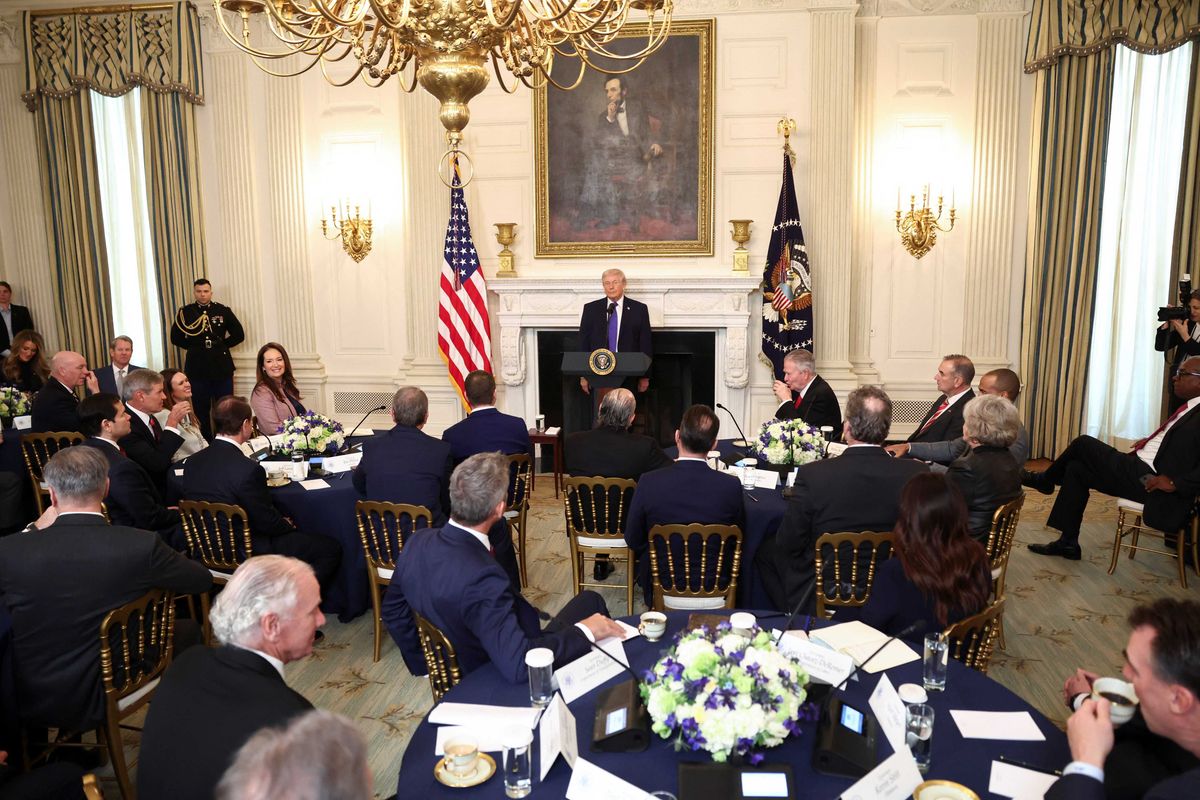
President Donald Trump holds a working breakfast with governors at the White House in Washington, D.C. on Feb. 20, 2026. REUTERS/Kevin Lamarque
President Donald Trump was reportedly infuriated Friday after the Supreme Court ruled that his tariffs were illegal.
Trump was hosting the National Governor's Association breakfast with a room full of the nation's governors at the White House when he found out about the high court's decision to strike down Trump's tariffs in a 6-3 vote.
"Apparently the gov breakfast had been going well, they were working together, and then President Trump became enraged. He started ranting about the decision, not only calling it a disgrace, but started attacking the courts at one point saying, these 'f------ courts,'" said CNN senior White House correspondent Kristen Holmes.
"This tariff policy — this could not be a bigger decision for President Trump — this could not be a bigger loss for President Trump," Holmes added. "Not only is so much of his economic agenda based on these tariffs, so much of his foreign policy is based on these tariffs. He has used these tariffs as leverage in almost every meeting that he has had around the world. He has touted them as the most important part of the economic agenda. So clearly, a huge loss, and he recognizes that today."
Trump and his administration have not yet made an official announcement in response. His team was reportedly meeting to determine next moves, Holmes said.
Nicole Charky-Chami
February 20, 2026
RAW STORY
President Donald Trump holds a working breakfast with governors at the White House in Washington, D.C. on Feb. 20, 2026. REUTERS/Kevin Lamarque
President Donald Trump was reportedly infuriated Friday after the Supreme Court ruled that his tariffs were illegal.
Trump was hosting the National Governor's Association breakfast with a room full of the nation's governors at the White House when he found out about the high court's decision to strike down Trump's tariffs in a 6-3 vote.
"Apparently the gov breakfast had been going well, they were working together, and then President Trump became enraged. He started ranting about the decision, not only calling it a disgrace, but started attacking the courts at one point saying, these 'f------ courts,'" said CNN senior White House correspondent Kristen Holmes.
"This tariff policy — this could not be a bigger decision for President Trump — this could not be a bigger loss for President Trump," Holmes added. "Not only is so much of his economic agenda based on these tariffs, so much of his foreign policy is based on these tariffs. He has used these tariffs as leverage in almost every meeting that he has had around the world. He has touted them as the most important part of the economic agenda. So clearly, a huge loss, and he recognizes that today."
Trump and his administration have not yet made an official announcement in response. His team was reportedly meeting to determine next moves, Holmes said.
Farmers giddy as Trump dealt 'big loss' at Supreme Court
Matthew Chapman
February 20, 2026
RAW STORY
GOP senator accuses Trump of having poor 'bedtime manners' after he's caught napping
John Boyd, Jr., the head of the National Black Farmers Association, celebrated Friday on MS NOW following the Supreme Court's decision invalidating President Donald Trump's authority to use emergency powers to enact tariffs.
"So, John, this morning you were feeling pretty positive," said anchor Antonia Hylton. "But now that President Trump says he's going to keep pushing these tariffs through no matter what, how are you doing?"
"Well, you know, I don't care how you look at it today — it's a big win for me and a big loss for this president," said Boyd, who has previously warned the tariffs are devastating farmers to the point of suicide. "That's why he was screaming to the top of his lungs at this press conference. He knows he lost in a big way today. And this is the first step in the right direction."
The ruling, he continued, is "the first real hard note that this president has heard from the Supreme Court since he became elected. 6 to 3 is a pretty sweeping, you know, victory. I don't care how you look at it."
The next step, said Boyd, is "we want to turn to Congress to see how we can get compensated for lost revenue from all of the hardship that these tariffs have cost us. In the soybean market alone, we lost $54 billion, and the president is proposing $12 billion. I mean, people, you can do the math there. What the Supreme Court didn't do is lay out how farmers like myself are going to recoup our losses based on the damage from the president's tariffs."
"But I don't care how you look at it today, this president lost and John Boyd won today, because I've been on your show saying that these tariffs are illegal," he added. "And the courts agreed with me today. And what the president said to the Supreme Court today was deplorable. He called them lapdogs and fools and RINOs. How does he think that other world leaders are looking at this decision and rating him today? It shows his lack of leadership skills."
Matthew Chapman
February 20, 2026
RAW STORY
GOP senator accuses Trump of having poor 'bedtime manners' after he's caught napping
John Boyd, Jr., the head of the National Black Farmers Association, celebrated Friday on MS NOW following the Supreme Court's decision invalidating President Donald Trump's authority to use emergency powers to enact tariffs.
"So, John, this morning you were feeling pretty positive," said anchor Antonia Hylton. "But now that President Trump says he's going to keep pushing these tariffs through no matter what, how are you doing?"
"Well, you know, I don't care how you look at it today — it's a big win for me and a big loss for this president," said Boyd, who has previously warned the tariffs are devastating farmers to the point of suicide. "That's why he was screaming to the top of his lungs at this press conference. He knows he lost in a big way today. And this is the first step in the right direction."
The ruling, he continued, is "the first real hard note that this president has heard from the Supreme Court since he became elected. 6 to 3 is a pretty sweeping, you know, victory. I don't care how you look at it."
The next step, said Boyd, is "we want to turn to Congress to see how we can get compensated for lost revenue from all of the hardship that these tariffs have cost us. In the soybean market alone, we lost $54 billion, and the president is proposing $12 billion. I mean, people, you can do the math there. What the Supreme Court didn't do is lay out how farmers like myself are going to recoup our losses based on the damage from the president's tariffs."
"But I don't care how you look at it today, this president lost and John Boyd won today, because I've been on your show saying that these tariffs are illegal," he added. "And the courts agreed with me today. And what the president said to the Supreme Court today was deplorable. He called them lapdogs and fools and RINOs. How does he think that other world leaders are looking at this decision and rating him today? It shows his lack of leadership skills."
Historian breathes sigh of relief over Trump's crippling blow: 'James Madison is smiling'
Nicole Charky-Chami
February 20, 2026
RAW STORY
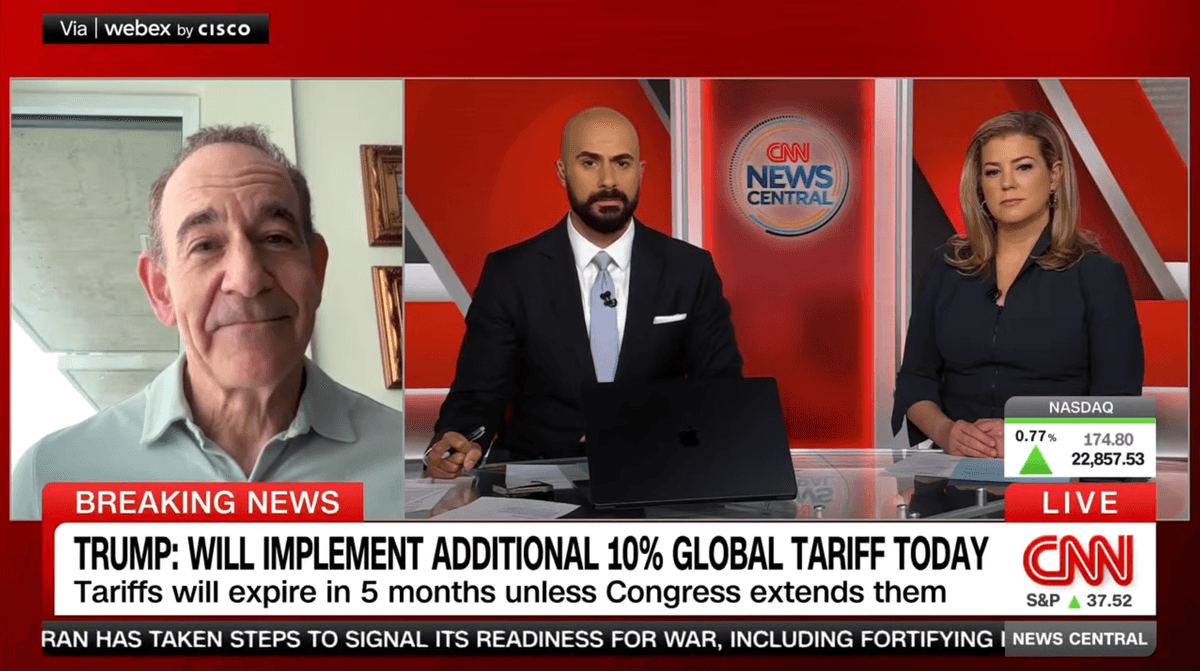
Tim Naftali, CNN's presidential historian, described why the nation's founding fathers would have approved of the Supreme Court's decision to strike back President Donald Trump's tariffs. (CNN/Screenshot)
A historian Friday described the historic impact of the Supreme Court's decision in its ruling against President Donald Trump's tariffs — something the nation's founders would have appreciated.
Tim Naftali, CNN's presidential historian and former head of the Nixon Presidential Library, explained why the high court's ruling was an active practice of what the Constitution was intended to do.
"Well, wherever he is, James Madison is smiling today. Tariffs are a tax. The founders decided that taxes should be the responsibility of the Article One branch, which is Congress," Naftali said.
"And today the U.S. Constitution worked as it's supposed to work, which is to keep various parts of the government in check when they overstep constitutional bounds," he added.
The court's decision was also one of many times throughout history that the Supreme Court has pushed back on a president.
"This is a huge moment in American history," Naftali said. "Donald Trump is not the first president to have been disappointed by the court. The courts in the 1930s invalidated Franklin Roosevelt's New Deal. That's what led to the first push to pack the court that was Roosevelt's response to the fact that he was so angry at the court for undermining the New Deal.
"In the end, the court changed, and the New Deal stayed. Richard Nixon was furious at the court for forcing him to turn over the tapes when he lost the case. U.S. v Nixon. Well, the Dobbs decision really unsettled the Biden presidency. And Obama was not happy with Citizens United."
He said it's not new for presidents to be unhappy about a Supreme Court decision, but it is American.
"It's the way that it works. Our system is supposed to work this way every so often. One of the branches is supposed to be disappointed when it can't engage in a power grab that is unconstitutional."
Nicole Charky-Chami
February 20, 2026
RAW STORY
Tim Naftali, CNN's presidential historian, described why the nation's founding fathers would have approved of the Supreme Court's decision to strike back President Donald Trump's tariffs. (CNN/Screenshot)
A historian Friday described the historic impact of the Supreme Court's decision in its ruling against President Donald Trump's tariffs — something the nation's founders would have appreciated.
Tim Naftali, CNN's presidential historian and former head of the Nixon Presidential Library, explained why the high court's ruling was an active practice of what the Constitution was intended to do.
"Well, wherever he is, James Madison is smiling today. Tariffs are a tax. The founders decided that taxes should be the responsibility of the Article One branch, which is Congress," Naftali said.
"And today the U.S. Constitution worked as it's supposed to work, which is to keep various parts of the government in check when they overstep constitutional bounds," he added.
The court's decision was also one of many times throughout history that the Supreme Court has pushed back on a president.
"This is a huge moment in American history," Naftali said. "Donald Trump is not the first president to have been disappointed by the court. The courts in the 1930s invalidated Franklin Roosevelt's New Deal. That's what led to the first push to pack the court that was Roosevelt's response to the fact that he was so angry at the court for undermining the New Deal.
"In the end, the court changed, and the New Deal stayed. Richard Nixon was furious at the court for forcing him to turn over the tapes when he lost the case. U.S. v Nixon. Well, the Dobbs decision really unsettled the Biden presidency. And Obama was not happy with Citizens United."
He said it's not new for presidents to be unhappy about a Supreme Court decision, but it is American.
"It's the way that it works. Our system is supposed to work this way every so often. One of the branches is supposed to be disappointed when it can't engage in a power grab that is unconstitutional."
Jacob Sullum
Fri, February 20, 2026
REASON

President Trump's claim of sweeping tariff authority under the International Emergency Economic Powers Act (IEEPA) was rejected by the Supreme Court, leading to a major setback for him.See more
President Donald Trump suffered a major setback today at the Supreme Court, which rejected his claim of sweeping tariff authority under the International Emergency Economic Powers Act (IEEPA). Trump could have avoided that embarrassing defeat if he was not so keen on asserting broad, unbridled powers based on a dubious legal interpretation, which is part of a pattern with him.
"When Congress grants the power to impose tariffs, it does so clearly and with careful constraints," Chief Justice John Roberts notes in Learning Resources v. Trump, the decision rejecting Trump's interpretation of IEEPA. As that observation suggests, there is no shortage of statutes that empower the president to impose tariffs. Trump himself already has used some of them and can be expected to do so again now that the Supreme Court has closed off this particular route. But all of those laws restrict presidential action by specifying acceptable rationales, requiring agency investigations, or limiting the size, scope, or duration of tariff hikes.
Because Trump wanted to avoid those restrictions, he instead latched onto IEEPA, a 1977 law that does not even mention tariffs and had never before been used to impose them. The government's lawyers cited an IEEPA provision that authorizes the president to "regulate" imports in certain circumstances. That provision, they claimed, included a hitherto unnoticed power to completely rewrite the tariff schedule approved by Congress. Trump maintained that IEEPA authorizes the president to impose any taxes he wants on any imports he chooses from any country he decides to target for any length of time he considers appropriate whenever he deems it necessary to "deal with" an "unusual and extraordinary threat" from abroad that constitutes a "national emergency."
That reading of the law was implausible for several reasons, not least because it rendered superfluous the many statutes that explicitly allow the president to impose tariffs. Section 232 of the Trade Expansion Act of 1962, for example, authorizes taxes on imports that "threaten to impair the U.S. national security." During his first term, Trump used that law to impose tariffs on steel and aluminum, which he expanded last year, raising the rate and applying the taxes to home appliances made from those materials. He also invoked Section 232 to justify tariffs on cars and car parts.
Unlike the power that Trump unsuccessfully claimed under IEEPA, his Section 232 authority is limited. It requires a Commerce Department investigation that must be completed within 270 days after it is initiated, focused on specific goods that supposedly implicate national security. While such determinations are frequently dubious, the resulting tariffs are much more narrowly targeted than the steep, indiscriminate "Liberation Day" tariffs that Trump announced last April, which applied to myriad categories of goods from scores of countries.
According to Trump, those tariffs were aimed (if that is the right word) at addressing the "unusual and extraordinary threat" posed by the overall gap between exported and imported goods. Leaving aside the question of whether that long-standing deficit qualifies as an emergency or even a problem, you might wonder why Trump invoked IEEPA to deal with it rather than a law that is much more obviously relevant.
Section 122 of the Trade Act of 1974 authorizes tariffs to address "large and serious United States balance-of-payments deficits" that present "fundamental international payments problems." That law was inapposite, the Trump administration's lawyers argued, because balance-of-payments deficits are different from trade deficits. But as trade policy experts Marc L. Busch and Daniel Trefler noted in response to that argument, "goods trade is the dominant component of the current account, which is at the heart of the balance of payments." The upshot is that "more than 90 percent of the balance of payments is the trade deficit."
Why would the government obscure that reality? Possibly because, as the U.S. Court on International Trade (CIT) noted when it rejected Trump's interpretation of IEEPA last May, "Congress's enactment of Section 122 indicates that even 'large and serious United States balance-of-payments deficits' do not necessitate the use of emergency powers and justify only the President's imposition of limited remedies subject to enumerated procedural constraints."
Those constraints include a 15 percent rate cap and a maximum duration of 150 days, which can be extended only with congressional approval. The CIT concluded that "Section 122 removes the President's power to impose remedies in response to balance-of-payments deficits, and specifically trade deficits, from the broader powers granted to a president during a national emergency under IEEPA by establishing an explicit non-emergency statute with greater limitations."
Another seemingly germane law is Section 201 of the Trade Act, which authorizes tariffs when a good "is being imported into the United States in such increased quantities as to be a substantial cause of serious injury" to U.S. manufacturers. Such tariffs are supposed to "facilitate positive adjustment to import competition." Trump is clearly aware of that provision, which he invoked in 2018 to impose tariffs on solar cells and modules. He also targeted imports of residential washing machines under Section 201. But like Section 232 and Section 122, Section 201 includes limits that evidently irked Trump.
Section 201 tariffs require an investigation by the U.S. International Trade Commission (ITC), which must be completed within 180 days after the ITC receives a petition from aggrieved domestic manufacturers. That process includes public hearings and solicitation of public comments, and any resulting tariffs, which can be no higher than 50 percent, are supposed to target a specific industry, as opposed to all goods from a given country or set of countries. The tariffs initially can be imposed for four years, which can be extended to eight years, but they must be gradually reduced if they last longer than a year.
Section 301 of the same law authorizes tariffs when the Office of the U.S. Trade Representative (USTR) determines, in response to a petition, that "an act, policy, or practice of a foreign country" either violates a trade agreement or "is unjustifiable and burdens or restricts United States commerce." We know Trump is familiar with Section 301 because he used it to impose tariffs on imports from China in 2018. But the pesky process it requires is a bit more complicated than simply issuing an executive order.
A Section 301 committee considers petitions, conducts hearings, and makes recommendations to the USTR, which has to consult with the relevant foreign government to investigate the possibility of a voluntary resolution. Any resulting tariffs automatically end after four years unless the USTR receives a request to extend them.
During the first Trump administration, the USTR looked into digital services taxes imposed by France and other countries. Last July, it launched an investigation of Brazil's "acts, policies, and practices" related to "unfair, preferential tariffs," "anti-corruption enforcement," "illegal deforestation," "ethanol market access," "intellectual property protection," "digital trade," and "electronic payment services." But instead of waiting for the outcome of that investigation, Trump suddenly, unilaterally, and sharply hiked tariffs on various Brazilian imports, including beef, based on his alleged authority under IEEPA.
Section 338 of the Smoot-Hawley Tariff Act of 1930 likewise targets "discrimination by foreign countries," but it may be more appealing to Trump because it seems to give him broader discretion. It authorizes the president to impose tariffs "whenever he shall find as fact" that a foreign country "discriminates in fact against the commerce of the United States, directly or indirectly," or that it is imposing "any unreasonable charge, exaction, regulation, or limitation which is not equally enforced upon the like articles of every foreign country." Based on such a finding, the president "shall by proclamation specify and declare new or additional duties" up to 50 percent.
Although the president's authority under this provision "appears to overlap with that of USTR under Section 301 of the Trade Act," the Congressional Research Service notes, "Section 338 does not appear to require any agency investigation or determination as a prerequisite to imposing tariffs." But it does charge the ITC with identifying practices that discriminate against U.S. commerce and informing the president about them, which "may raise a question as to whether the ITC must find that discrimination has occurred before the President may impose tariffs."
U.S. officials, including President Franklin D. Roosevelt, threatened tariffs under Section 338 on various occasions from 1935 to 1949, but none were actually imposed. "There appears to be no activity under Section 338 provisions since 1949," the Institute of Geoeconomics reports. It notes that "Section 338 measures would seem to run counter to the frameworks provided under the World Trade Organization and other trade agreements, allowing for the possibility that members may be permitted to impose retaliatory measures against the United States if Section 338 was used to impose tariffs."
Since Trump was unfazed by the fact that no president had ever used IEEPA to impose tariffs in the 48 years since that law was enacted, he is unlikely to be deterred by the fact that Section 338 has been dormant even longer. And even without Section 338, there are plenty of ways he can pursue his protectionist agenda, which is driven by a long-standing hostility to free trade rooted in fundamental economic misconceptions. Although opponents of that worldview scored a big victory today, they will have to continue their fight against the painful policies that Trump is determined to impose on American businesses and consumers.
The post Even Without the 'Emergency' Powers SCOTUS Rejected, Trump Has a Bunch of Tariff Options appeared first on Reason.com.

No comments:
Post a Comment